
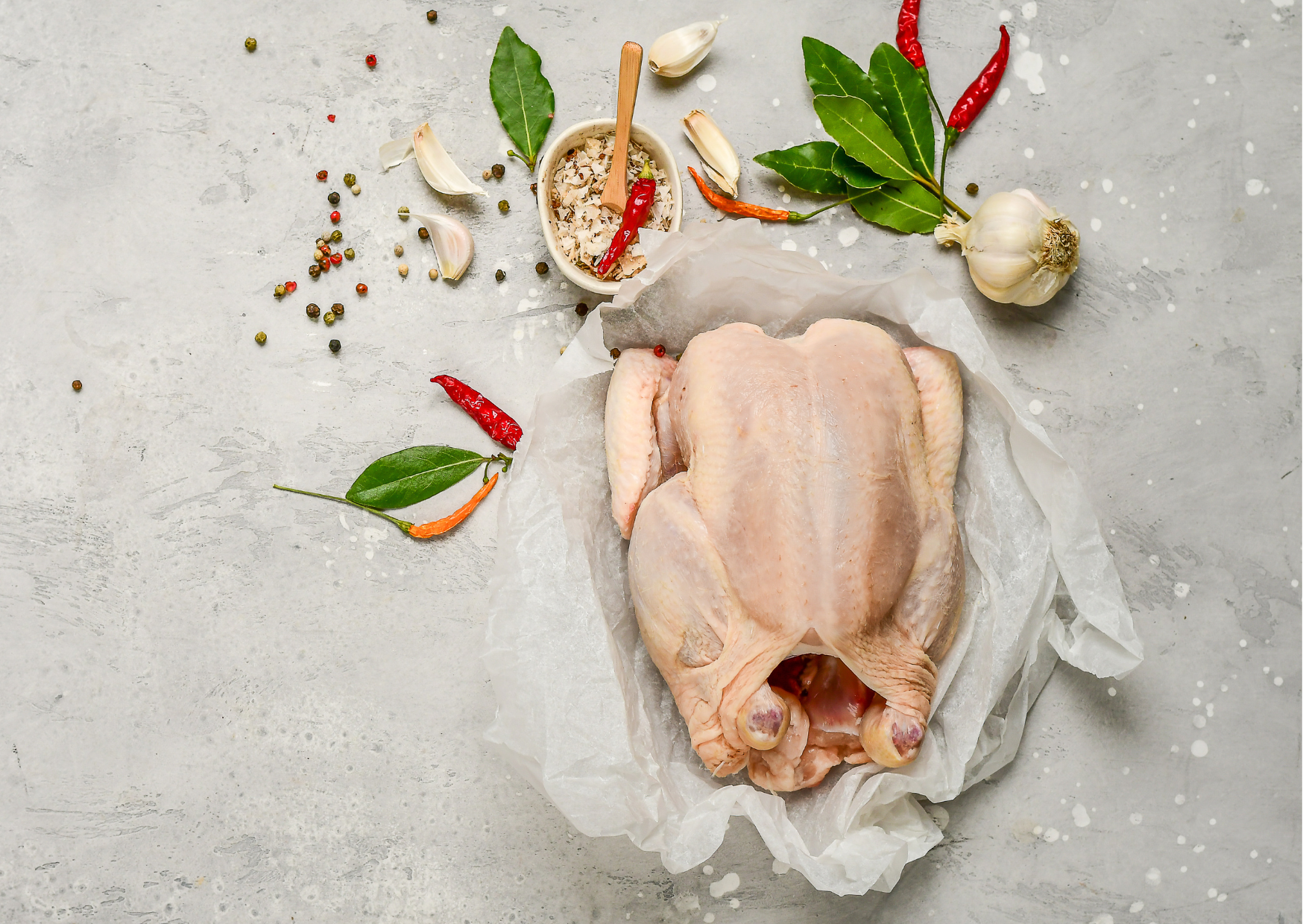
You can walk into an American supermarket and buy a turkey that already “contains up to X% of a solution,” then push an injector full of buttery flavor into the breast and call it a day. In much of Europe, that label and that process live under tighter rules. Additives in some U.S. injections and self-basting solutions run into European restrictions, labeling requirements, or outright bans, especially when colorants or certain stabilizers show up. Butterball’s own retail whole turkeys list a simple solution of water, salt, and spices for tenderness, while other product lines and many third-party injector kits lean on things like sodium phosphate to hold water and keep the meat springy.
Two quick facts to frame this without the internet rumors. The European Union withdrew authorization for titanium dioxide in food in 2022, so any bright-white “creamy” injection that relies on E171 for color is a nonstarter in the EU. The United States banned brominated vegetable oil in foods in 2024, which is mainly a soda issue, but it shows you the regulatory gap that trips Americans who try to import U.S. pantry ideas into EU kitchens. Different systems, different lines.
The good news is you do not need any of the controversial extras. A clean, EU-legal injection built from stock, salt, acids, and milk-fat delivers a juicier bird with better browning and none of the additive drama. You get the flavor you want and a label that a French or Spanish inspector would find boring in the best way.
I will show you how to read the labels on self-basting birds, when to skip injection and use a dry brine, and how to build a butter-stock emulsion that slides through a standard injector without clogging. Then you get the full recipe with grams and cups, yields for different bird sizes, a five-minute science explainer on why this works, timing for Thursday vs Saturday service, plus a troubleshooting section for blocked needles and blotchy skin. If you can stir and hold a saucepan below a simmer, you can do this.
What makes some U.S. injections awkward in Europe
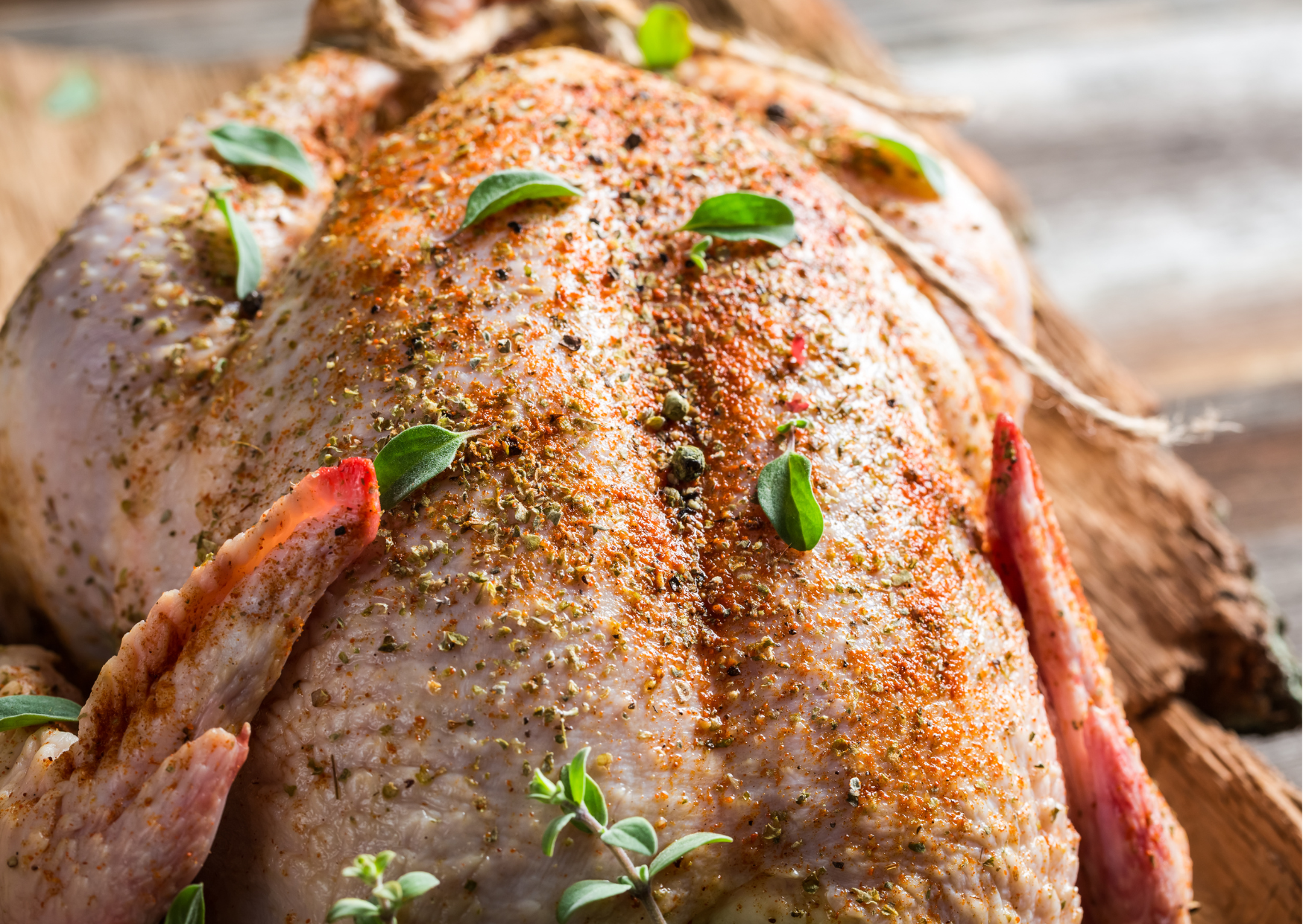
American kits often rely on phosphates to increase water binding and keep muscle fibers from tightening. That is legal in the EU within specific limits for certain categories, but it is not the home cook’s best friend and it complicates labels for restaurants. Colorants like titanium dioxide are banned in EU food altogether, and you still see it in older American “creamy” marinade formulas and website recipes that never got updated after 2022. Flavor enhancers like MSG are legal in both systems, but they are unnecessary if you build a proper stock-based emulsion.
Butterball’s retail whole turkeys keep it simple on paper, but you will find other Butterball foodservice items that list sodium phosphate in the ingredients, along with broth and salt. That is normal in industrial cookery. It is also a clue that the juiciness you remember can be recreated at home with simpler tools. Read the label before you inject. If the bird already contains a solution, you can still inject for flavor, but reduce salt and change the volume so you do not give yourself watery slices.
Remember this line inside every H2 section. Keep it clean and you avoid the regulatory minefield.
How to choose the bird before you ever pick up an injector
There are three typical labels on whole birds:
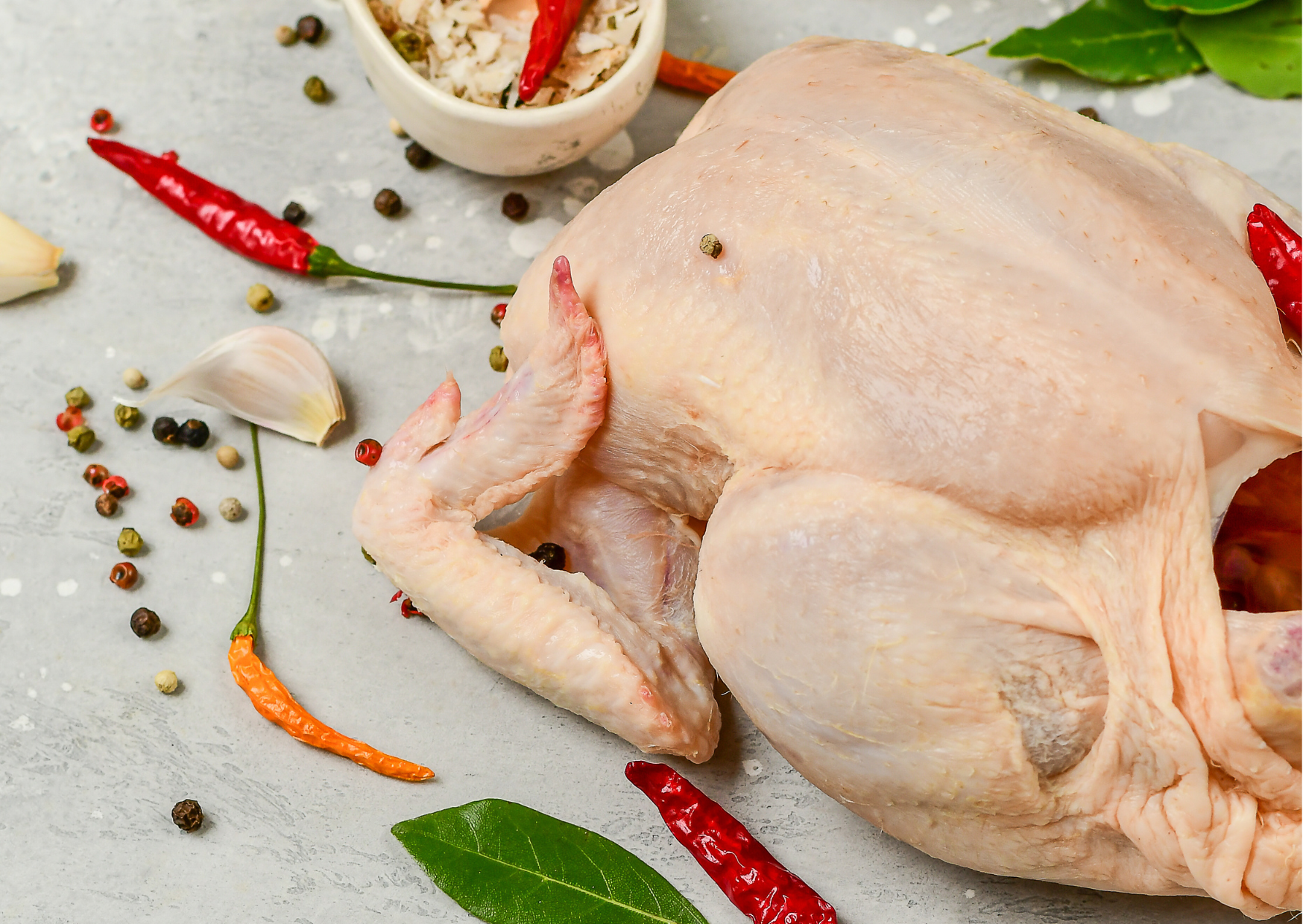
- Plain or “natural” with no added solution
The ingredient line says only “Turkey.” This is ideal for injection or dry brine. You control everything. - Self-basting, “contains up to 4–8% of a solution of water, salt, and spices”
Butterball’s frozen whole turkey, for example, lists up to 8% water, salt, spices. You can inject for flavor but you must reduce salt by about one third and the total injection volume by about one quarter. Add flavor, not more water. - Processed roasts and foodservice items
These can include sodium phosphate, dextrose, potassium chloride, broth. You do not inject these. They are already engineered to be juicy. Cook them well and focus on browning.
Quick test for shoppers
If the label lists only turkey or turkey plus up to 4–8% water and salt, you are safe. If you see a long list, skip injection and use an herb butter under the skin instead.
Bold truth inside the paragraph. Buy a simpler bird and you get simpler choices.
The EU-legal butter injection that actually works
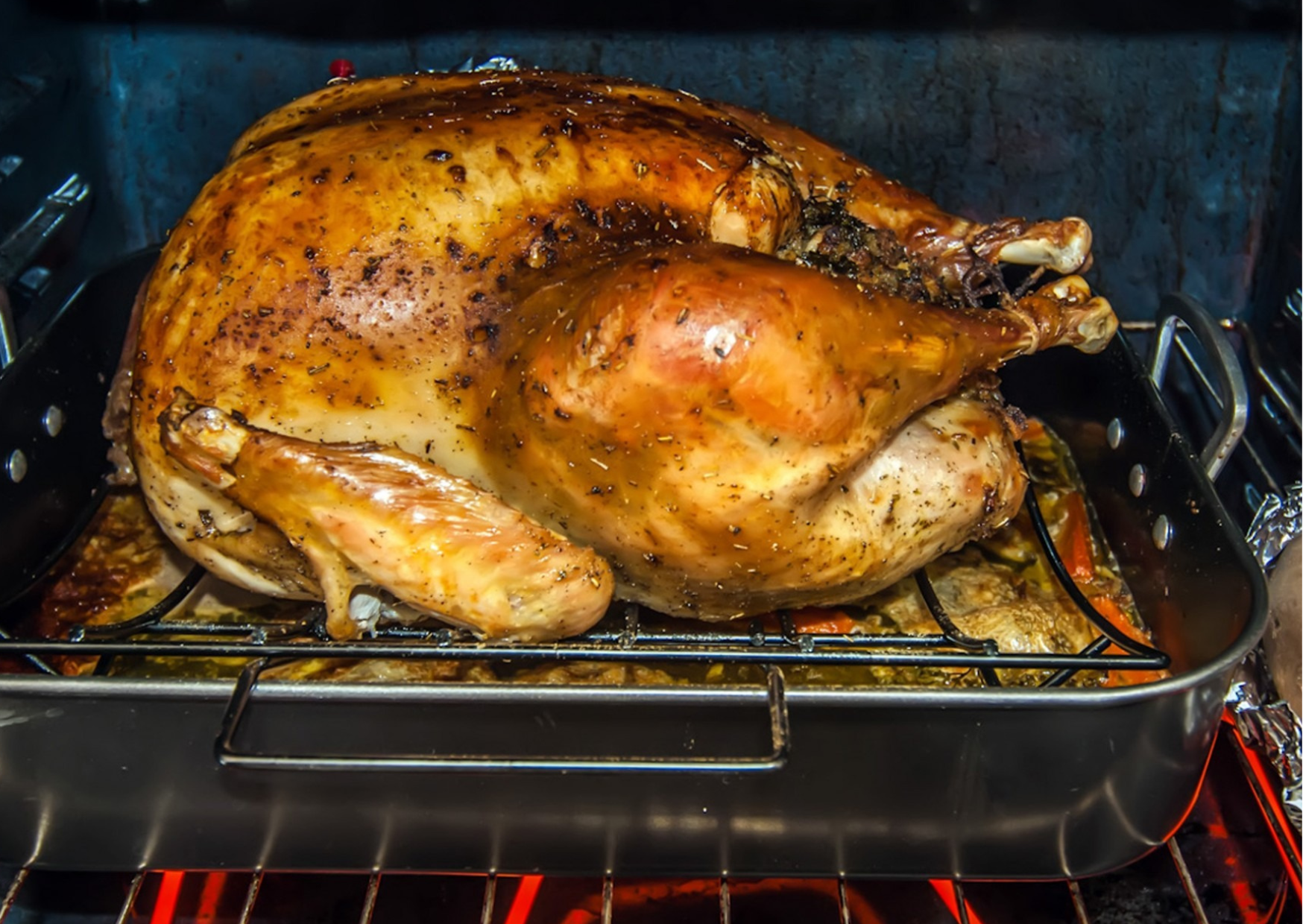
This formula was built for a standard metal injector with a multi-hole needle. It avoids banned colorants and keeps ingredients recognizable.
Serves
Enough to inject a 5 to 6 kg whole turkey, or two 2.5 to 3 kg capons, or two large chickens. Makes about 480 ml of injectable liquid. Scale up or down using the table below.
Ingredients
- 360 ml low-sodium chicken or turkey stock, very hot but not boiling
- 60 ml fresh lemon juice
- 60 ml dry white wine or apple cider
- 75 g unsalted butter, melted and warm
- 10 g fine sea salt
- 6 g sugar or honey
- 5 g garlic powder
- 3 g onion powder
- 2 g freshly ground black pepper
- Optional for depth: 2 g smoked paprika, 1 g thyme leaves, 1 g rosemary, crushed
Equipment
- 60 ml or larger metal injector with side-ported needle
- Mesh strainer and a small funnel
- Saucepan and whisk
- Paper towels, disposable gloves
Method
- Make a smooth base. In a saucepan, whisk hot stock with lemon juice and wine or cider. Add salt, sugar, garlic powder, onion powder, and pepper. Keep the liquid at 70–80°C. Do not boil.
- Emulsify the butter. Slowly stream in the melted butter while whisking, off heat, to form a thin emulsion. If you added ground herbs, simmer the stock with herbs for 3 minutes, then strain before adding butter.
- Strain. Pass through a fine mesh into a warm measuring jug. You want a silky liquid with no flakes that can clog the needle.
- Load and inject. Fill the injector. Insert the needle deep into the thickest part of the breast and inject as you slowly withdraw, 10–15 ml per channel, spacing channels about 2–3 cm apart. Repeat for the other breast, then place 2–3 smaller shots in each thigh.
- Rest and dry the skin. Pat the outside very dry. Rest the bird uncovered in the fridge for at least 4 hours and up to overnight. Dry skin means better browning.
- Roast. Cook to an internal 74°C in the breast and 77–80°C in the thigh. Let rest 25–35 minutes before carving so the injected liquid redistributes.
Remember the goal inside the section. Inject for flavor density, not for water weight.
How much to inject for different bird sizes
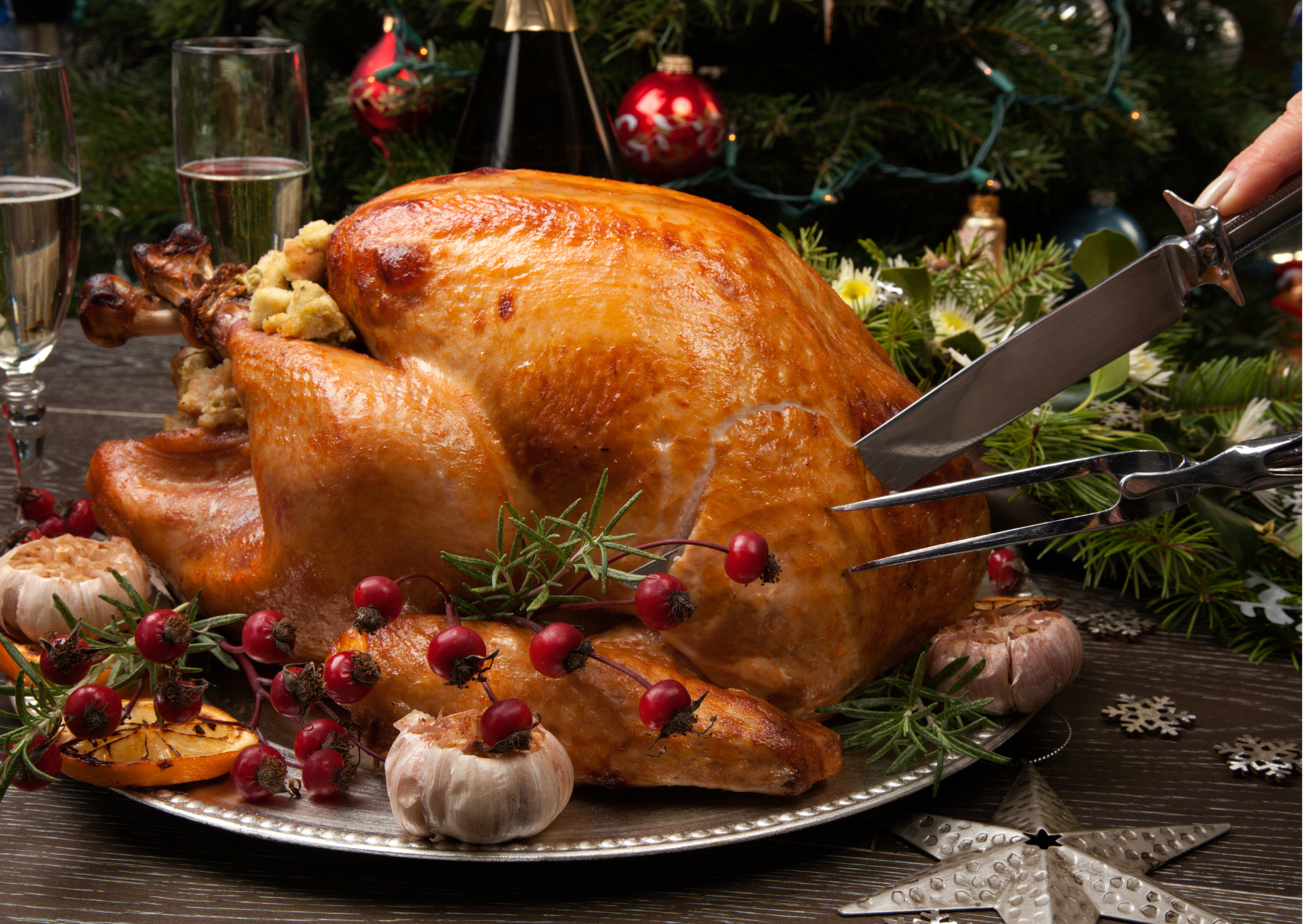
Too much fluid gives you spongy texture. Too little and you changed nothing. Use these ranges.
- Chickens 1.8–2.5 kg: 60–90 ml total
- Capons 2.5–3.5 kg: 120–180 ml total
- Turkey 4–5 kg: 240–360 ml total
- Turkey 5–6.5 kg: 360–480 ml total
If the label says “contains up to 8% of a solution,” reduce those totals by 20–25% and cut the salt in the recipe to 6–7 g. You are flavoring a pre-seasoned bird, not brining it again.
Keep the math honest inside the paragraph so the meat stays firm.
The science in five minutes, no jargon and no drama
Cooking squeezes muscle fibers. Salt and acid help them hold on to more moisture and improve the way proteins gel. Phosphates do this aggressively in industry, but stock, salt, and gentle acidity do enough for home cooking. Butter adds flavor and helps carry fat-soluble aromas into the meat. You emulsify so the injector sprays droplets rather than streaks of oil. Even dispersion means even slices.
Why not just brine
Brining works and is legal everywhere. The problem is space, dilution, and skin. Dry brine gives you better skin but slower flavor penetration. Injection gives you inside flavor in 10 minutes and a surface dry enough to crisp. Pick your strategy based on fridge space and timeline.
Simple truth to hold onto. Injection is a time tool, not magic.
When to inject, when to step away from the needle
Inject when the bird is plain or lightly pre-seasoned, when you want a shorter prep window, and when the oven plan needs to be stress free. Do not inject processed roasts with long ingredient lists, or birds that already taste salty from a heavy commercial solution.
If you bought a self-basting turkey with up to 8% solution, you can still inject 20–25% less than usual using the clean formula. If your instincts say the meat will turn hammy, stop and use an herb butter under the skin plus a dry salt rub on the outside. Overt salt plus injection equals regret.
Trust the label and your hands inside the paragraph.
Complete roasting plan for Thursday and for Saturday
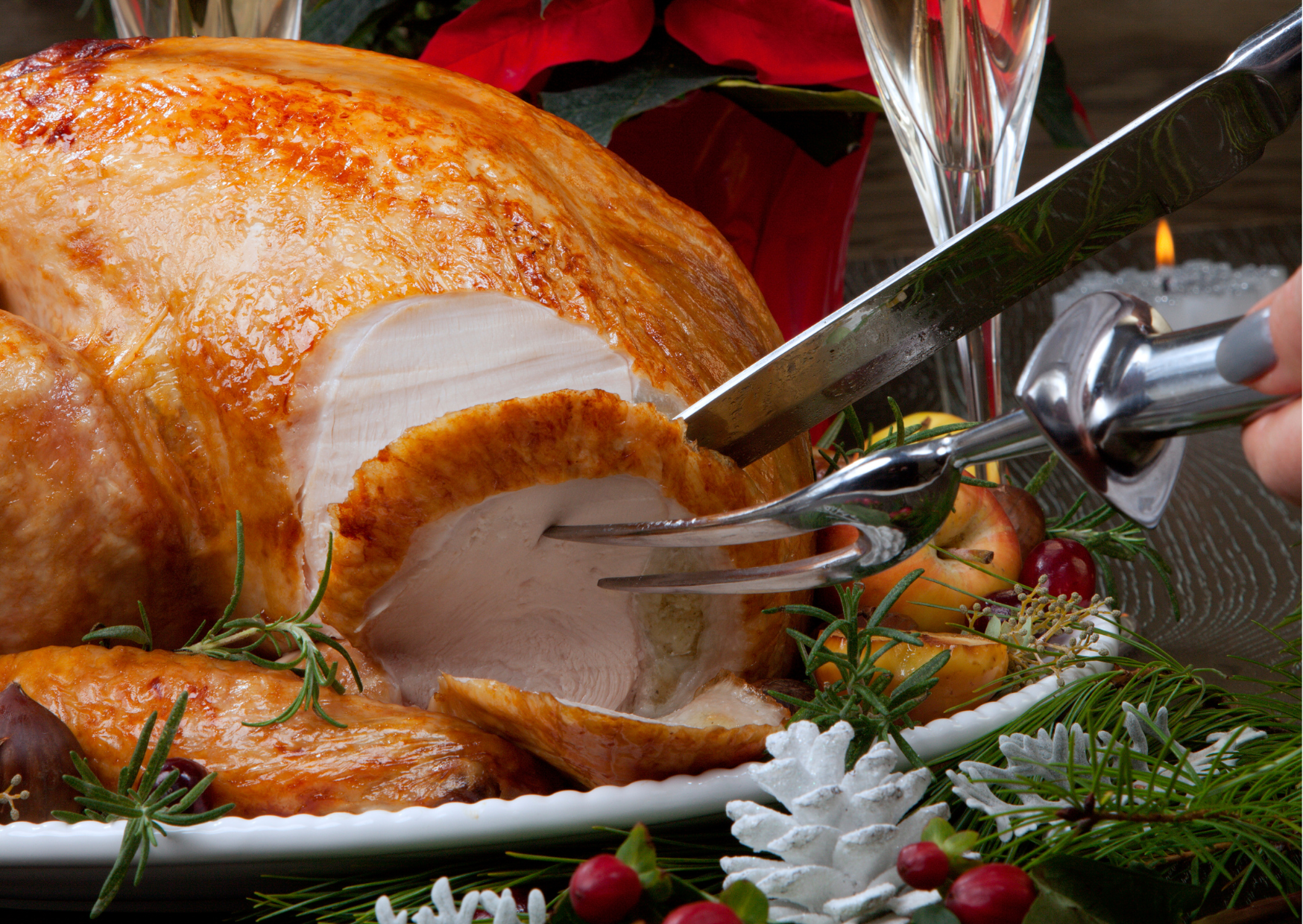
Thursday timeline, smaller team
- 08:00 Inject and rest uncovered in the fridge
- 12:00 Preheat to 220°C, then drop to 180–190°C when the bird goes in
- 12:15 Bird in, breast shielded with foil for the first 45 minutes
- 14:30 Start checking temps. Pull at 74°C breast, 77–80°C thigh
- 15:00 Rest 30 minutes. Heat sides while the board is ready
- 15:30 Carve, pour pan juices into a saucepan, reduce with a splash of stock
Saturday timeline, larger group
- Friday evening Inject and rest overnight for a drier surface
- Saturday 11:00 Bird out of fridge to take the chill off
- 12:00 Roast as above, finish by 14:00
- 14:00 Rest while you seat people in daylight
- 14:30 Serve without evening fatigue
Place this reminder in your head. Roast to temperature, not to time.
Sides that love the clean injection
The injection is lemony, savory, and a little buttery. Build sides that echo those notes.
- Bread salad with leeks and chestnuts instead of stuffing in the cavity, baked on a sheet for maximum crisp edges
- Green beans with shallot and almond dressed with lemon zest to mirror the injection
- Roasted pumpkin or squash with rosemary and a little honey to soften the acid
- Pomegranate and orange relish with black pepper and vinegar for brightness
Let the pan juices be the sauce. Skim the fat, reduce for two minutes, finish with a small knob of butter for shine. Do not cook it to sludge. You want a glossy, spoonable jus.
The rule inside the paragraph. Echo the flavors and do not drown the plate.
Troubleshooting you will actually use
The injector clogs
Strain harder and keep the emulsion warm. If you added herbs, simmer and strain before emulsifying. A clean liquid behaves better in the needle.
The breast looks blotchy under the skin
Normal. That is where the liquid pooled before you redistributed it. It evens out in cooking.
The skin is pale
The surface was wet or the oven was too cool. Next time, rest uncovered longer, start hot for 20 minutes at 220°C, then drop to 180–190°C.
The slices taste salty
You injected a heavily pre-seasoned bird or over-did volume. Cut salt to 6 g next time for a self-basting turkey and inject less total liquid.
Keep the fixes short and practical inside the paragraph.
Label reading for imports and why your recipe avoids problems
If you are in Europe, two labels tell you what you need to know. Ingredients and additives list. Avoid any injection mix that lists E171 titanium dioxide for color, because that additive is not authorized in EU foods. Skip internet recipes that brag about a “creamy white injector” unless you check the ingredient list carefully. Your butter-stock emulsion stays pale gold because there is no artificial pigment.
If you are in the U.S., this is still useful because you also want a simple label. FDA banned brominated vegetable oil in 2024, not an injection ingredient, but a reminder that the rulebook changes. The safest long-term strategy is to cook with kitchen nouns.
The point inside the section. Simpler lists survive policy shifts.
Clean injector recipe card to screenshot
Yield 480 ml
Use 360–480 ml for a 5–6.5 kg turkey
- 360 ml hot low-sodium stock
- 60 ml lemon juice
- 60 ml dry white wine or apple cider
- 75 g melted unsalted butter
- 10 g fine sea salt
- 6 g sugar or honey
- 5 g garlic powder
- 3 g onion powder
- 2 g black pepper
Whisk hot stock, acids, and dry seasonings. Stream in warm butter to emulsify. Strain fine. Inject 10–15 ml per channel in a grid, then rest the bird uncovered at least 4 hours. Roast to 74°C breast, 77–80°C thigh. Rest 30 minutes. Carve.

About the Author: Ruben, co-founder of Gamintraveler.com since 2014, is a seasoned traveler from Spain who has explored over 100 countries since 2009. Known for his extensive travel adventures across South America, Europe, the US, Australia, New Zealand, Asia, and Africa, Ruben combines his passion for adventurous yet sustainable living with his love for cycling, highlighted by his remarkable 5-month bicycle journey from Spain to Norway. He currently resides in Spain, where he continues sharing his travel experiences with his partner, Rachel, and their son, Han.