
And what it reveals about the body, the public gaze, and how different societies define what’s private
Spend a few hours on a Mediterranean beach — anywhere from the rocky coastlines of southern France to the long, golden shores of Spain, Portugal, or Italy — and you’ll quickly notice something that unsettles many American visitors.
It isn’t the topless sunbathers. It’s not even the speedos, the sagging swimsuits, or the toddlers running free. It’s the way people take photos — freely, casually, and without the layers of caution, permission, or paranoia that Americans have come to expect.
You’ll see families posing near strangers. Friends laughing with phones held high, capturing half the beach behind them. Teenagers filming dance videos. Grandmothers snapping wide shots with distant sunbathers in frame. And no one seems upset, concerned, or ready to call security.
To American eyes, this feels like a major breach of privacy. But in much of Europe, the beach is a public space — and photo culture reflects that.
Here’s why the way Europeans take photos on the beach would shock most Americans — and what it says about deeper cultural attitudes toward privacy, exposure, and how much the human body is really allowed to matter.
Want More Deep Dives into Everyday European Culture?
– Why Europeans Walk Everywhere (And Americans Should Too)
– How Europeans Actually Afford Living in Cities Without Six-Figure Salaries
– 9 ‘Luxury’ Items in America That Europeans Consider Basic Necessities
Quick & Easy Tips (for Navigating Beach Photo Culture Abroad)
Always ask before photographing people, even in public spaces.
Be aware of local norms—some beaches are more relaxed about candid shots.
Avoid photographing children unless you have explicit parental permission.
Stick to scenic shots if you’re unsure about cultural expectations.
Use discretion when sharing on social media—tagging or identifying strangers is often frowned upon.
In many European countries, public beaches are treated as genuinely public spaces where photography is common and not always seen as an invasion of privacy. People may casually take group selfies, scenic shots, or even wide crowd photos without worrying about who ends up in the frame.
To Americans, this can feel like a blatant disregard for personal boundaries, especially in a culture where photographing strangers without permission is often considered rude—or even a legal issue in some states. The contrast is rooted in different interpretations of privacy in public spaces: Europeans may see presence in a public place as implied consent for incidental photography, while Americans view privacy as something to be actively protected, even outside the home.
This cultural gap is magnified by beach environments, where swimwear and sunbathing naturally make people feel more exposed. What’s meant as casual and carefree in Europe can easily be perceived as intrusive or exploitative through an American lens, sparking debates about whether “public” really means “free to photograph.”
1. The Beach Is Treated Like a Public Square — Not a Private Backyard
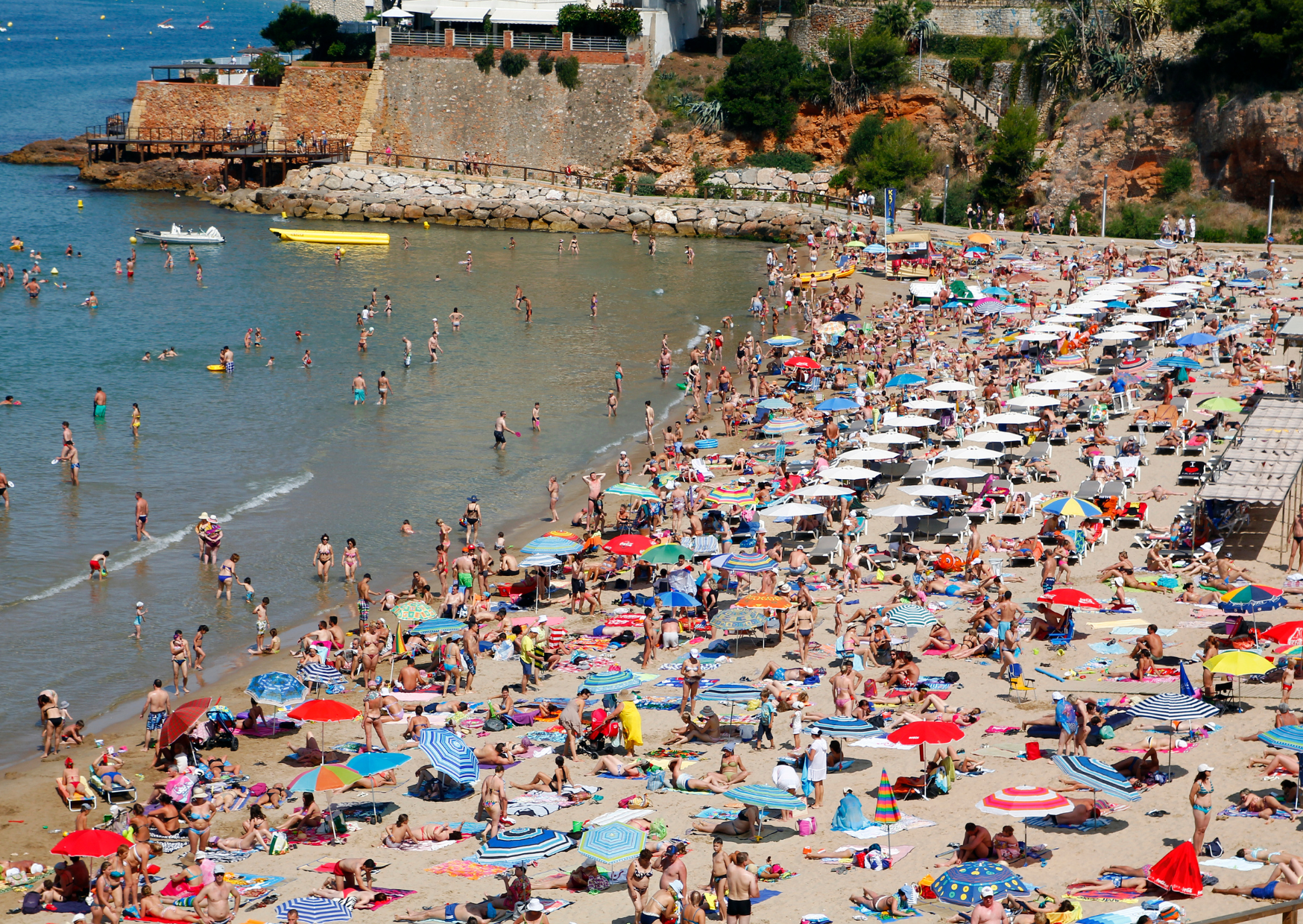
In the U.S., beaches often come with invisible boundaries. You stake out your towel. You set up umbrellas. You treat the surrounding few feet as your zone — and you expect others to respect it.
Photos taken near strangers, even if they’re in the background, can feel intrusive. And if a child or someone in a swimsuit appears in your shot, even accidentally, you’re expected to crop, blur, or apologize.
In Europe, that sense of territorial privacy doesn’t apply. A beach is a public commons, no different than a plaza or a park. If you’re there, you’re part of the background.
2. Background Strangers Aren’t Blurred — They’re Accepted
In American photo culture, especially with growing awareness around consent, people often avoid posting images that include strangers — particularly if those strangers are shirtless, in swimsuits, or children.
In Europe, casual beach photos often include dozens of background people, and no one expects to be edited out.
If you’re sunbathing in Barcelona, you might end up in someone’s family photo. If you’re walking along the Amalfi Coast in a swimsuit, your image might appear in the backdrop of a video blog.
And no one is angry. Because no one assumes they are being singled out — or objectified.
3. Topless Sunbathers Don’t Assume the Camera Is About Them

One of the biggest culture shocks for American visitors is seeing topless sunbathers just meters away from group photos and casual phone cameras.
In the U.S., exposed bodies trigger alarm bells. A stranger taking a photo near someone with exposed skin, even without ill intent, can be considered predatory — or at least disrespectful.
In Europe, the topless woman sunbathing near a group selfie isn’t worried. She knows the photo isn’t about her. She’s not offended. And she doesn’t assume her visibility equals objectification.
The default assumption is neutrality, not threat.
4. Children Are Photographed Naturally — Not Shielded from the Lens

In many parts of the U.S., photographing children — even in public — is a legal and ethical minefield. Parents often panic if a stranger’s phone is nearby. Signs at playgrounds and waterparks warn visitors not to film or snap photos.
In Europe, children are present in photos without alarm. Family vacation shots, public event photos, and even beach scenes often include kids playing in the background — and nobody calls it inappropriate.
This doesn’t mean there’s no awareness of safety. But it does mean the cultural expectation isn’t built on fear. The public space is shared — and so is the image.
5. Taking Photos in Public Doesn’t Feel Like Surveillance
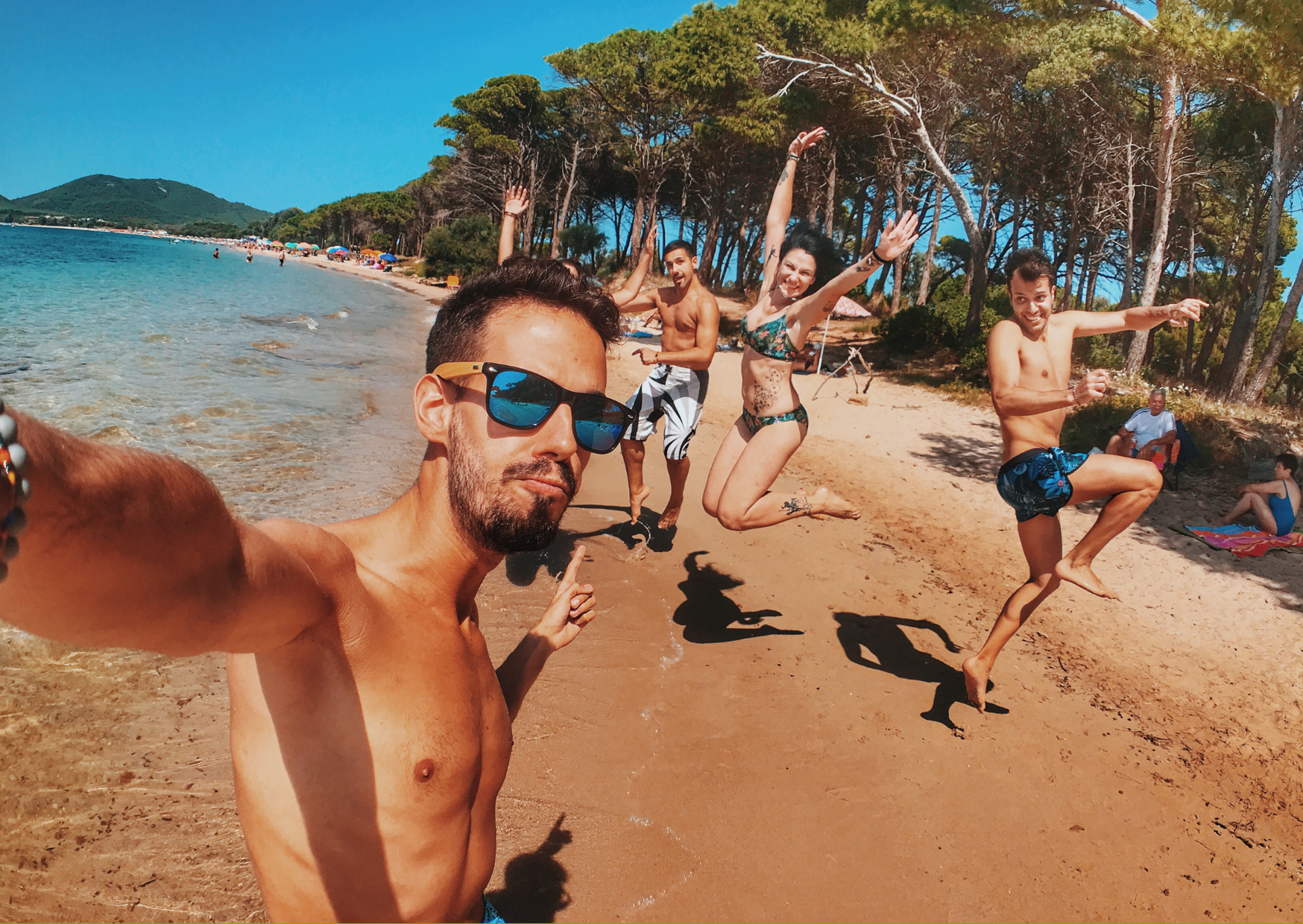
In the U.S., the act of pulling out a phone and filming something — even innocently — often triggers discomfort. “Why are you recording?” “Is this going online?” “Do I need to give permission?”
In Europe, filming or photographing public life is so embedded in the everyday that it rarely triggers suspicion.
At the beach, that means people record group games, sing-alongs, and sunsets — and strangers don’t flinch.
The assumption is simple: you’re not the subject unless someone tells you that you are.
6. There’s No Expectation That the Body Be Hidden
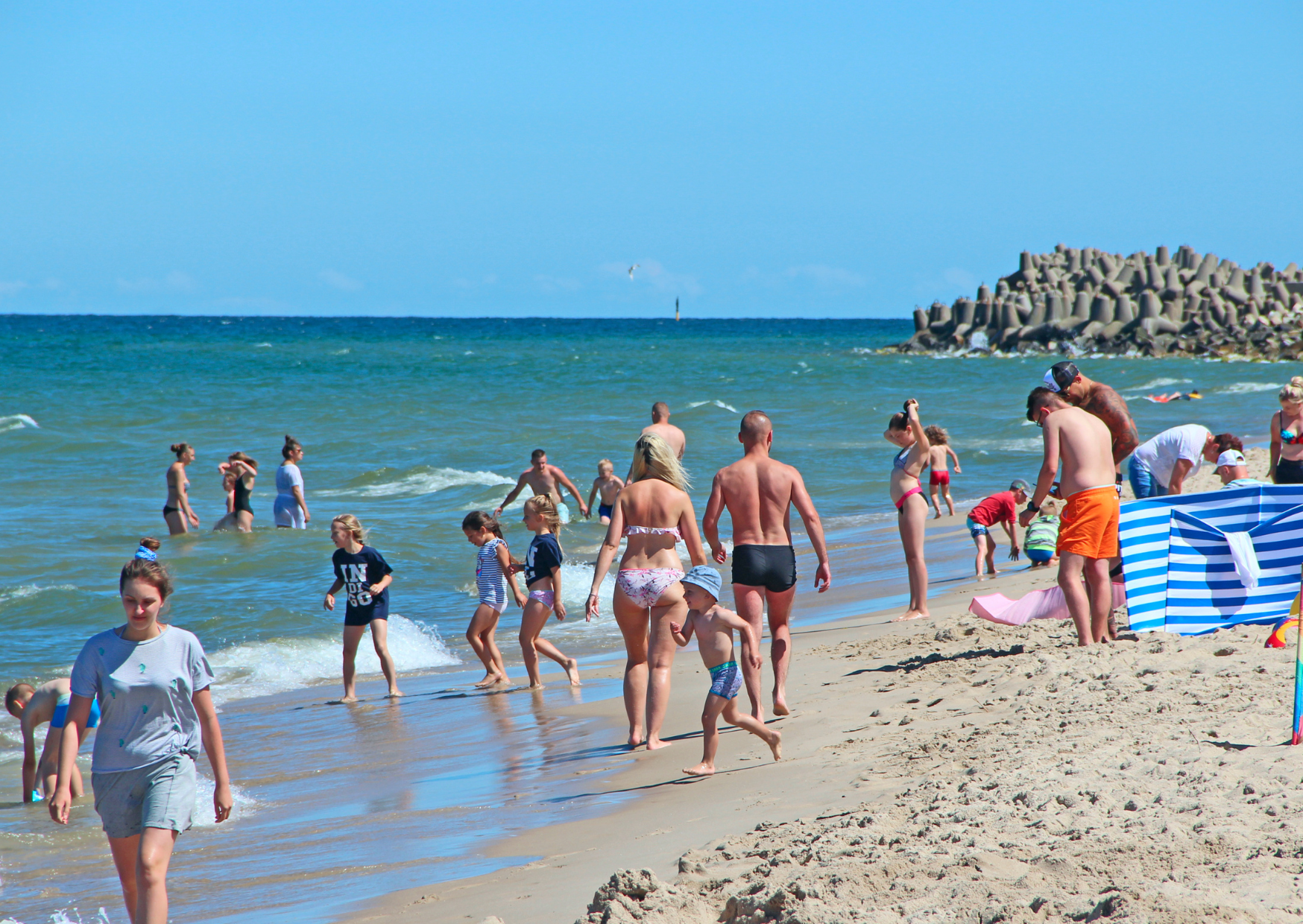
Much of American discomfort with beach photography stems from a deeper discomfort with exposure. Swimsuits are seen as revealing. The body, especially one not filtered or posed, is considered vulnerable.
In Europe, bodies are just bodies.
People of all ages, shapes, and sizes walk freely in speedos, bikinis, or nothing at all. They’re not posing. They’re not apologizing. They’re not performing.
So when a photo is taken nearby, no one assumes their body is under scrutiny. And if it is, they’re unlikely to care — because they don’t attach shame to physical presence.
7. Social Media Use Is More Casual — Less Performed
American photo culture is increasingly shaped by performance. Instagram grids. TikTok aesthetics. Filters. Carefully staged shots. “Candid” images that took twenty tries.
In Europe, social media is still used — but it’s less curated, less self-conscious, and often less about branding yourself.
People take group selfies with half the beach in the background. They post videos of their kids diving into the surf. They share unedited photos from an afternoon on the sand.
There’s less pressure to control the background — because the background isn’t seen as dangerous or offensive.
8. Asking Permission for Every Photo Would Be Seen as Awkward
In the U.S., it’s becoming more common to ask: “Do you mind if I take a photo?” even in casual settings.
On a European beach, that question might feel unnecessary — or even weird. Not because people don’t care about privacy, but because they don’t assume every photo is a statement.
Most people take photos for themselves. They don’t need strangers’ approval, because they’re not doing it for public consumption.
The cultural assumption isn’t “Everyone is watching.” It’s “No one is watching.”
9. If You’re in the Shot, It’s Not About You

Perhaps the biggest cultural contrast is this: Americans often interpret being in someone’s photo as a violation of privacy. Europeans interpret it as coexistence in public space.
If you’re on the beach and someone takes a photo, they’re not violating your image. They’re living alongside you.
Unless someone is clearly photographing you directly — and doing so in a creepy or exploitative way — it’s not a problem.
There’s no lawsuit. No social media callout. No moral panic.
Just an assumption that, in shared space, we all appear — and then disappear — in each other’s lives.
One Beach, Two Mentalities
To Americans, the European beach photo culture feels reckless. Where’s the consent? The boundaries? The protections?
To Europeans, the American discomfort feels dramatic. Why treat every image like a legal document?
In the U.S., photography is loaded with caution.
In Europe, it’s loaded with context.
A beach is a place for people — and people get captured in images. It’s not an invasion. It’s just part of being there.
So if you find yourself on a Mediterranean beach, and someone’s taking a photo nearby, pause before you panic. You’re probably just part of the background — and no one thinks twice.
And that, in its own quiet way, is a kind of freedom Americans rarely get to experience.

About the Author: Ruben, co-founder of Gamintraveler.com since 2014, is a seasoned traveler from Spain who has explored over 100 countries since 2009. Known for his extensive travel adventures across South America, Europe, the US, Australia, New Zealand, Asia, and Africa, Ruben combines his passion for adventurous yet sustainable living with his love for cycling, highlighted by his remarkable 5-month bicycle journey from Spain to Norway. He currently resides in Spain, where he continues sharing his travel experiences with his partner, Rachel, and their son, Han.
John
Saturday 9th of August 2025
One of the main difference is that Americans “sexualize” nudity when the rest of the world doesn’t. Nudity is something natural, not subject to any interpretation. This means a different perception of bodies and beach looks…