
Few dishes capture the soul of Northern Italian cuisine quite like Ossobuco alla Milanese, the rich and tender braised veal shanks, slowly cooked in a white wine and vegetable sauce, paired with Risotto alla Milanese, a luxurious saffron-infused risotto. Together, they form a plate that’s both elegant and deeply comforting — a staple of Milanese culinary tradition.
Though it might look like restaurant-only fare, Ossobuco is surprisingly approachable for home cooks with a bit of patience. It’s a dish that rewards slow cooking and delivers bold, complex flavors. The veal becomes fall-off-the-bone tender, and the marrow — the prized treasure within the bone — adds a silky richness that defines the experience.
This guide will walk you through how to make both components of this classic dish at home, with tips for nailing the creamy texture of the risotto and the deep flavor of the ossobuco. If you’ve ever wanted to bring true Italian refinement to your dinner table, this is the dish to master.
Read here best Italian food, vegetarian food in Italy, best drinks in Italy and best breakfast in Italy
Read Here Things to know before visiting Italy and how to buy a sim card in Italy.
What is Ossobuco alla Milanese?
Ossobuco literally means “bone with a hole,” referring to cross-cut veal shanks braised until tender, releasing the prized bone marrow into the sauce. It’s traditionally served with Risotto alla Milanese, a creamy saffron-infused risotto that balances the richness of the meat with its aromatic warmth.
Best Time to Eat & How to Partner the Dish
Ossobuco alla Milanese is a perfect cold-weather comfort food — hearty, warming, and satisfying. Serve it for a slow Sunday lunch, a dinner party that deserves a wow factor, or even a holiday meal. Its richness makes it ideal for cooler evenings or as a showstopper main course.
To complete the experience, pair it with a medium-bodied red wine like a Barbera, Chianti Classico, or Nebbiolo. The acidity of the wine cuts through the richness of the veal and risotto beautifully. For starters, keep it simple: an arugula salad with shaved parmesan or grilled vegetables balances the heavier main dish.
Don’t skip the gremolata garnish — a mix of lemon zest, garlic, and parsley — which brings a burst of brightness and tradition to the plate. It’s not just decorative; it’s a crucial flavor contrast to the richness of both the meat and the risotto.
One of the biggest misconceptions is that ossobuco should be made with tomato sauce — a variation that exists, especially in Southern Italy. But true Ossobuco alla Milanese uses no tomatoes, letting the veal, white wine, and broth speak for themselves. Purists will tell you: tomatoes are for the South, saffron and bone marrow are for Milan.
Another hotly debated topic is whether to serve the dish with risotto or polenta. While polenta is common in other parts of Northern Italy, the saffron risotto is Milan’s signature — and some would argue, the only correct pairing for this dish.
Perhaps most surprisingly, many overlook the bone marrow at the center of the veal shank. But for Italians, that marrow is the most prized bite — a velvety, rich essence that elevates the entire dish. In fact, ossobuco literally means “bone with a hole,” and that “hole” is where the flavor lives.
Ossobuco alla Milanese with Saffron Risotto Ingredients – (Serves 4)
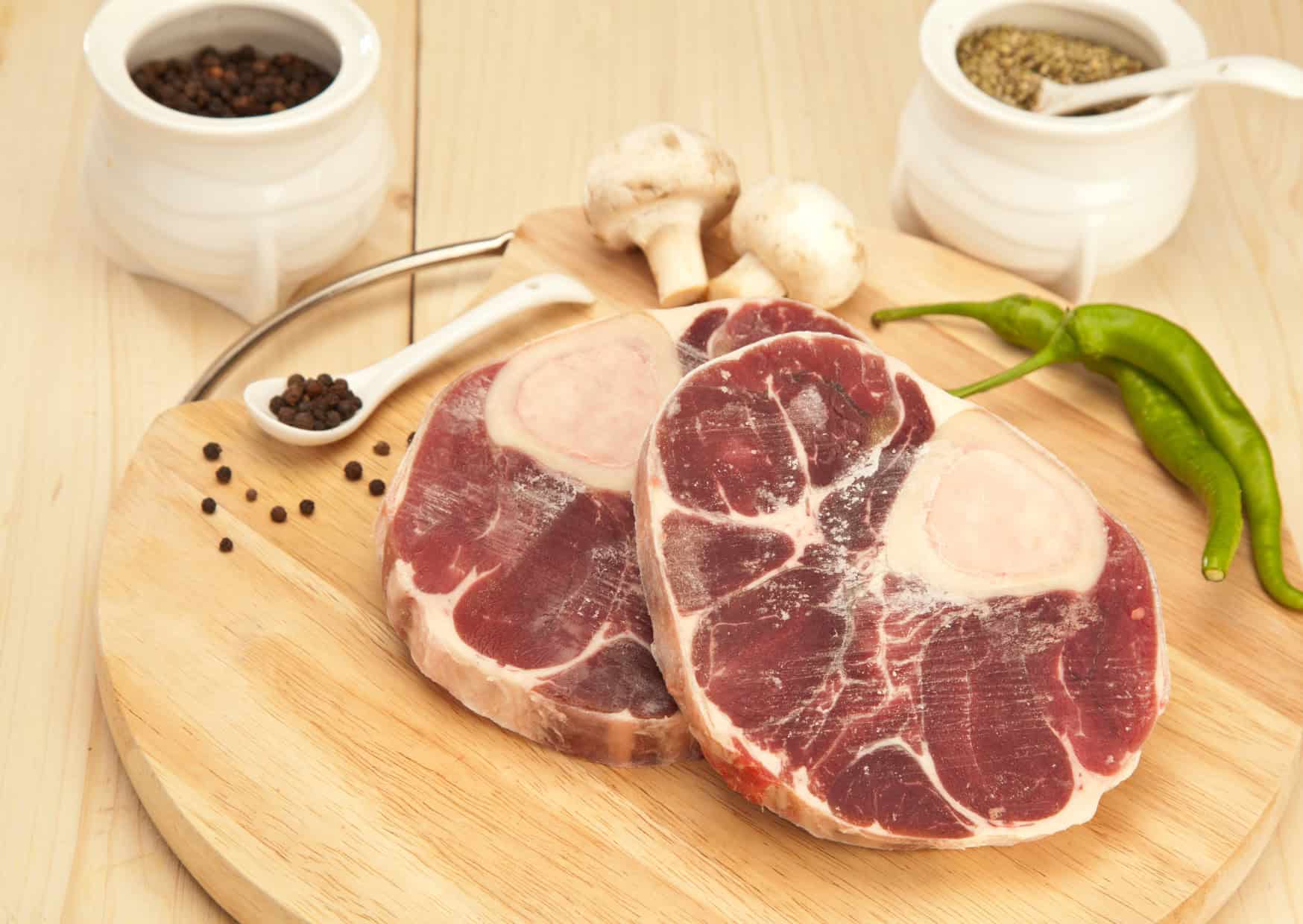
4 veal shanks, about 1.5 inches thick, tied with kitchen twine
1/2 cup all-purpose flour (for dredging)
2 tablespoons olive oil
2 tablespoons butter
1 carrot, finely diced
1 celery stalk, finely diced
1 small onion, finely diced
2 cloves garlic, minced
1/2 cup dry white wine
1 1/2 cups beef or veal broth
1 cup crushed tomatoes or passata
2 sprigs thyme
1 bay leaf
Salt and black pepper
Optional: Gremolata (for topping)
Zest of 1 lemon
1 tablespoon parsley, finely chopped
1 clove garlic, minced
Ingredients – Risotto alla Milanese:
1 cup Arborio rice
3–4 cups chicken or vegetable broth, kept warm
2 tablespoons butter
1 small shallot or onion, minced
1/4 cup dry white wine
1/4 teaspoon saffron threads, soaked in 2 tablespoons warm water
1/3 cup grated Parmigiano-Reggiano
Salt to taste
Ossobuco alla Milanese with Saffron Risotto Step-by-Step Instructions
How to Make Ossobuco
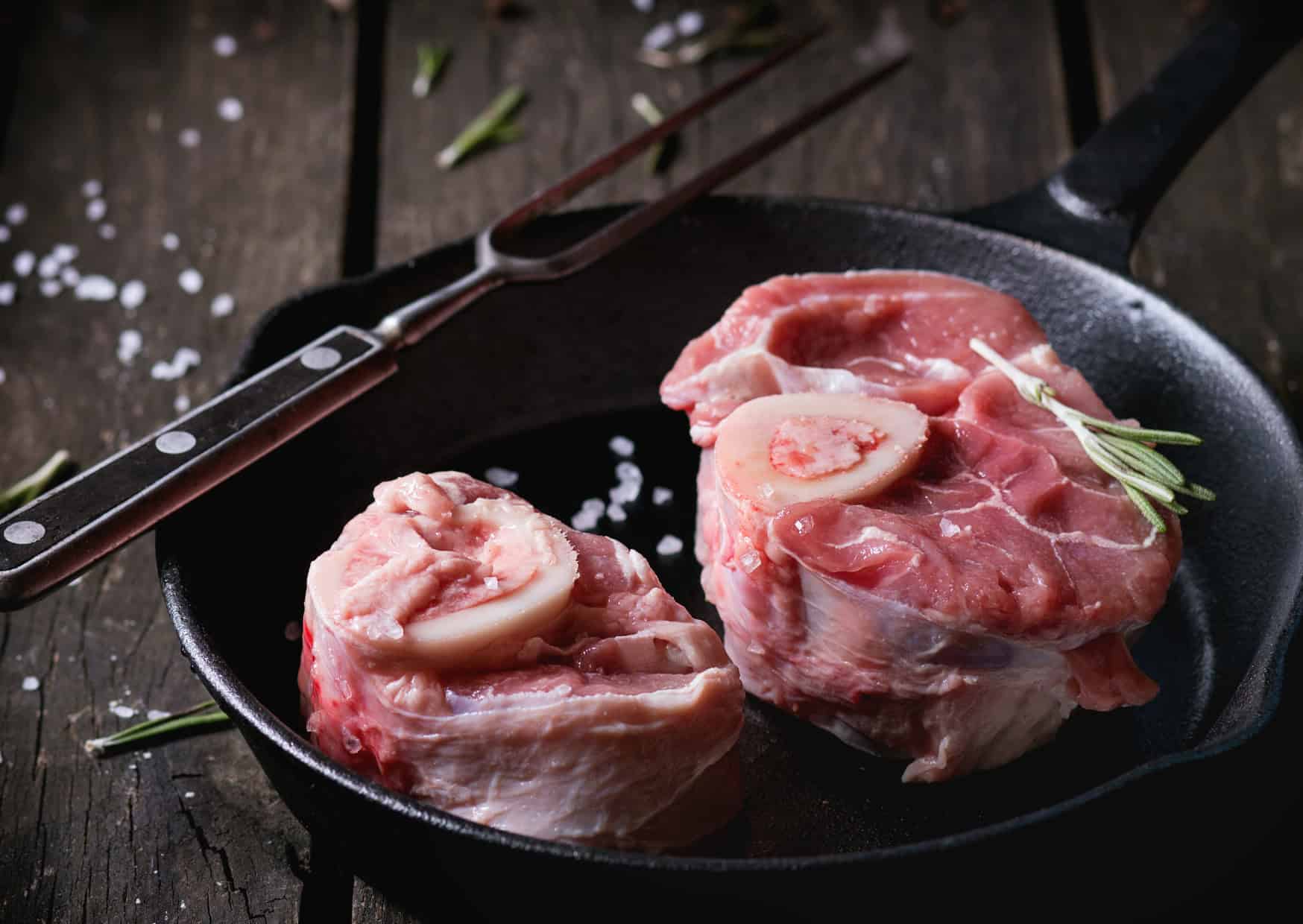
Prep the Veal
Pat shanks dry. Tie each with kitchen twine to hold their shape.
Dredge lightly in flour, shaking off excess. Season with salt and pepper.
Brown the Meat
In a heavy pot or Dutch oven, heat olive oil and butter.
Sear veal shanks until golden brown on both sides (about 3–4 minutes per side).
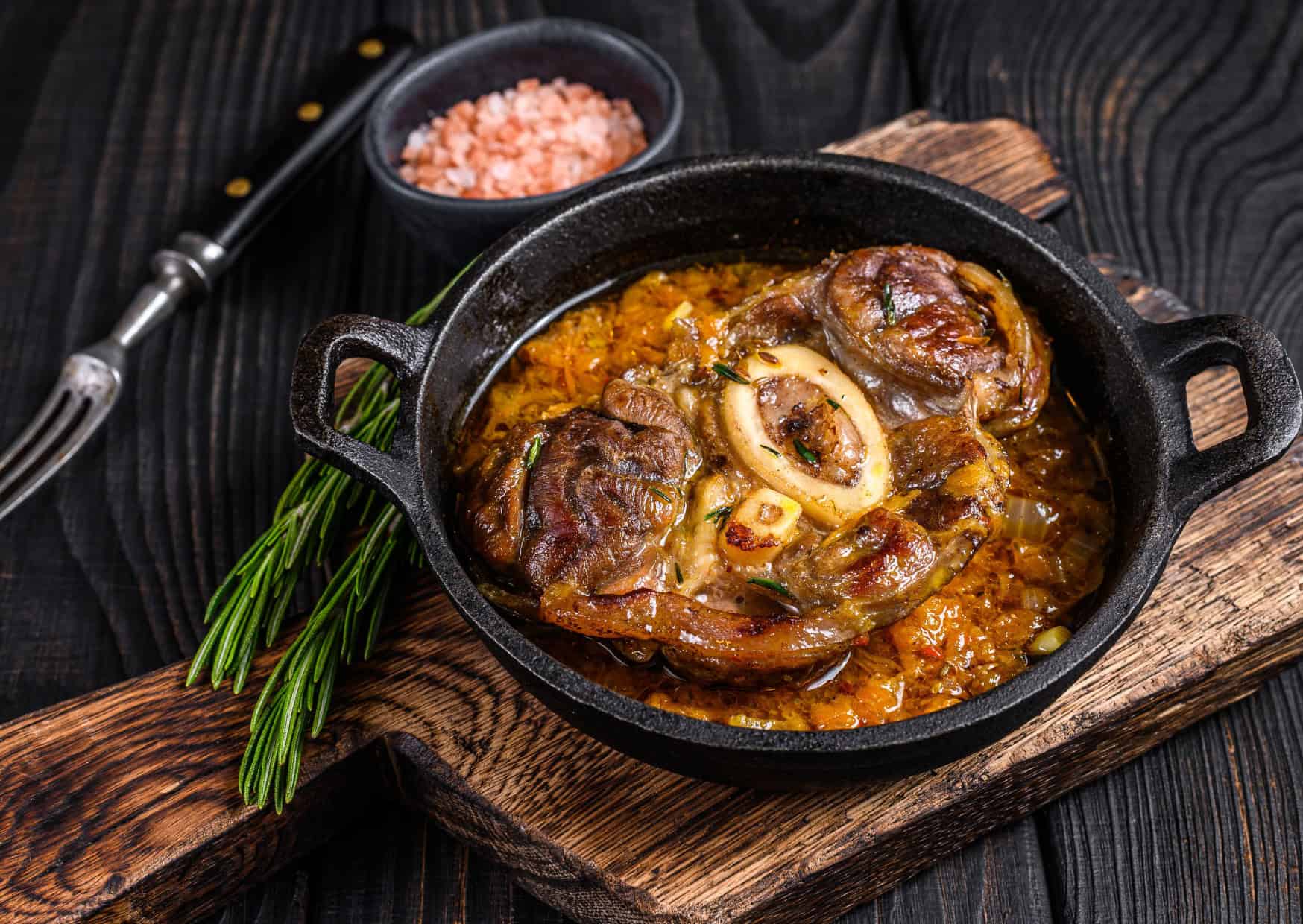
Remove and set aside.
Sauté the Vegetables
Add carrot, celery, onion, and garlic to the same pot.
Cook over medium heat until soft and aromatic (~8 minutes).
Deglaze & Braise
Pour in white wine, scraping the bottom of the pan.
Stir in crushed tomatoes and broth. Add thyme and bay leaf.
Return veal to the pot. Liquid should come about halfway up the sides of the meat.
Simmer Low & Slow
Cover and simmer on low heat (or 325°F oven) for 1.5 to 2 hours, turning once.
Meat is done when fall-apart tender, but still intact.
Make Gremolata (Optional but Traditional)
Mix lemon zest, parsley, and garlic. Sprinkle over the veal just before serving.
How to Make Saffron Risotto
Sauté the Aromatics
In a saucepan, melt 1 tbsp butter. Add shallot, cook until translucent.
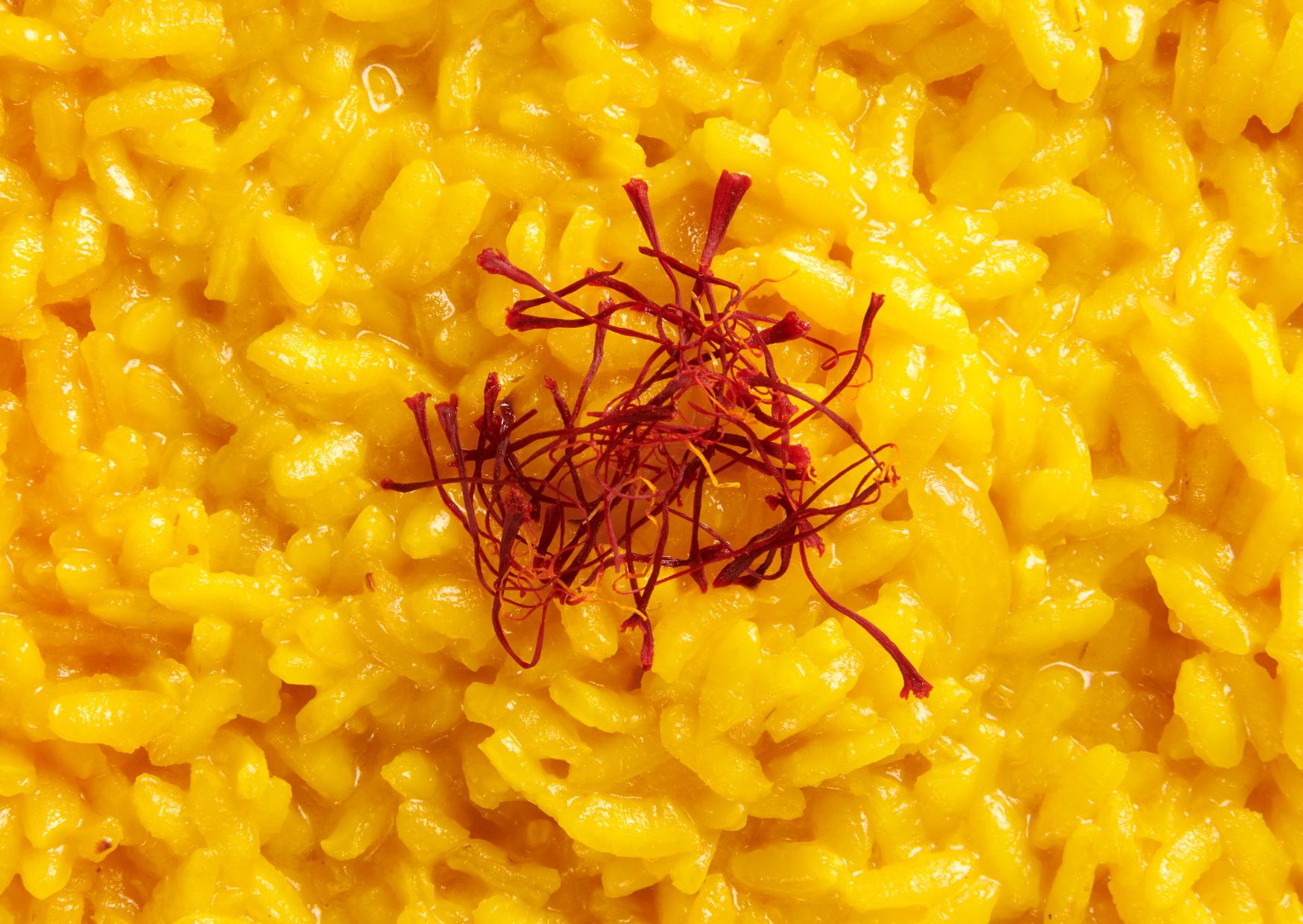
Toast the Rice
Add Arborio rice, stirring for 1–2 minutes until edges look translucent.
Add wine and stir until absorbed.
Add Broth Gradually
Add warm broth, 1 ladle at a time, stirring constantly.
Let each addition absorb before adding the next.
Add Saffron
About halfway through, stir in saffron water.
Keep stirring and adding broth until rice is creamy and al dente (about 18–20 minutes total).
Finish with Butter and Cheese
Stir in remaining butter and Parmigiano-Reggiano.
Season with salt to taste. Let rest 1–2 minutes before serving.
To Serve
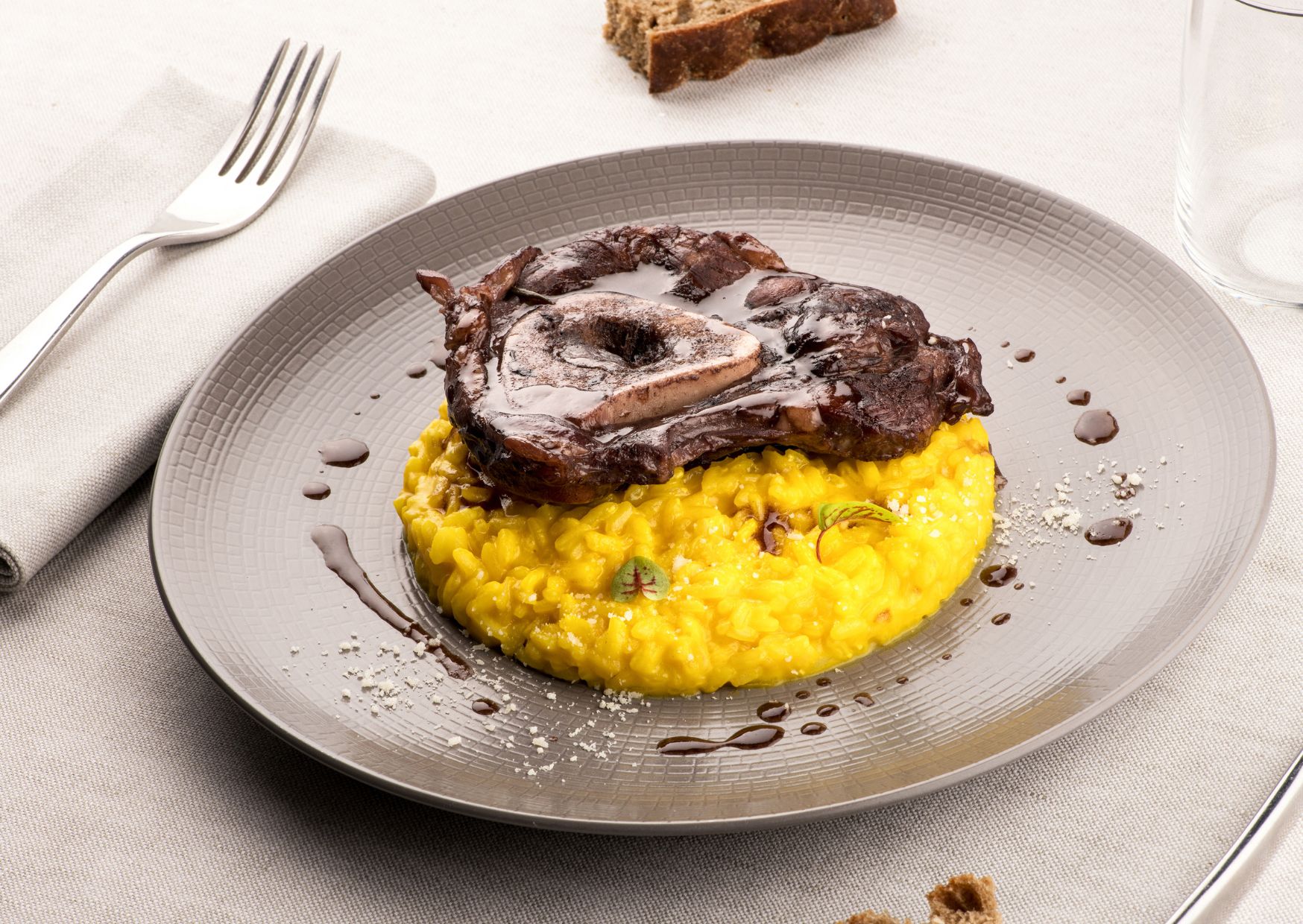
Place a scoop of saffron risotto on the plate.
Top with one veal shank, spooning over the rich tomato-wine sauce.
Finish with a sprinkle of gremolata for brightness and aroma.
Ossobuco alla Milanese with Saffron Risotto Tips for Success
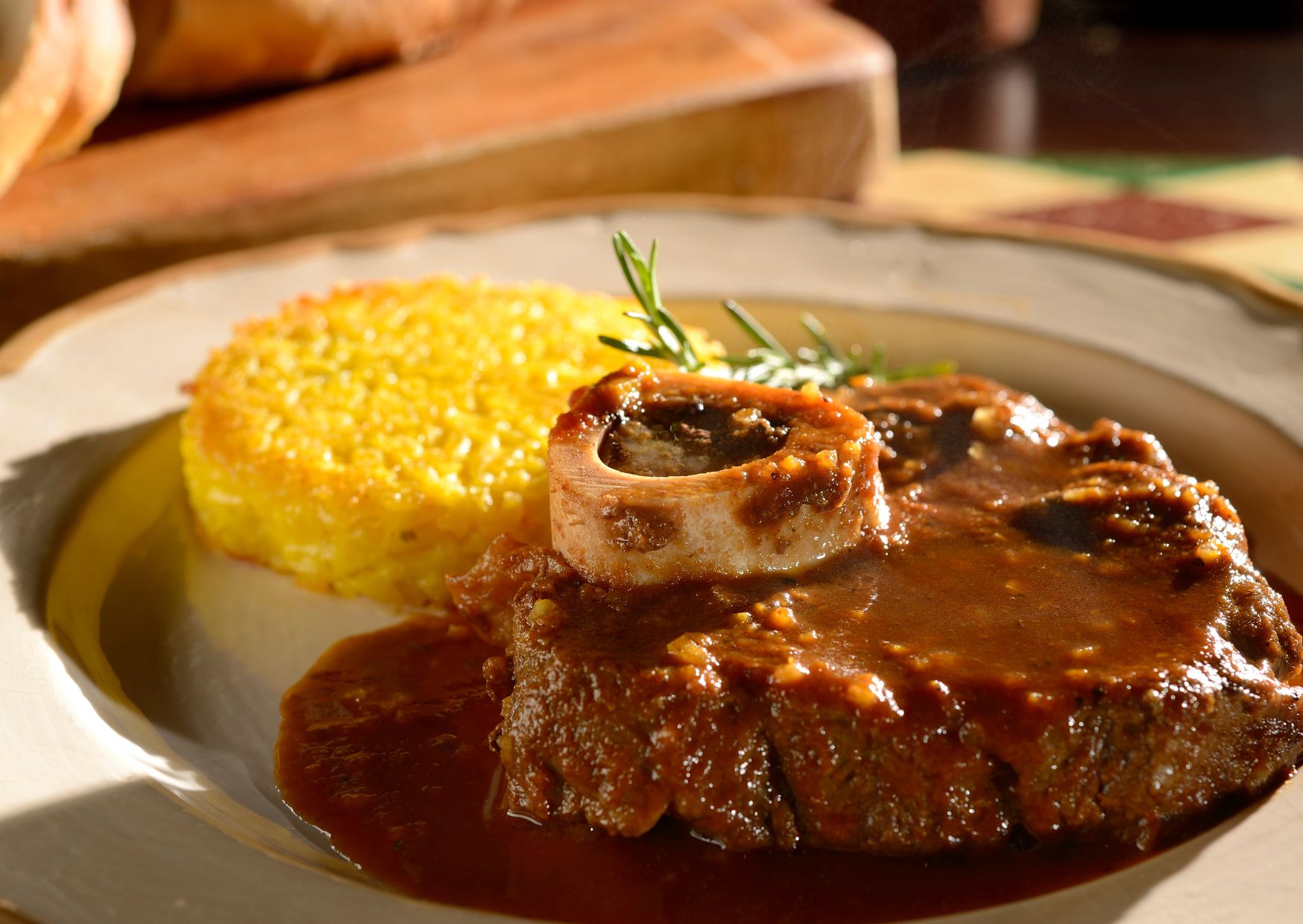
Don’t skip the gremolata—it adds a fresh contrast to the richness.
Use real saffron threads, not artificial powder. Soak first for better color and flavor.
Stir risotto constantly for maximum creaminess without cream.
Tie veal shanks so they don’t fall apart during braising.
Ossobuco alla Milanese with Saffron Risotto Nutrition Info (Per Serving – 1 veal shank + risotto)
Calories: ~750
Protein: 40g
Fat: 35g
Carbs: 55g
Fiber: 3g
Sugar: 6g
Sodium: ~800mg
Wine Pairing
Red: Barolo, Barbera, Chianti Classico
White (with risotto only): Gavi, Verdicchio, Pinot Grigio
Origin and History
Ossobuco alla Milanese, one of Italy’s most celebrated comfort dishes, traces its roots to the city of Milan in northern Italy. The name ossobuco literally translates to “bone with a hole,” referring to the cross-cut veal shanks used in the dish, each containing a rich marrow-filled center. Traditionally, this meal was born out of resourcefulness—Italian cooks made use of tougher, inexpensive cuts of meat by slow-cooking them in broth, wine, and aromatic vegetables until they transformed into tender, luxurious stews. The dish became a staple of Lombard cuisine in the 19th century and remains a symbol of Milan’s culinary elegance today.
The signature accompaniment, Risotto alla Milanese, has an equally storied past. It’s said that in the late 1500s, a master glassmaker’s apprentice accidentally dropped saffron—a pigment he used for stained glass coloring—into rice being cooked for a wedding feast. The result was a golden-hued risotto so fragrant and flavorful that it became an instant sensation in Milan. Over time, the pairing of ossobuco and saffron risotto became iconic—a marriage of rustic heartiness and refined luxury, representing both Milan’s working-class traditions and its sophisticated palate.
Unlike many Italian dishes that vary dramatically between regions, Ossobuco alla Milanese has retained a surprisingly consistent form. The recipe’s foundation—a slow braise of veal shanks in white wine, broth, and vegetables, finished with a vibrant gremolata of parsley, garlic, and lemon zest—remains largely unchanged. The combination of tender meat, buttery risotto, and bright citrus notes perfectly captures Italy’s culinary philosophy: patience, quality ingredients, and balance in every bite.
Despite its popularity, Ossobuco alla Milanese has stirred debates even among Italians. The first point of contention lies in the use of tomatoes. Purists argue that the traditional Milanese version must exclude them entirely, using only white wine and stock to preserve the pale golden hue of the risotto and the richness of the veal. Others, particularly in southern regions, insist that a splash of tomato adds necessary acidity and color. This simple difference divides cooks between tradition and evolution, sparking endless discussion at Italian dinner tables.
Another source of disagreement is the choice of meat. While veal shanks are the hallmark of classic ossobuco, some chefs and home cooks have adapted the recipe using beef, pork, or even lamb, citing availability and ethical concerns. Traditionalists claim that only veal delivers the proper texture and delicate flavor that melts into the saffron risotto. Modern chefs, however, defend variations as part of culinary progress, arguing that innovation keeps the dish alive in a changing food landscape.
Lastly, the pairing with risotto has its critics. Some say that the two together—creamy risotto and braised meat—can feel overly rich, preferring instead to serve ossobuco with polenta or mashed potatoes. Yet for many Milanese, the combination remains sacred. The golden rice, perfumed with saffron, cuts through the richness of the braised veal, balancing comfort and sophistication. These small debates only prove one thing: ossobuco’s enduring relevance across generations and tastes.
How Long It Takes to Prepare
Making Ossobuco alla Milanese is a labor of love, not a quick meal. While the active preparation takes about 30 minutes, the dish truly shines through its slow, patient cooking. After browning the veal shanks in butter and olive oil, they are gently braised with onions, carrots, celery, and white wine. The slow simmer—lasting about two hours—allows the collagen in the meat to break down, turning it incredibly tender while enriching the sauce with marrow and flavor.
Meanwhile, preparing the saffron risotto requires attention and timing. Arborio or Carnaroli rice is sautéed in butter and onions, then gradually cooked with warm broth, one ladle at a time, until it reaches a creamy consistency. The saffron threads are steeped in broth beforehand, infusing the risotto with its signature golden hue and delicate aroma. This process, though it takes around 25 minutes, demands constant stirring and care to achieve the perfect texture—al dente yet creamy.
Altogether, the entire dish—from searing the shanks to plating—takes roughly two and a half to three hours. It’s a meal that rewards patience, filling the kitchen with irresistible aromas and culminating in a dish that feels as comforting as it is elegant. While it requires commitment, every minute spent pays off in flavor and satisfaction.
Serving Suggestions
Ossobuco alla Milanese is best served piping hot, with the veal shank resting proudly atop a bed of saffron risotto. The marrow inside the bone should be soft and creamy—an indulgent delicacy that can be scooped out and spread onto bread or mixed into the risotto for added richness. A sprinkle of fresh gremolata over the top provides a burst of freshness, balancing the deep, savory flavors with citrus and herbal notes.
For an elegant presentation, serve the dish on wide, shallow plates that allow both components to shine. A crisp white wine such as Pinot Grigio or Verdicchio complements the dish beautifully, cutting through the richness without overpowering it. Alternatively, a dry sparkling wine adds a festive touch, enhancing the meal’s celebratory nature.
If you’re serving guests, consider pairing ossobuco with simple sides like roasted vegetables or a light green salad dressed with lemon vinaigrette. For dessert, a scoop of lemon sorbet or panna cotta provides a refreshing finish. In true Italian style, this dish invites slow dining—each bite meant to be savored, not rushed.
Final Thoughts
Ossobuco alla Milanese with saffron risotto is more than just a recipe—it’s a story of patience, heritage, and love. It represents everything that makes Italian cooking timeless: respect for ingredients, dedication to craft, and the ability to turn simple elements into something extraordinary. It’s the kind of meal that fills not just the stomach, but also the soul.
While the dish may seem intimidating, it’s surprisingly approachable once broken down into steps. It teaches the cook that great food doesn’t rely on complexity but on care and balance. The slow braise, the constant stirring, and the fragrant saffron all come together to create harmony—a reflection of Milanese culture itself.
In the end, this dish is a reminder that the best comfort foods often take time. They’re not just meals; they’re experiences meant to be shared. Whether you’re cooking it for a Sunday family dinner or a special celebration, Ossobuco alla Milanese proves that some traditions never lose their power to bring people together—one tender, golden bite at a time.

About the Author: Ruben, co-founder of Gamintraveler.com since 2014, is a seasoned traveler from Spain who has explored over 100 countries since 2009. Known for his extensive travel adventures across South America, Europe, the US, Australia, New Zealand, Asia, and Africa, Ruben combines his passion for adventurous yet sustainable living with his love for cycling, highlighted by his remarkable 5-month bicycle journey from Spain to Norway. He currently resides in Spain, where he continues sharing his travel experiences with his partner, Rachel, and their son, Han.