
So here is the part nobody tells you during the cute “we found a flat in Europe” montage. Your landlord will inspect like a hotelier, not like a buddy, and the checklist is written into culture, deposit law, and the building itself. People fail not because they are messy but because they do not know what is being judged. You think “clean.” They think limescale, silicone seams, ventilation habits, and proof that every bulb, hinge, and filter is exactly as handed over. That mismatch burns deposits. My coffee’s cold now, but anyway.
I am going to show you how inspections actually work, why the list is so fussy, and the exact things that get people failed in Paris, Berlin, Lisbon, Barcelona, and Milan. You will get a move-in routine that prevents 80 percent of disputes, a mid-lease maintenance loop the locals do without talking about it, and a move-out protocol that turns “we keep your deposit” into “here is your transfer.” You do not need to love the rules. You need to meet them.
What “inspection” means in Europe

In most countries there is a documented handover at move-in and move-out. France calls it état des lieux, Germany Übergabeprotokoll, Spain and Portugal use acta de entrega or inventário, Italy writes verbale di consegna. It is not a vibe. It is a form.
The inspection is three things at once:
- A line-by-line inventory of condition and contents.
- A photo set that becomes evidence if anyone argues later.
- A habit check. Landlords expect you ran the place like a steward, not like a guest.
Remember: the deposit is legally tied to “return to initial condition minus fair wear”. You are not paying for a landlord’s upgrade. You are paying for anything beyond fair wear that you did not prevent.
Little cultural reality: buildings are older, water is harder, windows actually breathe, and radiators and drains need attention you do not give them in newer American apartments. That is why you pass or fail here.
Why people fail, in one ugly paragraph
Because they clean surfaces and forget systems. The big four are limescale, silicone, ventilation, and filters. A bathroom can look spotless and still fail if the tap aerators are calcified, the shower silicone has black points, there is mildew behind a shampoo bottle, and the hood filter drips fat. Add dry P-traps that throw sewer smell on inspection day and windows that never got aired so the frames show condensation stains. That is a fail even if the countertop shines. Passing is maintenance plus cleaning, not cleaning alone.
The ten items that fail 8 out of 10 inspections
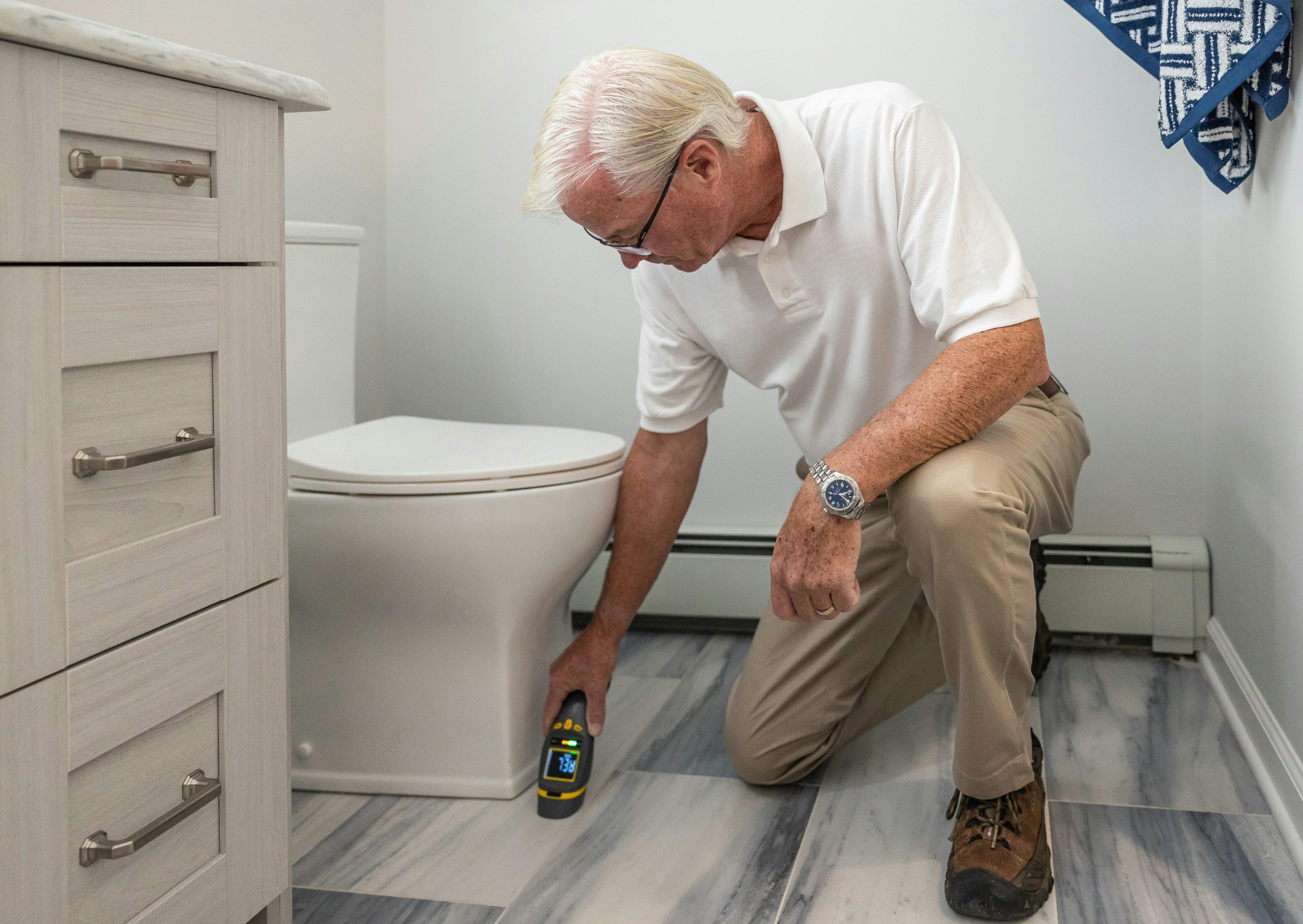
You can fix these in two Saturdays if you start early. Bold the ones you always forget.
- Limescale on glass, chrome, and heaters
Hard water leaves a film on shower screens, taps, kettle, washing-machine drawer, towel radiator. If your glass shows white streaks in raking light, you fail. Use a descaler on warm glass, then rinse and blade dry. - Blackened silicone seams
Look where the tub meets tile and where the shower tray meets glass. Black spots are mold in silicone, not dirt. You prevent this by wiping water after showers and keeping the bathroom door open. If it is stained, you either bleach and pray or you replace the bead. It is not dramatic. It is a one-hour job with tape, silicone, and a steady hand. - Ventilation neglect
Kitchens and baths need air. Ten minutes of window airing daily keeps humidity under control. If your inspector smells stale air or sees condensation marks above windows, they read “bad habits.” Open wide, short burst, then shut. Tilt windows for hours waste heat and do nothing. - Range hood and extractor filters
Metal baffles and charcoal pads clog. The test is simple: run the fan and hold tissue to the filter. If it drops, suction is weak. Degrease the baffles in near-boiling water with detergent and a spoon of washing soda. Replace charcoal pads. - Drain traps, siphons, and hair
Shower lines that gurgle or smell will fail you. Lift the trap insert, de-hair, flush with hot water, then run cold to reseal the P-trap. Do not pour straight bleach down a dry trap and call it a day. - Appliance seals and detergent drawers
Washing-machine rubber gaskets go gray and slimy. Wipe the seal lip, run a 60°C cycle with machine cleaner, pull and scrub the detergent drawer. Landlords look. They always look. - Window frames and channels
European windows are often tilt-and-turn. Clean the hinge channels, brush out grit, and wipe the gasket. If you left condensation to pool in winter, the lower frame shows brown marks. Remove with diluted vinegar and dry. If paint is damaged, note it at move-in or you own it at move-out. - Radiators and thermostatic valves
Dust burns, and paint chips get blamed on you. Vacuum fins and behind radiators, gently clean valves. If you banged a panel, do not repaint the whole thing with the wrong sheen. Touch up only if you can match. - Light bulbs and shades
The inventory includes bulbs. Replace every blown bulb like-for-like. Wipe shades and glass globes. A single missing bulb can be billed at boutique rates if you leave it. - Furniture feet and floor protection
In furnished or semi-furnished flats, add felt pads from day one. Scratches on parquet are deposit killers. A landlord does not replace one plank. They re-varnish half a room. Felt is two euros and five minutes.
If all you do is fix these ten, you are already in the passing tier.
The move-in play that saves your deposit

You cannot pass a move-out you never set up. Do this in the first 48 hours.
- Photograph everything in daylight, room by room, wall by wall, ceiling corners, baseboards, inside every cabinet, every appliance seal, every window channel, every tap, every plug, every heater, every lampshade. Bold rule: shoot defects up close and then wider for context.
- Write on the handover sheet. If the agent says “we will add later,” you say “we add now.” You are allowed to write “existing chip,” “worn varnish,” “slight silicone stain,” and sign both initials.
- Request missing items in writing within the legal window. That can be a shower blade, proper mattress protector, absent key copy, or fonts of limescale in a kettle. Once it is recorded, it is not yours at exit.
- Install protection on day one. Felt pads, silicone coaster under plant pots, a mat under dish rack, a tray under olive oil. These tiny items prevent rings and dents that look small to you and costly to them.
- Set two recurring events in your phone: descale day once per month and filter day every two months. Passing an inspection is calendar work, not heroics.
Remember, the handover is not adversarial. It is self-defense done politely.
The mid-lease loop locals run without talking about it
Passing happens in little weekly acts. Make these boring.
- Daily: after shower, blade the glass, wipe silicone with a cloth, open the window fully for five minutes. Short burst, real air.
- Weekly: vacuum along baseboards, wipe window channels, degrease the stove backsplash and the hood baffles. If tissue will not stick to the hood, you did it right.
- Monthly: descale taps and shower head. Unscrew aerators, soak in vinegar, rinse, reinstall. White sparkle equals no argument.
- Quarterly: washing-machine maintenance cycle, dishwasher filter scrub, fresh charcoal filter in the hood, dust radiators, check furniture pads.
- Winter rule: heat gently and air daily. Heating without airing creates condensation, and condensation makes mold. You cannot scrub your way out of a January of laziness.
Yes, some of this is boring. That is precisely why it works.
Country quirks that trip people who would otherwise pass

You do not need to memorize codes. You need to spot patterns.
France
- The état des lieux is granular. Every mark on walls is a line. If you repaint, landlords expect neutral color, clean edges, same sheen.
- Bathtub silicone and kitchen splashback grout get forensic attention. If black returns every month, you are not airing.
- Window condensation in winter is your problem unless the inspector sees mechanical failure. Keep a towel on the sill in January mornings and wipe.
Germany
- The Übergabeprotokoll can include meter readings and sometimes a freshly painted wall expectation if documented that way at move-in. Never accept “fresh paint on exit” unless you also received fresh paint on entry and the clause is lawful where you are.
- Hausordnung matters. Quiet hours, trash sorting, bike storage all show up indirectly in inspection tone. If you ignored rules, they already know.
- Fixtures like blinds and handles are checked. If a slat broke, write it at move-in, not at move-out.
Spain and Portugal
- Limescale is ruthless. Glass doors, chrome, and heaters take the brunt. Keep a squeegee hanging in the shower.
- Airing cuts odors from plumbing. Use floor drain plugs in rarely used baths and run water weekly. If the inspector smells sewage, you fail even if it is the building’s trap.
- Keys and remote controls are counted like coins. Return every copy listed or you pay a locksmith.
Italy
- Gas boilers and AC filters are your job unless stated otherwise. Keep the service receipt. An unserviced boiler gives inspectors a reason to hold money for “lack of maintenance.”
- Marble and terrazzo scratch. Felt pads and coasters save your deposit more than any single cleaning product.
Remember, country names differ, habits rhyme.
A move-out plan that actually returns your money

You cannot cram this into one night. Do it in four passes.
T-21 days
- Book a steam cleaner and a ladder. Order charcoal filters, silicone tube, descaler, machine cleaner, new bulbs, felt pads.
- Walk the flat with your move-in photos on your phone. Make a defects list. Decide what can be fixed and what needs to be declared as fair wear.
T-14 days
- Bathroom day: descale glass, taps, shower head, deep clean grout, replace silicone bead if stained. Wipe walls with a damp microfiber and neutral cleaner.
- Kitchen day: deep degrease hood and backsplash, change charcoal, clean oven properly, soak hob parts, scrub fridge seals, pull out the fridge if safe and clean the floor edge.
- Appliances: run the washing-machine maintenance cycle, pull and clean the drawer, clean the dishwasher filter and edges.
T-7 days
- Windows and frames: clean glass inside, wipe all channels and gaskets, wash curtains if they came with the flat and are washable.
- Radiators and vents: vacuum fins, wipe covers, brush vents free of lint.
- Floors: polish if wood allows, or just clean meticulously. Fix loose pads under furniture.
- Walls: erase scuffs carefully. If a touch-up is required and you have the exact paint, do it. If not, leave a clean scuff rather than a mismatched patch.
T-1 day
- Bulbs check room by room. Replace missing like-for-like.
- Smell test. Air the flat for ten minutes. Close and wait another ten. If you smell damp or drains, you missed a trap or a towel.
- Photos of every room in daylight, plus close-ups of the cleaned items. This is your exit album.
On the day
- Arrive early. Open blinds, turn on lights. Calm reads as clean.
- Have your move-in album and today’s album on your phone. If a dispute comes up, show before and after.
- Hand over keys and remotes exactly as listed. No improvising.
- If the inspector nitpicks a reasonable item, offer to fix within 24 hours or agree a small deduction. Do not agree to a painter for one scuff. Keep numbers specific.
Inspections reward preparation and calm, not arguing.
The product kit that quietly wins inspections
You do not need a closet. You need the right six.
- Acid descaler for limescale. Food-safe citric works in kitchens, a stronger bathroom version for glass and chrome. Wear gloves, rinse well.
- Degreaser that cuts hood fat without stripping surfaces. Warm water helps more than force.
- Machine cleaner for washing machines and dishwashers. One cycle, hot, done.
- Silicone and masking tape for a single neat bead. Practice on cardboard first.
- Microfiber cloths in two colors so you do not smear kitchen fat into bath glass.
- Squeegee for daily shower use. Mount it where you will actually grab it.
If there is one hack: keep vinegar in a spray bottle labeled “bath” and another labeled “kitchen”. A light daily mist on glass after the blade keeps limescale from ever forming. Prevention passes.
Habits that feel fussy and save hundreds
- Blade the shower every single time. Twenty seconds. No spots.
- Open windows wide for five minutes after hot showers and while cooking. Short burst changes the air; a narrow tilt for hours does not.
- Run hot water through rarely used drains weekly to refill traps.
- Salt and boiling water down the kitchen sink monthly to keep biofilm down. Do not mix random chemicals.
- Keep a folded towel on winter sills and wipe condensation on cold mornings. Dry frames do not stain.
- Change hood charcoal on a schedule instead of when it smells. If you can smell it, the inspector can too.
- Felt pads under chair legs, replace when they flatten. Pads are cheaper than parquet.
Remember, passing is just doing small things before the inspector becomes your conscience.
How to talk during the inspection without making it worse

No speeches, no defensiveness. Short facts.
- “This chip is in the move-in report, photo here.”
- “Silicone was replaced last week, invoice here if you need it.”
- “Filter is new, suction test works, would you like to try”
- “We ran the maintenance cycle yesterday, here is the drawer cleaned.”
- “All bulbs replaced. Same wattage and color temperature.”
If the agent pushes something you genuinely missed, ask for the exact cost and a receipt. If they want to charge wildly, offer to fix it yourself within 24 hours. Many will accept because they want the flat ready, not a fight.
A pre-inspection checklist you keep on your phone
- Shower glass is clear in raking light
- Taps and shower head sparkle, aerators run smooth
- Silicone seams uniform white or clear, no black points
- Range hood baffles clean, charcoal changed
- Drains do not smell, traps wet
- Washing-machine gasket clean, drawer free of grime
- Window channels wiped, gaskets intact
- Radiators dust-free, valves clean
- All bulbs working, same warmth
- Keys and remotes count matches the inventory
If you can say yes to all ten without squinting, you pass in 90 percent of cases.
Two quick stories people hate to learn from
- Barcelona, spring lease end. Tenant did a deep clean and forgot the range hood charcoal. Deduction was 120 euros for “professional degreasing and filter.” The pad would have cost 15. The tissue test would have caught it.
- Lyon, winter exit. Tenant repainted scuffs with wrong sheen. Deduction was for a painter to re-roll the wall to corners. Stopping at a clean scuff with photos would have been cheaper. Sometimes the right move is fewer moves.
I could add ten more, but you get the idea.
If you already failed once and feel cursed
You are not cursed. You were uncoached. Do a neutral audit of your place this weekend using the ten-item list. Install the two recurring events for descaling and filters. Buy the squeegee and the felt pads. Air daily. Pass next time, get the deposit back, and never think about this again.
Final reminder to keep on your fridge: inspections judge systems, not shine. Keep water flowing, air moving, filters clean, silicone dry, and glass clear. The rest is just wiping.

About the Author: Ruben, co-founder of Gamintraveler.com since 2014, is a seasoned traveler from Spain who has explored over 100 countries since 2009. Known for his extensive travel adventures across South America, Europe, the US, Australia, New Zealand, Asia, and Africa, Ruben combines his passion for adventurous yet sustainable living with his love for cycling, highlighted by his remarkable 5-month bicycle journey from Spain to Norway. He currently resides in Spain, where he continues sharing his travel experiences with his partner, Rachel, and their son, Han.