
And what it reveals about body acceptance, cultural expectation, and how one society embraces reality while the other conceals it
In the U.S., beach season often arrives with pressure to “look perfect.” Women adjust straps, smooth dimples, apply lotions or filters—and fear exposure. Side angles, mirrors, lighting are all calculated. Cellulite is an imperfection to hide, edit, or defeat. It’s a private shame that becomes a public performance under the sun.
Travel to southern France or Spain, and you’ll notice something different. At Mediterranean beaches, women of all ages walk, sit, and lounge in two-piece swimsuits, often uncovered. Dimpled skin is not hidden behind sarongs or bunkered behind stand-up umbrellas. It’s visible, accepted, unremarked. That cellulite you smoothed over in photos is everyday reality on the sand.
It’s not ignorance. European women see the creasing, the folds, the softness—and say nothing. It’s not even “confidence.” It’s simply normal. The body isn’t a work in progress. It’s life in motion—and cellulite is part of that rhythm, not a blemish.
Here’s why cellulite is displayed with ease on European beaches—and why it’s erased in American ones—and what this contrast says about two very different relationships with bodies, authenticity, and cultural beauty myths.
Want More Deep Dives into Everyday European Culture?
– Why Europeans Walk Everywhere (And Americans Should Too)
– How Europeans Actually Afford Living in Cities Without Six-Figure Salaries
– 9 ‘Luxury’ Items in America That Europeans Consider Basic Necessities
Quick Easy Tips
If you’re headed to a European beach, pack comfortable swimwear instead of something designed to impress. Feeling good in what you’re wearing makes the experience instantly easier.
Once you’re there, shift your focus outward, not inward. Look at how casually people enjoy themselves. Notice how little anyone cares about body presentation. Let that energy influence you instead of fighting it.
Try participating fully. Swim, walk, lie down, and relax without adjusting or comparing yourself. With each small step, you’ll feel more at ease, and the pressure you brought from home will start to melt away.
The biggest cultural clash at European beaches isn’t the swimwear or the sunbathing styles. It’s the shock many Americans feel when they see people of every size, age, and shape unapologetically showing their natural bodies. In much of Europe, cellulite, softness, stretch marks, and wrinkles are normal parts of life, not flaws that need to be hidden or edited. For travelers used to filtered images and perfection-focused media, this kind of openness can feel unfamiliar or even uncomfortable at first.
Another source of tension lies in expectations. Many American visitors assume beaches are judgment-heavy spaces where you must “prepare” or “look a certain way.” Europeans simply don’t approach public spaces with the same pressure. Women and men alike walk onto the sand without fussing or tensing up, because the beach isn’t treated like a stage. That difference in mindset creates misunderstandings: Americans think Europeans are unusually confident, while Europeans wonder why Americans are so self-conscious.
And then there’s the influence of digital culture. While Europeans use social media, they don’t center their self-worth around it in the same way many Americans feel pressured to. Retouching and smoothing apps are far more normalized in the United States, where even everyday photos are often “fixed” before posting. This creates a feedback loop: the more edited bodies Americans see, the more disconnected they feel from their own. On European beaches, that entire system breaks down, and some travelers find it liberating while others find it disorienting.
1. Smooth skin isn’t a sign of vitality—it’s a cosmetic ideal

In many European beach cultures, cellulite is not a flaw. It’s accepted as a natural result of aging, movement, diet, and life. Women in their 50s, 60s, even 70s, wear bikinis without hesitation because texture isn’t medical—it’s real.
In the U.S., smooth, taut skin is promoted as the benchmark of beauty. Cosmetic companies sell creams, wraps, lasers, all aimed at erasing dimples. And when the body fails to comply, women resort to editing with apps or Photoshop. Skin becomes a canvas to be perfected.
In Europe, the body remains exactly what it is—no filters, no shame, just acceptance.
2. Bodies are seen as lived‑in, not polished
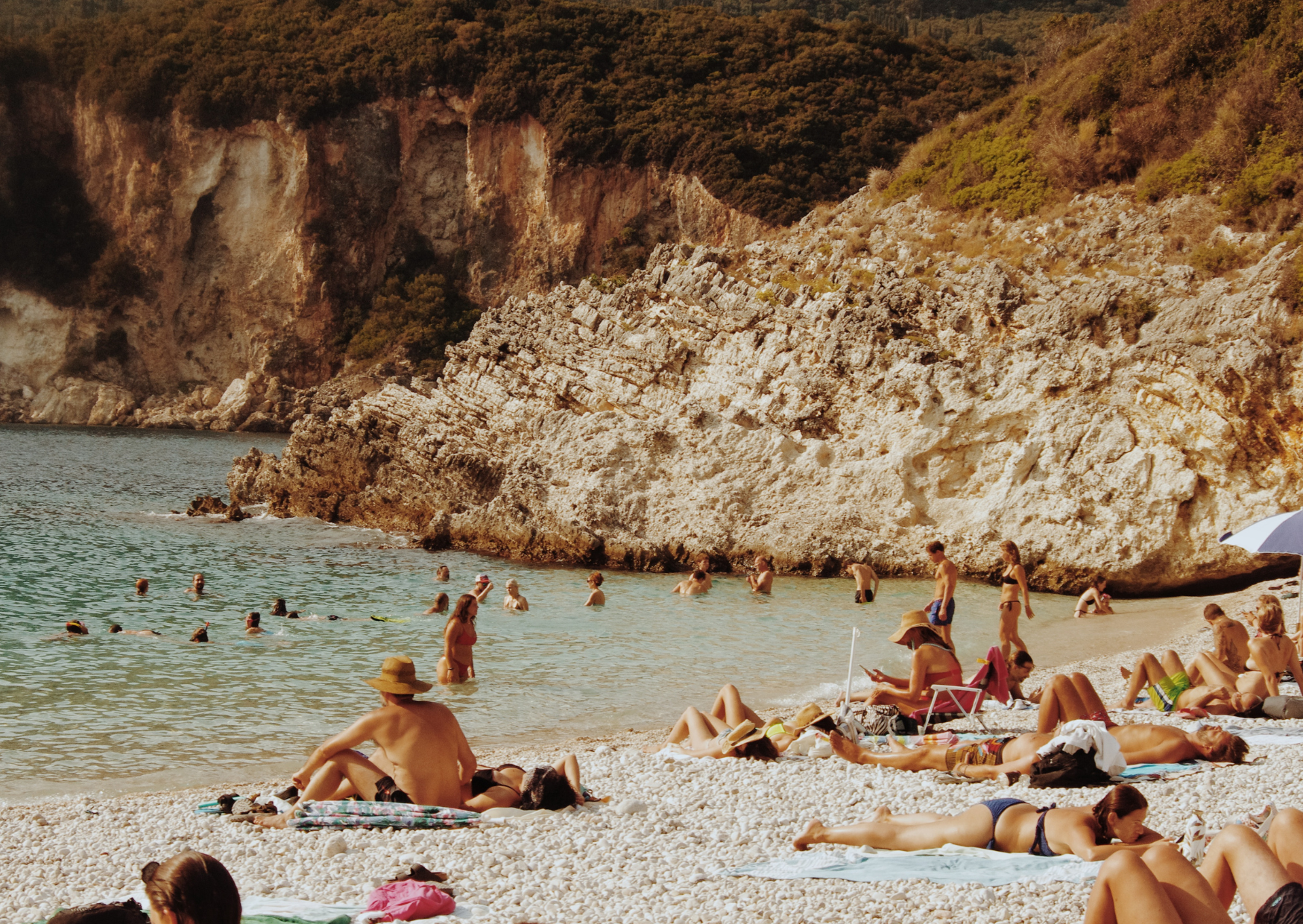
European women grew up watching mothers and grandmothers don bikinis with cellulite confidently. Body language, not body type, is what matters: how the shoulders stand, how the toes dig into the sand, how conversation flows alongside shawls and straw hats.
That visible familiarity sends a message: aging is not your enemy. The woman next to you isn’t less beautiful because of texture. She’s just like you, in motion and mattering.
In America, by contrast, every body is marketed as a before picture. Aging is an undoing. Skin is a battlefield. And so, the realism of dimples or folds becomes unacceptable beachwear.
3. The sun doesn’t shine on perfection—it shines on presence
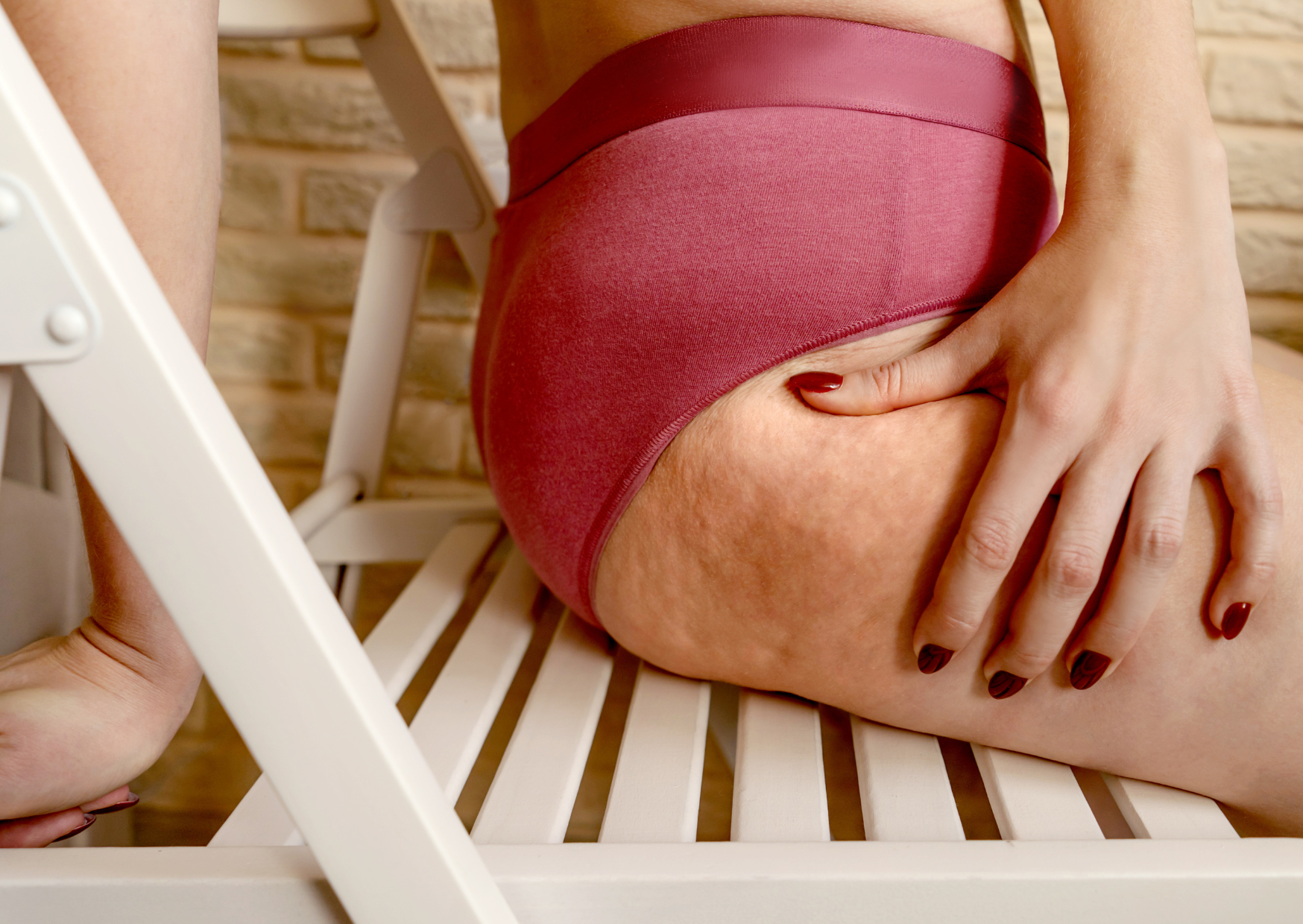
At European beaches, the goal isn’t to display flawless skin—it’s to enjoy sun, water, company. Women laugh, eat, play, fall asleep, wipe mouths. Sitting on towels, they aren’t performing. They’re present.
That presence sends a clear signal: your body is not an exhibit. It’s yours—and it’s fine.
On American beaches, cameras are trained. Photos are taken. Social media thrives. Every wave, every chair, every crease is watched. The focus is on how you look, not where you are.
4. Community creates consent around reality
In Europe, seeing cellulite is so common it becomes invisible. It’s like freckles, wrinkles, or sandy shoulders—no one remarks on it. The silence isn’t judgment. It’s understanding.
Contrast that with American beaches, where any visible dimple may draw embarrassment. Women tug straps, cross legs, flip towels. No one wants to stand out—and so reality gets edited.
Europeans share bodies without commentary. That communal permission is stronger than any ad campaign or filter.
5. Fashion, not Photoshop, influences swimwear choices

European swimwear leans toward classic cuts, one-pieces, high-waists, and fabrics that move, not sculpt. Women choose designs based on comfort and style—not compression.
In the U.S., shapewear swimsuits dominate. Brands boast tummy control, seam smoothing, targeted compression. These suits invite women to mold their bodies, to hold everything in, to erase every curve.
Europeans dress their bodies. Americans try to reshape them.
6. Vacation isn’t about impressing—it’s about resting

European holidays are restorative. Meals linger. Markets are walked. Beaches are slow. It’s a break from performance—physically and mentally.
That break includes the body. No one’s tracking calories, measuring fat, or seeking photos. The result? More relaxation, more ease, and more enjoyment of natural form.
In America, vacation becomes a “look” to be achieved. Beach bodies are curated. Holiday stress becomes another deadline. And cellulite becomes another battle.
7. Beauty myths don’t travel—they stay home
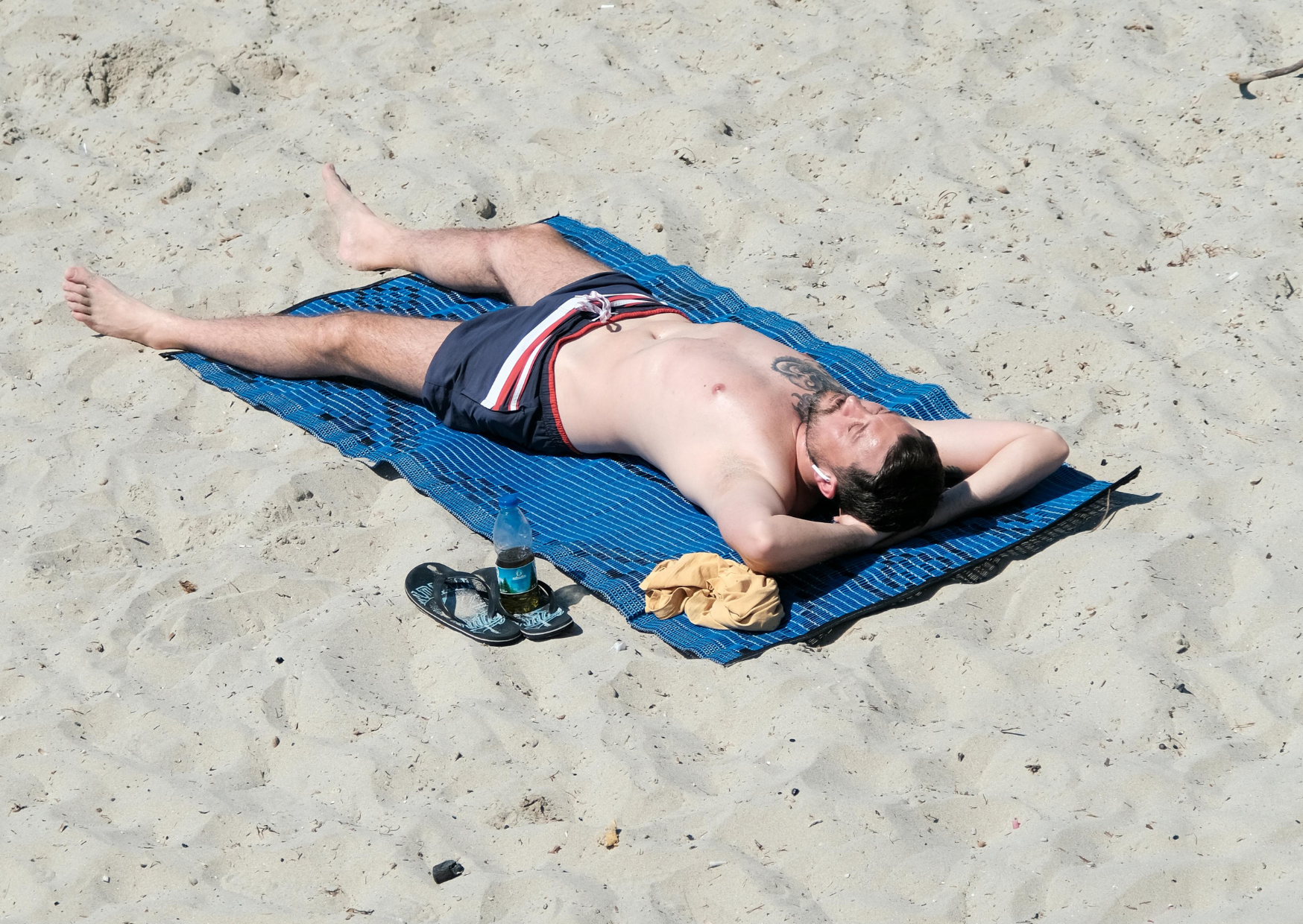
Global media broadcasts idealized bodies. But European women often tune it out. Young girls see friends, neighbors, sisters with cellulite—and internalize real bodies.
Photoshopped images do not form their beach-standard. Identity is rooted in living community, not online peers.
In the U.S., the standard is globalized—even on local beaches. Cellulite becomes a privacy issue. To show it is to risk judgment.
This isn’t carelessness—it’s cultural choice

European women don’t plaster cellulite on purpose. They don’t flaunt it as a statement. They just don’t see it as something to hide. And whether we like it or not, that choice shapes how people feel about their bodies on sand, in water, and in life.
In American culture, airbrushing bodies has become a form of politeness. In Europe, quiet acceptance feels kinder.
What Americans often interpret as bold confidence on European beaches is really just a different relationship with the body. European culture treats natural appearance as something normal, not a problem to solve or retouch. That mindset removes the barrier between people and their own comfort, which is why beaches feel so effortless there. When you allow yourself to step into that rhythm, something shifts.
You begin to see how much mental energy goes into self-editing: choosing angles, hiding parts of yourself, comparing your body to an imaginary standard. In Europe, that standard doesn’t dominate the shoreline. Life feels bigger than appearance, and the beach becomes a place to exist—not a place to perform.
If you let yourself embrace that perspective, it can be surprisingly freeing. Many American travelers leave Europe realizing that confidence isn’t about perfection. It’s about letting yourself live without constantly policing your body. And once you taste that freedom, you may never want to go back to the pressure of beach “perfection” again.

About the Author: Ruben, co-founder of Gamintraveler.com since 2014, is a seasoned traveler from Spain who has explored over 100 countries since 2009. Known for his extensive travel adventures across South America, Europe, the US, Australia, New Zealand, Asia, and Africa, Ruben combines his passion for adventurous yet sustainable living with his love for cycling, highlighted by his remarkable 5-month bicycle journey from Spain to Norway. He currently resides in Spain, where he continues sharing his travel experiences with his partner, Rachel, and their son, Han.