
When you travel through Costa Rica, two dishes will keep showing up like old friends at every meal: Casado and Gallo Pinto. Both feature humble ingredients like rice and beans, yet they serve wildly different purposes—and spark strong opinions. For locals, the distinction is cultural, even personal. For travelers, knowing the difference between the two isn’t just useful—it’s the key to ordering like a local and appreciating Costa Rican food on a deeper level.
Gallo Pinto is the heartbeat of the Costa Rican breakfast table. A savory mix of rice and black beans stir-fried with onions, red bell peppers, and a splash of Salsa Lizano, it’s often paired with eggs, cheese, or plantains. Casado, on the other hand, is a full-blown lunch or dinner plate, made with white rice, black or red beans, a choice of protein (chicken, beef, pork, or fish), salad, and fried plantains. Both dishes are simple, flavorful, and deeply rooted in tradition—but they serve different roles in the day.
Understanding the cultural identity wrapped in these plates goes beyond what’s on the fork. These meals reflect a lifestyle of balance, affordability, and connection to the land. For travelers looking to cook either dish at home, you’re not just recreating a recipe—you’re taking part in a centuries-old rhythm of life in Costa Rica.
BOOK YOUR TRAVEL INSURANCE
Two of our favorite travel insurance: Heymondo Vs Safetwing cheapest travel Insurance. You can get for $135 USD your Heymondo Travel Insurance with Heymondo discount code valid for 90 days. Read our full comparison of Genki vs Safetywing Travel Insurance Review and the comparison Heymondo vs Genki
Best Time to Eat & How to Partner
Gallo Pinto is best eaten in the early morning, especially after waking up to the sounds of howler monkeys or waves crashing near your beach rental. It pairs perfectly with scrambled or fried eggs, sliced avocado, tortillas, and a strong cup of Costa Rican coffee.
Casado is a midday star, ideal for lunch or early dinner. It’s the kind of meal you want after a long hike through the rainforest or a full day of surfing. The best way to partner it? With a chilled agua fresca, or a local beer if you’re unwinding. Add a few slices of fresh papaya or pineapple on the side to finish the meal in true Tico style.
Both dishes shine when paired with Salsa Lizano, the tangy brown condiment that Costa Ricans put on everything. Want to impress your guests or dive deeper into local culture? Try adding picadillo—a finely chopped veggie hash—or a fried egg on top for the ultimate local twist.
The debate between Casado and Gallo Pinto isn’t just culinary—it’s cultural. Some Costa Ricans will insist Gallo Pinto is sacred breakfast food and shouldn’t be eaten after noon. Others scoff at that idea and eat it whenever they like, even pairing it with steak. Meanwhile, debates rage over which version of Gallo Pinto is better—Costa Rican or Nicaraguan—with fierce national pride tied to every spoonful.
There’s also tension between authenticity and tourism. Restaurants catering to foreigners often modify both dishes to suit outsider tastes, loading them with cheese, extra sauces, or fusion flavors. While that might please the palate of a visitor, many locals see it as losing the simplicity and soul that makes the dish iconic.
And then there’s the class divide. Gallo Pinto, often seen as a humble farmer’s breakfast, has been both elevated and dismissed depending on who’s eating it. Casado, with its customizable components, is sometimes criticized for being “too touristy”—yet for locals, it’s the definition of a hearty home-cooked meal. Understanding the emotion behind these dishes is as important as learning how to make them.
Difference Between Casado And Gallo Pinto
Casado and Gallo Pinto are two distinct traditional Costa Rican dishes. Casado is a full meal typically served for lunch or dinner, featuring a combination of white rice, black beans, a protein (such as chicken, beef, pork, or fish), fried plantains, a salad, and sometimes a slice of cheese or tortillas.
It’s a well-rounded dish providing a variety of flavors and nutrients. Gallo Pinto, on the other hand, is a breakfast staple made by mixing white rice and black beans that are cooked together with onions, red bell peppers, and cilantro. It’s often served with scrambled or fried eggs, sour cream, and sometimes a slice of cheese or tortillas.
While Casado is a complete meal with separate components, Gallo Pinto is a simpler, unified dish highlighting the combination of rice and beans.
Casado
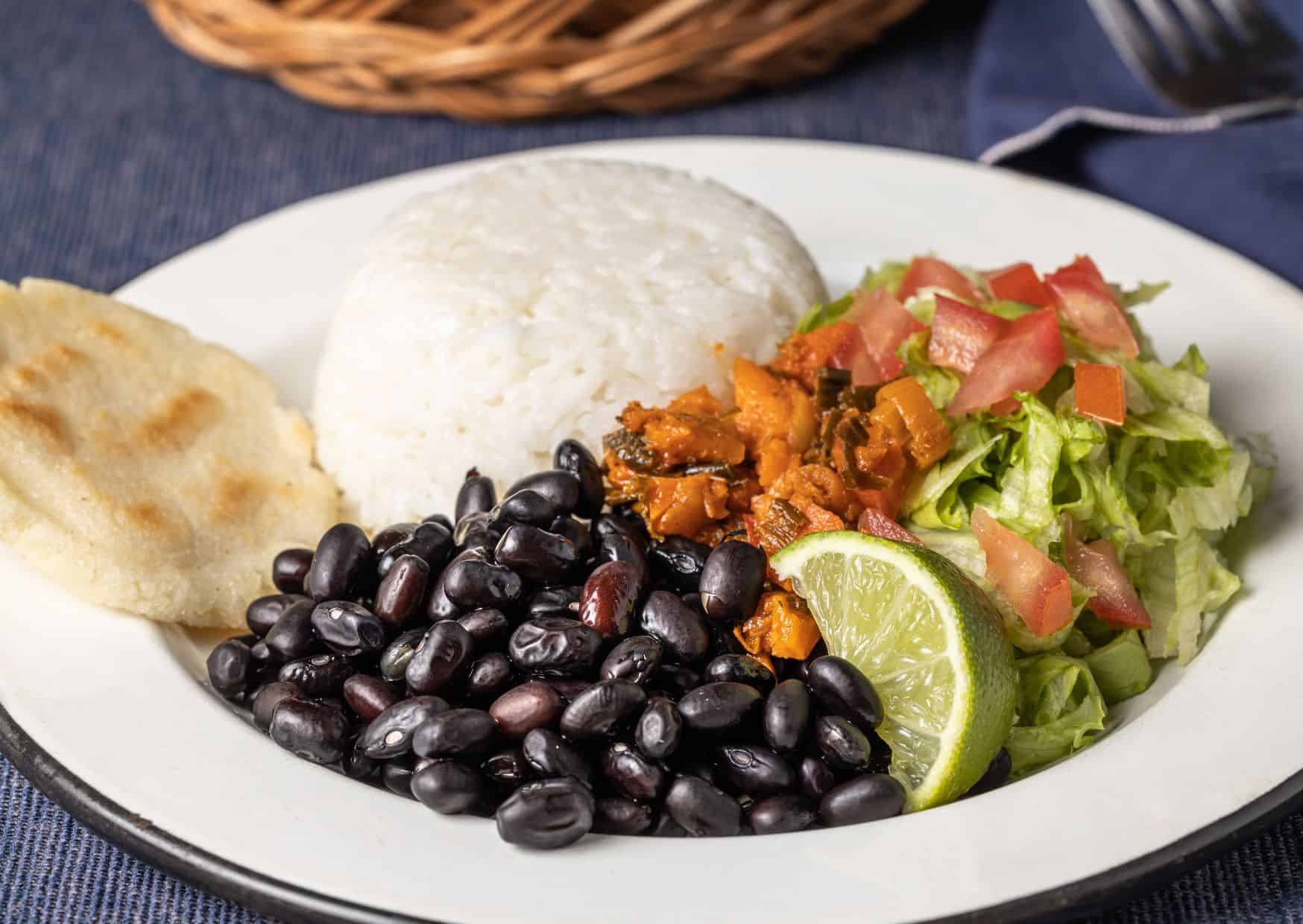
Overview:
Casado is a traditional Costa Rican meal that is often served for lunch or dinner. It is a full plate of food that includes various components, providing a balanced meal.
Key Components:
Rice and Black Beans: Served separately.
Protein: Chicken, beef, pork, or fish.
Plantains: Fried plantains.
Salad: Typically includes lettuce, tomato, and cucumber.
Vegetables: Often includes sautéed or steamed vegetables.
Tortilla: Corn tortillas.
Recipe Guide:
Ingredients:
1 cup white rice
1 cup black beans (cooked)
1-2 chicken breasts, beef steaks, pork chops, or fish fillets
1 ripe plantain
1 small onion, chopped
1 small red bell pepper, chopped
2 cloves garlic, minced
1 cup lettuce, chopped
1 tomato, sliced
1 cucumber, sliced
1 tablespoon vegetable oil
Salt and pepper to taste
Lime wedges for serving
Fresh cilantro for garnish
4 corn tortillas
Instructions:
Cook the Rice
Rinse 1 cup of white rice under cold water.
In a medium saucepan, bring 2 cups of water to a boil. Add a pinch of salt and the rinsed rice.
Reduce the heat to low, cover, and simmer for about 18 minutes, or until the rice is cooked.
Prepare the Black Beans
In a skillet, heat 1 tablespoon of vegetable oil over medium heat.
Add the chopped onion, bell pepper, and minced garlic. Sauté until the vegetables are soft.
Add the cooked black beans and cook for a few minutes until heated through. Season with salt and pepper.
Cook the Protein
Season the chicken, beef, pork, or fish with salt and pepper.
In a separate skillet, heat a tablespoon of vegetable oil over medium-high heat.
Cook the protein until it is thoroughly cooked. Chicken should reach an internal temperature of 165°F (75°C), beef and pork should be cooked to 145°F (63°C), and fish should be opaque and flaky.
Fry the Plantains
Peel and slice the plantain.
Heat vegetable oil in a skillet over medium heat.
Fry the plantain slices until they are golden brown on both sides. Drain on paper towels.
Prepare the Salad
Combine the chopped lettuce, sliced tomato, and cucumber in a bowl. Season with a little salt and lime juice.
Assemble the Casado
On each plate, arrange a serving of rice, black beans, protein, fried plantains, and salad.
Garnish with fresh cilantro and serve with a wedge of lime and a corn tortilla.
Calories:
Approximately 500-700 calories per serving, depending on the protein choice.
Read here how to make Casado
Gallo Pinto

Overview:
Gallo Pinto is a traditional Costa Rican breakfast dish made with rice and black beans, usually served with eggs, cheese, and fried plantains. It is known for its distinctive flavor and simplicity.
Key Components:
Rice and Black Beans: Cooked together with onions, bell peppers, and Salsa Lizano (a Costa Rican condiment).
Accompaniments: Typically served with scrambled or fried eggs, cheese, and fried plantains.
Recipe Guide:
Ingredients:
1 cup cooked white rice
1 cup cooked black beans (with some of their liquid)
1 small onion, chopped
1 small red bell pepper, chopped
2 cloves garlic, minced
2 tablespoons vegetable oil
2 tablespoons Salsa Lizano (or Worcestershire sauce as a substitute)
Salt and pepper to taste
Fresh cilantro, chopped (for garnish)
2 eggs
1 ripe plantain
1/2 cup cheese (queso fresco or any other preferred cheese)
Instructions:
Prepare the Gallo Pinto
In a large skillet, heat 2 tablespoons of vegetable oil over medium heat.
Add the chopped onion, bell pepper, and minced garlic. Sauté until the vegetables are soft.
Add the cooked rice and black beans with some of their liquid to the skillet.
Stir in the Salsa Lizano and cook for about 5-7 minutes, until everything is heated through and well mixed. Season with salt and pepper.
Cook the Eggs
In a separate skillet, cook the eggs to your preference (scrambled or fried).
Fry the Plantains
Peel and slice the plantain.
Heat vegetable oil in a skillet over medium heat.
Fry the plantain slices until they are golden brown on both sides. Drain on paper towels.
Assemble the Gallo Pinto
Serve the Gallo Pinto on a plate.
Add the cooked eggs, fried plantains, and cheese on the side.
Garnish with fresh cilantro.
Calories:
Approximately 300-400 calories per serving.
Read here how to make Gallo Pinto
Origin and History
Casado and gallo pinto are two pillars of Costa Rican cuisine, each carrying its own story and cultural weight. Gallo pinto dates back centuries and is believed to have Afro-Caribbean and Indigenous roots, blending rice and beans into a hearty, humble dish. It became the traditional breakfast across Costa Rica, especially in rural communities where workers needed filling meals early in the morning. Over generations, families added their own touches, such as Salsa Lizano, cilantro, or peppers, turning gallo pinto into a national symbol of comfort and identity.
The casado, by contrast, has origins tied to midday meals served in small local eateries called sodas. Its name means “married man,” possibly inspired by the generous plates wives prepared for their husbands. Others say the dish was called casado because all its components—meat, rice, beans, salad, and plantains—were “married” together. Either way, the casado evolved into Costa Rica’s quintessential lunch: balanced, colorful, and deeply tied to daily life.
While gallo pinto represents tradition and simplicity, the casado embodies abundance and structure. Together, they frame the rhythm of Costa Rican eating habits, reflecting how different times of day call for different energies. It’s no surprise that these two dishes have become intertwined with the country’s identity, shaping how Costa Ricans eat, work, and socialize.
The biggest debate lies in whether gallo pinto should stay strictly a breakfast dish or if it should freely cross into lunch territory. Many locals believe gallo pinto belongs exclusively in the morning, arguing that its purpose is to fuel the start of the day. Others embrace it at any hour, insisting its versatility makes it perfect for lunch, dinner, or even a late-night snack. This division runs deep enough that Costa Rican households often tease each other about “eating breakfast at the wrong time.”
Another point of contention is nutritional value. Fans of gallo pinto argue that it’s healthier thanks to being plant-based and lighter. Meanwhile, casado supporters point out that a casado offers a complete meal with protein, veggies, and carbs all on one plate. Both sides claim their dish is more “representative” of Costa Rican life, which naturally fuels friendly rivalry.
Regional pride complicates things even further. Some areas swear their gallo pinto variation is superior, while others say the casado defines local flavors better. Depending on where you travel in Costa Rica, you’ll hear different versions of which dish carries more cultural weight. The debate isn’t hostile—it’s part of the fun of living in a country where food traditions are taken seriously.
How Long You Take to Prepare
Gallo pinto is the quicker dish, typically taking 20 to 30 minutes—or even less if you already have leftover rice and beans. Most Costa Rican families prepare it by sautéing onions and peppers, mixing in beans with their broth, and folding in rice until everything is aromatic and cohesive. The simplicity is what makes it such a go-to breakfast option for busy households.
A casado, on the other hand, can take anywhere from 45 minutes to over an hour depending on the components you choose. Since it includes multiple elements—rice, beans, a protein like chicken or beef, salad, fried plantains, and sometimes tortillas—each piece must be cooked separately. While nothing about it is technically difficult, the combined prep time adds up quickly.
If you’re preparing both dishes from scratch on the same day, factor in even more time. But Costa Ricans often rely on leftovers to speed things up: beans cooked earlier in the week, rice made the day before, or quick-grilled proteins. Even then, casado still demands more hands-on attention, which is exactly why it remains a lunchtime tradition rather than a morning one.
Serving Suggestions
Gallo pinto shines when served with fried or scrambled eggs, warm tortillas, and a dollop of natilla, a tangy Costa Rican cream. Many locals love pairing it with sweet plantains or a side of fresh cheese for contrast. A strong cup of coffee completes the morning ritual, turning a simple plate into a full breakfast experience.
Casado, being a heartier meal, thrives on variety. You can serve it with grilled chicken, beef, pork, or even fish, depending on your preference. A fresh cabbage salad provides brightness, while rice and beans ground the meal with familiar flavor. Fried plantains add sweetness, tying the plate together. It’s balanced, colorful, and endlessly customizable.
For modern twists, gallo pinto can be served alongside avocado slices or topped with salsa for extra freshness. Casado pairs well with pickled onions or tropical fruit on the side. Both dishes play well with Costa Rica’s naturally vibrant produce, making them adaptable for home cooks trying to recreate local flavors abroad.
Conclusion Casado Vs Gallo Pinto
Choosing between Gallo Pinto and Casado in Costa Rica depends on the meal and personal preference. Gallo Pinto is ideal for breakfast, offering a hearty and flavorful start to the day with its blend of rice, beans, and fresh herbs.
Casado, with its diverse components of rice, beans, protein, salad, and plantains, is perfect for a balanced and satisfying lunch or dinner. Each dish embodies the essence of Costa Rican cuisine, so the best choice depends on the time of day and your craving for a simple yet rich breakfast or a varied, wholesome meal.
Cooking either dish at home gives you a window into Costa Rican culture. You’ll taste the balance of flavors, the reliance on fresh ingredients, and the care put into even the most everyday meals. Whether you lean toward the speed of gallo pinto or the fullness of a casado, both dishes offer comfort that transcends borders.
In the end, there’s no need to choose sides. The beauty of Costa Rican cooking lies in its flexibility, warmth, and honesty. Try both dishes, make them your own, and you’ll understand why locals hold them so close to their hearts.

About the Author: Ruben, co-founder of Gamintraveler.com since 2014, is a seasoned traveler from Spain who has explored over 100 countries since 2009. Known for his extensive travel adventures across South America, Europe, the US, Australia, New Zealand, Asia, and Africa, Ruben combines his passion for adventurous yet sustainable living with his love for cycling, highlighted by his remarkable 5-month bicycle journey from Spain to Norway. He currently resides in Spain, where he continues sharing his travel experiences with his partner, Rachel, and their son, Han.