
Last updated on January 14th, 2026 at 05:01 am
You can memorize every conjugation, order your café crème correctly, even switch from “croissant” to “pain au chocolat” in the south, and still feel like a ghost in Paris by month three. The problem is not pronunciation. The problem is the architecture of French friendship. It’s not broken. It’s built to last, which is exactly why you can’t fast-track it in a weekend.
My coffee’s getting cold, but anyway: the shortest version is this. French social life runs on shared routines, not sudden chemistry. You don’t get a best friend after one epic conversation. You get a circle after thirty small repetitions that don’t look like much. That’s the secret everyone misses while they panic about their accent.
Quick Easy Tips
Show up regularly rather than trying to accelerate closeness.
Keep conversations thoughtful instead of overly enthusiastic.
Respect personal time and don’t push for instant plans.
Let relationships develop through shared routines, not forced intimacy.
The most uncomfortable truth is that French people don’t seek new friends the way Americans do. Social circles are often formed early and maintained tightly. New additions are rare and considered carefully, not casually welcomed.
Another misunderstood point is emotional pacing. In many cultures, sharing personal stories quickly is a bonding tool. In France, that level of openness comes later. Early oversharing can feel intrusive rather than sincere.
There’s also a strong value placed on independence. Constant availability, frequent texting, or spontaneous drop-ins can signal neediness instead of friendliness. What feels warm in one culture can feel overwhelming in another.
Finally, Americans often confuse reserve with judgment. French social distance isn’t about evaluating you it’s about protecting boundaries. Friendship is treated as a commitment, not a default setting, and that difference shapes everything.
The Circle Before the Person

Walk into a French life and you won’t see loose threads to grab. You’ll see already-woven circles. High school friends who still meet every other Thursday. Colleagues who ski together the first week of March. Parents from the école who rotate apéro at apartments within a six-block radius. That’s why you’re charming and still outside. You’re a new node. The circle is the point.
This part sounds harsh and it isn’t. French friendship is structural. Circles are the scaffolding that protects time, privacy, and the week. You don’t blow them up with spontaneity. You attach. Slowly. Predictably. At the same time every month if possible. I can hear the objection forming, so let me say it out loud: yes, there are extroverts in Lyon who will adopt you in line at Monoprix. They are the exception. The rule is repetition.
Practical anchor inside all of this: join a circle that already meets, even if the topic feels ordinary. A running club on Wednesday. A choir on Monday. A board-game bar on the first Friday. The circle is the door, not the witty conversation you’re rehearsing.
Language Isn’t the Gate You Think It Is
You can survive with B1 in most social settings if you read the room. People will slow down. They’ll switch for clarity. The real gate is rhythm, not grammar. Turn up to the same five-person yoga class at 19:15 on Rue Oberkampf for four weeks and you’ll get an invite to a drink. Turn up once with flawless French and disappear and you’ll be treated kindly then forgotten.
Bold truth here: consistency trumps eloquence. Show up on time. Leave when others leave. Don’t hijack the pace. French small talk sits lower to the ground than you expect, then flips into debate once trust exists. If you open with confessions and favorite childhood pets, you’re breaching a wall that keeps everyone comfortable.
Tiny script that strangely works:
“Je ne parle pas parfaitement, mais je serai là chaque semaine.”
I don’t speak perfectly, but I’ll be here each week. People relax when you commit to the calendar, not the performance.
Routines Create Invitations
Friendship invitations don’t come from nowhere. They come from ritual adjacency. The woman who always locks her bike next to yours at 8:27 notices you buy the same pain de campagne on Tuesdays, then asks if you’re going to the neighborhood vide-grenier on Sunday. You say yes. Next month you carry a box for her. Three months later you are invited to her apéro. It looked like coincidence. It was ritual recognition.
Insert the habits that make you visible: buy your coffee at the same tabac at the same time, sit at the same table at the médiathèque on Thursdays, volunteer at the same association loi 1901 on the second Saturday. You’re building surface area for friendship to catch. Without it, you’re a tourist in your own week.
“Friend” is a title you receive after being a familiar stranger many times.
Privacy Is Not Coldness

French social temperature confuses newcomers because privacy reads as distance. It’s not. Privacy is politeness here. People keep their professional life, love life, and bank account in separate little bowls and very rarely spill them on the table. So when you share your salary range at drink number one and expect intimacy, your new neighbors smile then move the conversation to “les vacances”. You didn’t do anything awful. You just skipped chapters.
Boundaries are the reason French friendships feel safe once they exist. You can go months without drama because no one is excavating your insides for content. Then, one night after the third glass, someone says “franchement” and the real story lands and you’re inside for good. I’m overselling it. Or underselling it. Look, I don’t know why they do it this way, but I do know the result: low volatility connections that last years.
Remember that “tu” comes later. If you get “vous”, take it as respect, not rejection.
The Calendar Is the Culture
Here’s a basic mistake: people try to befriend in July and August. Half the country is away. Cities hollow out, villages refill, WhatsApp groups go silent. La rentrée in early September is the real new year. Parents reorganize, clubs reopen, associations relaunch, and your chance to slot into circles multiplies. If you want friends this year, be ready the first two weeks of September. It matters more than your accent ever will.
Bold reminder: “Yes in September” beats ten perfect coffees in August.
While we’re on calendar, Sundays are quiet by design. Shops close early. Lunch extends. Friends host apéro dînatoire that start at 18:30 and end by 22:30 because Monday is not optional. If you push for midnight chaos, you’ll become the person people see on Fridays only.
The Hierarchy of Invitations
French social invitations level up like this:
- Café debout at the bar. Five to ten minutes. Low commitment.
- Apéro at someone’s place. Drinks and petits trucs. You bring a bottle or fromage.
- Apéro dînatoire which is basically dinner without plates pretending it’s still apéro. You offer to help in the kitchen.
- Table set dinner. Offered after you’ve reciprocated somehow.
- Weekend outside the city, a pique-nique by the river, or a house in Bretagne. That’s inner circle. Don’t ask. Get invited.
Don’t jump levels. If you go from café to “come for a weekend” in one breath, you’ll feel a polite freeze. Climb the ladder. Reciprocate at the same echelon. If someone invites you to apéro, you invite to apéro. When you have enough chairs and confidence, you escalate to dinner. This symmetry is the etiquette glue.
Inside each step: always propose a date. “Mardi prochain à 19h30” beats “il faut se voir” which is French for “let’s never.”
Money Talk Will Sink You
If you want to sabotage yourself, calculate the per-person cost of the charcuterie you brought. In many French circles, money lives backstage. People split bills à la louche with rough fairness, not spreadsheets. You can Venmo your way through a trip with Americans and it works. In France, calling the exact euros can feel aggressive unless the group already runs that way.
Bold sentence: Generosity is quiet and specific here. Show up with tarte Tatin from the bakery down the street, don’t invoice the calories later. When someone says “laisse, j’invite”, you say “merci” once. Then you invite next time. That’s the loop.
Friendship Is Built Through Activities, Not Confessions
Confession culture is strong elsewhere. In France, doing things together is stronger. Six Saturday runs with the same three people will beat one heavy brunch confession every time. “On marche”, “on cuisine”, “on bricole”. You learn each other by the way you chop onions or choose a vin de Loire at €7.90. By the way, the €7.90 bottle is often better than the €18 bottle you bought to impress. Cheap good wine is a shared language.
If you need scripts, use actions:
“Je fais un cake salé pour samedi, tu veux que j’apporte aussi une salade.”
“I’m making a savory cake for Saturday, want me to bring a salad too.”
It’s an offer plus competence hint. People clock it.
Core idea tucked in a line: “We do” beats “let me tell you who I am.”
The Debate Is Not a Fight
You will hit a table where politics, labor law, school zoning, and cheese all get debated in one course. Voices rise. Hands fly. You might feel like you’ve been thrown into a miniature parliament with butter knives. Stay inside the cadence. Offer a point. Listen. Don’t moralize the room. When French friends argue, friendship is not at stake. The debate is the sport, not the war.
Bold reminder: sharp opinions aren’t a breakup letter. What breaks trust is gossiping outside the table about what was said. Table talk stays at the table. A week later you’ll be asked to bring radis and butter and nobody will remember the volume.
I once wrote that French people “love conflict.” Wait, that sounds wrong. Let me start over. They love clarity wrapped in ritual. It’s different.
Parent Networks Are Real Networks
If children are in your life, the school gate is infrastructure. Show up at 8:30 and 16:30 three days a week for one month and you will learn more names than any language class provides. Offer to chaperone a trip. Share crêpes at the kermesse. Join the APE parent association. The WhatsApp group will complain about cantine peas and then birth two dinners. You enter the circle by being useful, not by giving a speech about cultural exchange.
One rule inside parent circles: RSVP matters. When you say “oui” to a birthday, you go. If you can’t, you warn. Flakiness turns warm acquaintances cold faster than any mispronounced “merguez.”
Work Colleagues Are Not Automatically Friends
You can share a plateau repas with coworkers for a year and never be invited to their weekend. Work is work. The boundary is healthy and bright. People eat lunch together, argue gently about the canteen, then go home to circles they built in lycée, associations, or neighborhood life. If a colleague invites you to after-work apéro, treat it like level one on the invitation scale. You still have to climb. Don’t assume drink one equals friendship five.
What helps here is neutral hosting. Book a table for four at a normal bistro €18 plat du jour, invite two colleagues, keep it mid-week. Do not push for Saturday at your place yet. Mid-week is the safe lane in France. Weekends are for circles.
The Gift Economy Runs on Small, Right, and Timed
Bring something if you’re invited. Wine is fine, but ask: “On apporte du vin ou du fromage.” If the host says “rien”, bring flowers in paper (no vase, please) or pâtisserie in a box, then hand it at the door so the host can choose when to serve it. Bold rule: gifts should not create work. Don’t arrive with a raw chicken at 19:32 and a plan to “cook together” unless that was the plan.
Prices: €6 to €12 bottle for casual apéro, €12 to €18 if small dinner. Macarons €12 box. Tomme de Savoie wedge €7.50. I might have these slightly off, but the point is proportion. Right size. Right moment. Right tone.
The Two Phrases That Unlock Follow-Ups
You met someone nice at atelier céramique. You need a way to move from “see you around” to “see you Tuesday.” Two scripts:
- “Ça te dit qu’on se retrouve au marché dimanche vers 11 heures.”
- “Je passe à l’expo Cartier-Bresson samedi. Si tu veux, on y va ensemble.”
Notice what they are not. They are not “let’s hang sometime.” They are specific. They respect the calendar. They sit in public third spaces so no one risks an awkward apartment. And crucially: if they say no with no counter-proposal, you try once more two weeks later. If it’s no again, you drop it. French people will not ghost, but they will protect their bandwidth.
Invitations are either precise or performative. Be precise.
What You Think Is Friendly Can Read as Heavy
Americans (and others) often show warmth by oversharing early or by grand gestures. In France, lightness signals trust at the start. A soft joke. A “bon courage” text on a tough day. Sharing a madeleine recipe, not your life story. Understatement is oxygen here. Earnestness has its place later when the circle holds you.
Soften the edges: more “on verra”, less “this means everything.” I’m contradicting myself because I just told you to be specific. Be specific with plans and light with tone. There. That’s the sentence.
Association Life Is the Shortcut You’re Avoiding
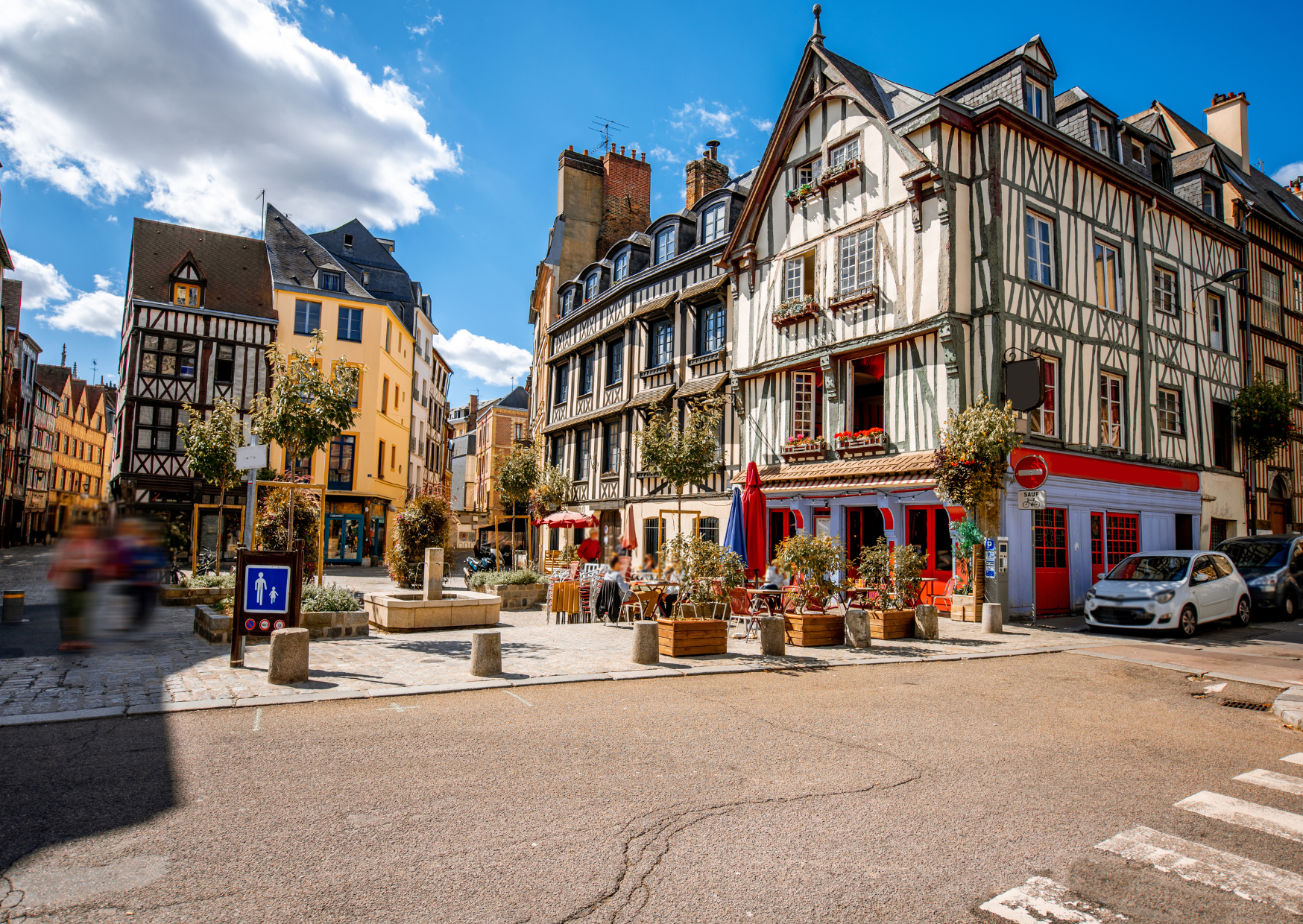
If you only read one section, make it this. Join an association loi 1901. Any. A community garden €15 per year, a chess club €28, a film ciné-club €30, a neighborhood AMAP veg box €12 membership plus weekly basket. Associations are friendship engines disguised as admin. They have presidents, AGMs, mailing lists, Saturday tasks, and wine in plastic cups after. You will end up carrying chairs with the same three people at 21:45 and that’s the real beginning.
Friendship follows shared effort more reliably than shared taste**. Stop trying to meet “your people.” Meet people who show up.
What About Dating, Aren’t We Talking Friends
A quick aside because you’ll ask. Dating leans on the same grammar. Light first. Rhythm second. Clear signals third. If you transpose high-intensity “define this now” styles into a French week, you’ll meet a lot of polite no’s. If you build a pleasant rhythm, then declare with clarity, you’ll meet a yes more often. Not always. Often.
Where was I. Right. Friends.
Common Mistakes and the Five-Minute Fix
Mistake: Cancelling same-day because you forgot you booked something else.
Fix: Apologize once, propose a new concrete date, then show up.
Mistake: Bringing expensive wine and critiquing someone’s Cantal.
Fix: Bring solid mid-range and praise the cheese you didn’t pick.
Mistake: Late arrival by 25 minutes without a text.
Fix: Text at 10. “Je suis en retard, j’arrive dans quinze minutes.” Then buy the next round.
Mistake: Switching everyone to English at table after someone did you a favor in French.
Fix: Hold the line in French, ask for help on a word, don’t flip the table’s language.
Mistake: Treating a colleague as a weekend friend in week two.
Fix: Mid-week bistro, small group, home invites later.
Bold reminder: polite specificity beats big energy every time.
Numbers That Describe the Pace
- Expect 6 to 10 encounters before a home invite in cities.
- Average group size for early apéro: 4 to 7 people.
- Typical arrival window: +5 to +10 minutes. More than +15 needs a text.
- Gift budget for first apéro: €8 to €15.
- Time from circle contact to “friend”: 3 to 6 months if you show weekly effort.
- RSVP etiquette: answer within 24 hours unless it’s an open “à la bonne franquette”.
Yes, someone will tell me they were adopted in one night in Toulouse. It happens. It’s not the baseline.
Statements or Phrases That Can Save You When You Don’t Know What to Say
- Accepting: “Avec plaisir. Je passe vers 19h15 et j’apporte quelque chose.”
- Declining without closing the door: “Je ne peux pas ce soir, mais partant pour la prochaine.”
- Following up: “Toujours ok pour jeudi. Je ramène le vin blanc.”
- Proposing a trade: “Prochaine fois chez moi. Même heure.”
- Ending the night: “C’était super. Merci pour l’accueil, à bientôt.”
These are small, repeatable, kind. That’s the whole grammar.
What I Would Do If Dropped in a French City With No Contacts
Week 1
- Join one association. Pay the €20 and fill a chair.
- Pick one third-space: a café at 08:30 or a library table at 18:00. Same spot, four days.
- One physical class with a weekly slot, even if it’s Pilates.
Week 2
- Learn the names of two staff in places you frequent. Use them.
- Host a tiny apéro for three neighbors with chips, olives, saucisson, and a €10 bottle. Two come, one cancels. Fine.
- Volunteer for one boring task at the association: taking minutes, folding programs.
Week 3
- Propose one market meet-up Sunday at 11:00.
- Say yes to any apéro that doesn’t conflict with your sleep or job.
- Make one recurring joke with someone from week one. Not a meme. A shared reference.
Week 4
- Escalate one relationship to apéro dînatoire. Ask for dietary quirks. Serve at 19:30. End at 22:30.
- Offer help to someone moving a shelf or carrying a plant. Don’t perform it. Just do it.
If nothing happens by Week 5, you have a scheduling problem, not a personality problem. Change your slots.
The Quiet Reason You’re Stuck
You are waiting for intense charm to beat predictable presence. It won’t. French friendship is a behavior, not a performance. Show up. RSVP. Bring the right small thing. Accept boundaries. Let the debate breathe. Repeat. Then, somewhere in month five, you’ll get a text at 18:04 that simply says “Tu passes.” You’ll pass with a bottle of Muscadet €8.20, you’ll talk about nothing for two hours, and you’ll go home grinning because you’re inside now and no one made a speech about it.
I had a point here somewhere. Right. It’s not your French. It’s the calendar, the circle, the rituals, and the small offers that signal “I’m here next Thursday, too.”
Friendship follows rhythm. Set one.
The hardest part about making friends in France isn’t language, accent, or etiquette—it’s timing and expectations. Friendship here isn’t fast, casual, or assumed. It’s built slowly, deliberately, and often privately.
What many newcomers interpret as distance is actually discernment. French people tend to separate public politeness from private intimacy. Being pleasant doesn’t mean being available, and being friendly doesn’t mean inviting someone into your inner circle.
Once you understand that distinction, interactions stop feeling personal. The pace isn’t a test you’re failing; it’s the system working as intended. Trust is earned through consistency, not charm.
The upside is depth. When a friendship forms, it’s stable, loyal, and long-lasting. The barrier is higher, but the payoff is real.

About the Author: Ruben, co-founder of Gamintraveler.com since 2014, is a seasoned traveler from Spain who has explored over 100 countries since 2009. Known for his extensive travel adventures across South America, Europe, the US, Australia, New Zealand, Asia, and Africa, Ruben combines his passion for adventurous yet sustainable living with his love for cycling, highlighted by his remarkable 5-month bicycle journey from Spain to Norway. He currently resides in Spain, where he continues sharing his travel experiences with his partner, Rachel, and their son, Han.