
You land in Paris, order the exact same meal you always get—fries, a cheeseburger, maybe a soft drink—and it tastes…cleaner. The fries are lighter, the ketchup’s less syrupy, the whole thing sits better. Same brand, same icons, different experience. That gap isn’t just “European atmosphere.” It’s regulation, sourcing, and formulation—what’s allowed, what’s required, and what consumers expect—baked into the supply chain.
What follows is a 2025-proofed, no-myth explainer of the specific ingredient and rule differences that make European McDonald’s taste unlike the U.S. version—and how to spot them on your next trip. No fear-mongering, no conspiracy. Just the practical levers: oils, sugars, additives, animal-welfare baselines, hormones/antibiotics, and GMO labeling.
Want More Deep Dives into Everyday European Culture?
– Why Europeans Walk Everywhere (And Americans Should Too)
– How Europeans Actually Afford Living in Cities Without Six-Figure Salaries
– 9 ‘Luxury’ Items in America That Europeans Consider Basic Necessities
The biggest controversy centers around why the U.S. continues to permit ingredients that are banned elsewhere. Chemicals like potassium bromate, azodicarbonamide, and certain artificial dyes are still allowed in American food production, despite studies linking them to health concerns. In the European Union, these same substances have been outlawed or replaced with natural alternatives for years. Critics argue that the U.S. regulatory system is heavily influenced by corporate lobbying, allowing profit to take precedence over public health.
Another layer of controversy lies in consumer perception. Many Americans assume McDonald’s tastes the same everywhere, unaware that the company modifies its recipes to comply with local laws and preferences. In effect, Europeans are eating a version of fast food that’s both healthier and more transparent, while Americans get the version designed for mass production efficiency. This discrepancy raises ethical questions about corporate responsibility—shouldn’t global brands maintain the same ingredient quality across all markets?
Finally, there’s the cultural debate. Some say Americans value speed, convenience, and low prices more than ingredient purity, while Europeans demand higher food standards as a matter of national pride. Others argue that if European consumers can have additive-free fries and antibiotic-free beef, there’s no reason Americans shouldn’t. The divide between U.S. and European McDonald’s isn’t just about taste—it’s about the values behind what’s being served.
Fries: beef flavor vs. vegan oil—what you actually taste
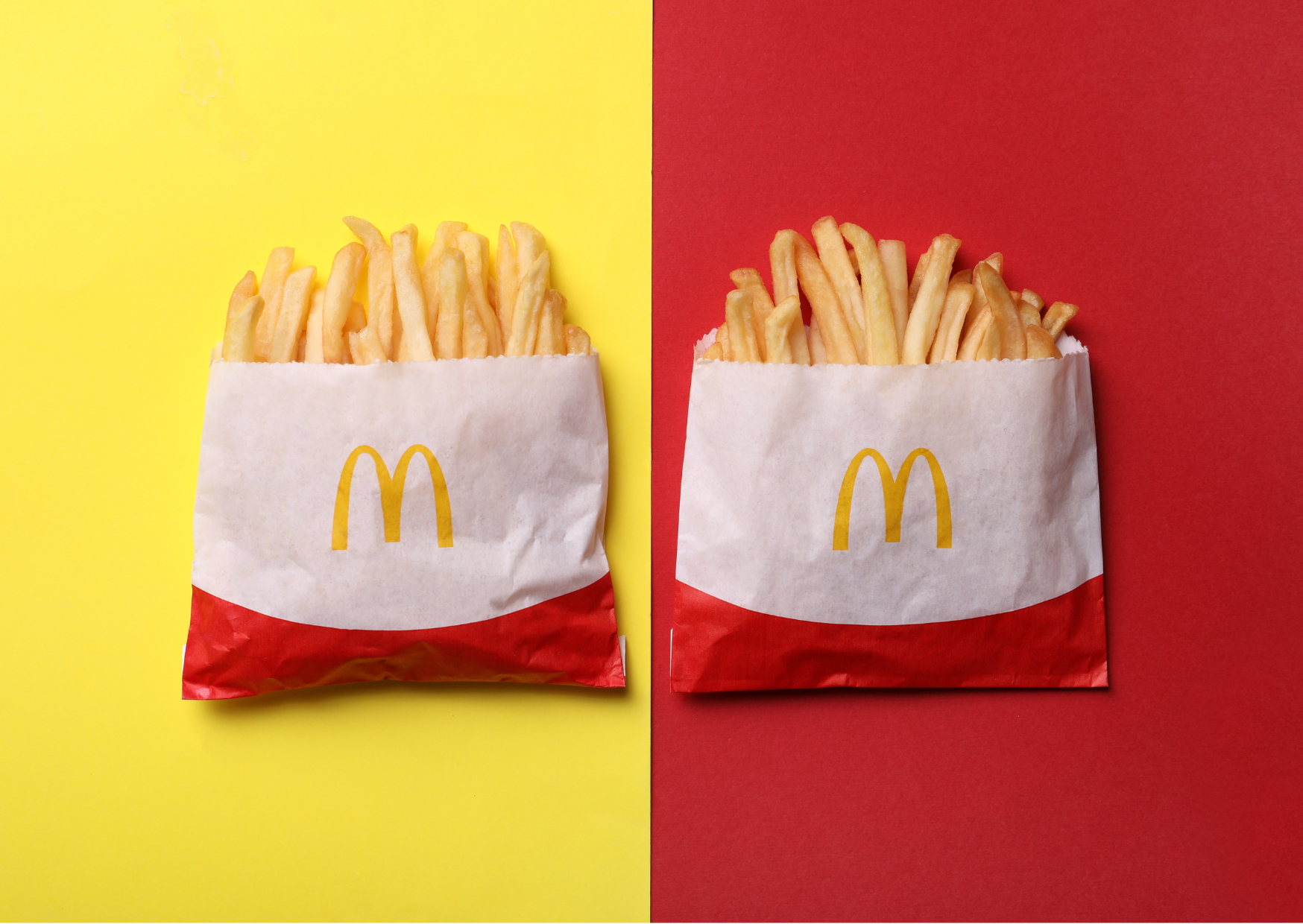
Natural beef flavor in the U.S. — vegetable-oil only in much of Europe — vegetarian certification (market-dependent)
In the U.S., McDonald’s fries include “natural beef flavor” (containing wheat and milk derivatives) added to the par-fried potatoes before restaurants finish the cook. That’s part of why American fries aren’t considered vegetarian, and why they carry wheat/milk allergen notes. In the U.K. and several European markets, fries are potatoes + non-hydrogenated vegetable oil (typically rapeseed/sunflower) plus a touch of dextrose—no beef flavor—and they’re cooked in separate vats; the U.K. explicitly describes them as suitable for vegetarians/vegans. Those two decisions alone—flavoring and fryer oil—shift aroma, aftertaste, and “clean” finish.
Sugars in sauces: why ketchup feels less syrupy
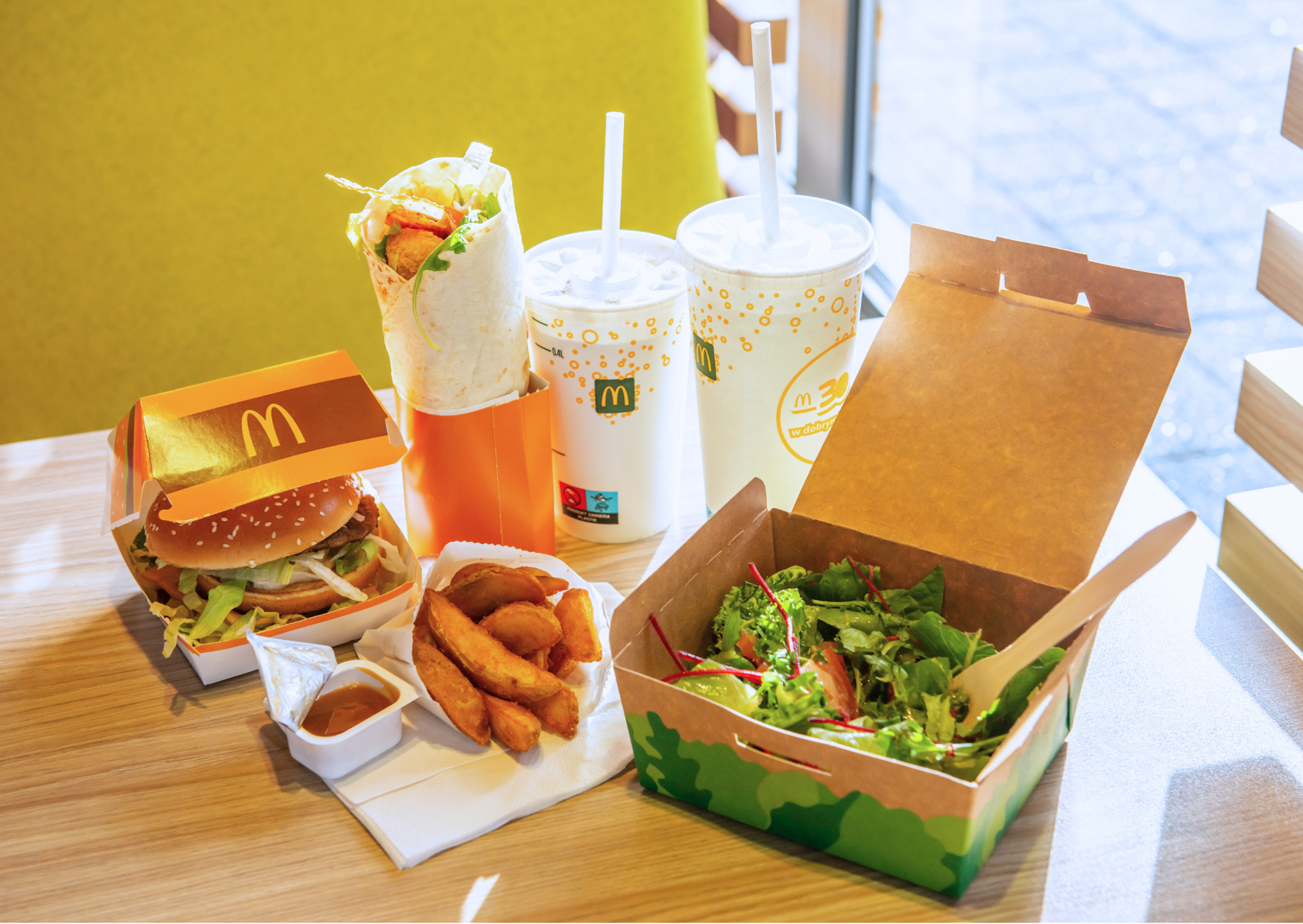
High-fructose corn syrup in U.S. ketchup — glucose-fructose syrup or sugar in Europe — less “candy” sweetness
Taste your ketchup packets: the U.S. ingredient line typically lists high fructose corn syrup and corn syrup. In the U.K./EU, the standard ketchup uses glucose-fructose syrup (or sugar) with a higher tomato solids percentage. The result is less spike-sweet, slightly brighter acidity, and a thinner, tomato-forward profile. When that ketchup goes on a burger, the whole build tastes less like dessert—and it nudges you to notice beef, onion, pickle, not just sugar.
Oils and fryers: seed-oil blends aren’t identical
U.S. blend includes canola/corn/soy (often with hydrogenated soybean oil) — EU/UK rely heavily on rapeseed/sunflower — no beef-tallow “echo”
Both regions use non-animal frying fats today, but the blends differ. In the U.S., the par-fry/final fry oil system typically mixes canola, corn, and soybean oils (with hydrogenated soybean oil still appearing on U.S. ingredient lines for the par-fried stage). In the U.K. and much of Europe, restaurants lean on rapeseed/sunflower oils without beef-flavor carryover. Different fatty-acid profiles + absence of beef flavor make European fries lighter and more neutral; U.S. fries read toastier/savory and leave a different finish on the palate.
Additives: “positive list” Europe vs. GRAS America

Azodicarbonamide suspended/illegal in EU foods — potassium bromate banned in EU — titanium dioxide (E171) banned in EU since 2022
Europe runs on a “positive list”: if an additive isn’t on Annex II, it isn’t allowed in food. That precautionary posture has concrete outcomes consumers notice. Two bread/processing conditioners that became headline symbols—azodicarbonamide and potassium bromate—are not permitted in the EU food supply; titanium dioxide (E171), once common as a whitening agent in candies and icings, was banned EU-wide in 2022 following EFSA’s re-evaluation. The U.S. has been slower to restrict some of these across the board nationally. Bottom line: EU bans force earlier reformulation across chains; U.S. changes arrive via state rules, corporate policy, or consumer pressure, and timelines can diverge.
Beef and chicken: hormones, antibiotics, and welfare baselines
Hormone-treated beef banned in the EU — antibiotic growth-promotion banned EU-wide since 2006; routine group prophylaxis restricted — U.S. has reduced but still permits broader “disease prevention” uses
Europe prohibits hormone-treated beef and ended antibiotic growth-promotion in 2006; new veterinary-medicine rules further curb routine group treatments. The U.S. has cut sales of medically important antibiotics in livestock since mid-2010s and tightened oversight, but still allows prophylactic uses under veterinary direction. These rules don’t flavor a patty like salt does, yet they shape upstream sourcing—which animals are eligible and how they’re raised—creating systematic formulation differences over time.
On welfare, Europe’s broiler standards (and NGO-driven benchmarks like the Better Chicken Commitment) push breeds, stocking densities, and slaughter requirements that nudge texture and moisture in chicken items. Meanwhile, one place where the U.S. has surged: McDonald’s USA confirmed 100% cage-free eggs, achieved two years early (2023)—a shift now broadly mirrored across major European markets as corporate standard. Different baselines don’t change “salt = salty,” but they steer raw-material quality and consistency.
GMOs and labeling: why EU menus quietly skew non-GMO
EU mandates GMO labeling — U.K. market messaging: no GM ingredients — label pressure influences feed and ingredient choices
The EU’s GMO regime requires traceability and labeling of GM ingredients; several European markets—including McDonald’s U.K.—explicitly state no GM ingredients in their food. Even where EU law allows certain GM foods, mandatory labeling and consumer expectations make multinational chains avoid GM-flagged inputs at menu scale. That doesn’t mean a different Big Mac recipe card; it means sugar sources, oils, and feed decisions tilt away from GM where labeling might jar consumers—one more subtle driver of “it tastes cleaner.”
Cheese, buns, sauces: little toggles that add up
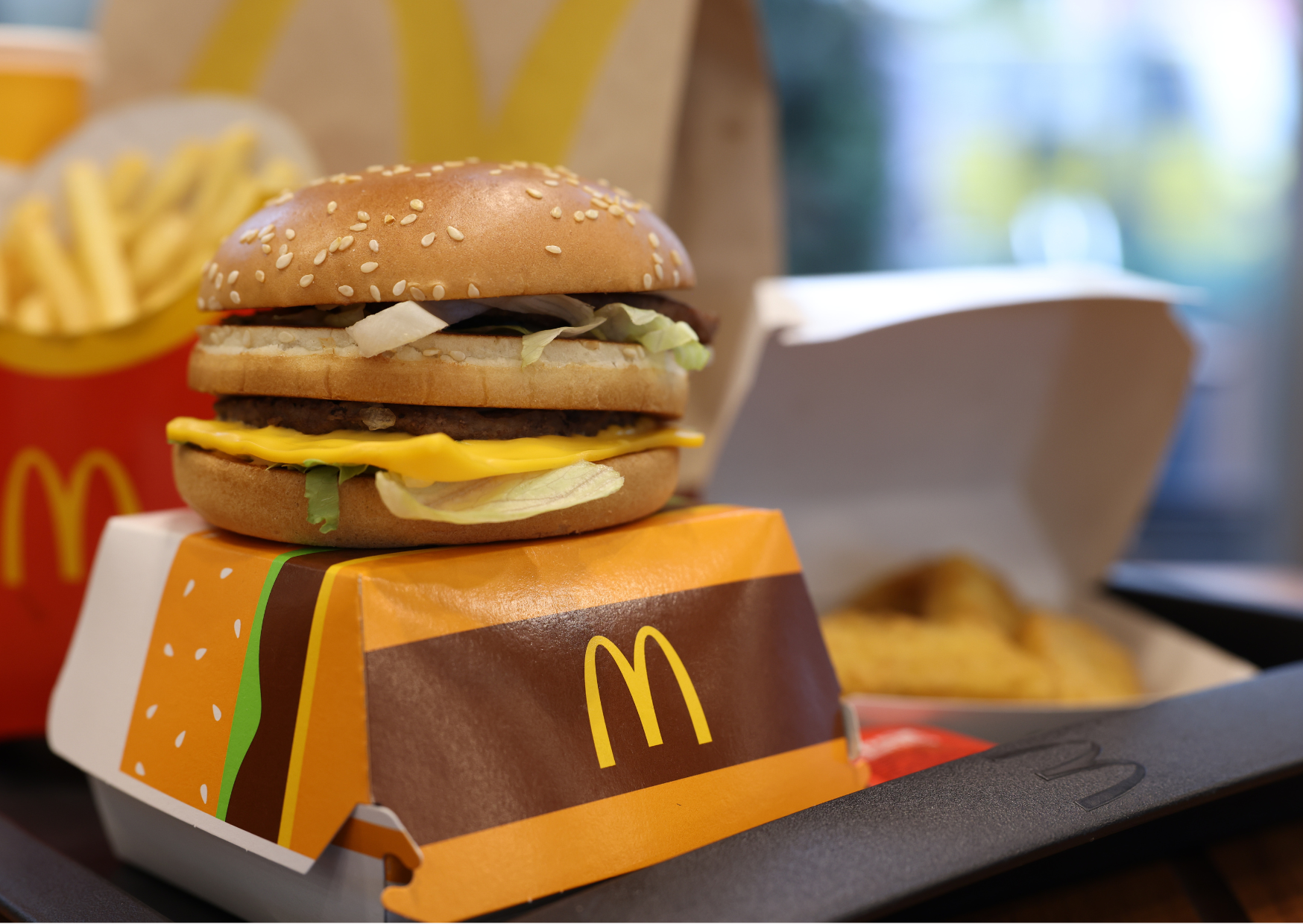
Relish and sauces in the U.S. often include HFCS — EU colorants/preservatives face tighter screens — titanium dioxide off the table
Peek at a U.S. build sheet: special sauce and sweet relish routinely list HFCS/corn syrup, and buns historically leaned on U.S.-typical conditioners (industry-wide, not only at one chain), though many brands have reformulated. In the EU, additive approvals are narrower, and the 2022 titanium dioxide ban eliminated a whitening crutch across sweets and icings system-wide. None of this makes a burger “health food,” but collectively these toggles dial down extreme sweetness and hyper-processed cues in the European experience. When acidity, salt, and fat aren’t buried under syrup, you perceive more of the actual sandwich.
Why the mouthfeel is different even when the label looks the same
Beef-flavor omission in EU fries — less aggressive sweetening — oil profile + no hydrogenated carryover
Taste is chemistry and context: remove beef-derived flavoring from fries, and you lose the savory top-note that Americans now expect. Swap HFCS for glucose-fructose syrup/sugar and you change how sauces bloom on the tongue. Use rapeseed/sunflower instead of a canola/corn/soy mix with hydrogenated fractions and you change crisp-to-cooling behavior and aftertaste. Stack those small deltas and Europe’s meal feels lighter, rounder, less sticky-sweet—even when the macros aren’t wildly different.
What changed since 2022—and why 2025 tastes are even further apart

EU: E171 out, single-use plastics curbed — U.S.: national pace on additives lags; states push change — supply shocks shifted European oils
Two recent forces widened the gap. First, Europe’s E171 ban—plus its broader precautionary posture—pushed reformulation across confections and icings (including QSR dessert components). Second, sunflower-oil shortages from the Ukraine war made European chains juggle rapeseed more aggressively, rewriting fryer behavior and texture expectations. In the U.S., national action on several legacy additives has been slower, with state-level bans and corporate goals doing more of the work. Different constraints → different recipes → different bite.
How to spot the differences when you travel
Read the fry card — check allergens in the app — taste the ketchup first
- Fries: if the local site/app lists “natural beef flavor” (U.S.), expect a toastier, savory-sweet note; if it lists rapeseed/sunflower oil only (UK/EU), expect a cleaner finish and vegetarian status.
- Ketchup: in the U.S., expect HFCS + corn syrup; in the EU/UK, expect glucose-fructose syrup/sugar and more tomato tang.
- Desserts/icing: post-2022 EU recipes will avoid E171 whiteners; textures and colors may be less “bright white.”
- Allergen flags: U.S. fries list wheat/milk derivatives via the beef flavor; UK fries typically do not—and are cooked in separate vats.
Common myths to drop (and what’s actually true)
“Europe bans everything.” Not true—Europe pre-approves additives on a positive list and re-evaluates them; when evidence is unclear (e.g., E171 genotoxicity), the EU tends to pull authorization.
“U.S. McDonald’s doesn’t change.” Also false: the U.S. system does reformulate—witness the early achievement of 100% cage-free eggs and years of sodium/trans-fat reductions—but it does so under a different regulatory philosophy.
“GMOs are ‘illegal’ in Europe.” Incorrect. The EU authorizes and labels GM foods/feed and sets thresholds; label expectations shape procurement even when something is legal.
A traveler’s quick guide to ordering better (no moralizing—just practical)
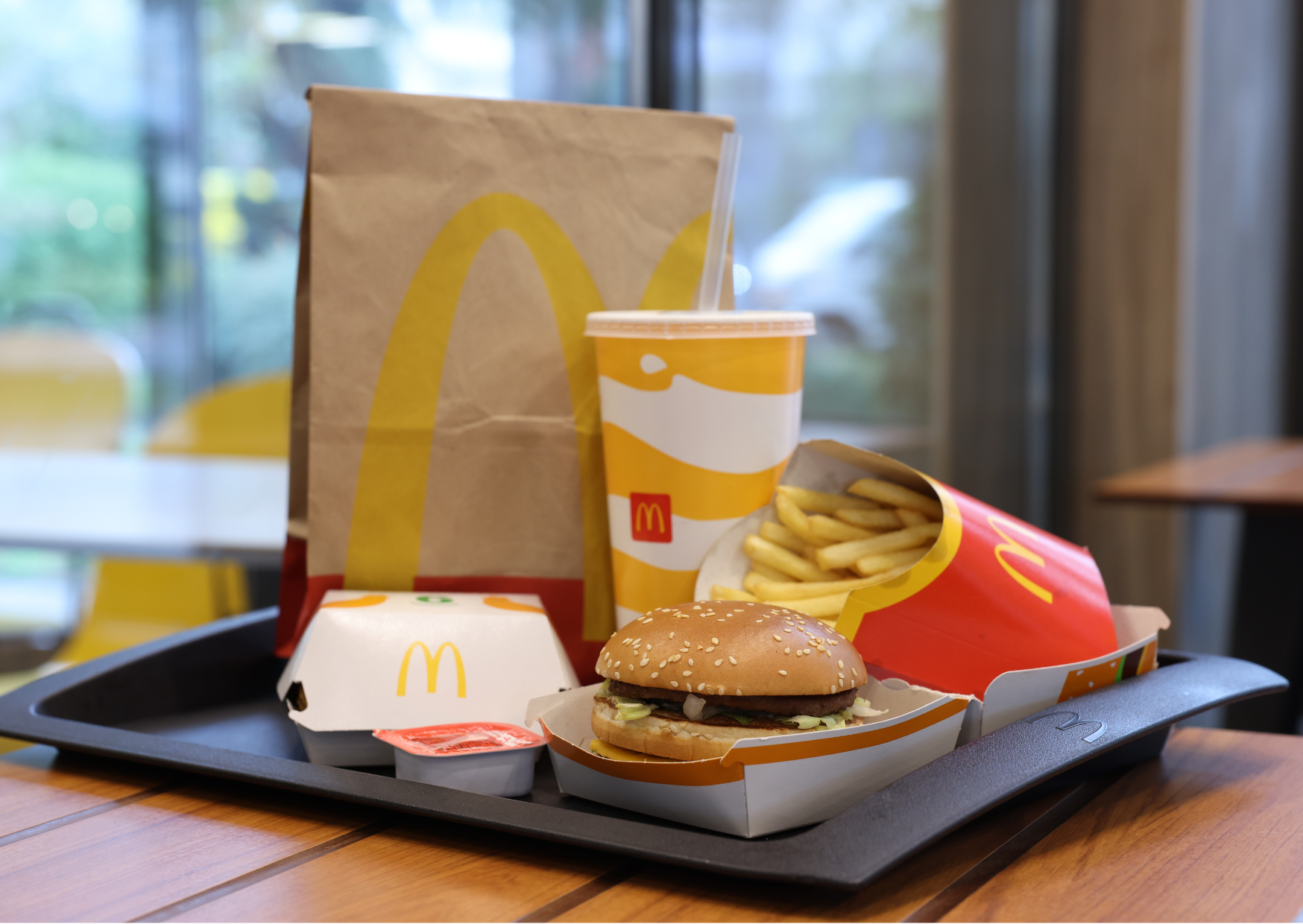
If you’re in Europe: try the fries naked first—notice the lack of beefy aroma—then add ketchup. In markets where ketchup is less sweet, the burger tastes more balanced.
If you’re in the U.S.: skip extra sauces if you dislike the syrup push; the basic mustard/onion/pickle combo reads cleanest.
Anywhere: if fries feel heavy, it’s not always the oil—it can be carryover flavor or just too much salt. Order a small and eat them hot; texture collapses fast once cool.
Allergies/vegetarian: double-check your local McDonald’s app. The same item name can have different allergen status by country.
So—why does European McDonald’s taste “cleaner”?
Not because “Europe = healthy” or “America = bad,” but because rules and expectations are different. Europe’s vegetarian fries (in many markets), lighter oils, less syrup-driven sauces, additive bans like E171, and hormone/antibiotic constraints create a baseline that lets salt, acid, and fat read clearly without a sticky-sweet drag. The U.S. builds in beef-flavored fry notes and sweeter condiments that deliver a nostalgic, savory-sweet hit—just a different target.
If you love the American profile, that makes sense; it’s engineered to be deeply familiar. If Europe tastes better to you, that also makes sense; it’s less sweet, less flavored, more neutral on the fry side. Once you know where the differences come from, you can order toward the taste you want—on either side of the Atlantic.
Final Thoughts
Eating at McDonald’s abroad can be a surprisingly eye-opening experience. In Europe, a Big Mac often tastes fresher, cleaner, and more flavorful than its American counterpart. The difference isn’t just in your imagination—it’s rooted in real distinctions in food standards, ingredient sourcing, and government regulation. While both continents share the golden arches, they play by very different rules when it comes to what goes into those famous fries and burgers.
Europe’s stricter food policies prioritize natural ingredients and minimal chemical processing. Artificial dyes, preservatives, and additives that are legal in the United States are banned or heavily restricted across the European Union. European McDonald’s restaurants are also more likely to use locally sourced meat, real sugar instead of high-fructose corn syrup, and cooking oils free from trans fats. The result? A version of fast food that tastes not only better but, arguably, closer to what it should have been in the first place.
Ultimately, the transatlantic McDonald’s divide says more about food culture than fast food itself. Europe has made clean, transparent labeling and ingredient integrity a public priority, while the U.S. has leaned toward corporate convenience and cost-cutting. The contrast serves as a reminder that the quality of what we eat often depends less on brand names and more on the standards we choose to uphold.

About the Author: Ruben, co-founder of Gamintraveler.com since 2014, is a seasoned traveler from Spain who has explored over 100 countries since 2009. Known for his extensive travel adventures across South America, Europe, the US, Australia, New Zealand, Asia, and Africa, Ruben combines his passion for adventurous yet sustainable living with his love for cycling, highlighted by his remarkable 5-month bicycle journey from Spain to Norway. He currently resides in Spain, where he continues sharing his travel experiences with his partner, Rachel, and their son, Han.