
And what it reveals about dough, devotion, and the kind of silence that lives between oven checks
No dessert is more photographed, imitated, or mispronounced than the Portuguese pastéis de nata. Tourists in Lisbon line up for them. Instagram travelers stack them in boxes. Michelin chefs reinterpret them. But in tiled kitchens across Portugal, grandmothers still make them from scratch—without timers, without puff pastry shortcuts, and without ever calling them iconic.
Their versions are less sweet, more blistered, and profoundly difficult to replicate. The filling isn’t poured. It’s coaxed. The dough isn’t rolled. It’s twisted, stretched, and slapped. The result is a custard tart that flakes into corners, scorches on top, and tastes like the thing every bakery is trying to remember.
Here’s why the real ones can’t be bottled, boxed, or rushed—and what makes the home version so hard to imitate.
1. The dough is not store-bought puff pastry
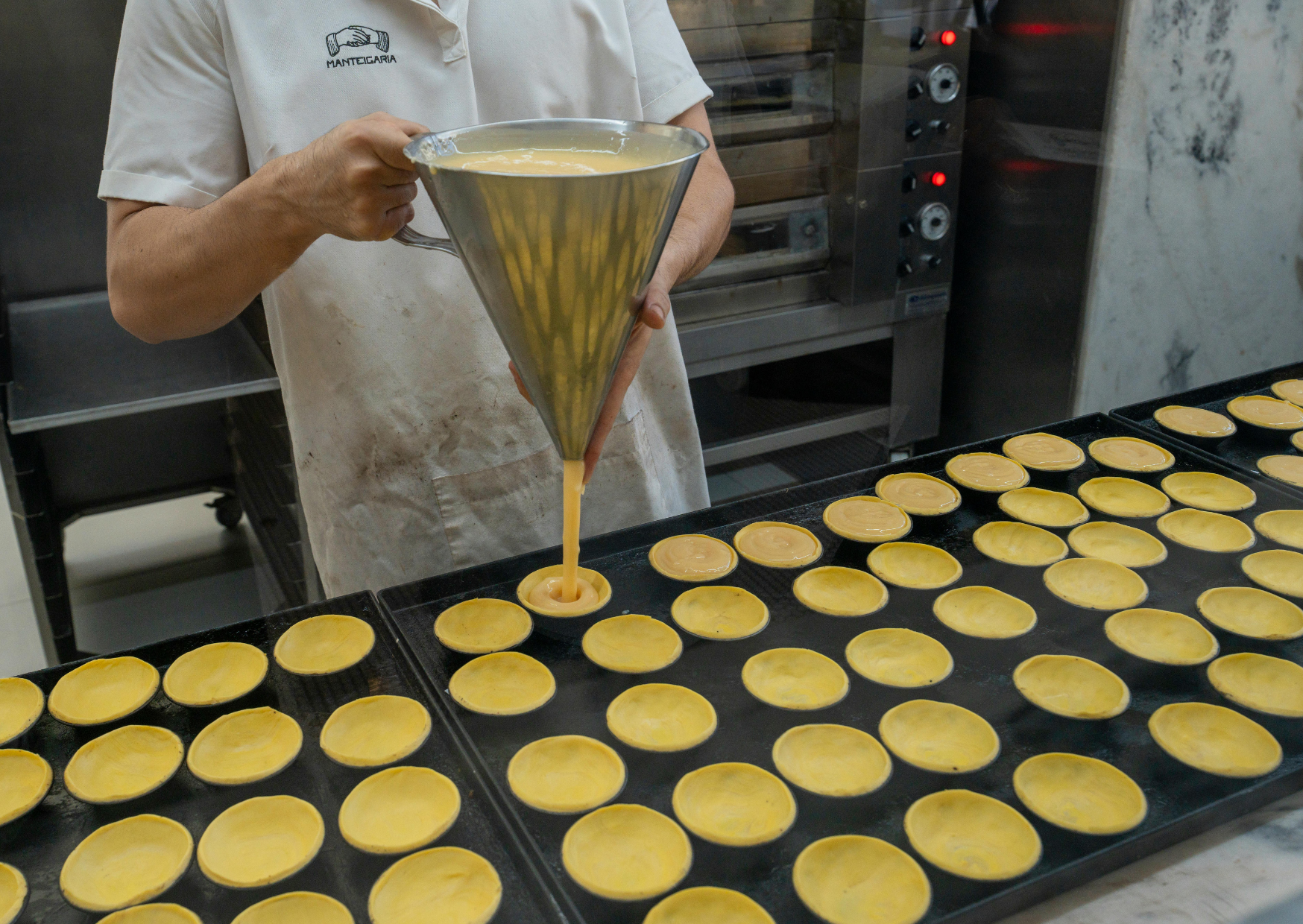
Most bakeries use commercial puff pastry. Some even freeze it. It looks fine. But a real pastéis de nata uses massa folhada, a Portuguese-style laminated dough that’s thinner, firmer, and more layered than French puff pastry.
Grandmothers make it by hand. They roll the dough into a large sheet, brush it with lard or butter, roll it again into a tight spiral, and slice rounds from the coil. Each round is pressed into the tin by hand—not rolled—so that the spiral pushes the layers up the sides of the mold.
This creates a crust that is flaky but structured, blistered on the edge, and sturdy enough to contain the custard without collapsing. It’s a process that takes hours. But it can’t be skipped.
Shortcutting the dough is the most common failure. And it’s the reason most homemade versions, even in Portugal, taste more like pastry than memory.
2. Ingredients
For the dough:
- 250g all-purpose flour
- 1/4 tsp salt
- 150ml cold water
- 150g unsalted butter or lard, softened but not melted (for laminating)
For the custard filling:
- 250g granulated sugar
- 125ml water
- 250ml whole milk
- 25g all-purpose flour
- 4 egg yolks
- 1/2 tsp vanilla extract (optional)
- Zest of 1 lemon or 1/2 stick cinnamon (optional, but traditional)
You’ll also need:
- Mini muffin tin or authentic pastel de nata molds
- Fine mesh sieve
3. Method: dough
- Mix flour, salt, and cold water until a smooth dough forms.
- Knead for 5–10 minutes. Wrap and chill for 20 minutes.
- Roll into a thin rectangle (about 1/8-inch thick).
- Spread a third of the butter across the top two-thirds of the dough.
- Fold the dough into thirds, like a letter.
- Rotate 90 degrees and repeat buttering and folding twice more.
- After final fold, roll the dough into a tight log.
- Wrap and refrigerate at least 2 hours, preferably overnight.
To form shells:
- Slice the log into 1-inch discs.
- Place cut side down into each mold.
- Dip your thumb in water and press from the center out, flattening and stretching the dough up the sides into a thin shell.
This pressing step is what creates the signature edge blistering. Don’t roll it flat—press it by hand.
4. Method: custard
- In a saucepan, combine sugar and water. Bring to a boil without stirring. Let boil for 3 minutes. Remove from heat.
- In another pan, whisk flour with a bit of milk to form a paste. Gradually whisk in remaining milk. Heat until thickened slightly.
- Slowly whisk hot syrup into the milk mixture.
- Let cool slightly, then whisk in yolks and flavoring.
- Strain through a fine sieve. Let rest until room temperature.
This custard should be thin and pourable, not thick like pudding. It sets in the oven—not on the stove.
5. Baking
- Preheat oven to its highest setting (250–290°C or 475–550°F). The hotter, the better.
- Fill each pastry shell 3/4 full with custard.
- Bake for 10–12 minutes, or until the tops blister and edges brown.
- Let cool slightly in pan, then remove to rack.
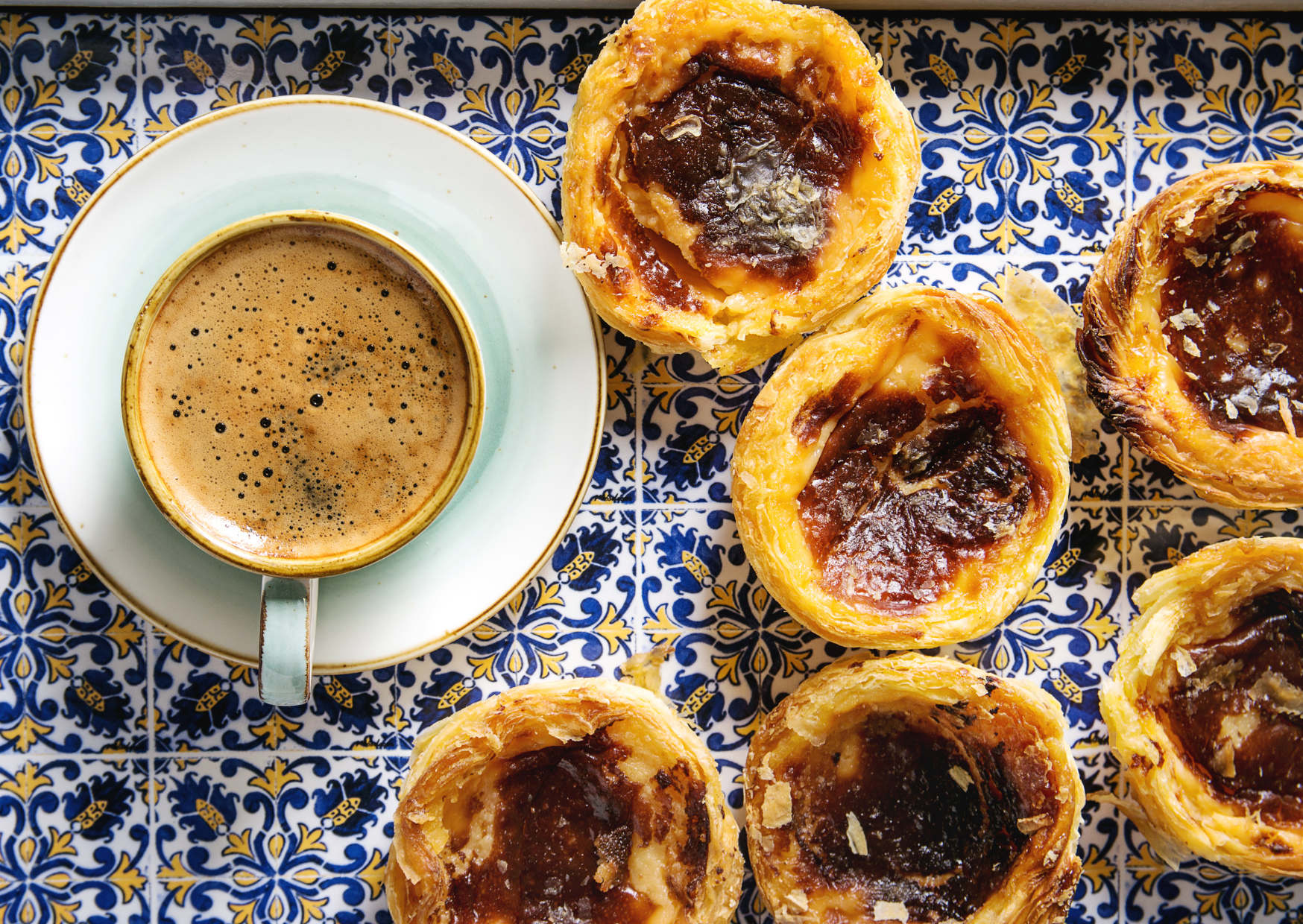
The top should have dark spots. This isn’t burning—it’s signature. The custard caramelizes where the heat hits it hardest.
Serve warm, with powdered sugar or cinnamon if you like. But never cold. And never after refrigerating.
6. Why grandmothers don’t follow the clock
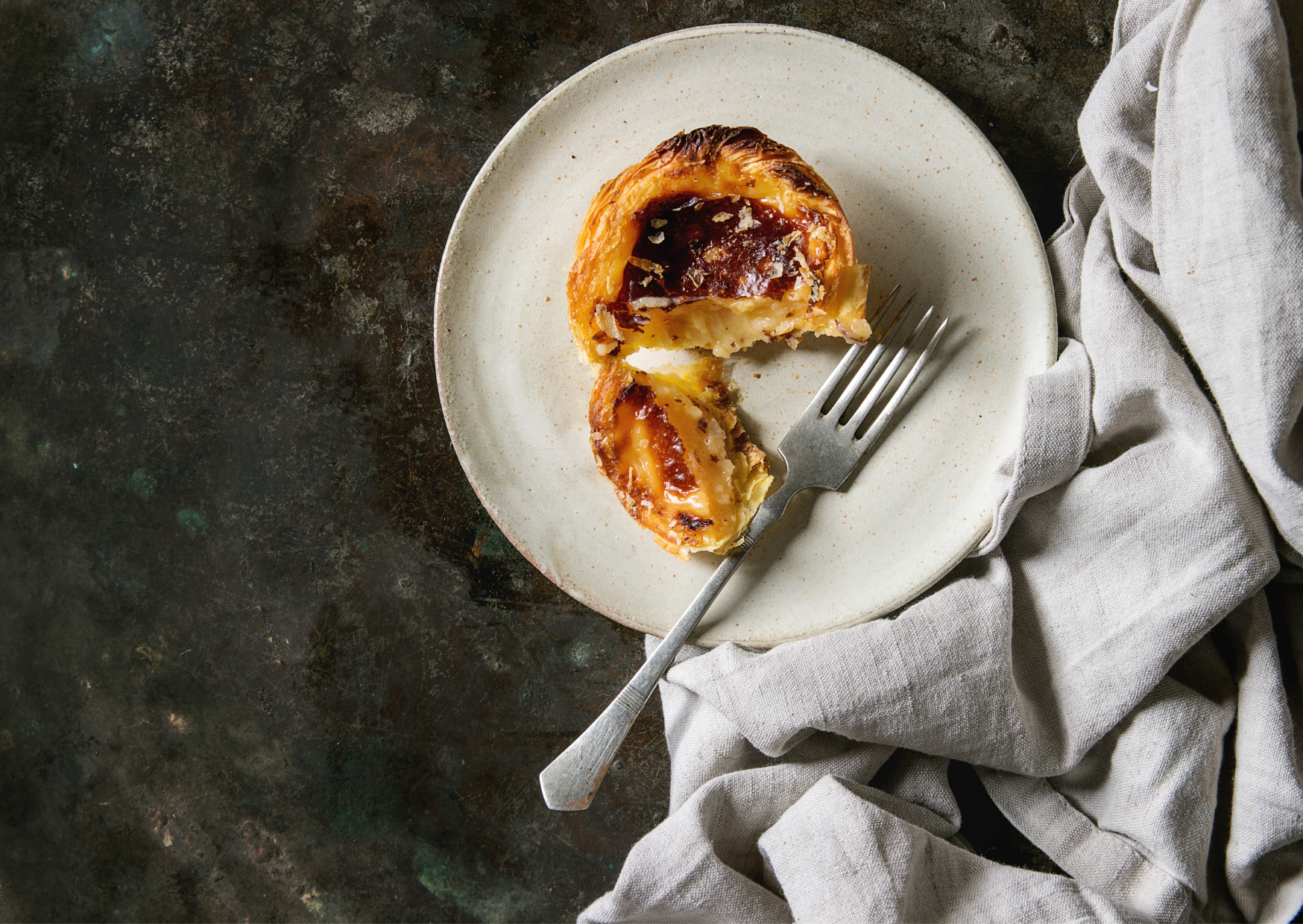
The reason this dessert survives in grandmothers’ kitchens and not on recipe blogs is because it doesn’t respect time. The dough must rest, but not too long. The custard must cool, but not completely. The baking must be watched—not timed.
A pastel de nata goes from perfect to overdone in under 30 seconds. No app will tell you that. You must watch the center tremble. You must smell the edge change. It is a dessert built on instinct.
Most Michelin chefs can mimic this. But few can teach it. The only way to learn is to do what grandmothers still do: bake it weekly, notice the weather, and feel the dough under your thumbs.
7. Why most bakery versions are sweeter
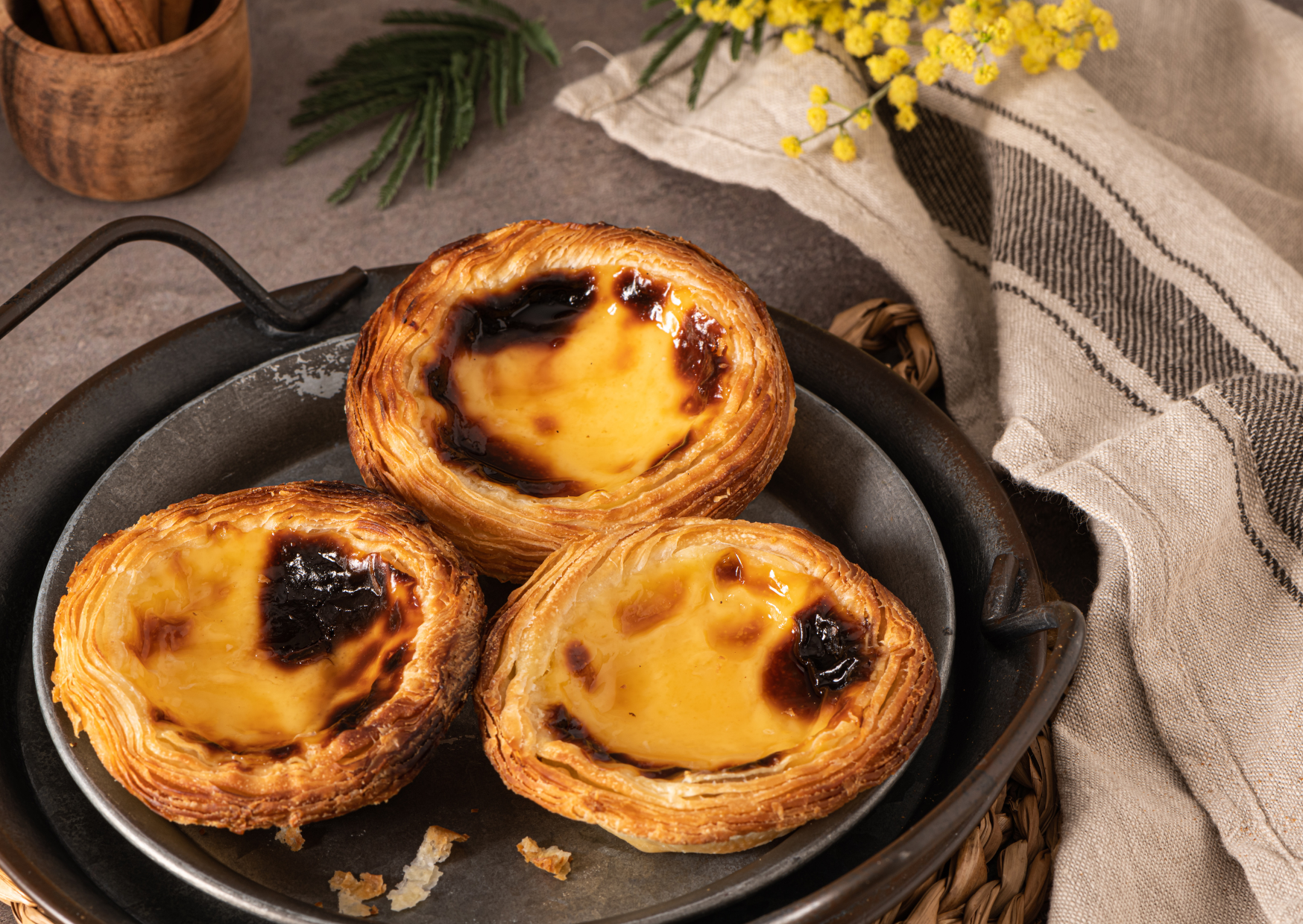
Modern bakeries often increase the sugar, shorten the dough rest, or use commercial puff pastry. This makes the tart look right, but taste shallow. The real version is less sweet, more eggy, more complex, with a faint pull of lemon or cinnamon.
Grandmothers don’t adjust it for tourists. They don’t make dozens at a time. They make six, maybe twelve. Enough for the family. That scale keeps the custard precise and the shells flaky.
And when the last one is eaten, no one writes it down. They just begin again next week.
Origin and History
Few desserts capture the heart of a nation quite like Pastéis de Nata, the creamy, caramelized custard tarts born in the kitchens of Lisbon. Their story dates back to the 18th century at the Jerónimos Monastery in Belém, where monks used egg whites to starch clothing and were left with an excess of yolks. Rather than waste them, they created sweet pastries—and so began a tradition that would one day define Portuguese baking. When the monastery closed in the early 1800s, the recipe was sold to a nearby sugar refinery, which eventually became the now-iconic Pastéis de Belém bakery.
From there, the dessert spread across Portugal and, eventually, the world. Each generation of bakers tried to recreate the original’s flaky crust and silky custard, but true mastery remained elusive. Even today, the exact formula for Pastéis de Belém is a closely guarded secret, known by only a handful of people. That secrecy—and the unmatched texture of the original—has turned the pastry into a symbol of national pride and culinary craftsmanship.
Beyond its historical roots, pastéis de nata embody the essence of Portuguese culture: patience, precision, and deep respect for tradition. Every tart carries a story of family, faith, and the passage of knowledge from one generation to the next—often told not through written recipes, but through careful observation and countless attempts beside a grandmother’s oven.
The debate around who can make “real” pastéis de nata runs deep, both within Portugal and beyond. Many believe that only Portuguese grandmothers—or avós—possess the instinct and intuition needed to perfect the pastry’s delicate balance between crisp and creamy. Others argue that strict tradition hinders innovation and that younger bakers should be encouraged to adapt the recipe for modern tastes.
Outside Portugal, the pastry’s growing popularity has led to what some locals call “the nata crisis.” Cafés around the world—from London to Tokyo—now sell versions of the tart that deviate from the original, sometimes replacing the puff pastry base with shortcrust or adjusting the custard to suit local preferences. Purists consider this culinary appropriation, while others see it as cultural evolution that keeps the dessert alive in new contexts.
Even within Portugal, disagreements persist about the “right” way to make the custard. Should it be cooked entirely on the stove or partially baked in the oven? How caramelized should the top be? Every region—and every grandmother—swears by its own method, proving that authenticity isn’t just about ingredients but about identity and memory.
How Long You Take to Prepare
Making true pastéis de nata is a labor of love, not a quick kitchen project. The process typically takes three to four hours from start to finish, including chilling the dough, preparing the custard, and allowing everything to set before baking. Each stage requires precision—one wrong step can turn the custard grainy or make the crust collapse.
The pastry base, made from delicate layers of laminated dough, demands patience. It’s rolled and folded multiple times to achieve that signature flaky texture. The custard, meanwhile, must be cooked gently with sugar syrup, milk, and egg yolks until smooth and glossy. Once poured into the pastry shells, the tarts are baked at a high temperature—often above 250°C—to create the trademark caramelized top that resembles a crème brûlée finish.
For home bakers, shortcuts exist—store-bought puff pastry and stovetop custard can yield satisfying results in under two hours. However, true perfection requires time, care, and intuition. It’s why many say only Portuguese grandmothers, with decades of practice and instinct, can truly master the art.
Serving Suggestions
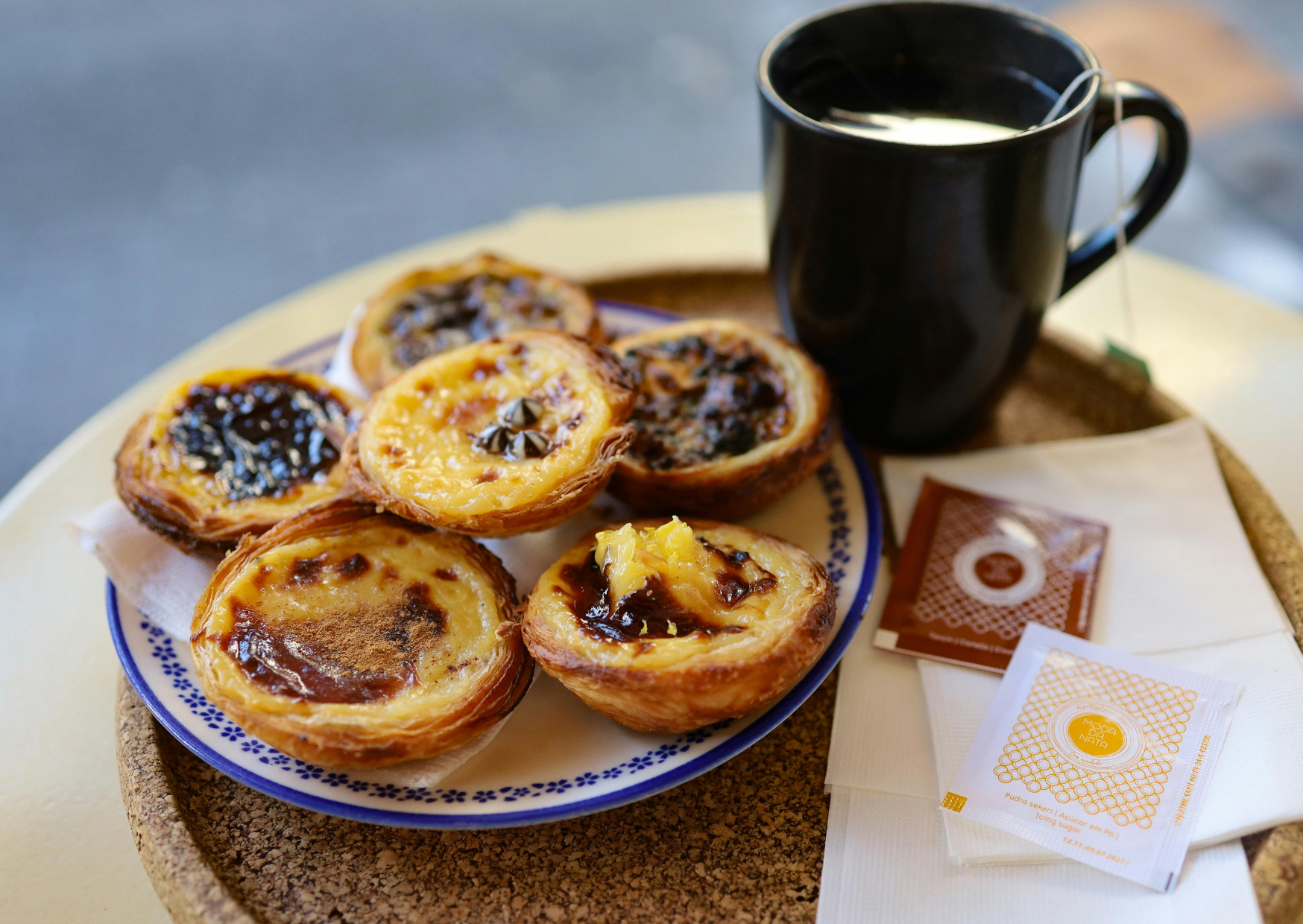
A freshly baked pastel de nata is best enjoyed warm, straight out of the oven, when the custard is still slightly wobbly and the pastry crisp. A light dusting of cinnamon and powdered sugar enhances the sweetness and gives each bite a subtle spice that balances the richness. Paired with a small espresso, or bica, it’s a ritual that defines the Portuguese café experience.
For special occasions, the tarts can be served alongside port wine or dessert liqueurs for a sophisticated pairing that highlights their creamy depth. Some modern chefs experiment with fillings like chocolate or passionfruit, but traditionalists maintain that simplicity is key—the original recipe needs no improvement.
If you’re hosting guests, serve pastéis de nata on a rustic platter lined with parchment and let the aroma speak for itself. They’re not just pastries—they’re conversation starters, capable of evoking nostalgia and admiration in anyone who’s ever tasted the real thing.
Final Thoughts
The allure of pastéis de nata lies not only in their flavor but in the hands that craft them. They represent a connection to history and family that goes beyond recipes or measurements. Each tart is a love letter from the past, shaped by generations of women who learned to bake not from cookbooks but from watching, feeling, and tasting.
Their complexity reminds us that some culinary traditions cannot be rushed or replicated. Machines may mimic the technique, and chefs may modernize the presentation, but the soul of the pastry—the warmth, care, and intuition—remains uniquely human. That’s why the phrase “only Portuguese grandmothers can make real pastéis de nata” carries such truth.
In the end, it’s not about exclusion but preservation. It’s a celebration of heritage, patience, and the quiet mastery that comes from time-honored repetition. So while anyone can attempt to make them, only those who approach the process with the same devotion as generations before can truly capture the heart of Portugal in every golden, custard-filled bite.

About the Author: Ruben, co-founder of Gamintraveler.com since 2014, is a seasoned traveler from Spain who has explored over 100 countries since 2009. Known for his extensive travel adventures across South America, Europe, the US, Australia, New Zealand, Asia, and Africa, Ruben combines his passion for adventurous yet sustainable living with his love for cycling, highlighted by his remarkable 5-month bicycle journey from Spain to Norway. He currently resides in Spain, where he continues sharing his travel experiences with his partner, Rachel, and their son, Han.