
A rustic Italian dish full of depth, warmth, and old-world flavor—straight from the countryside kitchens of Tuscany and Umbria.
In the rolling hills of Tuscany and the rustic kitchens of southern Italy, Coniglio in Umido—a traditional rabbit stew slowly braised in wine, herbs, and tomatoes—remains one of the country’s best-kept culinary secrets. While modern food culture often spotlights pasta and pizza, Italians know that true regional flavor lives in these deeply rooted, home-cooked dishes passed down from nonnas for generations.
Rabbit has long been a staple protein in Mediterranean homes, especially in rural areas where it was more accessible than beef or pork. Tender, lean, and able to absorb flavor beautifully, rabbit meat transforms into a rich, herb-infused dish when slow-cooked with olive oil, white wine, rosemary, and garlic. Coniglio in Umido is hearty yet elegant—a perfect example of Italian comfort food elevated by simplicity.
If you’ve never cooked rabbit before, don’t be intimidated. This recipe walks you through each step and even includes a tip for substituting with chicken if rabbit is hard to find. But once you’ve tried the real thing, you’ll understand why Italians treat this dish not as exotic, but as essential—served proudly at Sunday lunches and festive dinners alike.
Read here best Italian food, vegetarian food in Italy, best drinks in Italy and best breakfast in Italy
Read Here Things to know before visiting Italy and how to buy a sim card in Italy.
About the Dish
Coniglio in Umido is a classic Italian comfort dish made by slowly braising rabbit in a rich mixture of white wine, aromatic herbs, garlic, and vegetables. Traditionally served with polenta, mashed potatoes, or crusty bread, this dish is especially popular in central and northern Italy.
Rabbit meat is lean, delicate, and flavorful—perfect for slow cooking that keeps it tender and moist.
Best Time to Eat and How to Partner
Coniglio in Umido is traditionally served for Sunday lunch or a special family dinner, especially during fall and winter when its rich, warming flavors are most appreciated. It pairs beautifully with creamy polenta, crusty country bread, or roasted potatoes. For wine, go with a dry white like Vermentino or a light red like Chianti or Dolcetto, both of which complement the herbal and savory elements of the dish.
For many Americans, eating rabbit still feels taboo or too unusual, despite its common use in Europe. The controversy is often emotional—rabbits are seen more as pets than food in many cultures. But in Italy, there’s no such divide. Rabbit is treated with the same respect as any other meat, and nothing goes to waste. It’s seen not as cruel, but sustainable and deeply traditional.
Another point of cultural contrast is how Americans tend to shy away from using bones or whole-animal cuts. Coniglio in Umido is usually prepared with bone-in rabbit, which enhances the flavor and keeps the meat juicy. But for those accustomed to boneless, skinless everything, this can be a mental hurdle. Italians, however, embrace the tactile, primal experience of a dish that demands patience and connection to ingredients.
Finally, the rise of globalized food trends has somewhat sidelined dishes like this in favor of flashier Italian-American fare. But among purists and rural Italians, Coniglio in Umido remains a proud symbol of culinary heritage—one that resists the pressure to conform and continues to thrive off the radar of most tourist menus. It’s not trendy. It’s timeless.
Coniglio in Umido Ingredients (Serves 4–5)
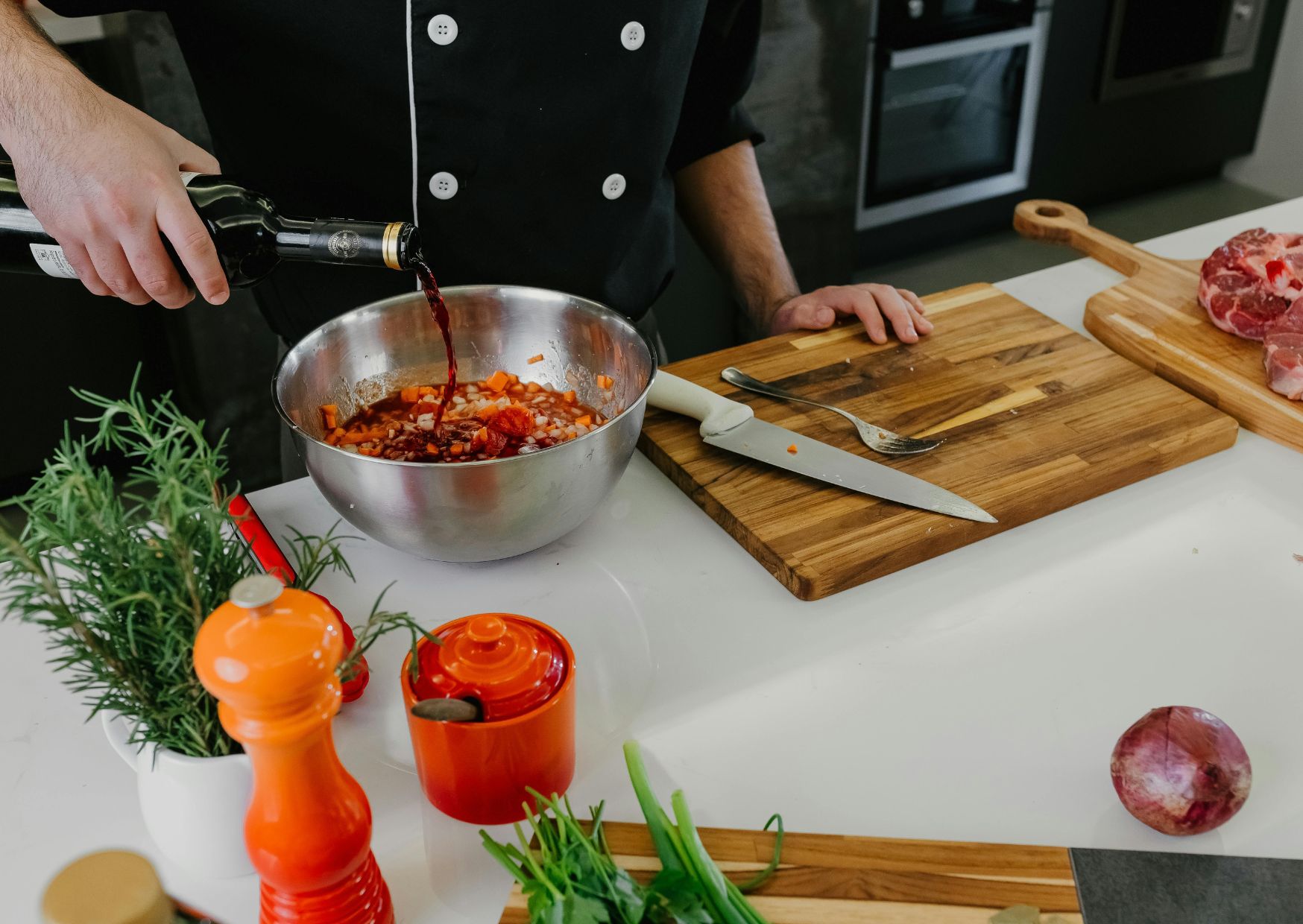
1 whole rabbit, cut into serving pieces (about 2.5–3 lbs or 1.2–1.5 kg)
2 tablespoons olive oil
2 tablespoons butter (optional, for richness)
1 onion, finely chopped
2–3 cloves garlic, minced or crushed
1 carrot, finely chopped
1 celery stalk, finely chopped
1 cup dry white wine (e.g., Pinot Grigio or Verdicchio)
1 cup chicken or vegetable broth
2 tablespoons tomato paste or 1/2 cup crushed tomatoes (optional, regional variation)
2 sprigs fresh rosemary
4–5 fresh sage leaves
1 bay leaf
Salt and freshly ground black pepper
Optional: a splash of red wine vinegar or lemon juice at the end for brightness
Coniglio in Umido Step-by-Step Instructions
Prep the Rabbit
Pat rabbit pieces dry and season with salt and pepper.
If desired, soak the rabbit in water with vinegar (1:10 ratio) for 1 hour to reduce gaminess, then rinse and pat dry.
Brown the Meat
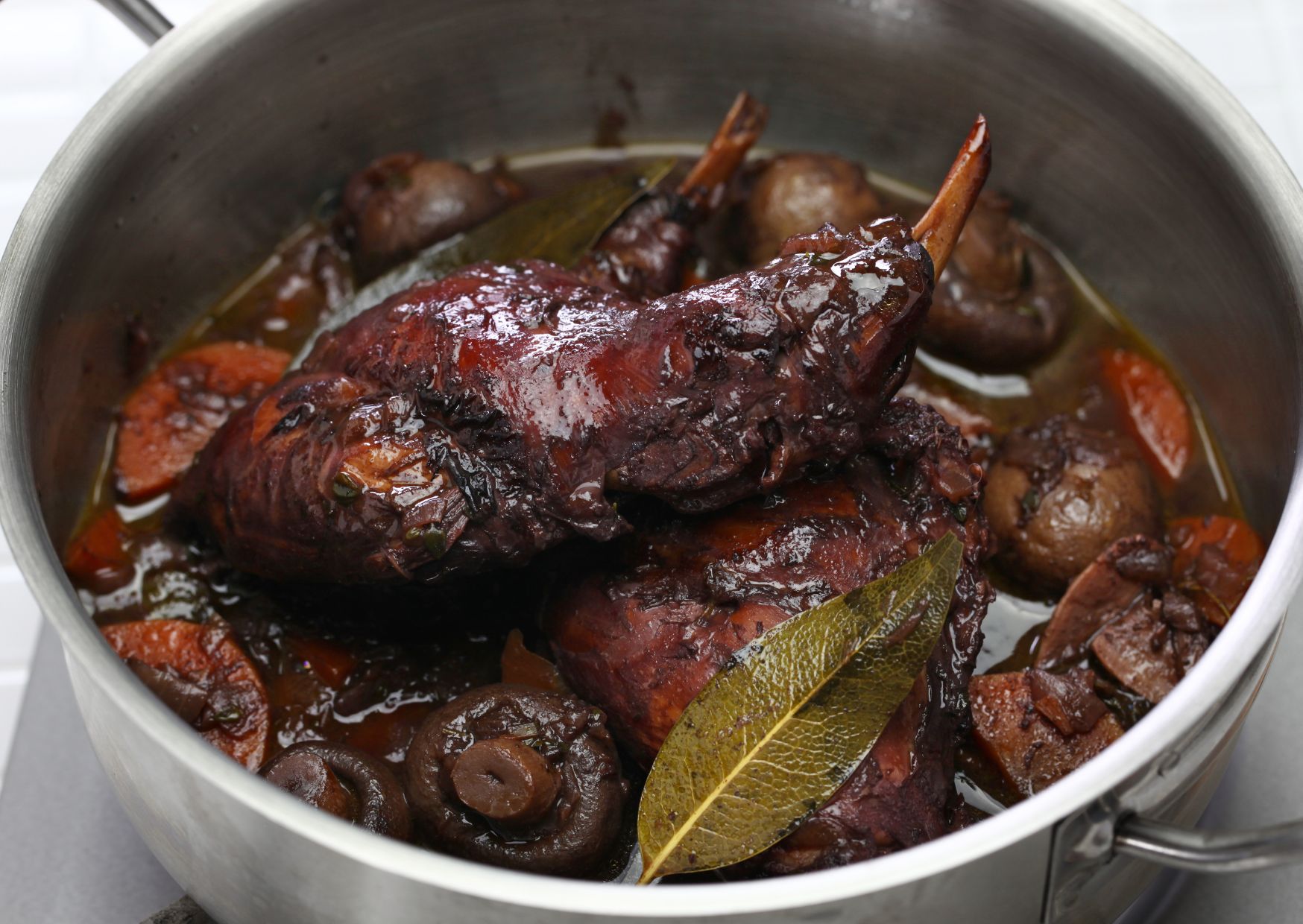
Heat olive oil (and butter if using) in a heavy pot or Dutch oven over medium-high heat.
Add rabbit pieces and sear until golden brown on all sides (about 10–12 minutes total).
Remove and set aside.
Tip: Don’t overcrowd the pan—brown in batches if needed.
Sauté the Aromatics
In the same pot, add chopped onion, carrot, and celery (the soffritto). Cook 5–7 minutes until softened.
Add garlic and cook 1 more minute.
Deglaze & Simmer
Return rabbit to the pot. Add white wine and let it reduce slightly (~5 minutes).
Stir in broth, tomato paste or tomatoes, herbs, and a pinch of salt and pepper.
Bring to a low simmer.
Braise
Cover and simmer gently on low heat for 1 to 1.5 hours, turning rabbit pieces once halfway.
The rabbit is ready when fork-tender and sauce is slightly thickened.
Finish & Serve
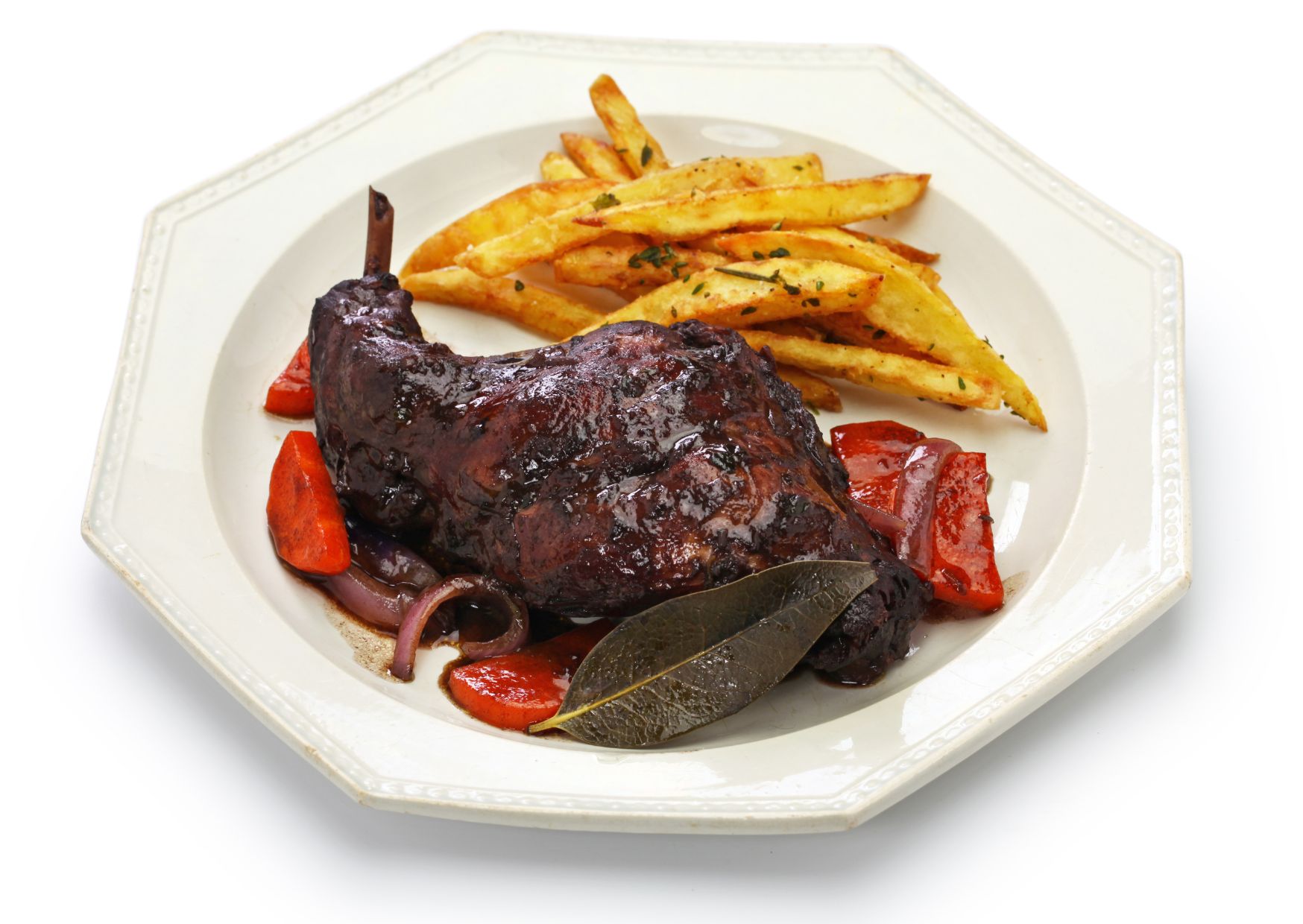
Remove lid for the last 10 minutes if sauce needs thickening.
Taste and adjust seasoning. Add a splash of vinegar or lemon juice for brightness, if desired.
Remove bay leaf and herb stems before serving.
Serving Suggestions
Polenta (soft or grilled)
Mashed potatoes or roasted root vegetables
Crusty bread for soaking up the sauce
Sautéed greens like spinach or chicory on the side
Coniglio in Umido Tips for Success
Use a good-quality dry white wine—one you’d drink
Braising slowly is key: low and slow = tender rabbit
Rabbit is very lean: don’t overcook or it can dry out
Add olives or pancetta for regional twists (especially in southern Italy)
Optional Flavor Variations
With olives: Add ½ cup green or black olives during the final 20 minutes
With pancetta: Sauté 2 oz chopped pancetta with the vegetables
Tomato-forward: Use more tomatoes and finish with basil for a richer sauce
Spicy: Add crushed red pepper flakes with garlic for a Calabrian kick
Coniglio in Umido Nutrition Info (Per Serving – Approx. 6 oz rabbit + sauce)
Calories: ~320
Protein: 32g
Fat: 18g
Carbs: 5g
Sugar: 2g
Fiber: 1g
Sodium: ~450mg
Wine Pairing
White: Vermentino, Verdicchio, or Soave
Red (if tomato-heavy): Chianti, Dolcetto, or Montepulciano d’Abruzzo
Origin and History
In the rolling hills and rustic kitchens of Tuscany and Umbria, Coniglio in Umido—a slow-braised rabbit stew—has long been a staple of Italian farmhouse cooking. The dish dates back centuries, when rural families relied on what their land provided, and rabbit was one of the most sustainable, accessible sources of protein. Long before chicken became the go-to white meat, rabbit was the centerpiece of Sunday lunches and harvest celebrations across the Italian countryside.
The word umido literally means “moist,” describing the method of slow-cooking meat in a rich sauce until tender. Traditionally, the stew was simmered with onions, carrots, garlic, and tomatoes, with local variations incorporating olives, wine, or rosemary. Each region developed its own distinct interpretation—Ligurians favored white wine and pine nuts, while Tuscans preferred bold red wines and herbs. What united them all was the philosophy of cucina povera, or “peasant cooking,” where simplicity and patience transformed humble ingredients into extraordinary meals.
Over time, Coniglio in Umido became a symbol of authenticity and respect for tradition. Though less common on restaurant menus today, it remains a dish that defines rural Italy—a testament to resourcefulness, craftsmanship, and the enduring Italian belief that food should tell the story of where it comes from.
While adored in Italy, rabbit stew remains controversial in many parts of the world, particularly in the United States. For many Americans, the idea of eating rabbit evokes discomfort, as rabbits are often viewed more as pets than livestock. Cultural perception plays a major role—what’s considered comfort food in one country can feel taboo in another. Yet, for Italians, rabbit holds the same place that chicken or duck might elsewhere: a traditional, ethical, and flavorful source of meat.
Animal welfare debates have also shaped opinions around rabbit consumption. Critics argue that raising rabbits for food raises ethical questions, especially when compared to other meats. Supporters, however, highlight that rabbit farming has one of the lowest environmental impacts in animal agriculture. Rabbits require less land, feed, and water, making them a sustainable choice for conscientious eaters seeking alternatives to industrially produced meats.
Culinarily, some chefs defend rabbit as an ingredient that deserves revival. They argue that rejecting it purely on emotion limits the culinary landscape and disconnects diners from the historical roots of European cuisine. Whether seen as controversial or courageous, Coniglio in Umido challenges people to rethink what defines “acceptable” food and rediscover the value of traditional, nose-to-tail cooking.
How Long You Take to Prepare
Authentic Coniglio in Umido is a dish that rewards patience. From start to finish, the process takes around two and a half to three hours—most of it gentle simmering. Preparation begins with marinating the rabbit in wine, herbs, and aromatics for several hours or overnight. This not only tenderizes the meat but infuses it with the earthy depth that defines the dish.
Once marinated, the rabbit is browned in olive oil before being braised with tomatoes, wine, onions, and fresh herbs. The key is to maintain a slow, steady heat, allowing the sauce to thicken naturally and the meat to become fork-tender. Many Italian cooks insist that the real secret lies in restraint—no shortcuts, no rushing, and no over-seasoning. The simplicity of the ingredients lets their natural flavors shine through.
For home cooks with less time, you can shorten the marination or use a pressure cooker to reduce the braising time to about an hour. While you’ll lose a bit of the layered depth of flavor, the result will still be delicious. The magic of Coniglio in Umido lies in its balance between rustic technique and refined flavor—proof that patience truly pays off in the kitchen.
Serving Suggestions
Traditionally, Coniglio in Umido is served with crusty bread to soak up its rich, tomato-infused sauce. In Tuscany, it’s often paired with polenta or creamy mashed potatoes, while in coastal regions it may be enjoyed alongside roasted vegetables or wild greens. A dry red wine, such as Chianti or Montepulciano d’Abruzzo, complements the stew perfectly, enhancing its earthy undertones.
For a complete Italian-style meal, begin with a light antipasto of olives, cured meats, or bruschetta, followed by the rabbit stew as the main course. Finish with a simple dessert like panna cotta or biscotti to balance the richness of the dish. This approach mirrors the traditional pacing of a countryside Italian dinner—unhurried, communal, and focused on savoring each course.
If you’re introducing guests to Coniglio in Umido for the first time, presentation matters. Serve it in a rustic ceramic bowl, garnished with fresh rosemary or parsley. The aroma alone will win over skeptics before they take the first bite. It’s the kind of dish that sparks conversation and invites diners to slow down and appreciate the craft behind every flavor.
Final Thoughts
Coniglio in Umido is not just a meal—it’s a piece of Italian history that speaks to the nation’s deep connection between food and culture. It represents the heart of cucina povera, where resourcefulness and simplicity create dishes of extraordinary character. Every element of this stew tells a story—from the careful braise to the patience it demands.
For many Americans, trying rabbit might feel like stepping out of their culinary comfort zone. But that’s precisely what makes this dish special. It invites eaters to experience a tradition that values the entire animal, celebrates sustainability, and honors techniques perfected over centuries. In a world of fast food and shortcuts, Coniglio in Umido stands as a reminder that some of the best flavors can only be earned through time and care.
So, the next time you’re searching for something authentic, daring, and deeply satisfying, skip the familiar and try the Italian stew that has fed generations. One bite of tender, wine-braised rabbit, and you’ll understand why this centuries-old dish still holds its place on Italy’s most cherished tables.

About the Author: Ruben, co-founder of Gamintraveler.com since 2014, is a seasoned traveler from Spain who has explored over 100 countries since 2009. Known for his extensive travel adventures across South America, Europe, the US, Australia, New Zealand, Asia, and Africa, Ruben combines his passion for adventurous yet sustainable living with his love for cycling, highlighted by his remarkable 5-month bicycle journey from Spain to Norway. He currently resides in Spain, where he continues sharing his travel experiences with his partner, Rachel, and their son, Han.