
And what it reveals about time, trust, and why slow food still simmers where the heat can’t be rushed
In many Italian homes—especially in the south—Sunday begins before dawn. Not because there’s an emergency, but because there’s a sauce. One that starts cold, cooks low, and simmers for six hours straight. No timer. No short cuts. Just low heat, careful watching, and a smell that fills the entire building by late morning.
To an American cook, this sounds risky. Leaving a pot on for six hours? Isn’t that a fire hazard? Isn’t there a slow cooker for that? But in Italy, this is normal. It’s how ragu, or sugo, or salsa gets its depth. The burner stays on low. The lid is cracked just slightly. The oil and tomatoes blend slowly, pulled toward the meat, the wine, the garlic. It’s not fast. It’s finished when it tells you it’s finished.
This isn’t culinary drama—it’s inherited rhythm. It’s the quiet patience of nonnas who never wrote recipes, only watched pots. Here’s how to cook it, and why it works.
1. Why the long simmer matters
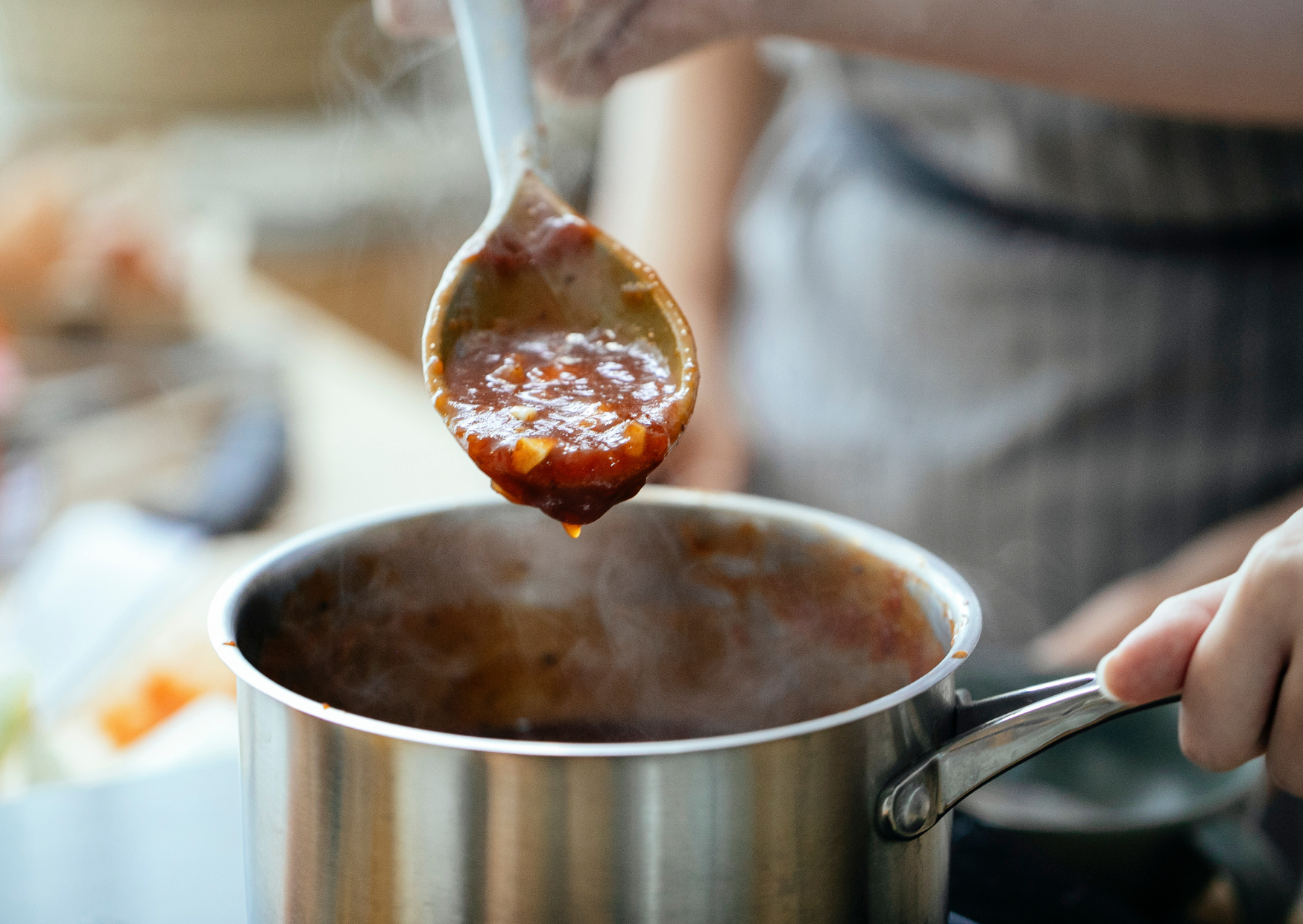
A short-cooked sauce can be bright, quick, and perfectly good. But a long simmer unlocks something deeper. The flavors aren’t layered—they’re merged. The meat doesn’t float in the sauce—it dissolves into it. Acidity softens. Sweetness fades. Everything becomes round.
The key is low heat. Not medium-low. Low. Barely bubbling. Just enough to keep it moving without reduction. This allows the fat from the meat to emulsify into the tomato, and the aromatics to mellow without vanishing.
It’s also practical. A long simmer lets you use tougher cuts—pork ribs, oxtail, beef neck, or sausage links—and turn them into silk. The sauce becomes a carrier for structure, not just a topping for pasta.
In Italy, this isn’t fancy. It’s how Sunday smells. And everyone knows when it’s ready. You don’t taste it to check. You smell it shift.
2. Ingredients
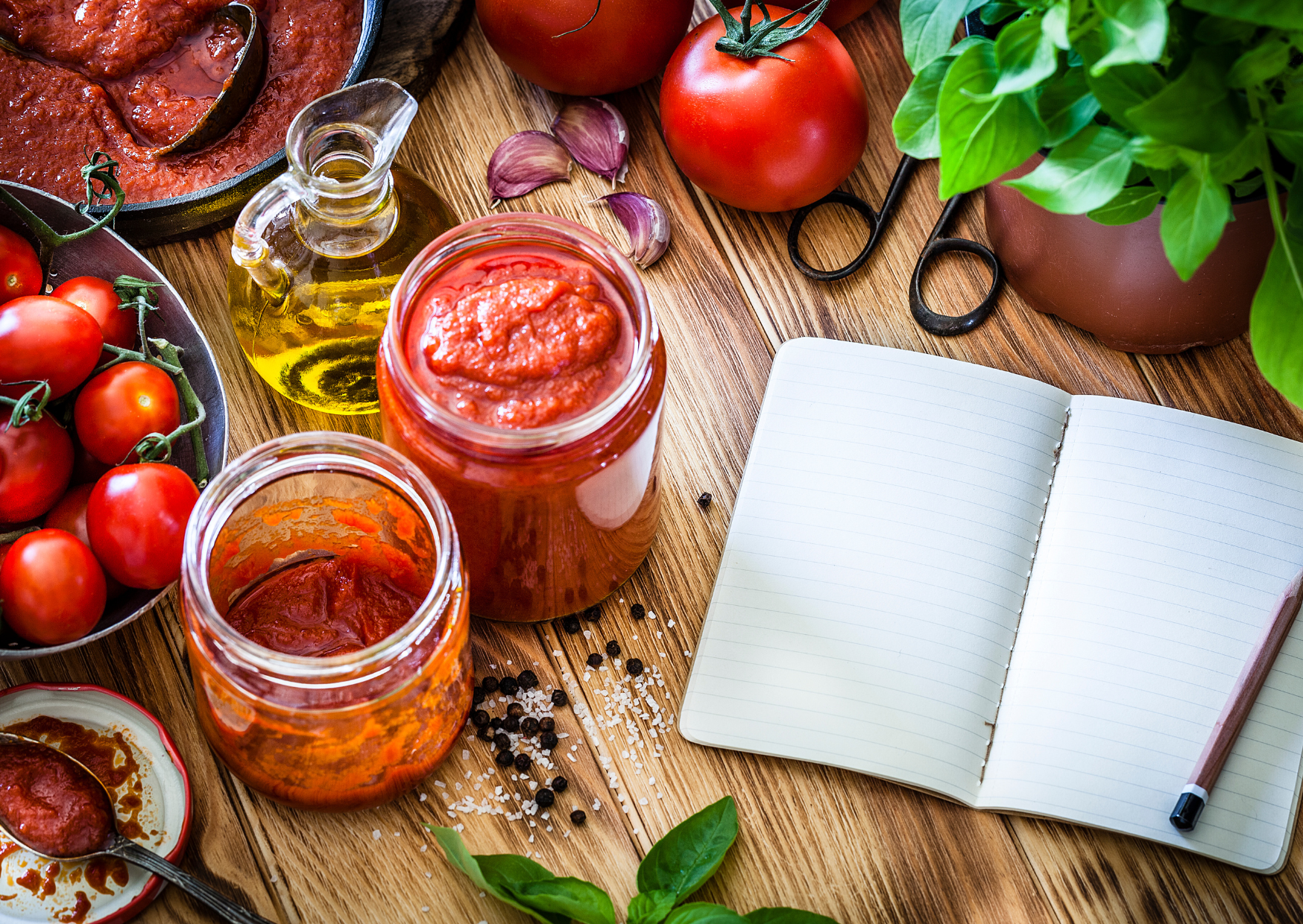
There are many variations, but a southern-style long-cooked sugo often includes:
- 3 tablespoons olive oil
- 1 small onion, finely chopped
- 2–3 cloves garlic, crushed
- 1 tablespoon tomato paste
- 1kg (2.2 lbs) meat: a mix of pork ribs, sausage, beef chuck, or neck bones
- 2 x 800g (56 oz total) whole peeled tomatoes, crushed by hand
- Salt to taste
- A splash of dry red wine (optional)
- Fresh basil, added at the end
No sugar. No dried herbs. No butter. The meat and time do the work.
Optional additions: a bay leaf, a parmesan rind, or a few pepper flakes if your household allows it.
3. Method
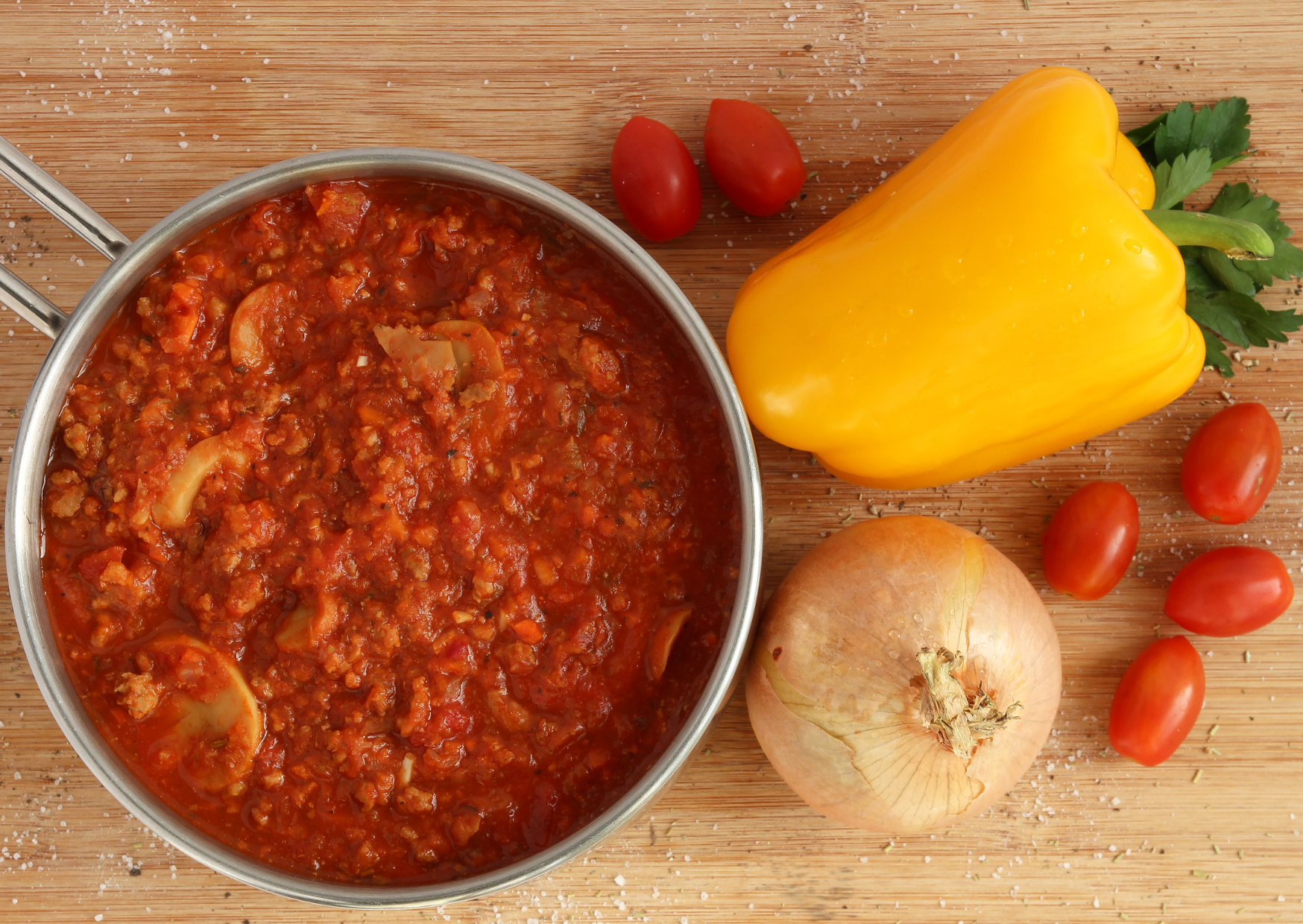
- Heat olive oil in a large heavy-bottomed pot over low heat.
- Add onion and garlic. Sauté until translucent, not browned.
- Add the tomato paste and stir until darkened slightly.
- Brown the meat in batches if possible. Let it take color.
- Add all the meat back to the pot. Pour in wine and let it reduce.
- Add crushed tomatoes and salt. Stir.
- Bring to a soft simmer. Then lower the heat as much as possible. It should barely bubble.
- Partially cover. Stir every 30–45 minutes.
- Simmer for 5–6 hours.
- In the last 10 minutes, add torn basil leaves.
- Remove meat, shred or slice as needed. Serve separately or return to sauce.
What you’re left with is not just sauce. It’s an edible memory. Something you smell before you taste.
4. How to avoid the fire department
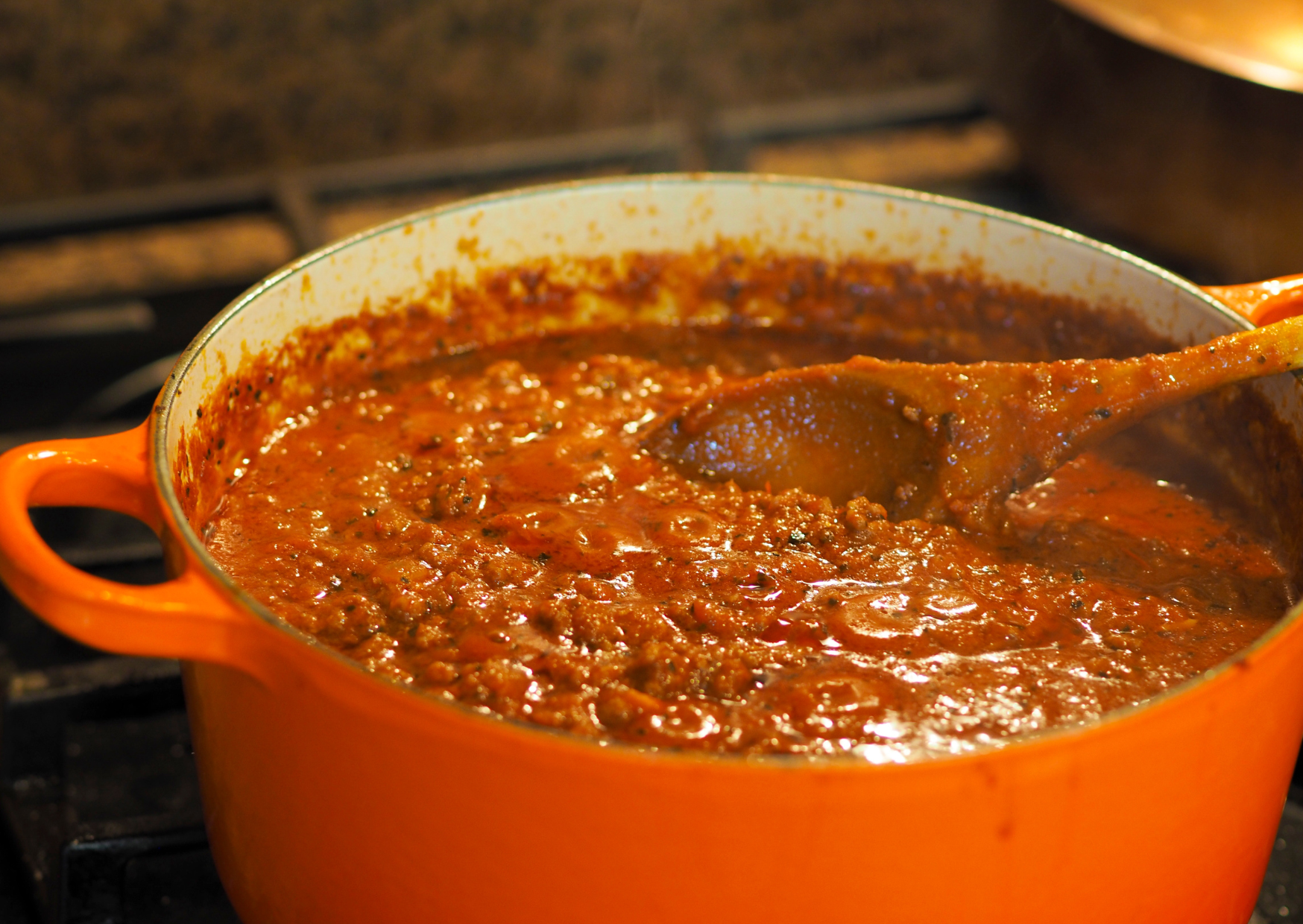
This kind of cooking scares people. Rightfully so. Leaving a flame on for six hours sounds reckless in a modern kitchen. But Italians don’t walk away. They stay home. They live near the stove. They check in. The sauce is part of the day.
Low heat is essential. A flame tamer or diffuser plate can help if your burners run hot. Some use a terracotta pot or heavy enameled Dutch oven. The lid is never tight. And if you must leave, turn off the burner and restart later. This isn’t about consistency—it’s about care.
The sauce is forgiving. It doesn’t mind cooling down and warming back up. What matters is that it never rushes.
That’s the part Americans struggle with—not just the time, but the permission to stay still while something good takes shape.
Origin and History
The slow-simmered Italian pasta sauce—often referred to as ragù—is a cornerstone of traditional Italian cooking. Its roots stretch back to the kitchens of Emilia-Romagna, where families perfected recipes that balanced meat, wine, and tomatoes into a sauce so rich it could transform simple pasta into a feast. The idea wasn’t speed but depth—allowing ingredients to merge over hours until they became something far greater than the sum of their parts.
In the early 19th century, as Italian households shifted from rustic countryside kitchens to urban homes, the long simmer became a Sunday ritual. Housewives and nonnas would start the sauce early in the morning, letting it bubble quietly through church, lunch prep, and the afternoon meal. The aroma filled entire neighborhoods, signaling that family dinner was near. It wasn’t just cooking—it was culture, patience, and love expressed through food.
When Italian immigrants brought their culinary traditions to America, time and convenience reshaped the process. The slow simmer was shortened, ingredients simplified, and the dish Americanized into a quick “spaghetti sauce.” But in Italy, the six-hour sauce still reigns supreme—a symbol of devotion to both craft and heritage.
The idea of leaving a pot simmering for six hours on a stove is almost unthinkable to most modern cooks, especially in countries like the United States where safety regulations and fast-paced lifestyles dominate kitchen habits. Some argue that such long cooking times are outdated and even risky, while others insist that slow simmering is the only true way to unlock authentic Italian flavor.
Within Italy, there’s debate too—particularly over what counts as a proper ragù. Should it include milk or cream, as in Ragù alla Bolognese, or stay strictly tomato-based? Does it require multiple types of meat, or can one suffice? Every region, and often every family, claims to have the “right” recipe. The passion can be so fierce that chefs have faced backlash for altering what many Italians consider sacred.
Outside Italy, the controversy grows even more complex. American chefs who try to modernize the six-hour sauce by cutting corners often face criticism from purists. Yet, supporters of adaptation argue that recipes evolve for a reason—modern life demands efficiency. The tension between authenticity and practicality keeps this dish at the center of culinary debate worldwide.
How Long You Take to Prepare
Making a true six-hour Italian sauce isn’t a casual task—it’s a ritual. Preparation begins with selecting the right base: quality olive oil, finely chopped onions, carrots, and celery. Once the aromatics soften, meat and tomato paste are added, followed by a slow pour of red wine that deglazes the pot. From that moment, time becomes the main ingredient. The sauce must simmer gently—never boiling—allowing every element to meld together.
The first two hours develop the foundation of flavor as the tomatoes reduce and the meat tenderizes. By the third and fourth hour, the sauce thickens, taking on a velvety consistency. The final two hours are where the transformation truly happens: the acidity balances, the texture becomes luxurious, and the aroma deepens into something almost intoxicating.
Of course, not everyone can dedicate half a day to a pot of sauce. For busy cooks, a scaled-down version—simmered for 90 minutes—can still deliver incredible results. But ask any Italian grandmother, and she’ll tell you that six hours isn’t excessive. It’s simply how long perfection takes.
Serving Suggestions
The magic of a slow-simmered sauce lies in its versatility. Traditionally, it’s served over fresh tagliatelle, pappardelle, or rigatoni—the kinds of pasta that hold thick sauce beautifully. A generous sprinkle of Parmigiano-Reggiano adds the perfect salty finish, while a drizzle of olive oil enhances the aroma.
Beyond pasta, this sauce pairs wonderfully with polenta, lasagna, or even as a base for baked dishes like parmigiana di melanzane. Its depth makes it adaptable, turning even simple proteins like chicken or pork into hearty, restaurant-worthy meals. Italians often make large batches, using leftovers throughout the week to reinvent meals without ever losing flavor.
For a true Italian experience, serve the sauce family-style. Place the pot in the center of the table, pour a glass of red wine, and let guests help themselves. The slow-cooked sauce isn’t meant to be rushed, and neither is the meal—it’s all about savoring the company and the craft.
Final Thoughts
The six-hour Italian sauce is a reminder of a slower, more intentional way of cooking. It’s a culinary practice that values patience, tradition, and the transformation that time alone can bring. In a world obsessed with instant results, this dish stands as quiet rebellion—a call to slow down and reconnect with the roots of good food.
There’s a reason this sauce has survived centuries. It’s not just about taste—it’s about process. The ritual of stirring, smelling, and waiting builds anticipation and appreciation for the meal ahead. It turns cooking into meditation, rewarding those who invest the time with unforgettable depth and richness.
So, while American kitchens may balk at the idea of leaving a sauce on the stove for hours, Italians know better. Some things simply can’t be rushed. A great sauce, like great memories, takes time—and that’s exactly what makes it worth it.

About the Author: Ruben, co-founder of Gamintraveler.com since 2014, is a seasoned traveler from Spain who has explored over 100 countries since 2009. Known for his extensive travel adventures across South America, Europe, the US, Australia, New Zealand, Asia, and Africa, Ruben combines his passion for adventurous yet sustainable living with his love for cycling, highlighted by his remarkable 5-month bicycle journey from Spain to Norway. He currently resides in Spain, where he continues sharing his travel experiences with his partner, Rachel, and their son, Han.