
And What It Reveals About Proximity, Politeness, and Unspoken Cultural Rules
Step into a room in Spain — a friend’s house, a small dinner party, even a casual meetup at a café — and something begins almost immediately.
It’s subtle, warm, and deeply choreographed.
People kiss each other’s cheeks.
They greet every single person individually.
They maintain eye contact, smile, and often say your name.
And they expect you to do the same.
But Americans, even the warm and well-meaning ones, often get this ritual wrong.
They wave from the doorway.
They say “hey guys!” to the group.
They avoid close contact or offer a quick handshake.
Some skip the greeting entirely, assuming they’ll catch up later.
To locals, this isn’t just awkward — it’s a breach of social respect.
Because in Spain, greetings aren’t small talk. They are a daily ritual of acknowledgment and belonging.
Here’s what the Spanish greeting ritual really is, how Americans routinely fumble it, and why it matters far more than most visitors realize.
Want More Deep Dives into Everyday European Culture?
– Why Europeans Walk Everywhere (And Americans Should Too)
– How Europeans Actually Afford Living in Cities Without Six-Figure Salaries
– 9 ‘Luxury’ Items in America That Europeans Consider Basic Necessities
Quick Easy Tips
Plan travel outside peak summer months to avoid extreme heat and overcrowding.
Learn a few basic Spanish phrases to make daily interactions smoother.
Research local customs and cultural norms to avoid misunderstandings.
Book accommodations and transport early if traveling during high season.
Explore beyond the major tourist hubs to experience authentic Spanish culture.
One of the biggest debates surrounding Spain as a travel destination is over-tourism. Cities like Barcelona and Madrid have become magnets for international travelers, creating tension between visitors and locals. Many residents feel their neighborhoods have been turned into playgrounds for tourists, while visitors often don’t realize the impact their presence has on daily life.
Another point of controversy is how Spain’s relaxed pace clashes with the expectations of fast-paced travelers. Long lunch breaks, late dinners, and slower service are part of Spanish culture, but some tourists perceive this as inefficiency or rudeness. In reality, it reflects a completely different way of valuing time and social connection.
Lastly, there’s the issue of regional identity. Spain isn’t a cultural monolith—each region has its own language, traditions, and attitudes toward tourism. For example, visiting Catalonia is a very different experience from visiting Andalusia. Understanding and respecting these distinctions can make or break the experience for travelers.
1. The Double Cheek Kiss Is Standard — Not Optional

Let’s start with the most visible part: the two cheek kisses, one on each side.
- Not on the lips
- Not a real kiss — just a light touch of cheeks, often air-kissed
- Always starting on your right cheek (their left)
This is how Spaniards greet:
- Friends
- Acquaintances
- New people introduced through others
- Family members
It’s not romantic. It’s not intimate in the American sense.
It’s simply standard etiquette.
Americans often:
- Go in for a hug
- Offer a stiff handshake
- Pull away awkwardly
- Ask “do we kiss?” (which immediately reveals you’re not from here)
To a Spaniard, dodging the kiss feels like rejection — not just of the person, but of the entire cultural rhythm.
2. Men Don’t Kiss Men — Usually

In most of Spain, male-to-male greetings are still shaped by social norms:
- A firm handshake between men is common
- Among close friends or family, a hug or cheek kiss may happen
- But it’s less automatic than between women, or between men and women
Americans often misjudge this:
- Offering kisses to men who don’t expect it
- Holding back when a local clearly leans in
The trick is to follow the lead of the other person — but know that a lack of kissing doesn’t mean a lack of warmth. It’s just one of the few gendered dynamics that still lingers.
3. You Greet Every Individual — Not Just “The Group”

One of the most telling cultural missteps Americans make is walking into a room and saying:
- “Hey everyone!”
- “What’s up, guys?”
- A wave from the door, followed by sitting down
In Spain, this feels cold. Detached. Even rude.
Why? Because greeting people one by one — even if there are 8 of them — is considered a mark of respect and equality.
You don’t walk into a group.
You join it by acknowledging each member with:
- A kiss or handshake
- A verbal greeting (“Hola,” “¿Qué tal?”)
- Eye contact and often a smile
Skipping this step means you’ve signaled, perhaps unknowingly:
I don’t see you. I’m just here for the group dynamic.
And in Spain, that doesn’t fly.
4. Skipping the Goodbye Is Just as Bad
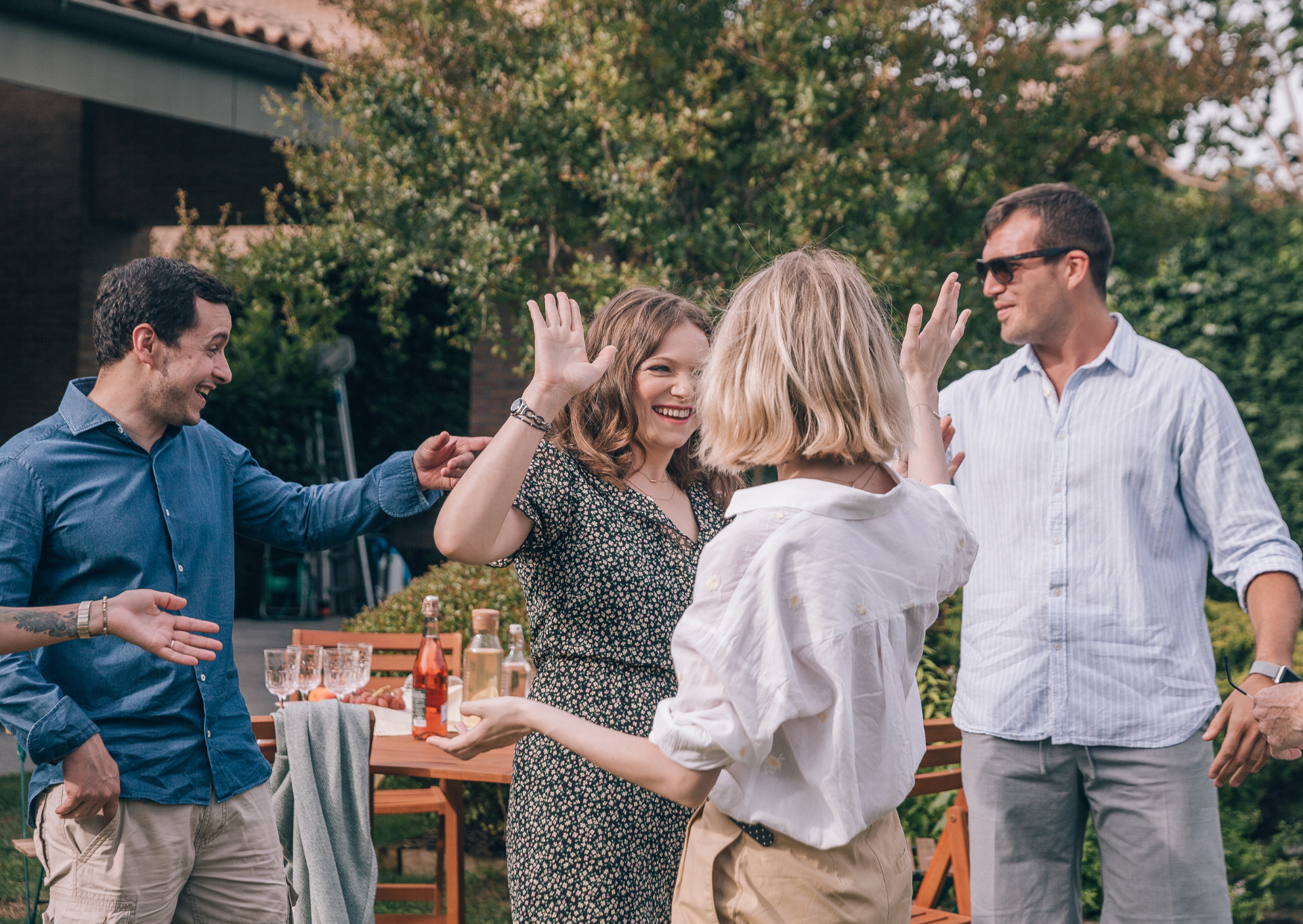
If greetings are a ritual, so are farewells.
When leaving, Spaniards:
- Say goodbye to everyone
- Often give another round of kisses or handshakes
- May linger at the door with short conversations
Americans, especially from casual or fast-paced cultures, often:
- Wave from across the room
- Sneak out quietly
- Say goodbye only to the host
To Spaniards, this feels dismissive — as if the people you met didn’t matter.
Saying goodbye is about closing the loop.
You entered the social space with acknowledgment. You exit with the same care.
5. Touch Is Expected — But Controlled
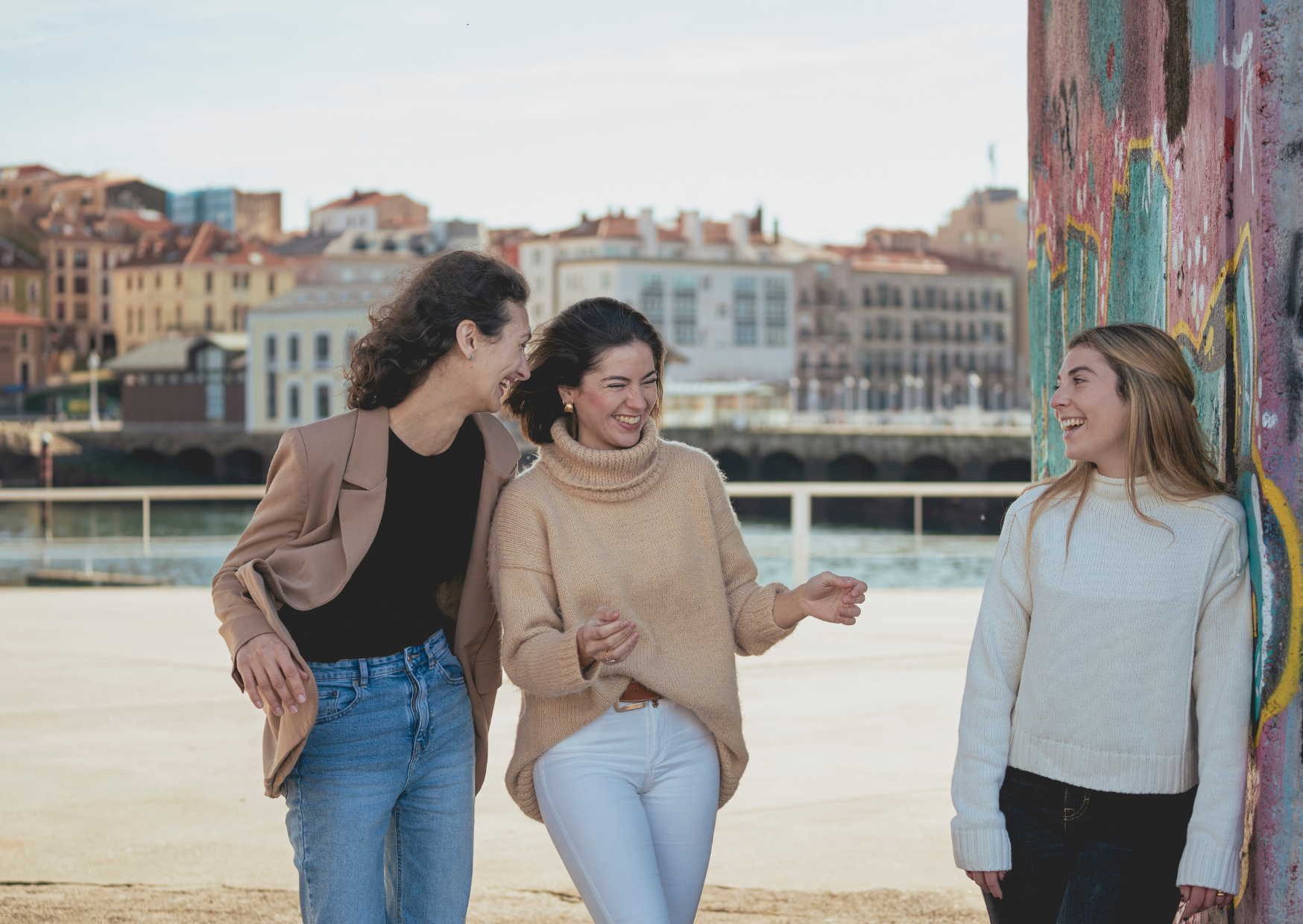
American travelers often assume Europe is a land of exaggerated affection.
But Spanish physical touch is not excessive — it’s calibrated.
A light hand on the arm.
A cheek kiss.
Occasional proximity in conversation.
That’s it.
What Spaniards dislike is:
- Stiffness
- Overly formal distance
- Flinching or pulling back at a kiss
- Loud declarations like “I’m not a hugger”
It’s not about how “touchy” you are. It’s about being socially fluent in a place where the body speaks gently.
6. Smiling Without Engaging Feels Hollow
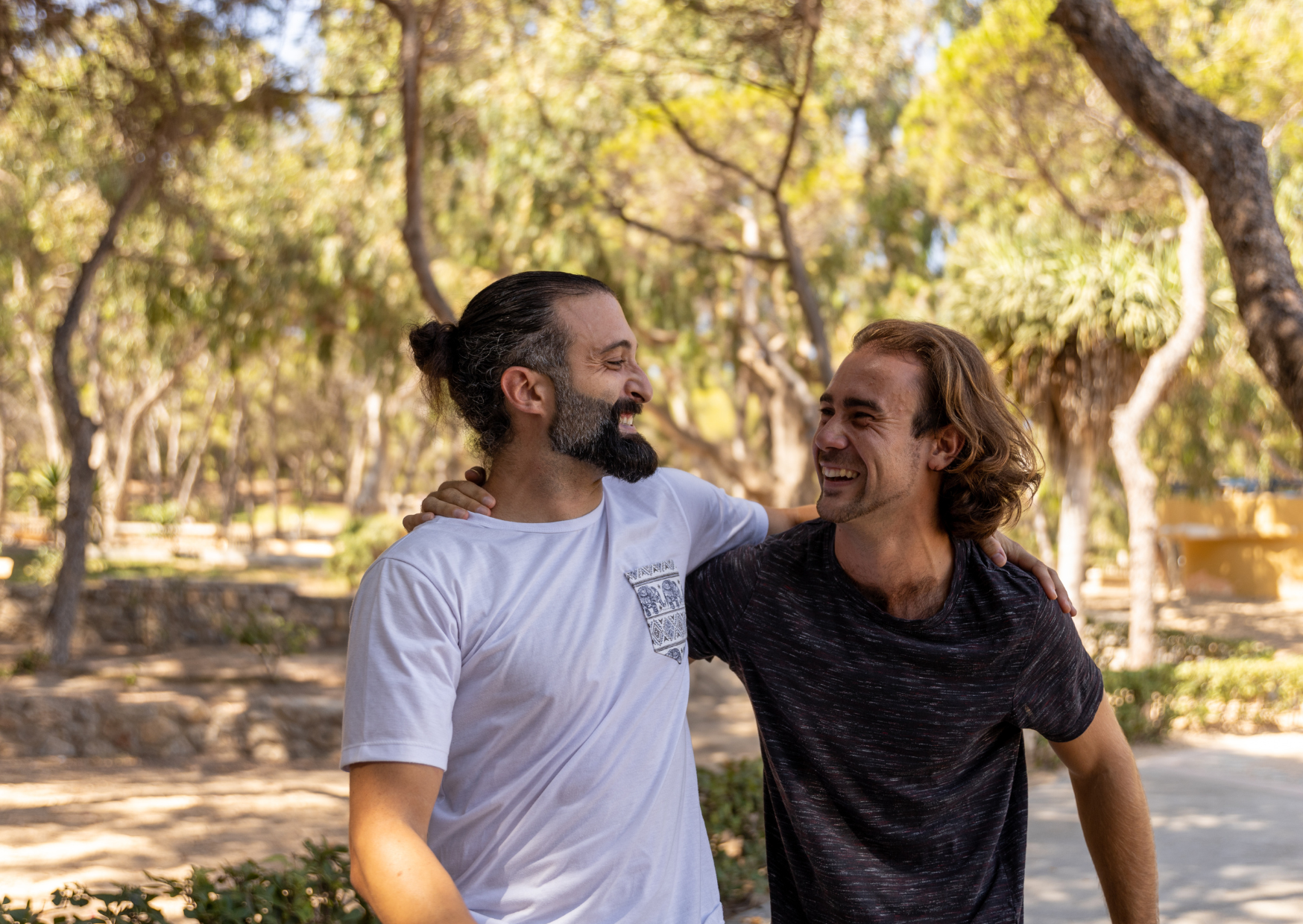
Americans are known for big, friendly smiles.
But in Spain, a smile without full engagement — without a greeting, name, or touch — can feel fake or impersonal.
Spaniards often smile after they’ve made a connection.
Not before.
If you smile broadly but don’t:
- Greet people individually
- Show warmth with your tone
- Make eye contact and follow the proper ritual
Then your smile won’t register as sincerity.
It will register as surface friendliness without depth.
7. Being “Low Maintenance” Isn’t a Compliment Here
In American social culture, being the person who says:
- “Oh, don’t worry about me!”
- “I’m just here to hang out.”
- “You don’t have to introduce me.”
…is often seen as polite or humble.
In Spain, it’s confusing. You’re in a social setting. Of course you’re meant to be acknowledged.
Refusing a greeting doesn’t make you easygoing — it makes you invisible.
Spaniards value shared presence, not quiet independence.
You don’t downplay your role in the room. You lean in — softly, but completely.
8. You Don’t Need an Excuse to Greet People
In the U.S., greetings are often linked to purpose:
- Meeting someone new
- Starting a conversation
- Reconnecting after time apart
In Spain, greetings are expected regardless of purpose.
Whether you’re:
- Seeing someone you already know
- Arriving at a dinner late
- Entering a room where no one notices you right away
You still make your rounds.
You still kiss cheeks, shake hands, or say hello.
You don’t wait for an invitation to be social.
It’s not about making an entrance. It’s about showing presence — and inclusion.
9. Locals Won’t Always Correct You — But They’ll Remember
Here’s the tricky part:
Spaniards are warm, patient, and generous with foreigners. They won’t correct your greeting mistakes outright.
But they’ll notice:
- That you skipped the kiss
- That you didn’t greet the full group
- That you left without saying goodbye
- That your physicality felt hesitant or performative
They won’t say anything — but they’ll quietly categorize you as someone who doesn’t fully get it.
It’s not cruel. It’s just cultural pattern recognition.
And it means that if you want to be welcomed as a local, learning this ritual matters more than your Spanish grammar ever will.
One Gesture, Two Interpretations
To Americans, greetings are casual.
To Spaniards, they’re a ceremony of connection.
One culture says: Just smile and wave.
The other says: Look me in the eyes, say my name, kiss me on the cheek.
One thinks: I’ll talk to them when we start chatting.
The other thinks: If you don’t greet me now, we’ll never be close.
And in that space — those 15 seconds when you arrive — the tone for everything that follows is set.
Traveling to Spain can be an unforgettable experience—but only if you know what to expect. While the country is celebrated for its warm climate, vibrant culture, and breathtaking architecture, it’s not without its challenges. High tourist volumes, scorching summer temperatures, and language barriers can take some visitors by surprise. Acknowledging the less glamorous sides of travel helps set realistic expectations rather than spoiling the trip.
At the same time, it’s important to remember that every destination has pros and cons. What may be a deal-breaker for one traveler might be a minor inconvenience—or even part of the adventure—for another. Spain’s charm lies in its energy, its food, and its people, but that same energy can overwhelm travelers who are unprepared.
In the end, Spain isn’t a one-size-fits-all destination. By weighing the good and the bad, travelers can make informed decisions about whether it’s the right place for their next adventure—and if it is, they can enjoy it on their own terms, fully aware of what to embrace and what to avoid.

About the Author: Ruben, co-founder of Gamintraveler.com since 2014, is a seasoned traveler from Spain who has explored over 100 countries since 2009. Known for his extensive travel adventures across South America, Europe, the US, Australia, New Zealand, Asia, and Africa, Ruben combines his passion for adventurous yet sustainable living with his love for cycling, highlighted by his remarkable 5-month bicycle journey from Spain to Norway. He currently resides in Spain, where he continues sharing his travel experiences with his partner, Rachel, and their son, Han.