
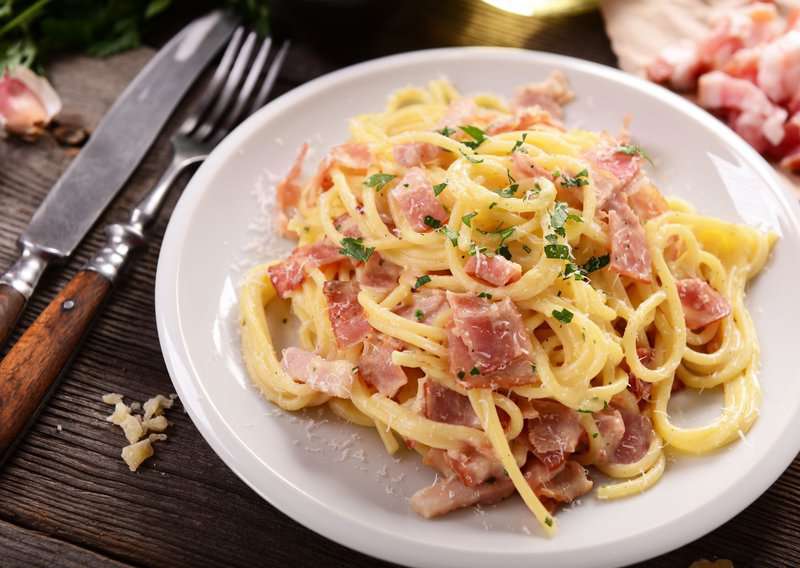
Few pasta dishes have captured the world’s appetite quite like Spaghetti Carbonara. Rich, creamy (without cream), and packed with the savory punch of cured pork and sharp Pecorino Romano, this classic Roman recipe is a masterclass in simple ingredients transformed by technique. It’s the kind of dish that proves you don’t need a long list of ingredients to create unforgettable flavor — just quality components and a little know-how.
Authentic Carbonara relies on pantry staples: pasta, eggs, Pecorino cheese, guanciale, and freshly ground black pepper. Yet it’s often misunderstood, especially outside Italy, where heavy cream, garlic, or random additions sneak into versions that barely resemble the real thing. True Carbonara is all about balance — a silky sauce made from egg yolks and cheese, gently coating al dente pasta with the perfect blend of saltiness and heat.
In this guide, we’ll show you how to make an authentic Italian Spaghetti Carbonara at home. Whether you’re cooking for a quick weeknight dinner or impressing friends at a casual gathering, this recipe brings the heart of Roman cooking to your kitchen — no shortcuts, no unnecessary extras.
Read here best Italian food, vegetarian food in Italy, best drinks in Italy and best breakfast in Italy
Read Here Things to know before visiting Italy and how to buy a sim card in Italy
BOOK YOUR TRAVEL INSURANCE
Two of our favorite travel insurance: Heymondo Vs Safetwing cheapest travel Insurance. You can get for $135 USD your Heymondo Travel Insurance with Heymondo discount code valid for 90 days. Read our full comparison of Genki vs Safetywing Travel Insurance Review and the comparison Heymondo vs Genki
Best Time to Eat & How to Partner This Dish
Spaghetti Carbonara shines as a lunch or dinner dish, ideally when you want something hearty but not overwhelmingly heavy. In Italy, it’s often enjoyed as a first course (primo) at midday meals or casual dinners with family and friends.
Pair it with a simple arugula salad dressed with lemon and olive oil, and serve alongside a glass of dry Italian white wine like Frascati or Verdicchio. These sides keep the focus on the bold, rich flavors of the pasta while offering a refreshing contrast. For an extra touch, a side of crusty bread can help scoop up every bit of the delicious sauce.
This dish works best when served immediately after cooking, while the sauce is still silky and the pasta perfectly coated. Carbonara doesn’t hold up well for reheating, making it a meal best enjoyed fresh and in good company.
One of the biggest misconceptions is that authentic Carbonara contains cream or garlic. In traditional Roman cooking, the creamy texture comes exclusively from the emulsion of egg yolks, cheese, and pasta water — no cream required. Adding cream not only changes the texture but dilutes the bold flavors that make the dish iconic.
Another debated belief is that bacon or pancetta can replace guanciale without changing the dish. While pancetta works in a pinch, guanciale — cured pork jowl — delivers a unique flavor and texture that’s hard to replicate. It’s the star ingredient that gives authentic Carbonara its unmistakable richness.
Perhaps most surprising is the assumption that you need fancy culinary skills to master Carbonara. In truth, the technique is straightforward but demands attention to detail — particularly when it comes to combining the egg mixture with the hot pasta without scrambling the eggs. With a little care, even a home cook can achieve restaurant-quality results.
How to Make Spaghetti Carbonara
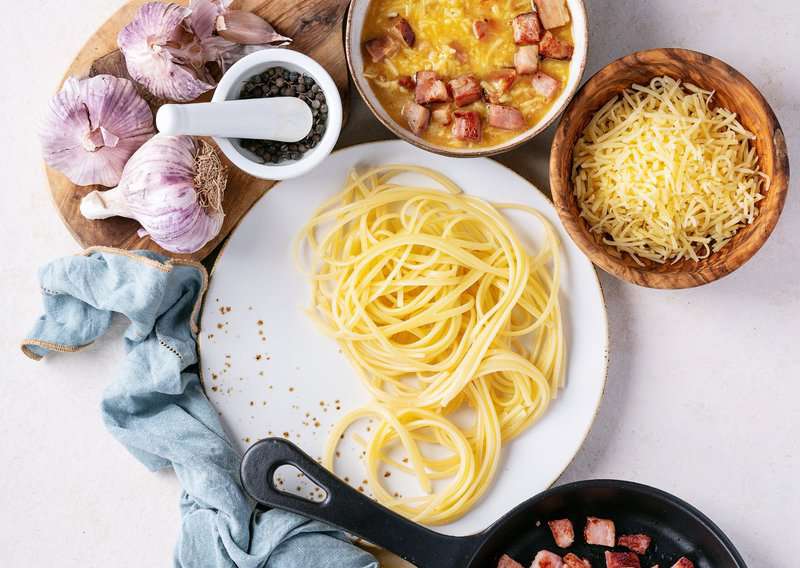
Spaghetti Carbonara Recipe Ingredients
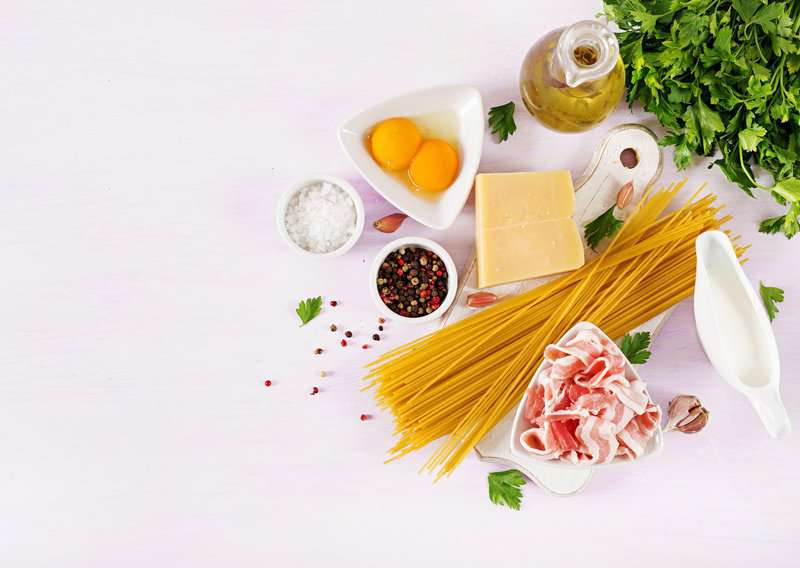
400g (about 14 oz) spaghetti
150g (about 5.3 oz) guanciale (cured pork cheek or jowl; pancetta can be used as a substitute)
3 large eggs
1 cup grated Pecorino Romano cheese (you can also use a mix of Pecorino and Parmesan)
Freshly ground black pepper
Salt (for the pasta water)
Get the best deals for your home and kitchen needs
Step By Step How to Make Spaghetti Carbonara
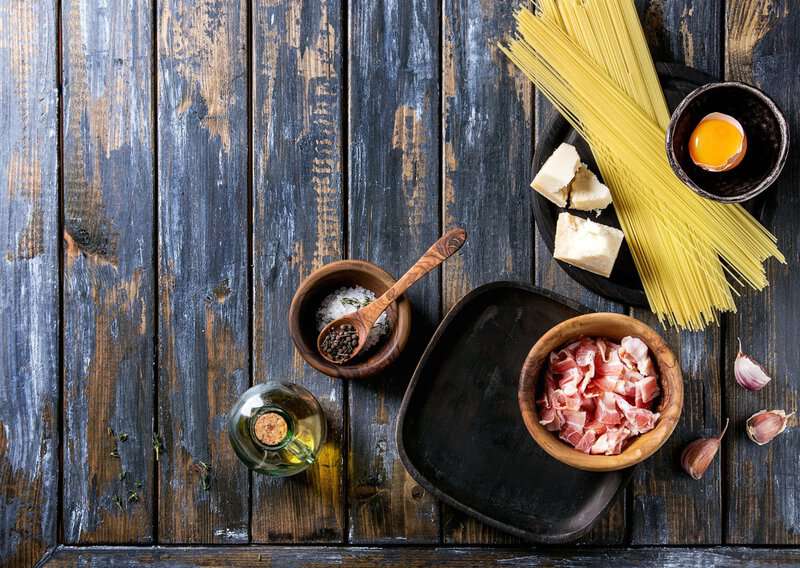
Step 1 – Prepare Ingredients
Slice the guanciale into small pieces or strips. The fat will render out during cooking, adding flavor to the dish.
In a bowl, beat the eggs and mix in the grated Pecorino Romano cheese along with a generous amount of freshly ground black pepper. Set aside.
Step 2 – Cook Pasta
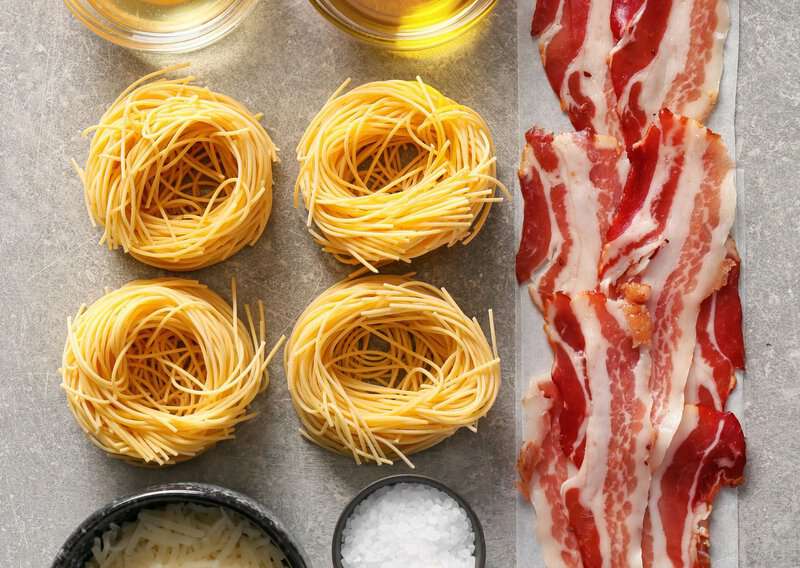
Bring a large pot of salted water to a boil. Add the spaghetti and cook until al dente, usually about 1 minute less than the package instructions suggest.
Step 3 – Cook Guanciale
While the pasta is cooking, place the guanciale in a cold skillet. Turn the heat to medium and cook until the fat renders out and the guanciale becomes crispy and golden. Remove from the heat and set aside.
Step 4 – Combine Ingredients
Once the spaghetti is cooked, reserve 1 cup of pasta water and then drain the pasta. Add the hot, drained spaghetti to the skillet with the guanciale. Toss well to coat the pasta in the rendered fat.
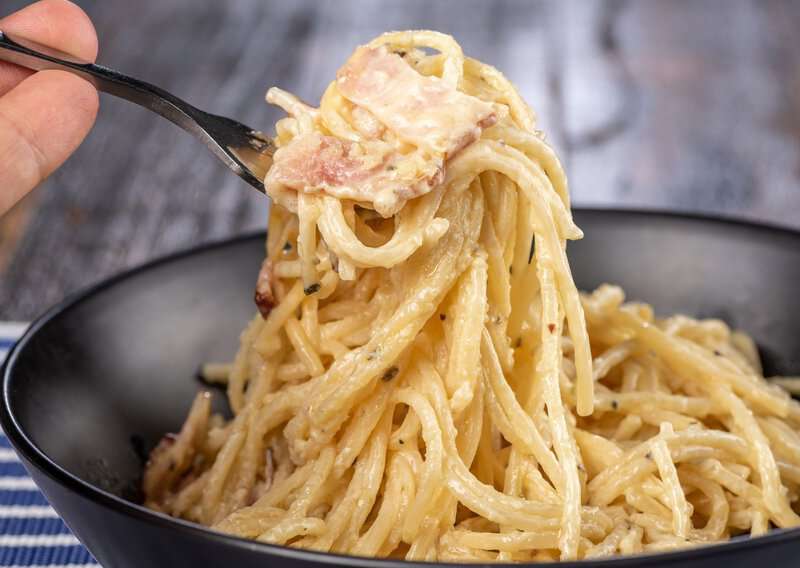
Remove the skillet from the heat. Quickly pour the egg and cheese mixture over the hot pasta, stirring vigorously. The heat from the pasta will gently cook the eggs, creating a creamy sauce. If the sauce is too thick, add a little reserved pasta water to loosen it.
Step 5: Serve Immediately
Serve the Carbonara immediately after mixing, with extra Pecorino Romano and freshly ground black pepper on top.
Tips To Make Spaghetti Carbonara
Traditional Carbonara does not include cream. The creaminess of the sauce is achieved by the eggs and cheese. It’s crucial to mix the pasta and egg mixture off the heat to avoid scrambling the eggs.
Using the starchy pasta water helps to create a smooth and silky sauce.
How Many Calories Has A Spaghetti Carbonara
A standard serving of cooked spaghetti is around 220 calories. Each large egg used in the sauce contributes about 70 calories, Pancetta can add around 250 calories, Parmesan Cheese is aorund 45 calories.
A typical serving of Spaghetti Carbonara might range from 650 to 750 calories.
Serving Suggestions
Spaghetti carbonara is best enjoyed straight from the pan, served hot and creamy before the sauce thickens too much. A sprinkle of freshly cracked black pepper and extra Pecorino Romano right before serving brings out the bold, savory notes that make this dish iconic in Roman cuisine.
For a more complete meal, pair carbonara with a crisp green salad dressed simply with olive oil and lemon. The freshness of the greens balances the richness of the pasta, creating harmony on the table without stealing attention from the star dish.
If you want to elevate the experience, serve it alongside a glass of Italian white wine, such as Frascati or Pinot Grigio. The acidity cuts through the richness of the guanciale and egg-based sauce, making each bite more satisfying. Keep sides minimal—carbonara is meant to be the centerpiece of the meal.
Final Thoughts
Authentic spaghetti carbonara proves that simplicity often delivers the deepest flavor. With just a handful of ingredients—guanciale, eggs, Pecorino Romano, black pepper, and pasta—you can create a dish that feels luxurious yet rooted in tradition.
What makes this recipe stand out is the technique, not complexity. By respecting the process—cooking the guanciale properly, tossing pasta off the heat, and letting eggs and cheese emulsify into a silky sauce—you capture the essence of Roman cooking: skillful restraint.
Ultimately, carbonara is more than just comfort food. It’s a symbol of culinary heritage, passed down through generations and fiercely protected by Italians who know its value. By making it authentically, you not only enjoy an incredible meal but also take part in preserving a timeless tradition.

About the Author: Ruben, co-founder of Gamintraveler.com since 2014, is a seasoned traveler from Spain who has explored over 100 countries since 2009. Known for his extensive travel adventures across South America, Europe, the US, Australia, New Zealand, Asia, and Africa, Ruben combines his passion for adventurous yet sustainable living with his love for cycling, highlighted by his remarkable 5-month bicycle journey from Spain to Norway. He currently resides in Spain, where he continues sharing his travel experiences with his partner, Rachel, and their son, Han.