
There’s a slice of rural Spain where a mayor will hand you keys, introduce you to the school director, and tell you the rent is zero for the first months. In a few places you’ll even see small monthly stipends tied to children or shop hours. The headline versions sound mythical. The reality is better: real houses, real contracts, and small-town strings that most remote workers can happily accept.
What “free house plus €200” really means in Spain right now
If you’ve seen posts promising cash just for showing up, you’re probably reading a mix of real offers and old rumors stitched together. The real programs fall into three buckets:
- Housing-first villages that comp the rent for a trial period, then set low fixed rent afterward. Some also offer small monthly stipends per school-age child to keep the classroom open. Griegos (Teruel) became the poster child: free rent for the first months, then about €225 with deductions per child, and in 2025 cycles some notices showed €100 per child per month as a repopulation support. These are not Instagram myths; they’re municipal rules approved by council for the school year.
- Housing-plus-work schemes that bundle a house with a needed service. Castellolí (Barcelona province) is the 2025 standout: free housing and premises plus €15,000 to fit out and run the village shop or similar service. It’s not passive cash. You agree to open the doors, and the town gives you a roof and a reason to meet everyone. Americans can qualify if they hold the right residency.
- Regional relocation grants that top up small-town life. Extremadura’s digital-nomad grant paid up to €15,000 for newcomers who work remotely and settle in the region. That 2024–2025 window closed on October 8, 2025, but it signals how Spain funds rural moves: not national checks to everyone, but regional money and municipal support you can combine.
So where does “€200 a month” come from. Not from a single national rule. It shows up as per-child stipends or local allowances that stack with free rent. In practice, a family with two school-age kids in a place like Griegos could see €200 a month on top of free housing in the trial period, then a low rent net of child deductions. That’s how ordinary numbers become a viral headline.
Who actually qualifies (and what Americans must have before applying)
These programs are not tourist perks. Towns want year-round neighbors, not winter tenants. Common baselines:
- Residency you can prove. As an American, you’ll use a Spanish residence compatible with remote work or self-employment, like the Digital Nomad Visa or self-employed (autónomo) routes. The village will ask for NIE/NIF, empadronamiento (local registration), and proof of income. No residence card, no keys.
- A reason the town needs you. That can be children for the school, a shop that opens daily, or skills the council requested (mechanic, baker, physio, café operator). Castellolí literally ties the package to reopening the village shop.
- Minimum stay and presence. Expect 12–36 months commitments and actual hours in any premises the town gives you. Towns care about lights on in winter as much as summer photos.
- Normal paperwork pace. Even tiny councils want contracts. You’ll sign housing use terms, business-use terms if premises are included, and often show proof of school enrollment for stipends tied to children.
A day-one honest picture of what you get (and what you give)
What you get:
- A roof at a rounding-error price. In housing-first villages, your largest expense disappears for a few months, then stays low and predictable.
- Introductions that matter. The mayor and secretary walk you to the school, shop landlord, and (if relevant) the clinic. In small places, one handshake beats a dozen forms.
- A simple runway for remote work. Fiber is often already there because the region subsidized it to keep families. Ask for speed and provider before you commit.
- Small monthly support if your children enroll. Stipends vary, but €100 per school-age child is a number you’ll see, and two kids often net out most of a symbolic rent once the trial period ends.
What you give:
- Presence. The point is to have people in the streets in January, not just July.
- Reliability. If you take a shop package, the council expects opening hours. If you promise school enrollments, they expect attendance.
- Community participation. In places like Griegos or the villages around Albarracín, you’ll be asked to join fiestas, share escuela duties, and be visible. It’s the best part if you lean in.
The map: where “free house + stipend” is alive this year
Griegos (Teruel, Aragón)
- Offer: Time-boxed free housing, then symbolic rent (around €225) with per-child deductions; in some 2025 cycles €100/month per school-age child; matching local jobs when possible.
- Why it exists: Keep the school open and maintain year-round services at 1,600 meters altitude.
- Fit: Families with remote income or who can take a local contract. Winters are cold. If you love snow and quiet, it’s heaven.
Castellolí (Barcelona province, Catalonia)
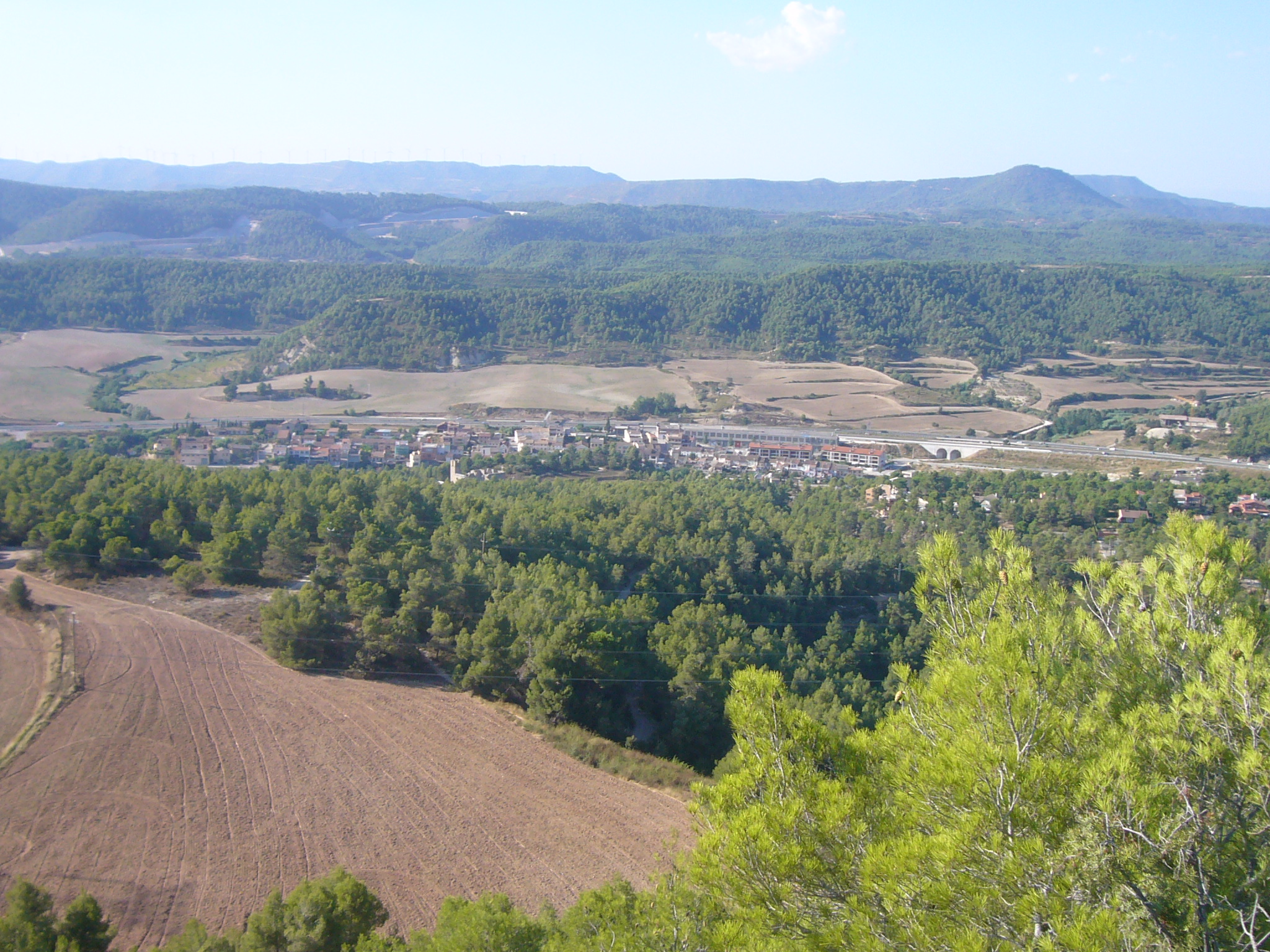
- Offer: Free housing + commercial premises + €15,000 to fit out and operate a needed shop.
- Why it exists: A 650-person town can’t lose its last grocer. The council created a ready-to-open path.
- Fit: Remote worker who also wants a part-time retail identity. Think coffee + basics + parcel point, open daily.
Extremadura (regional)
- Offer: Up to €15,000 for digital nomads who relocate and register activity in the region; 2024–2025 cycle closed Oct 8, 2025.
- Why it exists: Bring year-round spenders to rural municipalities and strengthen local services.
- Fit: Remote professionals happy with bigger towns as hubs and villages as home base; watch for next call.
Other frequent flyers in “Empty Spain” lists
- Albarracín area villages refresh housing-help notices when classrooms look thin.
- Sporadic rent supports and baby bonuses pop up across Castilla y León, Galicia, and Asturias. Beware old rumors like the famous Ponga story that resurfaces every year despite being debunked; always check the municipal bando (official notice) and current year.
The playbook: how to land one of these offers in 30 days
Week 1 — Get legally landable
- Pick your residency path. If you’re remote, the Digital Nomad Visa is the usual route. If you’re retiring or self-employed, match the permit to your income. Without a legal right to reside/work, a council can’t sign you.
- Gather proof of income, FBI/State background checks (if your visa type needs them), and private health insurance for the visa stage.
- Start your NIE and Spanish tax ID (NIF) plan. You’ll use these in every village conversation.
Week 2 — Aim at an actual council
- Write a one-page offer letter to the town: “Two adults, two children ages 7 and 10, remote income of €X per month, happy to run [shop/café/parcel point] with opening hours. Arrival by date, empadronamiento the first week.”
- Attach income proofs and a school enrollment commitment. Name your Spanish visa track and current status honestly.
- Send it to two targets: one housing-first village like Griegos, and one housing-plus-work town like Castellolí. Use Spanish. If you don’t write Spanish, keep it simple and factual and ask for a bando vigente (current notice).
Week 3 — Get specific
- If a mayor replies, propose dates to arrive, ask for draft terms (trial period, rent after, stipend rules, hours), and confirm school seats with the director.
- If you’re pitching a shop, send a two-page plan: products, hours, supplier contacts, parcel pick-up, coffee machine, and a five-line budget showing your fit-out use of the €15,000.
Week 4 — Close like a local
- Ask for a simple contrato that lists housing terms, shop hours (if any), stipend rules, and minimum stay.
- Book arrival and padron appointments. Keep the mayor and school in the loop with exact dates.
The fine print that saves you money and embarrassment
It’s not “Americans only.” These are municipal/regional offers open to anyone who meets the local rules. As an American you’re welcome if you have the right residence. Bring that first; the town can’t fix your visa.
Stipends have strings. Per-child money assumes enrollment and attendance. If your family travels for a month mid-term, expect pro-rated or paused support.
Shop packages mean work. Castellolí’s €15,000 isn’t a gift card. It’s a fit-out grant attached to opening hours. If you stop opening, the town will act.
Rumors never die. Each fall, social posts recycle old or false claims (the famous Ponga pays €3,000 myth). Check the current municipal site or regional portal. If you can’t find a 2025 bando, it’s not real this year.
You still pay utilities and tax. Free housing usually excludes electricity, water, internet, and basura (waste fees). Budget €80–€160 a month depending on size and altitude.
Winter is the feature, not the bug. Quiet months are why towns need you. If your ideal life is August-only, choose a bigger town.
What a real budget looks like in a “free house + €200” village
Assume two adults + two school-age children, remote income €3,500/month net.
Months 1–3 (trial period)
- Rent: €0
- Stipend: €200 (two kids at €100 each, if the town uses that rule)
- Utilities + internet: €140
- Groceries: €450–€600 (rural shopping + weekly market trips)
- Car fuel/insurance: €180 (distances add up)
- School lunches/fees: €120 (varies by region)
Net housing cost: negative or near zero after the stipend; total €1,000–€1,200 monthly spend on the basics.
After month 3
- Rent: €225 (symbolic) minus €100 per child = €25 effective, if your council uses that formula
- Everything else: similar
You’re effectively paying utilities and life, not rent. That is the whole point: to make staying financially easy through the first winters.
Pitfalls most newcomers miss
Assuming the mayor handles your visa. They can’t. Get legal residence first so your file is easy to sign.
Forgetting to ask about fiber. Rural networks are often excellent; sometimes they aren’t. Ask for provider, speed, and latency before you promise your boss a 4 a.m. Zoom.
Underestimating altitude and weather. Teruel villages are high and cold. Heating costs and snow tires are real line items.
Ignoring shop math. If you take a premises package, count supplier minimums, POS, parcel fee splits, and hours. A parcel point + coffee + basics model usually clears €600–€1,200 a month in a tiny place when run consistently. Do it for community + break-even; your remote salary pays the bills.
Not learning the two words that unlock everything: empadronamiento (registering as a resident of the town) and bando (official notice). When you use those words, doors open.
What this means for you
If you want space, safety, and a financial reset, Spain’s emptiest villages are not dreams. They are contracts that trade your presence for their housing and, in family-first towns, a small monthly stipend that keeps the school alive. For Americans, the real unlock is legal residence and showing up with a plan the mayor can sell to the council: two kids for the classroom, a shop that opens daily, rent that starts at zero, and neighbors who stay when the temperature drops.
Pick one housing-first village and one housing-plus-work town. Send two emails tonight. If you can live quietly, wave to the same people each morning, and shovel your own snow in January, you will fit just fine.

About the Author: Ruben, co-founder of Gamintraveler.com since 2014, is a seasoned traveler from Spain who has explored over 100 countries since 2009. Known for his extensive travel adventures across South America, Europe, the US, Australia, New Zealand, Asia, and Africa, Ruben combines his passion for adventurous yet sustainable living with his love for cycling, highlighted by his remarkable 5-month bicycle journey from Spain to Norway. He currently resides in Spain, where he continues sharing his travel experiences with his partner, Rachel, and their son, Han.