
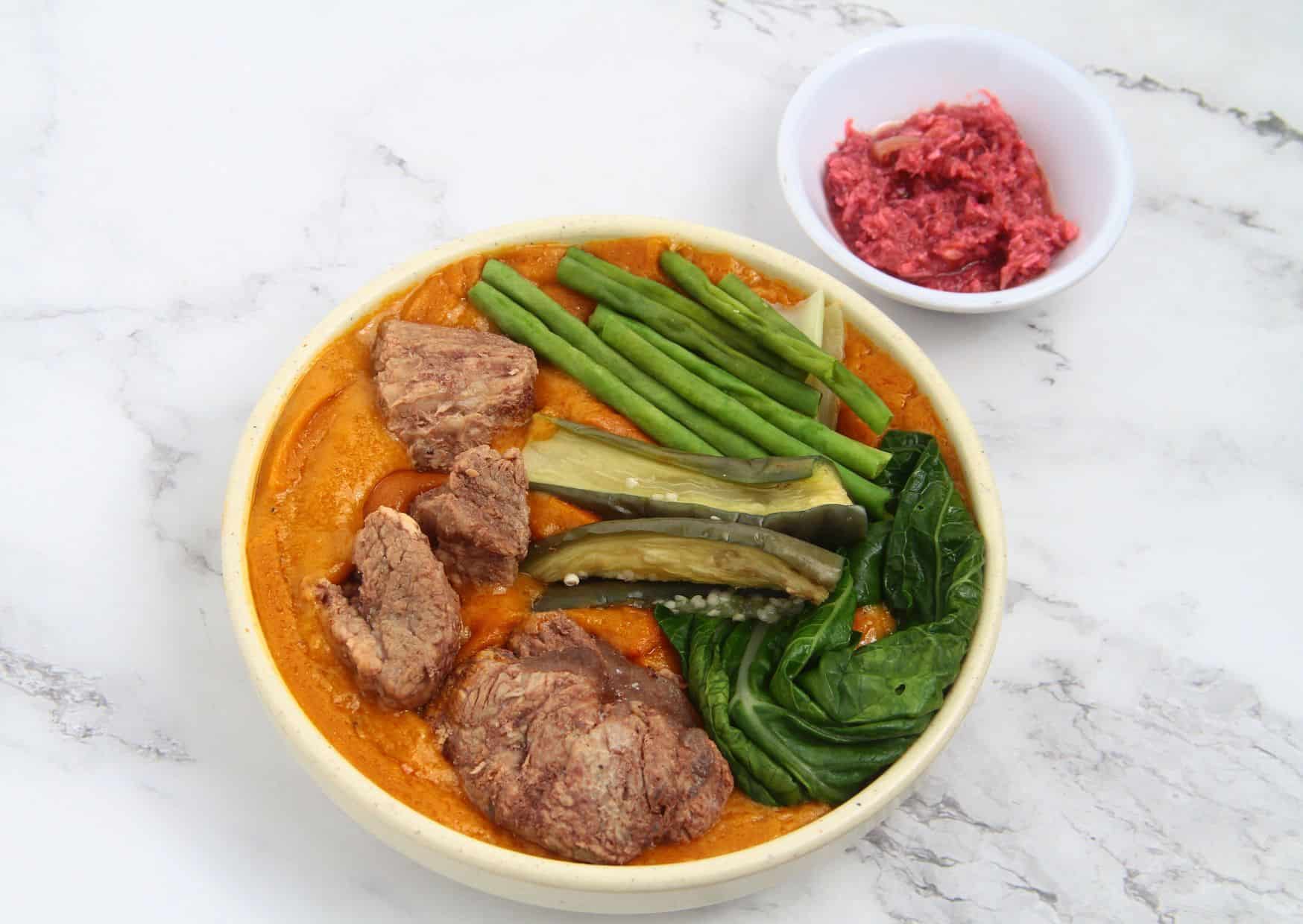
Kare-Kare is one of the Philippines’ most beloved traditional dishes, known for its rich, nutty peanut sauce and hearty combination of oxtail, tripe, and vegetables. Often enjoyed during fiestas, family gatherings, or Sunday lunches, Kare-Kare is a dish that brings people together around the table, served steaming hot with a side of bagoong (fermented shrimp paste) that adds a punch of umami to every bite. Its origins trace back to pre-colonial times, but it has evolved into a national comfort food, celebrated in Filipino homes and restaurants alike.
What makes Kare-Kare so special is its deep, velvety peanut sauce that coats each ingredient, creating a flavorful and comforting experience unique to Filipino cuisine. Traditionally, it’s cooked low and slow to tenderize the meat while infusing the sauce with the richness of ground peanuts and toasted rice flour, giving it a distinct earthy aroma and creamy texture that pairs perfectly with steamed white rice. For many Filipinos, Kare-Kare is not just a dish but a nostalgic reminder of home-cooked meals shared with loved ones.
In this recipe guide, you’ll learn how to make authentic Kare-Kare step by step, including tips for preparing its signature peanut sauce and balancing flavors to achieve a dish that rivals the best Filipino eateries. Whether you’re introducing friends to Filipino cuisine or craving a taste of home, this recipe will become your go-to for hearty, celebratory meals.
Read here our favorite Filipino Food, vegetarian food in the Philippines, Filipino breakfast, Filipino desserts, Philippine fruits, Filipino drinks and Filipino street food
BOOK YOUR TRAVEL INSURANCE
Two of our favorite travel insurance: Heymondo Vs Safetwing cheapest travel Insurance. You can get for $135 USD your Heymondo Travel Insurance with Heymondo discount code valid for 90 days. Read our full comparison of Genki vs Safetywing Travel Insurance Review and the comparison Heymondo vs Genki
Best Time to Eat and What to Serve It With
Best time to eat:
Kare-Kare is best enjoyed as a lunch or dinner dish, especially on weekends when you have time to prepare it with care. It’s also perfect for special occasions, family gatherings, or holiday feasts.
Perfect pairings:
Side: Serve with steamed white rice to soak up the rich peanut sauce and a side of bagoong alamang (fermented shrimp paste) for a salty, umami contrast.
Drink: Pair with an ice-cold San Miguel beer for an authentic Filipino meal or a light citrusy drink like calamansi juice to balance the richness.
Dessert: Finish your meal with a classic Filipino dessert such as leche flan or halo-halo for a refreshing and sweet ending to this hearty feast.
Kare-Kare isn’t just food—it’s a celebration of Filipino hospitality and culinary heritage, bringing warmth, richness, and connection to every gathering.
Kare-Kare, though beloved across the Philippines, stirs debate about authenticity and origin. Some say it originated in Pampanga, the country’s culinary capital, while others trace it to pre-colonial Manila or even to Indian curry influences brought by traders. The truth is likely a blend of these stories, reflecting how Filipino cuisine evolves through cultural exchange.
Another controversy lies in the ingredients. Traditionalists insist on using oxtail, tripe, and peanut sauce made from scratch using roasted peanuts and ground rice. Modern cooks, however, often replace these with peanut butter or ready-made mixes for convenience. Purists claim these shortcuts dilute authenticity, but others argue they keep the dish alive in modern kitchens.
Even the type of meat used divides opinion. Some prefer the richness of oxtail, while others use pork hock, beef shank, or even seafood. Yet despite these variations, the essence of Kare-Kare remains the same: a slow-cooked, peanut-rich stew that brings people together over shared history, culture, and comfort.
How to Make Kare-Kare
Kare-Kare Recipe Ingredients
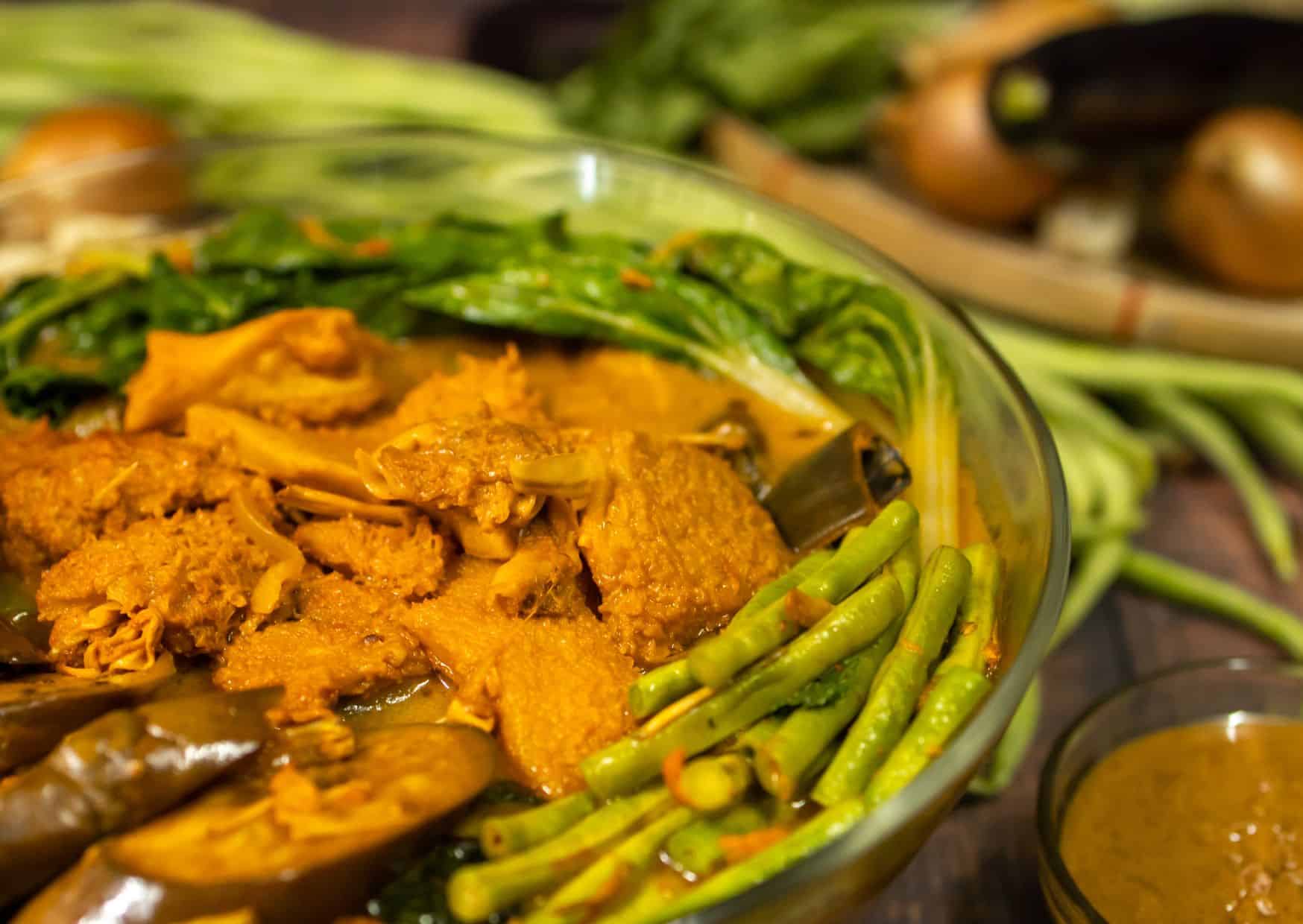
2 pounds oxtail, cut into pieces
1/2 pound tripe (optional)
1 bunch bok choy or pechay, ends trimmed
1 bunch string beans, cut into 2-inch pieces
1 eggplant, sliced
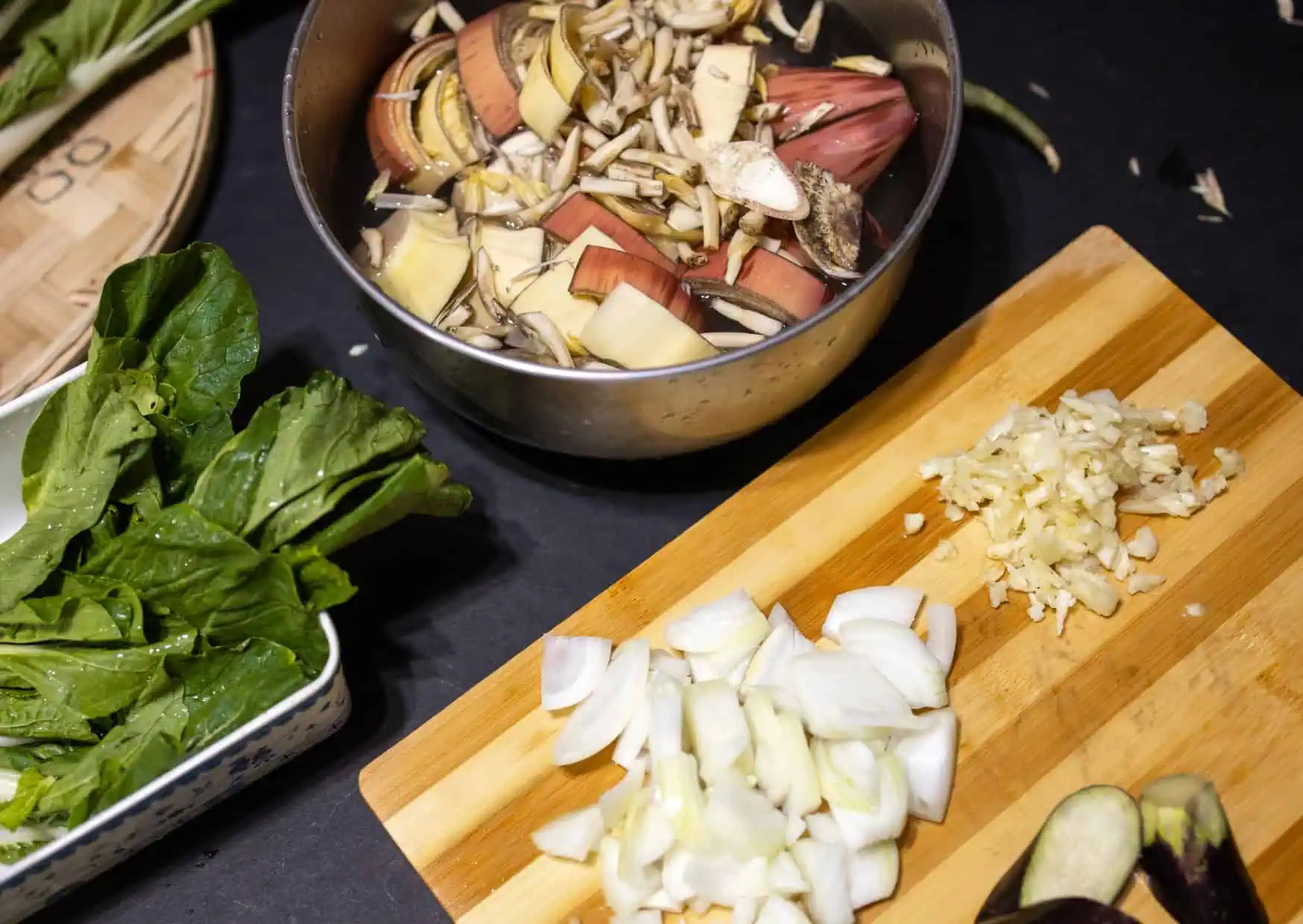
1 banana heart, sliced (optional)
1/2 cup peanut butter
1/4 cup ground toasted rice
1/4 cup annatto seeds (for color)
1 onion, chopped
4 cloves garlic, minced
6 cups water
2 tablespoons fish sauce
Salt and pepper to taste
Shrimp paste (bagoong) for serving
Step By Step How to Make Kare-Kare
Prepare Annatto Water
Soak the annatto seeds in 1/2 cup warm water for about 30 minutes. Strain and set the colored water aside.
Cook the Meat
In a large pot, bring water to a boil. Add the oxtail and tripe (if using) and simmer until tender, about 2-3 hours. Skim off any scum that rises to the surface. Alternatively, you can use a pressure cooker to reduce cooking time.
Prepare Vegetables
While the meat is cooking, prepare the vegetables. Blanch the bok choy, string beans, and eggplant in boiling water until just tender. Set aside.
Saute Aromatics
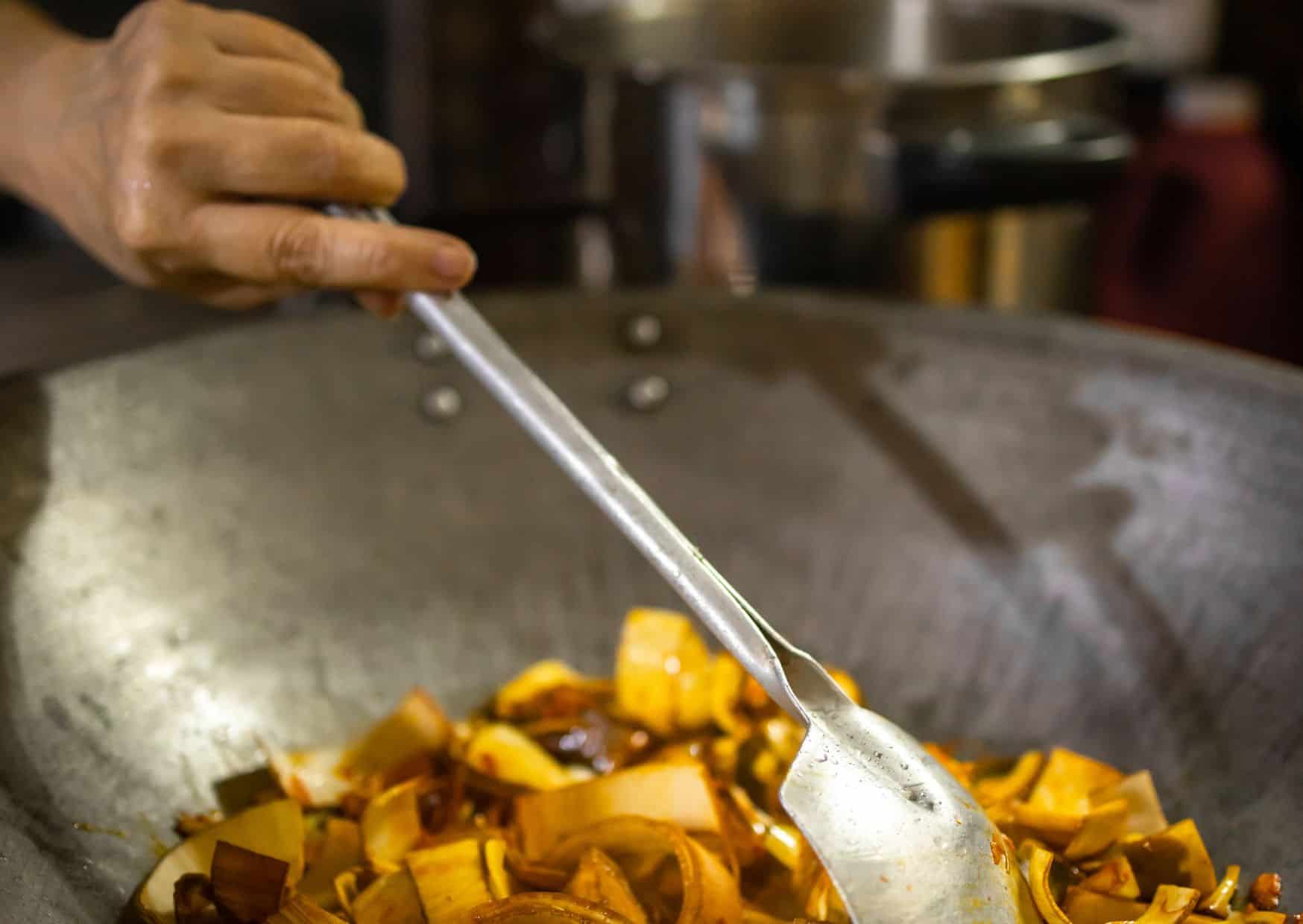
In a separate large pot, heat a bit of oil over medium heat. Saute the onion and garlic until fragrant and softened.
Make the Sauce
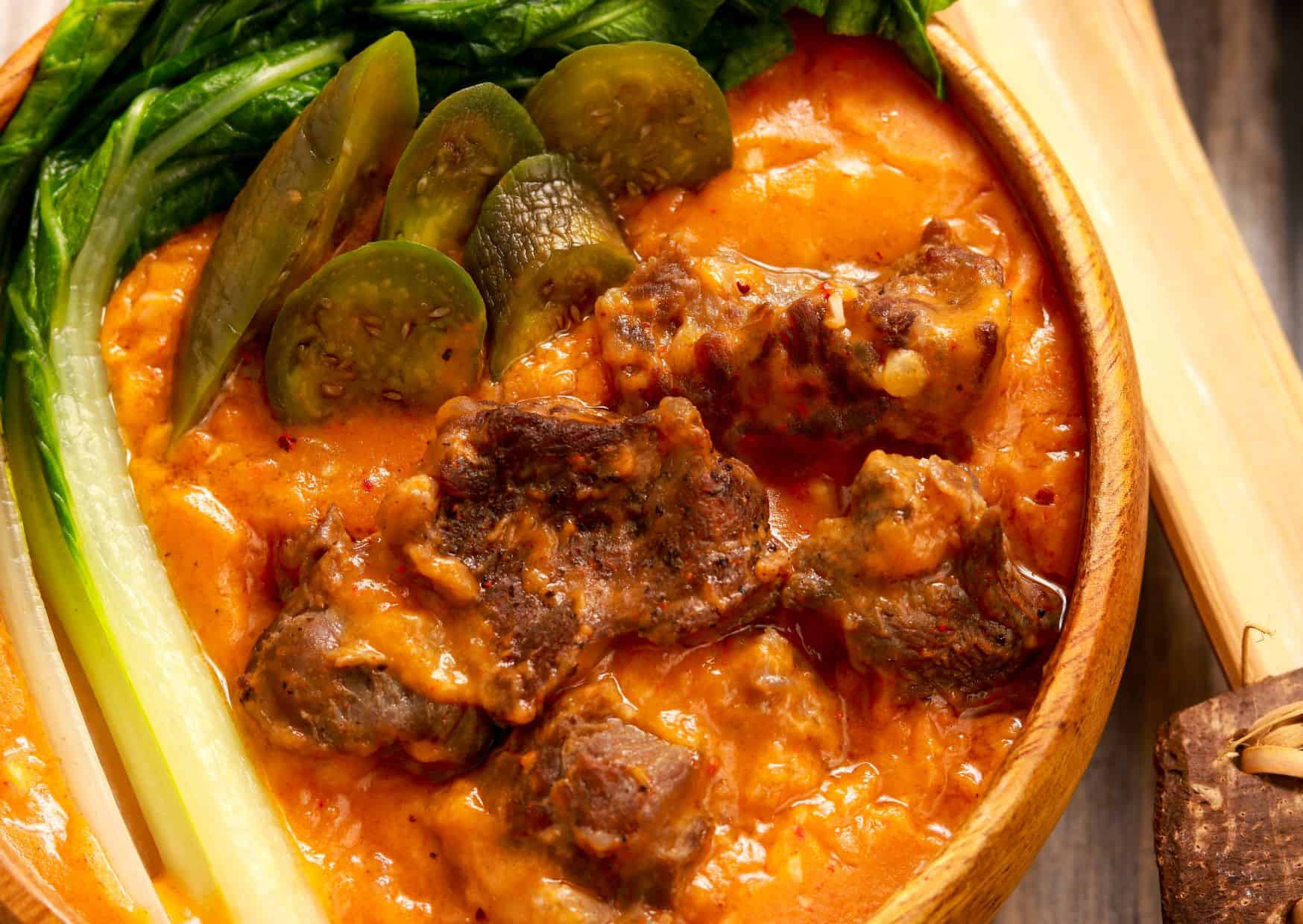
Add the cooked oxtail and tripe to the pot with the onions and garlic. Pour in the reserved annatto water and peanut butter. Stir well to combine. Add the ground toasted rice to thicken the sauce. Stir until the sauce is smooth and well blended.
Simmer
Simmer the mixture for about 20 minutes, allowing the flavors to meld together. Adjust the seasoning with fish sauce, salt, and pepper to taste.
Add Vegetables
Add the blanched vegetables to the pot and cook for an additional 5 minutes, just to heat through.
Serve
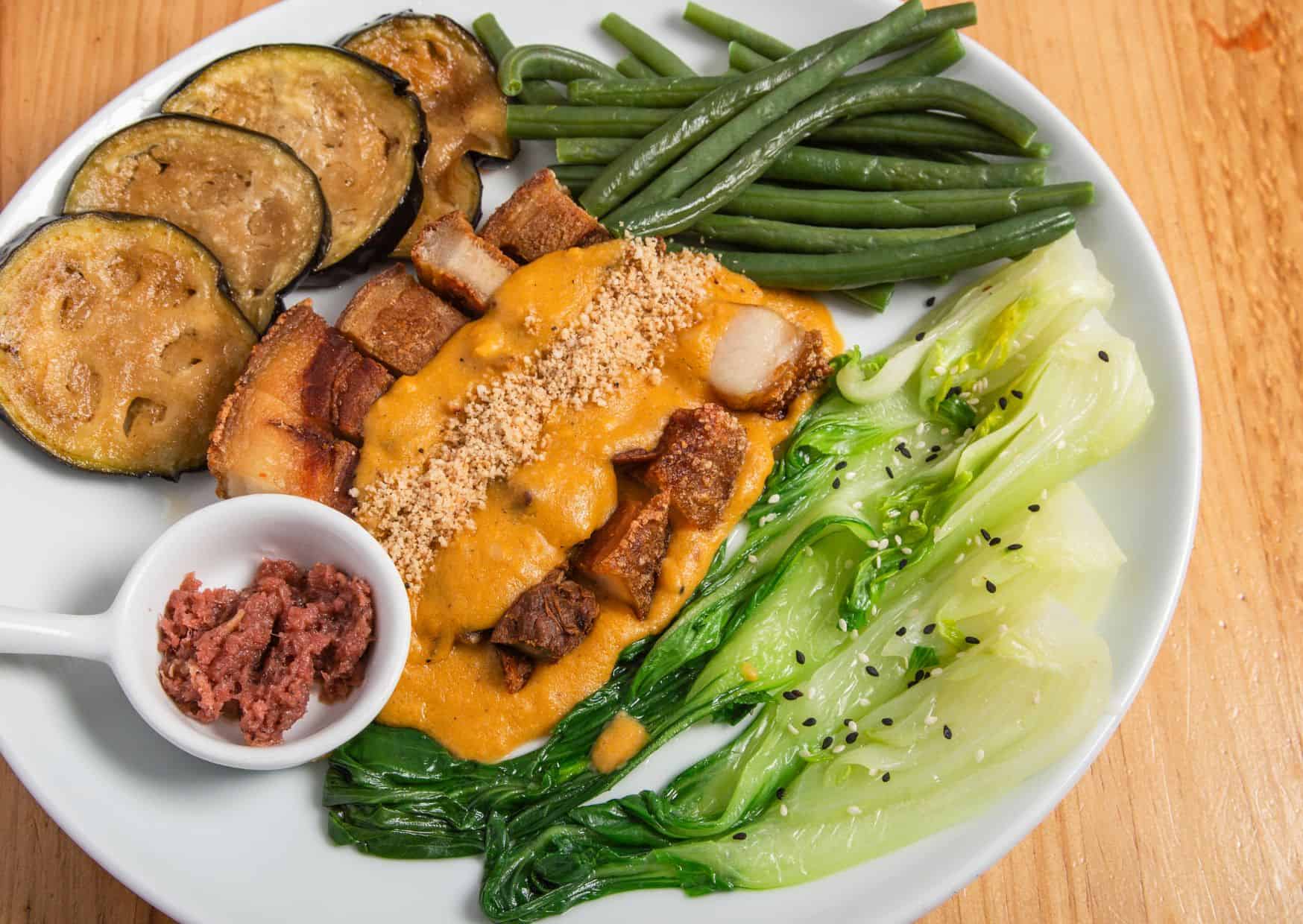
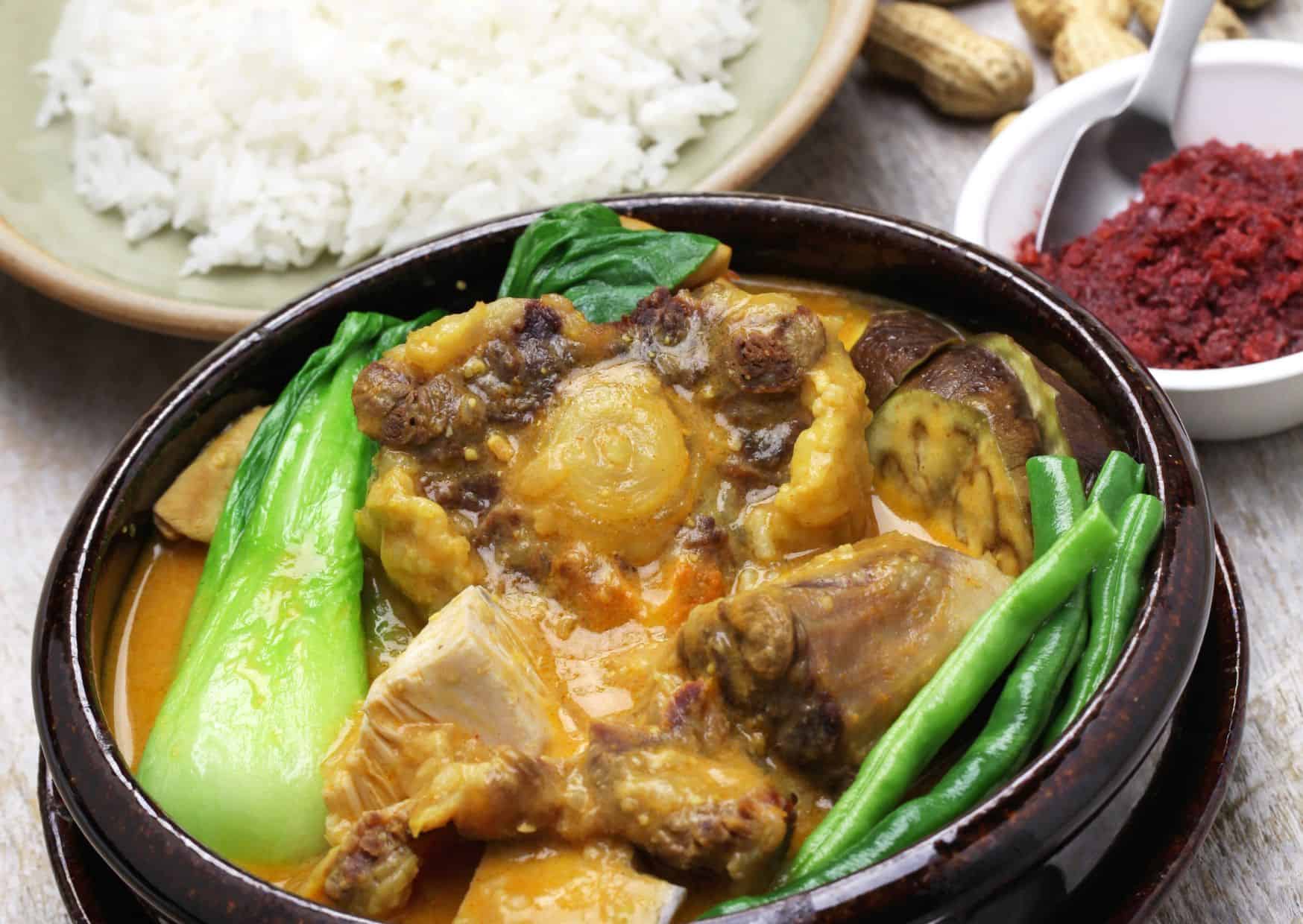
Serve the Kare-Kare hot with steamed rice and a side of shrimp paste (bagoong) for added flavor.
Tips To Make Kare-Kare
Ensure the oxtail and tripe are cooked until very tender. Using a pressure cooker can significantly reduce cooking time. The ground toasted rice helps to thicken the sauce and adds a unique flavor. Make sure it is finely ground.
These add a vibrant color to the dish. If you can’t find annatto seeds, you can use paprika for color. Serve with shrimp paste (bagoong) on the side for an authentic Filipino experience. The salty and slightly spicy flavor of the bagoong complements the rich, nutty sauce of the Kare-Kare.
How Many Calories Have Kare-Kare
Calories: Approximately 400-450 per serving
Protein: 20-25 grams
Carbohydrates: 20-25 grams
Fat: 25-30 grams
Fiber: 3-5 grams
Serving Suggestions
Traditional Style: Serve Kare-Kare with white rice and bagoong on the side. Add blanched eggplant, long beans, and banana heart for a classic touch.
Modern Version: For a lighter twist, use chicken or seafood instead of oxtail. Add roasted peanuts or coconut milk for creaminess.
Vegetarian Option: Substitute meat with tofu, mushrooms, and eggplant while keeping the same peanut-based sauce for authenticity.
For a Feast: Pair Kare-Kare with crispy lechon kawali or grilled tilapia for texture contrast.
Presentation Tip: Serve in a clay pot or deep dish, garnished with crushed peanuts and fresh greens.
Leftover Hack: Reheat leftover sauce and use it as a topping for noodles or as a dip for grilled meats.
Final Thoughts
Kare-Kare is more than a meal—it’s a symbol of Filipino warmth, resilience, and togetherness. Every pot tells a story of family, celebration, and the power of food to connect generations. Its signature peanut sauce and hearty ingredients embody what Filipino cuisine stands for: depth, complexity, and heart.
What makes Kare-Kare timeless is its adaptability. Whether prepared for a fiesta or a quiet family dinner, it feels both luxurious and homey. The dish reminds us that comfort food doesn’t need to be fancy—it just needs to be made with patience, love, and purpose.
In the end, Kare-Kare’s beauty lies in its imperfections. Every version—traditional or modern—reflects the cook who made it. And that’s what makes it authentically Filipino: it’s not defined by rigid rules, but by the shared joy of eating and belonging.

About the Author: Ruben, co-founder of Gamintraveler.com since 2014, is a seasoned traveler from Spain who has explored over 100 countries since 2009. Known for his extensive travel adventures across South America, Europe, the US, Australia, New Zealand, Asia, and Africa, Ruben combines his passion for adventurous yet sustainable living with his love for cycling, highlighted by his remarkable 5-month bicycle journey from Spain to Norway. He currently resides in Spain, where he continues sharing his travel experiences with his partner, Rachel, and their son, Han.