
Moroccan cuisine is a feast for the senses. Rich with spices like cumin, saffron, cinnamon, and ginger, it transforms simple ingredients into deeply flavorful dishes layered with history and cultural pride. From bustling Marrakech souks to quiet mountain villages, dinner in Morocco is more than just a meal; it is a ritual of connection, warmth, and hospitality.
Moroccan dinners are built around dishes that bring families and friends together at the table. Tagines bubbling with tender meat and vegetables, couscous steamed to fluffy perfection, and hearty lentil or chickpea stews served with fresh bread are staples that reflect Morocco’s blend of Berber, Arab, and Mediterranean influences. Each dish tells a story passed down through generations, honoring both tradition and local ingredients.
In this recipe guide, you’ll learn how to make three of the most popular Moroccan dinner dishes at home. Whether you’re seeking a comforting weekday meal or planning a special dinner to impress guests, these recipes will bring the aromas and flavors of Morocco straight into your kitchen.
Read here Moroccan food, best Moroccan drinks best breakfast in Morocco
BOOK YOUR TRAVEL INSURANCE
Two of our favorite travel insurance: Heymondo Vs Safetwing cheapest travel Insurance. You can get for $135 USD your Heymondo Travel Insurance with Heymondo discount code valid for 90 days. Read our full comparison of Genki vs Safetywing Travel Insurance Review and the comparison Heymondo vs Genki
Tips for Authentic Moroccan Cooking
Moroccan cuisine heavily relies on a variety of spices. Use fresh, high-quality spices for the best flavors.
Slow Cooking: Many Moroccan dishes benefit from slow cooking, which allows the flavors to meld and develop.
Serving: Serve Moroccan dishes with traditional bread, such as Khobz or couscous, to soak up the delicious sauces.
Best Time to Eat and How to Partner
In Morocco, dinner is typically eaten later in the evening, often after sunset, especially in rural areas where meals are shared after work or prayer. It is a time to gather as a family, share stories, and unwind over a hearty meal that nourishes both body and spirit.
To serve these dishes authentically, pair them with warm khobz (Moroccan bread) to scoop up sauces, mint tea to aid digestion and refresh the palate, and a simple cucumber and tomato salad with olive oil and lemon juice to balance the richness of the main dishes. Finish with fresh seasonal fruit or sweet pastries like chebakia to complete a true Moroccan dinner.
One controversial truth about Moroccan dinners is how they are portrayed in Western cookbooks and restaurants. Many recipes simplify spice blends or skip traditional preparation methods to save time, but authentic Moroccan cooking involves layering spices and allowing flavors to develop slowly, often over hours. Cutting corners may create a tasty dish, but it loses the complexity and soul of Moroccan cuisine.
Another misunderstood aspect is the use of couscous. Outside Morocco, couscous is often served as a side dish cooked in minutes, but in traditional Moroccan homes, couscous is steamed three times over broth to achieve its fluffy texture and is considered a main dish, especially on Fridays. Serving couscous as a quick microwave side diminishes its cultural significance as a centerpiece of communal meals.
Finally, while tagines are popular worldwide, many people use them incorrectly. The tagine pot is designed to slowly braise meat and vegetables, creating a self-basting steam environment. Using it merely as a serving dish or cooking tagines in a regular pot for convenience ignores the traditional method that defines the dish’s rich, tender results. To Moroccans, the process is as important as the flavors themselves.
Popular Dinners In Morocco
1. Moroccan Chicken Tagine
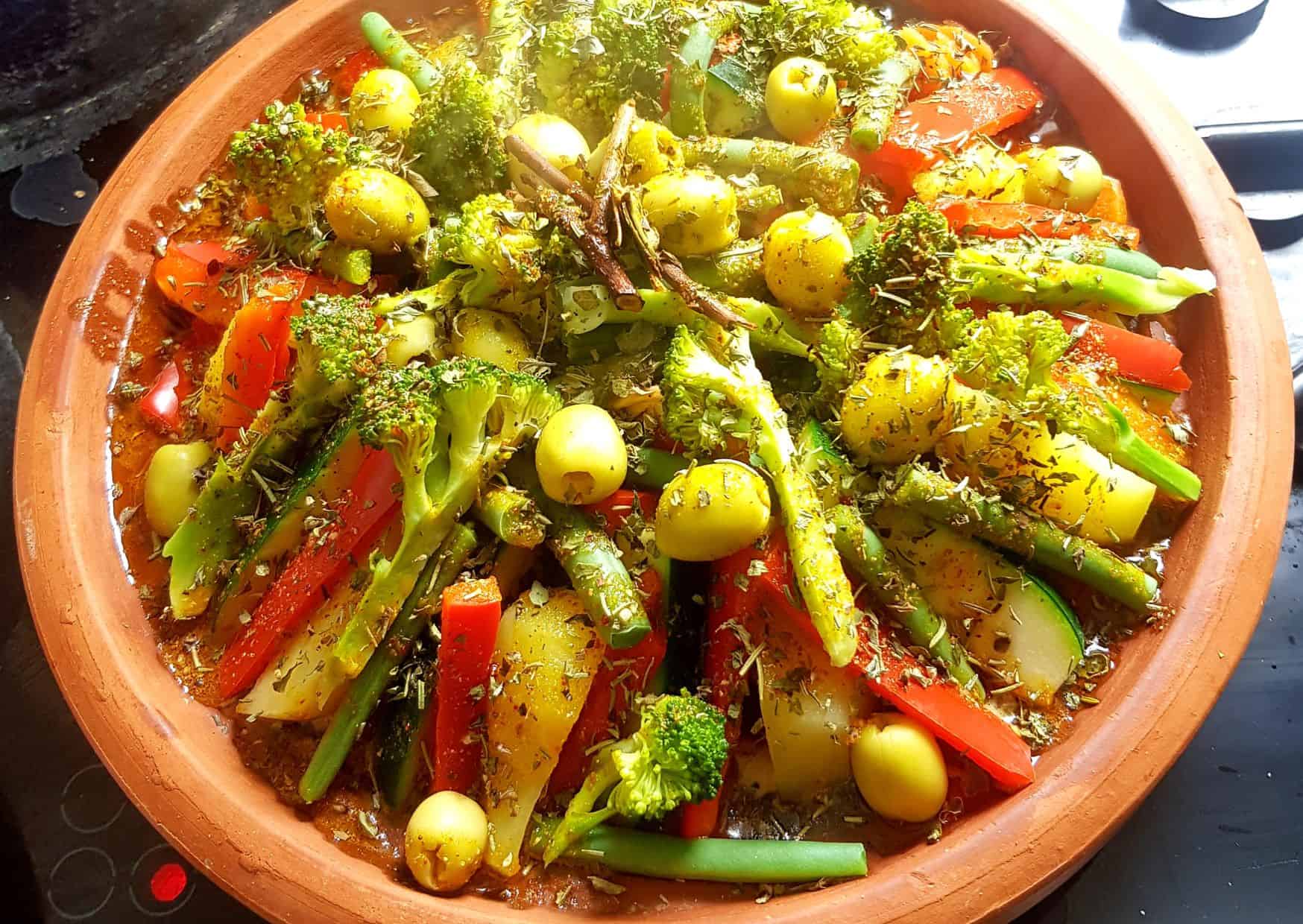
Ingredients:
4 chicken thighs or drumsticks
1 large onion, finely chopped
3 cloves garlic, minced
1 cup chicken broth
1 can (14.5 oz) diced tomatoes
1/2 cup dried apricots, chopped
1/4 cup green olives, pitted and sliced
1/4 cup almonds, toasted
1 tablespoon olive oil
1 teaspoon ground cumin
1 teaspoon ground ginger
1 teaspoon ground cinnamon
1 teaspoon ground turmeric
1 teaspoon paprika
1/2 teaspoon ground coriander
Salt and pepper to taste
Fresh cilantro, chopped (for garnish)
Instructions:
Prepare the Chicken
Season the chicken pieces with salt and pepper. In a large tagine or heavy-bottomed pot, heat the olive oil over medium-high heat. Add the chicken and brown on all sides. Remove and set aside.
Cook the Aromatics
In the same pot, add the chopped onion and garlic. Sauté until the onion is soft and translucent.
Add the Spices
Add the ground cumin, ginger, cinnamon, turmeric, paprika, and coriander. Cook for 1-2 minutes, stirring frequently, until fragrant.
Combine Ingredients
Return the chicken to the pot. Add the diced tomatoes, chicken broth, dried apricots, and olives. Stir to combine.
Simmer
Bring the mixture to a boil, then reduce the heat to low. Cover and simmer for 45-60 minutes, or until the chicken is tender and cooked through.
Finish and Serve
Stir in the toasted almonds. Garnish with chopped cilantro. Serve hot with couscous or Moroccan bread.
Calories: Approximately 450-500 calories per serving (assuming 4 servings).
Read here how to make Tangine
2. Lamb Couscous
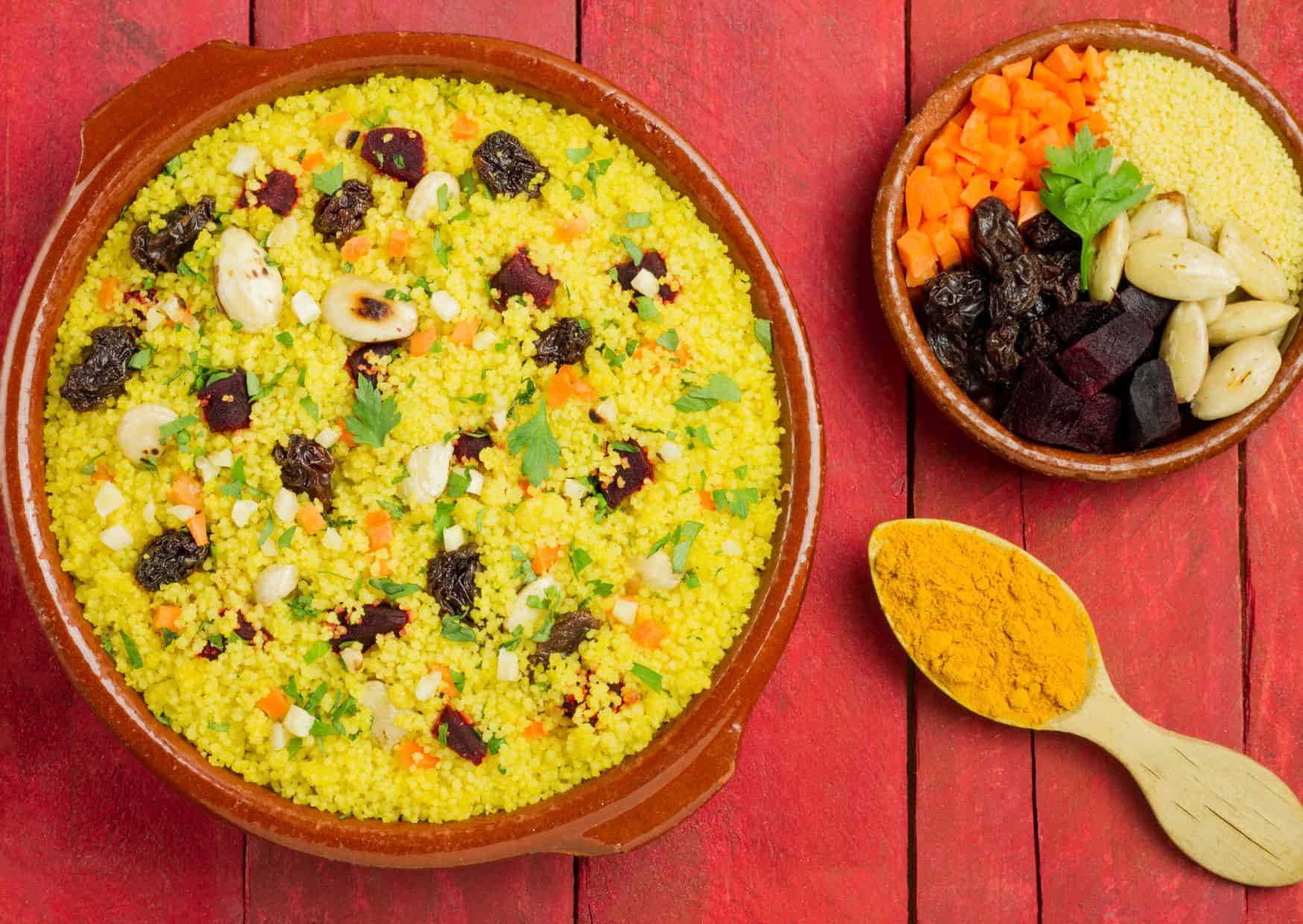
Ingredients:
1 lb lamb shoulder, cut into chunks
1 large onion, chopped
3 cloves garlic, minced
1 cup chicken or vegetable broth
1 can (14.5 oz) chickpeas, drained and rinsed
2 carrots, peeled and chopped
2 zucchinis, chopped
1 cup couscous
1/4 cup raisins
1/4 cup slivered almonds, toasted
2 tablespoons olive oil
1 teaspoon ground cumin
1 teaspoon ground coriander
1 teaspoon ground cinnamon
1/2 teaspoon ground ginger
Salt and pepper to taste
Fresh parsley, chopped (for garnish)
Instructions:
Prepare the Lamb
Season the lamb with salt and pepper. In a large pot, heat the olive oil over medium-high heat. Add the lamb and brown on all sides. Remove and set aside.
Cook the Vegetables
In the same pot, add the chopped onion and garlic. Sauté until the onion is soft and translucent. Add the carrots and zucchinis, and cook for a few minutes until slightly softened.
Add the Spices
Add the ground cumin, coriander, cinnamon, and ginger. Cook for 1-2 minutes, stirring frequently, until fragrant.
Combine Ingredients
Return the lamb to the pot. Add the chickpeas, chicken or vegetable broth, and raisins. Stir to combine.
Simmer
Bring the mixture to a boil, then reduce the heat to low. Cover and simmer for 45-60 minutes, or until the lamb is tender and cooked through.
Prepare the Couscous
In a separate pot, bring 1 1/4 cups of water to a boil. Stir in the couscous, cover, and remove from heat. Let it sit for 5 minutes, then fluff with a fork.
Finish and Serve
Stir the toasted almonds into the lamb mixture. Garnish with chopped parsley. Serve the lamb mixture over the couscous.
Calories: Approximately 500-550 calories per serving (assuming 4 servings).
Read here how to make Couscous
3. Moroccan Harira Soup
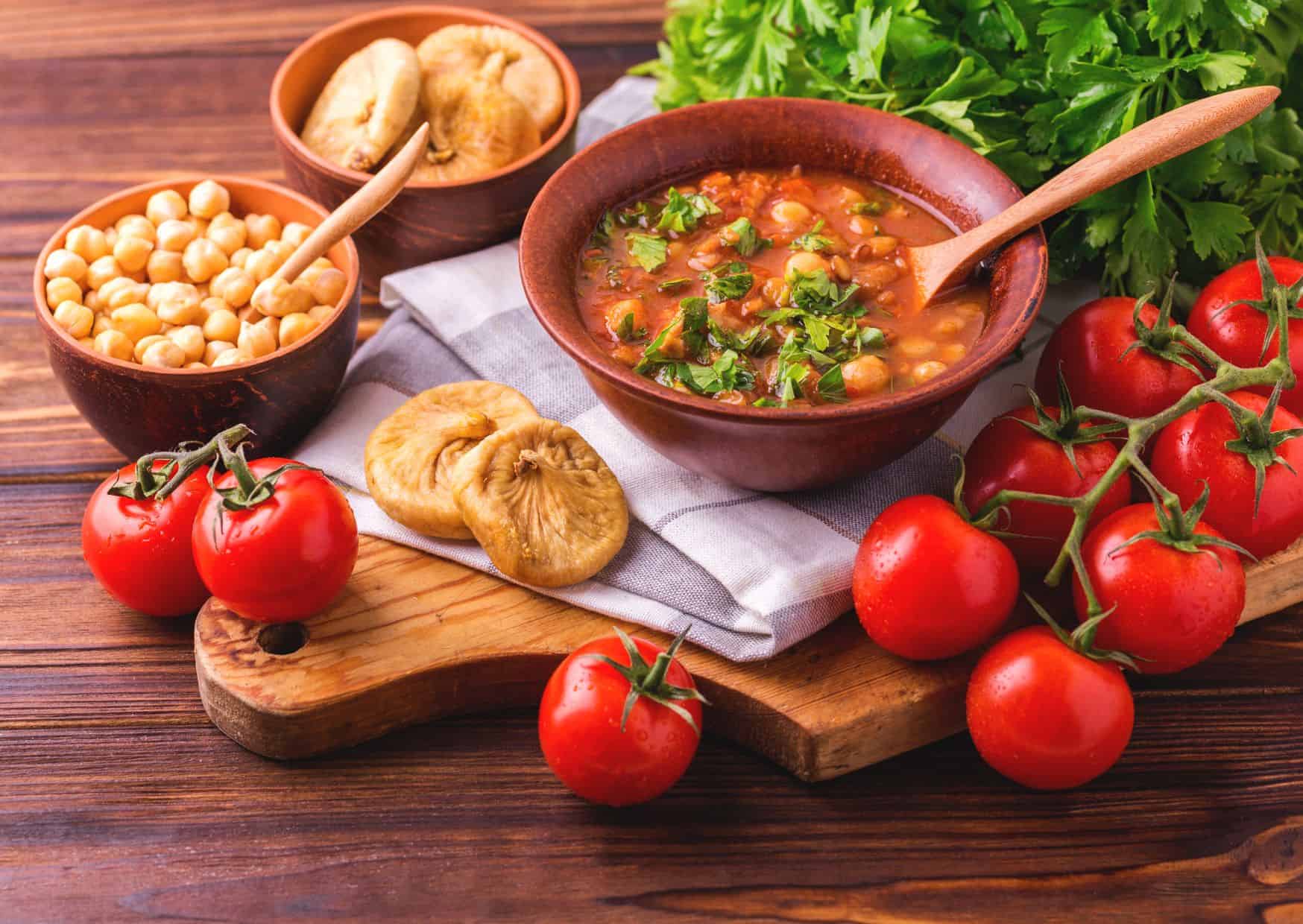
Ingredients:
1 cup dried chickpeas, soaked overnight and drained
1/2 cup lentils, rinsed
1 lb lamb or beef, cut into small pieces
1 large onion, finely chopped
3 cloves garlic, minced
1 can (14.5 oz) diced tomatoes
1/2 cup tomato paste
1/4 cup rice or broken vermicelli
1/4 cup fresh cilantro, chopped
1/4 cup fresh parsley, chopped
2 tablespoons olive oil
1 teaspoon ground ginger
1 teaspoon ground cinnamon
1 teaspoon ground turmeric
1 teaspoon ground paprika
1 teaspoon ground cumin
Salt and pepper to taste
Lemon wedges (for serving)
Instructions:
Cook the Meat
In a large pot, heat the olive oil over medium-high heat. Add the meat and brown on all sides. Remove and set aside.
Cook the Aromatics
In the same pot, add the chopped onion and garlic. Sauté until the onion is soft and translucent.
Add the Spices
Add the ground ginger, cinnamon, turmeric, paprika, and cumin. Cook for 1-2 minutes, stirring frequently, until fragrant.
Combine Ingredients
Return the meat to the pot. Add the chickpeas, lentils, diced tomatoes, and tomato paste. Stir to combine. Add 6 cups of water, bring to a boil, then reduce heat to low. Cover and simmer for 1 hour.
Add Rice or Vermicelli
Add the rice or broken vermicelli to the pot. Simmer for another 15-20 minutes, or until the rice or vermicelli is cooked.
Finish and Serve
Stir in the chopped cilantro and parsley. Season with salt and pepper. Serve hot with lemon wedges on the side.
Calories: Approximately 350-400 calories per serving (assuming 6 servings).
Read here how to make Harira Soup
How to Eat
Moroccan cuisine is meant to be savored slowly, not rushed. Traditional meals are often served family-style, encouraging everyone to share from the same dish. Whether it’s a fragrant tagine, a couscous mountain topped with tender vegetables, or a hearty harira soup, eating Moroccan food is about creating connection at the table. The aromas of warm spices like cumin, coriander, and cinnamon set the tone before the first bite even happens.
Bread plays a central role in Moroccan dining. Instead of relying on utensils, locals often use freshly baked khobz to scoop up stews and sauces. This simple act adds texture and richness to every bite while grounding the dining experience in tradition.
Above all, Moroccan dinners are social events. Meals stretch out over time, accompanied by conversation and mint tea. The food isn’t just nourishment; it’s an expression of hospitality, community, and heritage.
How to Partner
To elevate these Moroccan dinner recipes, pair them with sides and drinks that complement their complex flavors. A crisp cucumber and tomato salad brightens heavier stews, while a bowl of marinated olives adds a briny punch. These fresh accompaniments balance the warmth of spices and keep the meal layered and dynamic.
Mint tea is the undisputed beverage partner of Moroccan cuisine. Its natural sweetness and refreshing quality make it perfect to serve alongside savory dishes. For a modern twist, a lightly sparkling citrus drink can also work well to cleanse the palate.
For dessert, keep it simple and traditional. Sweet pastries made with almonds or honey, such as chebakia or briouats, finish the meal beautifully. The combination of fragrant main dishes and delicate sweets creates a complete Moroccan dining experience.
Many outsiders mistakenly view Moroccan cuisine as overly spicy or complicated to make. In reality, Moroccan food relies on layered flavors, not heat, and its dishes are often surprisingly approachable. The misconception comes from confusing “spiced” with “spicy,” which deters some people from trying these recipes at home.
Another common misunderstanding is treating Moroccan food as just another form of Middle Eastern cuisine. While there are similarities, Moroccan dishes are uniquely shaped by Berber, Arab, Andalusian, and French influences. This blend of culinary traditions makes Moroccan cooking distinct and far richer than it’s often given credit for.
There’s also a debate around “modernizing” Moroccan cuisine to suit Western palates. Some chefs simplify recipes by removing key ingredients or altering spice blends. While adaptation can be creative, many Moroccans argue that these shortcuts dilute the soul of the dish. Authenticity matters because it tells the story of a culture, not just a flavor profile.
Serving Suggestions
Serve Moroccan dinners on large, shared platters to recreate the authentic communal feel. Tagines and couscous are best presented in wide, shallow dishes that allow guests to easily scoop up portions. A beautifully arranged platter becomes the centerpiece of the table, creating a warm and inviting atmosphere.
Place baskets of warm khobz or flatbread around the table so everyone can enjoy the tactile experience of scooping up rich sauces. Garnish the dishes with fresh herbs like cilantro or parsley to add a burst of color and freshness.
For a complete Moroccan dinner night, add finishing touches like tea glasses, patterned serving bowls, and soft background music inspired by Moroccan rhythms. The goal is to make the meal feel immersive, transforming dinner into a cultural journey rather than just a plate of food.
Final Thoughts
Mastering Moroccan recipes isn’t just about learning techniques; it’s about embracing a culinary philosophy centered on warmth, hospitality, and shared experience. These dishes reflect centuries of cultural blending, resulting in flavors that are both bold and comforting.
Cooking Moroccan food at home brings the aromas and atmosphere of North Africa right into your kitchen. The slow-cooked stews, vibrant spices, and layered flavors make any dinner feel special, whether it’s a casual weeknight or a gathering with friends.
Once you’ve tried these three recipes, you’ll see why Moroccan dinners are beloved around the world. They’re not just meals—they’re moments of connection, celebration, and culture served on a plate.

About the Author: Ruben, co-founder of Gamintraveler.com since 2014, is a seasoned traveler from Spain who has explored over 100 countries since 2009. Known for his extensive travel adventures across South America, Europe, the US, Australia, New Zealand, Asia, and Africa, Ruben combines his passion for adventurous yet sustainable living with his love for cycling, highlighted by his remarkable 5-month bicycle journey from Spain to Norway. He currently resides in Spain, where he continues sharing his travel experiences with his partner, Rachel, and their son, Han.