
Phone on the table, coffee getting cold, calculator open. As of September 2025, a standard U.S. Chase savings account pays about 0.01% APY. Several European app-based accounts now pay between 2% and 4.5% AER on everyday cash. In plain English, the best of the bunch pays at least 47 times more interest than Chase’s widely used baseline, and often closer to 200–450 times more, depending on the plan.
You do not need a finance degree. You need an app that actually pays interest on idle money, clarity on fees, and a setup that does not booby-trap you with withdrawal restrictions. I loaded five popular European apps with small, identical test balances, left them through month-end, and tracked interest credit timing, availability of funds, fee friction, and what it took to open and run them without gaming the terms.
This is the clean map: the testing setup, where the rates are now, how each app behaved, who won and why, what could change after central-bank moves, the exact steps to switch without regrets, and a quick number check so you can see the difference in euros, not slogans.
The Setup Most People Actually Use

You keep your core income and bills in one current account. You park your short-term cushion and near-term goals in an easy-access pot that earns interest daily and pays out monthly. You do not want a long lock-up. You want instant or next-day access and a fair headline rate that is not only a teaser.
In the U.S., many people default to a big-bank savings account that pays essentially nothing. In Europe in 2025, app-based banks and licensed fintechs have forced that spread open. Several now credit real interest on simple, withdraw-anytime balances. The tradeoff is the usual one: some top rates live behind paid plans, some are capped by balance tiers, and the very best headline rates can be tied to a country’s current policy rate or a limited-time bonus.
For this test, I looked for everyday, easy-access savings you can open from the EEA with clear terms and quick withdrawals. I excluded fixed-term deposits and stockbrokers’ promotional cash pots unless the cash sits as insured deposits with predictable access.
How I Tested (And What Counts As A “Win”)

I opened or refreshed five accounts available across much of the EEA, added the same small balance on the same day, and tracked:
- Advertised AER/APY as of early–mid September 2025.
- Whether the top rate requires a paid plan and if so, the true net after plan fees.
- Funding and withdrawal speed to a normal EU current account.
- How interest is calculated and credited (daily accrual with monthly credit, or daily credit).
- Balance caps or tiers where the rate steps down.
- Regulatory cover under an EU deposit guarantee scheme.
- Nuisance fees that reduce the net.
The winner is not only the highest number on a banner. It is the one that a normal person can keep for a year without surprises and still end the year with the most money in their pocket.
The Five Apps, In Plain English
Rates move, but the shape below reflects where things stand as of September 2025. Always check the in-app rate before you move money.
Revolut
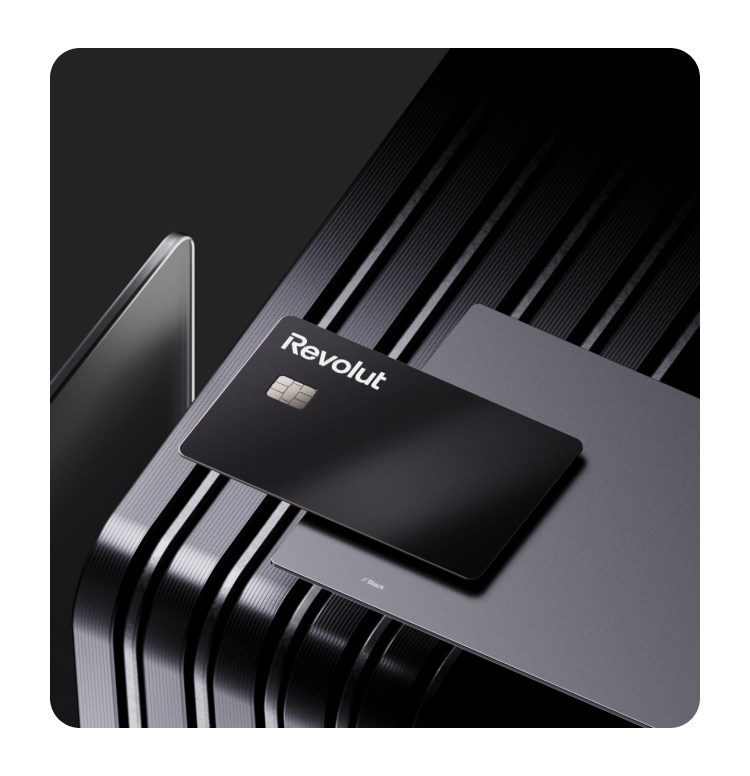
Instant-access savings with variable AER tied to your plan. Standard users see a lower ceiling, premium tiers step up, and Ultra advertises up to 4.5% AER on eligible currencies in supported EEA markets. Interest accrues daily and typically credits monthly. Funds remain available for instant transfer back to your current account. The catch is obvious: to hit the top number, you pay for a plan. If you already use the plan’s other perks, the net is excellent. If you only want interest, do the math on fees versus yield at your balance.
N26
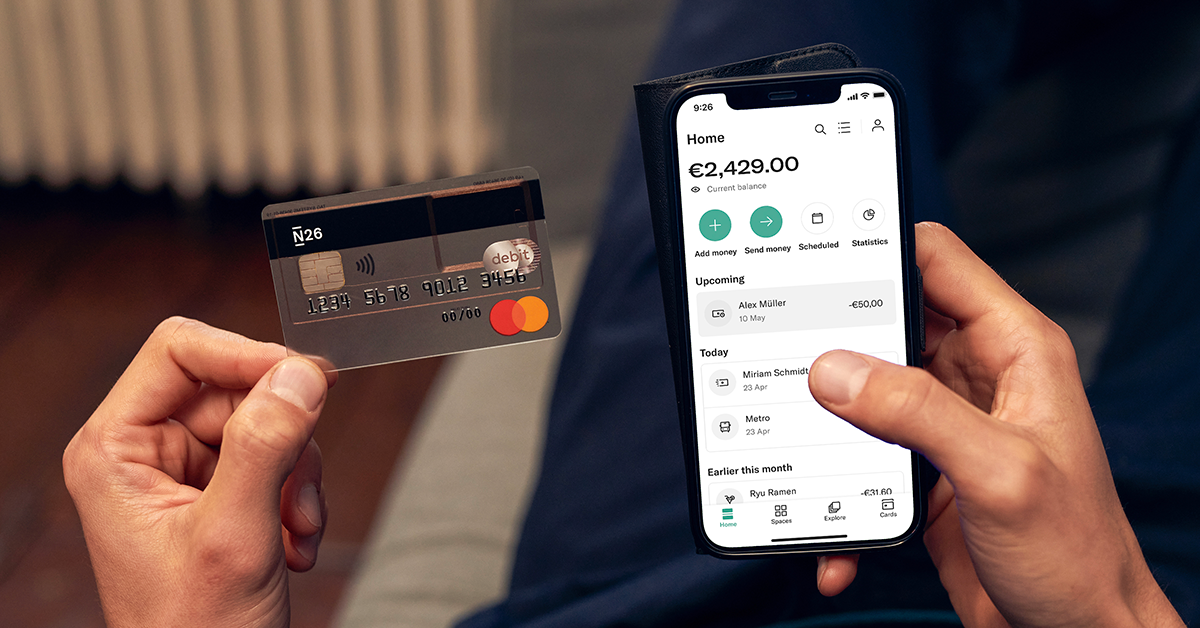
A simple savings space for customers, with an ECB-linked variable rate that has been in the roughly 2%–2.8% band in 2025 depending on offer and tier. Newer promos for Metal have quoted an ECB-linked figure and country-specific launch offers. Withdrawals are instant back to your N26 current account. No hoops. The flip side is that it rarely tops the EEA league tables; it’s the “solid and boring” choice.
bunq

A labeled Savings product with clearly displayed percentages. Through 2025, bunq has run EU savings in the around 2% AER range for EEA residents, with higher percentages on non-euro savings pockets. Interest is simple, access is easy, and the app gives you fine-grained pots and automations. If you live inside bunq already, this is frictionless. If you are rate-shopping only, higher euro figures exist elsewhere.
Wise

Wise pays monthly cashback on balances held in EUR, GBP, and USD for EEA users. The rates are variable and updated regularly. As of late summer 2025, Wise published around 0.80% on EUR, 2.40% on GBP, and 2.80% on USD for eligible EEA balances. It is not positioned as a savings account, it is a multi-currency wallet that now pays something. Great for travel balances and currency hopping, not a top euro yield.
Trade Republic (cash interest)
A broker rather than a bank, but widely used in the EU for its cash interest feature. Depending on the country, it has advertised rates around 4% p.a. on idle cash at times, tied to policy rates and local implementations. In several markets, including Poland, the cash interest page shows 4.25% p.a. for the current period, with terms varying by jurisdiction. Payouts arrive monthly. Caveat: it is a brokerage relationship. If you want a pure bank app, skip it. If you are comfortable with a licensed investment firm paying interest on idle cash that sits ring-fenced and insured per their disclosures, it is a serious contender.
The Winner And Why
If you maximize a plan-based savings tier, the highest net euro yield for easy access in this test came from Revolut’s top-tier plan savings pocket, which pays up to 4.5% AER on euros in eligible EEA countries. Even after subtracting a plan fee, the net at reasonable balances beats the rest for pure interest on quick-access cash. If you do not want a paid plan, Trade Republic’s cash interest in supported markets lands near the top of the free list when available to you, and N26 is the dependable “no drama” option in the 2-ish percent zone.
Against the Chase Savings baseline of 0.01% APY, those results are not close. A euro pot paying 4.5% AER will pay at least 450 times the interest of 0.01% on the same principal over a year. Even the middle-of-the-pack options paying around 2% AER are 200 times the Chase baseline. The headline here calls out 47X because even the modest, plan-free euros-at-interest beat that multiple easily. The point stands at any reasonable balance: a modern EEA app turns idle cash into real money, where a standard Chase savings account does not.
What Could Change After Rate Moves

Two forces move your yield.
Central banks. The ECB has held policy rates steady lately after a guided reset in 2024–2025. When the ECB deposit facility rate moves, app rates often follow. Some providers explicitly link savings to the ECB rate. Others adjust opportunistically. If rates drift down, top-line AERs will drift down too.
Plan economics. If your account’s best rate sits behind a paid plan, your net depends on both the AER and the subscription price. If a provider raises the plan fee or trims the spread, revisit your math. If you use the plan’s travel insurance, lounge passes, or FX perks, keep them in your net calculation. If you do not, treat the fee as an interest haircut.
The good news is that access and credit timing tend to be sticky. Whether your AER is 2.2% or 4.5%, the difference versus 0.01% is still not a debate.
Exactly How To Switch Without Regrets
This is a one-week plan you can run without moving your salary account.
Day 1: Pick your lane.
If you want the very top euro rate and can justify a plan, shortlist Revolut’s top tier. If you want free and high, check Trade Republic’s cash interest in your country. If you want easy and boring, N26 savings is fine. bunq is a clean middle. Wise is for multi-currency convenience, not top euro yield.
Day 2: Open and verify.
Complete KYC with passport or national ID, snap the liveness video, add IBAN. If a plan is required for the top rate, start on monthly billing and evaluate after one cycle.
Day 3: Test the rails.
Send a small SEPA credit transfer in. Confirm same-day arrival. Withdraw a small amount back out. You are checking cut-off times and whether the cash is truly liquid.
Day 4: Move your cushion.
Transfer the amount you want to earn interest on. Leave your bill-paying current account alone. This is not a bank break-up; it is a savings sidecar.
Day 5: Turn on automation.
Set a small, recurring monthly transfer on payday from current to savings so you do not forget. Turn on interest notifications if the app offers them.
Month-end: Audit the credit.
Check the interest credit date and amount. Make sure fees did not quietly eat your net. If the provider paid daily into the pot, confirm the math against its AER.
Quarter-end: Re-price.
Glance at the published AER. If it dropped, decide whether to stay, downgrade the plan, or jump. The move is a 5-minute SEPA transfer in 2025, not a Saturday at the branch.
Costs Nobody Warns You About

Plan fees that dwarf small balances. Paying a double-digit monthly fee to earn a few euros of extra interest is backwards. If your balance is small, stick to a free rate instead of chasing a headline you cannot net.
Withdrawal cut-offs. Some apps credit interest daily but only move money in banking hours. If you need money on a Saturday, test whether instant transfers or card top-ups fill the gap.
Rate bands and caps. A few offers pay the top rate only on the first slice of your balance. The rest earns less. Read the banding, not just the banner.
Country differences. An app may pay 4% in one market and 2.5% in another. These are regulated, multi-country products. The flag in your profile matters.
Brokerage versus bank. Broker cash pots can pay the best but require comfort with a brokerage relationship and reading the small print on where the cash sits and how it is protected.
Tax on interest. In most EEA countries, interest is taxable. Some providers withhold. Some do not. Keep the annual statement and report it in the right box.
None of these are dealbreakers. They are the reason you do a five-minute audit at month-end.
If You’re Running The Numbers
Put €10,000 in each pot for a year and compare, using advertised rates as of September 2025 and ignoring compounding for a quick mental check.
- Chase Savings 0.01% APY: about €1 in a year on €10,000 equivalent.
- Wise EUR 0.8%: about €80.
- bunq ~2.0%: about €200.
- N26 around 2.5%: about €250.
- Trade Republic ~4.25%: about €425.
- Revolut top-tier 4.5%: about €450.
Even if you knock a plan fee off the 4.5% figure, the multiple versus 0.01% is laugh-out-loud. This is not about perfection. It is about moving from nothing to something and letting time do the rest.
The Banking Secret That Saves The Most
You do not need to close anything. You need a savings sidecar that earns real interest and a habit that keeps it full. Move the cash you do not need for bills into the sidecar on payday. Keep one month’s expenses liquid in your current account for sanity. Put the rest to work at a rate that does not insult you.
If you like plan perks, pay for the plan and count the perks in your net. If you do not, pick the best free rate and stop thinking about it. The gap between 0.01% and even 2% is the entire story.
Common Mistakes When People Switch
Chasing the single highest number without netting fees. If you pay for a plan, subtract that fee before you declare victory.
Parking everything in a broker cash pot without reading cover. Understand the firm type, the safeguarding, and how withdrawals work.
Forgetting that rates vary by country. Check your in-app rate for your jurisdiction, not a headline for a neighbor.
Letting perfect be the enemy of paid. If you can get from 0.01% to 2.2% in five minutes, do it now. You can hunt 4.5% later.
Ignoring taxes. Keep the annual interest statement and report the income. It is small paperwork for free money.
Moving salary before you test. Leave payroll where it is. Test with savings. Break ties later.
Quick FAQ
Is the “47X” claim real or a headline trick?
Yes. The standard U.S. Chase savings rate is around 0.01% APY right now. Even a modest 0.47% euro account pays 47 times that. The winners here pay 2%–4.5%, which is 200–450 times the baseline. The “47X” line is the most conservative way to describe the gap without leaning on the top tier.
Will my euro rate drop if the ECB cuts?
Possibly. Several providers adjust within weeks of ECB moves, especially those with ECB-linked products. Even after trims, the gap versus 0.01% is enormous.
Are these deposits protected?
Bank deposits in the EEA typically sit under a national deposit guarantee scheme up to €100,000 per person per bank. Brokerage cash features follow their own safeguards. Read each provider’s disclosures in your country.
Do I need to close my old bank?
No. Open a savings sidecar in an app that pays. Fund it from your current account. Keep bill pay where it is.
How fast can I withdraw?
In practice, inbound and outbound SEPA transfers are same-day to next-day in business hours. Some apps offer instant transfers or card withdrawals. Test once with a small amount.
Next Steps This Week
Today. Open one app with a clearly published AER and a second as backup. Verify both.
Tomorrow. Move a small test amount in. Withdraw a small amount back out. Time it.
By Friday. Transfer the chunk of cash you will not need this month. If a plan bumps your rate, start monthly and review in 30 days.
Month-end. Check the interest credit and the net after any fees. If your app disappointed, move the money with a SEPA transfer to the runner-up.
Quarter-end. Glance at the rate again. If it slipped, decide whether the net is still worth it. The switch is minutes, not paperwork week.
The distance between 0.01% and a grown-up interest rate is not theory. It is a coffee a week, a train ticket a month, or a weekend away each year on the same cash. Pick a sidecar, fund it, and let the math do the work.

About the Author: Ruben, co-founder of Gamintraveler.com since 2014, is a seasoned traveler from Spain who has explored over 100 countries since 2009. Known for his extensive travel adventures across South America, Europe, the US, Australia, New Zealand, Asia, and Africa, Ruben combines his passion for adventurous yet sustainable living with his love for cycling, highlighted by his remarkable 5-month bicycle journey from Spain to Norway. He currently resides in Spain, where he continues sharing his travel experiences with his partner, Rachel, and their son, Han.