
You check your U.S. pay stub, then you look at rent listings in Ljubljana and laugh. As of September 2025, a typical public school teacher’s salary in the United States is roughly double what a public school teacher in Slovenia earns on paper. Yet when you place that Ljubljana paycheck against rent, transit, food, childcare, and daily friction, the life it buys can feel two or three times larger.
You are not trading prestige for poverty. You are trading a high sticker price for a lower burn rate. The difference shows up in quiet places: the bus pass that costs less than one American rideshare surge, the two-bedroom that does not swallow half your net, the €2 espresso that makes afternoons feel civilized, the health cover folded into payroll instead of a monthly side quest.
This is a clear, numbers-forward map of what a mid-career teacher’s paycheck in Ljubljana can do, how it compares to U.S. outflows, where people overestimate the pain, where they underestimate the gains, and how to set up your first year so the budget breathes.
The Setup: Salary Versus Spend, Not Hype Versus Hope
Start with two anchors. In the United States, the national average public school teacher salary sits in the low 70s in dollars for 2024–2025. In Slovenia, public school teacher pay is civil-service scale, expressed in gross euro amounts that step up by seniority and role. At first glance, the dollar sticker is bigger, sometimes dramatically. But a life is not lived in gross.
In Ljubljana, the rent for a normal, furnished one-bedroom sits under the psychological thousand-euro line more often than not. Utilities for a modest flat land where you expect them, sometimes lower than your American winter bills. A full-freedom monthly bus pass costs less than a single American airport ride. Health contributions come out of payroll. Your coffee habit becomes cheaper. The list is not glamorous. It is cumulative.
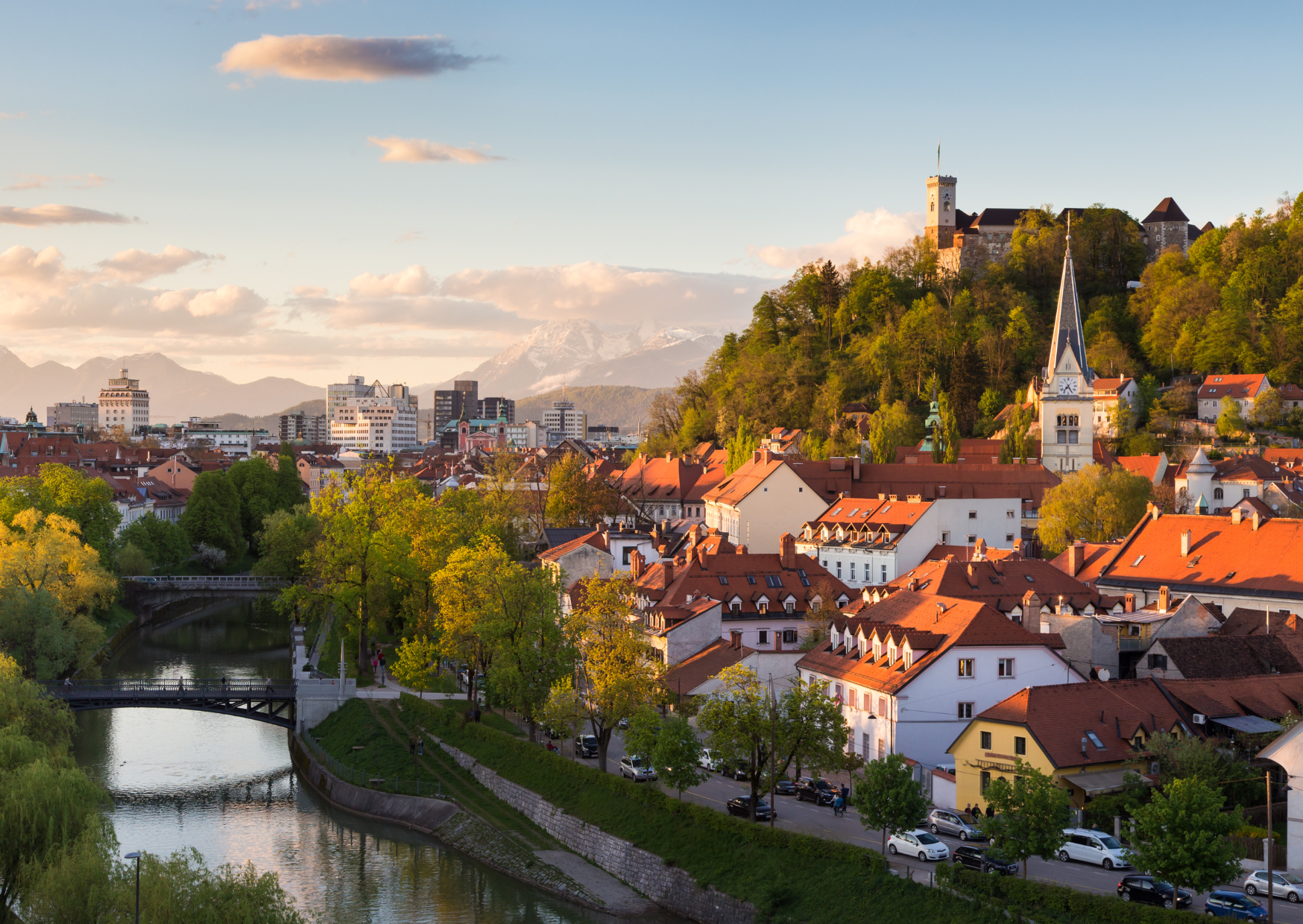
When you compare a paycheck to a life, the question is not what you could earn in a different country. It is what a given paycheck buys where you actually live. Ljubljana, with its compact transit, sane rents, and small daily costs, punches above its salary line.
What The Paycheck Buys In Ljubljana
Picture a mid-career, fully qualified teacher at a Ljubljana public school. Their gross monthly sits in the low to mid 2,000s in euros depending on seniority, allowances, and extras, with experienced advisors and mentors higher. Apply Slovenia’s tax and contribution structure, including the 2025 changes to brackets and the new long-term-care contribution, and you arrive at a net that looks modest next to a U.S. gross, but solid next to local prices.
What that net covers well:
- Housing that does not suffocate the rest of the budget. A one-bedroom in a normal area, furnished, commonly prices in the high 600s to around 750–900 € depending on location and season. A compact two-bedroom for a small family can stay under the kind of ratios U.S. teachers routinely struggle with in expensive metros.
- Transport that behaves itself. A citywide bus pass that lets you cross town at rush hour or glide in on Sunday costs less per month than many Americans pay in parking alone. The same card stretches to the funicular and bike share, and intercity options bundle into national caps when you need to range farther.
- Groceries that reward cooking. Slovenian supermarkets, farmers’ markets, and bakeries let you eat fresh without turning dinner into a budget decision. Food inflation cooled into 2025 compared to prior spikes, and seasonal eating is not a virtue signal; it is how stores are stocked.
- Healthcare you stop budgeting like rent. Compulsory health insurance contributions are woven into payroll, with predictable employee rates and an additional small long-term-care contribution introduced in mid-2025. You pay attention to appointments, not premium hikes.
The composition does not read like a headline. It reads like relief.
My Monthly Budget Breakdown (Composite Teacher, Ljubljana)
This is a realistic sketch for a single educator renting a furnished one-bedroom in a normal area, commuting by bus, eating mostly at home with a few café and restaurant visits each week.
Income (net, typical mid-career public school teacher):
Net pay after standard income tax and social contributions, incorporating the 2025 bracket structure and the new long-term-care contribution. Exact nets vary with grade, allowances, and personal circumstances. Use this as a ballpark, not a promise.
Rent: 680–900 € depending on neighborhood and season.
Utilities (power, heat, water, refuse, internet for a small flat): 220–280 € average across the year, higher in heating months, lower in shoulder seasons.
Transit (city bus monthly or amortized annual): ~37 € monthly, or ~30 € if you amortize an annual.
Groceries and household basics: 220–300 € if you cook most meals, buy produce in season, and keep coffee and bread habits local.
Eating out and cafés: 120–180 € for two to three coffees out per week and two modest dinners.
Mobile plan: 15–25 €.
Discretionary (books, clothing, cinema, gym): 120–200 €.
Healthcare add-ons (occasional co-pays or supplemental): small, case-dependent.
Savings cushion / travel fund: target 10–15% of net.
Even on a conservative net, this stack fits, and it includes breathing room many U.S. teachers never see without roommates or extra jobs. Couples and families alter the shape, but the transit and healthcare dynamics still help the budget stand up.
Local Versus Tourist Prices (So You Do Not Torpedo Your Budget)
Ljubljana is small enough that you can stumble into tourist pricing and think the whole city works that way. It does not.
- Coffee and pastry. In local bakeries and neighborhood cafés, a cappuccino and a croissant cost a fraction of what downtown tourist windows charge. Stand at the bar, learn the rhythm, and the morning bill looks like a rounding error.
- Groceries. Chains stock private-label and regional staples that compete with the farmer’s market. Shop like a local on weekdays for staples, use the market on Saturdays for produce and treats, and keep specialty shops for treats you plan, not panic buys.
- Transport. Do not live on single rides. Buy a monthly or annual pass. The per-ride cash math misleads newcomers into paying museum prices for bus trips.
- Old Town dining. Lovely, worth it, and priced accordingly. Keep weeknights neighborhood-based and reserve Old Town for guests and occasions.
- Seasonal fruit and veg. When apples flood in, buy apples. When tomatoes peak, buy tomatoes. Out-of-season imports swing in price.
A tourist day in Ljubljana can be cheap by the standards of Paris or Rome, but it is still a tourist day. Live on local pricing 80 percent of the time and the math takes care of itself.
The Numbers That Shock Americans
There are three.
Housing, because ratios rule. In many U.S. metros, teachers watch 40 to 60 percent of take-home vanish into rent or a mortgage once you stack insurance, taxes, and utilities. In Ljubljana, ratios under 30 to 35 percent for a modest flat are common with ordinary choices. You can blow that with a luxury building in the center, but you do not have to.
Transit, because the pass is a cheat code. A general monthly bus pass for the city hovers in the mid-30s in euros, with an annual at roughly ten months’ price. Compare that to an American car payment plus insurance plus parking or, worse, rideshare dependency and occasional commuter rail. The behavioral flip is worth more than the line item; it changes which apartments are viable.
Healthcare, because predictability buys calm. With compulsory health insurance embedded in payroll and a small long-term-care add-on, the medical line in a teacher’s budget stops dictating life choices. You still plan, you still wait your turn for some specialists, but you do not fear the mail.
Add the small wins: a monthly pass your kid rides with you, a library system that reduces paid entertainment, parks that remove the need to “buy” weekends. The result is not an exotic hack. It is a city designed to moderate spiky costs.
Exactly How To Make This Job Work (Hiring, Paperwork, Timing)
Credentials. Public school jobs require recognized qualifications. Private international schools set their own standards, often asking for a degree plus teacher certification and classroom experience. Bring sealed transcripts when requested and keep digital copies synchronized across names if you have changed them.
Language. Public posts require Slovenian. International schools hire in English but value any Slovenian you bring to parent and staff life. Start classes early. It improves your days and your prospects.
Contracts. Read for salary grade, hours, prep time, mentoring expectations, and allowance types. Slovenian public schools use civil-service grids with step-ups by years and roles. Private schools set their own scales, sometimes paying above public rates to recruit in-demand subjects.
Tax and contributions. Employees are on payroll with income tax withheld at source and social contributions deducted. In July 2025, a new long-term-care contribution of one percent each for employer and employee joined the existing package. Your net is the number you live on; the thresholds and rates determine how it lands.
Housing search. Start two to three months pre-move if you can visit; four to six weeks if you are landing cold. Aim slightly outside the tightest Old Town ring if you want more space for the money. Transit coverage makes many neighborhoods viable without a car.
Timing the year. September openings align with the school calendar. If you aim for January or midyear, you will find fewer posts but less competition. Rents drift seasonally; late summer is tighter, winter offers more leverage.
Costs Nobody Warns You About
Winter utilities. Old buildings with character can have heaters with character, too. Budget a winter bump. Ask landlords for the last 12 months of bills before you sign.
Appliances and bedding. “Furnished” may mean a table and a sofa, not a stocked kitchen. Price a starter kit for pots, knives, linens, and a small appliance or two.
Intercity family obligations. If your partner works in another city or your family is spread across borders, the train line item grows. Look into national pass caps and advance-purchase discounts.
Certification translation. When you need an official translation, the clock and the cost are not imaginary. Order sooner than you think.
School extras. Public schools are free, but trips, activities, and clubs add small amounts that accumulate. You will not be surprised if you plan for them.
None of these break the budget. They only punish people who forgot they exist.
Why This Works Behind The Scenes
Slovenia’s public-sector pay is not an American free-market scrum. Teachers are civil servants on a shared salary system. That means fewer bidding wars but more predictability. It also means step-ups for mentoring, years in service, and advanced roles. In 2025, the public-sector wage framework adjusted again, with stepped brackets and cost-of-living logic layered in. Add a tax system with defined brackets and payroll contributions, and a transit system priced to be used, and you get a life where the recurring bills are knowable.
Ljubljana’s geography helps. It is a small, dense capital with walkable neighborhoods. Bus frequency is high on trunk lines and good enough elsewhere. Because daily life is built around transit instead of parking, a teacher does not need a second job to fund a car to get to the first job. That single design choice expands your apartment map and shrinks your monthly nut.
If You’re Running The Numbers
Here is a concrete, reproducible comparison for a single teacher.
American cost (teacher in a mid-priced U.S. metro):
- Rent for a one-bedroom or modest two-bed in a teacher-friendly neighborhood: a number that often runs 1,500–2,300 $ depending on city and commute.
- Car payment, insurance, fuel, parking: 500–900 $ combined.
- Healthcare premiums and out-of-pocket: highly variable; many teachers budget 300–600 $ monthly on average across a year.
- Transit add-ons, phone, internet, groceries: fill the rest of the check.
European cost (teacher in Ljubljana):
- Rent for a furnished one-bed in a normal area: 650–900 €.
- Utilities and internet: 220–280 € average across the year.
- City bus pass: ~37 € monthly (or ~30 € amortized annual).
- Healthcare contributions: withheld at payroll; occasional co-pays.
- Phone: teens in euros, not hundreds.
- Groceries: 220–300 € for a home-cooking routine.
Savings: The point is not the exchange rate. The point is the ratio. Housing plus transport routinely falls under 45 percent of net for a careful Ljubljana setup. In many U.S. teacher budgets, housing plus transport alone can breach 60 percent before groceries and healthcare. That gap is the “triple the life” you feel on the ground: not fancy, but steady.
The Exact Documents You Need (And How To Avoid Delays)
- Diplomas and transcripts in original and certified copies; keep translations ready if asked.
- Background check within the freshness window the school specifies.
- Proof of teaching license/certification from your home jurisdiction where relevant.
- Passport, visa/residence documents as instructed by the school’s HR and the ministry process.
- References with direct emails and phone numbers; schools in Slovenia actually check them.
- Health records when the job requires certain clearances.
Make a single PDF pack with consistent file names. Use the exact spelling of your legal name across every page. Every mismatch costs you time.
Common Mistakes
Chasing Old Town apartments before you price utilities. Charm is real; insulation is physics. Get the billing history.
Living on single bus rides. The monthly or annual pass exists to be used. Buy it and stop counting taps.
Assuming U.S. salary equals U.S. life. A bigger gross in an American city with car dependency and spiky healthcare can buy less lived life than a smaller net in a compact city.
Treating “gross” like “net.” Slovenian gross is not your spendable cash. If you are comparing offers, compare nets after tax and contributions.
Underestimating language. International schools hire in English; life runs in Slovenian. Classes pay for themselves in less frustration.
Forgetting the long-term-care contribution. It is small, it is new, and it appears on your stub beginning mid-2025. Do not let a tiny line item shake your mental math.
Seasonal Differences You Should Plan For
Heating months. Expect utility spikes November through March. Shoulder seasons soften. Air conditioning is not universal, and summers are warm but manageable in most flats with smart ventilation and fans.
School calendar. Hiring peaks before September. Mid-year roles exist, but fewer. If you want the best housing selection, do not land on September 1 and expect magic keys by the weekend.
Tourist waves. Summer Old Town prices surge a bit. Live your weekly rhythm in local neighborhoods and enjoy the center as a treat.
Produce cycles. Strawberries will be cheaper and better in late spring than in November. Plan menus by markets, not by nostalgia for out-of-season fruit.
Before You Hit “Accept” On An Offer
- Ask for the salary grade and step, not just a round number.
- Confirm allowances: mentoring, form teacher duties, overtime rules.
- Request a sample weekly timetable so you see contact hours and prep.
- Price three apartments within a 25-minute bus ride of the school.
- Map your commute on peak and off-peak schedules.
- Check the bus pass math; buy monthly or annual immediately.
- Build a first-month cash float to cover deposits, initial utilities, and furniture gaps.
- Start Slovenian classes now. The first ten words lower your blood pressure.
Next Steps This Week
Today. Shortlist two neighborhoods that match your rent target and your school commute. Price three viable flats each. Put the rent range and utility average side by side with your expected net.
Within 48 hours. Assemble your credential pack into a single PDF, request any missing translations, and schedule a background check if you need a fresh one.
By Friday. Buy or budget the monthly bus pass and stop paying per ride. You will make better housing decisions when every address has equal transit weight.
This weekend. Visit two supermarkets and the central market. Build a list of seasonal basics and price your weekly basket. The savings are not theory; they sit on shelves.
By month’s end. If you have an offer, confirm grade, step, allowances, and start date in writing. If you are still searching, set up alerts on school portals and target subject areas with known shortages.
A smaller paycheck can purchase a larger life when the city, the systems, and your habits align. Ljubljana is built to make that possible. Your job is to meet the city halfway.

About the Author: Ruben, co-founder of Gamintraveler.com since 2014, is a seasoned traveler from Spain who has explored over 100 countries since 2009. Known for his extensive travel adventures across South America, Europe, the US, Australia, New Zealand, Asia, and Africa, Ruben combines his passion for adventurous yet sustainable living with his love for cycling, highlighted by his remarkable 5-month bicycle journey from Spain to Norway. He currently resides in Spain, where he continues sharing his travel experiences with his partner, Rachel, and their son, Han.