
And Why It Reveals a Completely Different Idea of Confidence
Walk through a beach in Crete, a village in Sicily, or a neighborhood café in Andalusia, and you’ll notice something quietly subversive: Mediterranean women don’t hide the things American beauty culture calls flaws.
They wear sleeveless dresses without apologizing for softness.
They laugh without covering smile lines.
They show sun-kissed skin that isn’t filtered, blurred, or smoothed.
But one detail stands out more than any other:
They highlight their natural texture—especially around the eyes.
Crow’s feet. Fine lines. Smile creases.
What many Americans race to erase, they choose to emphasize.
It’s not an oversight. It’s not a lack of access. It’s a cultural philosophy about aging, presence, and what it actually means to be beautiful.
Here’s why Mediterranean women often highlight the very facial lines American women spend fortunes hiding—and what that tells us about self-perception on both sides of the ocean.
Want More Deep Dives into Other Cultures?
– Why Europeans Walk Everywhere (And Americans Should Too)
– How Europeans Actually Afford Living in Cities Without Six-Figure Salaries
– 9 ‘Luxury’ Items in America That Europeans Consider Basic Necessities
Quick Easy Tips
Reframe your thinking: Instead of hiding features you dislike, experiment with ways to highlight them.
Simplify your routine: Adopt natural skincare and beauty practices that emphasize health over heavy coverage.
Take inspiration locally: Look at how different cultures celebrate traits you’ve been taught to conceal.
Practice confidence daily: Confidence is a skill; the more you own your look, the more attractive it becomes.
For many Americans, beauty culture is built around concealing, correcting, or outright removing what doesn’t fit a narrow standard. Billions of dollars are spent every year on treatments and products aimed at hiding traits considered unattractive. This obsession reflects a deeply ingrained belief that beauty equals flawlessness.
In the Mediterranean, the same traits are often reframed as alluring, mature, or even powerful. A feature that sparks insecurity in the U.S. might be highlighted proudly in Greece, Italy, or Spain. The cultural message is that imperfection is not only normal but beautiful.
This clash creates controversy when ideals collide. Americans often accuse Mediterranean women of being “lazy” or “unpolished,” while Mediterranean women view Americans as trapped in a costly, exhausting cycle of impossible standards. Both perspectives reveal more about cultural values than about beauty itself.
1. Smile Lines Are Seen as Proof of Joy—Not Damage

In American beauty marketing, fine lines around the eyes are labeled as the first sign of aging—something to “treat,” “prevent,” or “erase.”
Entire product lines are built on targeting crow’s feet. Injectables promise to freeze them. Creams claim to blur them. Photos are filtered until they vanish.
But in much of the Mediterranean, smile lines are considered evidence of a life well lived.
They don’t signal decay. They signal emotion, expression, and memory.
To soften a smile line too much is to suggest you’ve never really smiled. And in a culture that values laughter, storytelling, and animated conversation, that absence would be a far greater flaw.
2. Eyeliner and Bronzer Are Used to Frame, Not Conceal
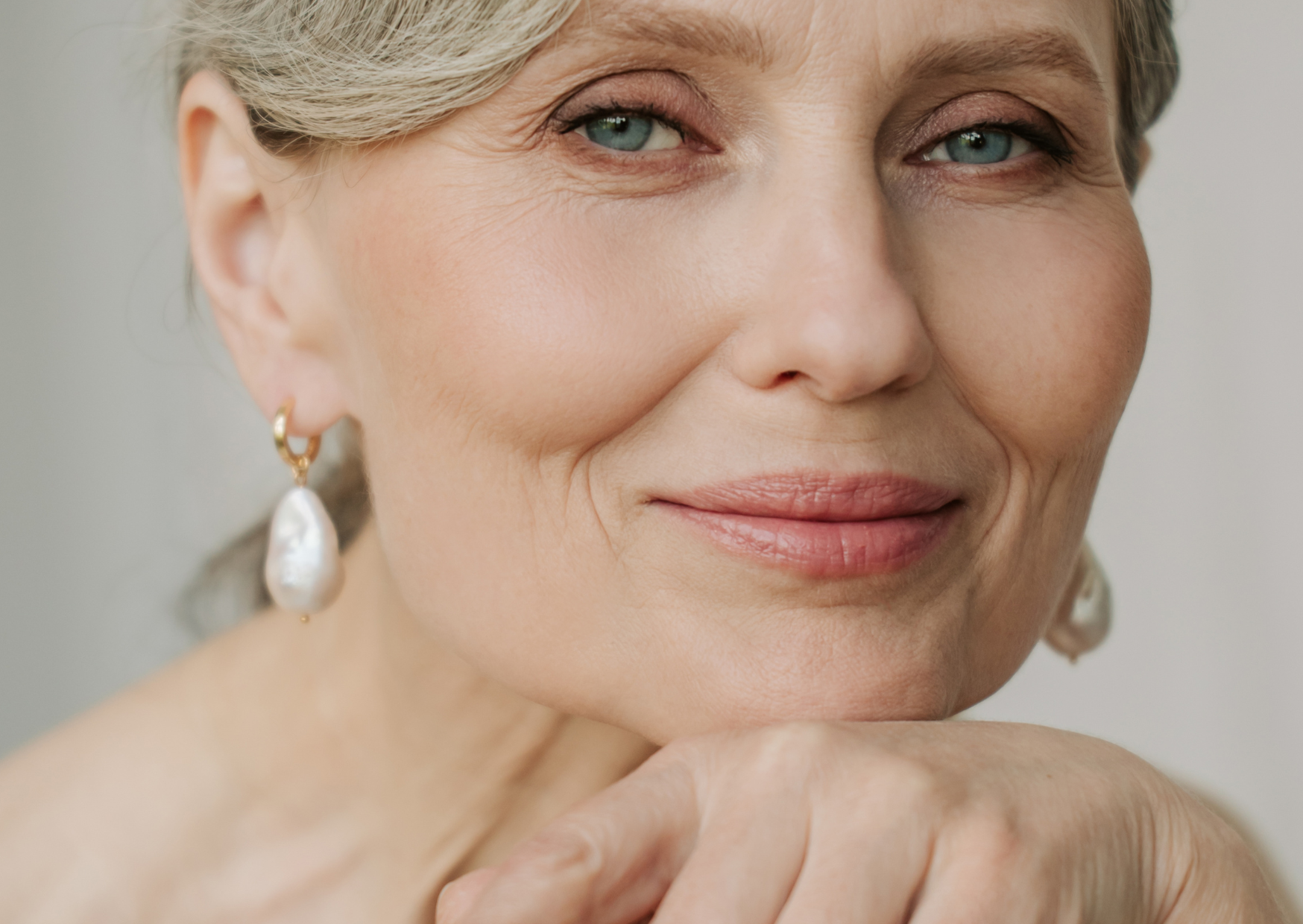
Mediterranean women often lean into bold eyeliner, smudged kohl, or sun-warmed bronzer—even as lines and creases develop.
Why? Because these tools emphasize the eyes, not the smoothness of the skin.
Rather than “conceal” signs of age, they celebrate the architecture of the face—bringing out the shape, depth, and intensity that time naturally adds.
It’s common to see:
- Gold or brown shimmer pressed into the lids of a woman over 50
- Deep liner smudged around creased corners
- Skin with visible movement under the eyes
Nothing is frozen. Everything is alive.
In the American market, by contrast, eyeshadow and liner often get lighter or more “natural” with age. The goal is to look polished, but not dramatic. Mediterranean women ignore that rule entirely.
3. Expression Is Valued Over Perfection

Mediterranean women—especially in Italy, Spain, Greece, and parts of North Africa—use their faces as part of the conversation.
They speak with their brows, their eyes, their mouth. They squint. They widen. They grin with full teeth and animated volume.
To reduce expression in favor of smoother skin would mean reducing vitality—the very thing that makes them captivating.
American beauty culture often rewards symmetry, stillness, and “youthful softness.” Mediterranean culture rewards life-force. Movement. Feeling.
The idea isn’t to erase time—it’s to show that you’ve been alive for it.
4. Aging Isn’t Treated as a Crisis

One of the biggest differences is how each culture treats the passage of time.
In American beauty, aging is often framed as a problem to solve.
The messaging is relentless:
- “Anti-aging”
- “Age-defying”
- “Look 10 years younger”
Mediterranean beauty culture takes a slower, calmer approach.
Yes, women use creams, serums, and treatments. But aging isn’t something to fight—it’s something to live alongside.
Lines and sun spots are part of the story. The goal isn’t to look like you’re 25. The goal is to look like yourself at your most luminous, regardless of number.
This shift in perspective changes everything—especially what’s considered a flaw.
5. Sun-Kissed Skin Is Embraced—Even with the Marks It Leaves

Many Mediterranean women spend time outdoors—at the sea, in gardens, walking through markets, or sharing food on terraces.
They wear sunscreen. But they also understand that sun, salt, and time leave texture.
Rather than panic about pigmentation or the soft creases that form after decades in the sun, they embrace the warmth those years gave them.
American culture often teaches women to fear sun exposure and hide any evidence of it. Mediterranean women tend to associate bronze skin, freckles, and fine lines with vitality, not neglect.
It’s not about reckless exposure. It’s about accepting texture as natural, not tragic.
6. Skin Texture Isn’t Airbrushed Out of Daily Life
Scroll through European lifestyle magazines or ads for Mediterranean skincare lines, and you’ll notice something rare: faces with texture.
Models over 40 might show crow’s feet or a gentle smile crease. Skin is dewy, yes—but not waxy. Lines aren’t edited into oblivion. They’re just… there.
In American media, by contrast, high-definition retouching has become the norm. Even a 60-year-old model may appear poreless and expressionless.
The result is a subconscious pressure to eliminate every sign of real skin.
Mediterranean aesthetics resist that urge. They understand that texture = life. And if a product makes you glow, it’s doing its job—even if your laugh lines are still visible.
7. Beauty Is a Daily Ritual—Not a War of Elimination
Part of this cultural difference stems from how beauty is approached daily.
In the U.S., beauty routines are often built around correcting flaws.
- “Fix” under-eye bags
- “Erase” wrinkles
- “Conceal” discoloration
Mediterranean women tend to approach beauty as a celebration, not correction.
The day begins with:
- Cold water splashed on the face
- A few drops of oil or rosewater
- A swipe of bold lipstick or eye pencil
- And a scent—always a scent
Even at 70, many women wear makeup. Not to look younger. But to feel more themselves.
That ease translates into confidence. And that confidence makes every so-called flaw irrelevant.
8. Lines Are Seen as Markers of Femininity—Not Deviations From It
In American beauty language, femininity is often paired with smoothness, youth, and softness.
But in Mediterranean culture, femininity is bolder, fuller, and more emotionally textured.
It includes:
- Laugh lines deepened by decades of storytelling
- Brow creases formed by passionate arguments
- Crow’s feet from afternoons squinting in the sun while watching children play
These features aren’t considered masculine or unsightly. They’re viewed as part of the emotional landscape of womanhood.
To remove them entirely would be like painting over history.
9. The Face Tells a Story—and That’s the Whole Point
At its core, Mediterranean beauty isn’t just about appearance.
It’s about narrative.
A face that has changed is a face that’s lived:
- It’s loved and lost
- It’s worked and wandered
- It’s tasted olive oil, and wept at funerals, and laughed at inappropriate jokes over wine
- It’s been kissed by sun, wind, and the passage of seasons
Mediterranean women don’t hide these things. They let them surface—quietly, confidently, without apology.
American culture often pushes women to curate an idealized version of youth.
Mediterranean culture suggests that beauty gets richer, not weaker, with time.
One Flaw, Two Realities
What Americans call a flaw—laugh lines, sun texture, skin movement—Mediterranean women call the face.
It doesn’t mean they avoid care. They love their creams, they use retinol, they apply SPF.
But they’re not waging war on their skin.
They’re building a relationship with it.
This is what makes the difference so noticeable—and so powerful.
Not that one culture cares more, but that one culture cares differently.
One hides.
The other highlights.
And in that difference lies the secret not just to Mediterranean beauty, but to Mediterranean confidence.
Beauty standards are never universal, and the way Mediterranean women embrace what others might call flaws proves that confidence is often the most powerful accessory. Instead of fighting nature, they lean into it, turning what’s hidden in America into something celebrated. This mindset not only saves time and money but also shifts the focus from perfection to authenticity.
What makes this approach so effective is its simplicity. By embracing natural features, Mediterranean women radiate a sense of self-assurance that no expensive procedure can replicate. Their confidence becomes the defining trait, not the flaw itself.
Ultimately, the Mediterranean perspective offers a valuable reminder: beauty lies less in erasing differences and more in amplifying individuality. What Americans see as a weakness, Mediterranean culture reframes as strength. That subtle shift changes everything.

About the Author: Ruben, co-founder of Gamintraveler.com since 2014, is a seasoned traveler from Spain who has explored over 100 countries since 2009. Known for his extensive travel adventures across South America, Europe, the US, Australia, New Zealand, Asia, and Africa, Ruben combines his passion for adventurous yet sustainable living with his love for cycling, highlighted by his remarkable 5-month bicycle journey from Spain to Norway. He currently resides in Spain, where he continues sharing his travel experiences with his partner, Rachel, and their son, Han.