
And what it reveals about freedom, proximity, and the radically different ways families define “togetherness”
Spend a summer day at a beach in Spain — whether it’s a packed city stretch in Valencia, a quiet cove in Asturias, or the golden shores of Cádiz — and you’ll quickly notice that Spanish families take up space. Not just with umbrellas and coolers, but with volume, movement, and a style of togetherness that feels impossibly close by American standards.
Children roam. Grandparents supervise while half-asleep. Teenagers sit half in and half out of adult conversations. Everyone shares food. Everyone shares towels. And no one is looking for quiet.
Then visit a beach in the U.S. A well-spaced family unit may be quietly reading under a shade tent. Kids have their own chairs. Adults may be sipping drinks while half-watching. There’s sunscreen, rules, schedule, and order.
The difference is subtle — but profound.
Here’s how Spanish families behave at the beach, and why it feels so jarring to American visitors who are used to boundaries, structure, and designated personal space.
Want More Deep Dives into Everyday European Culture?
– Why Europeans Walk Everywhere (And Americans Should Too)
– How Europeans Actually Afford Living in Cities Without Six-Figure Salaries
– 9 ‘Luxury’ Items in America That Europeans Consider Basic Necessities
Quick Easy Tips
If you’re visiting Spain, embrace the communal aspect—don’t be surprised if families set up close by and treat the beach as a social hub.
Respect cultural differences without judgment; what feels unusual might be normal in another country.
If you prefer more privacy, choose less crowded beaches or go during off-peak hours.
One of the biggest cultural contrasts between Spanish and American families appears on the beach. In Spain, the beach is treated as an extension of the family living room. Parents, grandparents, children, and even distant relatives often gather together for long afternoons, bringing food, music, and games. Americans, by contrast, are more likely to carve out space for their own nuclear family, preferring privacy over communal gatherings.
This difference sometimes sparks misunderstanding. Spanish beach culture can feel “intrusive” to Americans who value personal space, while Americans can seem “cold” or overly reserved to Spaniards used to open, collective enjoyment. Both perspectives reflect deeply ingrained values around family and boundaries.
Another point of tension is how children are supervised. Spanish families tend to be more relaxed, allowing kids to roam between groups of relatives and even make friends with strangers. American parents, meanwhile, often keep tighter watch, with clear boundaries about what is considered safe or acceptable. These cultural differences can lead to judgment on both sides, but they ultimately reflect different ideas of community and independence.
1. Everyone Sits Close — Really Close
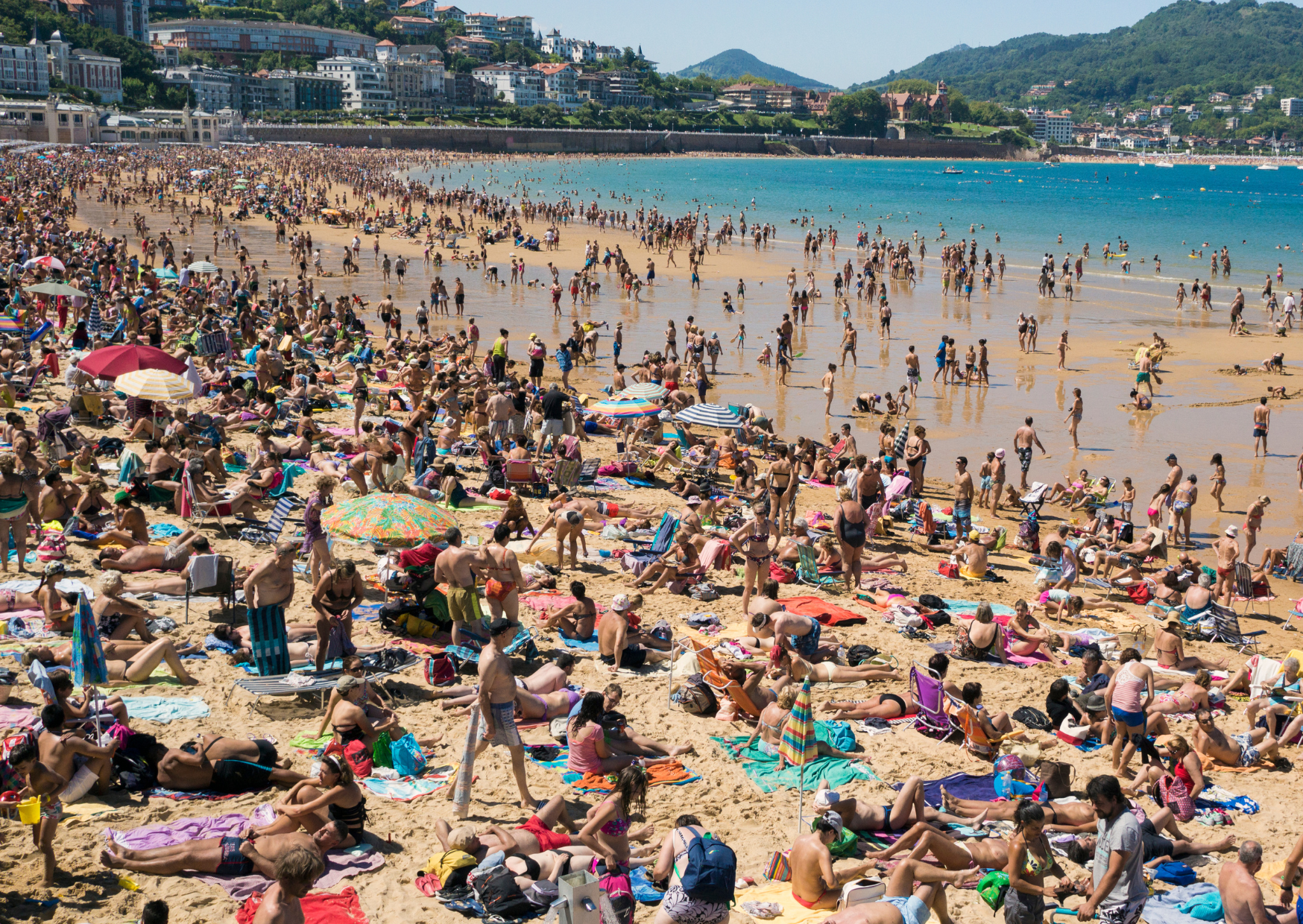
In the U.S., families often bring foldable chairs, spaced evenly, with room for each person’s towel, bag, and sense of independence. Even children are given a bit of space to sprawl.
In Spain, everyone sits right on top of each other. Multiple towels are layered together. A single blanket might hold six people. Bags are crammed in a shared pile. Grandparents, toddlers, cousins, and neighbors all squeeze into a central patch of sand.
There’s no personal “zone.” There’s shared gravity. The closeness is the point.
To Americans, it may feel like chaos. To Spaniards, it feels like a family.
2. Children Roam Freely — But Never Alone
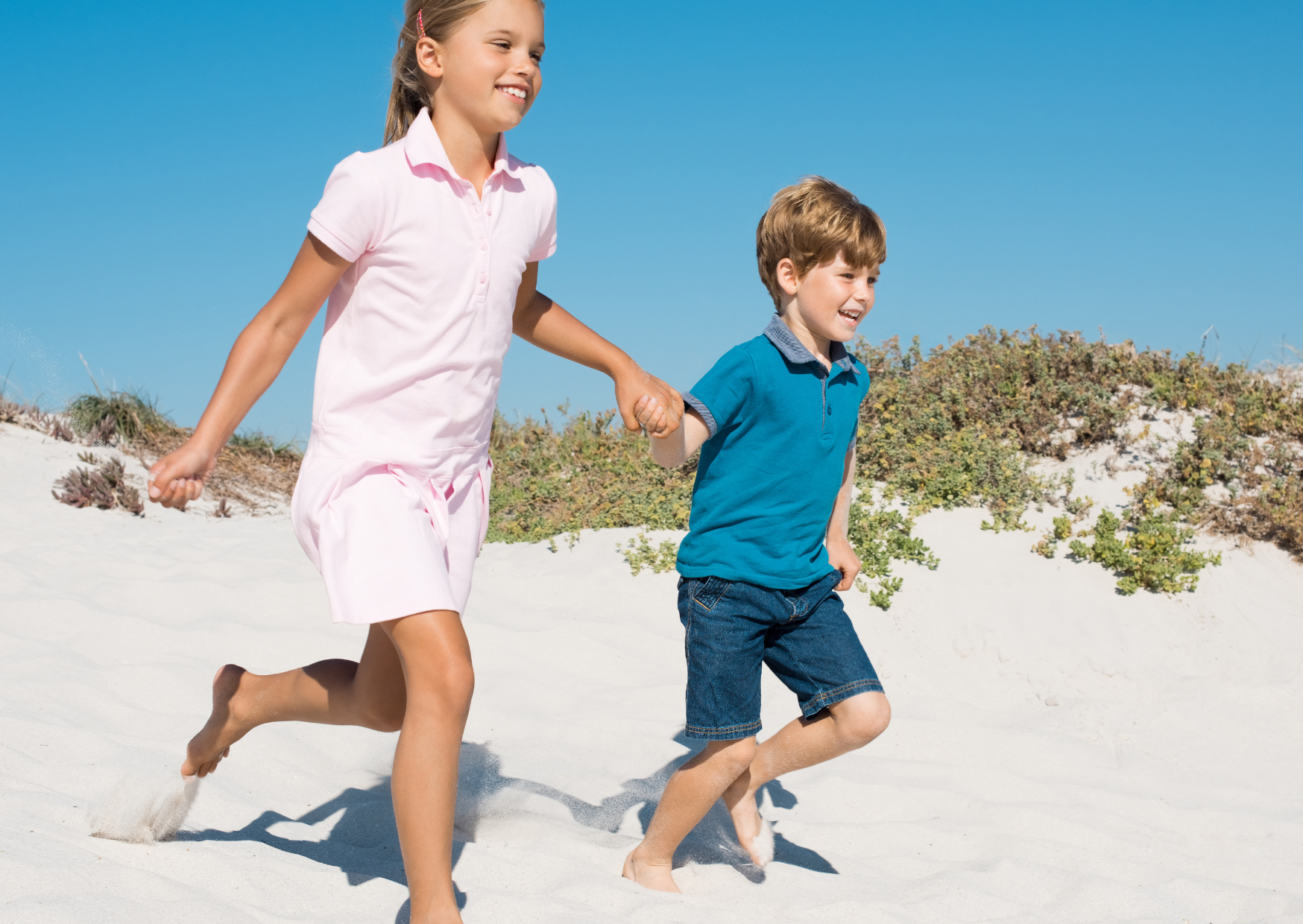
In Spain, children move. Constantly.
They run to the water. They sprint across towels. They play ball near strangers. They explore nearby rocks. But they are never truly alone — because they’re part of a collective field of awareness.
A grandparent is watching from under the umbrella. An older cousin yells if someone goes too far. A neighboring family nods in quiet acknowledgment if a kid wanders past.
There’s no helicoptering. But there’s no neglect either. The supervision is distributed, not assigned.
In the U.S., a child may be more confined — monitored by one parent, called back often, or given rules that define movement.
Spanish beach parenting favors autonomy — but within a constant, invisible web of attention.
3. Teenagers Stay with the Group — Not on Their Own
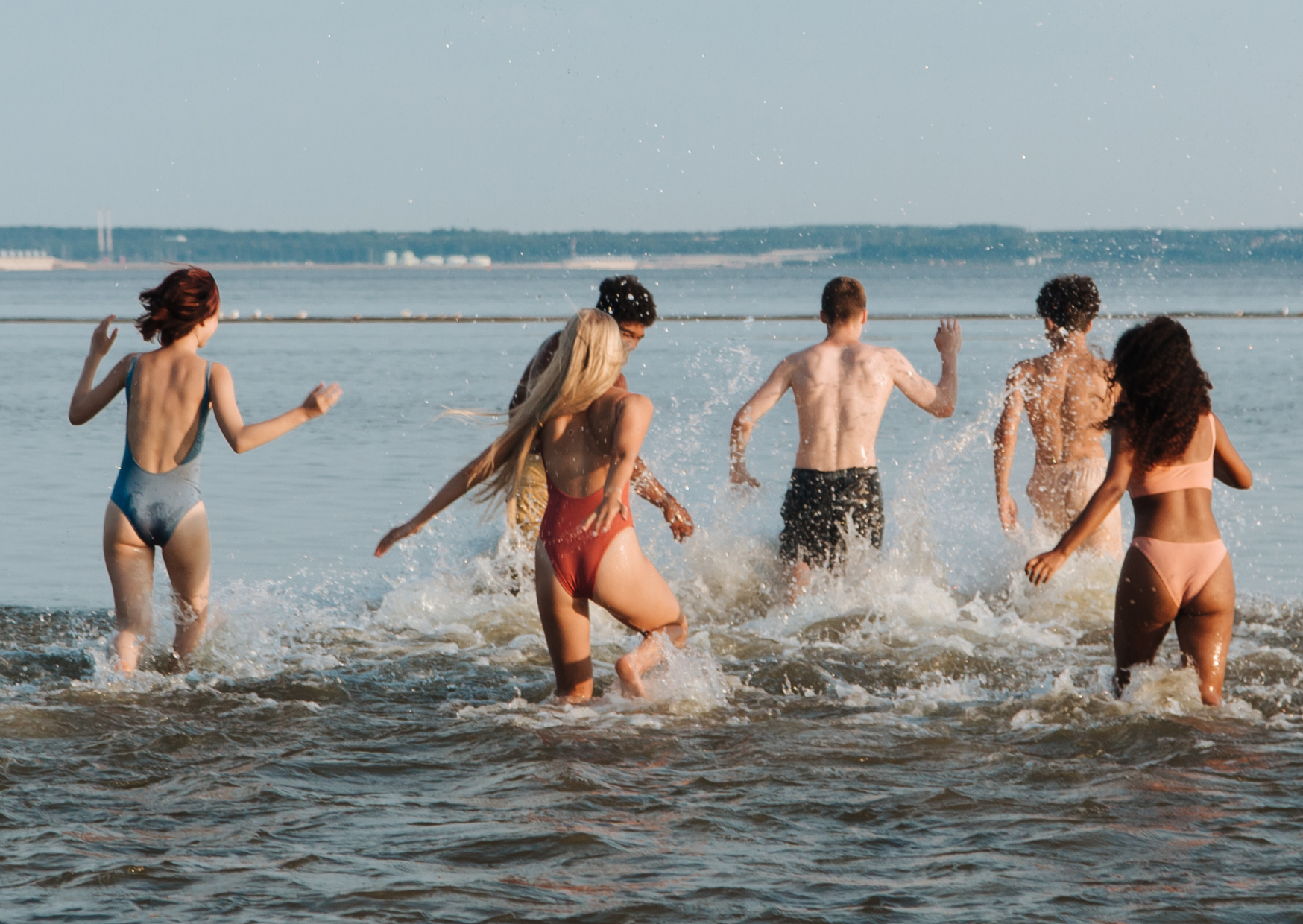
In the U.S., teenagers at the beach often sit apart. They come with friends, not parents. If they’re there with family, they might bring headphones, withdraw behind sunglasses, and minimize interaction.
In Spain, teens often sit in the mix — lounging with aunts, uncles, or younger siblings. They may get bored and wander off, but they’ll return. They eat lunch with everyone else. They participate in group conversations, jokes, and errands.
There’s no pressure to appear aloof. Being with family is not seen as embarrassing.
And no one assumes their independence is threatened by staying close.
4. Adults Talk — Loudly and Constantly

Spanish families bring conversation to the beach like they bring sunscreen — in abundance.
Conversations flow from politics to football to lunch plans. Arguments start and end. Laughter is frequent. Volume is high.
There are no quiet beach reads. No serene meditations with the waves. There are real conversations — often overlapping, multilingual, and emotionally alive.
In the U.S., there’s often a pressure to keep beach noise down. Quiet is part of the experience. The family zone is defined partly by its acoustic border.
In Spain, sound is part of claiming space — and sharing joy.
5. Food Is Central — and Always Shared
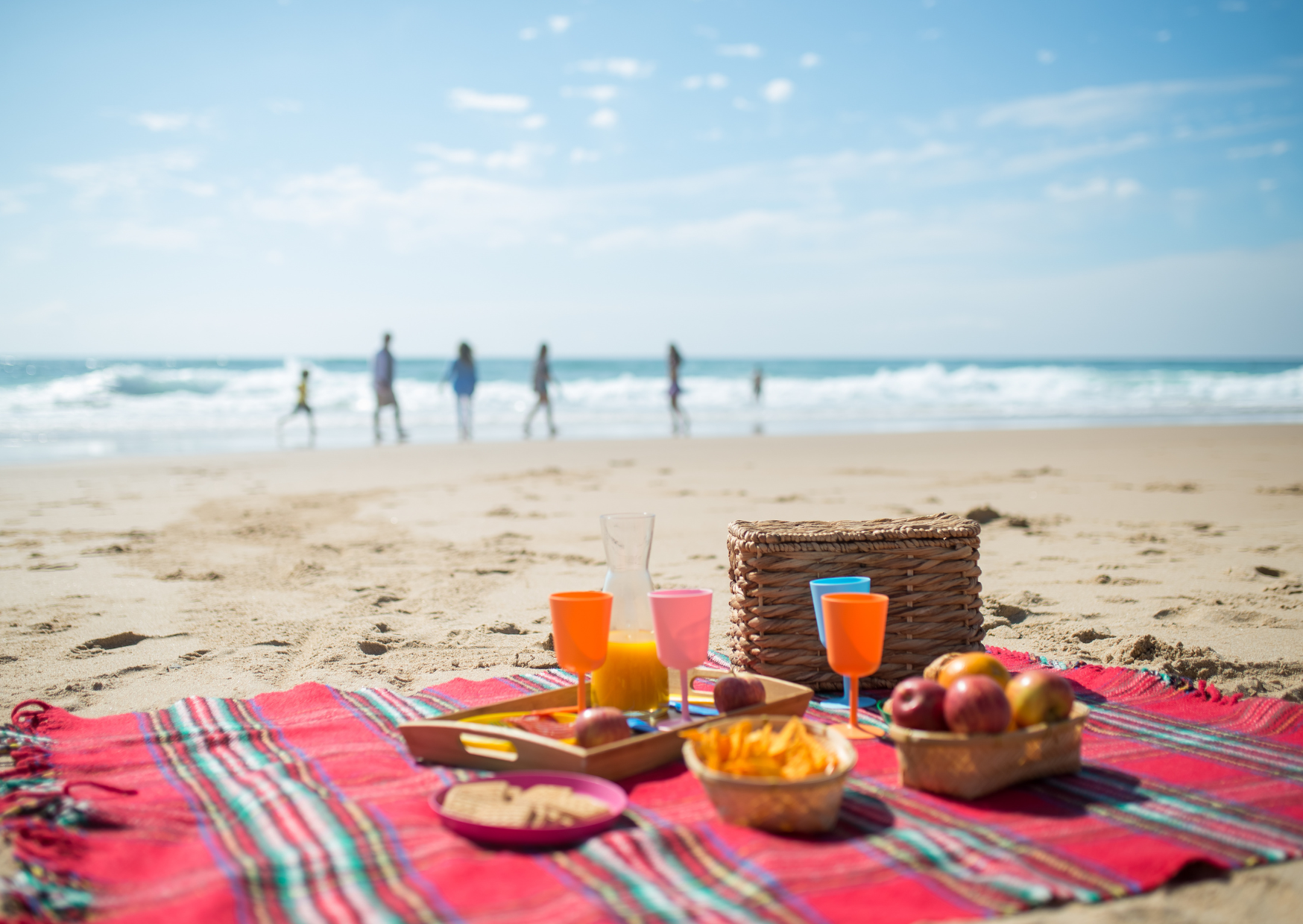
American beach snacks tend to be individual. Juice boxes. Sandwiches. Separate bags of chips. Personal containers.
In Spain, food is shared, often brought in tupperware or wrapped in foil. Spanish omelets, gazpacho in thermoses, peeled fruit, hard-boiled eggs, cold croquettes. Everyone eats from the same source, often passed around on mismatched plates or shared straight from the container.
There’s a pause for eating — often long, leisurely, and communal.
No one eats in isolation. And no one thinks it’s odd to be feeding a toddler, a teen, and a tía from the same fork.
6. There Are No “Mom Zones” or “Dad Chairs”
In American beach setups, it’s common to see the parenting dynamic divided: one parent stays back with the stuff, the other watches the kids. Or there’s a designated “dad chair” under the umbrella, while mom walks to the restroom with the little ones.
In Spain, parenting is fluid and collective.
Grandparents, siblings, cousins, friends — everyone takes turns. You’ll see abuelos playing paddleball. You’ll see teenagers changing diapers. You’ll see entire multi-generational groups going to get ice cream together.
There is no sense that care is gendered, assigned, or exhausting. It’s just what people do together.
7. Everyone Changes Clothes — Right There on the Sand

This one is particularly shocking for American visitors.
In Spain, it’s completely normal to change in and out of swimsuits in public — on the beach, behind a towel, or not even trying that hard to hide it.
You’ll see kids pulling off wet suits, adults wriggling out of bikinis, and people of all ages doing a quick, efficient outfit change without heading to a restroom or changing room.
To Americans, this feels wildly exposed. But to Spaniards, the beach isn’t a fashion show. It’s a place to swim, dry, and get on with your day.
8. Modesty Rules Are Flexible — And Nobody Cares
Americans often maintain modesty boundaries even at the beach. Cover-ups. Rules about what kids can wear. Sensitivity about being seen.
In Spain, modesty is softly defined.
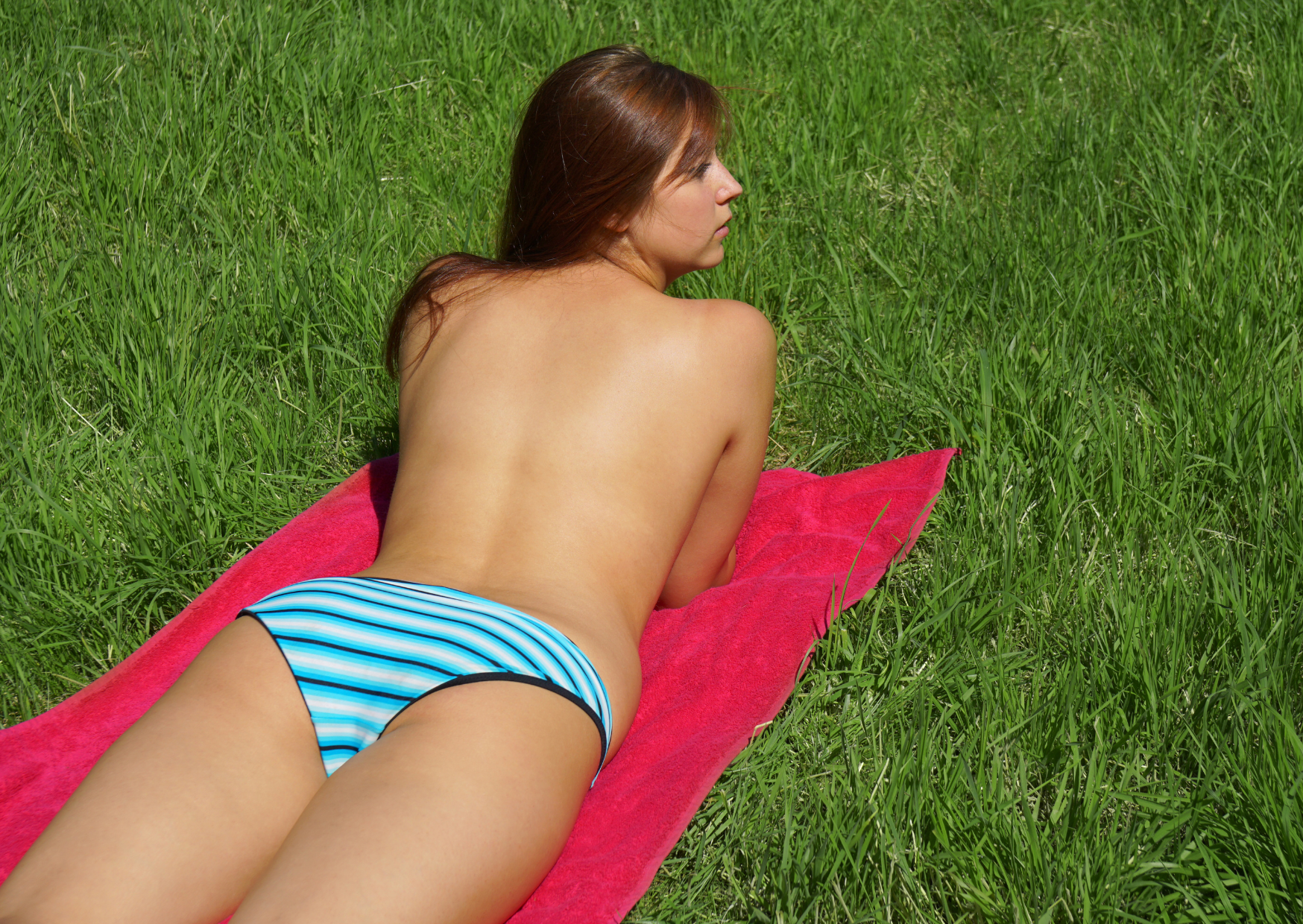
Toddlers often run around naked. Topless sunbathing is common. Men of all ages wear tight swimsuits without shame. And no one looks twice.
There is no moral panic about skin. No sense that exposure equals attention. The body is just part of the environment, not the focus.
9. There Are No Quiet Zones — Only Coexistence
In the U.S., certain beaches pride themselves on peace. No music. No shouting. Quiet hours.
In Spain, beaches are shared, not segmented.
There may be kids yelling, music playing, beach paddle going on next to your head — and no one gets up and leaves. No one files a noise complaint.
You adjust. You shift. You accept that the joy of others is not a disruption of your peace — it’s part of the landscape.
One Beach, Two Realities

To Americans, Spanish beach life can feel overwhelming. Too loud. Too close. Too communal.
Where are the personal boundaries? The structured parenting? The private space?
To Spaniards, the American beach scene often looks isolated and over-managed. Everyone on their own towel. Every child heavily supervised. Every activity compartmentalized.
In American families, the beach is a time to unwind — within lines.
Family dynamics on beaches reveal more than just how people relax—they highlight cultural values around space, community, and freedom. Spanish families embrace openness and togetherness, creating lively beach atmospheres that can feel both inviting and overwhelming to outsiders.
Americans, on the other hand, bring their cultural preference for boundaries and independence, which results in quieter, more self-contained beach outings. Neither approach is wrong—they simply reflect different priorities and worldviews.
In the end, travel teaches us that there’s no universal rule for how families should behave. By observing, adapting, and respecting these differences, visitors can enjoy the richness of cultural contrast while finding comfort in their own ways of connecting at the beach.

About the Author: Ruben, co-founder of Gamintraveler.com since 2014, is a seasoned traveler from Spain who has explored over 100 countries since 2009. Known for his extensive travel adventures across South America, Europe, the US, Australia, New Zealand, Asia, and Africa, Ruben combines his passion for adventurous yet sustainable living with his love for cycling, highlighted by his remarkable 5-month bicycle journey from Spain to Norway. He currently resides in Spain, where he continues sharing his travel experiences with his partner, Rachel, and their son, Han.
GEOFFREY
Sunday 15th of June 2025
Even though I have been to a Spainish beach, it was out of season so the experience isn't comparable. What i do find odd is the perception described here of quiet Americans all sequestered into defined spaces. That flys in the face of the European image of boisterous, smiling Americans.