
Walk into a Roman trattoria, order cacio e pepe, and when the conto lands you spot a small line for pane (bread) or servizio. Cue the table-wide eyebrow raise: “They scammed us.” They didn’t. You just met a centuries-old Italian custom wearing its Roman-era outfit. What looks like a sneaky add-on is the local descendant of the coperto—the historic “cover” for table setting and bread—that’s been part of Italian dining culture since long before the U.S. had restaurants to tip in. The twist: Rome sits in Lazio, the one region where coperto is banned, so you’ll rarely see that word on the bill. Instead, places legally itemize bread per person or apply service if it’s printed on the menu. Same idea, different label.
If you understand why that line exists, when it’s legitimate, how to decline it gracefully, and how Rome differs from the rest of Italy, the mystery (and the irritation) disappears. You’ll also stop arguing with your server and start enjoying the thing you came for: a warm basket that knows exactly how to keep pasta sauces company.
Want More Deep Dives into Other Cultures?
– 9 Italian Style Rules That Instantly Outshine American Fashion
– Why Europeans Walk Everywhere (And Americans Should Too)
– How Europeans Actually Afford Living in Cities Without Six-Figure Salaries
– 9 ‘Luxury’ Items in America That Europeans Consider Basic Necessities
1) Four lines that unlock every Italian bill

Coperto
Literally “cover.” Historically covers the cost of table linen, cutlery, crockery, and the bread that arrives with your meal. In most of Italy, a coperto is per person (think €1–€3.50 in ordinary places, more in tourist magnets) and must be listed on the menu. You pay it even if you split a plate or eat lightly; you’re paying for the table, not a dish.
Servizio
A service charge—usually a percentage (often 10–15%, sometimes attached to large groups or Sundays/holidays). It’s not the same as coperto and, when used, must also be disclosed on the menu. If servizio is charged, you’re not expected to tip on top. (Rounding up a euro or two for kindness is fine; adding 20% American-style is not the norm.)
Pane
Bread. In some cities, you’ll see pane listed per person as its own small charge. In others you won’t, because bread is folded into the coperto. The basket itself is not “free refills”—it’s part of the table ritual, refilled within reason while you eat.
Acqua
Water. Italians buy bottled still or sparkling in restaurants. If you want tap, ask for acqua del rubinetto or caraffa d’acqua; don’t just say “water” or you’ll likely get a bottle. Remember: table/cover may be fixed, but drinks are separate.
2) Why Rome looks different: Lazio’s ban on coperto and the rise of pane and servizio
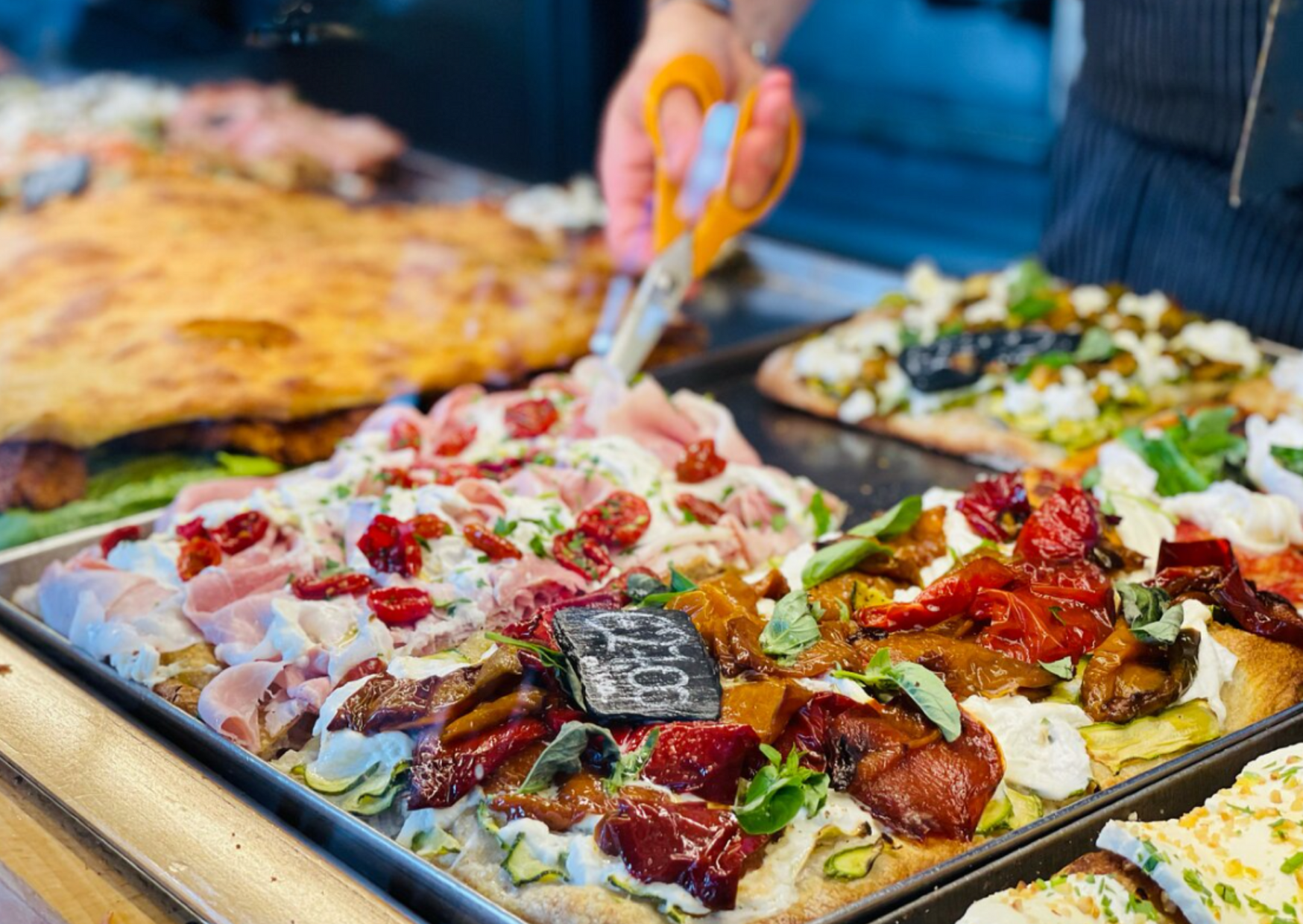
Here’s the gotcha that trips up visitors: Lazio (Rome’s region) is an exception to the national pattern. The regional rules prohibit “pane e coperto” as a mandatory cover charge. That doesn’t mean Romans eat bread for free or that restaurants absorb linen costs out of thin air. It means Roman dining rooms can’t slap coperto on your check just for sitting down. To cover the same real costs, many places list:
- Pane at a small, disclosed per-person rate (e.g., €1.50–€3.00), or
- Servizio as a clearly stated percentage, especially in tourist-heavy or higher-end spots.
If you learned that “coperto is normal in Italy” and then wound up in Rome, you looked for coperto, didn’t see it, and felt blindsided by pane or servizio. That disconnect fuels the “scam” myth. The bill isn’t cheating you; it’s reflecting Lazio’s legal framework.
Practical tip: before you sit, glance at the bottom of the menu (or the placard outside). In Rome you’ll often find “Pane €2,00 p.p.” or a note that servizio 10% applies. If you dislike the numbers, choose another trattoria—there are plenty.
3) A 500-year backstory in 90 seconds
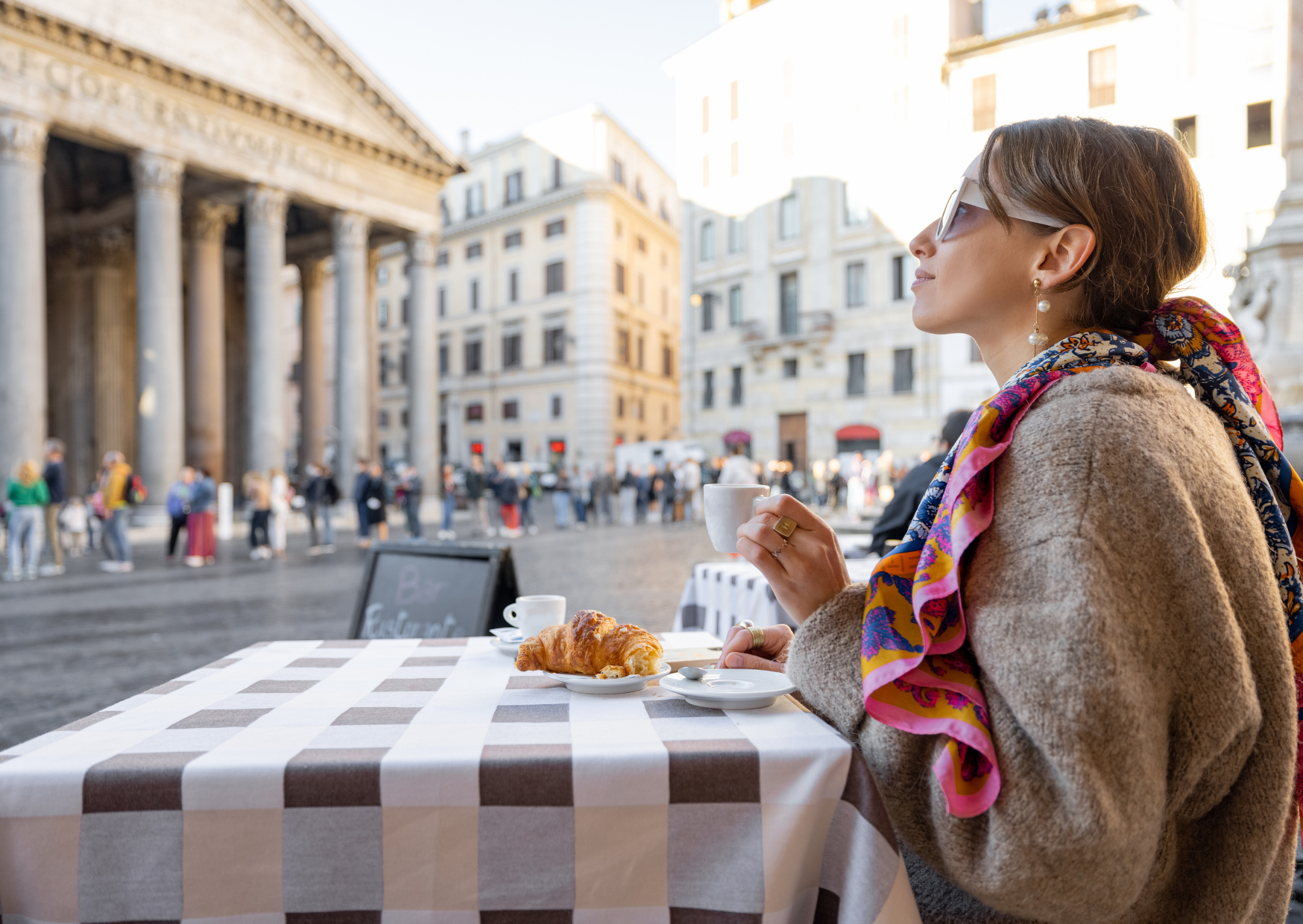
Why does Italy unbundle a tiny “cover” at all? Because for centuries inns and taverns priced food and the table separately. Bread was staple food; linens were expensive to launder; plates and cutlery had to be kept and replaced. Charging a small coperto stabilized the economics for hosts and made prices predictable for travelers. The custom stuck through the birth of modern restaurants. Today, tax and basic service are included in menu prices, but the tiny fixed line for table/bread survives—in most regions as coperto, in Rome as pane or servizio. It’s not a gotcha; it’s continuity.
4) “Is the bread charge legit?” The two-step test
Step 1: Is it disclosed on the menu (or house rules)?
If pane or servizio is printed—often in little type, but there—it’s legitimate. Italy’s consumer rules require disclosure. No listing, no charge.
Step 2: Did you accept the bread?
If a basket appears and you plan not to eat it, say so when it lands: “Per noi niente pane, grazie.” Most houses will remove it (and the line) if you decline immediately and leave it untouched. If you tuck in, you’re opting in.
Pro move: if you’re cutting costs or minimizing waste, order “niente pane” when you order food. You’ll avoid any awkward back-and-forth later.
5) How Rome differs from the rest of Italy (so you stop arguing with Florentines)
- Rome/Lazio: No coperto; expect pane per person or servizio (if printed).
- Tuscany/Umbria/Emilia-Romagna/Naples/Veneto etc.: Coperto is common and legal when printed. Bread is usually included in that coperto rather than listed separately.
- Liguria and the Riviera: coperto is common; you’ll see higher seaside numbers in hot spots.
- South Tyrol/Trentino and parts of the Alps: coperto appears; service charges may be rarer outside cruise corridors.
If you hop from Florence (coperto €2) to Rome (pane €2 p.p.), nothing “changed” philosophically. You’re just reading regional dialects of the same custom.
6) The psychology: why Americans bristle—and why Italians shrug
In the U.S., we wrap a lot of cost into tipping and “free” bread/refills; we also expect unsignaled bottomless baskets. In Italy, tax and core service are already built into menu prices, bread isn’t unlimited by default, and small fixed costs are itemized. So the American eye sees a line and thinks padding; the Italian eye sees transparency. Which pricing culture you prefer is a taste issue, but calling the other “a scam” is just not understanding how the math is shown.
7) Real numbers: what a normal Roman check looks like
Two people at a classic trattoria:
- Rigatoni all’amatriciana €13
- Tonnarelli cacio e pepe €14
- Carciofi alla romana (shared) €9
- Acqua frizzante 1 L €2.50
- Vino della casa ½ L €6
- Pane €2 p.p. → €4
- Servizio none listed
Total: €48.50
That €4 is the “annoying” line Americans fixate on. But notice: you didn’t pay sales tax on top, you didn’t tip 20%, and you ate fresh, cooked-to-order food in a staffed room with linen and ceramics, in the center of a European capital, for under €25 a head. It’s a pretty fair spreadsheet.
If the menu listed servizio 10%, tack on €4.85. You wouldn’t then tip another 10–20%. At most, you’d round the total to €50 or €52 to be sweet.
8) Scripts that save you money (and face)
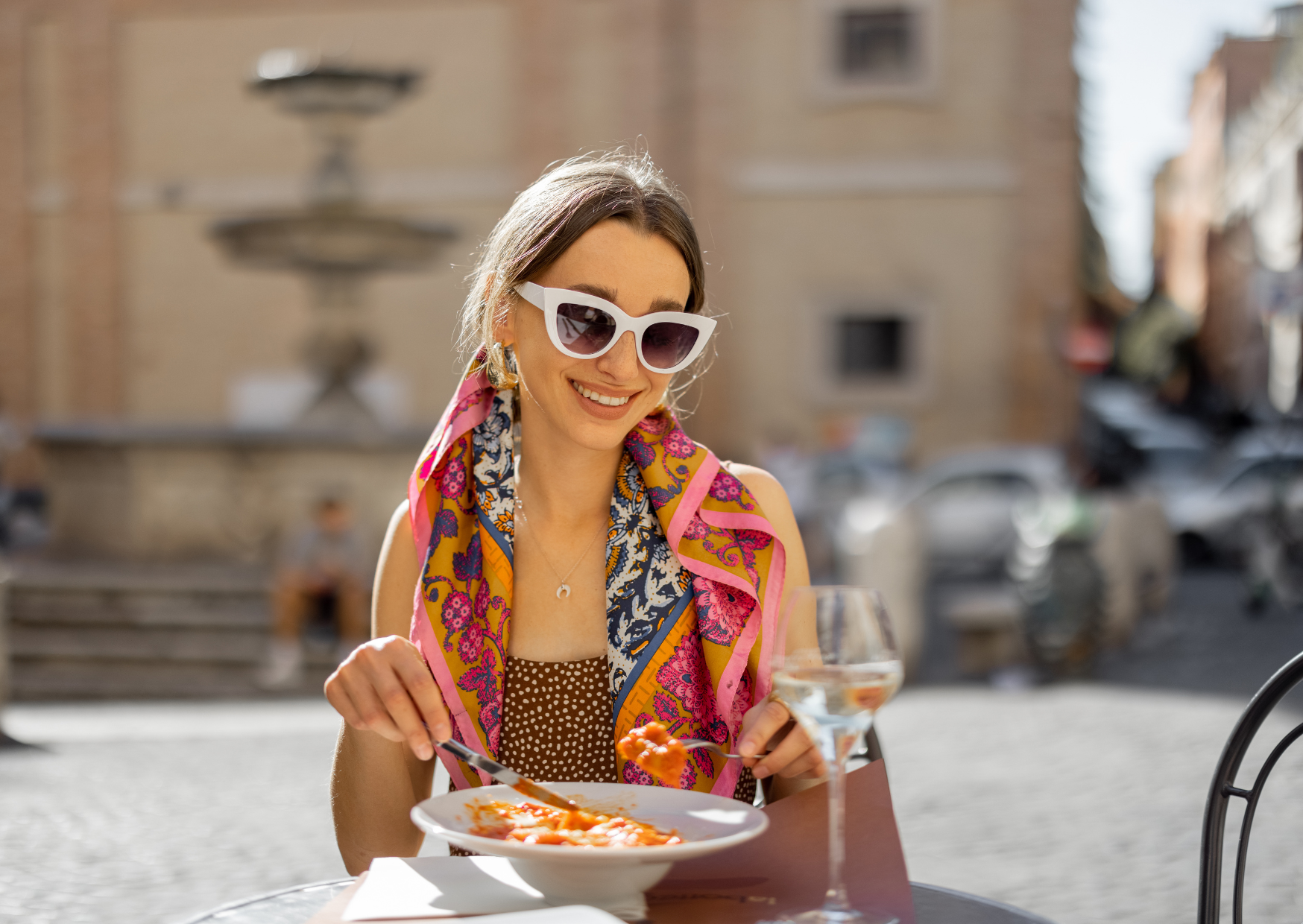
Declining bread politely
When the basket appears: “Per noi niente pane, grazie—stiamo bene così.” If they already set it down, gesture gently and don’t touch it. Most servers will remove it with a nod.
Confirming service
“Scusi, il servizio è compreso?” If they say yes and the menu shows servizio, you’re done—no extra tip necessary.
Avoiding bottled water
“Possiamo avere una caraffa d’acqua, per favore?” Some spots push bottled by default; most will bring tap if you ask clearly.
Challenging a line that wasn’t listed
“Mi scusi, non vedo il pane/servizio nel menù—possiamo verificare?” Stay calm and curious, not accusatory. Nine times out of ten, an honest mismatch gets corrected on the spot.
9) “But I didn’t touch the bread!”—how to handle edge cases
If you forgot to decline and the basket sat there untouched, mention it before paying: “Abbiamo lasciato il pane intatto—possiamo toglierlo dal conto?” If the menu clearly says pane p.p. and the basket lived on your table through the meal, some places may keep the charge anyway (you occupied the setting and they can’t reuse that bread). Others will happily remove it. Ask nicely; accept whichever answer fits the house policy that was disclosed.
10) Bar, banco, tavolo: why the same cappuccino costs two prices
Italy often posts two prices: al banco (standing at the counter) and al tavolo (seated service). Sitting ties up a server, linen, and a chair; standing does not. Rome follows this logic, especially near famous piazzas. If you want the cheapest coffee in the center, drink it Italian-style at the bar. If you pick the prettiest terrace and sit for an hour, you’re paying rent for that square of cobblestone—and you’ll see it reflected either in the menu prices or a posted servizio/cover for the table.
11) Tourist traps vs. normal practice: how to spot padding
Normal
Small pane p.p. written on the menu; modest servizio clearly stated; prices for dishes within neighborhood norms.
Padding
Unlisted charges added at the end; mysteriously high servizio (e.g., 20% at a basic trattoria) with no mention on the card; aggressive bread drop with a high per-person bread line you didn’t see on the menu; a separate “music” or “terrace” fee never posted.
If something feels off, step outside, check the posted menu again, and return to the register with your question. Calm curiosity beats confrontation and is more likely to get you a correction.
12) Tipping in Rome: a 30-second reset
- If servizio is charged: don’t tip on top.
- If servizio is not charged: round up a euro or two, leave small coins, or add ~5% if you had exceptional service and feel like it.
- No server expects an American 20%; it can even be awkward in humble places.
- If you pay by card but want to leave coins, just say: “Pago con carta, ma lascio qualcosa qui.”
Remember: coperto and pane are not tips; they’re line items for the table and bread service.
13) Why Roman bread is worth the line (and how to use it like a local)
Roman baskets are a supporting actor, not the star. The idea is companionship, not pre-meal gorging. You’ll see a crusty pane casareccio or slices from a local forno—sturdy enough to escort the peppery sauce from your cacio e pepe, perfect for scarpetta (wiping the plate) if the room is casual. If you want butter, don’t assume it’s a thing; ask lightly, accept no with a smile. If you want oil, you’ll often find a bottle on sideboards; otherwise the kitchen may bring a saucer.
14) What to do if the bill feels wrong (a friendly playbook)
- Read the menu fine print before ordering; note any pane / servizio.
- When the conto arrives, scan quickly: dishes, water, wine, bread, service.
- If a mystery charge appears, ask: “Questo è il pane/servizio? È indicato nel menù?”
- If it’s a mistake, most places correct it immediately. If it’s policy you missed, chalk it up to tuition and enjoy the night sky on the walk home.
- If you feel truly misled (unposted extras), you can request the receipt (scontrino) and note the issue; Romans dislike bad press more than small refunds.
15) Special cases: group menus, holidays, and high-end rooms
- Group reservations sometimes include servizio by default. It should be printed on the set menu.
- Christmas/Easter/NYE menus often roll everything (bread, service, water) into a fixed price. Read the header; you might actually be paying less than à la carte plus add-ons.
- Fine dining in Rome typically does not itemize bread or coperto separately; it’s folded into the higher per-person cost. You might see pane e burro (bread and cultured butter) listed as a course in modern bistros; if so, it’s because the bread program is part of the cuisine, not a mysterious fee.
16) “I just want the cheapest, most local dinner—what do I do?”
- Get lunch right. Rome’s pranzo menus can be spectacular value. If you eat a solid lunch, dinner pressure eases and you won’t care about a €2 bread line later.
- Dodge the postcard views. One or two streets off a famous piazza, prices soften and practices are gentler.
- Scan for handwritten cards. Daily specials and chalkboards usually signal lived-in places where bread/service are modest and clearly posted.
- Peek at plates. Are locals eating? Do you see bread handled with respect, not as filler? Follow that room.
17) “But I’m gluten-free.” Does pane still apply?
Tell your server when you sit: “Sono celiaco/a—niente pane per me.” If the house charges pane p.p., they’ll typically remove it for the gluten-free diner or for the whole table if no one takes bread. If a separate servizio exists, that’s unrelated—it may still apply because it covers service, not bread. Rome has many GF-aware spots; a heads-up keeps everyone happy.
18) Words on the menu that signal you’re paying for a real bread program (and should be excited)
- “Pane fatto in casa / lievito madre” — house-made sourdough; sometimes served warm with olive oil or butter.
- “Selezione di pani” — a curated selection; occasionally priced like a small starter.
- “Pane & olio / pane & burro” — explicitly a mini-course. If you order it, you’re choosing an experience, not stumbling into a fee.
When bread becomes an intentional course, treat it like one. Slow down and enjoy it; the little line at the bottom turns into a memory, not an irritant.
The polite anatomy of paying (so the last moments stay lovely)
- Ask for the bill: “Il conto, per favore.”
- If you’re splitting: “Possiamo dividere in due, per favore?” (Most Roman spots are used to it; some will do separate receipts, others will calculate.)
- Tip logic: if there’s servizio, pay the total; if not, leave small coins or round up.
- If the server gave you a small favor (swapped a dish, saved a terrace seat, brought a digestive), a couple extra euros are the right thank-you.
The honest bottom line
In Rome, the “bread charge” Americans grumble about isn’t a grift; it’s the Lazio-legal cousin of Italy’s five-century-old coperto. Because coperto itself is banned locally, restaurants either list pane per person or apply servizio—as long as it’s printed on the menu. If you don’t want bread, decline it when it arrives. If service is charged, skip the tip. If nothing is disclosed and a mystery line appears, ask calmly and it will almost always be fixed.
Understand the rule, and you’ll stop treating the basket as a trap and start using it the Roman way: not as a free buffet before the meal, but as the quiet partner to the food on your plate. The charge is small; the hospitality is real; the best argument with the check is no argument at all—just a last piece of crust, a final sip of house wine, and a slow walk past lit windows where other tables are laughing over their bread, too.

About the Author: Ruben, co-founder of Gamintraveler.com since 2014, is a seasoned traveler from Spain who has explored over 100 countries since 2009. Known for his extensive travel adventures across South America, Europe, the US, Australia, New Zealand, Asia, and Africa, Ruben combines his passion for adventurous yet sustainable living with his love for cycling, highlighted by his remarkable 5-month bicycle journey from Spain to Norway. He currently resides in Spain, where he continues sharing his travel experiences with his partner, Rachel, and their son, Han.