
You feel the urge at Gare du Nord, see a turnstile asking for one euro, and the first word in your head is not merci.
In much of the United States, bathrooms inside train stations, malls, and big stores are free. In France, your first encounter with a pay gate often happens in a station or an older shopping arcade. The result feels personal, as if the city is holding your bladder for ransom. Then you step back outside and notice something else. On the sidewalk a few meters away sits a sleek, self-cleaning cabin with a green light, and it is free to use. The truth is not that France charges for every toilet. It is that the map is different, the money pays for specific things, and the rules sit closer to maintenance and labor than morality.
This guide translates that map so you stop being surprised. We will show you where fees persist, why they exist, and why Paris made thousands of sidewalk trips free while stations still guard the door. You will learn what the fee buys, how to avoid it when you can, and why French voters are now asking whether free access should become a right. By the time you finish, the turnstile will feel less like a shakedown and more like a policy choice you can plan around.
Want More Cultural Myth-Busting?
– 7 Ways You’re Insulting Europeans Without Even Realizing It
– 10 Secrets to Understanding European Politeness (And Why You’re Doing It Wrong)
– How to Spend a Month in Europe With Just a Carry-On—Minimalist Packing Hacks
First, the reality check: not all “French public toilets” are pay toilets
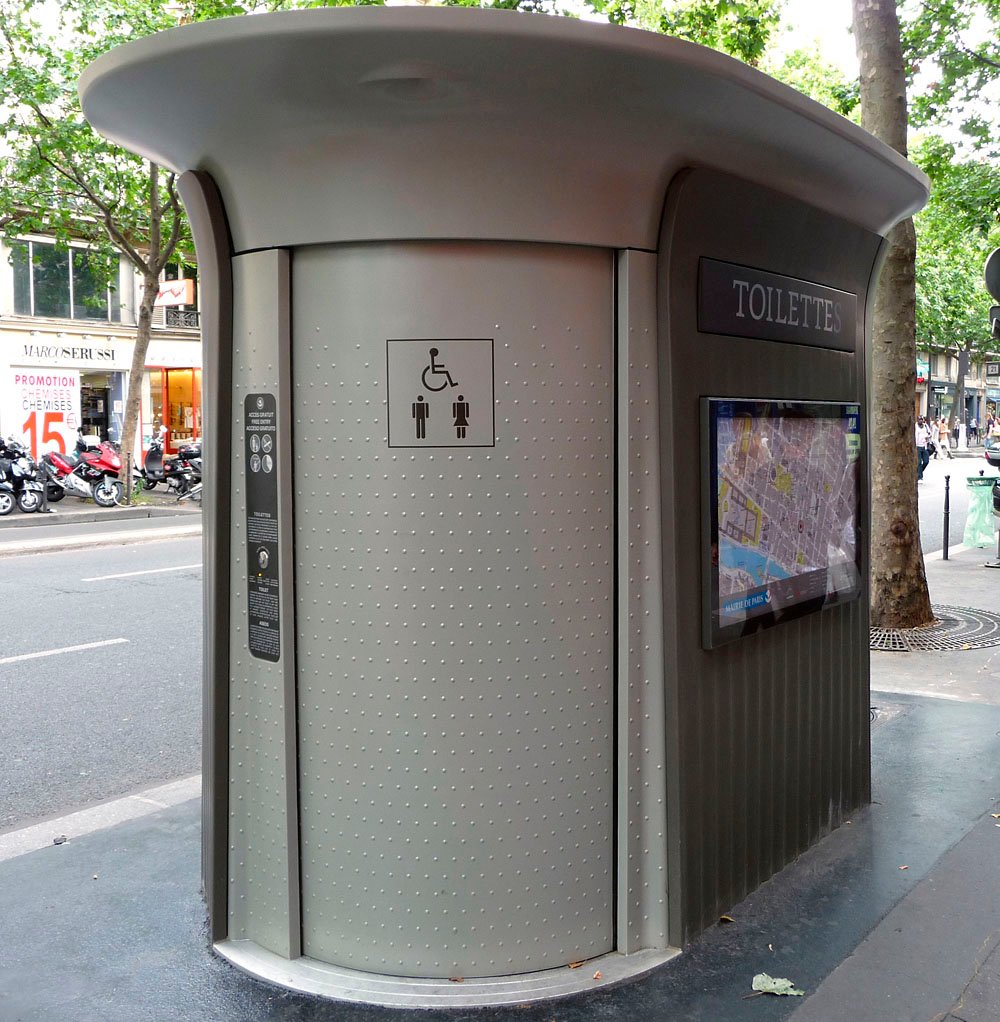
France mixes models. Paris’s street pods called sanisettes are free. Many station facilities are not. Museums and cafés are free for customers. Parks can be either, depending on who runs the site. If you hold one rule in your head, hold this: sidewalks in Paris are largely free, big indoor hubs often are not.
Paris made its curbside units free years ago and is replacing them with a new generation of larger, touchless cabins through 2025. The city lists roughly four hundred to four hundred thirty five units, many open 6 a.m. to 10 p.m., with about one hundred fifty operating around the clock on main roads. They are wheelchair accessible and self-clean after each use. The city and its contractor are in the middle of rolling out upgraded models with contactless interfaces, an exterior drinking fountain, and a back-side urinal to increase capacity during busy hours. These cabins cost users nothing. The bill is paid by the municipality.
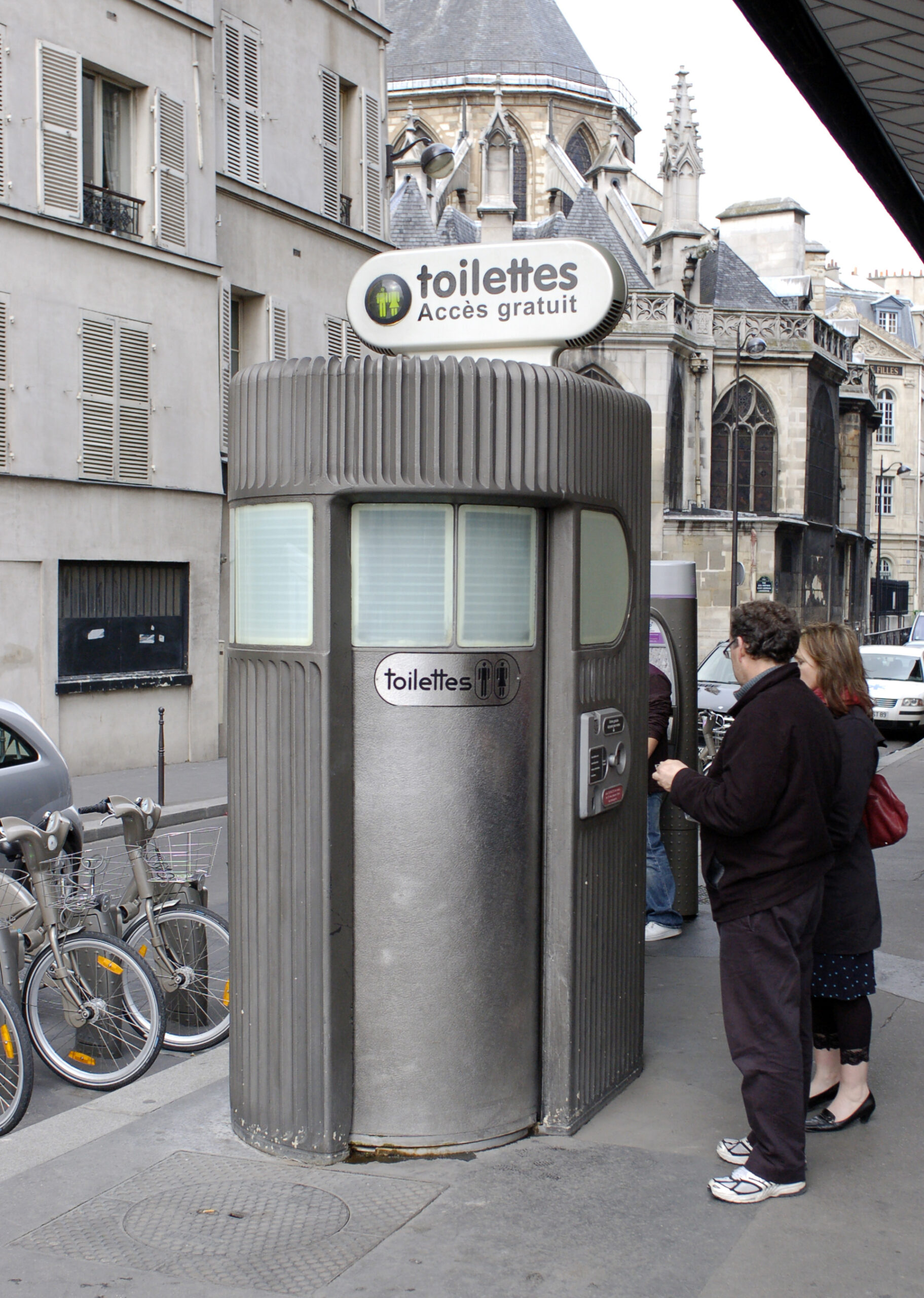
Move inside a big rail hub and the rules change. Toilets in many SNCF stations remain behind a pay gate, usually around fifty centimes to one euro depending on the station and operator. Some facilities now accept cards, some offer a receipt with a small shop discount, and a few have opened the gates for local transit pass holders so daily commuters are not nickeled and dimed. The point is that the fee is common in stations even as the sidewalk pods outside are free.
If you leave Paris, you will find the same mix. Lyon’s sidewalk facilities are free, while parts of the Part-Dieu station or a mall may charge a small fee. Marseille lists public toilets across districts that are free to use, but you may still find a staffed or gated facility in a transit or shopping complex. The surprise comes from assuming one rule fits all. It does not. Station managers, mall operators, and cities make separate choices.
Why the sidewalk is free but the station gate costs a euro
Follow the money and the roles. Paris treats street toilets as a city service baked into the streetscape, like benches or bus shelters. The city pays a contractor to build, maintain, and clean them, and ties the system to an advertising concession that subsidizes street furniture. The newest models add capacity and accessibility, an explicit public service posture in a capital that hosts millions of visitors. The outcome is simple for you. On the street, you rarely pay.
Stations and malls are different. They are not municipal streets. The operator has cleaning staff, water, supplies, insurance, and security to fund. The fee acts like a small ticket that pays those costs, discourages misuse, and, in some places, pays the wages of attendants. The job of the restroom attendant, called a dame pipi in older facilities, has a long history in France. Today some stations outsource to private restroom companies whose business model is the very thing you meet at the gate, a charge that promises cleanliness. Whether you like the model or not, the logic is clear. You are paying for staffing and standards in a high-traffic, enclosed space.
There is also a quiet legal and budget backdrop. French cities are broadly responsible for public cleanliness and health, but there is no national law that forces municipalities to install a specific number of public toilets or to make them free. That leaves mayors to balance budgets and choose models. In Paris, officials have said the free street-toilet system costs the city on the order of tens of millions of euros annually, which helps explain why a station, owned by a different entity, might guard the door.
The American sticker shock, explained
Americans do not love paying to pee, for three simple reasons.
First, they are primed by home turf. In many U.S. cities, malls and transit hubs offer bathrooms without a gate. Even where restrooms are for “customers only,” there is no coin slot. You may have to buy a coffee, but you are not sliding your card at a turnstile that lists a price. When you put that background next to a very literal paywall in a European station, you feel gouged even if the amount is small.
Second, the fee is visible. A coin slot shouts in a way a hidden cost does not. In the U.S., the cost of cleaning is folded into retail rent, concessions, and your train ticket. In a French station, the cleaning contract is sometimes paid directly by the users of the room. The euro you see is the broom you do not see.
Third, the map is inconsistent to an outsider. You paid at Saint-Lazare at noon but used a free sidewalk cabin fifteen minutes later. You paid in Lyon Part-Dieu on Saturday but not at a museum on Sunday. Inconsistent rules feel unfair even when there is a logic behind them. The cure is to understand who is paying for which room.
What your euro actually buys in a station
In most staffed or gated facilities, the ticket funds staffing, cleaning, supplies, and a standard of hygiene that is difficult to guarantee in a totally open, high-traffic space. You see soap in the dispenser, paper on the roll, and an attendant who keeps the line moving. For some users, especially with kids, that is worth fifty centimes every time.
Some operators add a small consumer incentive. Pay, receive a paper chit, and the slip gives you the amount off a coffee or snack from a station kiosk. It is not universal and it does not erase the cost, but it shows the system sits inside a larger retail ecosystem.
Public health and dignity arguments cut both ways. Critics point out that fees are a barrier for those most in need, and that even small charges can punish people with medical conditions, older adults, and the homeless. Advocates for free access have proposed making station toilets free by law or setting national quotas for the number of toilets per residents. The debate is active. You can watch it move through French newspapers and city halls as mayors weigh costs against fairness.
The Paris exception that confuses everyone
Tourists often leave Paris telling friends that “France charges for toilets,” then describe a trip that happened entirely in free street cabins. Here is what is happening.
Paris’s sanisettes have been free for years and are being modernized. They self-clean, include contactless doors and controls, and many operate 24 hours on major corridors. The city publishes a map, tourist offices point to them, and the contractor upgrades the fleet with features like outside fountains and a secondary urinal to double capacity at peak times. This model is unusual in its scale. It coexists with paid station facilities that answer to a different owner and budget. Both can exist within a five minute walk. Both can be true at once.
A small recent twist tries to soften the station sting for locals. In the Paris region, long-term transit pass holders can now swipe into some station toilets without paying the euro, a perk meant to match daily use with free access for commuters. It does not help a tourist on a one-week pass, but it shows how operators are adjusting rules at the margin.
Why the fee exists at all: costs, staffing, and vandalism
A clean restroom in a transit hub is not a cottage. It is a small industrial site that uses water, power, labor, and consumables all day. The bill lands somewhere. Cities that make every public toilet free take the costs into the municipal budget and, in Paris’s case, roll them into a broader street-furniture contract. Operators that gate indoor facilities ask users to chip in.
The fee also acts as a small behavior filter. When you must pass a gate or an attendant, misuse drops, turnaround is faster, and the room is easier to keep clean. That is why some cities keep attendants in heritage facilities and why station managers hire private restroom brands. It is not a moral judgment. It is a maintenance model that tries to match the reality of enclosed, high-traffic spaces.
A last practical point explains why parks and monuments vary so much. Some parks are run by the city, others by the national government. Some monuments are managed by private foundations. Each chooses a cleaning model. The result is a patchwork. When in doubt, assume street pods are free, museums are free to ticket holders, and large indoor hubs may charge unless you see a sign that says otherwise.
How to stop paying every time: a traveler’s playbook
This is not a crusade. It is a set of habits that keep your day smooth and your coins in your pocket.
Plan before stations. Use the café or museum restroom where you already paid for entry. Train stations are the most common place you will meet a pay gate. If you go ten minutes earlier, you avoid the turnstile.
Use the street pods. On Paris sidewalks and in many French cities, the self-cleaning cabins are free. Look for the green light and the occupancy sign. Many have audio prompts and braille. They clean between users, which takes a minute. In peak hours, wait times can be real, so look for the next unit along the boulevard.
Carry a card for stations. If you will be in and out of stations, assume you may have to pay. Most gates accept coins and cards now. Some even accept phone payments. In a pinch, a small purchase at a station café will get you access to the customer restroom without the gate.
Learn the indoor map. In a department store, restrooms are free for customers, and you often find them on upper floors. In malls, you may meet a staffed desk with a saucer for coins. In tourist-heavy galleries and parks, signage will tell you up front if a fee applies.
Know the exception pass. If you are a long-term Navigo or Imagine R subscriber in the Paris region, try your card at the gate in the eight stations where the program is live. The reader sits next to the payment terminal. It will either open or tell you to pay.
Bring dignity with you. A small packet of tissues and a travel-size hand gel will make every model easier to use. Street cabins are self-cleaning but not self-stocking with paper.
The labor story Americans miss
When Americans see a coin slot, they think toll. When many French people see it, they also see a job. The attendant seated by the door is part of the picture, especially in older underground facilities and heritage parks. The position has been contested in recent years as private brands automated station restrooms and tried to shed staff. Court cases and protests made the tension visible. Whether or not you pay in a given location, labor sits behind most clean rooms. The coin funds a person or a company that does the work. That is the point, not the brand name on the door.
Is France moving toward free access everywhere
The conversation is active and public. Members of parliament have proposed making access to toilets free and universal, citing dignity and health. City officials counter that free systems cost real money and that private operators in enclosed hubs are not running public services. Another proposal would set quotas of public toilets per residents so mayors cannot ignore the need when they draw budgets. In other words, exactly the debate you would expect in a country that treats public space as a shared living room. The direction of travel is clear. More free options on the street, pressure to end fees in stations, and pilot programs that reduce or remove turnstiles for everyday commuters. The pace, as always, depends on who pays the cleaning bill.
Why this feels like “robbery” to Americans, and how to reframe it
The charge hits you in a vulnerable moment. That alone makes it feel unfair. The cure is to treat it like an airport luggage cart. You are paying a small operational fee in a private facility that cleans at scale. On the street, the city already paid for you. In cafés and museums, your ticket or your espresso pays the bill. If you think in those three lanes, you will stop feeling picked on and start making smoother choices.
There is also a deeper difference in how people use cities. In French towns the sidewalk is a sitting room, the terrace is a living room, and street furniture is part of the social contract. The free pod on the curb is a sign of that contract. In the United States, the same money is often routed into indoor hubs. The outcome feels different because the gate sits in your way rather than on a city budget line you never see.
The small etiquette that makes this easy
Do not duck a turnstile. If a station restroom is gated and you need it, pay the euro. If you truly cannot, ask the attendant politely. You will be surprised how often they wave a parent with a child through.
Do not raid customer-only facilities without buying something. In dense tourist zones, that misuse is exactly what creates stricter rules for everyone else. A coffee buys you a bathroom and helps the café manage the crowd.
Do not force your way into staff toilets. French businesses keep employee facilities separate for legal reasons. Ask, do not push.
Do not be shy about the street pods. They exist to be used. The green light means go. If there is a queue, it will move.
Where fees persist and why they probably will for a while
Big station hubs. The cost and risk profile is not going away. Expect to pay unless you hold a local commuter pass and there is a reader on the gate.
Heritage sites and gardens. Some legacy underground facilities keep attendants for safety and cleanliness. Fees remain common.
Tourist-dense zones. A small charge discourages misuse and funds staff. Cities that go fully free in these zones often move money from other lines to cover it.
Private malls and arcades. The operator sets the rules. In some, a staffed desk with a saucer simply invites a tip. In others, a turnstile enforces a fixed price.
None of these are a trap if you plan and carry a card. The sidewalk’s green light is still your friend.
What this means for you
France is not charging you for a human right. It is charging you for a cleaned room on private premises while it gives you a free alternative on the street. Once you learn the map, you stop being surprised. Use the free pods, use the café when you are already a customer, and be ready to pay in stations where the gate funds a crew that keeps a busy room usable. If you prefer to never pay, plan ten minutes earlier and aim for the green light.
The last word is practical. When you travel, your choices vote. If you consistently respect customer-only rules, staff will keep being kind about exceptions. If you consistently use the free pods, cities have an easier time defending budgets for them. And if you pay a euro in a station, you are buying five clean minutes in a place that sees a hundred thousand people a day. It feels less like robbery once you see the ledger.

About the Author: Ruben, co-founder of Gamintraveler.com since 2014, is a seasoned traveler from Spain who has explored over 100 countries since 2009. Known for his extensive travel adventures across South America, Europe, the US, Australia, New Zealand, Asia, and Africa, Ruben combines his passion for adventurous yet sustainable living with his love for cycling, highlighted by his remarkable 5-month bicycle journey from Spain to Norway. He currently resides in Spain, where he continues sharing his travel experiences with his partner, Rachel, and their son, Han.