
You eat cold soup from a heavy glass, olive oil glints on top, you sleep through the night, and the scale smiles in the morning.
This is not a miracle. It is structure. Dinner built from ripe tomatoes, cucumber, green pepper, garlic, olive oil, and a little sherry vinegar is mostly water and fiber, anchored by measured fat and virtually no starch. It fills you, it does not swell you. If you keep salt tight and skip the bread, many people see the scale dip by half a kilo to a full kilo the next day. That change is water and gut weight, not fat loss, but it is real enough to calm a bloated week and reset appetite without white-knuckle hunger.
Call it the Andalusian night shift: a light, satisfying dinner that works while you sleep.
This is general information, not medical advice.
What Gazpacho Actually Is, And What It Is Not
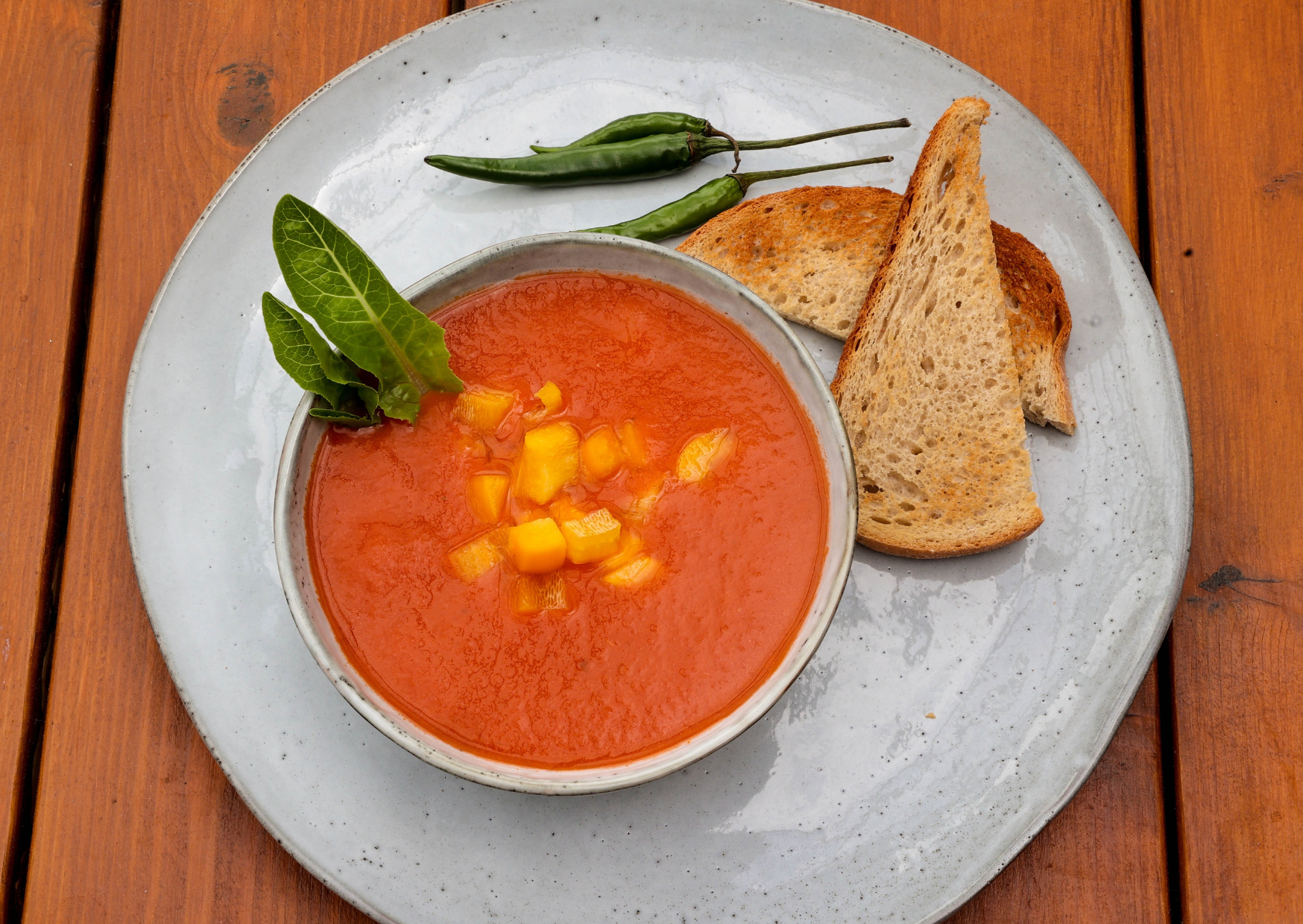
Gazpacho is not a smoothie in a bowl. It is a raw, savory emulsion of tomato, cucumber, green pepper, garlic, olive oil, and wine vinegar, sometimes thickened with a little day-old bread, always served cold. The classic versions come from Andalusia, where summer kitchens lean on no-cook dishes.
The keys are boring and strict:
- Ripe vegetables, not juice. Tomatoes and pepper give body and natural glutamates, cucumber cools, garlic gives a little heat.
- Real extra-virgin olive oil. You need enough to emulsify, not enough to turn it into a dressing.
- Sherry vinegar, not balsamic. The acidity must be clean, not sweet.
- Salt, but only a pinch. The dish should taste bright and round, not briny.
- Bread, optional. Traditional recipes add a small piece for body. For a lighter night, you can omit it and the emulsion still holds.
The cultural test is simple. If it is pink and creamy, you probably drifted toward salmorejo, a different Cordoban cousin heavy with bread and oil, best at lunch. For an overnight reset, stay with gazpacho: high water, high produce, low starch.
Scan-hooks: raw emulsion, vinegar not sugar, bread optional, low salt.
Why This Dinner Makes The Morning Number Drop
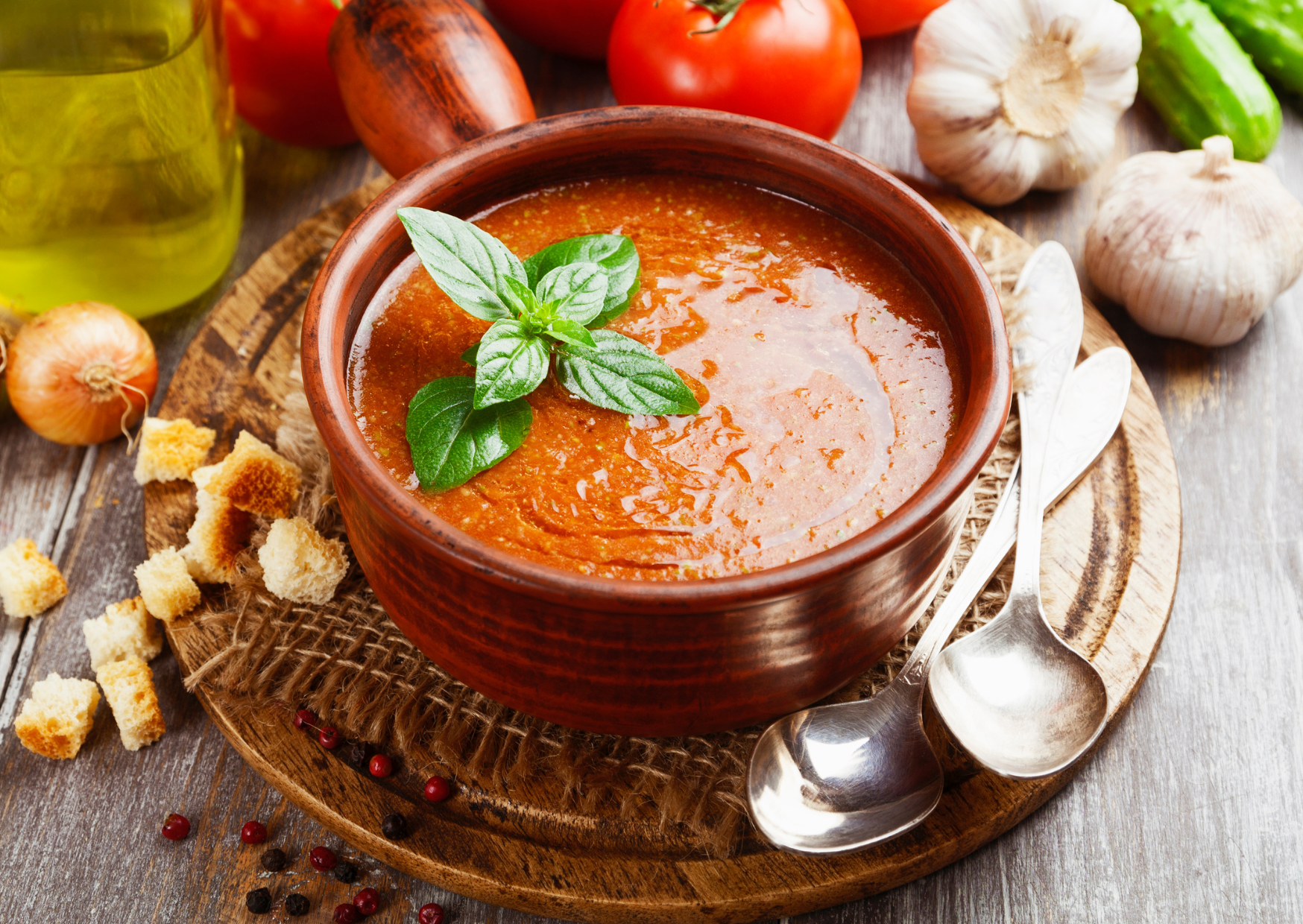
Two pounds sounds like a promise. Think of it as plausible physics. A gazpacho night sets up four changes that move water and gut weight by morning.
1) You cut sodium, you shed fluid.
Restaurant dinners and packaged sauces run salty. Gazpacho made at home lands on the low end of sodium if you season lightly. Lower sodium reduces the hormone signals that hold water, decreasing overnight retention. Tomatoes, cucumber, and pepper also carry potassium, which supports normal fluid balance. Together, less salt in and more potassium out is a simple way to wake up less puffy.
2) You shrink glycogen water.
Glycogen, the way your body stores carbohydrate, binds multiple grams of water per gram. A light dinner with almost no starch nudges you toward using a little stored glycogen overnight. Use a little glycogen, lose some bound water, and the scale moves. This is not fat loss, it is water bookkeeping, which is still the bloat you feel.
3) You reduce gut bulk without losing satiety.
Raw vegetables can sound bulky, yet a blended soup disperses fiber and water so it empties consistently and keeps you full with very few calories. Soup preloads are famous for reducing later intake. At dinner, the same physics leaves you satisfied with far less food and less residue sitting in the gut the next morning.
4) You flatten glucose, you sleep better.
There is no sugar spike in a bowl of gazpacho. A little olive oil and vinegar further soften the glucose response. Quieter blood sugar, plus a cool, light dinner, often means steadier sleep, and steady sleep is a quiet lever on appetite the next day.
When people report an overnight drop after a gazpacho dinner, they are reporting salt balance, glycogen water, gut contents, and timing, not a fat-burn fantasy. That is enough to feel different in the mirror.
Scan-hooks: low sodium, glycogen water, soup satiety, vinegar calm.
The Practical Playbook: A Weeknight Gazpacho That Actually Works
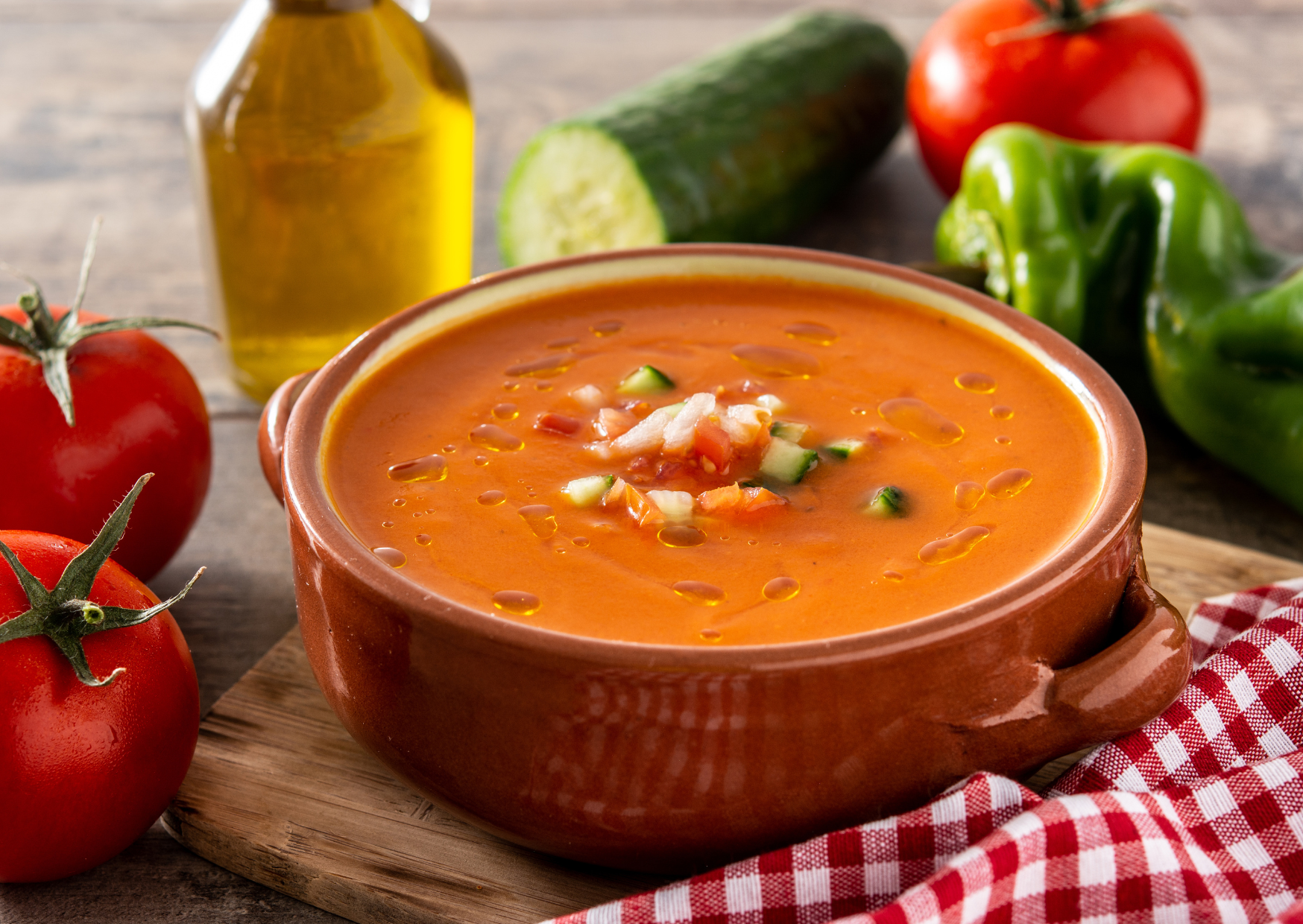
This is the Andalusian baseline tuned for a light dinner. It makes two generous dinner bowls or three smaller ones. Double it to stock the fridge for two nights.
Gazpacho Andaluz, Night-Shift Version
Scan-hooks: 5 minutes prep, no cooking, measured oil.
You need
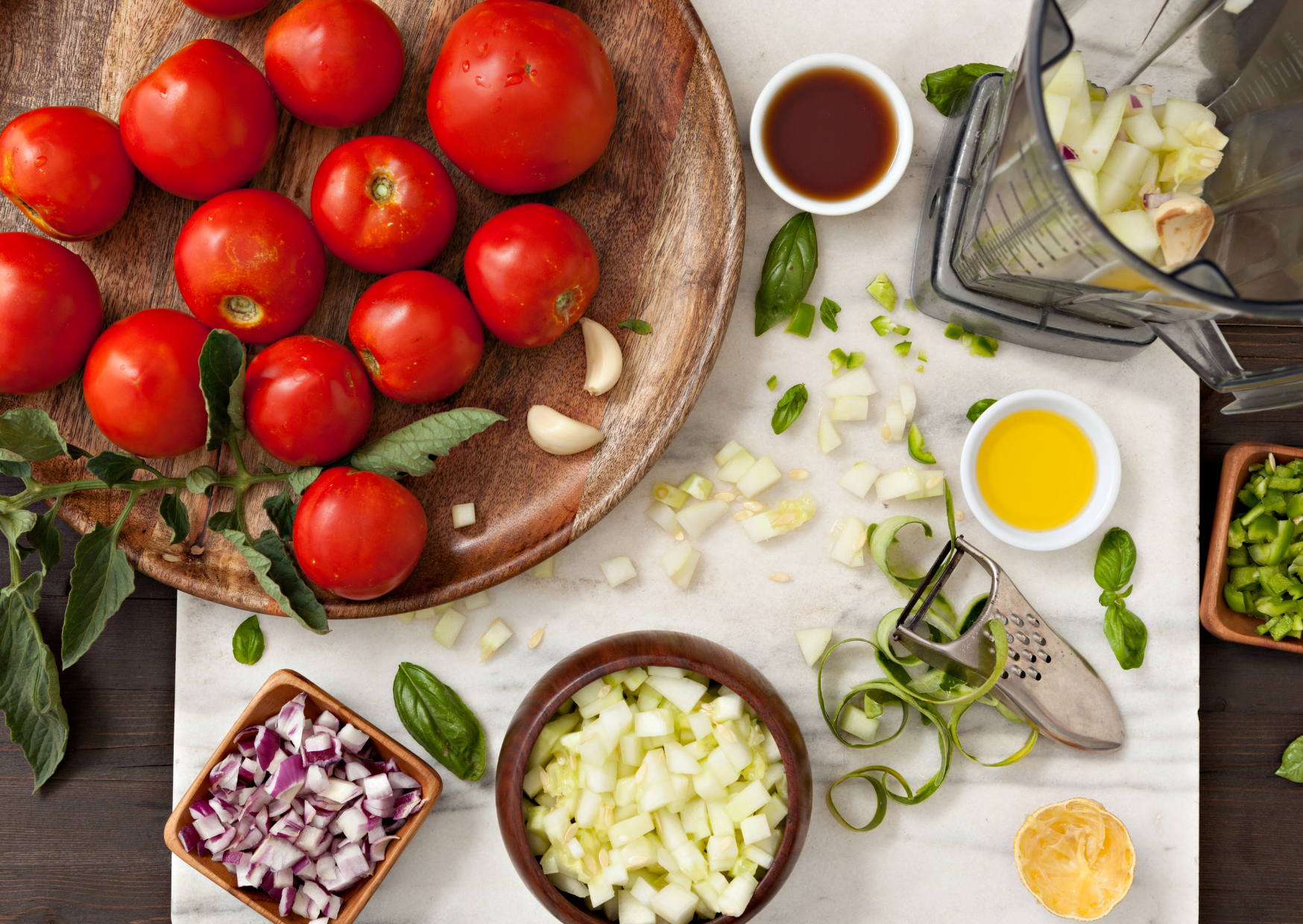
- 800 g ripe tomatoes, cored and roughly chopped
- 1 small cucumber, peeled if waxed, roughly chopped
- 1 green bell pepper, seeded, roughly chopped
- 1 small garlic clove, trimmed
- 45 ml extra-virgin olive oil
- 20–30 ml sherry vinegar, to taste
- 120 ml cold water, plus more for texture
- ¾ tsp fine sea salt, or less to taste
- Freshly ground black pepper
Optional, for body
- 40–60 g day-old white bread, crusts removed, soaked in a splash of water and squeezed dry
To finish
- A few drops of olive oil, diced cucumber, or a spoon of chopped tomato for contrast
Method
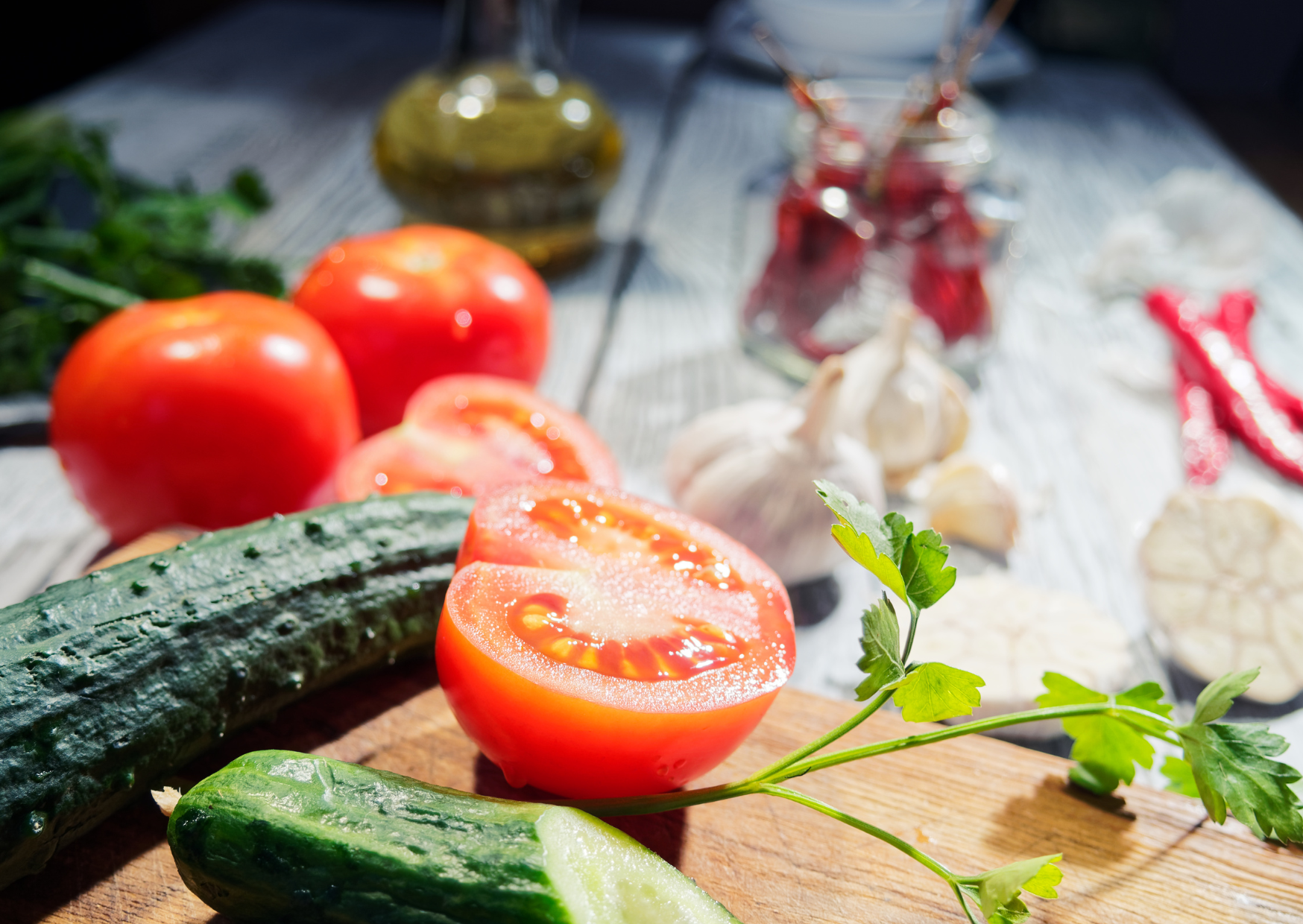
- Load the blender. Tomatoes first, then cucumber, pepper, garlic, vinegar, salt, and water. If using bread, add it now.
- Blend hard for 60–90 seconds until silky. With the motor running, stream in the olive oil to emulsify.
- Taste and adjust. You should taste tomato first, then a clean tang. Add a pinch of salt or a drip of vinegar as needed.
- Chill 1–2 hours if you can. It thickens as air escapes and flavors knit.
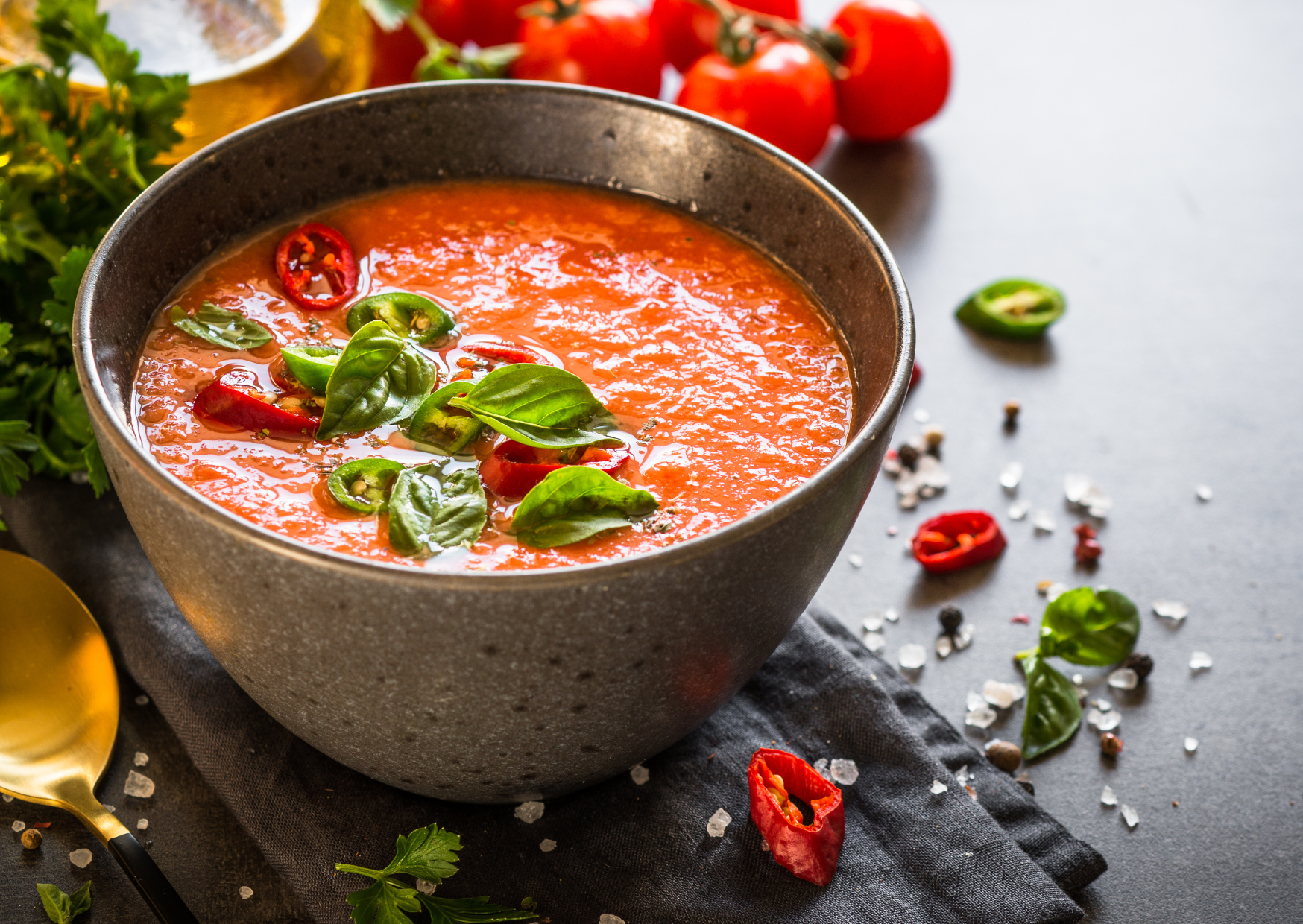
- Serve cold in bowls or heavy glasses. Finish with a few drops of oil and a spoon of diced cucumber for bite.
Portioning for this playbook. For a true “lighter by morning” test, serve about 400–500 ml per person, skip bread on the side, and avoid salty toppings.
Why This Recipe Works
- Measured oil. Forty-five milliliters, not a glug, gives body and carries carotenoids without turning dinner into a calorie bomb.
- Small garlic, big vegetables. A single clove keeps the dish savory, not spicy, and it preserves the cooling effect that makes this a dinner, not a dare.
- Sherry vinegar. The acetic acid brightens flavor and may modestly blunt post-meal glucose, which helps sleep feel steady.
- Optional bread. A classic touch that you can skip when you want a lighter night.
Scan-hooks: olive oil as a tool, vinegar for clarity, garlic small, bread optional.
The Dinner Plan Around The Bowl
A bowl of gazpacho is the main event, not the whole plan. These small decisions keep the morning payoff.
Keep the clock early. Eat 2–4 hours before bed. A late heavy dinner holds water and heat, both enemies of steady sleep.
Protein, not bread. If you want an accessory, choose one: a boiled egg, a small can of tuna in olive oil drained well, or a few slices of jamón serrano if salt is under control the rest of the day. Skip croutons and rustic loaves tonight. Protein satisfies, bread swells.
Mind the salt, everywhere. The gazpacho itself is low-sodium when lightly seasoned. Do not undo it with olives, anchovies, or salted nuts. Add herbs if you want more flavor: chives, basil, or oregano are clean boosts.
No alcohol on the “drop” night. Wine is romantic and salty snacks follow it. If the morning number matters, skip it for one evening.
Water after, not during. Drink normally in the evening, not aggressively with dinner, so the kidney can do its job overnight without a 3 a.m. wake-up.
Sleep like it counts. A cool room and a dark screen help the same goal. You are giving your body an easy night to tidy fluids and reset appetite hormones.
Scan-hooks: early dinner, protein over bread, salt everywhere, skip wine, cool room.
Variations That Keep The Effect
You can swap within the Spanish family without losing the overnight result, as long as you keep sodium low and starch near zero.
Watermelon gazpacho, restrained. Replace half the tomato weight with watermelon, keep the oil and vinegar the same, and reduce the salt further. It is sweeter, so keep portions modest.
Tomato-only, “no green” gazpacho. If cucumber repeats on you at night, drop it and use more tomato. You lose some potassium, but the pattern still holds.
Roasted garlic twist. If raw garlic upsets you, roast a head and use one mellow clove. You keep savory depth without heat.
No pepper, more herbs. Some people sleep better without raw capsicum. Double the tomato and add basil and chives.
Lactose-free creaminess. Blend in a small piece of soaked almond or a spoon of ground almonds for body if you are avoiding bread. Almonds add texture with minimal sodium.
Scan-hooks: fruit swap, softer garlic, herb lift, almonds for body.
Common Mistakes That Steal The Morning Drop
Tiny errors add up. These are the usual suspects.
Too much oil. Olive oil is healthy, but every tablespoon is energy. If the bottle pours freely, the bowl stops being light.
Salting by habit. Your tongue expects restaurant salt. Season just until flavors lift, then stop. The point of this dinner is less sodium.
Bread storm. Pan-con-tomate, croutons, and a heel to mop the bowl will push you into starch and water hold territory.
Late cheese. Manchego cubes taste great, they also add salt. Save them for another day.
Making it spicy. Chili or too much raw garlic can wake you at night. Cool and quiet wins here.
Calling it fat loss. The morning drop is fluid and residue, which is why it is fast. If a headline told you otherwise, it was selling you something.
Scan-hooks: oil creep, salt creep, bread creep, spice creep, this is water, not fat.
The Spanish Context, Because It Helps To Know
Gazpacho is not a trend. It is home cooking and summer survival across the south of Spain. Classic recipes from Spanish sources list tomato, cucumber, green pepper, garlic, olive oil, sherry vinegar, day-old bread, water, and salt. In restaurants and homes, it appears as a drink in a glass, a bowl with garnishes, or as a small cup alongside fried fish or tortilla.
Nutrition writers in Spain routinely describe gazpacho as low-energy, high-micronutrient, and hydrating, with the usual caveat that sodium climbs when you chase restaurant flavors or pour oil heavily. Dietetic societies fold it into Mediterranean dietary patterns where produce and olive oil anchor the plate.
There is even experimental work. In a small randomized crossover study, gazpacho outperformed hummus and ajoblanco on subjective satiety after a standard breakfast, even though the soup did not have the most protein or fiber. Lab and review work around soup preloads shows why this is plausible: water in food behaves differently than water in a glass, reducing later intake for the same or fewer calories. This is the physics you borrow for dinner.
Scan-hooks: Andalusian baseline, hydrating by design, soup satiety is real.
US–EU Pantry Swaps And Buying Tips
You do not need a Spanish market to do this well.
- Tomatoes: Buy vine-ripened or good heirloom in season. Off-season, reach for the best you can find, or use high-quality canned tomatoes plus fresh pepper and cucumber for brightness.
- Olive oil: Choose a fresh extra-virgin you actually like on a spoon. You will taste it.
- Vinegar: Sherry vinegar makes the dish. If you cannot find it, red wine vinegar works. Avoid balsamic.
- Bread: If using, buy white country bread or bolillo, not whole wheat, which muddies color and flavor.
- Blender vs food processor: A high-speed blender gives you the bar-smooth texture. A food processor stays rustic.
- Make-ahead: Gazpacho improves after chilling. Make it in the afternoon for dinner.
Scan-hooks: sherry vinegar matters, blend hard, rest cold, canned tomato hack.
A Simple Two-Day Reset, If You Want To Try It
You do not need a program. You need a repeat.
Day 1 lunch: Normal, just watch the salt.
Day 1 dinner: Gazpacho bowl, plus one of the protein add-ons, early evening.
Bedtime: Cool room, no alcohol.
Day 2 morning: Note the number. Breakfast normally, tuned to protein and fruit rather than pastries.
Day 2 dinner: Repeat the gazpacho bowl or pivot to a salad with beans and tuna if you want more chew, still keeping salt low.
Most people feel less puffy and less hungry by the second morning. Keep going if you like the pattern, or save it for nights when travel and restaurant weeks have you feeling swollen and wired.
Scan-hooks: two bowls, two nights, protein at breakfast, salt awareness, no drama.
What This Means For You
You can borrow a Spanish habit and make it do a job. The gazpacho dinner is not a fad, it is a tool: a cool, savory, low-sodium, low-starch meal that lets you sleep while water balance, gut volume, and appetite signals reset. If you want a lower number tomorrow, cook once, eat calmly, and let the night do work.
Keep the claims honest. You did not burn two pounds of fat. You did something smarter. You used food geometry to wake up lighter, flatter, and ready to eat like a person again.

About the Author: Ruben, co-founder of Gamintraveler.com since 2014, is a seasoned traveler from Spain who has explored over 100 countries since 2009. Known for his extensive travel adventures across South America, Europe, the US, Australia, New Zealand, Asia, and Africa, Ruben combines his passion for adventurous yet sustainable living with his love for cycling, highlighted by his remarkable 5-month bicycle journey from Spain to Norway. He currently resides in Spain, where he continues sharing his travel experiences with his partner, Rachel, and their son, Han.