
Picture a jet-lagged Parisian at a highway rest stop in Ohio, staring at a stall door with a finger-wide crack by the latch and a 30-centimeter void at the floor. She backs out. You would too if you grew up with floor-to-ceiling cubicles.
You hear it from visitors all the time. The coffee is good, the parks are generous, then the first public restroom stop turns into a cultural jump scare. Why can strangers make eye contact through the door. Why are there gaps at the sides and daylight under the door big enough to slide a backpack. The answer is not one thing. It is a stew of building codes, cost and maintenance, safety and supervision assumptions, and a market that, for decades, treated privacy as optional.
There is a better way. You see it across Europe in full-height cubicles with no sightlines. You also see it in newer American buildings that have quietly upgraded to no-sightline partitions. If you know the why, you can find the quiet stalls in the wild, and if you manage a venue, you can fix the problem without ripping out your plumbing.
This is general information about buildings and design, not legal advice.
Want More Cultural Myth-Busting?
– 7 Ways You’re Insulting Europeans Without Even Realizing It
– 10 Secrets to Understanding European Politeness (And Why You’re Doing It Wrong)
– How to Spend a Month in Europe With Just a Carry-On—Minimalist Packing Hacks
What Europeans Expect, What Americans Built
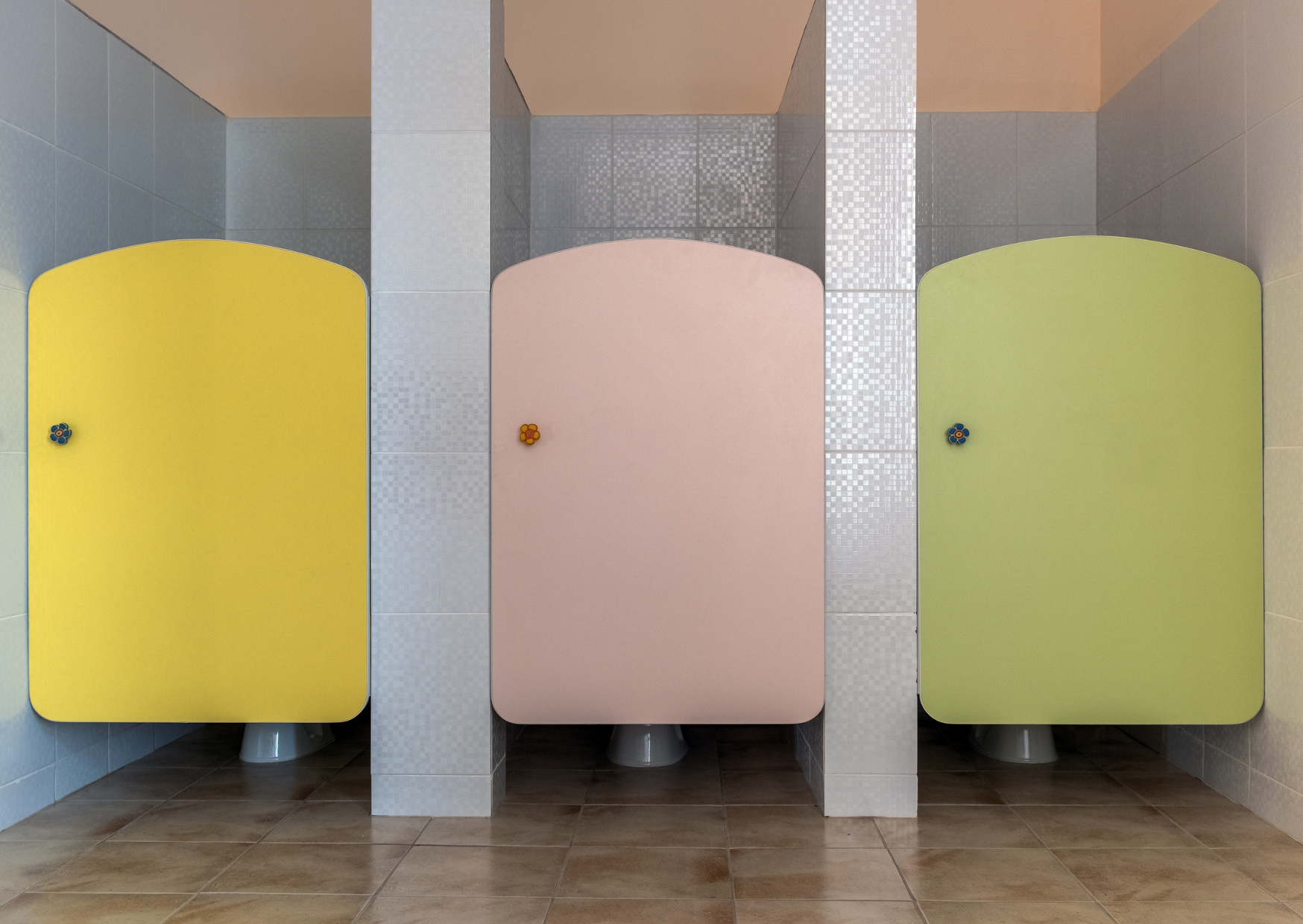
Walk into a mall in Madrid or a museum in Berlin and the toilet cubicle is a room within a room. The door touches the floor or nearly so. The sides meet the walls. The latch blocks sightlines. You close the door and disappear. European manufacturers explicitly market full-privacy and floor-to-ceiling systems, which is why travelers rave about “no gaps, no peeking.”
Cross the Atlantic and most legacy American restrooms use standard partitions, not walls. Common specs include shorter doors and panels with a visible gap at the latch and a large opening at the floor. Many jurisdictions also codify a minimum toe-clearance under the front and side partitions of the accessible stall. The ADA standards set that at 9 inches, while newer accessibility standards used by many states raise it to 12 inches, unless you build a deeper or wider compartment that makes the cutout unnecessary. New York City’s code, as one example, calls for partitions that start no more than 12 inches above the floor and extend at least 60 inches high. None of those rules require a vertical crack by the latch. That sightline is a hardware and cost choice, not a legal mandate.
Scan-hooks: Europe closes the gaps, U.S. standard leaves them, toe-clearance is code, peek-through is not.
The Real Reasons American Stalls Have Gaps
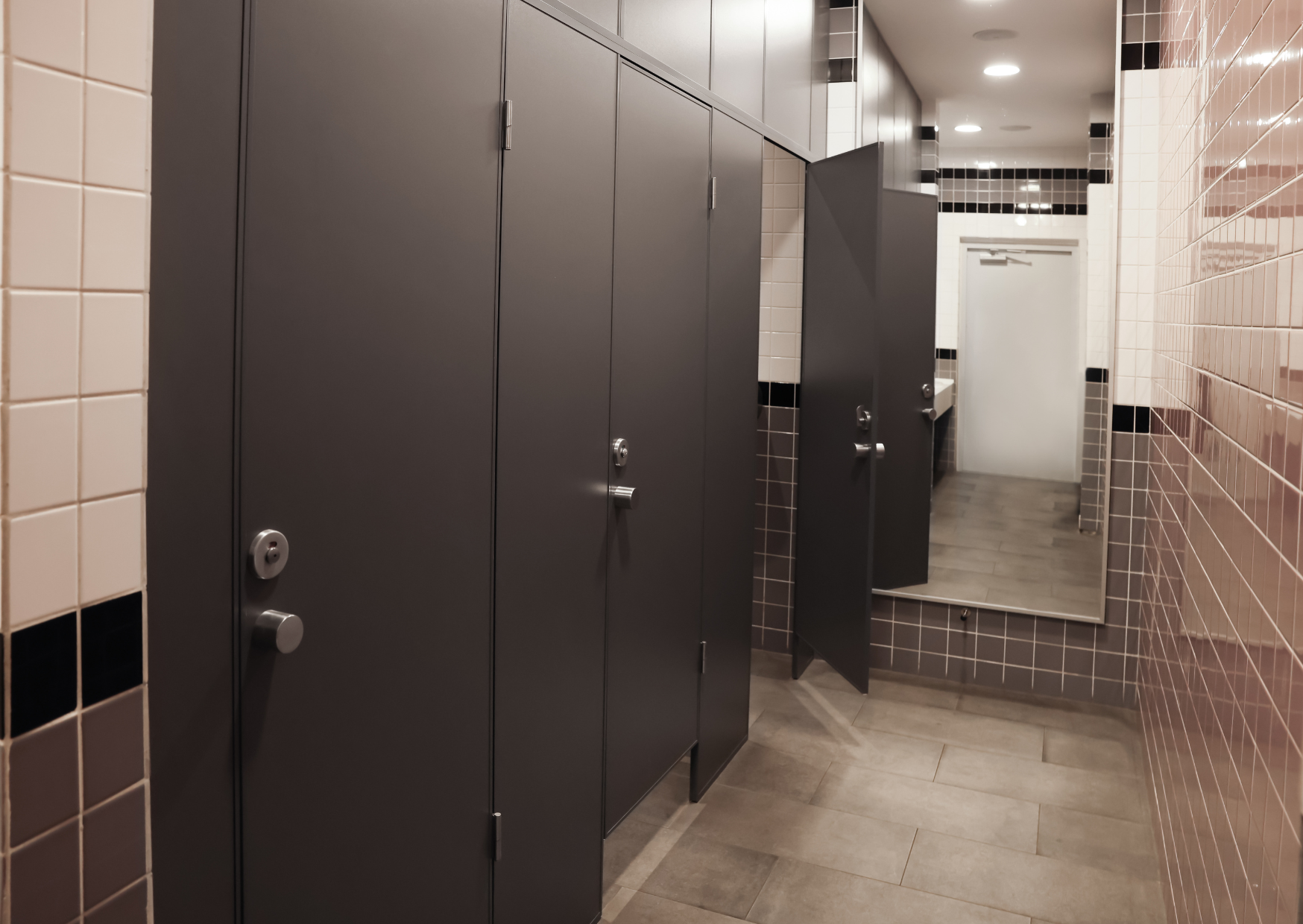
If you ask a contractor why the door has a crack and the panel floats above the floor, the answer is rarely about culture. It is about budget, tolerance, and maintenance.
Cheaper to buy and install. Stock partitions are mass-produced in set widths and heights, which lets builders cover large rooms quickly. They are forgiving when floors are out of level. Full-height, tight-fit cubicles require custom sizing, precise framing, and heavier hardware. That costs more per stall and more labor to install. Price sheets and industry guides will tell you outright that typical powder-coated or laminate partitions are hundreds of dollars per part, while phenolic, stainless, or Euro-style systems run higher and often require quotes. For a bank of stalls, the delta scales fast.
Faster to clean and repair. The gap at the floor makes it easier to mop and spot messes without opening each door. Panels hung above the finished floor resist water damage and let maintenance staff snake a mop or hose under the door. Manufacturers and installers say this out loud in their own literature.
Emergency access and supervision. Openings make it obvious when a stall is occupied, help staff see a collapse, and let responders bypass a door without breaking hardware. They also deter certain misuses by preserving passive visibility in busy, unsupervised restrooms. These reasons appear across trade guides and consumer explainers, and they have been cited for decades, rightly or wrongly, as hygiene and security rationales.
Codes emphasize clearance, not cocooning. U.S. model codes historically focused on minimum space and accessibility, not seamless privacy. The ADA and ICC standards spell out clear widths, turning space, and toe clearance, but they do not require a crack by the latch. That gap exists because standard doors and pilasters are built with simple straight edges to keep costs down and tolerances loose. Privacy can be engineered in with overlaps and channels, it just did not come standard for a long time.
Scan-hooks: cheap parts scale, gaps aid cleaning, visibility is policy, codes care about access first.
The New Privacy Trend, Quietly Rolling In

Here is the good news. Privacy is not a European privilege. It is a specification. American manufacturers now sell zero-sightline systems with overlapping door edges, continuous stops, and taller panels that eliminate the peek-through. Architects call them full-privacy or Euro-style partitions, and stadiums, airports, tech offices, and higher-end retail are adopting them because the complaints are loud and repeatable. If you have seen occupancy indicators on stall locks and floor-to-ceiling cubicles in a new terminal, you have seen the shift.
Model codes are also catching up. The International Building Code and International Plumbing Code now permit multi-user all-gender rooms, an option many owners choose only when privacy is robust. Jurisdictions and large owners that adopt these layouts often layer on stricter privacy details such as no visible door gaps, taller panels, screened entries, and occupied/vacant indicators to make shared rooms comfortable for everyone. Some cities hard-code pieces of this. Denver’s amendments, for example, call for floor-to-ceiling compartments with no sightlines in multi-user all-gender rooms. Trade articles and code summaries spell out the direction clearly: more privacy at the stall, not less.
Scan-hooks: privacy is a spec, codes now allow all-gender rooms, cities are writing no-sightline rules.
How To Find A Stall You Can Actually Use In The U.S.
You do not need to hate every restroom on a trip. You need tells that help you find the good ones fast.
Look for newer builds and higher-end venues. Airports, museums, corporate campuses, and renovated theaters are where zero-sightline and floor-to-ceiling partitions show up first. If a building looks recently redone and the lobby is generous, the restroom usually is too. Manufacturer case studies and product pages highlight these installs because they photograph well and reduce complaints.
Ask for a single-user room. U.S. law in some states requires that single-user restrooms be open to all genders and be identified as such. Those rooms are private, lockable, and common in restaurants, cafes, and small shops. You will also see family or accessible rooms near big restrooms. If you do not need the accessible room, yield to those who do and ask staff for a standard single-user. Many buildings have one tucked away.
Spot the hardware. If you can see overlapping edges where the door meets the pilaster, or a continuous channel instead of a gap, you have a no-sightline system. If the lock shows red/green, you are in a higher-spec room. Those are your friends.
Use corner stalls. In traditional banks of stalls, the corner unit usually has one fewer shared seam and slightly fewer sightlines. It is not perfect. It is better.
Carry a micro fix. A folded tissue or postcard-sized notebook can block a latch-side crack in a pinch. Do not tape or wedge anything that blocks egress or damages the partition.
Scan-hooks: newer buildings win, single-user is golden, overlaps and indicators = privacy.
If You Operate A Venue, Here’s The Upgrade Path

Owners who dread angry reviews can fix the problem without rebuilding the entire room. The market already did the R&D for you.
Specify “no sightlines.” Major brands sell integrated privacy kits that overlap door and stile edges so the crack disappears. They also offer taller doors and panels and reduced floor gaps where code allows. This is the single most visible improvement per dollar. Spec sheets spell out the overlaps in millimeters.
Use occupancy indicators. A simple red/green latch calms users and reduces rattling and accidental door pulls. Many all-gender designs require them.
Mind the codes. The ADA and ICC A117.1 standards govern clear widths, turning circles, and toe-clearance. You can often reduce the floor gap by increasing stall depth or width. In some states and cities, the toe-clearance minimum is 12 inches under the front and side partitions of the accessible stall unless you oversize the compartment. Jurisdictions vary. Coordinate early with your architect and plan checker.
Budget reality. Typical U.S. partitions can run a few hundred dollars per part, while phenolic and Euro-style systems climb from there. A multi-stall refresh can land in the five-figure range, especially with better hardware and indicators. Owners spend it because complaints drop, and in all-gender layouts these upgrades are functionally expected.
Design the entry, not just the stall. The 2021 IBC tightened restroom privacy at entries, addressing sightlines from the corridor and mirror reflections. A screened entry with a short dogleg preserves safety without turning the room into a wind tunnel.
Scan-hooks: overlap the edges, keep the widths, price the premium, screen the entry.
Edge Cases, Red Flags, And Common Misunderstandings
“ADA forces the gaps.” Not quite. ADA and related standards require toe-clearance under accessible stalls unless you grow the compartment. They also require clear door width and turning space. They do not require the vertical peek-through by the latch. That is solvable with overlaps or privacy channels.
“Gaps are safer.” The emergency-access and supervision arguments show up often in trade guides. They carry some logic for unsupervised, high-turnover spaces. They are not the only way to design for safety. Occupancy indicators, higher partitions, and screened entries deliver privacy without compromising response. Some U.S. jurisdictions now require stronger privacy for all-gender multi-user rooms, which proves the point.
“Europe has no issues.” Europe trades privacy for other frictions. Restrooms are often harder to find and sometimes paid, which pushes use into cafes and stations. You can love the cubicles and still miss the U.S. habit of free facilities everywhere.
“Just build walls.” Full walls and doors work, but they increase cost, coordination, and maintenance. The middle ground is full-privacy partitions that mount to floor and ceiling, eliminate sightlines, and keep a modular system that is easier to service.
Scan-hooks: ADA is about access, privacy can be safe, Europe trades other costs, walls are not the only fix.
Regional And Policy Shifts You Should Know About

American restrooms are not frozen in the 1990s. Three policy trends matter if you design or pick venues.
All-gender, multi-user rooms are now allowed in model codes. The IPC and IBC were amended to permit multi-user rooms for all genders when stall privacy is robust. Owners who choose this option should expect to specify no-sightline compartments and indicators, and some cities add local rules. Trade coverage and code resources outline the change.
Local adoptions are uneven. Model codes are non-binding. States and cities adopt on their own cycles. Some use older ADA toe-clearance rules at 9 inches, some use ICC A117.1 at 12 inches, and some adopt privacy extras for shared-gender layouts. Check the jurisdiction and the edition year.
Single-user restrooms are labeled for everyone in some states. California’s law is the well-known example. It requires all single-user restrooms in businesses and public places to be all-gender by signage. For travelers, this is a reliable path to a private door with a deadbolt.
Scan-hooks: codes permit shared rooms, adoption lags, single-user labeling helps travelers.
What This Means For You
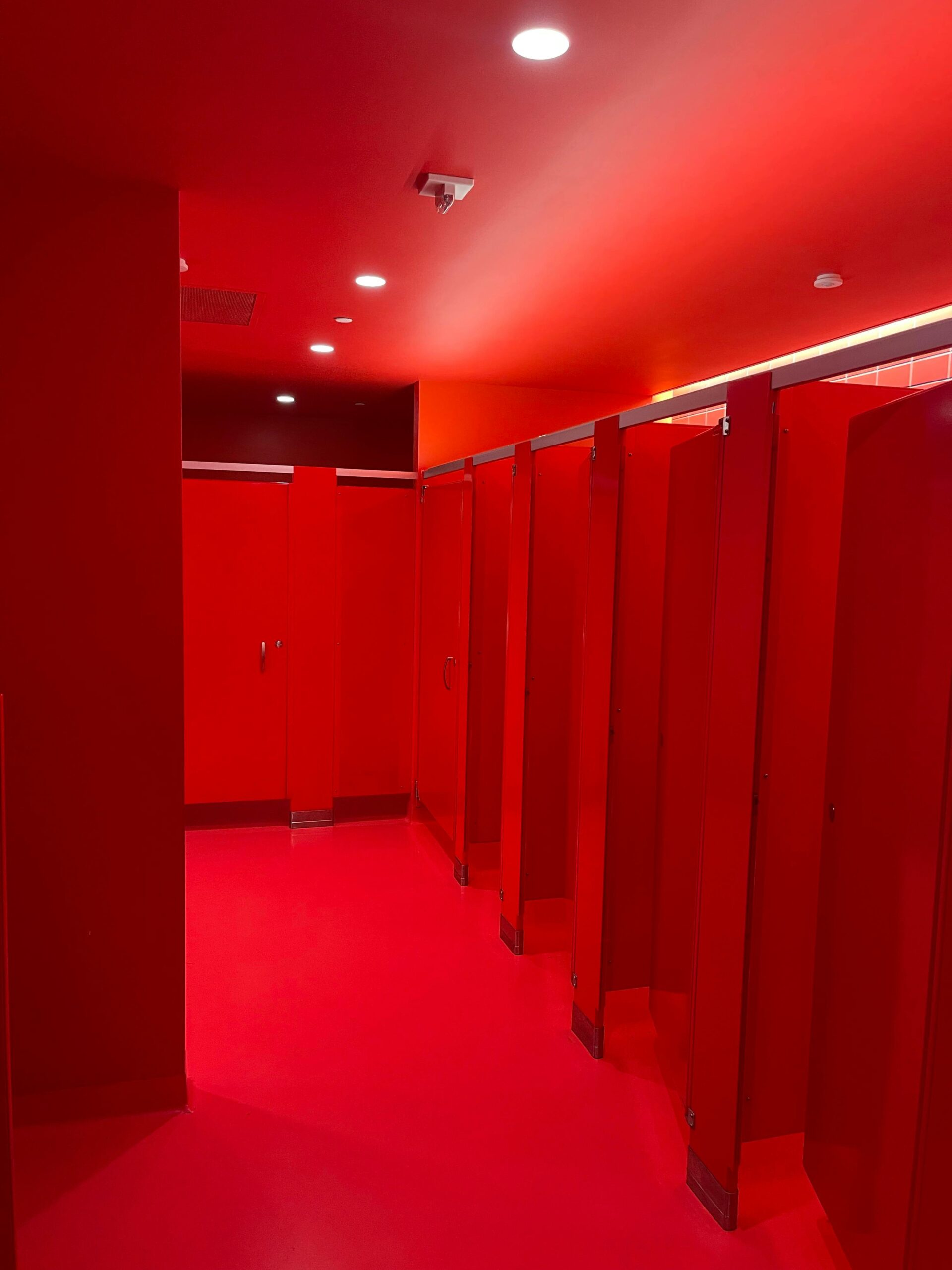
If you are traveling from Europe, do not take the first stall bank as fate. Newer buildings and single-user rooms will feel like home. If the door edges overlap and a small window shows occupied, you found the right spec. If you run a venue and you want the complaints to stop, specify zero-sightline kits, taller doors and panels, and indicators, and coordinate early with your plan checker on toe-clearance and clear widths. You do not need to fight your guests’ instincts. You can meet them.
The gap is not a national character trait. It is a decades-old default. Defaults can change.

About the Author: Ruben, co-founder of Gamintraveler.com since 2014, is a seasoned traveler from Spain who has explored over 100 countries since 2009. Known for his extensive travel adventures across South America, Europe, the US, Australia, New Zealand, Asia, and Africa, Ruben combines his passion for adventurous yet sustainable living with his love for cycling, highlighted by his remarkable 5-month bicycle journey from Spain to Norway. He currently resides in Spain, where he continues sharing his travel experiences with his partner, Rachel, and their son, Han.