
You order a coffee in Lisbon, a pastel arrives still warm, the pastry shatters, the custard hums, and five bites later you feel finished rather than hunting for a second box.
Walk into an American office on a Friday and you meet a dozen donuts in a glossy box, half of them frosted and filled. People slice “just a half,” then return for another “half,” then a third. The contrast is not magic, and it is not moral superiority. It is pastry architecture, portion defaults, and the way each culture expects you to eat.
Real pastéis de nata are small, hot, eggy, and crisp. They are built to taste complete on their own, then fade quickly so they are best right now, not later. Many American donuts are large, sweet-forward, and engineered to travel. They are built to be bought in quantities and shared throughout a morning. One format encourages one-and-done, the other nudges just-one-more. That difference feels like “addiction” in everyday language, although clinically it is not. It is design.
It is not addiction, it is design and context
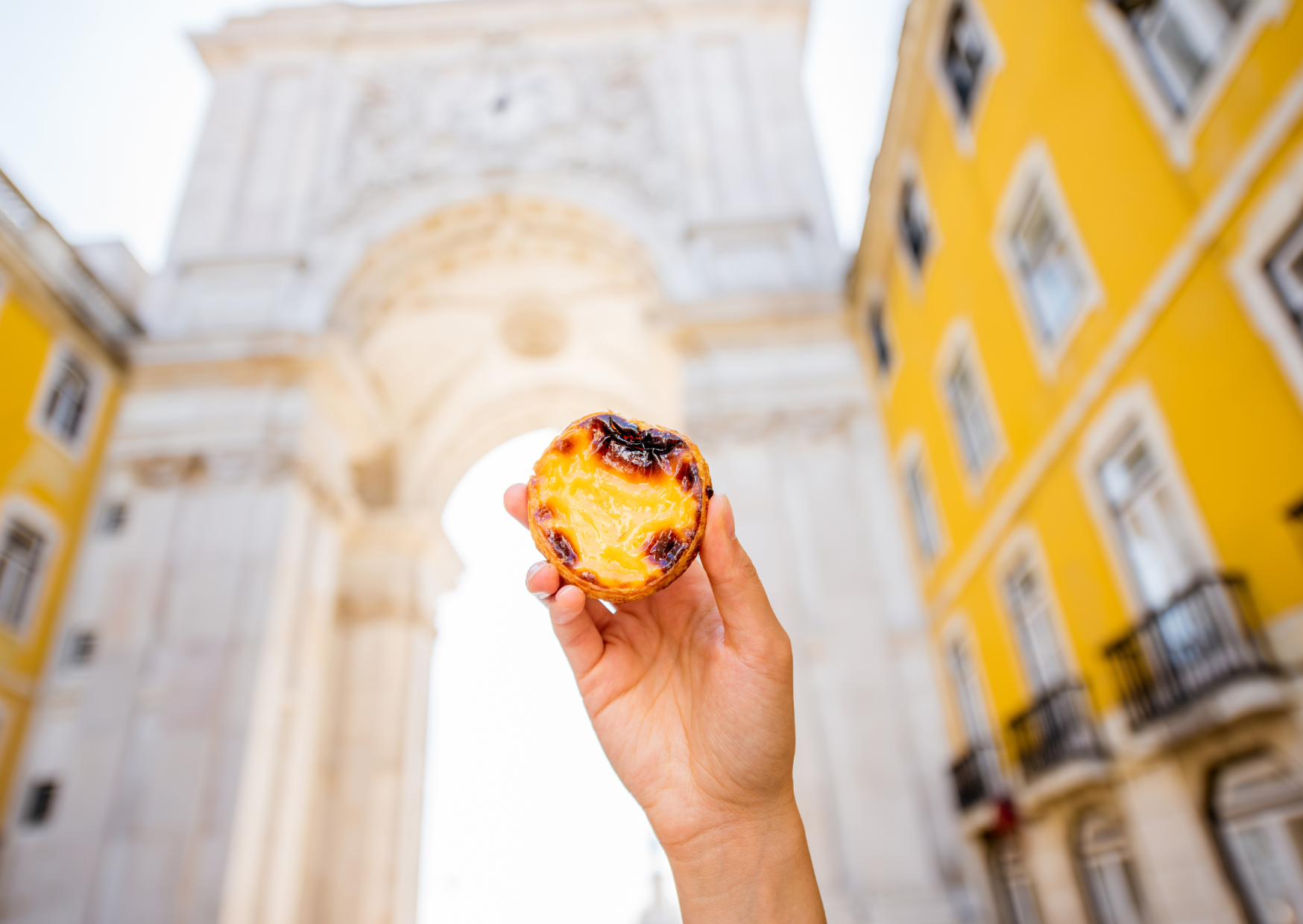
In casual speech people call any strong food pull “addictive,” but food is not a controlled substance and pastries do not meet clinical addiction criteria. What people feel is a mix of portion cues, variety cues, and texture cues pushing them to keep eating. Pastéis and donuts push in very different ways.
A pastel is a single-serving tart. The shell is laminated pastry that stays crisp for a short window and the filling is egg-yolk custard that reads rich rather than sugary. You order one, you stand at the counter, you finish with an espresso, and the moment ends. A donut is often sold by the dozen, frosted or filled in multiple flavors, and packaged to linger on a table. Variety resets your interest and erases the natural boredom that should make you stop. That phenomenon has a name in appetite research, sensory-specific satiety, and it makes “a bite of each” feel reasonable until the box is gone.
Key idea: format, variety, and serving ritual are the real levers. Pastéis are tuned to close the loop. Donuts are tuned to keep the loop open.
Portion, pace, and purchase pattern
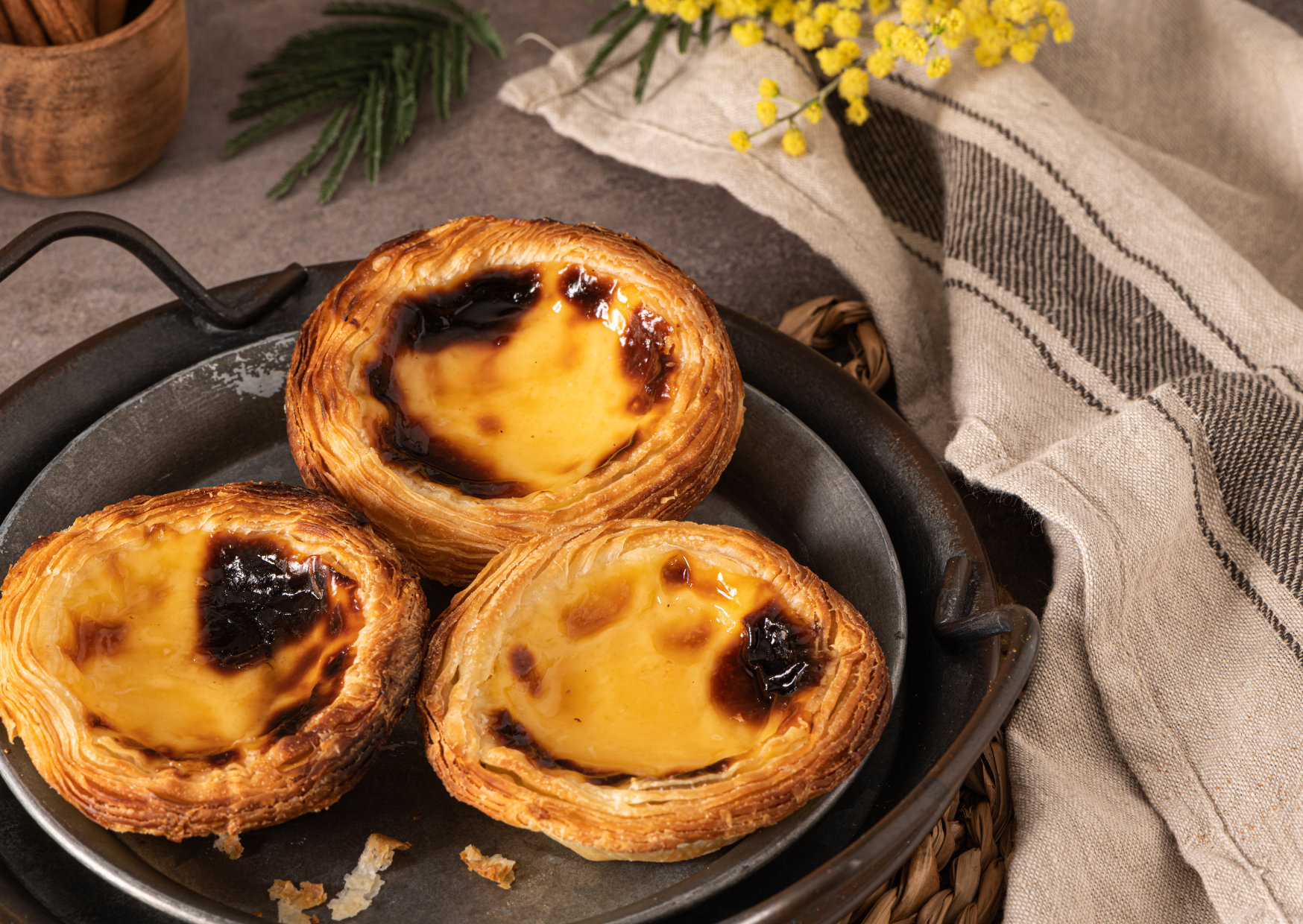
In Portugal the default unit is one tart with one coffee. That default matters. A typical pastel weighs around 60 grams and lives comfortably in the 200 to 300 calorie range depending on recipe and size. The act of standing at the counter, eating it hot, and paying for exactly one builds a natural stop. Small unit, hot service, and pay-per-piece add up to satiety discipline.
In the United States the default unit is often a dozen. National chains explicitly promote buy-a-dozen deals and “BOGO dozen” days. A dozen sits in a communal space for hours, every glance renewing the invitation. Bulk pricing, many flavors, and all-day availability make restraint harder than it needs to be. Even if one glazed donut can be modest on paper, the box is not.
Practical takeaway: if you change the default unit, you change the outcome. A single pastel creates a finish line. A dozen donuts removes it.
What is inside the tart versus what is inside a donut
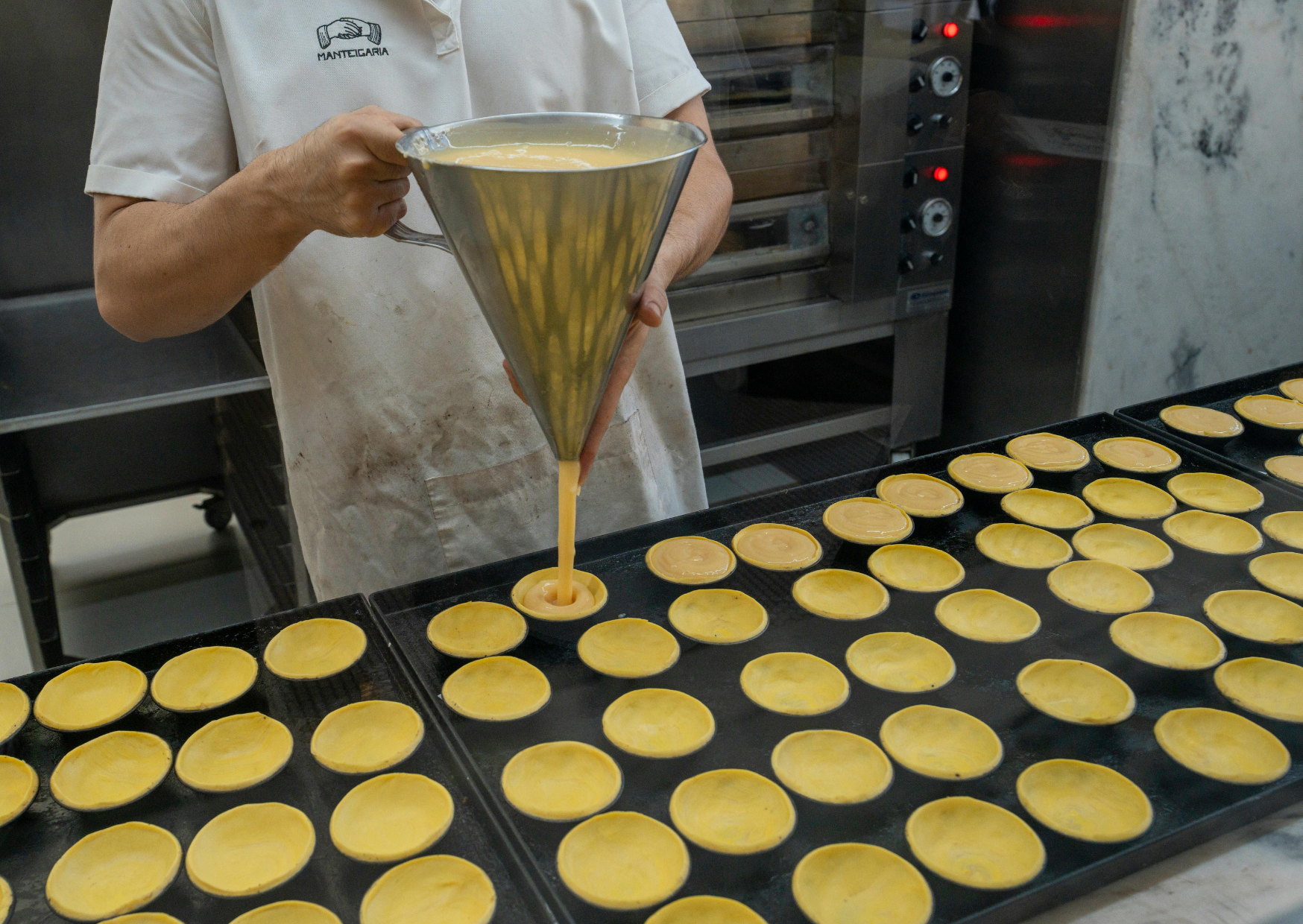
A pastel’s core is custard built from egg yolks, milk or cream, sugar, and citrus or cinnamon. The shell is butter-based puff pastry. The sweetness is there, but it rides on fat and protein that slow the rush and stretch satisfaction. A donut’s core is enriched dough fried in oil, then often glazed or filled. The sweetness sits on a base that is soft and airy, which is pleasurable, but the frosting and fillings push sugar to the foreground. Many donuts are perfectly reasonable as an occasional treat, yet the format tilts you toward multiples.
There is also a regulatory footnote that shapes textures. In the European Union, industrial trans fats have been capped at no more than 2 grams per 100 grams of fat since 2021, which narrowed the use of partially hydrogenated oils across baked goods. The United States largely removed partially hydrogenated oils from the food supply earlier too, so both markets have improved. Still, Portugal’s baseline pastel uses baked puff pastry and egg custard, not a deep-fried dough plus glaze, so the mouthfeel signal is richness rather than sticky sweetness. Custard base, butter pastry, and baked shell will naturally read as “enough” sooner for many people.
Summary: pastéis emphasize fat-plus-protein with moderate sweetness, donuts emphasize sugar-forward finishes and frostings. That difference matters for how quickly you feel done.
Temperature and texture tell you when to stop
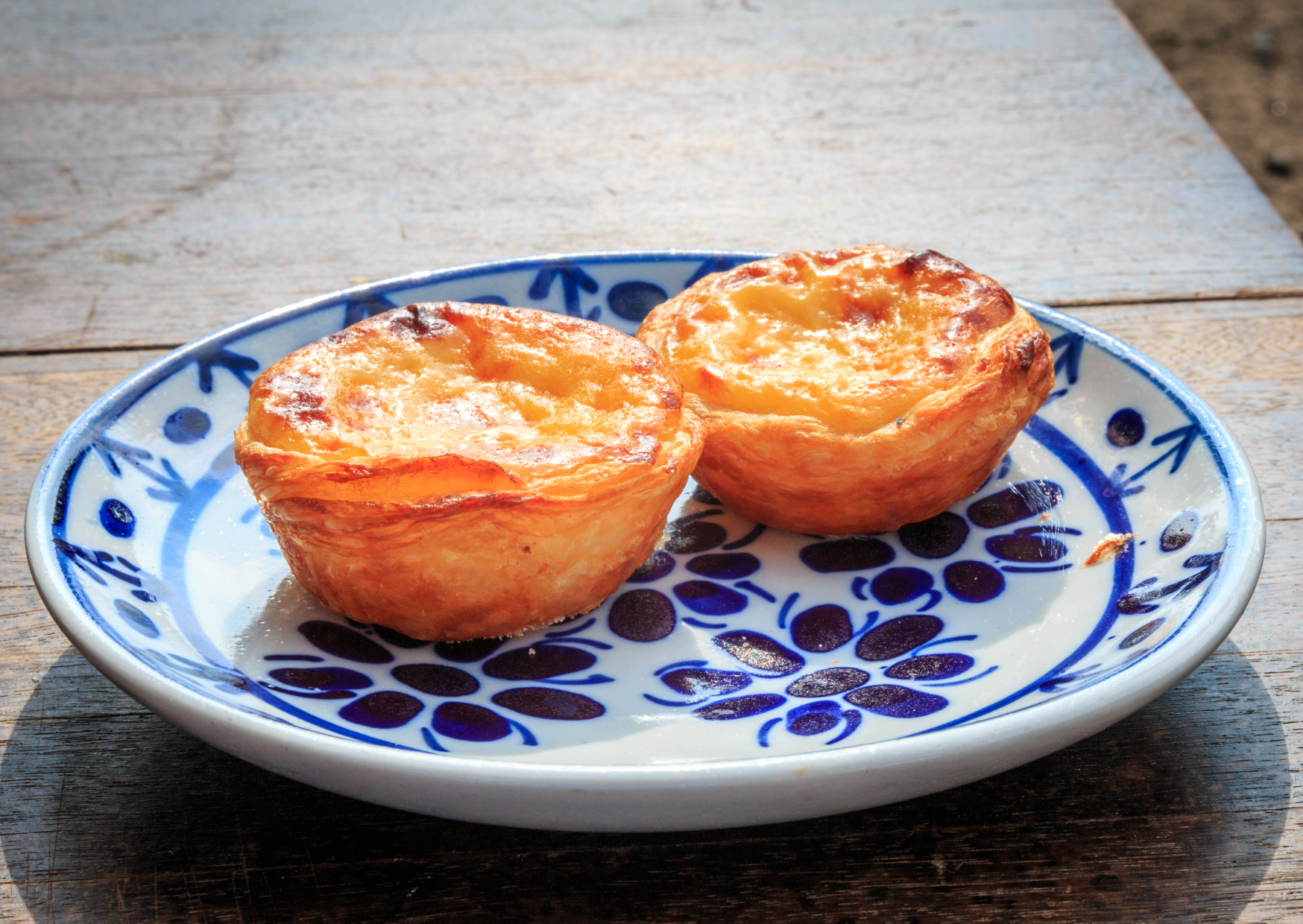
Fresh pastéis are served hot with a shatter-crisp shell. That crispness decays in minutes, which is why top shops run trays from oven to counter all day. The pastry asks to be eaten now, not stored, and you rarely bring a box to the office. Heat, crispness, and ephemeral quality create a short, satisfying ritual.
Donuts are designed to hold. Glazes, fillings, and icings keep moisture inside and shine outside, making them attractive hours later. The box of flavors also defeats boredom. Appetite research shows that variety resets desire, which is why “I will just try the maple bar too” feels logical after you already ate a chocolate ring. Holding power, multi-flavor boxes, and soft textures are a reliable recipe for grazing.
Result: the pastel says “now, then stop,” the donut box says “later, and again.”
Culture does the rest
In Lisbon and Porto people often stand at the counter, sip a bica, and eat a single pastel. Coffee is short, pastry is single, and the price is pocket change. The ritual is daily for some, but the unit is always small. In the United States, chains anchor the “treat for the team” habit with dozen pricing, fundraising dozens, and specials that multiply quantity. The social script is to bring more than enough, which means too much. Counter culture, espresso pacing, and single-serve norms versus box culture, office sharing, and deal-of-the-dozen explain more than macros do.
Three realities: stand-and-finish, espresso pairing, buy-one on one side, sit-and-graze, coffee carafes, buy-twelve on the other.
Eat like a local: how to enjoy pastéis without turning them into a habit
Order one pastel and one espresso, dust with cinnamon and powdered sugar if you like, then stop. If you want a second, walk and return later. The distance resets appetite better than staring at a plate. Store-bought versions are fine in a pinch, but the real pleasure is fresh-out-of-the-oven. If you live far from a Portuguese bakery, make them at home and freeze unbaked shells so you bake exactly two at a time.
If donuts are on the table, cut the variety. Pick one flavor, skip the frosting-heavy options, and avoid the dozen entirely unless you are hosting a crowd. The easiest way to “beat” the donut is not to fight willpower. It is to remove volume and variety from the equation.
Guiding rule: small unit, hot service, single flavor.
Make them at home: a fast, blistered pastel de nata for modern ovens
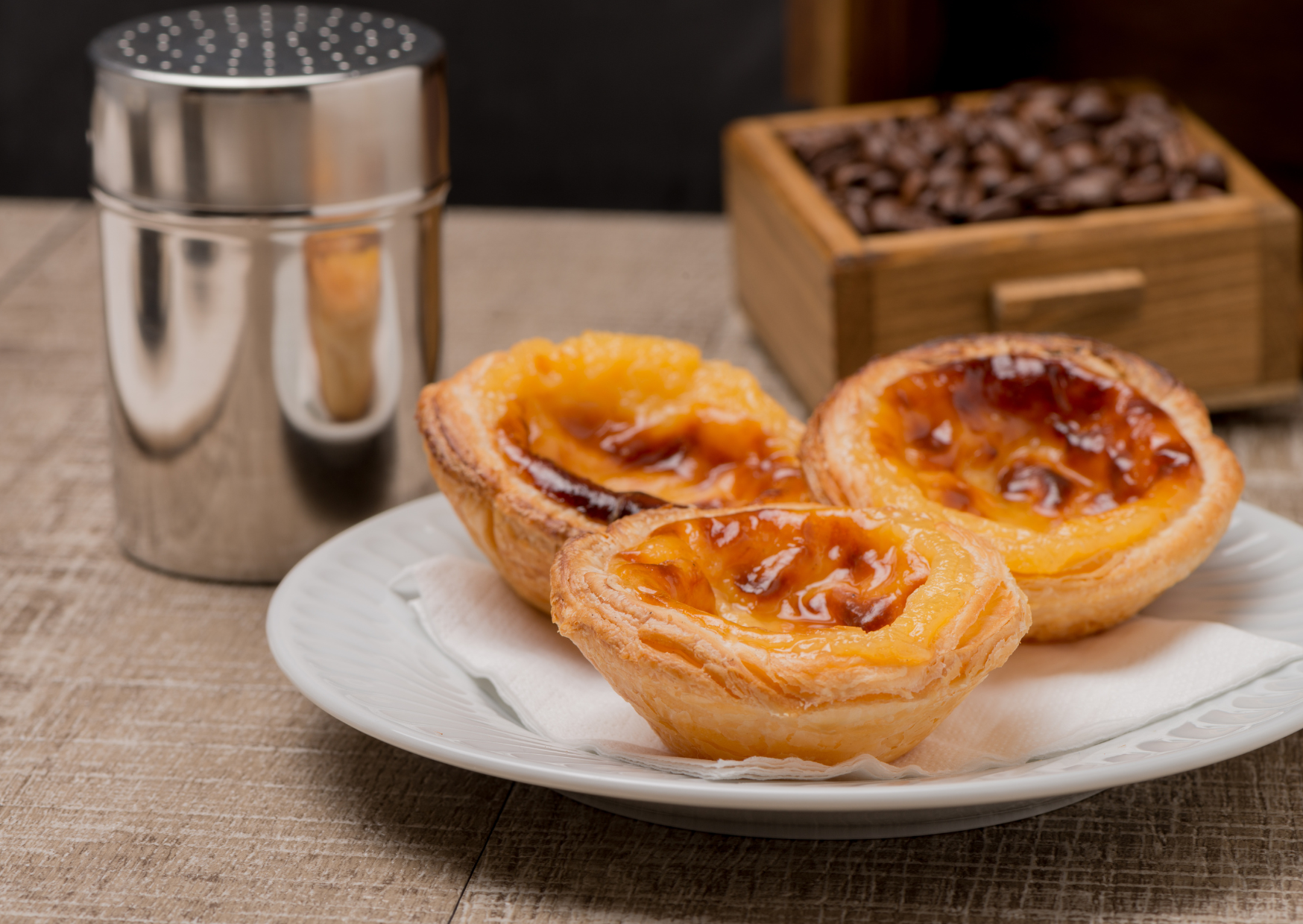
This version uses store-bought puff pastry and a classic custard. You get the right crisp shell, the creamy center, and those little caramel freckles on top. Yields 12 standard tarts.
Ingredients
• 2 sheets all-butter puff pastry, thawed but cold
• 500 ml whole milk
• 250 g sugar
• 40 g all-purpose flour
• 1 cinnamon stick
• 2 strips lemon peel, no pith
• 6 large egg yolks
• 1 tsp vanilla extract
• Pinch of fine salt
• Cinnamon and powdered sugar for finishing
Method
- Heat the custard base. In a saucepan whisk flour with a splash of cold milk to a smooth paste, then add the rest of the milk, sugar, salt, cinnamon stick, and lemon peel. Bring to a bare simmer, whisking until lightly thickened. Remove from heat, fish out cinnamon and peel, and cool 5 minutes.
- Add yolks. Whisk yolks in a bowl. Slowly stream in a cup of warm milk mixture while whisking, then return everything to the pan. Warm gently for one minute off the heat to combine. Stir in vanilla. The custard should be pourable, not thick.
- Prepare tins. Heat the oven as high as it will go, ideally 250 to 260 C. Place a baking steel or heavy sheet on the middle rack to preheat. Lightly butter a 12-cup muffin tin and chill it for 5 minutes. Very hot oven, cold tin, and hot steel are the trio that blisters the tops.
- Make the shells. Roll each pastry sheet into a tight log from the short side. Cut each log into 6 coins. Place a coin spiral-side up in a cup and press with damp thumbs from center outward to form a thin cup that rises just above the rim. The base should be thin but not transparent.
- Fill and bake. Fill each shell two-thirds with custard. Set the tin on the preheated steel and bake about 14 to 17 minutes, rotating once, until the custard domes and freckles and the rims are deeply golden. If your oven has a grill or broiler, give the tops 30 to 60 seconds to spot-caramelize. Thin shells, hot deck, and short bake protect crispness.
- Finish. Cool 5 minutes in the tin, unmold to a rack, then dust with cinnamon and a whisper of powdered sugar. Eat warm. They fade after an hour because that is their nature. That fleeting quality is the charm.
Home success keys: scorching oven, cold tin, pourable custard.
A quick compare that keeps you honest
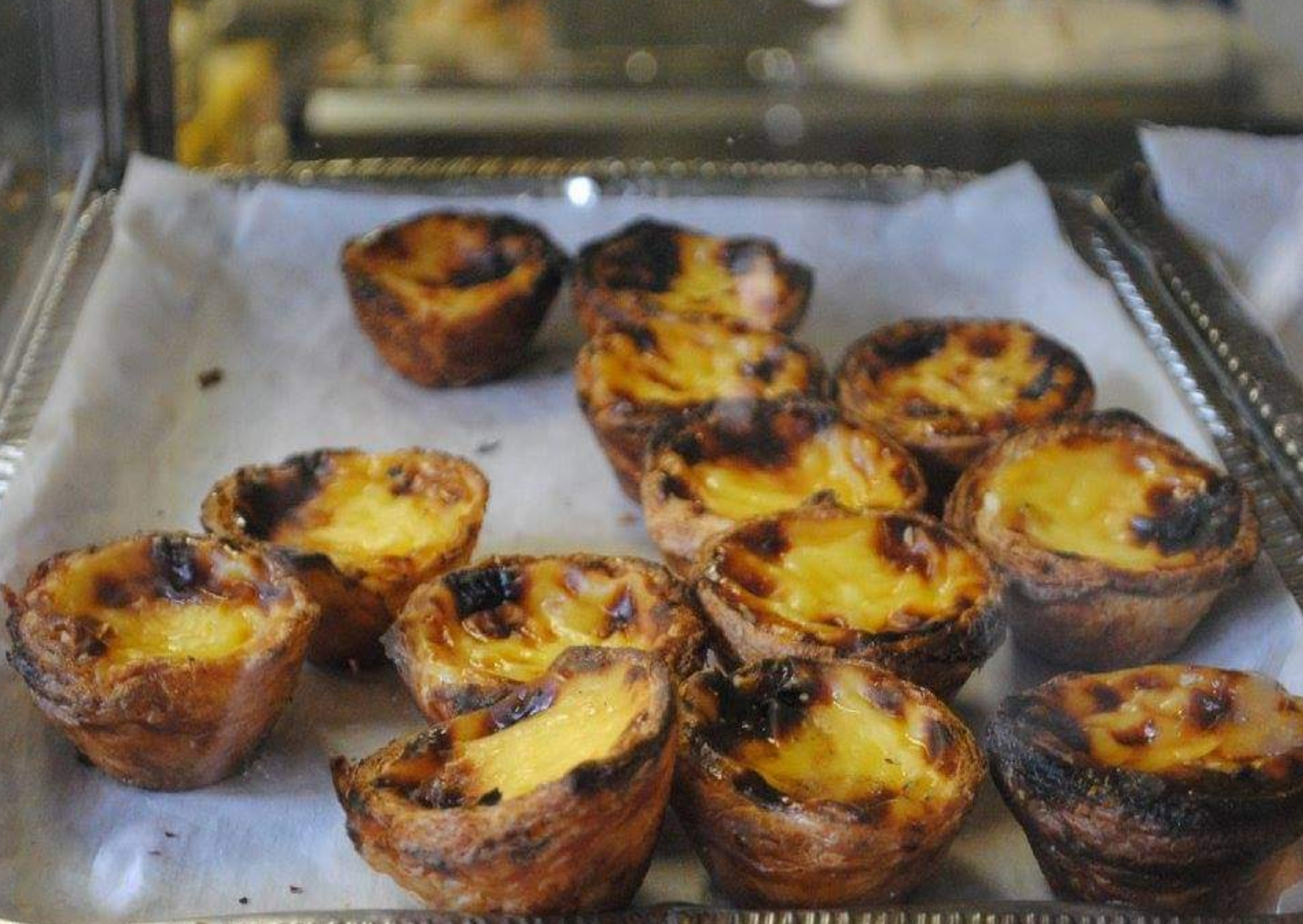
Numbers vary by bakery and recipe, yet context still wins:
• A typical pastel is 60 to 80 grams, often 200 to 300 calories with a moderate sugar load cushioned by yolks and dairy fat. You buy and finish one.
• A typical glazed donut can be around 190 to 260 calories. That looks similar. The difference is that donuts arrive in dozens, with promotions that practically guarantee surplus on the table. You rarely stop at one because the box is designed not to end.
Conclusion of the compare: it is not the single pastry. It is the package, price, and placement.
What this really explains
When travelers say “pastéis do not hook me the way donuts do,” they are noticing structure, not willpower. Pastéis are small, fresh, and time-sensitive, so one feels complete. Donuts are large-batch, varied, and table-stable, so three feel normal. If you import the Portuguese rules into your own routine, the “sugar addiction” feeling fades without a lecture about nutrition.
Eat one hot pastel with coffee, then walk. If you want a second, make it a separate trip. If donuts are in your life, buy two, never twelve, and stick to a single flavor. Food feels addictive when the environment is engineered for grazing. Change the environment and the craving usually follows.
You do not have to give up either one. You do have to respect the design. Choose the single, skip the dozen, and let the pastry taste like a treat instead of a task.

About the Author: Ruben, co-founder of Gamintraveler.com since 2014, is a seasoned traveler from Spain who has explored over 100 countries since 2009. Known for his extensive travel adventures across South America, Europe, the US, Australia, New Zealand, Asia, and Africa, Ruben combines his passion for adventurous yet sustainable living with his love for cycling, highlighted by his remarkable 5-month bicycle journey from Spain to Norway. He currently resides in Spain, where he continues sharing his travel experiences with his partner, Rachel, and their son, Han.