
When you think of Spain, what comes to mind? Maybe the scent of paella wafting through seaside cafés, the hypnotic rhythm of flamenco, or the warm golden glow of the Mediterranean coast. But if you’ve ever spent a day on a Spanish beach — from Barcelona to Cádiz — you’ll encounter something even more vivid: unapologetic, radiant body confidence.
Spanish beach culture is a world apart from what many people — especially Americans — are used to. It’s a place where cellulite isn’t hidden, where age is worn proudly, and where beachwear isn’t dictated by a number on the scale. For those raised in more body-conscious or appearance-pressured cultures, the Spanish coastline can be eye-opening, liberating, and even healing.
Here’s what Spanish beach culture teaches you about body confidence — and why we might all benefit from taking a page out of their sun-soaked book.
Read Here European Things that terrify Americans and American Habits that make Europeans Cringe
Read here how to pack for Europe and Best eSIM for Europe
BOOK YOUR TRAVEL INSURANCE
Two of our favorite travel insurance: Heymondo Vs Safetwing cheapest travel Insurance. You can get for $135 USD your Heymondo Travel Insurance with Heymondo discount code valid for 90 days. Read our full comparison of Genki vs Safetywing Travel Insurance Review and the comparison Heymondo vs Genki
Quick Easy Tips
Ditch the cover-up: Spanish beaches embrace all body types — confidence comes from comfort, not concealment.
Stop comparing: No one is paying attention to your “flaws” — they’re too busy enjoying themselves.
Embrace sun, sea, and self: The best accessory on any Spanish beach is self-acceptance.
One of the most jarring realities for many Americans visiting Spain isn’t the topless sunbathing — it’s the unapologetic comfort people have in their own skin. Spanish beach culture isn’t obsessed with toned abs or bikini bodies. People of every shape, size, and age wear what they want without shame, judgment, or self-consciousness. This cultural openness isn’t about rebellion; it’s about liberation — and it leaves many outsiders questioning their own deeply rooted body anxieties.
Americans often arrive on the beaches of Barcelona or the Costa del Sol with insecurities shaped by years of fitness culture, magazine covers, and social media filters. In contrast, Spaniards don’t wait until they “earn” the right to wear a swimsuit. They don’t treat the beach as a performance space but as a place of joy, connection, and ease. It’s not about flaunting — it’s about living.
This contrast can be uncomfortable. Americans may silently judge the openness or mistake it for a lack of modesty. But that discomfort often comes from internalized shame and unrealistic standards. Spanish beach culture doesn’t ignore appearance; it simply doesn’t let it define the worth of the person wearing the swimsuit. And that, for many, is revolutionary.
1. Every Body Is a Beach Body

On Spanish beaches, the phrase “beach body” has a radically different meaning than in most English-speaking countries. Here, it simply means: you have a body, and you’ve brought it to the beach. That’s it.
You’ll see bodies of all shapes and sizes — young, old, athletic, curvy, wrinkled, pale, tanned, tattooed — walking proudly in swimsuits, bikinis, Speedos, or nothing at all (in designated nude areas). There’s no performance of perfection, no expectation that you should look like a fitness model before you deserve a towel in the sand.
This cultural norm does something profound: it normalizes the diversity of human bodies. Instead of viewing flaws as something to fix or hide, they’re simply part of the landscape.
In contrast, many people — especially Americans — are taught that you have to “earn” your spot on the beach. Fitness culture, diet ads, and social media all contribute to the idea that public exposure is only for the slim, toned, or surgically enhanced. But in Spain? You show up, and that’s enough.
2. Bikinis at Any Age, Any Size

Perhaps one of the most striking sights for foreign visitors is seeing older women confidently wearing bikinis. In Spain, it’s not unusual to see grandmothers strolling along the beach in two-piece swimsuits, chatting with friends or grandchildren, unbothered by stretch marks or sagging skin.
The unspoken message? Age doesn’t disqualify you from beauty or joy.
This flies in the face of many cultures where aging women are subtly (or overtly) encouraged to become invisible — to cover up, “age gracefully,” and stay out of the spotlight. But Spanish beachgoers show that beauty and confidence don’t have an expiration date. They embody a kind of graceful defiance — a reminder that you don’t stop being a person with desires, dignity, and pride just because you have gray hair or wrinkles.
The same applies to people of all body types. There’s no pressure to hide behind wraps, long shirts, or oversized clothing. If it’s hot, you wear what’s comfortable. And comfort, not concealment, reigns supreme.
3. Topless Sunbathing Is Normal — Not Sexual

One of the first things visitors notice on Spanish beaches is how many women sunbathe topless. This isn’t confined to designated nude beaches or secluded coves. In fact, topless sunbathing is legal and completely normalized on nearly all public beaches in Spain.
Here’s the key difference: it’s not seen as sexual.
Women go topless to get an even tan, to feel freer, or simply because it’s more comfortable in the heat. There’s no gawking, no drama, and no shame. Local men, women, and children don’t react — because it’s just part of the beach experience.
In many countries, especially the U.S., the idea of going topless in public is controversial or outright illegal. Female breasts are hyper-sexualized, and public exposure is often seen as provocative or attention-seeking. But in Spain, toplessness is a non-issue — and that cultural neutrality creates a unique kind of freedom.
For women raised in more modest or conservative societies, going topless for the first time can feel both terrifying and transformative. But once they do, they often describe a rush of body acceptance and liberation.
4. There’s No Dress Code for Joy
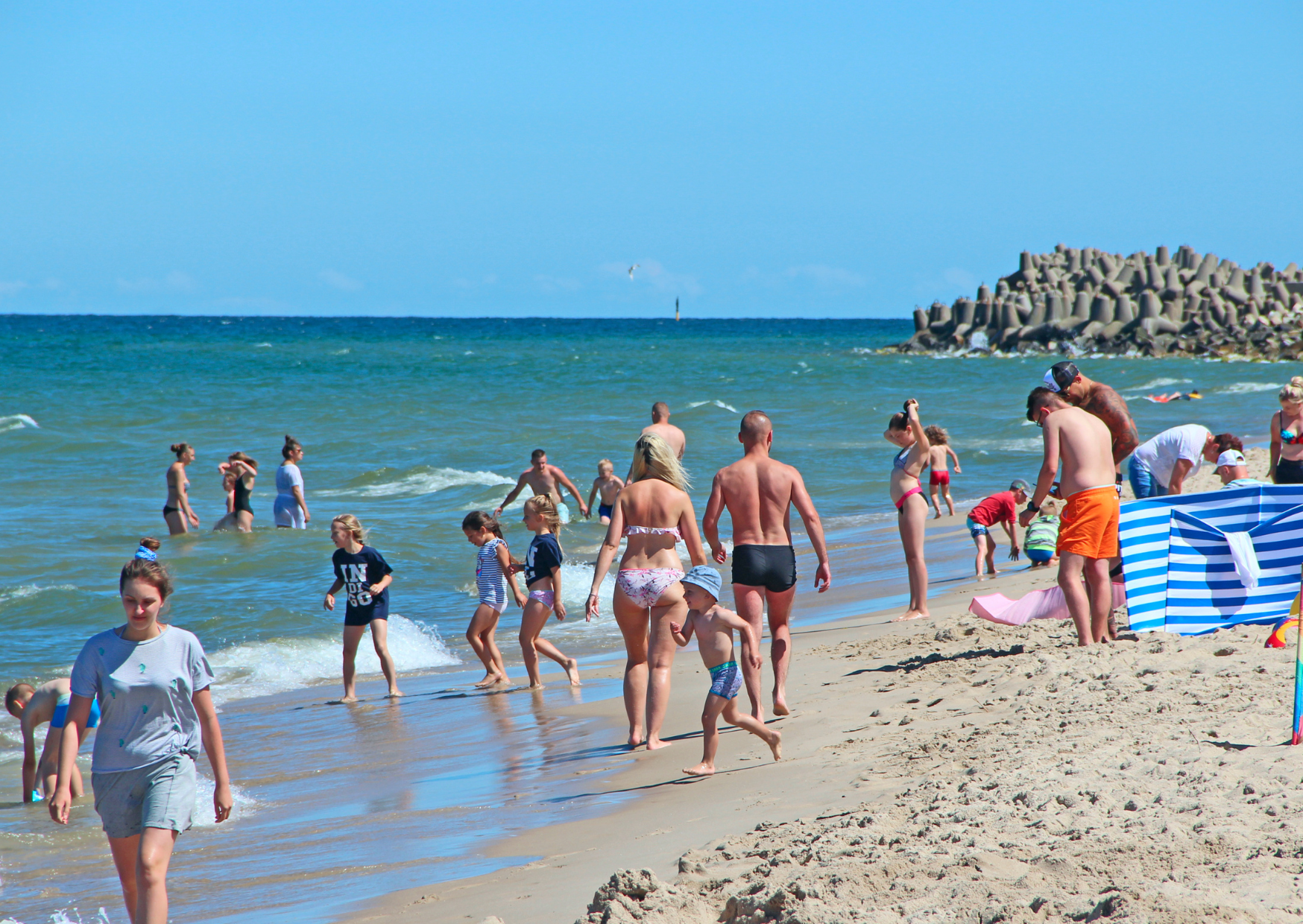
Perhaps the most heartwarming part of Spanish beach culture is seeing people truly enjoy their bodies — without self-consciousness.
You’ll see people dancing in the sand, playing paddleball in bikinis, diving into waves with the abandon of children, or simply lying on their towels in peace. Nobody is sucking in their stomach. Nobody is adjusting their outfit every two minutes. People move freely, laugh loudly, and let their bodies exist without apology.
This stands in stark contrast to the performative atmosphere of many American beach scenes, where people often spend more time adjusting swimsuits, posing for photos, or covering perceived flaws than actually relaxing. Spanish beachgoers, by contrast, seem to operate from an unspoken agreement: We’re here to feel good, not to look perfect.
5. Body Acceptance Is Modeled from Childhood

Cultural body confidence doesn’t appear out of thin air — it’s taught and reinforced from childhood.
In Spain, children are raised in environments where the human body isn’t a source of shame. It’s common for kids to run around naked on the beach or swim without tops until they feel ready to wear one. Their parents don’t rush to cover them up, and the atmosphere is one of normalcy and ease.
More importantly, they see adults being confident — moms in bikinis, dads in Speedos, grandparents dancing barefoot in the sand. When you grow up watching people enjoy their bodies — flaws and all — you learn that your body is worthy, too.
In more image-conscious or puritanical cultures, kids often internalize shame early: being told to cover up, hearing adults complain about their own bodies, or absorbing media messages that say only certain bodies are beautiful. Spain’s beach culture flips that narrative — not by preaching body positivity, but by living it out loud.
6. Less Comparison, More Community
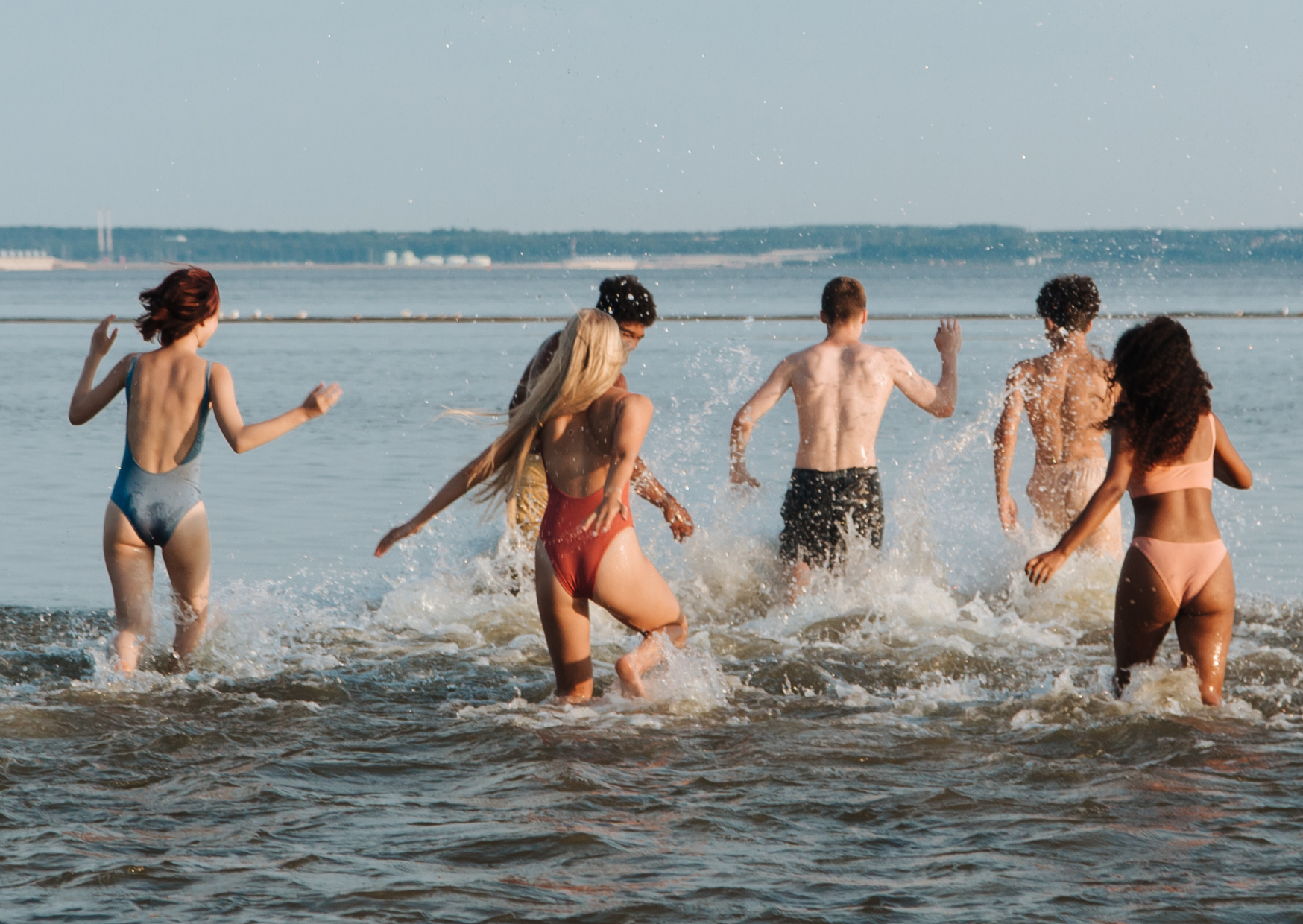
One reason body confidence thrives in Spanish beach culture is because the atmosphere is less competitive and more communal. People go to the beach to relax, be with friends and family, and enjoy the natural world — not to show off or compare themselves.
Sure, attractive people exist on Spanish beaches just like anywhere else, but there’s no dominant beauty type everyone is striving to emulate. You’ll see diversity in every direction — curly hair, natural breasts, big thighs, slim torsos, full hips, freckles, scars, tattoos, piercings. The effect is both disarming and comforting. No one body dominates the space — they all belong.
In American or influencer-driven beach culture, there’s often a subtle hierarchy of appearance. Who has the best bikini body? Who looks best in photos? Who wore the trendiest swimsuit? That comparison creates anxiety and self-consciousness. But the Spanish beach feels like a judgment-free zone, and that fosters a more relaxed relationship with your own body.
7. Fashion Is Freedom, Not a Rulebook

Let’s talk swimwear. On Spanish beaches, fashion is an expression of personality — not a set of rules about what your body should look like. You’ll see older men in Speedos, curvy women in string bikinis, and teenagers in retro one-pieces. Everyone wears what they like, and what makes them feel good.
And guess what? Confidence always looks good.
There’s no sense of, “She shouldn’t be wearing that” or “He’s too old for that suit.” Spaniards have a wonderfully relaxed approach to style — as long as it’s comfortable, breathable, and makes you feel amazing under the sun, it’s the right choice.
Contrast that with beach fashion in many parts of the world, where swimwear often follows strict “body rules”: high-waisted bottoms to hide stomachs, tankinis for moms, board shorts for modesty, push-up tops to create cleavage. Spain’s fashion attitude is refreshing: Wear what you want, and enjoy yourself.
8. Confidence Is Contagious

Perhaps the biggest takeaway from Spanish beach culture is this: confidence is learned through exposure. When you’re surrounded by people who are unbothered by their imperfections — and who celebrate life in all its sweaty, sandy, sunburned glory — it becomes easier to feel okay in your own skin.
You stop viewing your body as a problem to fix, and start seeing it as a vehicle for joy, connection, and experience.
Many travelers report feeling more confident after just a few days on Spanish beaches. At first, they may feel self-conscious or overdressed. But gradually, they adapt. They stop pulling at their swimsuits. They stop covering up. They feel less alone in their perceived flaws — because suddenly, those flaws look normal.
This cultural environment doesn’t “fix” body image issues overnight, but it does offer an alternative. And sometimes, just seeing a different way to exist in your body can be transformative.
Final Thoughts: Spain’s Quiet Revolution of Self-Acceptance
Spain isn’t famous for starting a “body positivity” movement — and that’s precisely the point. The confidence you see on Spanish beaches isn’t a social campaign, a hashtag, or a curated Instagram trend. It’s something organic, quiet, and deeply cultural. It’s been passed down through generations by people who simply refuse to believe that joy and beauty are reserved for the few.
In a world full of diet fads, Photoshop filters, and appearance-based judgment, Spanish beach culture offers a radical message: You don’t need to change your body to enjoy your life.
Maybe we don’t all have Mediterranean beaches nearby. But the spirit of Spanish beach culture — unapologetic presence, joyful movement, and relaxed acceptance — is something we can all carry with us, wherever we go.
Have you ever experienced the freedom of a Spanish beach? How did it change your relationship with your body? Let’s talk in the comments — and don’t forget to share this with a friend who could use a dose of body confidence!

About the Author: Ruben, co-founder of Gamintraveler.com since 2014, is a seasoned traveler from Spain who has explored over 100 countries since 2009. Known for his extensive travel adventures across South America, Europe, the US, Australia, New Zealand, Asia, and Africa, Ruben combines his passion for adventurous yet sustainable living with his love for cycling, highlighted by his remarkable 5-month bicycle journey from Spain to Norway. He currently resides in Spain, where he continues sharing his travel experiences with his partner, Rachel, and their son, Han.