
If you imagine a line of colleagues doing lip smacks at the office door, you have the wrong picture. What you are seeing in Italy is a light, social cheek touch between people who already know each other well, and it happens when the context makes it natural, not as a rule for every workplace.
What you are actually seeing
Walk into a studio in Milan at nine o’clock and you may watch two designers greet with a quick cheek touch and a quiet buongiorno. Step into a municipal office in Turin at the same hour and you will mostly see handshakes or a simple good morning. The difference is not contradiction, it is context. Familiarity over formality shapes greetings inside Italian workplaces more than any single rule. Teams that have worked together for years often greet the way families do, while newer or more formal teams keep their distance.
The greeting itself is usually a soft brush of cheeks with a small turn of the head. It is fast, almost automatic, and nobody counts it aloud. In many cities two touches are common, in some circles one is enough, and nobody keeps score if you mirror the other person. Context decides contact, and Italians read the room well. If the group is mixed between old friends and new colleagues, you will see a blend. Handshakes flow at first, then the long time coworkers greet each other more warmly.
Americans sometimes assume a kiss is romantic or transgressive. Italians do not. Function beats drama. The gesture tells the brain we belong to the same group, then work begins. It is no more charged than a hug from an aunt at Sunday lunch. Where the line appears is professionalism. Meetings with clients, first day introductions, senior management reviews, and cross company events usually stick to a firm handshake and a clear buongiorno.
Want More Deep Dives into Other Cultures?
– Why Europeans Walk Everywhere (And Americans Should Too)
– How Europeans Actually Afford Living in Cities Without Six-Figure Salaries
– 9 ‘Luxury’ Items in America That Europeans Consider Basic Necessities
How Italian work norms draw the line

Italian society is warm in private life, yet business culture sits closer to formal than many visitors expect. The default at work is still the handshake, especially with new faces and with hierarchy. Publications and etiquette guides say it plainly. Cheek kisses are popular in social life, handshakes remain the business standard unless colleagues already have a friendship. That is why you can watch the same people kiss at an after work aperitivo and shake the next day when a client joins the room. Place and purpose matter.
There are also differences by sector. Creative fields, hospitality, media, and fashion lean relaxed, which makes a cheek touch between long time colleagues more likely. Banking, public administration, law, and manufacturing are more formal. Regional habits add another layer. Northern offices skew cooler, southern offices warmer, and even within cities teams set their own micro culture. Local micro norms rule once a team gels.
Health awareness changed habits for a while. During the pandemic many workplaces paused all touch, moving to nods and elbow bumps. As restrictions ended, people recovered their old greetings at different speeds. Young teams often kept lighter touch or a wave, older teams drifted back to their comfort zone. You will still meet Italians who prefer a smile and a buongiorno with no contact at all, and that choice is respected. Nobody keeps a contact ledger at the door.
What about men greeting men. You will see cheek touches among male relatives and close friends in some regions, and among colleagues who are very close outside the office, yet a handshake is still the safest opener between men in professional settings. Women often set the tone for the room. If she steps in for a cheek touch and you know each other well, you mirror. If she offers a hand, you offer a hand.
Why Americans feel the HR alarm
American workplaces center on policy. Training highlights boundaries, and managers are taught to reduce risk. That lens makes a kiss of any kind look like a complaint waiting to happen. The law backs the caution. In the United States, harassment guidance says conduct that is unwelcome and severe or pervasive can create a hostile environment, and unwanted touching can be part of that picture. Companies design rules that err on the side of distance, not because every touch is illegal, but because clear lines are easier to teach and to enforce. Policy first, people second is how risk management reads social life at work.
Italy polices harassment too. The national code on equal opportunities treats unwanted conduct of a sexual nature that violates dignity as discrimination, and it prohibits behavior that creates an intimidating or offensive environment. In practice that means most workplaces rely on the same anchor as American ones, consent and appropriateness. The difference is tone. Italian offices assume adults can tell when warmth is welcome, then expect managers to correct the room if someone misreads. Consent, not category is the guiding idea. The greeting is fine when both parties are comfortable, and it is off limits when one is not.
These legal frames explain the culture clash. Americans are trained to remove ambiguity, so touch at work looks reckless. Italians are trained to manage ambiguity in person, so a light greeting among friends does not trigger alarms. Neither country licenses harassment. Each sets defaults that fit its own work culture.
How to navigate your first Italian office

If you are the American in the room, treat the first week like reconnaissance. Arrive a few minutes early, watch how the team greets, and let colleagues lead. Mirror what you see, and use the safe opener until the room tells you otherwise. A handshake, direct eye contact, and a clear buongiorno work in every region and every sector. If somebody steps in for a cheek touch and you are comfortable, go with it. If you are not, keep your hand forward and smile. It reads as polite and professional, not cold.
When you join a tight team, you will notice three moments where greetings get warmer. The first is Monday morning, the second is birthdays or name days, the third is the last day before holidays. Those are the touchy moments in many Italian offices, because they are more social than operational. If a teammate greets you with a cheek touch then, it is not a test. It is the office equivalent of a neighbor handing you a coffee at the bar downstairs.
Words help when you need a boundary. A simple scusami, preferisco la stretta di mano today, with a smile, is enough. You do not need to justify, and nobody expects a speech. If you prefer to set your standard before it comes up, you can add a light line at the coffee machine, I am old school, I go with the handshake at work, then meet people warmly later. Say your boundary simply, then return to the task at hand.
First days and first meetings
Early in a role, meet senior people with a handshake unless they make a different move. Titles still matter. Dottore or Dottoressa paired with a last name is safe on first contact, then you follow their lead on names. If a client enters the room, downshift to business formality even if the internal team is warm. The office can be intimate at nine thirty and formal again at ten when the outside world walks in. Adjust to the room, not the clock.
When you already know everyone
If you have been in the team for months and the norm is a kiss hello among peers, it is fine to go with it, especially at the end of the week or right before holidays. Keep it brief and modest, a cheek touch and done. Skip perfume heavy moves and anything that slows the rhythm of work. Greetings in Italy are quick and sincere, not theatrical. Warm, then work is the cadence.
Where the line is always no
There are clean no zones even in the warmest offices. If someone is ill, nobody touches. If a person steps back or keeps hands on a laptop, you read that signal and stop. If a power imbalance is strong, senior to very junior, or manager to temporary staff, default to the handshake unless the junior person clearly initiates. In cross border teams, keep to the most formal shared standard when the group first gathers. These rules are not about fear. They are about making sure everyone can relax.
Client meetings and job interviews are handshake territory. So are first days, cross company summits, and any conversation about pay, performance, or conflict. Keep greetings light at after hours work events too, where alcohol clouds judgment. You will see more hugs and cheek touches at a leaving party than at a budget review, but the same principle holds. Occasion controls tone, and you never lose points for staying a step more formal than the room.
The last no is consent. If someone says they prefer a handshake, take it as a favor. That clarity saves time and keeps the team in sync. In both Italy and the United States, harassment law centers on unwelcome conduct. You cannot guess another person’s history or comfort level, so you honor their words. Consent ends the question.
Scripts that work in real rooms

You do not need big Italian to handle greetings. Three phrases carry most of the weight. Buongiorno and buonasera at the right time of day. Piacere when you meet someone new. A warm come stai to a colleague you already know. If a cheek touch appears and you are ready for it, lean slightly from the waist, turn your head, and make light contact. The point is social glue, not ceremony.
If you want to set a boundary, be brief. Preferisco solo la stretta di mano at work works everywhere. If you need to soften a refusal on a big holiday, try, oggi solo saluti da lontano, I am fighting a cold. Italians treat illness seriously at close quarters, and nobody will test your shield. If an older colleague greets you warmly and you are unsure, you can step in with a smile and offer your hand firmly. That is a classic bridge between styles.
The hardest moment for Americans is when the team is mixed, some kiss, some do not, and you are first through the door. Solve it by greeting the whole room first. Buongiorno a tutti, then move to the handshake with the person closest to you. People who prefer a cheek touch will step toward you after that. People who do not will stay where they are. The room sets itself if you give it half a second. Lead with voice, let the room decide.
What this custom really signals
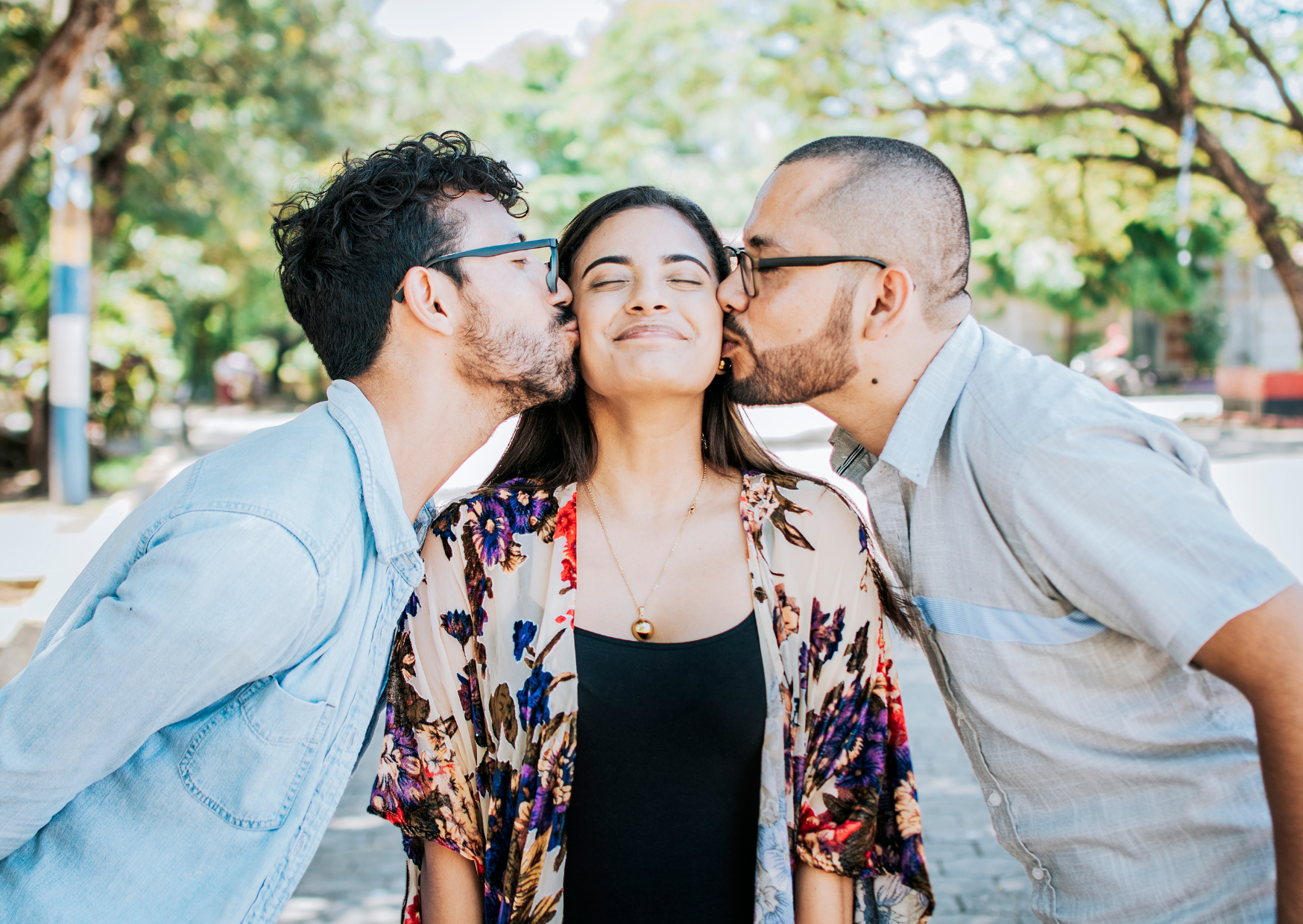
The ritual is not about romance. It is about group trust. Italian offices use small, repeated gestures to remind people that work here is done in company. Lunches are longer, coffee is shared, and even the greeting is a small act of inclusion. The team that kisses each other good morning did not start there on day one. They arrived at it over months of projects, delays, wins, and deadlines, and the greeting is a side effect of that history.
American offices, especially large ones, try to build trust with policies first. That approach protects more people more often, and in a big system that counts. Italian offices try to build trust with proximity and routine. That approach can make everyday life feel more human, and in a small team that counts. Neither path excuses bad behavior. The point is to understand what a greeting is doing. In Italy it treats colleagues like neighbors you see every day, and then the work gets done with fewer introductions.
For a foreigner, the advantage is simple. You get to choose. If touch is not for you at work, you can hold the line with a polite handshake forever and nobody will call you rude. If you enjoy the warmth and the team makes it clear that warmth is the norm, you can match it when it feels natural. The rule that never changes is clarity. Say hello clearly, set boundaries clearly, and remember that good manners everywhere boil down to the same three habits. Notice the room, honor consent, and keep the work moving.

About the Author: Ruben, co-founder of Gamintraveler.com since 2014, is a seasoned traveler from Spain who has explored over 100 countries since 2009. Known for his extensive travel adventures across South America, Europe, the US, Australia, New Zealand, Asia, and Africa, Ruben combines his passion for adventurous yet sustainable living with his love for cycling, highlighted by his remarkable 5-month bicycle journey from Spain to Norway. He currently resides in Spain, where he continues sharing his travel experiences with his partner, Rachel, and their son, Han.