
And what it reveals about body neutrality, generational visibility, and why one culture hides what the other no longer notices
Every summer, American tourists land in Europe and make their way to a nudist beach. They’ve read about it online. They’ve marked it on their maps. It’s framed as an experience—liberating, exotic, maybe even a little rebellious. What they don’t realize is that they’ve been walking past topless grandmothers all week.
On ordinary Mediterranean beaches, women in their 60s, 70s, and beyond swim, sunbathe, and wade without bikini tops. It’s not announced. It’s not labeled. And it’s not considered brave. It’s just part of the coastline. While American visitors seek designated nudity, most Europeans don’t need a sign to remove a top. And no one around them treats it as news.
This contrast isn’t about law. It’s about comfort, exposure, and expectation. In Europe, the beach is a democratic space. All bodies arrive. All bodies are visible. And no one apologizes for showing skin. Americans, on the other hand, are raised in a culture where the body is either aesthetic or private—rarely just neutral. So when they finally see bare chests on regular beaches, they’re not just surprised. They’re disoriented.
Here’s why Americans go looking for something Europe never needed to hide—and what that tells us about cultural perceptions of aging, modesty, and public space.
Want More Deep Dives into Everyday European Culture?
– Why Europeans Walk Everywhere (And Americans Should Too)
– How Europeans Actually Afford Living in Cities Without Six-Figure Salaries
– 9 ‘Luxury’ Items in America That Europeans Consider Basic Necessities
1. In Europe, beaches aren’t body-curated spaces

European beaches, especially in France, Spain, and Italy, are open terrain for all kinds of bodies. You’ll see toddlers playing naked in the surf, teenagers lounging in groups, and women of all ages walking along the shoreline with or without tops. There’s no sorting by age or shape. Everyone coexists.
The absence of policing—formal or informal—makes this possible. No one is instructed to cover up. No one is told a bikini is required. And more importantly, no one is shamed for appearing topless if they’re not young or commercially “fit.” A 75-year-old woman can remove her top and read a book. No one glances. The moment passes.
In contrast, American beach culture is filtered through aesthetic expectations. Swimsuits must flatter. Bodies are judged. Older women often dress modestly—not from law, but from a lifetime of internalized gaze. Visibility becomes a choice you have to justify, not a right you inherit.
When Americans encounter a European beach, they’re surprised by how little drama surrounds toplessness. It’s not activism. It’s not rebellion. It’s continuation. And that calmness often speaks louder than any sign that says “clothing optional.”
2. Topless doesn’t mean nude. It means not hidden

Many American tourists assume that going topless is the same as being nude. But for European women, it’s just partial clothing. Removing a top is not full exposure—it’s a seasonal adjustment. It has nothing to do with being “naked in public.” It’s about tanning, swimming, drying off, or just relaxing.
Toplessness, in this context, is practical more than ideological. Women who never visit designated naturist beaches still remove their tops. They do it in front of their grandkids. They do it while talking to neighbors. They do it with casual familiarity. There’s no flirtation. There’s no spectacle.
This confuses Americans, who often assume that any public nudity must be either performative or sexual. In the U.S., breasts are charged territory. They are hidden, revealed, or censored. They’re not neutral. So when Americans seek out nude beaches, they often do so with a level of preparation—as if stepping into a world apart.
But the truth is that Europe doesn’t draw that line so sharply. Toplessness isn’t considered nudity. It’s simply one way people manage their bodies in warm weather. And that cultural perception changes how it’s received.
3. Grandmothers are visible, not erased
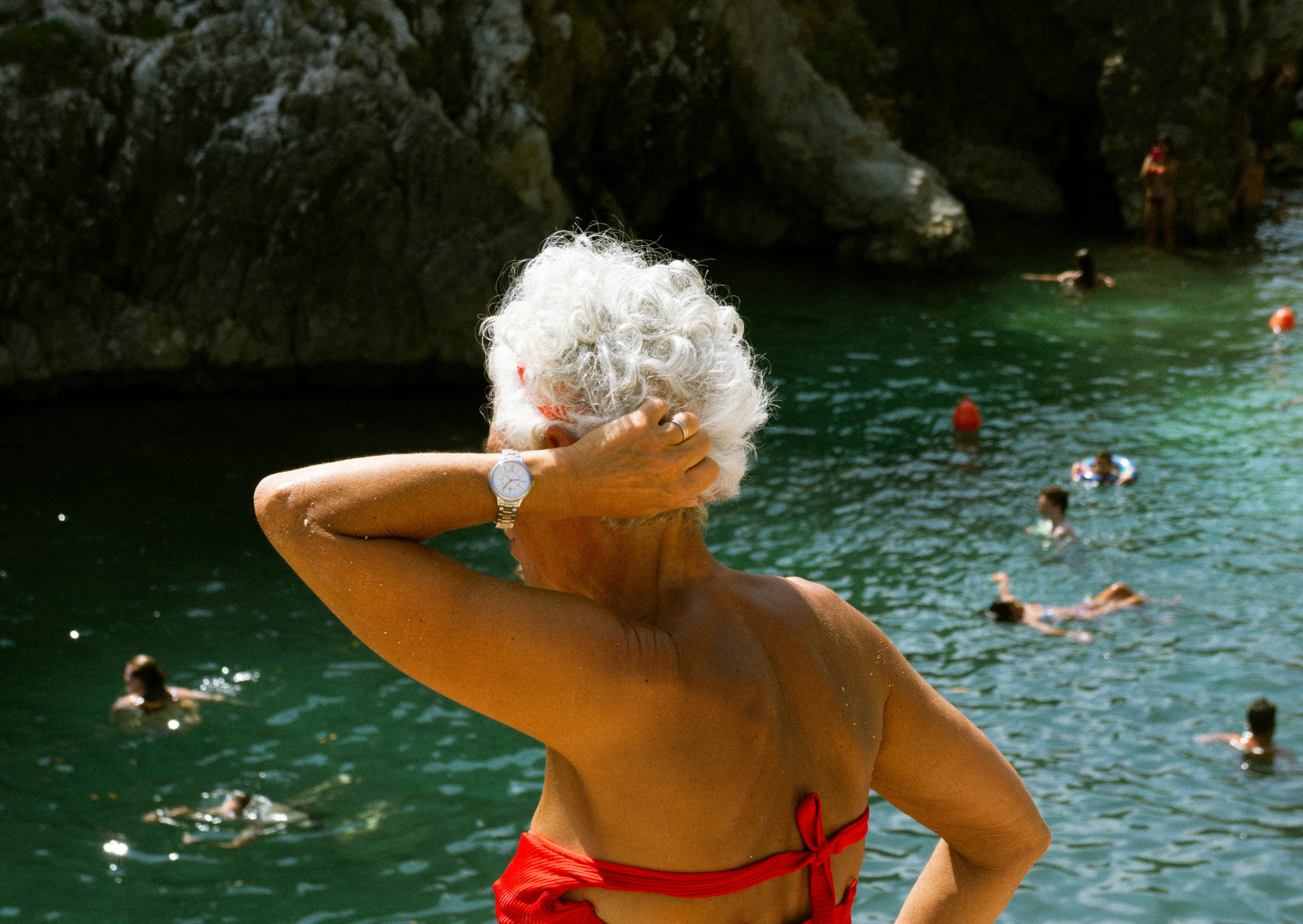
The most disorienting detail for American visitors isn’t just the toplessness—it’s who’s topless. In the U.S., older women disappear from swimwear marketing, from beach imagery, from visible public life. They’re either modest or invisible. European grandmothers, by contrast, are present. On beaches, they are in the sun, in the water, and fully part of the social fabric.
They don’t wear wraps or hide in shade. They don’t apologize for wrinkles, softness, or sag. They move through beach space with the same casualness as younger people. And they expect to be left alone.
This is cultural. It reflects a European comfort with aging and a looser link between body and worth. An older woman’s chest isn’t a punchline. It’s not brave. It’s not inappropriate. It’s just part of her. And that normalcy teaches younger generations that age is not shameful.
For Americans, this can be startling. The expectation is that only young, conventionally attractive women remove their tops. The presence of older topless women short-circuits those assumptions. It reorients the question: maybe the beach doesn’t belong to one type of body after all.
4. The American tourist’s search for nudity is a search for permission
American travelers often seek out official nude beaches because they’re looking for permission. In the U.S., nudity is regulated. There are designated areas, posted signs, and communities built around clothing-optional zones. If you want to be nude, you need explicit social approval.
So when Americans come to Europe, they bring that same search pattern. They ask where the nude beaches are. They research. They post questions in forums. They treat it like a destination. Meanwhile, Europeans are already partially undressed—without asking.
This difference reflects deeper contrasts in how cultures relate to public space. In Europe, you don’t always need permission to exist. You can sunbathe topless without declaring anything. You can change your swimsuit behind a towel without being accused of public indecency. The beach is flexible.
For Americans, that kind of unsupervised freedom can feel strange. But it’s real. And sometimes, the thing they’re seeking in a gated naturist cove is already happening—on the next towel over.
5. Modesty isn’t moral. It’s contextual

In many American communities, modesty is taught as a value. It’s tied to morality, respectability, and propriety. In Europe, especially on beaches, modesty is functional. It’s about what makes sense in the moment—not about virtue.
That means an older woman might wear a one-piece one day and no top the next. It depends on the sun, the season, the crowd, or her mood. There’s no permanent posture. She isn’t declaring her politics by removing her top—she’s just managing her body.
American discomfort often comes from assuming that visibility equals intent. If someone is showing skin, they must want attention. But European beach culture separates exposure from performance. You’re allowed to be seen without making a statement.
This distinction explains why American tourists often misread European beaches. They assume toplessness is signaling something—when in fact, it’s saying nothing at all. It’s just presence.
6. Children grow up with normalized bodies
One reason toplessness continues across generations in Europe is that it’s never made shocking. Children see adults in various stages of undress at the beach from the time they can walk. It’s not hidden. It’s not exaggerated. It’s part of summer.
This creates body literacy without spectacle. Kids don’t stare. They don’t giggle. They don’t sexualize every chest they see. They learn that different bodies exist, change, and function in public space.
In the U.S., exposure is often delayed or forbidden. When it happens, it carries weight. Kids learn that nudity is either comedic or forbidden. By the time they’re old enough to choose how they show themselves, they carry those binaries with them.
European children, by contrast, grow into adults who treat their bodies more neutrally—because they were never told to fear visibility in the first place. That comfort travels up the age ladder, until grandmothers are topless and no one flinches.
7. You don’t need to be nude to be free
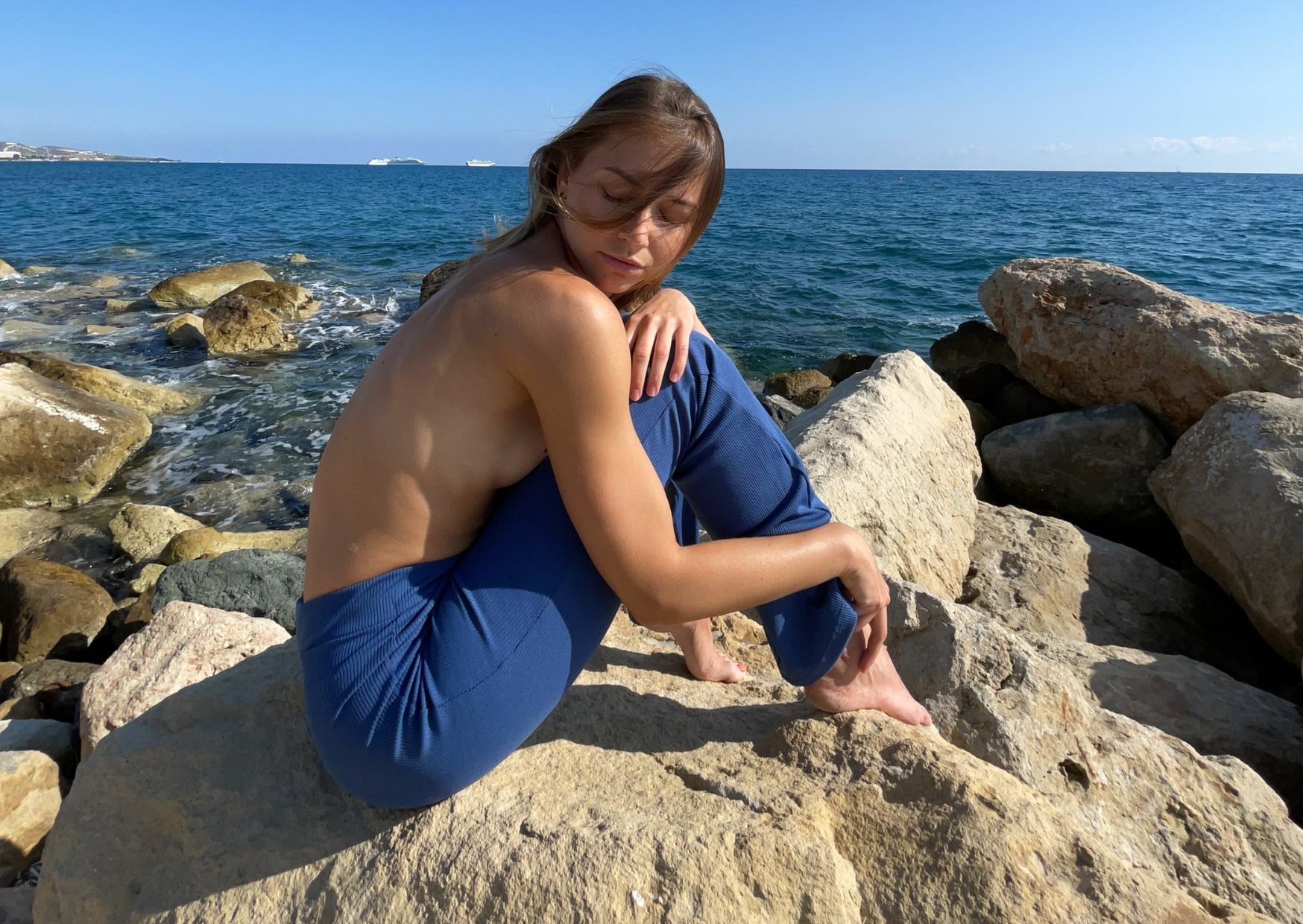
American tourists sometimes approach nude beaches as a bucket-list item—an experiment in freedom, a way to rebel against Puritan roots. But European beachgoers don’t think of freedom that way. For them, freedom is consistency. It’s being allowed to do what makes sense without judgment.
That’s why a woman can be topless and ignored, or fully clothed and relaxed. The beach doesn’t demand performance. It offers room. And in that room, people choose what feels natural.
Nude beaches exist in Europe—but many Europeans never visit them. They don’t need to. They already feel unmonitored. They already belong. So when Americans go looking for nudity, they often miss the deeper freedom: being accepted no matter what you wear.
That’s what older topless grandmothers understand. They’re not nudists. They’re not defiant. They’re just locals. And that, in the end, is what true body freedom looks like.

About the Author: Ruben, co-founder of Gamintraveler.com since 2014, is a seasoned traveler from Spain who has explored over 100 countries since 2009. Known for his extensive travel adventures across South America, Europe, the US, Australia, New Zealand, Asia, and Africa, Ruben combines his passion for adventurous yet sustainable living with his love for cycling, highlighted by his remarkable 5-month bicycle journey from Spain to Norway. He currently resides in Spain, where he continues sharing his travel experiences with his partner, Rachel, and their son, Han.