
Walk into a busy Roman café at 10 a.m.—bottles clinking, saucers ringing, voices rolling over the bar—and you’ll see a mother sit at a regular table, lift her baby, and latch without breaking the flow of conversation. No one points. No one redirects her to a “family lounge.” Staff might bring a glass of water. That at-the-table, front-and-center nursing spot is the norm in much of Italy. In U.S. malls, by contrast, the same scene has often been steered into a private “nursing room” or—more rarely—met with a misunderstanding by staff, even though breastfeeding in public is legal in all 50 states. The difference isn’t biology. It’s design, norms, and training.
Want More Deep Dives into Everyday European Culture?
– Why Europeans Walk Everywhere (And Americans Should Too)
– How Europeans Actually Afford Living in Cities Without Six-Figure Salaries
– 9 ‘Luxury’ Items in America That Europeans Consider Basic Necessities
What “the location” actually is in Italy
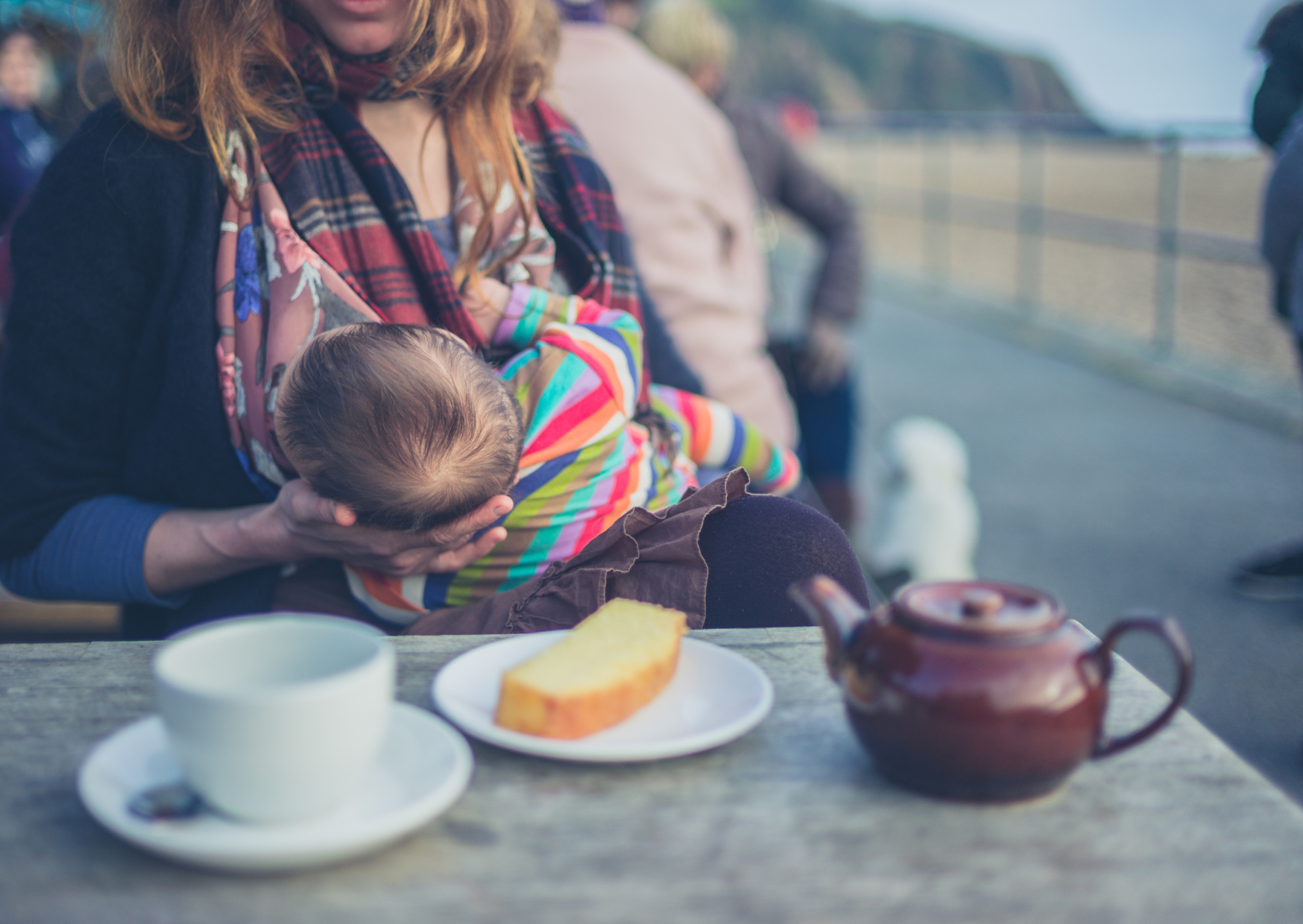
At the table — in the main room — no permission needed
The Italian “breastfeeding location” isn’t a designated lounge or a back corridor; it’s the same place everyone else sits—the café table, the trattoria banquette, the shaded bench in the piazza, sometimes even a church pew during a long Mass when the baby gets hungry. There’s no ritual of asking permission because none is needed. Italy has no law against public breastfeeding, and culturally the act reads as straightforward childcare, not a spectacle. The spatial message is simple: babies are part of public life, so feeding them belongs in public space right alongside everything else.
Law versus norms: the U.S. is legal too—so why the friction?
Legal in all 50 states — private-property confusion — staff training gaps
Let’s be clear: breastfeeding in public is legal across the United States. That includes stores, restaurants, and malls. The friction comes from norms and enforcement, not the law. In many shopping centers, well-intentioned “nursing rooms” became a default funnel, and occasional misinformed staff tried to redirect mothers from food courts or benches—sparking nurse-ins and apologies after the fact. Legally, a mother doesn’t have to leave a table to feed; culturally, the U.S. often treats feeding as something to tuck away. Italy flips that script: no funnel, no segregation, no drama.
Why Italy normalizes at-table feeding

Piazza culture — Baby-Friendly momentum — explicit Church support
Italy’s public life centers on third places—bars, piazzas, parish halls—so childcare happens where people already are. That habit lines up with decades of WHO/UNICEF messaging to support breastfeeding everywhere and not treat it as something to hide. Even in religious contexts, the tone is explicit: Pope Francis has repeatedly told mothers to breastfeed during Mass—even in the Sistine Chapel. When authority figures and institutions normalize the act, staff and bystanders take their cue. Result: in Italy, feeding at the table reads as ordinary care, not a rule-breaker.
Where you’ll actually see it in Italy
Cafés and trattorie — benches and trains — yes, sometimes pews
The highest visibility is in bars/cafés (morning rush) and trattorie (long lunches), where a baby’s hunger simply outruns any special facilities. You’ll also see nursing on platform benches, regional trains, and museum courtyards; staff may offer water or help rearrange a chair. In church, especially during baptisms or long liturgies, discrete feeding is not treated as scandalous—again, because norms say “feed the child, carry on.” New shopping centers and airports may offer nursing rooms, but they’re options, not obligatory detours away from the main space.
The U.S. mall pattern: how a legal right got relegated
Optics over rights — “Use the lounge” scripts — rare but real missteps
Many American malls proudly built family suites—a good thing. The side effect was a script: “Ma’am, the lounge is right over there,” delivered even when a parent merely sat at a food-court table. Most centers now know better, but headline-grabbing cases still pop up when security or staff misunderstand policy. Every time, the resolution is the same: management apologizes, reiterates the law, and retrains staff. The pattern isn’t about legality; it’s about norms that still push breastfeeding out of sight.
Etiquette in Italy: the three-line script that keeps it smooth

Feed on the baby’s schedule — accept help — don’t disappear unless you want to
Italian courtesy is built for flow. If you’re feeding, staff may quietly bring water, shift a chair, or shield with a jacket if you ask—without theatrics. Covers are optional; many mothers simply latch and let the table chatter continue. If you prefer privacy, ask for a corner table; you won’t be nudged toward a bathroom or back room. The only “rule” is to treat the moment as what it is: care, not performance. The speed and normalcy of that script is exactly what makes the at-table location work. (And yes, restrooms are for washing hands—not for feeding.)
A surprising data note: acceptance ≠ higher breastfeeding rates
Europe’s rates are low — policy ≠ practice — local campaigns matter
Here’s the twist: even with visible public nursing, Europe’s exclusive breastfeeding rates at six months trail the world’s regions. Acceptance in cafés doesn’t magically create duration and exclusivity; those hinge on hospital practices, work policies, and hands-on support. Italy’s professional societies and UNICEF-linked “Baby-Friendly” initiatives keep pushing improvements across maternity wards and community care precisely because visibility alone isn’t enough. It’s a useful reminder for the U.S.: protecting the right to feed publicly is the floor, not the ceiling.
If you’re an American parent nursing in Italy (or anywhere in Europe)
No permission needed — ask for water, not a room — bring your pace, not your anxiety
- Sit where you want. In cafés, trattorie, trains, and parks, latch and carry on. If anyone offers a quieter seat, it’s courtesy, not a requirement.
- Hydrate and stay put. Staff are used to topping water and adjusting chairs. You don’t owe the room a relocation.
- Dress for comfort. Button-downs, wrap dresses, or a light scarf make on-off latching smooth in summer heat—no special gear required.
- Church or ceremony? If the baby melts down and you’re comfortable, feed where you are. You’ll be in good company; St. Peter’s has seen it.
If you’re a U.S. parent who wants Italy’s freedom at home

Know your rights — nursing rooms are optional — escalate politely, then document
- Know the law: Public breastfeeding is legal in all 50 states. If approached, calmly say, “I’m feeding my child; state law protects this.”
- Use lounges by choice, not compulsion. They’re amenities, not compliance checkpoints.
- If challenged: ask for a manager, restate your right, finish feeding, then follow up with written feedback so training sticks.
- Workplace pumping: separate issue, separate law—federal protections now require time and a non-bathroom space for expressing milk. Keep both facts handy; they fix most confrontations in thirty seconds.
Why the Italian model feels calmer (and how venues can copy it)
Design for inclusion — train for neutrality — ban bathrooms as policy
Venues that want fewer complaints should signal inclusion right where people sit: a small decal that says “Allattare qui va bene / Breastfeeding welcome here.” Train staff to offer water, not relocation. Make it policy that restrooms are never suggested as feeding spaces. Provide a quiet room for those who want it, and otherwise let the table be the table. Italy didn’t “solve” a problem so much as decline to invent one, and businesses that copy that stance see less conflict and faster table turns.
The “church pew” question Americans always ask
Yes, it’s happened in the Sistine Chapel — no special pass required — discretion is normal, not mandatory
If the idea of nursing in a sacred space makes you nervous, remember that the Pope himself has repeatedly told mothers to breastfeed during Mass. The message—“feed your child”—carries more weight than any side-eye from a stranger. In practice, Italian mothers tend to be discreet because they’re practical, not because a rule forces them to hide. That’s the deeper cultural difference: feeding is prioritized; optics are incidental.
What American malls can learn in one memo

Put the policy on the wall — retrain security — stop funneling
If you manage a mall, your memo is short:
- Breastfeeding is allowed anywhere a patron is allowed to be.
- Security does not redirect nursing parents unless they ask for a quiet room.
- Bathrooms are never suggested for feeding.
- Apologize immediately if staff misstep (most incidents end right there).
The result isn’t culture war; it’s fewer escalations and happier customers—including the people sitting with the baby.
What this reveals about everyday Europe
Babies are public — care is visible — rules serve people, not optics
Italy doesn’t romanticize breastfeeding; it normalizes it. The at-table location—the one that would still trigger a “there’s a lounge over there” reflex in parts of the U.S.—isn’t meant to make a point. It’s meant to keep life moving: feed the baby, finish the coffee, pay the bill, get on with the day. When you strip away invented hurdles, public space gets kinder and simpler for everyone—especially the smallest people in the room.

About the Author: Ruben, co-founder of Gamintraveler.com since 2014, is a seasoned traveler from Spain who has explored over 100 countries since 2009. Known for his extensive travel adventures across South America, Europe, the US, Australia, New Zealand, Asia, and Africa, Ruben combines his passion for adventurous yet sustainable living with his love for cycling, highlighted by his remarkable 5-month bicycle journey from Spain to Norway. He currently resides in Spain, where he continues sharing his travel experiences with his partner, Rachel, and their son, Han.