
You land in Europe in late September or October—leaf color peaking, crowds thinning, prices easing—and decide a rental car will unlock vineyards, small towns, and mountain passes. Then the weather turns, a roadside sign says chains or winter tyres are required, the rental desk shrugs, and a police stop turns your postcard trip into a four-figure bill.
The most expensive fall mistake Americans make isn’t a “gotcha” airfare or a tourist trap—it’s renting a car in Europe without winter-ready equipment and assuming U.S. norms apply. Between country-by-country tyre laws, fines, insurance exclusions, and new 2025 border timing, the margin for error narrows right when the first frost arrives.
Below is the practical playbook: what the rules really say, how rental contracts handle tyres and chains, what your insurance won’t cover, and the five-minute checklist that prevents a €135 ticket—or a €5,000 nightmare.
Want More Deep Dives into Other Cultures?
– Why Europeans Walk Everywhere (And Americans Should Too)
– How Europeans Actually Afford Living in Cities Without Six-Figure Salaries
– 9 ‘Luxury’ Items in America That Europeans Consider Basic Necessities
Why Fall Is the Trap, Not the Bargain
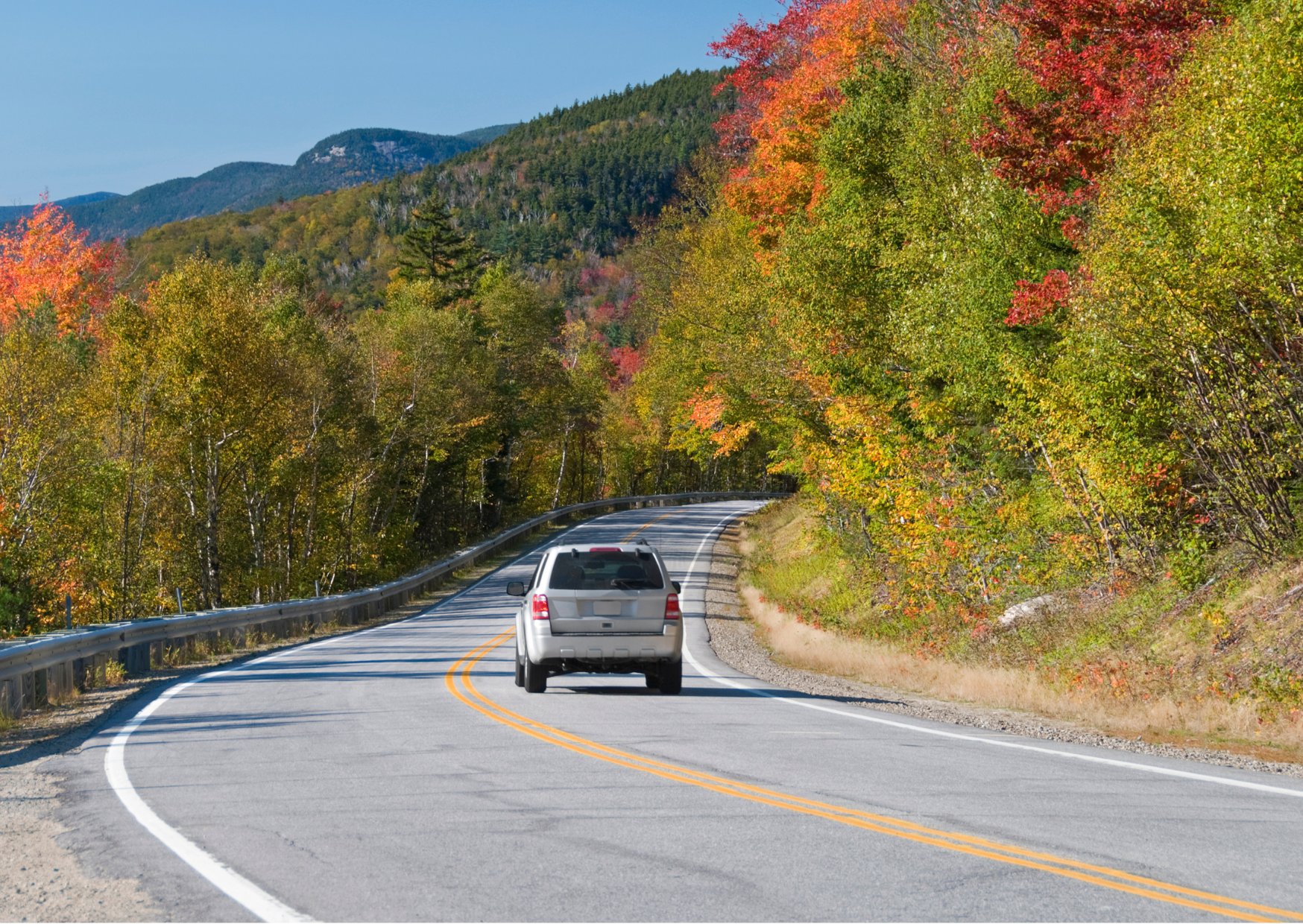
Autumn looks like “shoulder season”—until you hit a pass at dusk. Across much of Europe, legal obligations kick in from 1 November or even 15 November, and “winter conditions” rules can bite earlier if roads are icy or slushy. The weather shifts fast at elevation. A car that felt fine at sea level can become illegal 90 minutes later.
The trap has three parts. First, law changes by date—obligations start on fixed calendar days in many countries. Second, law changes by condition—Germany’s rule triggers when roads are icy, regardless of month. Third, rental counter reality—winter tyres and chain kits can be “on request” or sold as a pricey add-on, and in popular areas they sell out. If you arrive assuming “they’ll sort it on the day,” you inherit the risk.
On a calm day you won’t notice. On the first cold front, you will—financially.
The Rules You Actually Face (The Dates That Matter)

Europe doesn’t have one winter-tyre law; each country sets its own standard. The headlines Americans miss:
In Germany, there’s a situational requirement. If roads are icy or snowy, you must use winter tyres; since late 2024, tyres that count must carry the Alpine/3PMSF symbol (not just “M+S”). Fines start around €60—and rise if you obstruct traffic. Insurers can reduce payouts after a crash on the wrong tyres.
Austria requires winter tyres from 1 November to 15 April when conditions are wintry; without them you can be fined, and if others are endangered, penalties can reach €5,000.
France’s “Loi Montagne” applies 1 November to 31 March in designated mountain departments. You must have winter tyres or carry chains/snow socks. Violations bring a €135 fine.
Italy uses regional and road-specific orders—common windows are 15 November to 15 April on signed stretches (e.g., Alpine regions and some motorways).
Slovenia mandates winter equipment 15 November to 15 March and during winter conditions.
Switzerland has no general national mandate, but you must always control your vehicle; running summer tyres in winter can be deemed gross negligence, reducing insurance benefits and bringing fines if you block traffic.
Those dates and definitions are why a sunny breakfast in Piedmont can end as a legal problem in the Val d’Aosta—on the same day.
What “Legal Winter Tyre” Means Now

Not all “snow-looking” tyres are legal anymore. In Germany—and increasingly across Europe for compliance checks—tyres must show the three-peak mountain snowflake (3PMSF) to qualify as winter-suitable. The old M+S letters alone no longer meet the standard for newer tyres. That update closed a loophole where “mud and snow” labelling didn’t guarantee cold-weather performance.
Two quick rules keep you safe: look for the 3PMSF icon on the sidewall and verify tread depth isn’t down to a legal minimum. For many countries, 4 mm is the practical threshold for winter performance even if 1.6 mm is the general legal minimum. Chains or snow socks can satisfy French mountain zones if you don’t have winter tyres—but only when you actually use them where signed.
Rental companies sometimes mount all-season tyres. If they carry the 3PMSF symbol, they typically satisfy the law; if they don’t, you still risk fines under winter conditions. Don’t guess from the tread pattern—ask and look.
The Insurance Problem No One Warns You About
American cards and third-party policies feel bullet-proof—until a European claim is denied for negligence. Here’s where travelers lose thousands.
Most collision damage waivers exclude tyres, glass, underbody, and “use contrary to law.” If you crash on summer tyres in a snow flurry where winter equipment is mandated—by date, condition, or signage—the rental company can bill the full repair, plus towing, “loss of use,” and administrative fees. Your credit card’s coverage may still reject that bill if you violated local law or the rental agreement’s winterization clause.
Even when police issue only a small fine, that ticket can become Exhibit A in a claim denial. Insurers don’t need to prove you caused the accident—only that you didn’t meet the minimum legal equipment for the conditions. That’s the expensive twist: it’s not about blame; it’s about compliance.
If a third-party hits you while you’re on the wrong tyres, you can still take a hit. Liability determinations in parts of Europe routinely assign partial fault for improper equipment, eroding the payout and raising your out-of-pocket.
How Rental “Winterization” Works (And Why Walk-Up Is Risky)

In many regions, rental fleets add “winter tyres” as a paid option (often called “winterization,” “winter package,” or just “winter tyres”). In some markets it’s included in base rates during winter months; in others it’s first-come, first-served or priced daily. Chain kits are frequently “on request”—not guaranteed, limited in quantity, and sometimes not permitted on certain models.
Three realities to accept before you book:
First, phone confirmation isn’t enough—you want the winter tyres or chain kit listed as a line item on the booking. Second, fleets mix tyres—your exact car at pickup may differ. If you must have 3PMSF, verify on the sidewall before leaving the lot. Third, cross-border itineraries can void availability; an office in Milan may not stock chains for a last-minute detour into the Dolomites.
Walk-up renters pay the most and get the fewest choices. Pre-booking the winter package is cheaper than a counter add-on, and it locks in equipment while there’s stock. If an agent tries to hand you a car on summer tyres in winter conditions, you’re within your rights to refuse the vehicle and request one that is road-legal for your route.
The Real Cost of Getting It Wrong
Drivers fixate on the size of the fine and ignore the cascade. Yes, the on-the-spot penalty might be €60–€135 in some places, but the expensive part is everything that follows: towing from an Alpine lay-by, a replacement vehicle from a distant depot, a lost hotel night, and rebooked non-refundable activities. If a minor fender-bender happens on the wrong tyres, expect an argument over coverage and admin fees even if the other party caused the impact.
In Austria, where authorities treat winter compliance seriously, endangering others can mean fines reaching €5,000. In Switzerland, there’s no blanket winter-tyre law, yet insurers can reduce benefits for gross negligence and police can fine you if you block traffic on summer tyres. Those aren’t edge cases—they happen every early storm.
Quietly, the costliest line item is time. A morning spent buying chains, swapping cars, or filing a police report can erase the day you crossed an ocean to enjoy.
Smarter Routing: Rail First, Car Where It Makes Sense
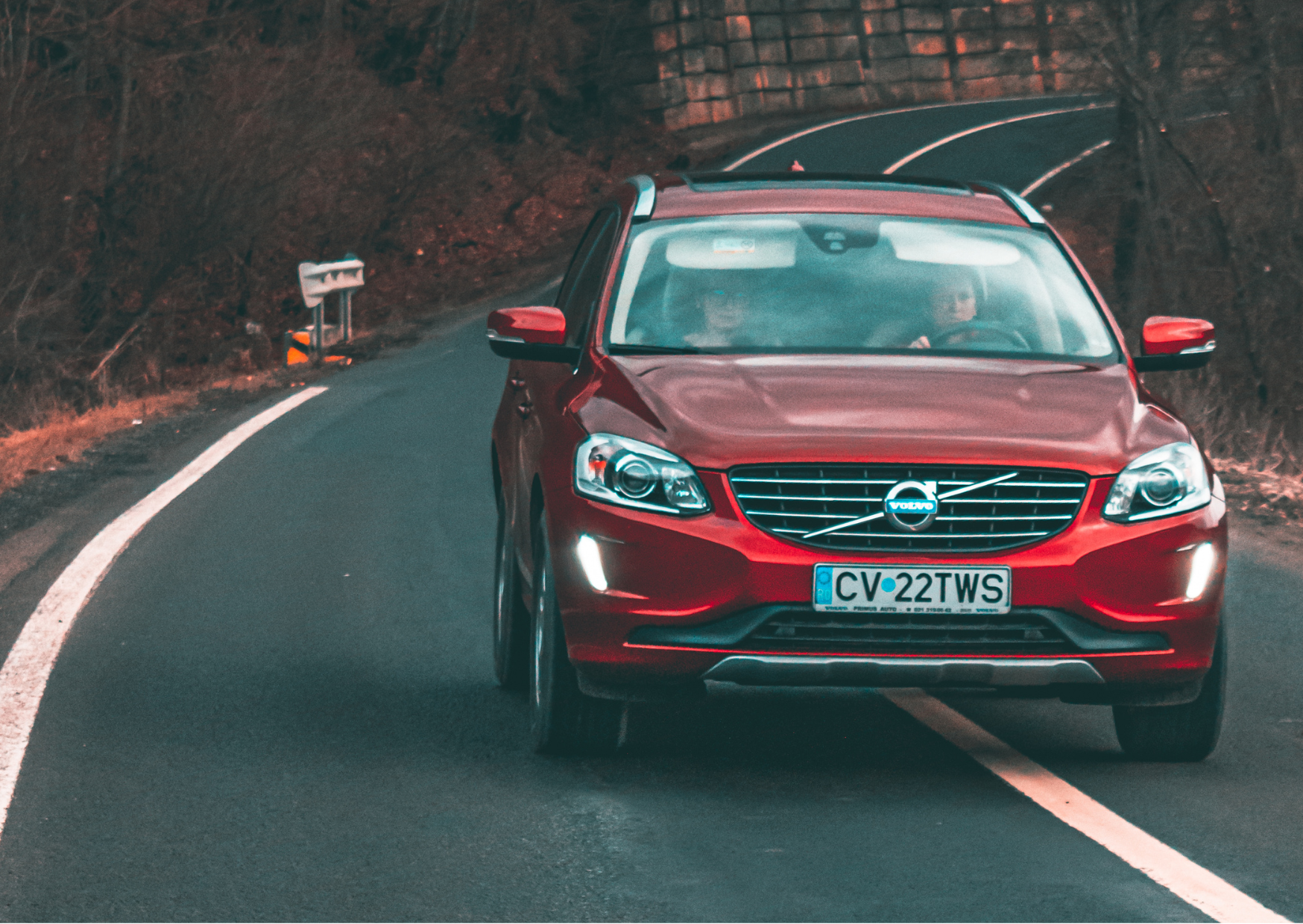
You don’t have to white-knuckle the Alps in November. Europe’s fall travel sweet spot is rail into the region, then car locally on valley floors and coastal routes. Trains keep you out of weather windows you can’t read in a new country and drop you near the old towns you came to see. If you still want a car, pick it up where winter equipment is routine (e.g., Innsbruck, Salzburg, Munich, Grenoble) and where staff know how to kit you correctly.
When you must drive through mountain corridors, leave daylight margins. In fall, dusk comes early, temperatures fall quickly, and fog forms in passes. If a sign mandates chains, that’s not an option—pull over and fit them. If you don’t know how, practice in the lot before you need them on the shoulder at night.
And if the forecast flips to real winter, trade your loop for a linear plan: return the car and switch to rail. Flexibility is cheaper than recovery.
The Legal Kit People Forget to Check
Beyond tyres, several countries expect a small safety kit in every car: a high-visibility vest, a warning triangle, and—especially in Germany—a first-aid kit that meets local standards. Rentals usually include these, but “usually” isn’t a plan. Open the trunk before you leave.
In France, you must carry a hi-vis vest and a hazard triangle; the vest should be reachable in the cabin so you can put it on before stepping into the road. In Italy, a reflective vest and triangle are likewise expected for breakdowns. In Germany, a warning triangle and compliant first-aid kit are required; hi-vis vests are standard equipment, and updates in recent years even specified mask contents in the kit standard.
The point is simple: in a breakdown, a vest and triangle are legal obligations as well as safety basics. Fines are modest; accidents aren’t.
2025 Timing Gotcha: Border Tech Meets Tight Itineraries
This fall adds a wrinkle unrelated to tyres but relevant to your schedule. The EU’s Entry/Exit System (EES) begins 12 October 2025 with a progressive rollout. First-time enrollments capture fingerprints and a face image at the first Schengen border you cross—longer than a stamp. If you’re collecting a car soon after landing, build a buffer between landing and pickup; late returns can trigger rental surcharges.
If your routing touches the United Kingdom, the ETA pre-travel authorization is already in effect for Americans. No authorization, no boarding—even if you’re only transiting landside. Add that check to your fall planning so your pickup clock isn’t chewed by a documentation surprise.
Bottom line: the fall of 2025 mixes weather, equipment rules, and new border timing. Treat your first Schengen entry like a new process—because it is—and avoid same-hour car pickups.
How to Book So You Never Think About This Again
Do three things at the booking screen and your fall road trip stops being a gamble.
First, choose rail for the long legs and a car where it adds value—wine roads, national parks, farmhouse stays. That naturally keeps you in milder corridors.
Second, when you do book a car, add the winter tyres/winterization option and a chain kit right then. Make the equipment appear as line items on your voucher and confirm via message that tyres are 3PMSF-marked.
Third, align your itinerary with the law windows: if you’ll be in Alpine or mountain departments after 1 November, assume you’ll hit a checkpoint. If your trip touches 15 November, treat all mountain-adjacent routes as winter-equipment territory.
If a desk hands you a non-compliant vehicle for your route, don’t drive it. Ask for a swap or adjust the plan—before you take the keys.
Five-Minute Pre-Trip Checklist (Save It to Notes)
Route reality. Look at elevation and the calendar. If passes, plateaus, or mountain departments appear after 1 November, plan for winter rules even on sunny days.
Tyre confirmation. Message the rental site: “Please confirm 3PMSF winter tyres and a chain kit are reserved on my contract.” Screenshot the reply. At pickup, check the sidewall for the Alpine symbol.
Insurance line-up. Read your CDW/excess terms; assume negligence and tyre damage are excluded. If you rely on a credit card policy, confirm it doesn’t exclude winter conditions or unpaved roads you intend to use.
Safety kit. Before leaving, open the trunk: hi-vis vest, triangle, first-aid kit. If anything’s missing, ask the desk to fix it on the spot.
Timing buffer. Add 60–90 minutes at your first Schengen entry from 12 October 2025 onward for EES enrollment, and ensure your UK ETA is approved if your route touches Britain.
Do those five, and the only thing “fall” about your trip will be the leaves.
The Short Version You’ll Remember in the Snow
Fall makes Europe feel easy—and hides rules that wake up with the first cold snap. The people who pay four figures aren’t reckless; they’re under-equipped by accident. Book winter tyres and chains in writing, verify the 3PMSF symbol at pickup, carry the basic vest/triangle/first-aid kit, and give yourself border time in October and November 2025.
Do that, and the only thing you’ll collect on the mountain road is a view.

About the Author: Ruben, co-founder of Gamintraveler.com since 2014, is a seasoned traveler from Spain who has explored over 100 countries since 2009. Known for his extensive travel adventures across South America, Europe, the US, Australia, New Zealand, Asia, and Africa, Ruben combines his passion for adventurous yet sustainable living with his love for cycling, highlighted by his remarkable 5-month bicycle journey from Spain to Norway. He currently resides in Spain, where he continues sharing his travel experiences with his partner, Rachel, and their son, Han.