
And what it reveals about early-hour expectations, social rhythm, and why one culture leans in while the other stays silent.
In much of the United States, breakfast is a private act. People move quietly. They scroll through phones, sip coffee in solitude, and brace for the day ahead. The mood is soft. Eye contact is minimal. Speaking, if it happens at all, is brief and low. It’s not that Americans are rude—it’s that the morning is sacred.
But in many parts of Europe, especially in Mediterranean households, breakfast is often noisy, social, and layered with commentary. Someone is complaining about the news. Someone else is retelling a dream or arguing about whose turn it is to get bread. If the whole family is present, you’re expected to speak.
This difference isn’t just about personality—it’s cultural. In Europe, conversation is part of digestion. Even early in the day, there’s rhythm. There are rules. And for Americans used to starting the day in peace, those rules would feel like a morning ambush.
Here are nine European breakfast habits that would derail the American ideal of a silent sunrise.
Want More Deep Dives into Other Cultures?
– Why Europeans Walk Everywhere (And Americans Should Too)
– How Europeans Actually Afford Living in Cities Without Six-Figure Salaries
– 9 ‘Luxury’ Items in America That Europeans Consider Basic Necessities
1. You’re expected to greet everyone with full sentences
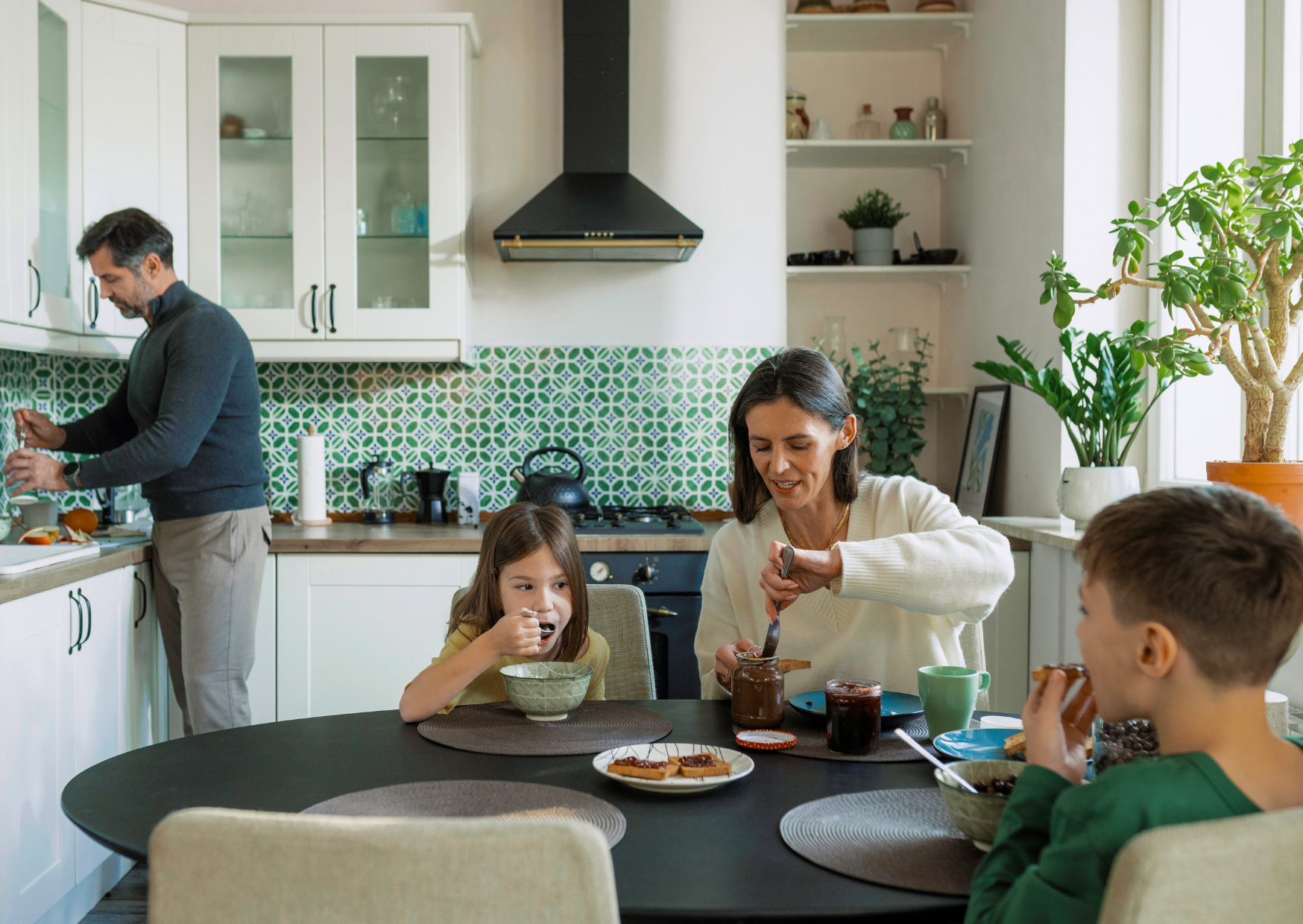
In Italy, France, and Spain, you don’t shuffle into the kitchen and mumble. You say good morning clearly. You ask how everyone slept. You might even make a short comment about the weather, the noise from upstairs, or the state of the coffee pot. Acknowledging presence is not optional.
In the U.S., many households allow for quiet coexistence. A head nod or a groggy “hey” is sufficient. But in European homes, silence reads as cold. If someone enters and doesn’t say “buongiorno” or “bonjour,” it’s noticed.
The greeting opens the social exchange. Even if you’re tired, even if you’re annoyed, you participate. Not speaking feels like rudeness—even rebellion. In many households, the day doesn’t start until everyone has been named.
2. Breakfast is when minor grievances are aired

Many Europeans use the breakfast table to get small annoyances out of the way. It might be a complaint about the coffee brand. Or about the towel left in the bathroom. Or the dog that barked at 2 a.m. It’s not dramatic—it’s clearing the air.
Americans might see this as a stressful way to start the day. Who wants to begin with problems? But for European families, especially in southern countries, the table is a forum. Better to say it now than let it build.
It also resets the household dynamic. Morning grumbles are often softened with bread, butter, and time. By the end of the meal, the irritation is smaller—or at least shared. And that shared reality matters more than silence.
3. Children are expected to speak—and be corrected

In many American households, kids are allowed to ease into the day. Conversation is optional. But in Europe, children are full participants at the table. They’re expected to say good morning, answer questions, and behave politely.
This includes speaking clearly, not interrupting, and using proper phrases. If a child mumbles or says “yeah” instead of “yes,” they may be corrected immediately. Breakfast becomes a site of gentle (or not-so-gentle) etiquette reinforcement.
Americans might see this as pressure. But for many European families, it’s just rhythm. The day begins with practice in how to speak—and how to be heard.
4. Food is commented on out loud
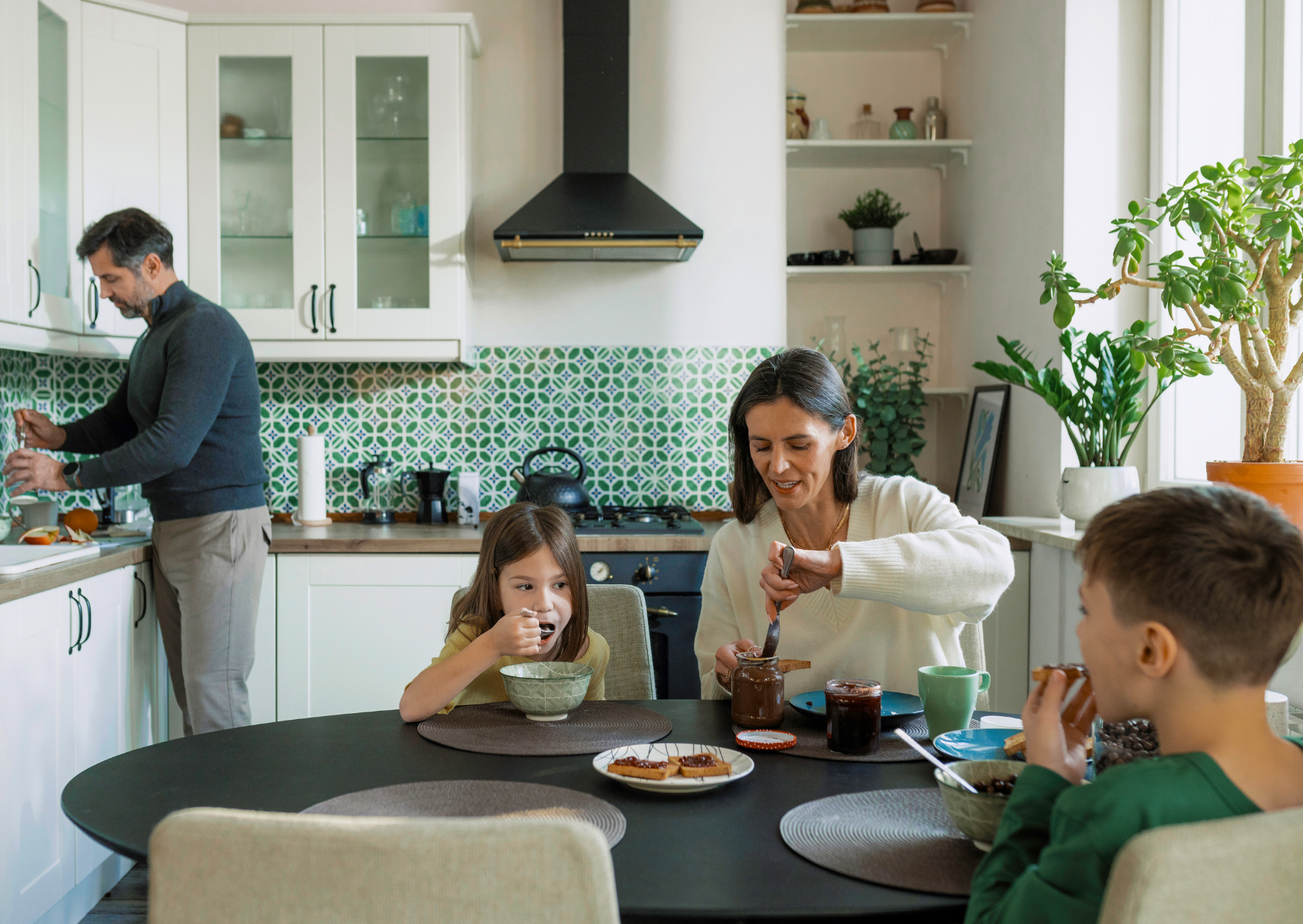
If the jam is different, someone will mention it. If the toast is overdone, it will be pointed out. If the yogurt is sour, it becomes a topic. European breakfasts are rarely silent—even in their critique.
Americans often avoid commentary in the morning, especially if someone else prepared the food. Gratitude is quiet. Complaints are saved. But in Europe, sharing impressions—even minor ones—is part of participation.
This habit isn’t about negativity. It’s about noticing. Being aware of the food, the table, and the people around it. If the milk is colder than usual, someone will say so—and someone else will nod.
5. You talk while chewing as long as you’re making a point

In the U.S., there’s a strong etiquette rule: don’t speak with your mouth full. But in many European homes, the rule bends if you have something worth saying. If a conversation starts mid-bite, you don’t wait. You finish your sentence. The rhythm matters more than the form.
This doesn’t mean talking with food flying out of your mouth. But it does mean that silences are filled, and urgency trumps perfection. A child might interrupt a sibling’s story with a question, toast still in hand. A grandparent might launch into a side story between sips of coffee.
It’s not considered rude—it’s considered human. The table holds space for overlapping voices, not isolated monologues. Americans might see this as chaotic. Europeans see it as alive.
6. Silence is interpreted as a signal

If you’re quiet at a European breakfast table, someone will ask why. Are you upset? Are you ill? Are you angry? Silence is not neutral—it’s interpreted.
In American culture, silence at breakfast is often a courtesy. It’s giving people space. But in Europe, quiet behavior breaks the expected rhythm. It stands out.
This can feel intrusive to outsiders. But for many European families, checking in is the norm. Silence requires acknowledgment. If you don’t want to talk, you explain that. Otherwise, people assume something’s wrong.
7. You’re expected to know what’s happening in the world
In many European homes, breakfast includes some light news commentary. A headline might be mentioned. A political name might come up. A neighbor’s misfortune may get a line.
Children are expected to listen, and adults are expected to have opinions. The newspaper might be passed around. A smartphone article might be read out loud. Everyone contributes—or at least reacts.
In the U.S., this would feel heavy. Politics and scandal before 9 a.m.? But for Europeans, information is food. Discussing it is a sign of presence. Skipping the news can feel like skipping the meal.
8. Breakfast is not rushed, even on weekdays
Many Americans eat breakfast on the go. A granola bar in the car. A smoothie during emails. Time is tight. But in many European homes, even a 15-minute breakfast happens at the table.
The food might be simple—toast, coffee, fruit—but the act of sitting down matters. You don’t hover. You don’t stand. You join. Even if it’s short.
This slows the day in a way Americans aren’t used to. It prioritizes shared presence over punctuality. Being five minutes late is forgivable. Ignoring the table is not.
9. You say goodbye with emphasis
When breakfast ends, you don’t just leave. You say goodbye to everyone still sitting. You offer a “ciao,” “a dopo,” or “bonne journée.” If someone stays behind, you wish them a good morning. If someone’s leaving for school, you give a kiss or a wave.
In the U.S., the exit is often quiet. People slip out. There’s a mutual understanding. But in Europe, the exit is part of the ritual. It seals the morning.
Skipping it feels wrong. Like walking out of a room without closing the door. It’s not about sentiment—it’s about structure.
Where Morning Energy Really Comes From
These rules don’t exist to control people. They exist to shape rhythm. In Europe, breakfast isn’t just fuel—it’s form. The structure sets tone, the tone builds day, and the day begins in conversation.
To Americans, this can feel like noise where there should be quiet. But for Europeans, it’s exactly the opposite: silence at the table breaks the social flow, and the best mornings are the ones that start with sound.
You don’t need to be cheerful. But you do need to show up. And once you’ve been offered coffee, a chair, and someone else’s story, the least you can do is say “Good morning” back.

About the Author: Ruben, co-founder of Gamintraveler.com since 2014, is a seasoned traveler from Spain who has explored over 100 countries since 2009. Known for his extensive travel adventures across South America, Europe, the US, Australia, New Zealand, Asia, and Africa, Ruben combines his passion for adventurous yet sustainable living with his love for cycling, highlighted by his remarkable 5-month bicycle journey from Spain to Norway. He currently resides in Spain, where he continues sharing his travel experiences with his partner, Rachel, and their son, Han.