
(And Why One Casual Wave Can Send the Wrong Message Entirely)
Southern Europe is known for its warmth, its hospitality, and its expressive body language. But that expressiveness comes with rules. In Italy, Spain, Portugal, and Greece, your hands say as much as your words—and sometimes more.
The problem is that many American and Northern European travelers use their hands without thinking. They gesture casually, mimicking what they think is “European,” or just defaulting to habits from home. The result? Confusion. Awkwardness. Sometimes even offense.
Here are seven hand gestures that might seem harmless to you—but that could have locals giving you strange looks, backing away, or walking off entirely.
Want More Deep Dives into Everyday European Culture?
– Why Europeans Walk Everywhere (And Americans Should Too)
– How Europeans Actually Afford Living in Cities Without Six-Figure Salaries
– 9 ‘Luxury’ Items in America That Europeans Consider Basic Necessities
Quick Easy Tips
Avoid the “OK” Sign – In Southern Europe, especially in places like Greece or Italy, this can be highly offensive.
Watch Your “Peace” Sign Orientation – Flashing a peace sign with the palm facing inward can be seen as vulgar in some cultures.
Don’t Use the “Fig” Gesture – Thumb between the index and middle finger is an ancient insult in many Mediterranean areas.
The ‘Talk to the Hand’ Gesture Is a No-Go – Holding up an open palm can be interpreted as telling someone to shut up.
Keep Your Fingers Together When Pointing – Pointing with fingers spread or in a “come here” motion is disrespectful.
Control Wild Gesturing – Overly animated hands can seem aggressive, especially in formal settings.
Learn Local Alternatives – Southern Europeans use expressive gestures too—but theirs are nuanced. Copying without understanding can backfire.
Americans and other tourists often arrive in Southern Europe unaware that their most casual hand gestures could offend locals deeply. What may seem like harmless body language back home can carry heavy historical, religious, or even sexual implications in countries like Italy, Spain, and Greece. The “OK” sign, for example, isn’t just misunderstood—it can come across as lewd or even obscene depending on where you flash it.
This difference isn’t just about etiquette—it reflects the depth of communication embedded in Southern European cultures. These regions rely heavily on gestures to complement language, meaning many hand signs carry emotional or social weight. Tourists, unaware of this deeper layer of meaning, risk coming off as disrespectful or crass without realizing it.
Yet some travelers push back, arguing that expecting foreigners to master local gestures is unrealistic and overly sensitive. Others suggest that it’s a sign of cultural intelligence to learn nonverbal norms, just as one might learn a few local phrases. Either way, it’s clear: hand gestures are not universally understood—and in Southern Europe, they speak louder than words.
1. The Open Hand “Stop” Gesture

In the U.S., holding up an open hand with fingers spread out means “stop” or “wait.” It is assertive, clear, and not particularly emotional.
But in Greece, this gesture—known as the moutza—is deeply offensive.
- It dates back to Byzantine times, when criminals were humiliated by having ashes or excrement smeared on their face using an open palm.
- Flashing the palm outward, especially close to someone’s face, is a way of insulting them.
- Even doing it in traffic, as a way to signal “hold on,” can be read as a vulgar insult.
Travelers who wave this gesture too forcefully, especially when frustrated, may not realize they’re telling someone off. Greeks often respond with discomfort or anger, even if no words are exchanged.
2. The “OK” Sign (Thumb and Index Finger Forming a Circle)

In American culture, this hand sign is positive. It means “okay,” “great,” or “perfect.” In Southern Europe, particularly in parts of Portugal, Greece, and southern Italy, it carries a very different meaning.
- In these regions, the circle formed by your fingers can symbolize something far more anatomical and offensive.
- It is often interpreted as a crude gesture with sexual connotations or an insult implying foolishness.
- While some younger people may understand the American meaning, many older locals still associate it with vulgarity.
Best to skip it entirely and give a thumbs-up instead—or better yet, just nod and smile.
3. The “Come Here” Finger Curl

In the U.S., curling one finger toward yourself is a universal way to signal someone to come over. It is informal, fast, and used with children, pets, or even adults.
In Italy and Spain, this gesture is inappropriate—and often considered rude or disrespectful, especially if directed at an adult.
- It is seen as a way to summon someone like an animal, not like a human being.
- In some places, it is even associated with seduction or inappropriate advances.
- The more casual or quick the gesture, the worse it comes across.
Locals typically use the entire hand, palm down, and wave the fingers toward themselves in a slow motion. If you want someone to come closer, use this instead of the American version.
4. The Finger Flick From Under the Chin

This gesture—flicking the fingertips from under your chin outward—is rarely used in the U.S., but occasionally mimicked from mob movies or “sassy” memes.
In Italy, however, it is a well-known expression, and not a friendly one.
- It means “I don’t care” or “go away” in a sharp, dismissive tone.
- It can also carry undertones of defiance or contempt.
- It is especially inappropriate when used toward elders or in formal settings.
While it might be used jokingly among close friends in some contexts, it is not a playful or neutral gesture. Most locals will view it as needlessly confrontational.
5. The Devil Horns Gesture (Index and Pinky Extended)
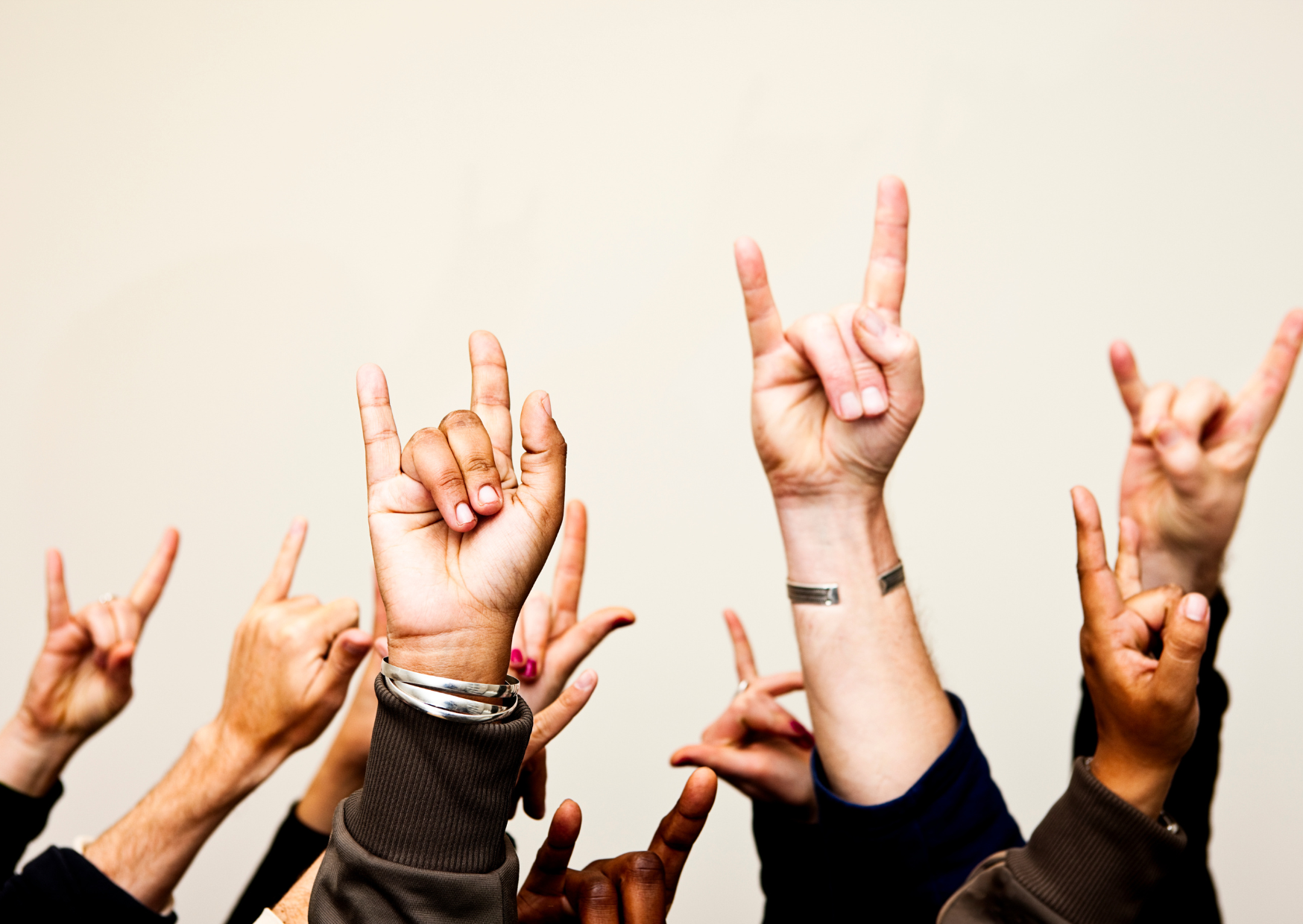
In American culture, this gesture is often associated with rock music. It is a symbol of energy, rebellion, and the heavy metal scene.
But in Italy, especially in the south, it takes on a completely different meaning.
- Called le corna, it implies that someone’s partner is cheating on them and that they are unaware—a cuckold.
- It is one of the most insulting things you can do, especially when pointed at someone.
- Even when used in jest, it can elicit strong reactions from older generations.
Using this sign at a concert might be fine. Using it in the middle of a plaza in Naples? Expect some glares.
6. Crossed Fingers for Luck

This gesture is used widely in the U.S. to wish someone luck or to hope for the best. But in Southern Europe, it is far less common and can even be misunderstood.
- In Spain and Portugal, it is not traditionally used and may confuse older locals.
- In Italy, the gesture is sometimes confused with religious symbolism or superstitious gestures meant to ward off bad luck.
- In certain contexts, it can appear sarcastic rather than sincere.
Instead, locals may touch wood, carry amulets, or simply say a phrase to express the same hope. If you want to show support, a hand on the heart or a verbal blessing is more culturally familiar.
7. Air Quotation Marks (Finger Quotes)

In America, using your index and middle fingers to mimic quotation marks in the air is a common way to indicate sarcasm or to signal a phrase should not be taken literally.
In Southern Europe, this gesture is much less common and often looks confusing or even suspicious.
- Many locals interpret it as a mocking gesture rather than sarcasm.
- Others may not understand the intended nuance and feel you are emphasizing something strangely.
- In formal or professional interactions, it can look overly casual or inappropriate.
If you need to be sarcastic or ironic, it is best to let tone of voice or facial expression carry the message. Using your fingers to “quote” someone in the air can easily get lost in translation.
Why Gestures Matter More Than You Think
Travelers often assume that if they don’t speak the language, gestures will help them communicate. This is true—but only if those gestures are culturally understood. In places like Southern Europe, where communication is already very expressive, body language carries a lot of weight.
A casual flick of the hand in Naples does not mean what it means in Nebraska. A finger curl in Seville does not say “come here” the way it does in San Diego. And an open palm in Athens might not stop someone—it might offend them.
Understanding these small differences is not just about avoiding embarrassment. It is about showing respect for a culture that values connection, expression, and emotional intelligence.
What to Do Instead
If you are traveling in Southern Europe and want to avoid misunderstandings:
- Observe before gesturing. Watch how locals use their hands. Mimic them only if you’re sure of the meaning.
- Use your voice more than your hands. A kind tone and clear words, even in English, go further than awkward signals.
- When in doubt, smile and nod. It may sound simple, but these are universal signs of respect and friendliness.
Gestures may be silent, but in Southern Europe, they speak volumes. Learning to use them wisely can help you feel less like a tourist and more like a welcomed guest.

About the Author: Ruben, co-founder of Gamintraveler.com since 2014, is a seasoned traveler from Spain who has explored over 100 countries since 2009. Known for his extensive travel adventures across South America, Europe, the US, Australia, New Zealand, Asia, and Africa, Ruben combines his passion for adventurous yet sustainable living with his love for cycling, highlighted by his remarkable 5-month bicycle journey from Spain to Norway. He currently resides in Spain, where he continues sharing his travel experiences with his partner, Rachel, and their son, Han.