
And what it reveals about patience, resourcefulness, and a very different relationship with weather and home life
Walk through any Italian town in January — whether it’s a medieval alley in Bologna, a coastal village in Puglia, or a foggy street in Milan — and you’ll notice something that seems impossible to American eyes. Laundry. Everywhere.
Wet socks stiffening in the cold. Jeans slowly freezing into shape. T-shirts clipped to railings. Bed sheets draped like flags from wrought-iron balconies. In the dead of winter, Italians are still air-drying their clothes.
They’re not waiting for spring. They’re not bringing everything inside. And they’re definitely not using a dryer — because in many Italian homes, there isn’t one.
To Americans, this feels absurd. Why not just throw it in the dryer and be done in forty minutes? Why risk mildew, dust, or cold-frozen towels?
But for Italians, hanging laundry outside — even in cold, wet, inconvenient weather — isn’t a compromise. It’s a normal part of life, shaped by tradition, architecture, and quiet resistance to waste.
Here’s why Italians still hang their laundry outside in winter — and why Americans, despite their tech and convenience, often miss the deeper comfort behind this daily ritual.
Want More Deep Dives into Everyday European Culture?
– Why Europeans Walk Everywhere (And Americans Should Too)
– How Europeans Actually Afford Living in Cities Without Six-Figure Salaries
– 9 ‘Luxury’ Items in America That Europeans Consider Basic Necessities
1. Most Italian Homes Simply Don’t Have Dryers
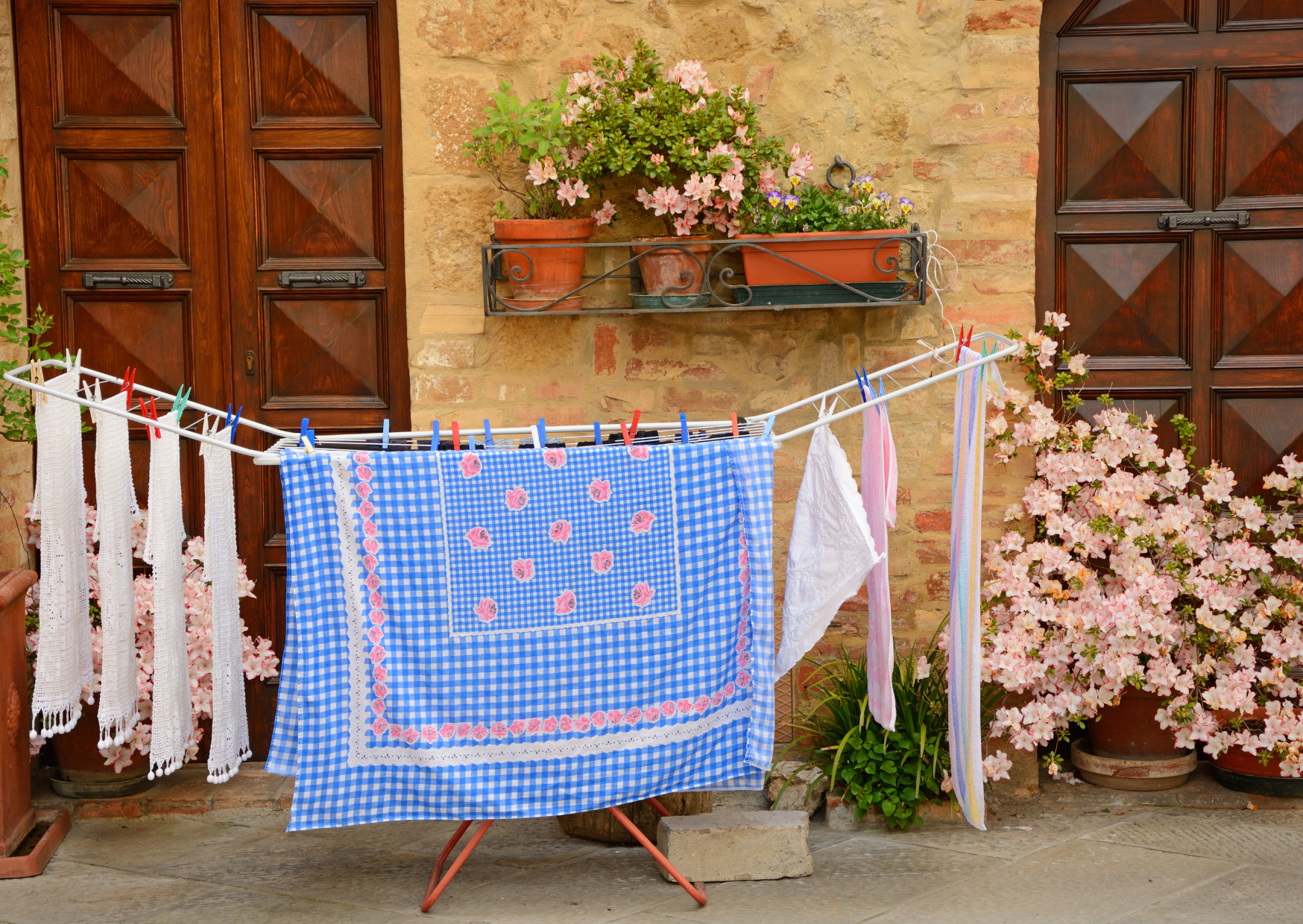
In the U.S., dryers are as standard as dishwashers or ovens. In Italy, they’re still the exception — not the rule.
In many apartments, especially older ones, there’s no dedicated laundry room. Washers are compact and live in the kitchen or bathroom. Dryers take up space Italians don’t want to lose. And they consume electricity at a rate that makes most people raise their eyebrows at the bill.
So instead of drying by machine, Italians use clotheslines, folding racks, railings, and balconies — and they’ve been doing so for generations.
Even when people can afford dryers, they rarely buy them. Why? Because they don’t need them — and they don’t trust them to improve life.
2. Winter Is Not an Excuse, It’s a Schedule Adjustment
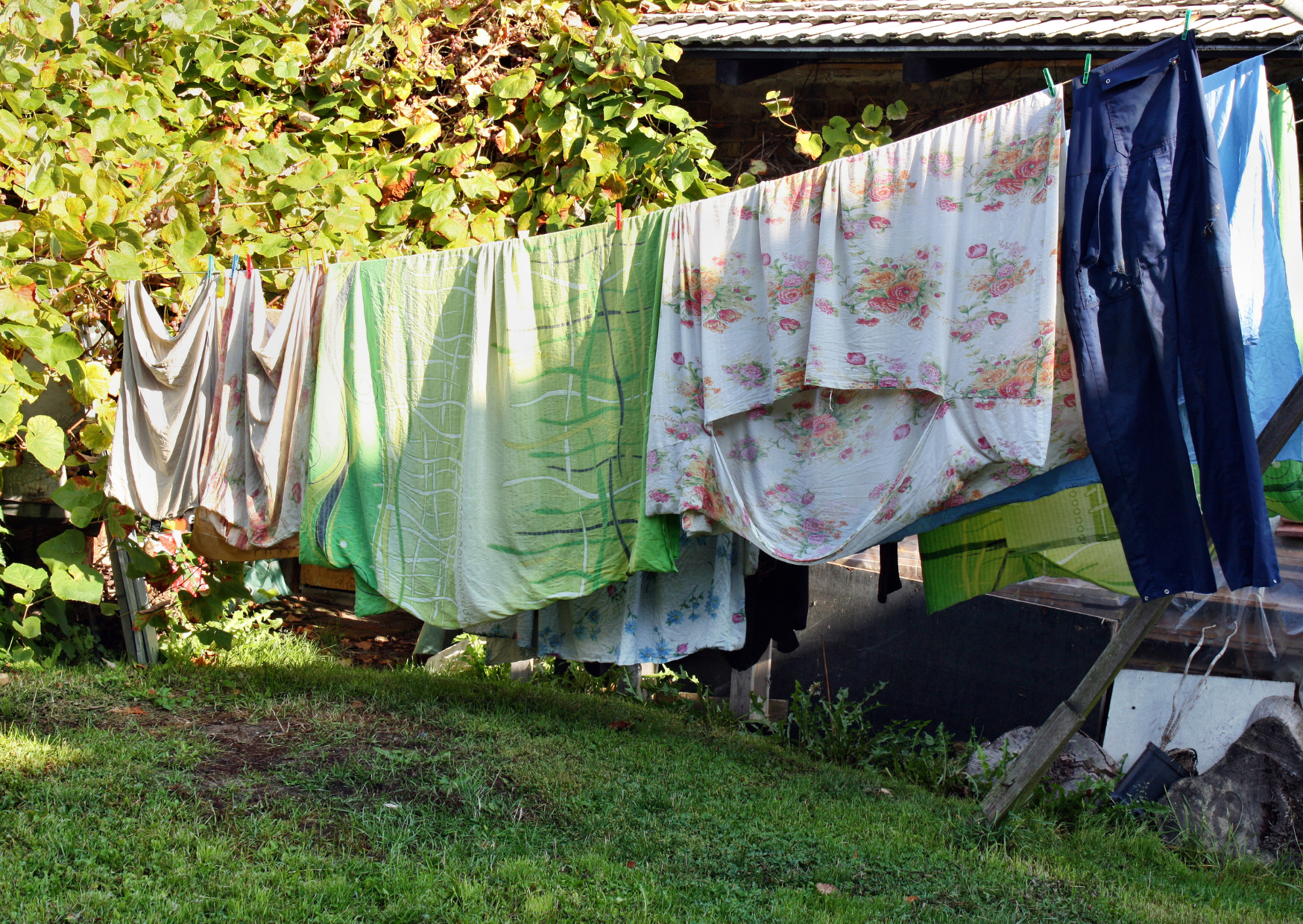
In the U.S., any drop in temperature is enough to move laundry indoors. Americans often avoid outdoor chores entirely in the cold.
In Italy, winter isn’t a reason to stop drying laundry outside. It’s just a reason to change your rhythm.
You do laundry early, so clothes have maximum daylight. You rotate items throughout the day. You flip shirts, move socks, chase a little sun.
Yes, it might take longer. Towels might feel stiff. Jeans might need a warm-up draped over a chair.
But the clothes get dry — eventually. And in the meantime, no one is anxious about speed.
3. Cold Air Is Considered Cleaner Than Dryer Air
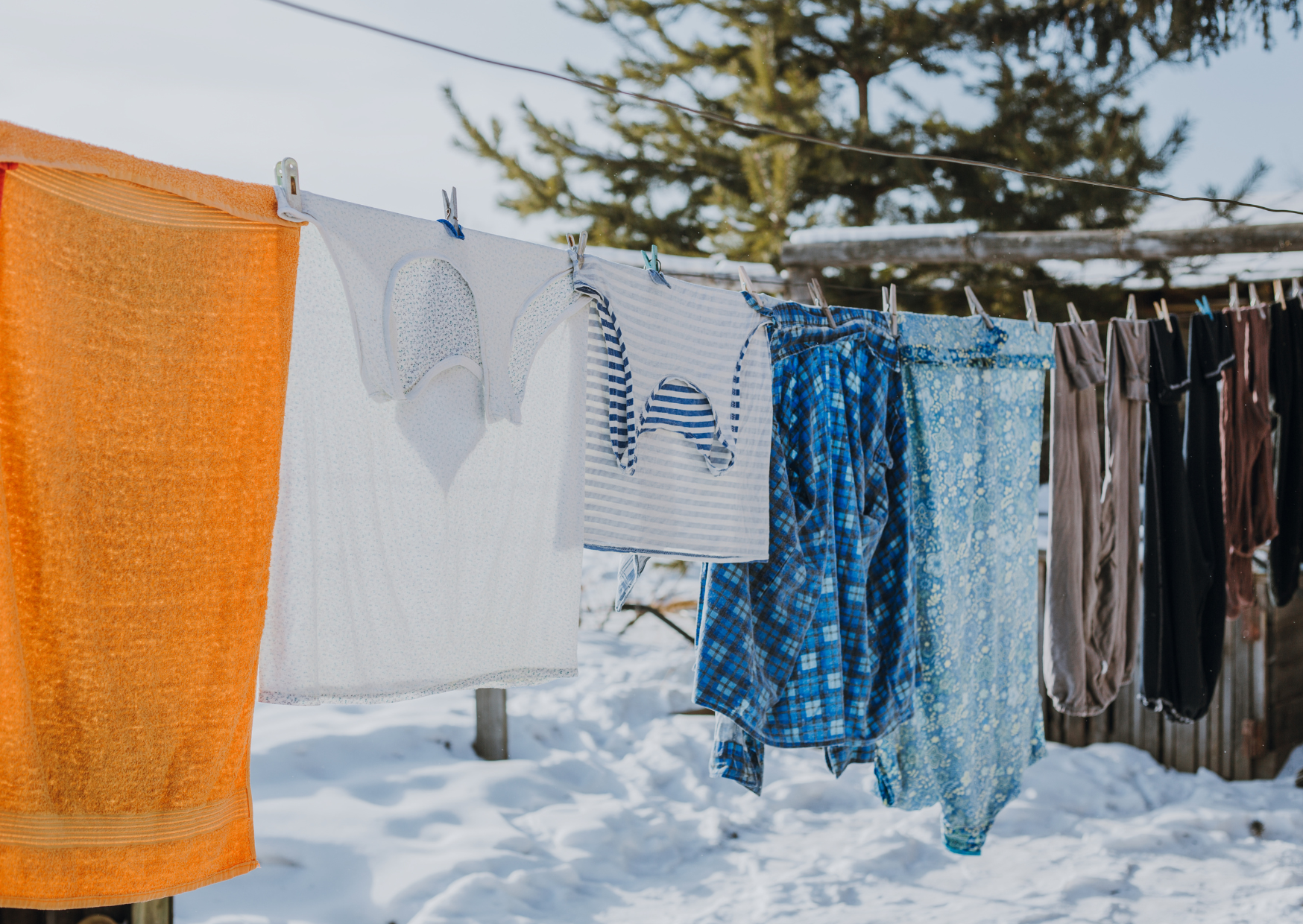
Many Italians believe that cold, fresh air — even foggy air — is healthier for drying clothes than heated indoor air or the filtered heat of a dryer.
There’s a deep belief, especially among older generations, that laundry dried outdoors smells better, feels better, and lasts longer.
Even in cold months, the breeze is valued. The smell of winter air — pure, slightly earthy — is considered far preferable to the artificial warmth of a machine.
To Americans, this feels like an unnecessary hardship. But to Italians, it’s an improvement in quality, not a downgrade.
4. Dryers Are Seen as Wasteful Not Helpful
In the U.S., dryers are associated with cleanliness, modernity, and time management. In Italy, they’re often viewed as unnecessary appliances that waste energy.
Electricity costs are high. Environmental awareness is widespread. And the cultural instinct leans toward using what nature provides — even if it takes a little longer.
Why pay to do something that the sun and air can do for free, even in winter?
To Americans, a dryer is part of “getting things done.”
To Italians, it’s a shortcut that isn’t worth the tradeoff.
5. Balconies Are Designed for This
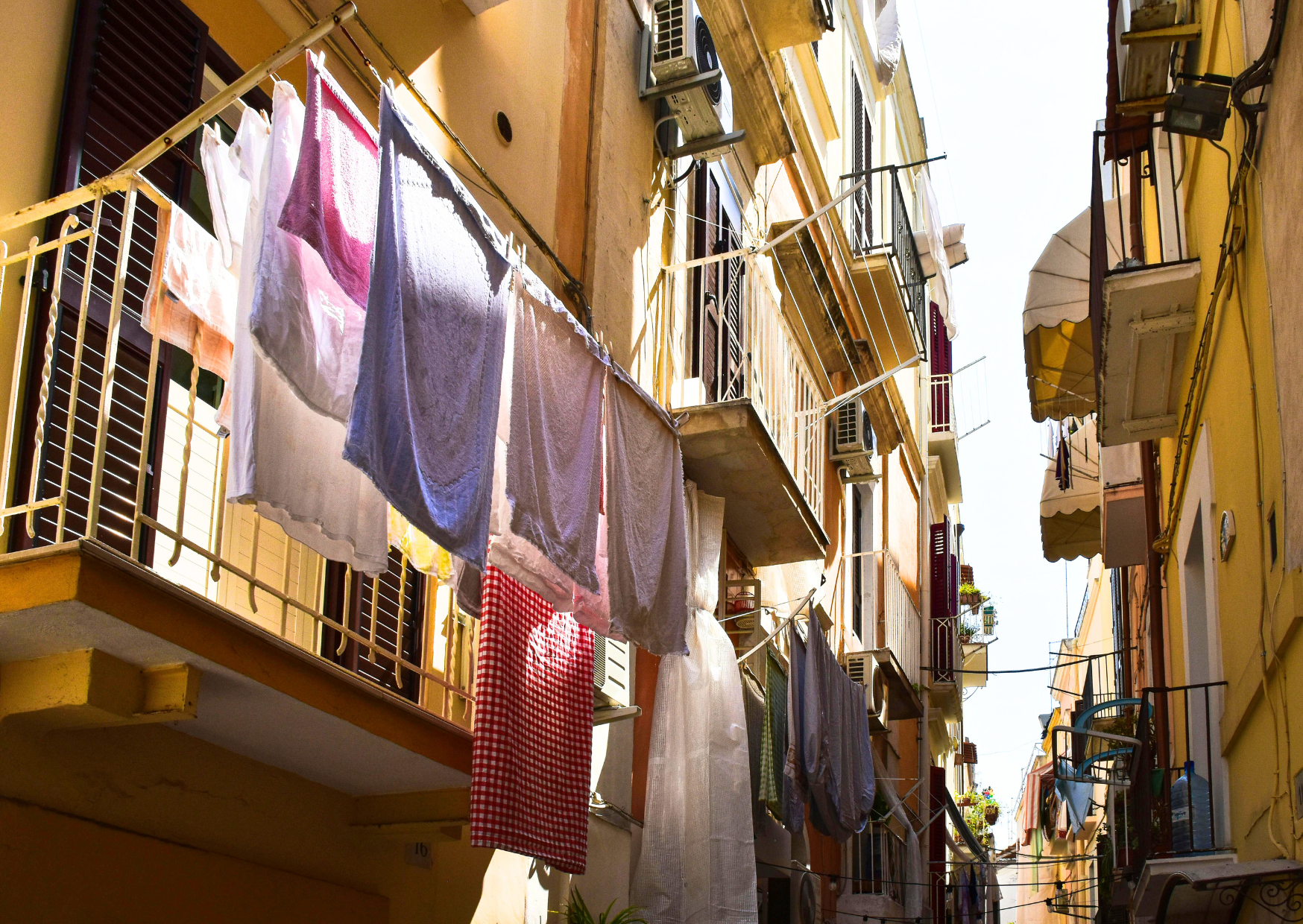
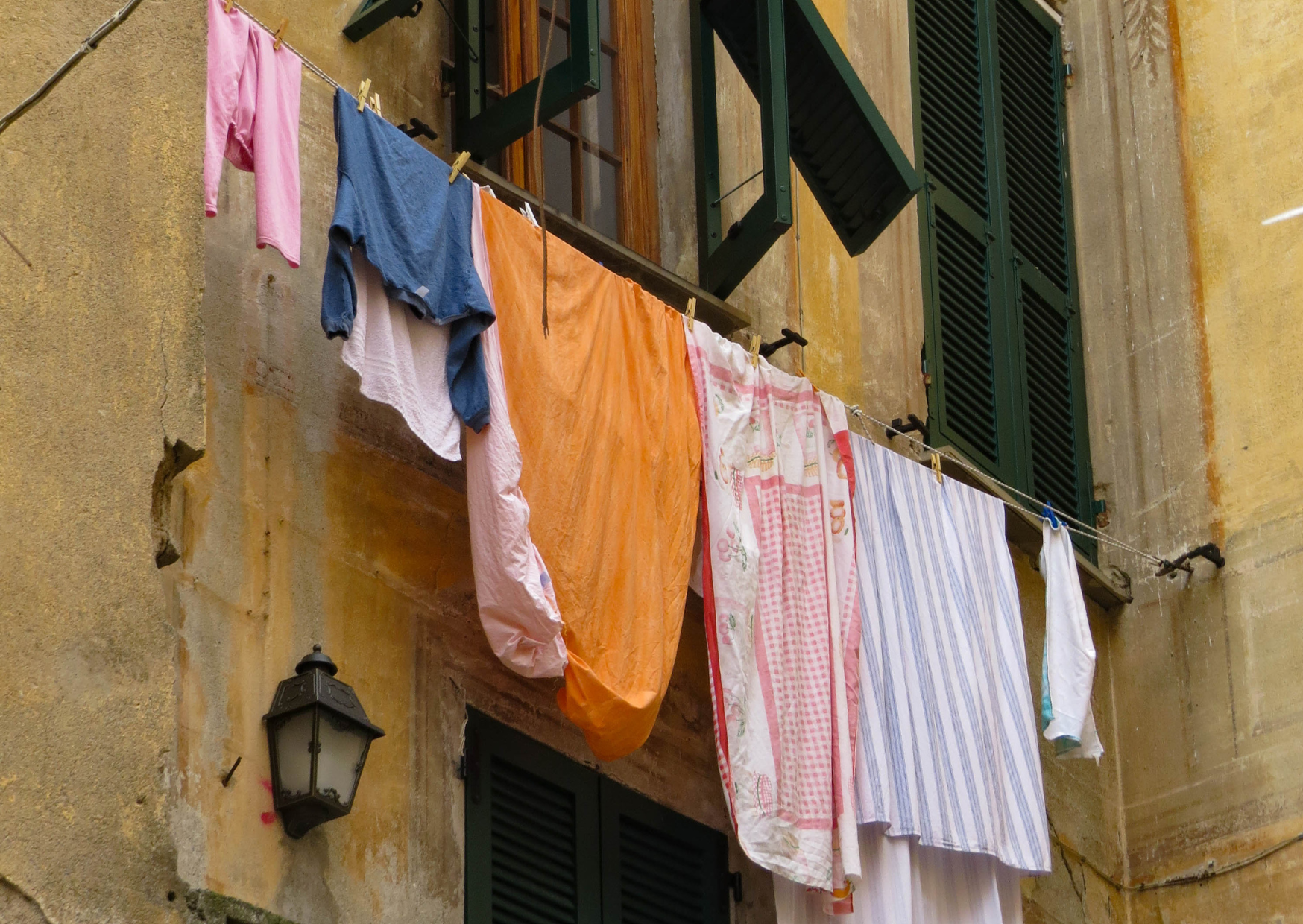
Italian cities, especially in the south, are built around balcony culture. These are not decorative features — they are functional parts of daily life.
Clotheslines are strung across streets. Pulleys are used to raise and lower baskets. Entire buildings coordinate drying habits based on sun angles and wind direction.
Even in January, balconies are in use — with sweaters clipped to hangers, sheets flapping gently, and shirts turned inside out to protect colors.
In the U.S., homeowners associations would issue citations. In Italy, it’s a symphony of shared habit.
6. Laundry Is Part of the Day Not a Chore to Escape
Americans often treat laundry as something to finish quickly. Get it out of the way. Check the box.
In Italy, laundry is woven into the rhythm of home life. You wash in the morning. You hang mid-morning. You rotate in the afternoon. You bring it in before dinner.
You might chat with a neighbor while flipping a towel. You might pause for espresso between clotheslines. It’s slow, yes — but embedded into something else: life itself.
There’s no pressure to finish. Just a quiet movement from one task to the next.
7. Weather Forecasts Are Just Part of the Game
Yes, sometimes it rains. Yes, clothes get damp again. Yes, a surprise wind might send socks flying.
But Italians don’t treat that as failure. They adjust. Clothes get brought back in. Hung indoors. Dried overnight near a radiator.
There’s no meltdown over “wasted time.”
There’s no sense that the weather has ruined the week.
Instead, there’s a calm trust that everything dries eventually. And if it takes a little longer in January, so be it.
8. Drying Racks Fill the Kitchen and No One Apologizes
In American homes, visible laundry is often treated like a sign of disorganization. A drying rack in the living room is something to hide when guests come over.
In Italy, drying racks are furniture. They are part of the room. They stand next to dinner tables, in front of windows, beside the bed.
No one makes excuses. Everyone understands.
If you visit someone and see a full rack of socks, towels, and underwear, you don’t comment. You just walk around it and keep talking.
9. Clothes Last Longer And That Matters
Italians tend to own fewer clothes, but they take better care of them.
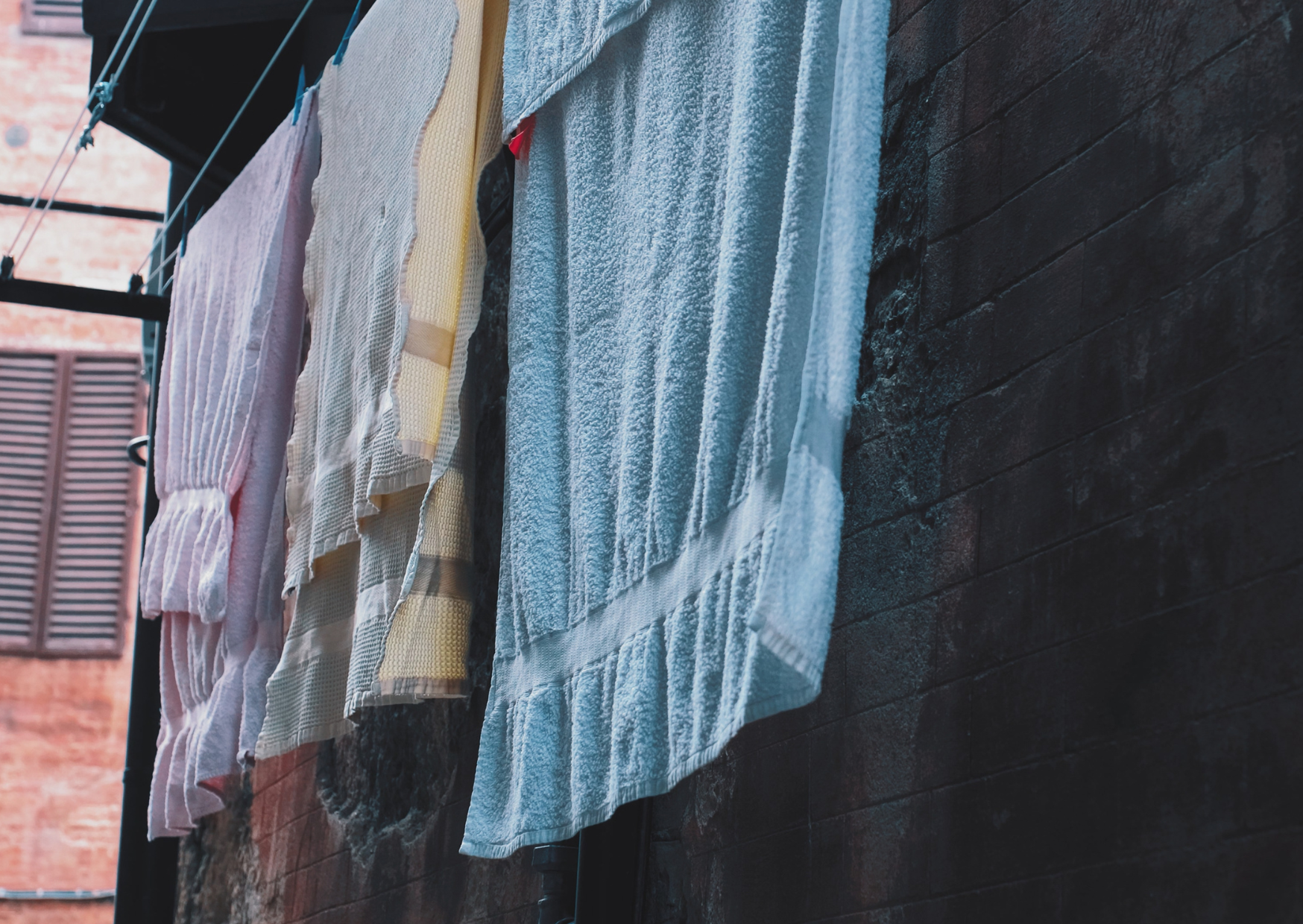
Air drying reduces shrinkage, preserves elasticity, protects colors, and extends the life of garments.
This is not just a side benefit — it’s part of the mindset. Why burn energy and shorten the life of your clothing for the sake of speed?
In Italy, clothing is seen as something to maintain, not churn through.
This stands in contrast to fast fashion cycles and the machine-reliant habits of American laundry culture.
One Line, Two Cultures
To Americans, hanging laundry outside in January seems inefficient. Cold. Even absurd.
To Italians, throwing everything into a dryer year-round seems impatient. Loud. And strangely disconnected from nature.
In the U.S., the goal is to finish.
In Italy, the goal is to live with the rhythm of the day, even if it means draping your jeans over the radiator for one more night.
So the next time you see bedsheets floating over a stone balcony in 4°C weather, or socks stiff with cold air drying in the wind, don’t pity the person who hung them.
They’re not behind. They’re not suffering.
They’re just living slowly, in a way that makes a little more sense than most people are willing to admit.

About the Author: Ruben, co-founder of Gamintraveler.com since 2014, is a seasoned traveler from Spain who has explored over 100 countries since 2009. Known for his extensive travel adventures across South America, Europe, the US, Australia, New Zealand, Asia, and Africa, Ruben combines his passion for adventurous yet sustainable living with his love for cycling, highlighted by his remarkable 5-month bicycle journey from Spain to Norway. He currently resides in Spain, where he continues sharing his travel experiences with his partner, Rachel, and their son, Han.