
And what it reveals about performance culture, emotional honesty, and why European service staff don’t trust constant friendliness
You’re sitting in a bistro in Bordeaux, smiling warmly at your server. You’re polite, cheerful, maybe even a little overly friendly — making eye contact, nodding, saying “bonjour” with enthusiasm. You tip your head when ordering. You beam a thank-you when the food arrives.
But something feels off.
Your server doesn’t return the smile. Not really. They acknowledge you, but with a neutral expression. They take your order without affirmation. They might seem brisk, even cold. You smile harder, trying to warm things up.
And still — nothing changes.
To an American, this can feel like a social failure. But to many European waiters, especially in France, Germany, Italy, or the Netherlands, your eager friendliness reads less as kindness and more as a strange cultural mask.
Here’s why the American habit of constant smiling confuses, irritates, or even distances European waitstaff — and what it says about how emotional expression is read across cultures.
Want More Deep Dives into Everyday European Culture?
– Why Europeans Walk Everywhere (And Americans Should Too)
– How Europeans Actually Afford Living in Cities Without Six-Figure Salaries
– 9 ‘Luxury’ Items in America That Europeans Consider Basic Necessities
1. Americans Smile to Smooth Social Transactions

In the United States, smiling is a default social behavior. People smile to put others at ease, to show cooperation, to signal friendliness even before anything is said.
It’s a kind of social grease — smoothing out moments that might otherwise feel stiff or uncertain.
In service situations, this habit intensifies. Diners smile to acknowledge service, avoid awkwardness, and express appreciation. It’s not fake — but it’s often reflexive, regardless of how they actually feel.
2. Europeans Reserve Smiles for Sincerity

In many European countries, smiling is not a default — it’s a choice based on actual feeling.
If you’re amused, you smile. If something is charming, or warm, or moving, you smile. But you don’t smile just to fill silence or lubricate a transaction.
To European waiters, the American smile can feel overused — an emotional gesture with no clear meaning. When it happens constantly, it’s hard to tell if it’s genuine, manipulative, or simply performative.
That uncertainty breeds distance, not connection.
3. Emotional Neutrality Is a Sign of Professionalism
In the U.S., service staff are expected to smile. Enthusiasm is part of the job. A warm tone and a visible expression are seen as signs of good service.
In Europe, particularly in France or Germany, good service is defined by competence and timing, not by friendliness.
A neutral expression doesn’t mean the server dislikes you. It means they’re focusing on the task. They believe professionalism is quiet.
Smiling constantly would feel unnatural — even suspicious. Not because emotion is wrong, but because it’s meant to be proportional and situational.
4. American Cheerfulness Can Feel Superficial

When Americans arrive at a European restaurant with a wide smile, excited tone, and over-eager “Bonjour!” — it’s not always charming. To some waiters, it feels forced.
Not because joy is unwelcome. But because European emotional culture values authenticity over presentation.
A person who smiles all the time, regardless of tone or context, is harder to read. Are they trying to flatter? Are they insecure? Are they masking discomfort?
The result is confusion, not connection.
5. In Europe, Waiters Aren’t Trying to Win You Over
American service workers are trained to please. Their pay often depends on tips. Their performance is part of the guest’s experience.
In Europe, wages are stable, and service is viewed as a respected profession. The goal is to serve the table efficiently, not to create an emotional performance.
So when a waiter doesn’t return your smile, it’s not a snub. It’s a signal that their role is clear, bounded, and professional.
They don’t need to perform friendliness to prove competence.
6. Americans Often Mistake Neutrality for Coldness

If a French server doesn’t smile back, American tourists often feel slighted. They assume they’ve done something wrong. They may try to fix it with more smiling, more jokes, or more English.
But the issue isn’t offense — it’s misalignment of tone.
You’re smiling as a gesture of goodwill. They’re staying neutral to preserve clarity. You see distance where they see normalcy.
And the more you try to “fix” it, the more awkward it can feel — for both of you.
7. Smiling at Strangers Is Culturally Loaded
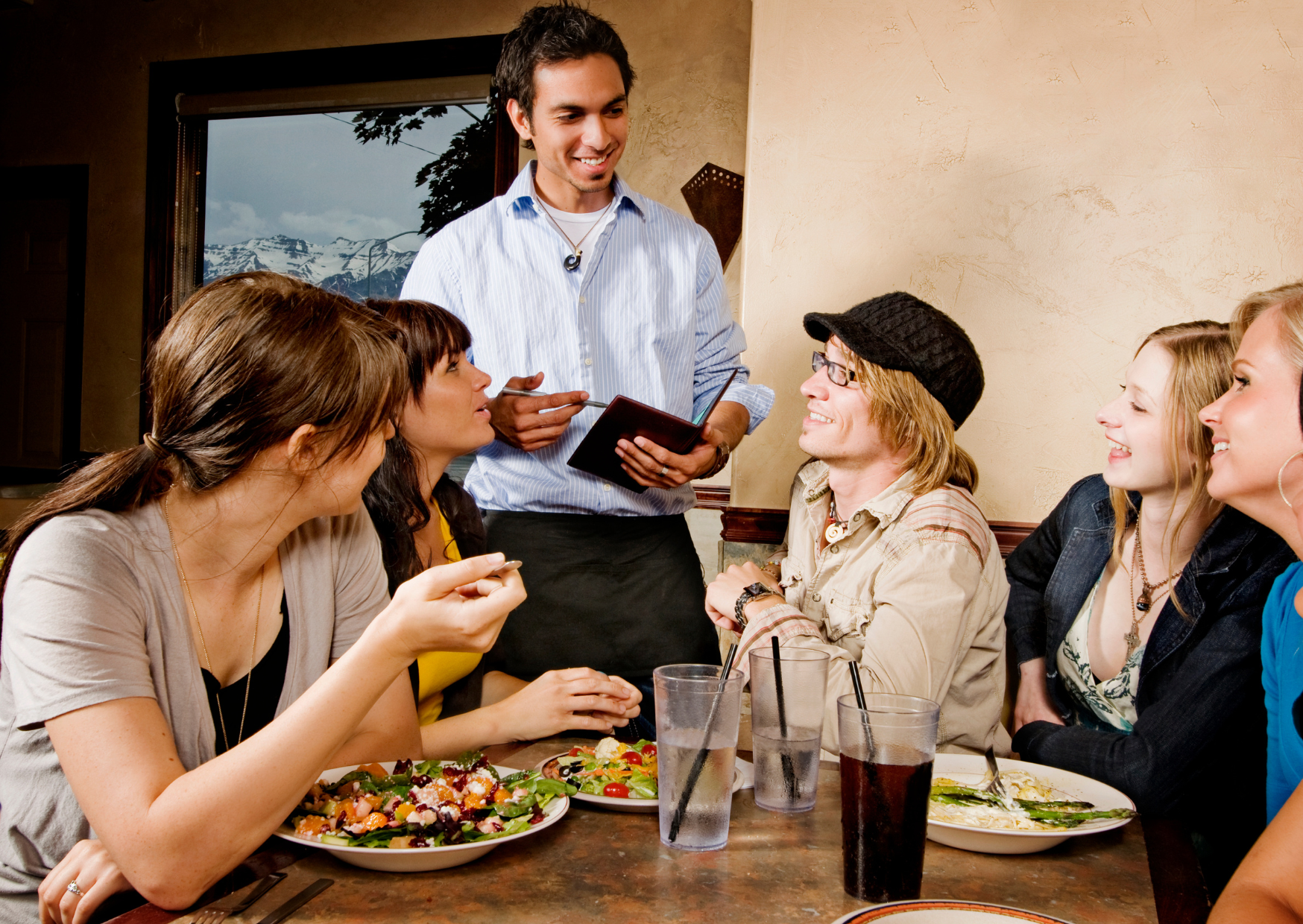
In many parts of Europe, people do not smile at strangers on the street. Smiling without a reason — especially at someone you don’t know — can be seen as naïve, flirtatious, or simply odd.
This carries into restaurants.
If you smile too much, especially at a young waiter or waitress, your warmth might be read as interest, not politeness. Or it might signal a lack of understanding of local decorum.
Either way, your intention can be misinterpreted, even if it’s completely innocent.
8. The Smile Gap Can Affect Service Quality
In some tourist-heavy areas, servers are used to American behavior — and adjust accordingly.
But in more local spots, your constant smiling might cause servers to treat you cautiously. Not unkindly, but with a certain distance.
They’re unsure how to interpret your tone. They don’t want to offend, but they also don’t want to mirror what they see as performance.
The result? Polite, efficient, emotionally flat service — which Americans often read as cold.
9. Americans Sometimes Smile Through Discomfort
A key difference lies in what the smile is covering.
In the U.S., people often smile when they’re anxious, uncertain, or uncomfortable. It’s a softening move. It says, “I’m no threat. Let’s keep this light.”
In Europe, this can be disorienting. If you’re smiling while something is going wrong — a wrong order, a long wait, a mistake — your waiter may assume everything’s fine.
Later, when you leave a negative review or make a complaint, they’re blindsided. You smiled. You didn’t say anything.
Because in their world, smiling implies satisfaction.
10. Not All Smiles Are Equal in Europe

This doesn’t mean Europeans never smile. But the type and timing of the smile carry different meanings.
- A smile after a good meal = genuine pleasure
- A smile with eye contact = acknowledgment
- A smile during banter = warmth
But a smile that never fades? That shows up at the beginning and stays regardless of tone? That’s not common — and it often feels insincere.
To connect across cultures, the smile needs context, not constancy.
11. European Servers Look for Verbal Signals Instead
If you want to express warmth in a French or Italian restaurant, don’t just smile.
Speak. Say “merci beaucoup.” Compliment the food. Ask a question about the wine. Engage, but don’t perform.
These verbal gestures are received more clearly. They show appreciation without confusing the emotional register.
Smiling is welcome — when it’s specific, sincere, and earned.
12. American Tourists Often Leave Feeling Unseen

After a meal in Paris or Milan, many American travelers leave feeling like they never quite “clicked” with the staff.
They smiled. They were polite. But they never felt the warmth they’re used to at home.
This isn’t rejection. It’s cultural mismatch.
The server wasn’t rude. They were respectful. You weren’t ignored. You were simply served — efficiently, neutrally, and with the assumption that a smile isn’t required to mean things went well.
When a Smile Isn’t Returned, It Doesn’t Mean It Was Wasted
In Europe, the absence of a smile isn’t a sign of coldness. It’s a sign that you’re not being emotionally managed.
Your waiter isn’t trying to charm you. They’re trying to serve you. And their neutrality is not hostility — it’s space for sincerity.
So smile if you feel good. But don’t expect it to be mirrored every time. In many European countries, the most respectful thing a server can do is take your order, bring your meal, and treat you without expectation.
Because here, warmth comes in pauses, glances, and the meal itself — not always in a smile.

About the Author: Ruben, co-founder of Gamintraveler.com since 2014, is a seasoned traveler from Spain who has explored over 100 countries since 2009. Known for his extensive travel adventures across South America, Europe, the US, Australia, New Zealand, Asia, and Africa, Ruben combines his passion for adventurous yet sustainable living with his love for cycling, highlighted by his remarkable 5-month bicycle journey from Spain to Norway. He currently resides in Spain, where he continues sharing his travel experiences with his partner, Rachel, and their son, Han.