
And what it reveals about status, subtlety, and the quiet choreography of being a guest in France
American hospitality is often bold, warm, and casual. The moment a guest walks in, they’re offered a drink, a plate of food, a seat at the center of the action. “Make yourself at home” is said within minutes. Shoes may or may not be removed. Guests are encouraged to open the fridge, serve themselves, join the chaos. It’s relaxed. It’s friendly. It’s about making people feel included.
But walk into a French home — especially one outside Paris, or in a smaller town — and that exact same behavior might earn you a silent glance, a polite smile, and later, a whispered judgment.
Because in France, being a good host is not about generosity at all costs. And being a good guest means knowing when to accept — and when to stay back.
The hosting habit Americans are famous for — treating guests like family right away, and encouraging total informality — is, to many French people, a subtle form of rudeness. Not because they dislike generosity, but because they value boundaries, grace, and the delicate dance of social space.
Here’s why American-style “help yourself” hospitality quietly offends French sensibilities — and what it reveals about two very different ideas of what it means to be welcomed.
Want More Deep Dives into Everyday European Culture?
– Why Europeans Walk Everywhere (And Americans Should Too)
– How Europeans Actually Afford Living in Cities Without Six-Figure Salaries
– 9 ‘Luxury’ Items in America That Europeans Consider Basic Necessities
1. “Make Yourself at Home” Feels Like a Disguised Abdication

In the U.S., telling a guest to “make yourself at home” is a sign of warmth. It’s meant to remove pressure. Grab a drink. Put your feet up. Use the bathroom without asking.
In France, that phrase — or its equivalent — is rarely used. Because home is a curated space, and guests are not meant to take it over.
When an American host encourages guests to rummage through cabinets, pour their own wine, or “grab whatever,” it can come across as an abandonment of hosting duties.
To a French person, offering a drink means serving it yourself, with care. A guest should never need to ask twice — but they also shouldn’t be expected to behave like a roommate.
2. Guests Are Guided, Not Left to Navigate Alone
French hosting is intentional. A good host controls the rhythm of the evening. You are seated deliberately. Drinks are poured in a certain order. Food is served by the host, not family-style. Courses arrive with precision, even in casual settings.
In contrast, American hosting often emphasizes looseness. People eat buffet-style. Plates are passed. Guests may be told, “Go ahead, serve yourself!”
To the French, this feels chaotic and impersonal. It suggests the host hasn’t taken the time to consider the guest’s experience — or worse, that they’re being left to manage themselves in someone else’s home.
3. Offering Too Much, Too Fast Can Feel Like Pressure
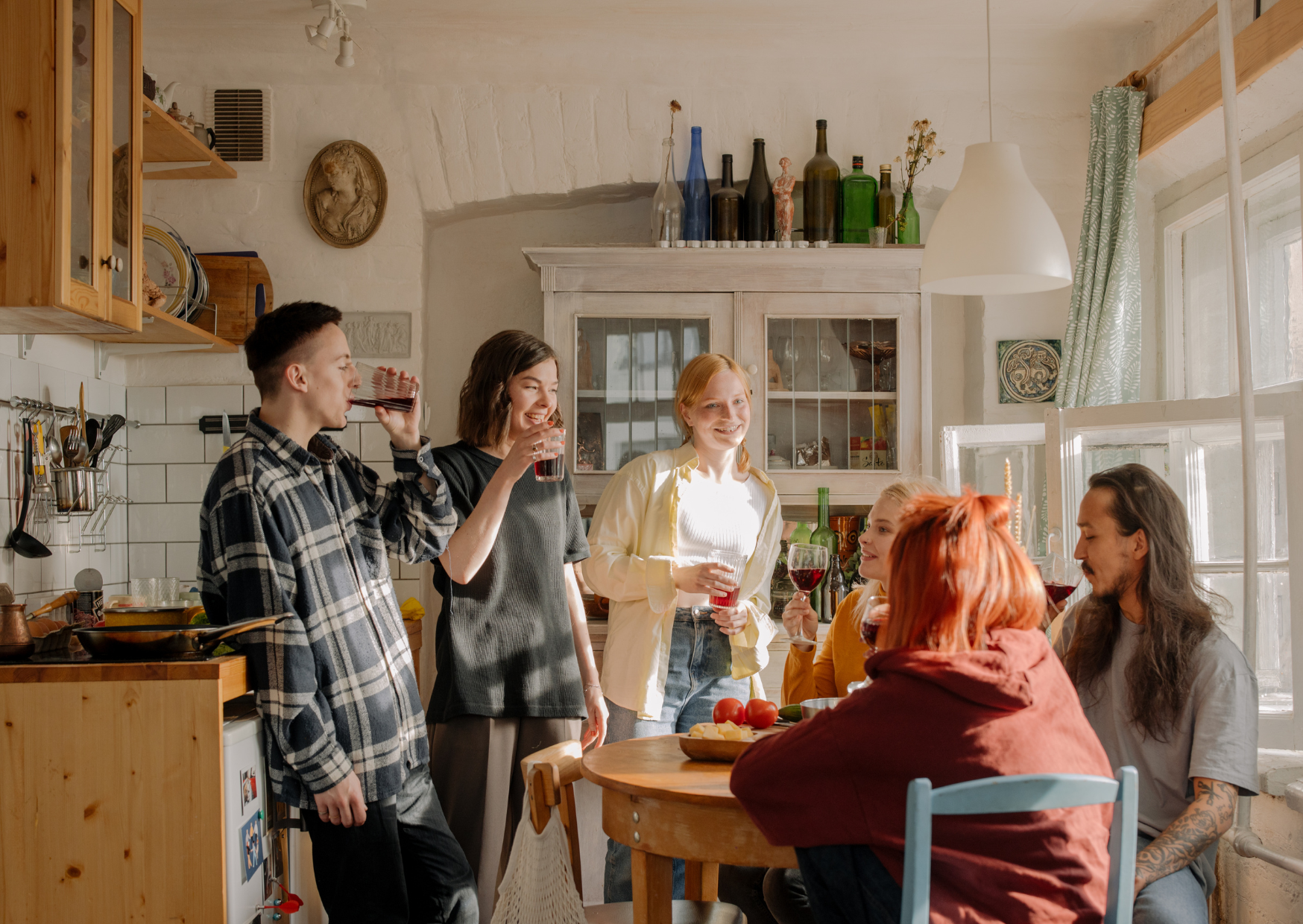
American hosts often ask repeatedly: “Can I get you anything?” “Are you sure?” “More wine?” “Another helping?” The intention is kind. But in France, this level of insistence can feel overwhelming — or even manipulative.
To the French, restraint is respectful. A well-offered tray, once. A single clear offer of wine. And then… silence.
They trust the guest to ask if they want more. There’s no need to push.
Overoffering feels like emotional labor disguised as kindness. And it can turn a calm dinner into a subtle test of etiquette that the French prefer to avoid entirely.
4. Familiarity Too Soon Feels Like Disrespect
In American homes, it’s not uncommon for a guest to be invited over once and instantly treated like family.
In France, familiarity takes time. Even among close acquaintances, there’s a slow buildup. You may be welcomed warmly, but the host maintains a small layer of formality.
That means: no wandering through the house. No looking through bookshelves unless invited. No throwing your bag down just anywhere.
It’s not coldness. It’s respect for the structure of the host’s space.
5. You Don’t Touch the Kitchen Unless You’re Invited

One of the quickest ways to make a French host uncomfortable is to start “helping” in the kitchen without being asked.
In American homes, especially during family-style dinners or parties, it’s often encouraged. “Can you grab the salad?” “Stir this while I get the bread.”
In France, the kitchen is private territory. The host is in control. If they ask for help, it’s offered precisely. But to jump in, start touching pans, or rearranging ingredients is a subtle violation.
Even offering to help too forcefully — “Are you sure I can’t do something?” — can be interpreted as implying they’re not managing well.
6. Oversharing or Performing Can Disrupt the Atmosphere
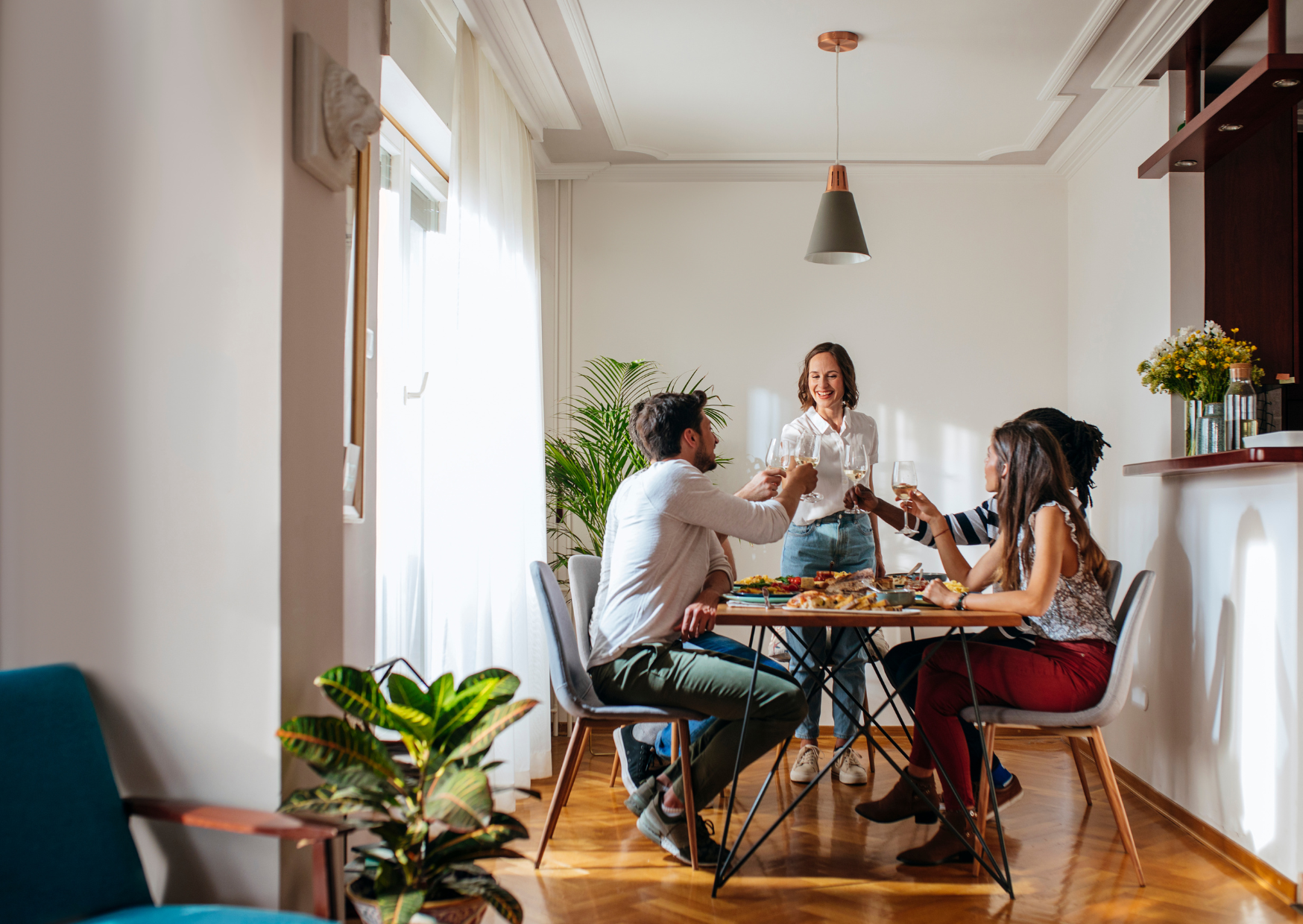
American gatherings often include spontaneous stories, jokes, even toasts from guests. The energy is expressive.
In France, mealtime conversation is lively — but not theatrical.
A guest who dominates the table, tells a long story, or makes a dramatic comment might unknowingly disrupt the social rhythm.
The French table is about balance, turn-taking, and tone. A host doesn’t want to “lose control” of the mood — and a guest isn’t expected to contribute by performing.
Being too loud, too quick to laugh, or too eager to share personal details can shift from charming to awkward very fast.
7. Children Are Not Expected to Be the Center of Attention
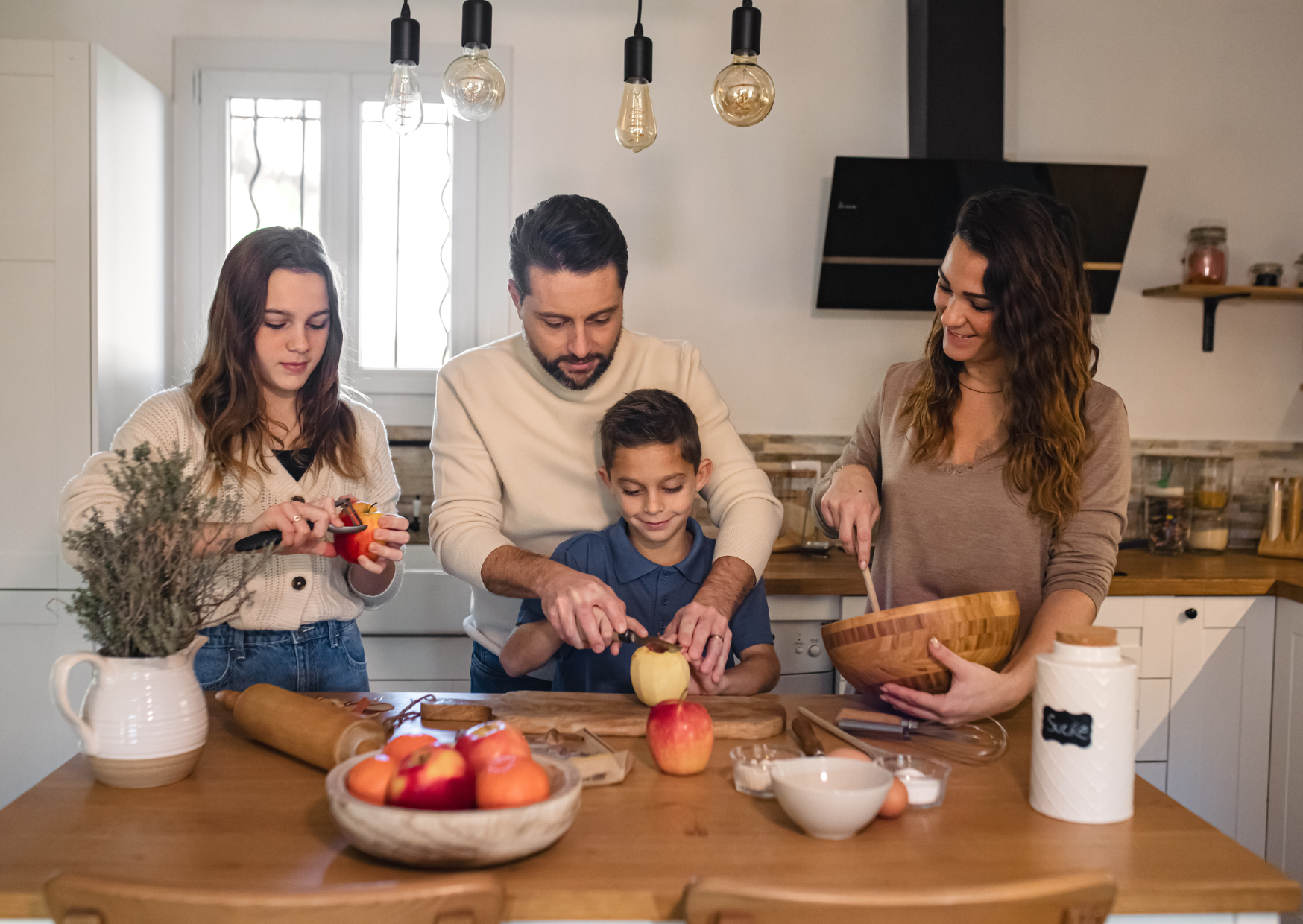
In American homes, when a guest brings a child, the host often pivots to accommodate them. They’re given space, toys, extra servings, attention.
In France, children are welcome — but they are expected to behave like junior adults.
They sit at the table. They greet the host. They don’t interrupt.
And they aren’t the focus of the gathering. The host doesn’t drop everything to entertain them. Guests don’t praise them loudly or ask too many questions.
This isn’t unkind. It’s about maintaining the adult space, where everyone — including the child — knows how to belong without taking over.
8. Hosting Is Performance — But It’s Never About Showing Off
French hosts take pride in hosting well — but subtly. The food might be homemade and elegant. The setting might be lit with candles and perfectly portioned wine glasses. But it’s not meant to dazzle.
In contrast, American hosts sometimes aim to impress. Elaborate recipes. Decorated tables. Playlists. The phrase “I want it to be special for you” is common.
To French hosts, this can feel too much like a production — and not enough like a conversation.
If the host is trying too hard to impress, they may appear insecure or insincere. In France, the best hosting is understated confidence — effort without performance.
9. The Best Guests Are the Ones Who Observe, Not Assert

In American culture, guests are encouraged to feel entitled to comfort. You’re supposed to feel at ease. You’re told to ask for what you want.
In France, being a guest means being observant. You read the room. You adjust. You follow cues.
You don’t grab a second helping until others do. You don’t refill your own glass unless the host gestures. You wait for coffee — and you don’t ask for substitutions.
This isn’t about elitism. It’s about the choreography of shared space.
The French guest participates in the experience — but never tries to take charge of it.
One Table, Two Worlds
To Americans, being a good host means breaking the rules. Making things easy. Letting the guest take the lead.
To the French, being a good host means orchestrating every detail — and trusting the guest to follow.
To Americans, warmth is shown by sharing everything, fast.
To the French, warmth is shown by making someone feel quietly respected.
And to be respected in France, you don’t need to serve yourself.
You need to trust that the host already thought about you — and will take care of it before you ever ask.

About the Author: Ruben, co-founder of Gamintraveler.com since 2014, is a seasoned traveler from Spain who has explored over 100 countries since 2009. Known for his extensive travel adventures across South America, Europe, the US, Australia, New Zealand, Asia, and Africa, Ruben combines his passion for adventurous yet sustainable living with his love for cycling, highlighted by his remarkable 5-month bicycle journey from Spain to Norway. He currently resides in Spain, where he continues sharing his travel experiences with his partner, Rachel, and their son, Han.