
And what it reveals about scent, self-perception, and the quiet rebellion against over-sanitized living
Ask an American what’s non-negotiable in their morning routine, and you’ll get a confident answer: deodorant. It’s right there with toothpaste and clean underwear. People carry it in gym bags. They keep a backup stick at work. They apply it before hot yoga, casual dinners, and even short walks.
In many parts of the U.S., not wearing deodorant — or worse, being caught smelling like you didn’t — is treated as an offense to public decency. It’s tied to respect, hygiene, and personal image. And anything less than artificial freshness is met with alarm.
But spend enough time in Europe — especially long enough to step outside the tourist zones — and you’ll discover something American travelers rarely expect.
Europeans don’t always wear deodorant.
Sometimes they skip it for days.
Sometimes they wear versions that don’t block sweat at all.
And often, they don’t mention it — because they don’t think it’s a big deal.
Here’s the deodorant secret Europeans rarely discuss openly — and why Americans often misunderstand what’s actually going on behind that seemingly effortless air of cool.
Want More Deep Dives into Everyday European Culture?
– Why Europeans Walk Everywhere (And Americans Should Too)
– How Europeans Actually Afford Living in Cities Without Six-Figure Salaries
– 9 ‘Luxury’ Items in America That Europeans Consider Basic Necessities
1. Not Everyone Wears It Daily — And That’s Not a Scandal
In the U.S., deodorant is a default. You wear it every day — sometimes more than once — even if you’re staying home.
In Europe, daily application is optional. Some people skip it altogether. Others use it only when they expect to sweat more than usual.
Many Europeans are taught to listen to their body — not follow a hygiene schedule out of fear. If you’re not sweating, and your shirt smells fine, why apply something?
This doesn’t mean they’re dirty. It means they aren’t raised to believe that odorless is the only acceptable state of being.
2. Antiperspirant Is Rare — And Often Disliked

Most American deodorants are also antiperspirants. That means they contain aluminum salts that physically block sweat glands. The goal is to stop perspiration entirely.
In Europe, that kind of product is less popular. Many people use deodorants that only mask or neutralize odor, not prevent sweating.
Why? Because sweating isn’t seen as something to fight. It’s a normal bodily function — not a flaw. Blocking it with chemicals feels unnecessary, even unhealthy.
For many Europeans, using a mild deodorant — or skipping it — is about letting the body function naturally.
3. Natural Products Actually Get Used (Not Just Talked About)
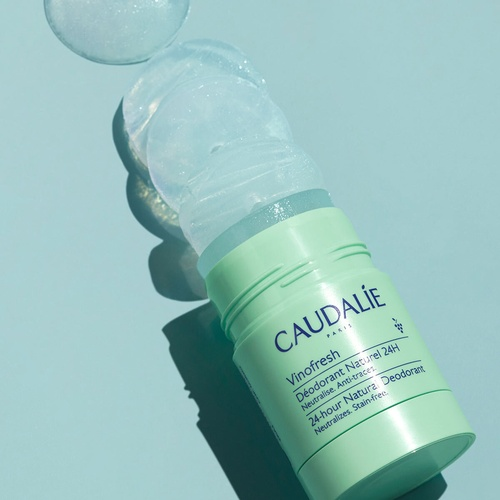
In the U.S., natural deodorants are often purchased and then quietly abandoned. They’re seen as noble ideas — until they fail under real pressure.
In Europe, natural deodorants are widely used and respected, especially among younger people and in Southern countries with stronger eco-culture. Crystal sticks, aluminum-free roll-ons, and herbal solutions are common.
These products don’t stop sweat. And they don’t promise to. They simply reduce odor — softly.
That’s not considered a weakness. That’s intentional restraint.
4. Smelling a Little Human Isn’t Considered Offensive

American hygiene culture is built around elimination. You eliminate germs. You eliminate scent. You eliminate even the idea that your body does things you can’t control.
In Europe, bodies are allowed to be bodies.
That means you may catch the scent of a person’s skin, a faint trace of yesterday’s perfume, or yes — a little sweat after a metro ride.
And no one panics. No one pulls away in horror. People may notice — but they rarely judge.
It’s a cultural baseline of acceptance, not performance.
5. Reapplying Midday? Rarely Happens

In the U.S., many people carry deodorant in their bags. They reapply in the afternoon. Some even keep extras in cars or offices — just in case.
In Europe, this kind of constant vigilance is uncommon.
You put it on in the morning — if you’re going to. Then you live your life. If you sweat, you sweat. If you smell later, you shower that night. You don’t interrupt your day because you aren’t “fresh enough.”
The body isn’t a machine to keep resetting. It’s meant to change through the day.
6. Social Spaces Aren’t Built Around “Scent Control”

Many American social norms revolve around minimizing scent. Offices are air-conditioned. Gyms have fans. Classrooms prohibit perfume. Public places are cooled and controlled.
In Europe, public life happens closer, warmer, and more naturally.
People sit closer. Air conditioning is rare. You may walk into a café and smell coffee, people, old wood, and perfume — all at once.
In that environment, a trace of body scent doesn’t feel out of place. It feels human.
7. Children Aren’t Rushed Into Deodorant Use
In the U.S., preteens are often handed deodorant with early puberty — or before. Parents may begin instructing 9- and 10-year-olds to start managing body odor aggressively, out of fear they’ll be teased.
In Europe, that timeline is gentler. Parents wait until their kids need it. Sometimes they wait until teens ask for it. The pressure to control scent at the first sign of sweat simply isn’t there.
That slower rollout creates less anxiety. Kids grow into awareness of their body — not fear of it.
8. Scent Is Part of Identity — Not a Threat to It

In American culture, strong scents are often seen as unprofessional. The goal is to smell like nothing, or like carefully curated cleanliness.
In Europe, people use scent intentionally, but casually. A trace of sweat after walking to work isn’t alarming. A little skin scent at the end of the day isn’t scandalous.
You can smell like your body and still be attractive, respectable, and presentable.
Scent is part of the person, not a failure to manage oneself.
9. The Nose Is Trained to Tolerate — Not Panic
In the U.S., the moment someone smells something “off,” alarms go off. Deodorant ads reinforce this — if you smell, you’ve failed. If someone else smells, you’re a victim.
In Europe, people are trained to notice without dramatizing.
That means your coworker might notice your shirt’s a bit stale, but they won’t react. You might catch a whiff of someone’s natural odor, but you’ll survive. You might even keep talking to them without backing away.
It’s not indifference. It’s emotional resilience around the body.
One Armpit, Two Realities
To Americans, the idea of not wearing deodorant daily is shocking. Offensive. Even disrespectful.
To Europeans, it’s just personal — like choosing your breakfast or your socks.
In the U.S., deodorant is armor.
In Europe, it’s a tool — optional, flexible, and situation-based.
And the result? A culture where people smell like people. Sometimes fresh. Sometimes warm. Always real.
So the next time you’re on a crowded European train and someone near you smells faintly human, don’t assume they forgot something.
They may simply be doing it differently than you — on purpose.

About the Author: Ruben, co-founder of Gamintraveler.com since 2014, is a seasoned traveler from Spain who has explored over 100 countries since 2009. Known for his extensive travel adventures across South America, Europe, the US, Australia, New Zealand, Asia, and Africa, Ruben combines his passion for adventurous yet sustainable living with his love for cycling, highlighted by his remarkable 5-month bicycle journey from Spain to Norway. He currently resides in Spain, where he continues sharing his travel experiences with his partner, Rachel, and their son, Han.