
And why they reflect a different definition of wealth, risk, and responsibility
Ask an American what it means to be “financially responsible,” and you’ll often hear the same checklist: budget tightly, invest early, avoid debt, build credit, save for retirement. It’s about optimizing your future.
Now ask a Mediterranean.
You won’t get a checklist.
You might get a shrug, a joke about surviving on olive oil and bread, or a passionate monologue about helping your cousin open a bar.
Because in much of southern Europe — Italy, Spain, Greece, and parts of southern France — financial habits are deeply shaped by culture, history, and social priorities. It’s not that Mediterranean people are less responsible with money. It’s that they define responsibility differently.
Here are nine financial habits common across Mediterranean countries that regularly confuse, shock, or frustrate American observers — and what they reveal about two very different financial mindsets.
Want More Deep Dives into Everyday European Culture?
– Why Europeans Walk Everywhere (And Americans Should Too)
– How Europeans Actually Afford Living in Cities Without Six-Figure Salaries
– 9 ‘Luxury’ Items in America That Europeans Consider Basic Necessities
1. They Prioritize Family Over Financial Independence

In the U.S., adulthood is often defined by one major milestone: financial independence.
Living on your own
Paying your own bills
Managing your own debt
But in the Mediterranean, the line between personal finances and family finances is blurry — and often intentionally so.
Adult children may live at home well into their 30s.
Parents may co-sign loans, help with housing, or cover grandkids’ schooling.
Siblings may “loan” each other money with no timeline for repayment — and no expectation of interest.
To an American, this can feel like boundary-crossing or financial codependence.
To a Mediterranean family, it’s normal. Supporting each other is how you build stability.
2. They Spend Generously on Food, Even When Money’s Tight

Mediterranean families will cut corners on many things — new clothes, tech upgrades, even home repairs. But ask them to reduce the grocery budget, and you’ll hit a cultural wall.
Food is never just an expense. It’s an expression of care, tradition, and identity.
People buy fresh produce daily.
They visit the butcher, the baker, the cheesemonger.
They cook for guests like they’re feeding a royal court.
To an American raised on coupon clipping and bulk purchases, this can seem extravagant or impractical. But for Mediterranean families, a meal isn’t where you economize — it’s where you invest.
3. They Don’t Trust Credit Cards (And Often Avoid Them Entirely)
In the U.S., using credit responsibly is how you build your score. But in Mediterranean countries, many people treat credit cards with deep suspicion.
They prefer to use debit cards or cash.
They may have one credit card for emergencies — but rarely for daily use.
They don’t track points, play the rewards game, or “float” expenses.
Why? Because in much of southern Europe, debt carries serious social stigma. It’s not about leverage — it’s about honor. If you owe money, you’re not free.
To Americans, who often view credit as a tool, this can feel like missed opportunity.
To Mediterraneans, it’s common sense.
4. They Often Don’t Move Out at 18 — or 28

In many Mediterranean countries, leaving home at 18 is not a rite of passage.
It’s a financial and cultural decision — one that happens later, more gradually, or sometimes not at all.
People stay with family through university.
They move back in after breakups or job loss.
They may live near or with parents even after marriage.
Why? Because rent is high, wages are low, and proximity to family is seen as a strength, not a failure.
To Americans raised on the ideal of the self-sufficient individual, this can look like immaturity or overdependence.
But in the Mediterranean, it’s often a calculated way to survive — and thrive — in expensive, uncertain economies.
5. They’ll Spend Freely on Celebrations — Even When Struggling

If you’ve ever attended a Mediterranean wedding, baptism, or village festival, you know: people don’t hold back.
The food. The wine. The musicians. The rented chairs for 200 people.
Even families facing financial hardship will spend lavishly on major celebrations.
Why? Because in Mediterranean cultures, marking life’s milestones is non-negotiable. Community matters. Rituals matter. Pride matters.
To Americans, this can feel irresponsible — why throw a wedding you can’t afford?
To locals, it’s the one time money should be visible. Not to show off, but to show up.
6. They Don’t Always Prioritize Retirement Savings
In the U.S., planning for retirement is nearly obsessive. IRAs. 401(k)s. Compound interest graphs.
But in the Mediterranean, many people don’t build detailed retirement portfolios.
Why not?
Because:
- The state often provides a basic pension
- Many retirees live with or near family
- They expect lower living costs in later life
This doesn’t mean people are careless. It means the model of independence-based retirement — retiring alone, funding yourself fully, and expecting 20+ years of solo living — isn’t the default expectation.
For Americans who view financial planning as individual responsibility, this can feel dangerously casual.
But in the Mediterranean, it’s a collective plan, not a solo burden.
7. They Often Choose Time Over Money
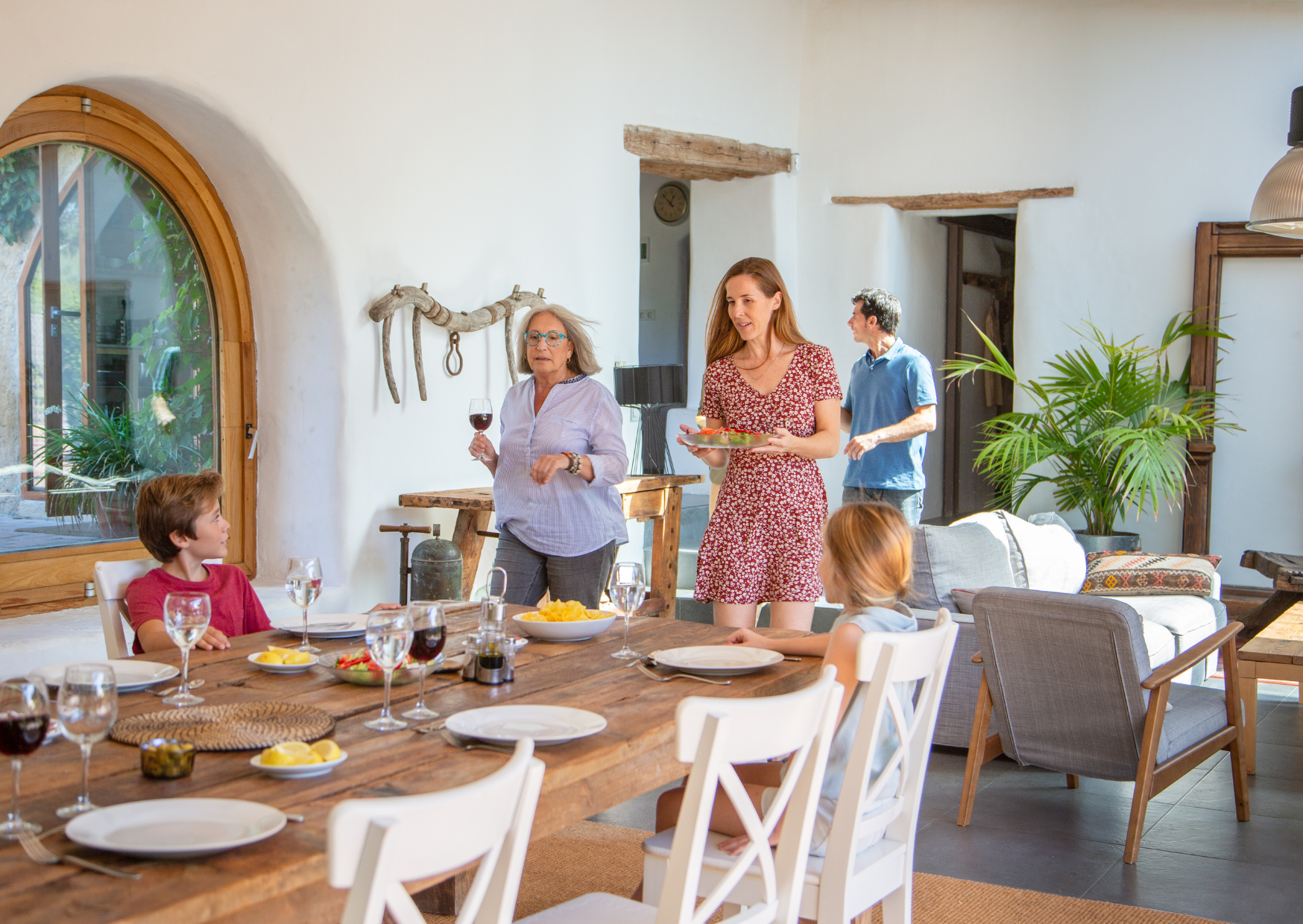
In the U.S., the logic is straightforward: work more, earn more, retire sooner.
In the Mediterranean, the logic is different: life is happening now. And no amount of future security is worth permanent stress.
Many people:
- Take longer lunch breaks
- Refuse to overwork
- Close shops in August
- Accept lower pay in exchange for less pressure
It’s not laziness. It’s a choice.
To Americans steeped in hustle culture, it can feel wasteful or short-sighted.
To Mediterraneans, it’s the opposite: freedom starts with time.
8. They Save in Informal Ways

While Americans often funnel money into investment apps, retirement accounts, or aggressive savings plans, Mediterranean savers often use more traditional or informal methods.
They may:
- Keep cash at home (sometimes literally under the mattress)
- Invest in gold jewelry
- Own land passed down through generations
- Save in envelopes for specific goals
There’s less trust in market volatility — and more comfort with tangible, local value.
It’s not ignorance. It’s caution, shaped by past economic instability and a strong desire to keep savings close and understandable.
9. They Don’t Obsess Over “Net Worth”

In America, a person’s financial identity is often tied to measurable figures:
- Salary
- Home value
- Retirement account balance
In Mediterranean cultures, wealth is often softer, less quantifiable.
It’s about:
- How well you eat
- How often you see your family
- Whether you feel free to close the shop for two weeks in summer
- Whether you owe anyone
- Whether your grandmother’s house is still standing
To Americans, this may feel vague or naïve.
But to Mediterraneans, a rich life isn’t necessarily a high-income life.
It’s about quality of time, depth of connection, and freedom from constant financial anxiety — even if that means fewer digits in the bank.
Two Ways to Handle Money — Two Definitions of Wealth
These nine habits aren’t signs of dysfunction or failure. They’re signs of different priorities.
In the U.S., financial health is often measured by autonomy and growth.
In the Mediterranean, it’s often measured by resilience and connection.
That’s not to say one model is better — only that they operate from different assumptions.
Americans plan. Mediterraneans adapt.
Americans save to retire. Mediterraneans live to enjoy now.
Americans draw boundaries. Mediterraneans blur them — in ways that confuse outsiders, but feel natural at home.
So the next time you see a Spanish grandmother buying prawns instead of budgeting for her future medical expenses, or a Greek family throwing a party when rent is overdue, remember:
It’s not financial madness.
It’s cultural clarity.
Because not every economy runs on optimization.
Some run on values — and a kind of abundance that money alone can’t measure.

About the Author: Ruben, co-founder of Gamintraveler.com since 2014, is a seasoned traveler from Spain who has explored over 100 countries since 2009. Known for his extensive travel adventures across South America, Europe, the US, Australia, New Zealand, Asia, and Africa, Ruben combines his passion for adventurous yet sustainable living with his love for cycling, highlighted by his remarkable 5-month bicycle journey from Spain to Norway. He currently resides in Spain, where he continues sharing his travel experiences with his partner, Rachel, and their son, Han.