
And why the very thing that feels neglectful to Americans is seen as essential to growing up responsibly in Italy.
American parents often view schools as structured, carefully controlled environments. Safety, supervision, and constant adult presence are considered essential, especially in the elementary years. Students are signed in and out. Visitors wear badges. Children are rarely alone — on campus or off.
In Italy, the framework looks very different.
One particular rule stands out — a rule that many American parents find almost shocking:
Italian children as young as 11 can leave school on their own.
No parent pickup. No guardian sign-out. No hand-holding to the car. They walk out the gate and head home — often on foot, by bike, or public transit.
To many Italians, this is a normal part of growing up. To many Americans, it sounds borderline negligent.
But beneath the cultural tension lies a deeper difference in how these two societies define childhood, risk, and independence.
Here’s why Italian children follow this rule without protest — and why American parents often struggle to understand it.
Want More Deep Dives into Everyday European Culture?
– Why Europeans Walk Everywhere (And Americans Should Too)
– How Europeans Actually Afford Living in Cities Without Six-Figure Salaries
– 9 ‘Luxury’ Items in America That Europeans Consider Basic Necessities
1. Children Leave School Without an Adult
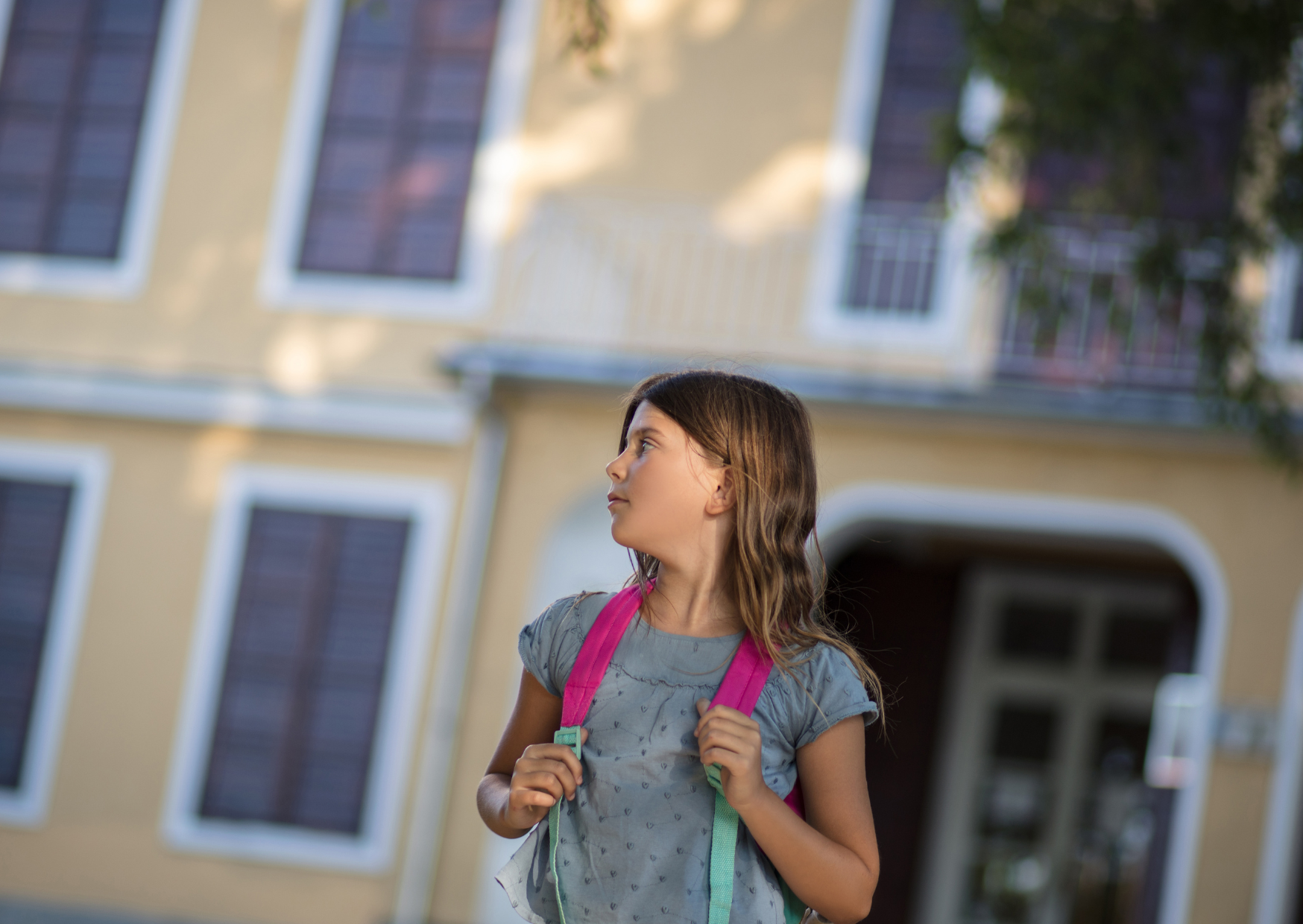
In Italian middle schools (scuola secondaria di primo grado), which begin at age 11, children are typically allowed — even expected — to leave on their own at the end of the school day.
There’s no pickup queue of SUVs.
No school official matching IDs to guardians.
No signed notes from home required once the student reaches this age bracket.
At dismissal time, the gates open. Students stream out into the piazza. Some walk. Others bike. Some catch the bus.
And for the most part, they’re alone.
In the United States, this would raise alarms. An 11-year-old on the metro? A 12-year-old walking ten minutes through town?
But in Italy, it’s not unusual. It’s the cultural norm.
2. The Walk Home Is a Lesson — Not a Liability

For many Italian families, walking home from school isn’t just a logistical convenience — it’s a rite of passage.
The walk home teaches:
- Orientation — how to get from one place to another without GPS
- Time management — getting to your destination without dawdling
- Street awareness — learning to navigate pedestrian crossings, traffic lights, and busy sidewalks
- Responsibility — arriving home without reminders or supervision
In most towns and cities, streets are walkable, and communities are tight-knit. People know each other. Local shopkeepers recognize the kids. Grandparents often live nearby.
It’s not just about getting home. It’s about moving through your environment with confidence.
3. Schools Expect Independence, Not Helicopter Parenting
Italian school systems, particularly in public institutions, operate with the assumption that children should grow into independence — not remain under constant adult control.
Once students enter middle school (typically from age 11 to 13), they’re treated as developing adolescents, not extended elementary students.
They carry their own books.
They manage long school days without lockers.
They are responsible for getting themselves to and from school — just like adults are responsible for getting to work.
There are no crossing guards or strict drop-off zones in many places.
Children arrive on foot or by bike, alone or in small groups.
The school gates are simply a threshold — not a protected dome.
4. Public Spaces Are Considered Part of Childhood

One of the key differences between American and Italian childhoods is how public space is understood.
In the U.S., many families consider children’s presence in public to be risky — parks, streets, and plazas require adult supervision.
In Italy, children are expected to occupy and navigate public space as part of daily life. You’ll see:
- Kids walking to the bakery with a note and small change
- Groups of 11- or 12-year-olds chatting on benches after school
- Young teens running small errands alone
This exposure doesn’t make children reckless. It makes them capable.
It teaches them that the world is not something to be feared — it’s something to learn to move through.
5. Public Transportation Isn’t Off-Limits
While many American cities make public transportation feel unsafe or untrustworthy for children, Italian cities take a different approach.
It’s not unusual to see a 12-year-old on the city bus, alone, school backpack in lap.
Why?
- Public transit in Italy is widely used by all demographics, including the elderly and schoolchildren.
- There are discounted or free passes for students.
- Routes are designed to serve school zones and neighborhoods.
- Children grow up using the system — and thus, using the city.
In Italy, independence isn’t postponed until a driver’s license.
It begins the moment a child can read a bus number and recognize their stop.
6. Community Eyes Replace Constant Supervision

One major difference that makes this rule possible in Italy is the enduring sense of neighborhood watchfulness — but not in the American, security-camera sense.
In Italian towns, people sit on balconies.
They linger in shops.
They walk slowly, notice faces, and remember names.
If a child falls off a bike, someone helps.
If a group of boys is getting too loud, a nonna says something.
If a child is crying, a passerby will ask what’s wrong.
There’s a collective cultural expectation that adults in public spaces will intervene — not turn away.
It’s not perfect, but it creates a sense of ambient safety that fills in the gaps where American systems rely on constant direct supervision.
7. Risk Is Accepted as Part of Growing Up

In the U.S., many parenting decisions are governed by liability avoidance.
What if they trip? What if someone takes them? What if they make a bad decision?
In Italy, while safety matters, it doesn’t override all other values.
Children are taught to navigate the real world by being in it — not by being shielded from it until adulthood.
Risk isn’t eliminated.
It’s managed by exposure, habit, and community.
And so, the idea of letting a 12-year-old walk home is not seen as negligence — it’s seen as a form of education.
8. Parents Aren’t There to Prove Good Parenting
American parents are often pressured — by schools, other parents, and social norms — to perform presence.
To be visible.
To be seen supervising.
To log minutes on the PTA calendar, at drop-off lines, and school events.
In Italy, the pressure is different.
Being a good parent doesn’t mean being constantly present. It means raising a child who can function without you at every moment.
Letting a child go to school alone, walk home alone, and manage their schedule isn’t a sign of detachment.
It’s a sign of trust.
9. This Rule Teaches Emotional Autonomy

When children leave school by themselves, they do more than get home.
They decompress.
They reflect.
They engage in peer conversations away from adult ears.
They make spontaneous decisions: stop for gelato or go straight home?
In short, they begin to build their own inner lives.
American children are often escorted, scheduled, and observed until late adolescence. Italian children — at least in this narrow window of daily life — get a head start.
That walk from school to home becomes a private corridor between two worlds.
And that corridor is what helps children begin to form independent emotional identities.
What Americans See as Dangerous, Italians See as Necessary
To an American parent, the idea of letting an 11-year-old walk home from school alone might feel like a failure of care.
To an Italian parent, not allowing that independence might feel like a failure to launch.
This single school rule reflects something deeper than logistics:
It reflects two very different ideas of what it means to prepare a child for life.
Two Rules, Two Childhoods
In the United States, we prioritize protection, control, and supervision.
In Italy, there’s a quiet emphasis on autonomy, resilience, and trust.
One model fears what might happen.
The other assumes the child will learn what to do.
Both models come with risks.
But only one regularly hands children the keys to their own independence — not someday, but today.
And that’s what makes the Italian school dismissal rule more than a quirk.
It’s a cultural code for how children are expected to grow — by walking out the school gate, on their own two feet, and into the world they are already a part of.

About the Author: Ruben, co-founder of Gamintraveler.com since 2014, is a seasoned traveler from Spain who has explored over 100 countries since 2009. Known for his extensive travel adventures across South America, Europe, the US, Australia, New Zealand, Asia, and Africa, Ruben combines his passion for adventurous yet sustainable living with his love for cycling, highlighted by his remarkable 5-month bicycle journey from Spain to Norway. He currently resides in Spain, where he continues sharing his travel experiences with his partner, Rachel, and their son, Han.