
In Spain, few dishes capture the heart of traditional home cooking quite like Cocido Madrileño. This rich, slow-cooked chickpea stew isn’t just a meal — it’s a ritual, a symbol of family gatherings, and a reminder of the flavors that shaped Spanish culinary heritage. For generations, grandmothers across Madrid have prepared this hearty stew, turning simple ingredients into a dish that brings everyone to the table.
At its core, Cocido Madrileño is a humble mix of chickpeas, vegetables, meats, and savory broth, cooked low and slow until everything melds together perfectly. What sets this dish apart isn’t just the ingredients, but the methodical way it’s prepared and served — often in several courses, honoring each component of the stew. It’s a dish that speaks of patience, tradition, and the joy of sharing a comforting meal with loved ones.
In this guide, we’ll explore how to make an authentic version of Cocido Madrileño, just like a Spanish abuela would. Whether you’re recreating family memories or discovering this classic for the first time, this dish brings the warmth of a Madrid kitchen straight into your home.
The best Spanish food to try, Breakfast in Spain, and vegetarian food in Spain
What is Cocido Madrileño?
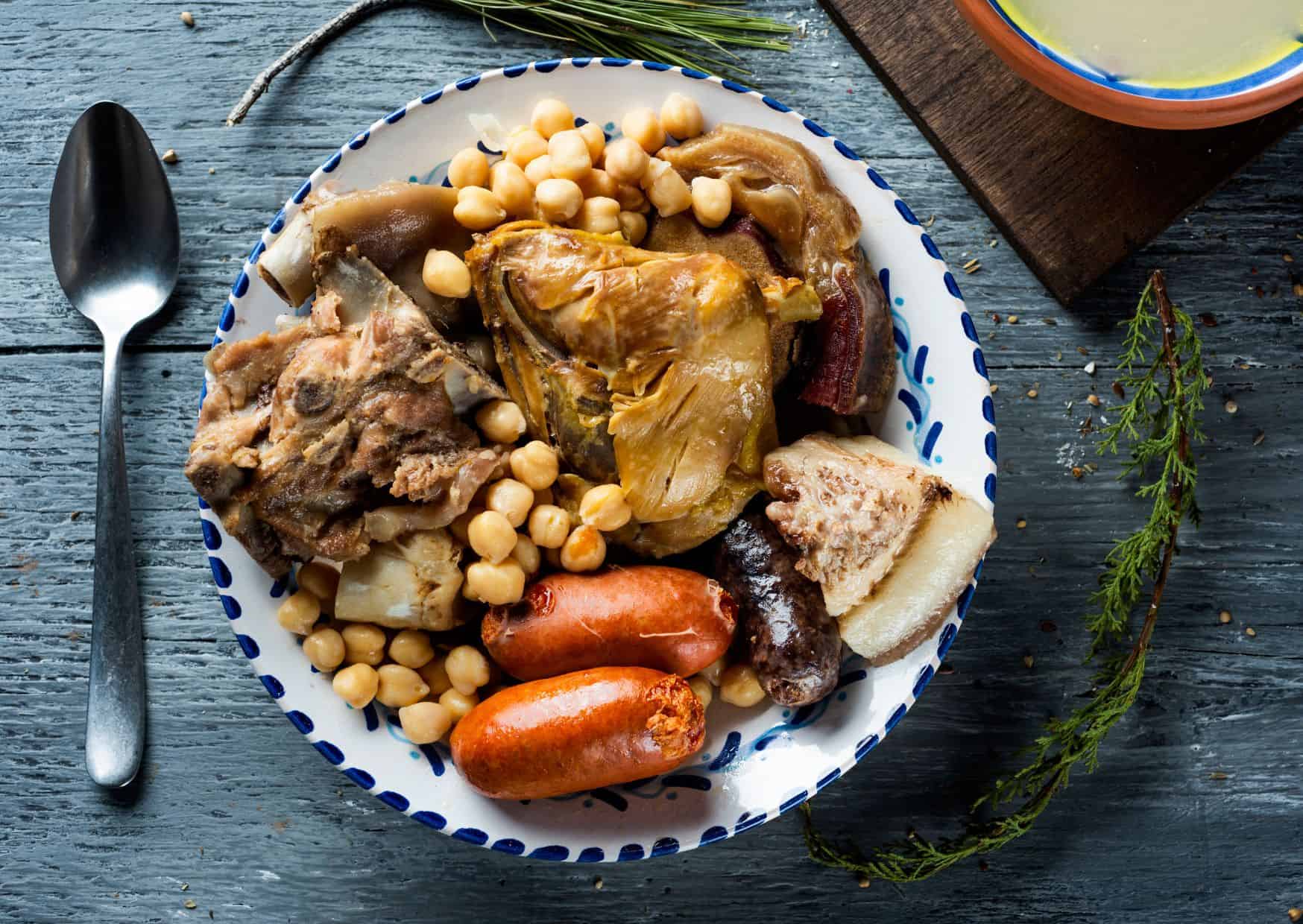
Cocido is a traditional Spanish chickpea-based stew that originated in Madrid but is loved across Spain. It’s a full meal made in layers—meat, vegetables, and legumes simmered for hours.
This dish is all about slow cooking, simple ingredients, and sharing with family, which is why it’s often reserved for Sundays or special gatherings. And yes, every abuela has her own version.
Best Time to Eat & How to Partner This Dish
Cocido Madrileño is traditionally enjoyed as a long, leisurely lunch, especially during cooler months when a hearty stew feels most comforting. It’s often served on Sundays or special family occasions, allowing plenty of time to savor each part of the dish.
Pair this stew with crusty bread for dipping, a simple green salad, or a glass of robust Spanish red wine like Rioja. The richness of the broth and meats is beautifully balanced by lighter sides, while the bread soaks up every last bit of flavor. If you want to serve it the traditional way, start with the broth as a soup, followed by the chickpeas and vegetables, and finish with the meats.
Whether served as a casual family meal or a special weekend feast, Cocido Madrileño is best enjoyed in good company, accompanied by plenty of conversation and perhaps a shared memory or two of home-cooked meals.
One common misconception is that Cocido Madrileño is just another chickpea stew like those found across Spain or Europe. In reality, its multi-course serving style and the variety of meats — often including chorizo, morcilla, and pork fat — give it a distinct identity that sets it apart from other stews.
Another debated belief is that this dish is too heavy or old-fashioned for modern tastes. While undeniably hearty, many Spaniards see Cocido Madrileño as a comforting, celebratory dish rather than everyday fare. With mindful portioning and fresh accompaniments, it easily fits into today’s dining culture.
Perhaps most surprising is the idea that Cocido Madrileño can be rushed or made in a single pot like a simple soup. Traditional preparation takes time — often several hours — with each ingredient carefully layered in. Cutting corners may yield a stew, but it won’t capture the authentic depth of flavor that makes this dish a staple in Spanish homes.
Classic Chickpea Stew Abuela’s Ingredients (Serves 6–8)
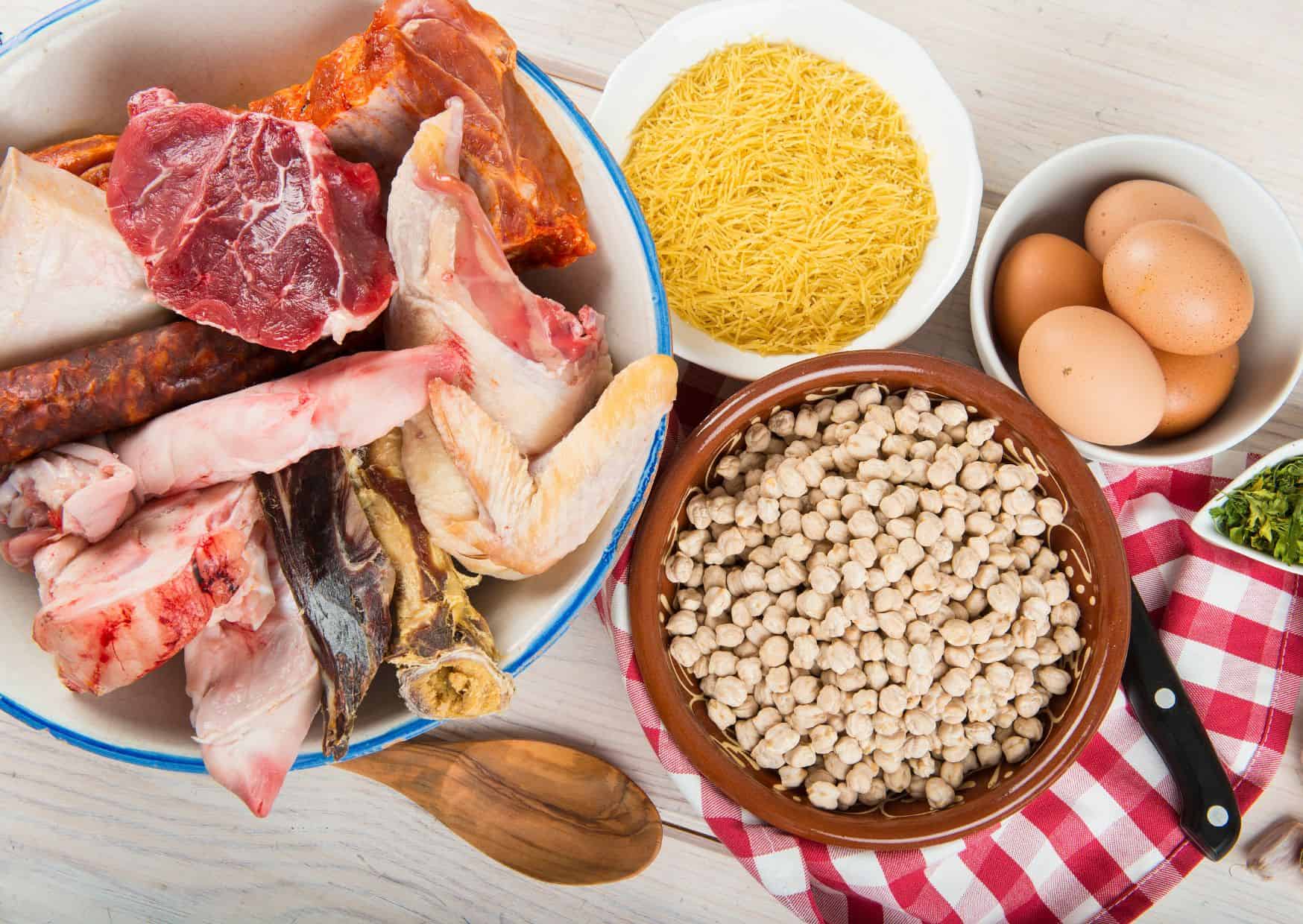
Legumes & Grains:
2 cups dried chickpeas, soaked overnight
Optional: a handful of short pasta (fideos) or rice for serving
Meats (traditional mix):
1 small bone-in beef shank or marrow bone
1 piece of pork belly or salt pork
1 chicken thigh or drumstick
1–2 chorizo sausages (mild or spicy, sliced)
Optional: morcilla (Spanish blood sausage) for extra depth
1 ham bone or piece of jamón serrano
Vegetables:
2 carrots, peeled and sliced
2 potatoes, peeled and quartered
1 large onion, peeled
1/2 cabbage, cut into wedges
2 cloves garlic, whole or crushed
1 bay leaf
Seasoning:
Salt and black pepper to taste
Olive oil, for drizzling
Sweet smoked paprika (pimentón), optional garnish
Classic Chickpea Stew Step-by-Step Instructions (Abuela-Style):
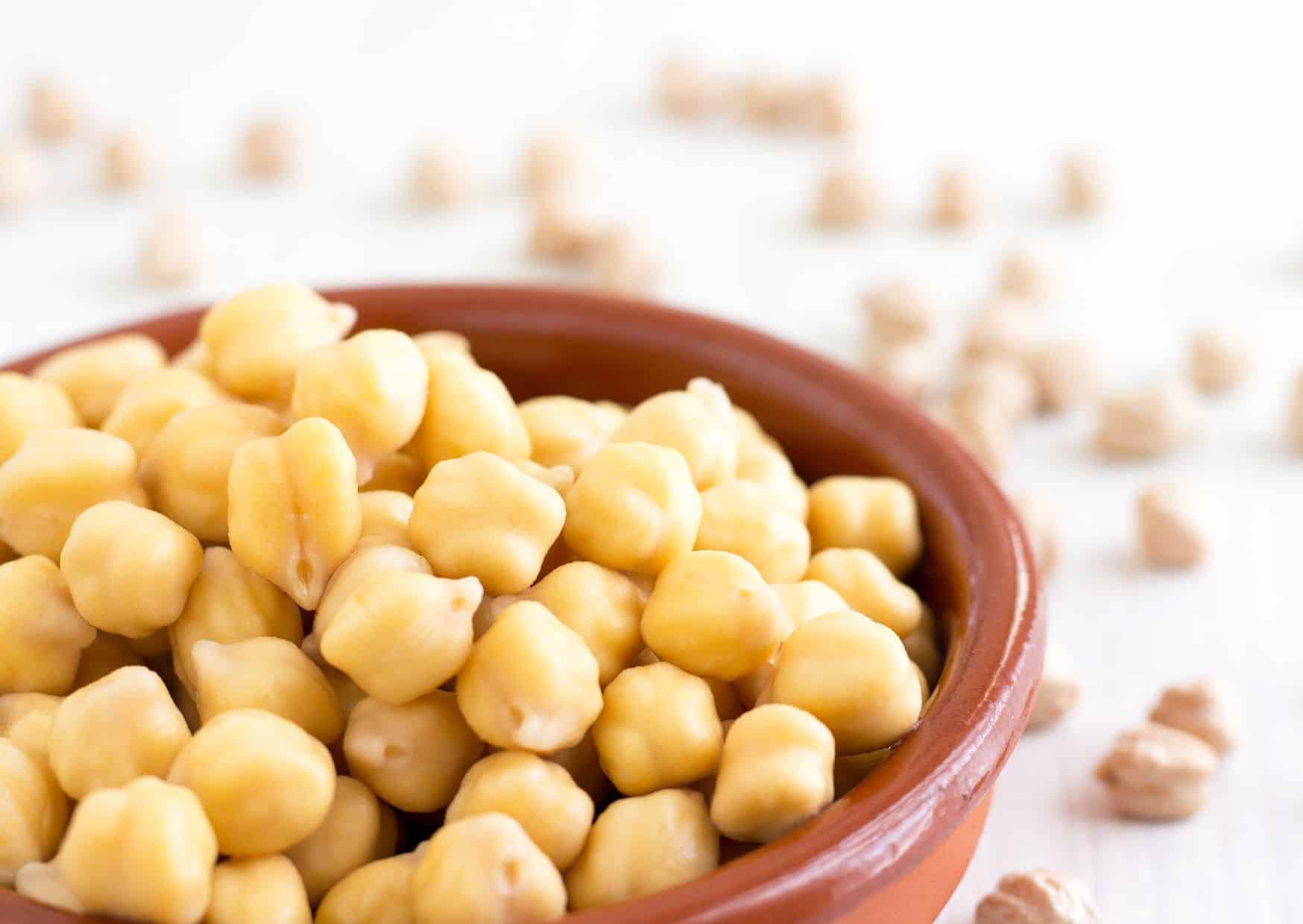
Soak the Chickpeas
Soak chickpeas overnight in cold water with a pinch of salt. Drain before cooking.
Tip from Abuela: “Use good chickpeas. Tender, buttery ones make the difference.”
Start the Broth
In a large stockpot, place all meats and bones.
Cover with cold water (about 10 cups) and bring to a boil.
Skim off any foam, reduce to low heat.
Add the Chickpeas and Flavor Base
Add soaked chickpeas, onion, garlic, and bay leaf.
Simmer gently for 1.5 to 2 hours, uncovered or partially covered.
Tip from Abuela: “Low and slow—let it talk to you while it cooks.”
Add Veggies in Stages
After 1.5 hours, add carrots and potatoes.
In the final 30 minutes, add cabbage wedges (can be sautéed separately in olive oil for extra flavor).
Taste & Finish
Remove bones and inedible bits (bay leaf, marrow bones).
Season with salt and pepper to taste.
Optional: remove meats, slice or shred them, and serve on a separate platter (“la pringá”).
Serve in Courses or All Together
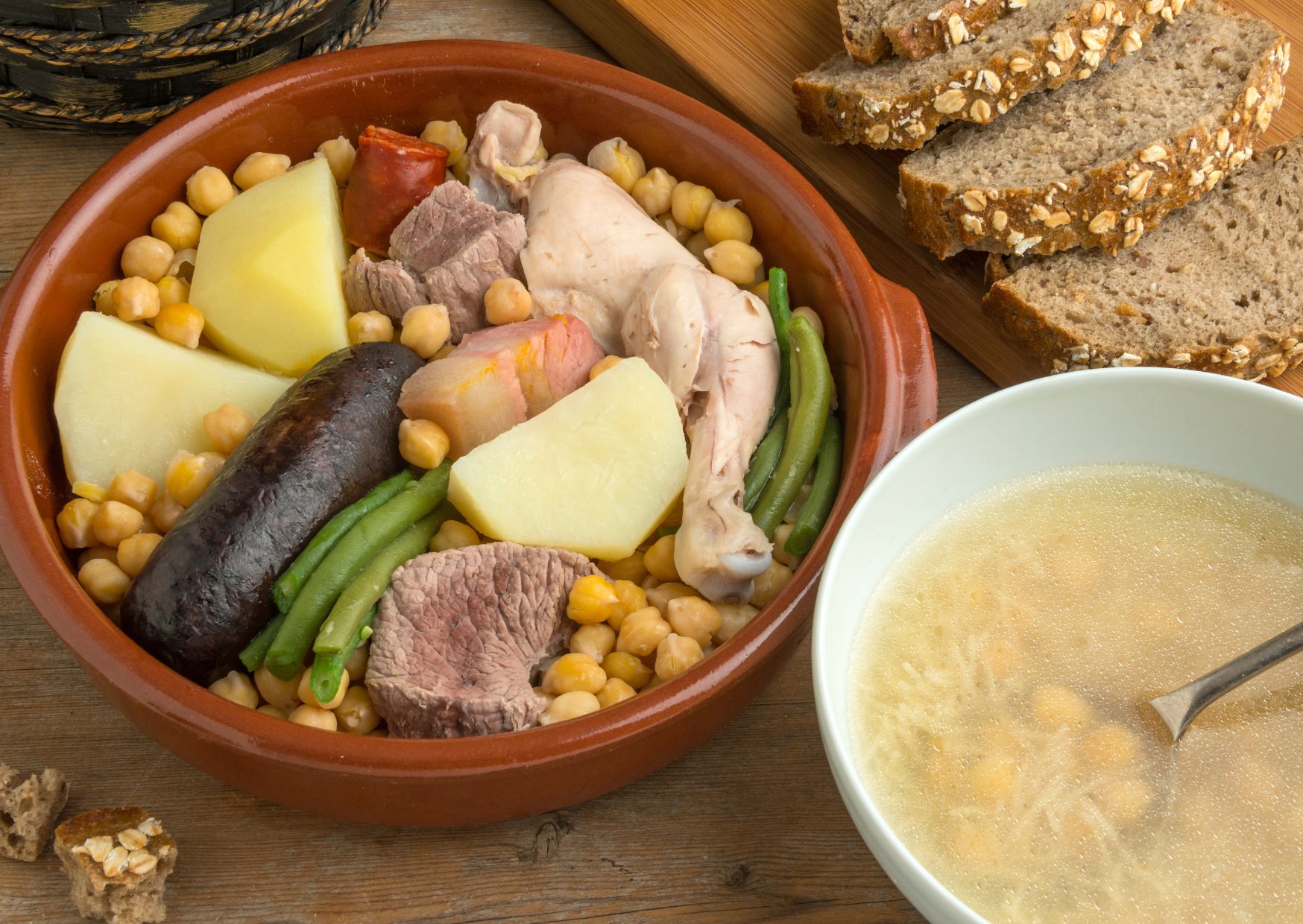
Traditionally, cocido is served in “tres vuelcos” (three parts):
Broth first (with noodles or rice)
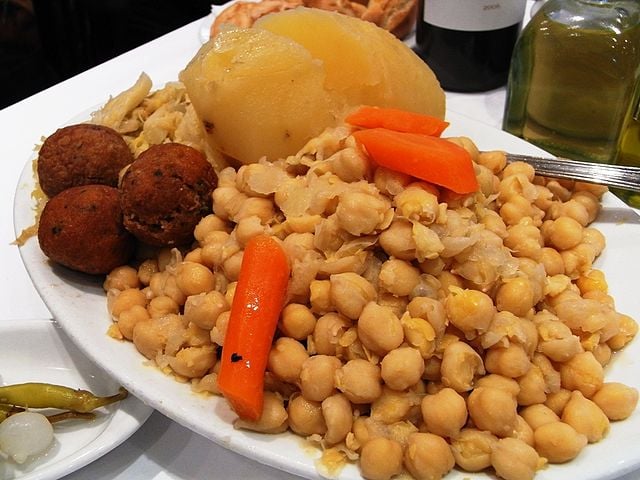
Chickpeas and vegetables
Meats last, as the protein-rich finale
But at home, abuela often serves it all together, rustic and rich.
Tips From Spanish Grandmothers
Layer your flavors: Add cabbage last or sauté it for a sweeter depth.
Don’t rush: Let it cook slowly so everything is tender but holds its shape.
Use leftovers: Cocido tastes even better the next day—and makes killer croquetas!
Accompany it with crusty bread, a glass of red wine, and maybe a spoonful of spicy sauce (salsa picante) on the side.
Variations Across Spain
In Andalusia, morcilla is always included.
In Catalonia, they may use butifarra sausage.
In Valencia, a similar dish is called olla.
Every region (and every abuela) makes it a little differently.
Classic Chickpea Stew Nutrition Info
Calories: ~450–550 (varies by meats and serving size)
Protein: 25–35g
Fat: 20–30g
Carbs: 35g
Fiber: 10g
Sodium: ~600mg
Origin and History
Cocido Madrileño is one of the most iconic dishes of Madrid, a hearty stew that has warmed Spanish homes for centuries. Its foundation—slow-simmered chickpeas, vegetables, and meats—comes from rural cooking traditions where families needed filling meals that could stretch across the week. Cocido originated as a simple pot of legumes and scraps, but over time it evolved into a beloved symbol of local culture, reflecting the agricultural landscape and family-centered rhythms of central Spain.
The dish’s roots are intertwined with medieval Iberian cuisine and the influence of Sephardic Jewish communities, who prepared chickpea-based stews that later blended with Christian and Muslim food customs. As ingredients like pork, chorizo, and morcilla entered the pot, Cocido became a defining feature of Madrid’s working-class households. By the 17th century, it was so common that taverns and inns throughout the capital served it daily, often as an affordable and nourishing midday meal.
In the modern era, Cocido has moved from humble kitchens to restaurant menus, celebrated as one of Madrid’s most comforting and traditional dishes. Despite its rising popularity, families continue to pass down treasured variations, each “abuela” adding her own touches. Today, Cocido Madrileño remains a living piece of culinary heritage—slow, rustic, and proudly tied to Spain’s past.
As beloved as Cocido is, it is not without its culinary debates. The biggest point of contention is which ingredients truly belong. Some argue that an authentic Cocido must include morcilla, tocino, chicken, and chorizo, while others insist that regional adaptations—like adding beef shank or cabbage—are equally valid. The argument often comes down to family tradition, with each household claiming their version as the original.
Another debate centers on how to serve the stew. Traditionalists maintain that Cocido must be eaten in three courses, known as tres vuelcos: first the broth with noodles, then the chickpeas and vegetables, and finally the meats. But many modern cooks prefer serving everything together in one hearty bowl. Purists argue this breaks the ritual; others say practicality wins in busy homes.
Even the cooking method sparks controversy. Some insist Cocido must simmer slowly for hours to develop its deep flavor, while others use pressure cookers to shorten the process. To some Spaniards, this shortcut feels sacrilegious, while others believe it keeps the dish relevant in contemporary kitchens. These disagreements show how emotionally tied people are to a stew that represents comfort, heritage, and family identity.
How Long You Take to Prepare
Making Cocido Madrileño from scratch generally requires 3 to 4 hours, especially if you want its signature depth. The process begins with soaking the chickpeas overnight to ensure they become tender. Once ready, they’re added to a large pot with bone-in meats, vegetables, and aromatics. Traditional recipes rely on slow simmering, allowing the flavors to develop gradually and the broth to become rich and silky.
If you’re short on time, a pressure cooker can reduce the cooking process to about 60 to 90 minutes. While some argue that the flavor isn’t as layered, the result is still delicious and satisfying. This method keeps the stew practical for weeknights while preserving its comforting spirit. The key is maintaining the balance between chickpeas, meats, and vegetables so no element overwhelms the others.
Preparation also involves separating elements if you wish to follow the classic tres vuelcos format. After cooking, the broth is strained and used for a soup course with noodles. The chickpeas and vegetables serve as the second course, and the meats—tender and flavorful—finish the meal. Whether served traditionally or in a single bowl, Cocido’s preparation encourages patience and appreciation of simple, honest cooking.
Serving Suggestions
The traditional way to serve Cocido Madrileño remains the three-course approach. Begin with the golden broth poured over cooked noodles, a soothing first course perfect for cold days. Then serve a platter of chickpeas, potatoes, carrots, and cabbage. Finally, present the tender meats—chorizo, morcilla, pork belly, and chicken—arranged for everyone to share. It’s a progression that honors the dish’s rustic roots and elevates it into a full, satisfying meal.
For a modern twist, many people enjoy serving everything together in one deep, comforting bowl. This convenient style still captures the stew’s warmth and richness while simplifying the experience. Add a drizzle of olive oil, a sprinkle of paprika, or chopped parsley for freshness. Crusty bread is essential for dipping and savoring the broth.
Cocido also pairs beautifully with light salads or simple starters to balance its richness. For drinks, Spain’s traditional tinto de verano or a crisp white wine complements the stew well. Leftovers are especially delicious the next day as flavors continue to deepen, making Cocido one of those rare dishes that improves with time.
Final Thoughts
Cocido Madrileño is more than a stew—it’s a story of family, tradition, and slow cooking passed down through generations. It captures the heart of Spanish home life, offering warmth and nourishment in every spoonful. Whether you grew up eating it or are discovering it for the first time, Cocido brings a sense of comfort that transcends cultural boundaries.
What makes the dish truly special is its adaptability. Every family has its version, each “abuela” adding her own wisdom to the pot. You can follow the classic tres vuelcos, serve it all together, or tailor the ingredients to your taste. Yet no matter how it’s prepared, the soul of Cocido remains the same: simple ingredients transformed by time and care into something deeply satisfying.
So skip the fast meals and make Cocido the way families in Madrid have for generations—slowly, patiently, and with love. It’s the kind of dish that fills the home with warmth, brings people together at the table, and reminds us why comfort food matters in every culture. Once you try it, you’ll understand why Cocido Madrileño continues to define Spanish comfort cooking.

About the Author: Ruben, co-founder of Gamintraveler.com since 2014, is a seasoned traveler from Spain who has explored over 100 countries since 2009. Known for his extensive travel adventures across South America, Europe, the US, Australia, New Zealand, Asia, and Africa, Ruben combines his passion for adventurous yet sustainable living with his love for cycling, highlighted by his remarkable 5-month bicycle journey from Spain to Norway. He currently resides in Spain, where he continues sharing his travel experiences with his partner, Rachel, and their son, Han.