
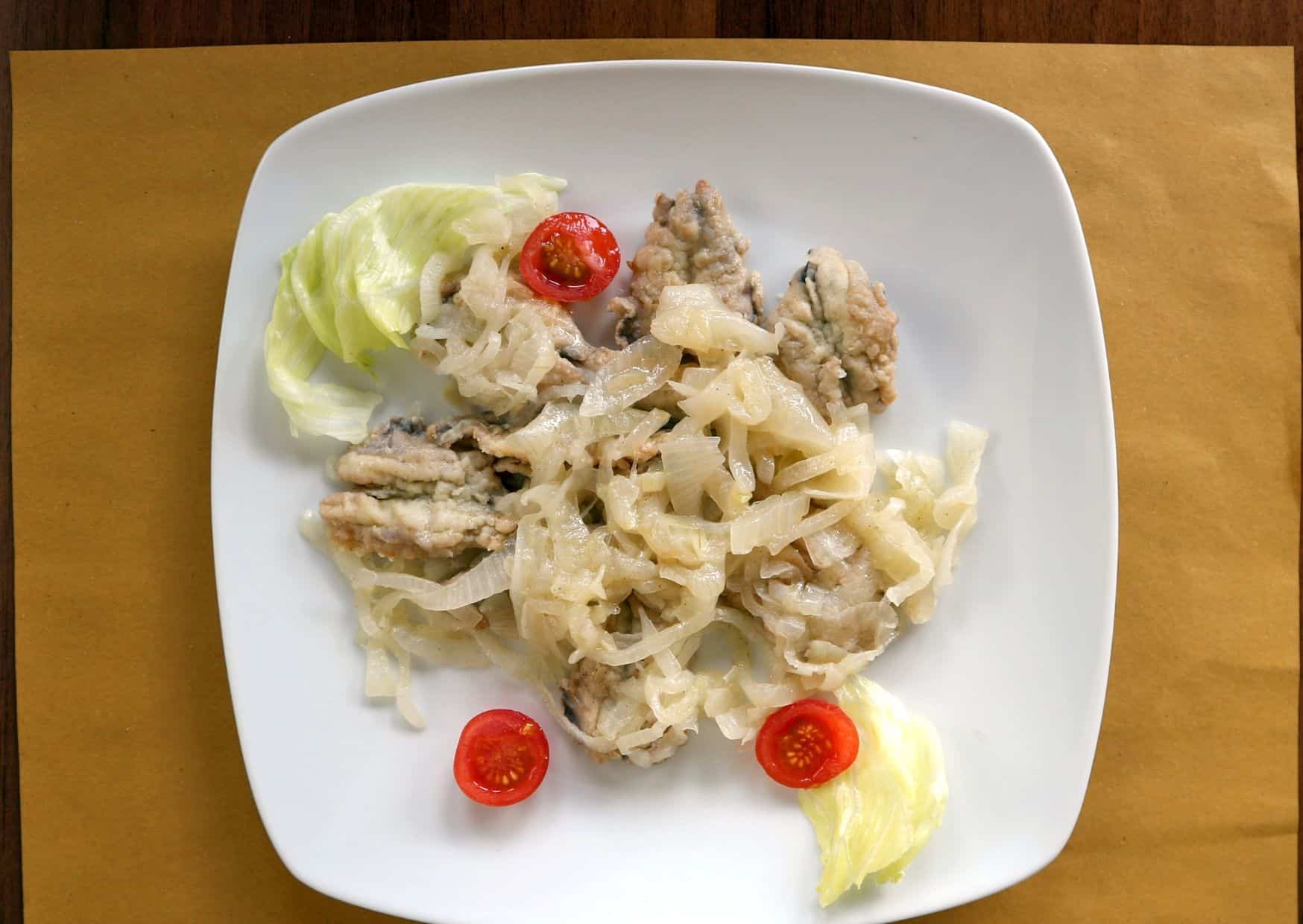
Our guide on How To Make Sarde in Saor one of the most popular dishes in Veneto area in North Italy.
Sarde in Saor is a classic Venetian dish that features sardines marinated in a sweet and sour sauce with onions, pine nuts, and raisins. This dish dates back to the Middle Ages when it was used by sailors and fishermen to preserve fish for long journeys.
Today, it’s enjoyed as an appetizer or a small plate and is a delightful combination of flavors.
Read here best Italian food, vegetarian food in Italy, best drinks in Italy and best breakfast in Italy
Read Here Things to know before visiting Italy and how to buy a sim card in Italy
BOOK YOUR TRAVEL INSURANCE
Two of our favorite travel insurance: Heymondo Vs Safetwing cheapest travel Insurance. You can get for $135 USD your Heymondo Travel Insurance with Heymondo discount code valid for 90 days. Read our full comparison of Genki vs Safetywing Travel Insurance Review and the comparison Heymondo vs Genki
How to Make Sarde in Saor
Sarde in Saor Recipe Ingredients
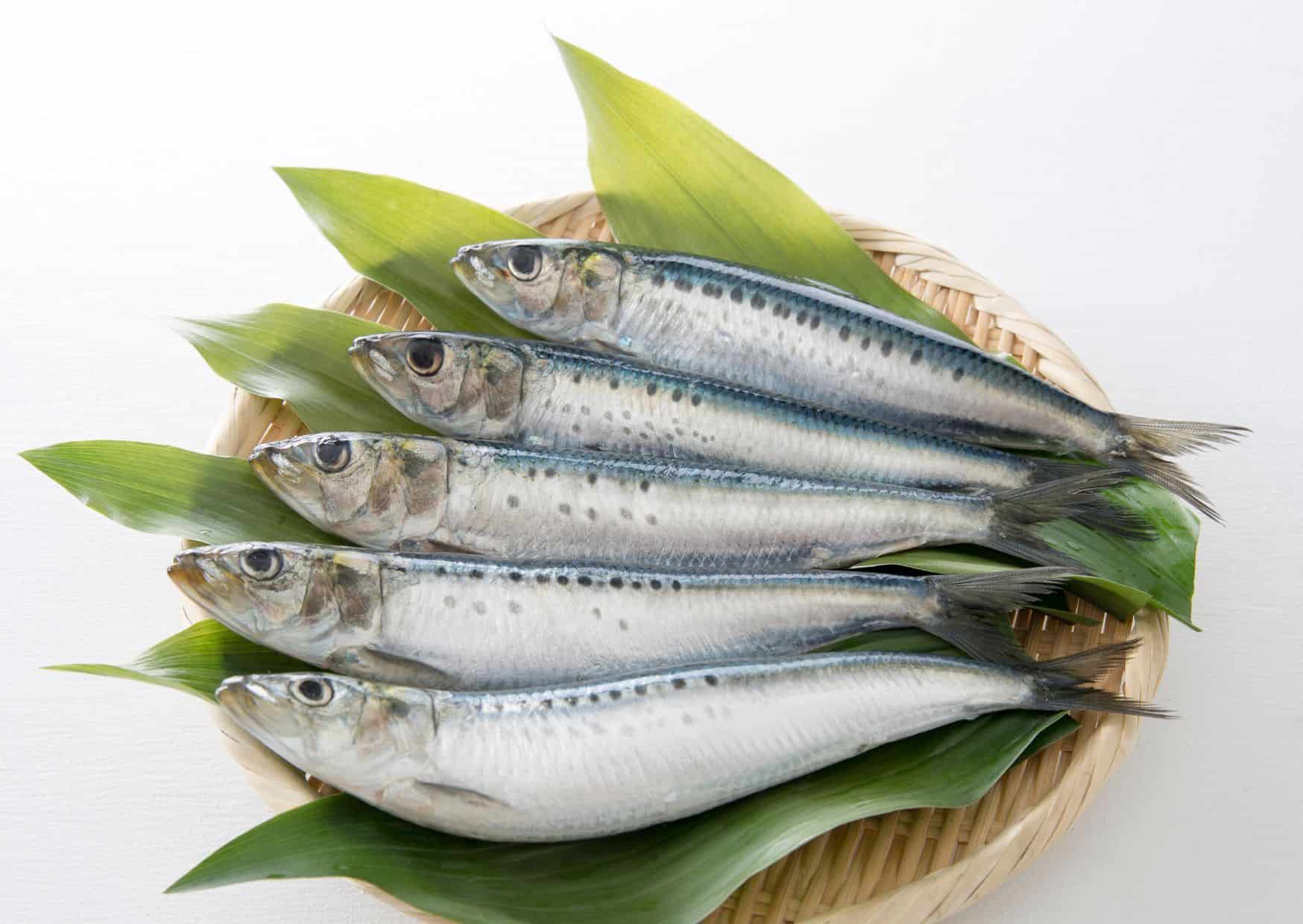
12 fresh sardines, cleaned and filleted
Flour, for dusting
Olive oil, for frying
3 large onions, thinly sliced
1/2 cup white wine vinegar
2 tablespoons sugar
1/3 cup raisins
1/3 cup pine nuts
Salt and pepper, to taste
Get the best deals for your home and kitchen needs
Step By Step How to Make Sarde in Saor
Prepare the Sardines
Pat the sardine fillets dry and season with salt and pepper. Lightly dust the sardines with flour.
Fry the Sardines
Heat a generous amount of olive oil in a frying pan over medium-high heat. Fry the sardines for about 2 minutes on each side, or until golden and crisp. Remove and set aside on paper towels to drain.
Cook the Onions
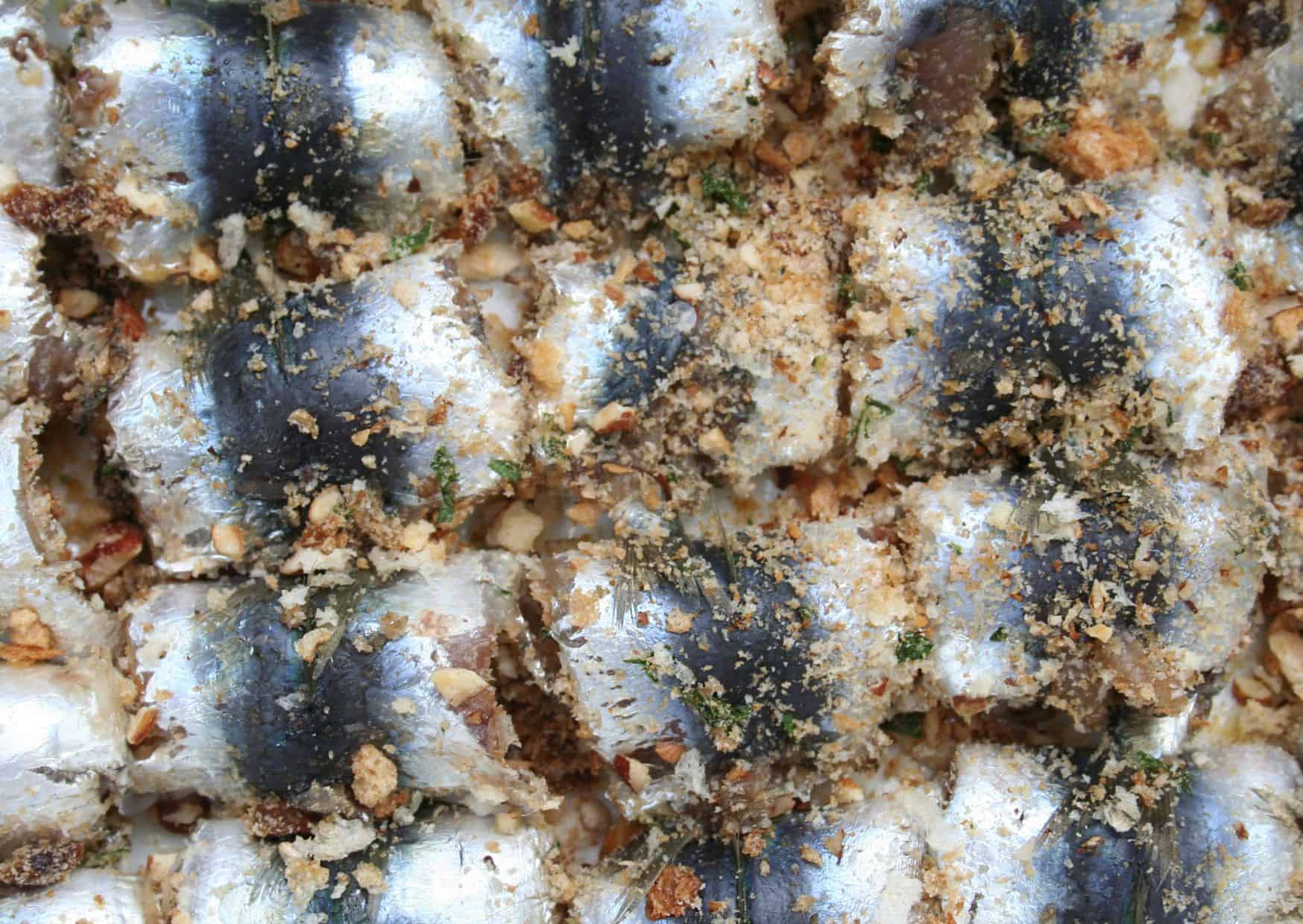
In the same pan, reduce the heat to medium. You may need to add a bit more oil. Add the sliced onions with a pinch of salt and cook, stirring occasionally, until they are very soft and starting to caramelize, about 15-20 minutes.
Make the Saor
Add the vinegar and sugar to the onions, stirring until the sugar has dissolved. Add the raisins and pine nuts and cook for a further 5 minutes, allowing the flavors to meld together.
Marinate the Sardines
In a dish, arrange a layer of fried sardines, then top with some of the onion mixture. Repeat the layering until all ingredients are used up. Cover and refrigerate for at least 24 hours to allow the flavors to develop fully.
Serve
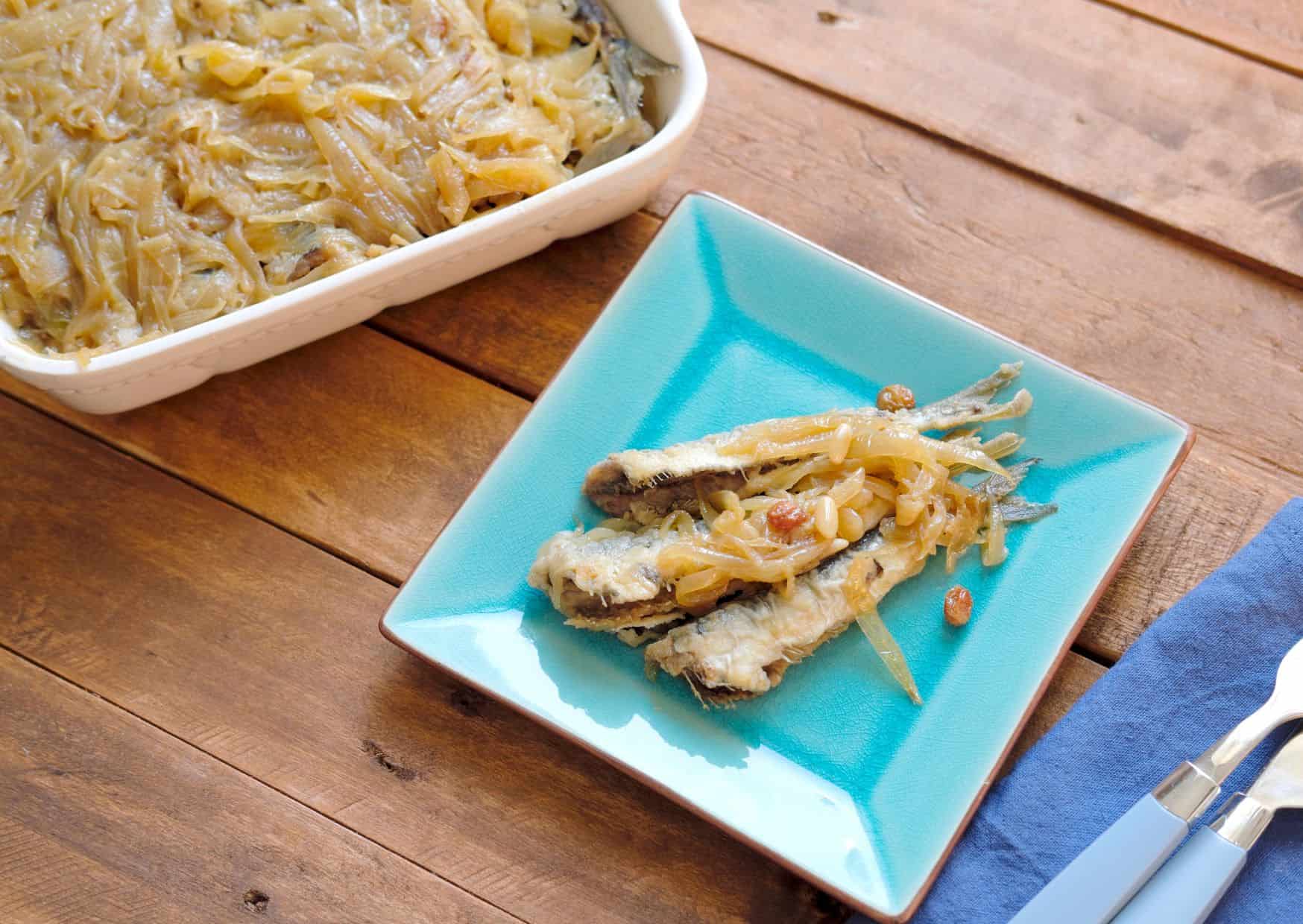
Allow the sardines to come to room temperature before serving. They can be enjoyed on their own or with a slice of crusty bread.
Tips To Make Sarde in Saor
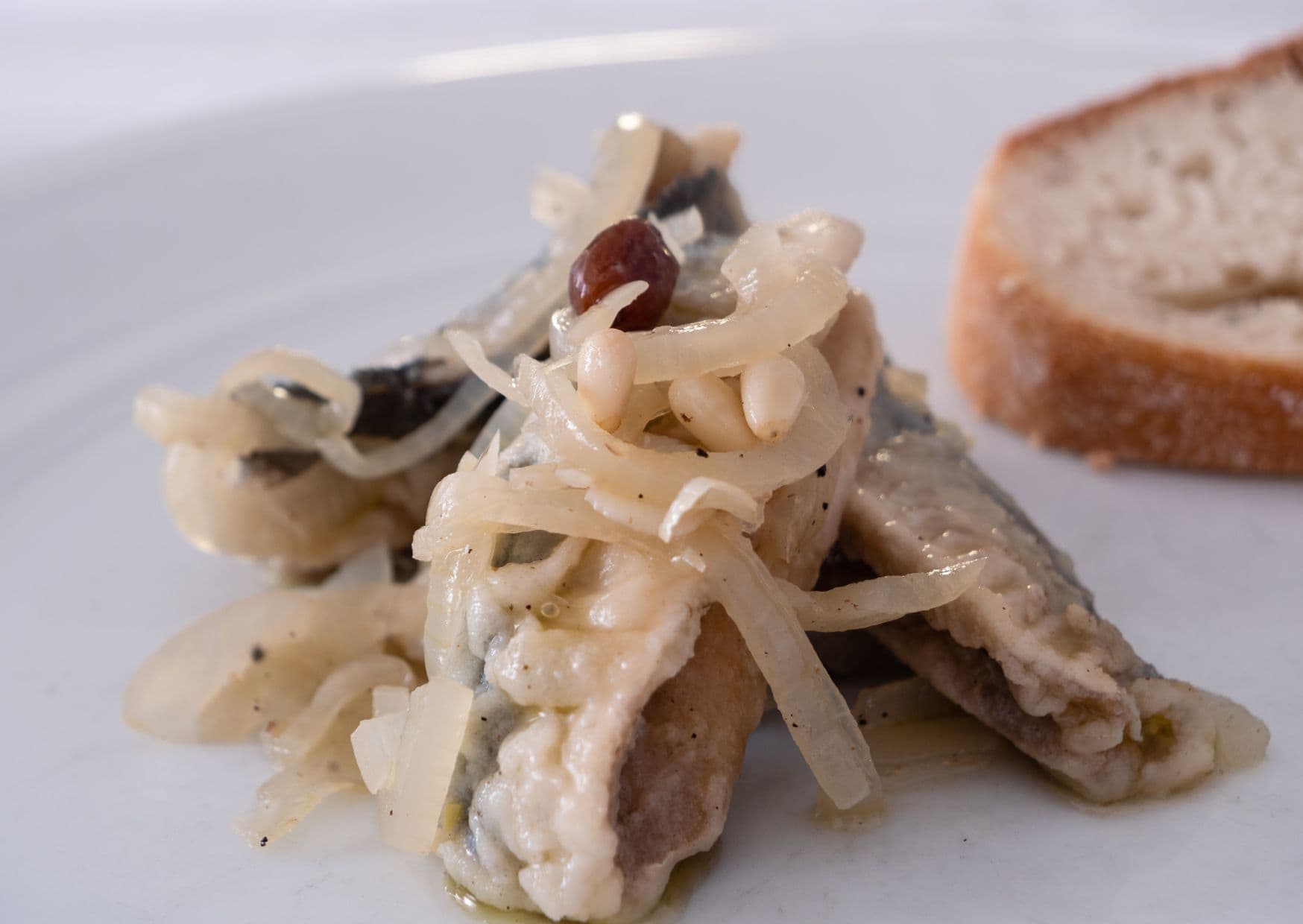
The key to a great saor is soft, sweet onions. Take your time cooking them until they are perfectly caramelized. The balance of vinegar and sugar can be adjusted to taste. Some prefer a sweeter or more sour profile, so modify according to your preferences.
Allow at least 24 hours for marinating, but the dish often tastes better after 48 hours.
How Many Calories Have Sarde in Saor
A single serving (assuming the recipe serves 4) contains approximately 200-250 calories. This estimate depends on the amount of frying oil retained by the fish and other ingredients.
Origin and History
Sarde in saor is one of Venice’s most historic and beloved dishes, dating back to the late Middle Ages. Originally created by Venetian sailors and fishermen, it served as a practical way to preserve fresh sardines before refrigeration existed. The combination of vinegar, onions, and spices acted as a natural preservative, allowing the fish to last through long journeys at sea.
As Venice grew into a major maritime power, the dish evolved from simple sustenance into a symbol of the city’s culinary identity. Wealthier families and taverns began adding pine nuts, raisins, and fragrant spices brought in from the East via Venetian trade routes. This blend of local seafood and imported flavors reflected the city’s unique position at the crossroads of cultures.
Over time, sarde in saor became a traditional dish served during holidays, festivals, and everyday meals. Its sweet-and-sour balance embodies Venetian gastronomy—rustic yet refined, simple yet layered. Today, it remains a staple of the city’s culinary heritage, offering a taste that connects modern visitors to centuries of Venetian history.
One of the biggest controversies surrounding sarde in saor is whether raisins belong in the dish at all. Some purists argue that the sweetness should come only from slowly cooked onions, believing that raisins overpower the delicate flavor of the sardines. Others insist that the sweet element is a defining part of the dish’s identity, making raisins non-negotiable.
Another debate focuses on the acidity level. Some cooks prefer a sharper, more pronounced vinegar flavor to highlight the dish’s preservative roots. Others soften the acidity with wine, sugar, or longer cooking times. Each method leads to a different flavor profile, and Venetians often defend their family’s version with surprising intensity.
There is also an ongoing disagreement about how long the dish should marinate. Traditionalists say sarde in saor must rest for at least 24 hours—and sometimes up to three days—to achieve proper depth. Modern cooks, eager for quicker results, often shorten the process. This divide reflects the broader tension between culinary patience and contemporary convenience.
How Long You Take to Prepare
The preparation of sarde in saor is straightforward, but it requires patience. Cleaning and lightly frying the sardines takes about 20 to 30 minutes, depending on your skill and the quantity you’re preparing. This step builds the foundation of the dish’s flavor and texture.
Next comes the onion mixture, which needs at least 20 minutes to soften gently and absorb the vinegar, spices, and optional raisins. Cooking the onions slowly is essential to achieving the dish’s signature sweet-and-sour balance. Rushed onions result in sharpness rather than harmony.
Once everything is assembled in layers, the dish must rest in the refrigerator for at least 12 to 24 hours. This marinating period allows the flavors to meld fully. While the active cooking time is under an hour, the waiting stage transforms the dish from simple sardines into a deeply flavored Venetian specialty.
Serving Suggestions
Sarde in saor is traditionally served chilled or at room temperature, making it perfect as an appetizer or part of an antipasto platter. Its bold, tangy flavor contrasts beautifully with creamy cheeses, marinated vegetables, or crusty Italian bread. This combination creates a balanced, elegant spread worthy of any dinner gathering.
For a more substantial presentation, serve it alongside polenta. The soft, neutral flavor of polenta complements the bright acidity of the saor, creating a classic Northern Italian pairing. This combination turns the dish into a satisfying meal that still feels light and sophisticated.
Sarde in saor also pairs wonderfully with crisp white wines, especially those from the Veneto region. Wines like Soave or Pinot Grigio enhance the dish’s freshness while balancing its sweetness and acidity. A simple garnish of fresh parsley or lemon zest completes the plate with brightness and color.
Final Thoughts
Sarde in saor is a reminder that some of Italy’s most remarkable dishes come from humble origins. What began as a fisherman’s preservation method evolved into one of Venice’s most iconic culinary traditions. Its flavors are a testament to centuries of creativity, trade, and resourcefulness.
Making the dish at home connects you directly to Venetian culture. The slow marinating, delicate balance of sweet and sour, and emphasis on quality ingredients reflect the patience and pride that define Italian cooking. It’s a dish that invites you to slow down, savor each bite, and appreciate the craftsmanship behind it.
In the end, sarde in saor is more than a recipe it’s a story told through food. Whether you’re an adventurous cook or simply curious about Italian traditions, this dish offers a vibrant, historic, and unforgettable taste of Venice that deserves a place in your kitchen.

About the Author: Ruben, co-founder of Gamintraveler.com since 2014, is a seasoned traveler from Spain who has explored over 100 countries since 2009. Known for his extensive travel adventures across South America, Europe, the US, Australia, New Zealand, Asia, and Africa, Ruben combines his passion for adventurous yet sustainable living with his love for cycling, highlighted by his remarkable 5-month bicycle journey from Spain to Norway. He currently resides in Spain, where he continues sharing his travel experiences with his partner, Rachel, and their son, Han.