
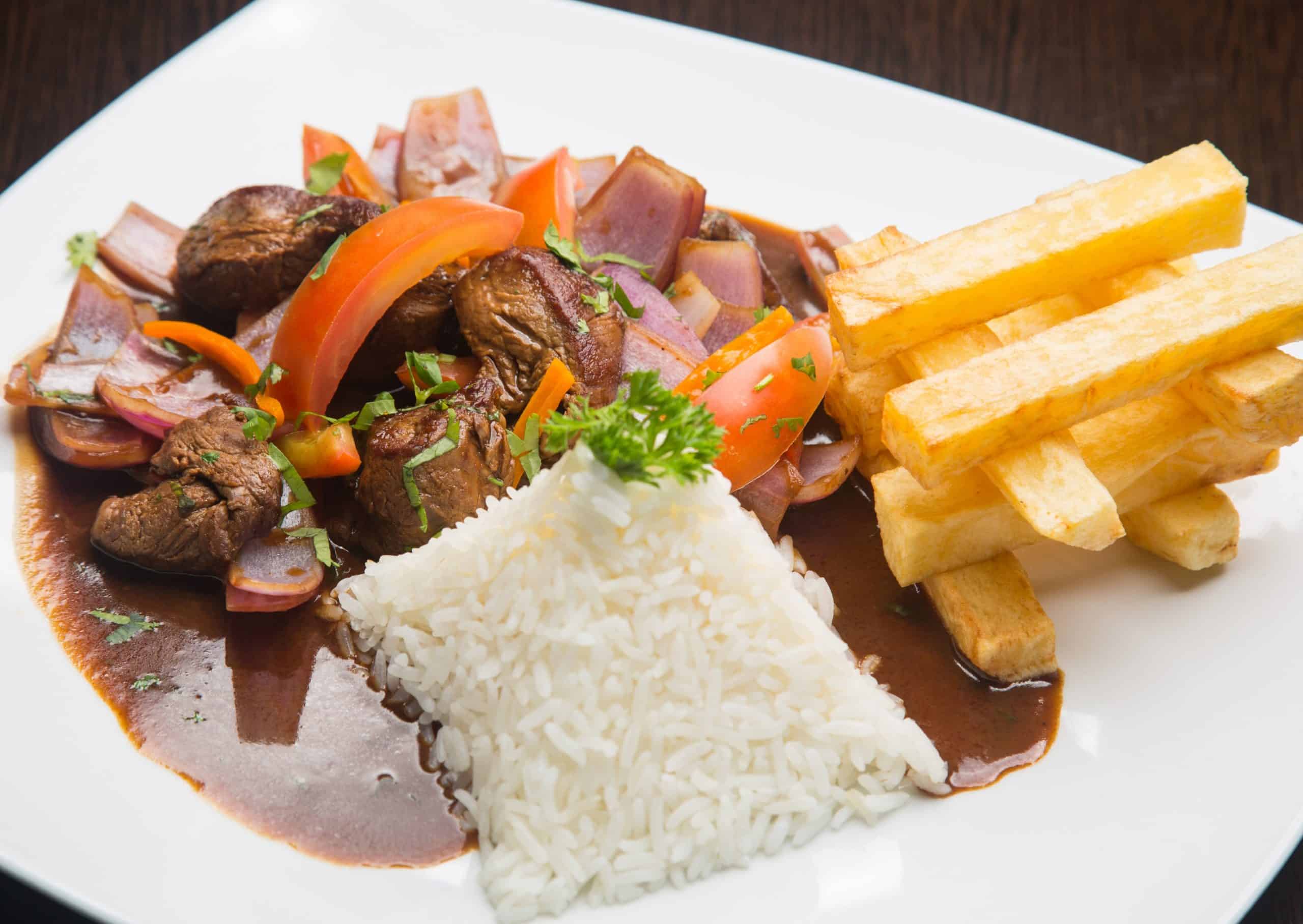
Peruvian cuisine is a vibrant tapestry of indigenous traditions and global influences, and few dishes showcase this fusion better than Lomo Saltado. A bold stir-fry of marinated beef, onions, tomatoes, and Peruvian spices served over crispy fries and rice it’s a plate that blends Chinese cooking techniques with classic Latin American ingredients. Originally born from Peru’s Chifa (Chinese-Peruvian) culinary tradition, Lomo Saltado is now a staple in homes and restaurants across the country.
What makes Lomo Saltado so special is its balance of textures and flavors. You get the tender sear of beef, the sweet acidity of tomatoes, the slight crunch of sautéed onions, and the irresistible comfort of golden fries all pulled together with a savory soy-based sauce. It’s hearty, satisfying, and packed with umami a must-try for anyone looking to explore South American comfort food at its finest.
In this recipe guide, you’ll learn how to make an authentic version of Lomo Saltado right at home. Whether you’re cooking for guests or simply want to expand your weeknight dinner routine, this dish delivers restaurant-level satisfaction without the need for hard-to-find ingredients or complicated steps.
Read here vegetarian food in Peru, Peruvian drinks and best breakfast in Peru
Read here Lima vs Cusco and 8 Days Peru Itinerary
BOOK YOUR TRAVEL INSURANCE
Two of our favorite travel insurance: Heymondo Vs Safetwing cheapest travel Insurance. You can get for $135 USD your Heymondo Travel Insurance with Heymondo discount code valid for 90 days. Read our full comparison of Genki vs Safetywing Travel Insurance Review and the comparison Heymondo vs Genki
Best Time to Eat & What to Serve with Lomo Saltado
Lomo Saltado is typically enjoyed for lunch or dinner, especially as a main course when you’re craving something filling yet vibrant. It’s perfect for weekends, casual dinners, or as a flavorful twist on a traditional steak-and-potatoes night.
To complete the experience, serve Lomo Saltado with steamed white rice and thick-cut homemade fries (ideally cooked in oil for a crispy exterior). For a side, consider a light avocado salad with lime dressing, and to drink, pair with a cold glass of Inca Kola (for authenticity) or a Malbec or Cabernet Sauvignon to complement the beefy richness.
Whether you’re new to Peruvian food or already a fan, Lomo Saltado is the kind of meal that brings the heat, flavor, and soul of Peru straight to your table.
Here’s where it gets spicy: Many purists argue that adding French fries directly into the stir-fry “ruins” the texture, while others say it’s the very essence of the dish. Then there’s the soy sauce debate should it be classic Chinese dark soy or a lighter Peruvian twist?
And while the fusion of Chinese and Peruvian cuisine is celebrated, some critics argue that Lomo Saltado has become too globalized, with restaurants across the world altering the flavor profile in ways that dilute its authenticity. Yet despite these debates, the dish’s popularity keeps growing perhaps because its very roots are all about cultural adaptation.
How to Make Peruvian Lomo Saltado
Lomo Saltado Recipe Ingredients
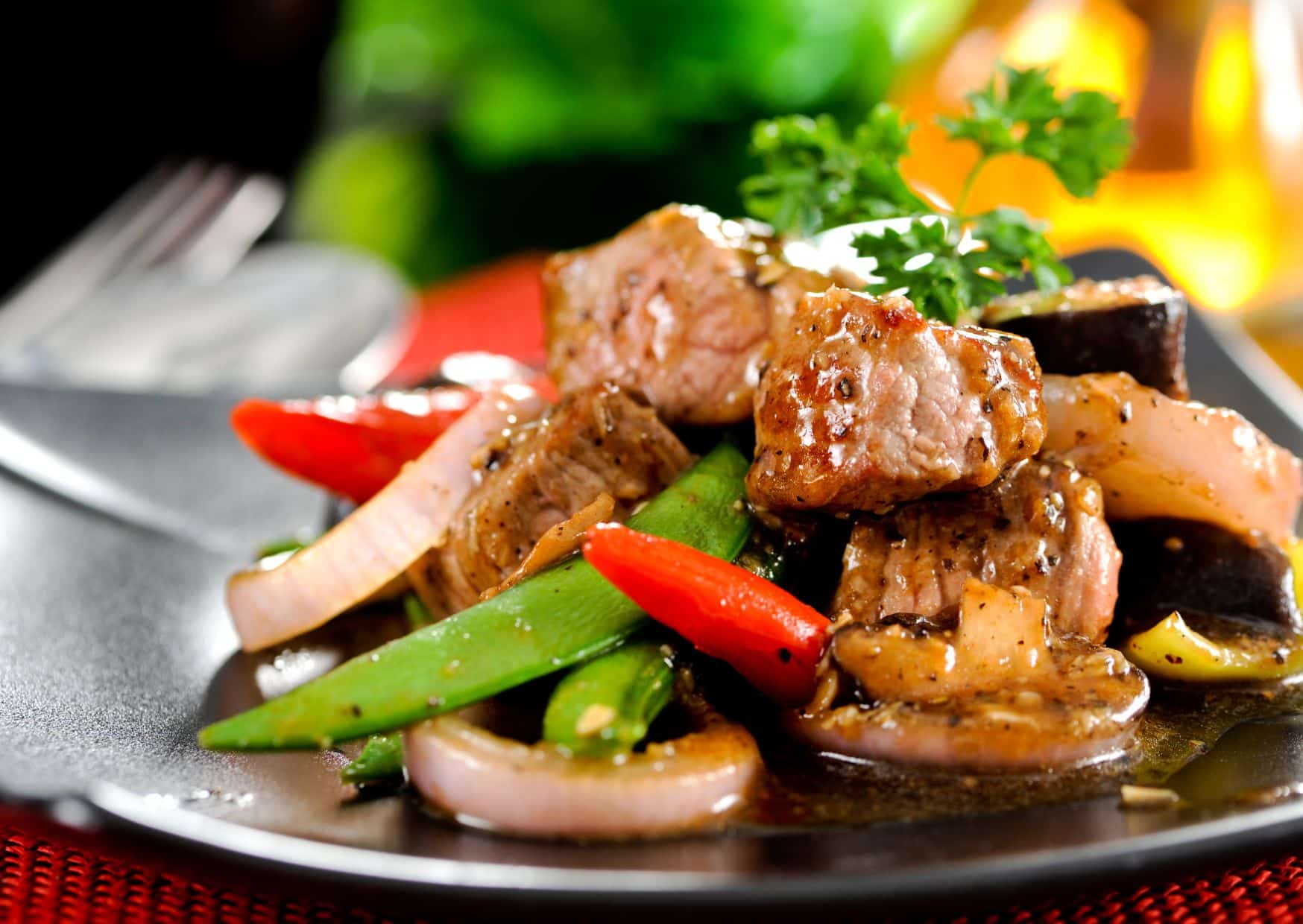
For the Stir-Fry:
1 lb (450g) beef sirloin or tenderloin, sliced into strips
1 large red onion, sliced into wedges
2 medium tomatoes, cut into wedges
1 large yellow chili (ají amarillo), julienned (optional)
3 cloves garlic, minced
2 tbsp soy sauce
1 tbsp vinegar (red wine or white vinegar)
2 tbsp oyster sauce (optional, for extra depth)
2 tbsp vegetable oil
Fresh cilantro, chopped (for garnish)
For the Sides:
2 cups cooked white rice
2 cups French fries (homemade or store-bought)
Get the best deals for your home and kitchen needs
Step By Step How to Make Lomo Saltado
Prep the Ingredients
Slice the beef into thin strips for quick cooking. Prepare the vegetables (onion, tomato, and chili) and set aside.
Cook the Beef
Heat 1 tbsp of oil in a large skillet or wok over high heat. Sear the beef in small batches to avoid overcrowding. Cook for 2-3 minutes until browned but still tender. Remove from the skillet and set aside.
Stir-Fry the Vegetables
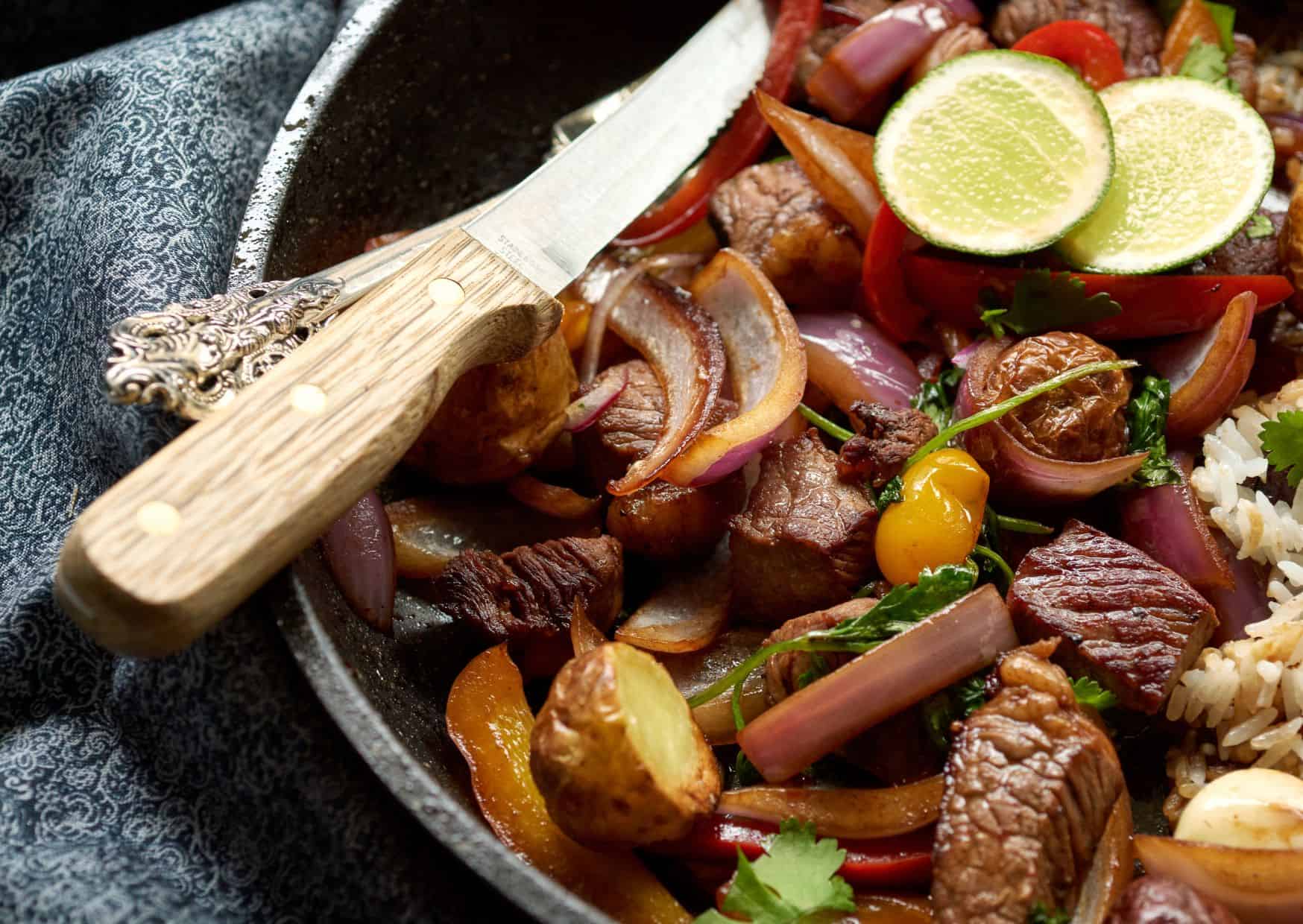
Add another tablespoon of oil to the same skillet. Sauté the onions until slightly softened, about 2 minutes. Add garlic and chili (if using) and stir-fry for another minute. Toss in the tomato wedges and cook briefly, keeping them slightly firm.
Combine and Season
Return the beef to the skillet. Add soy sauce, vinegar, and oyster sauce. Toss everything together to coat in the sauce. Adjust seasoning with salt and pepper to taste. Cook for an additional 1-2 minutes.
Serve
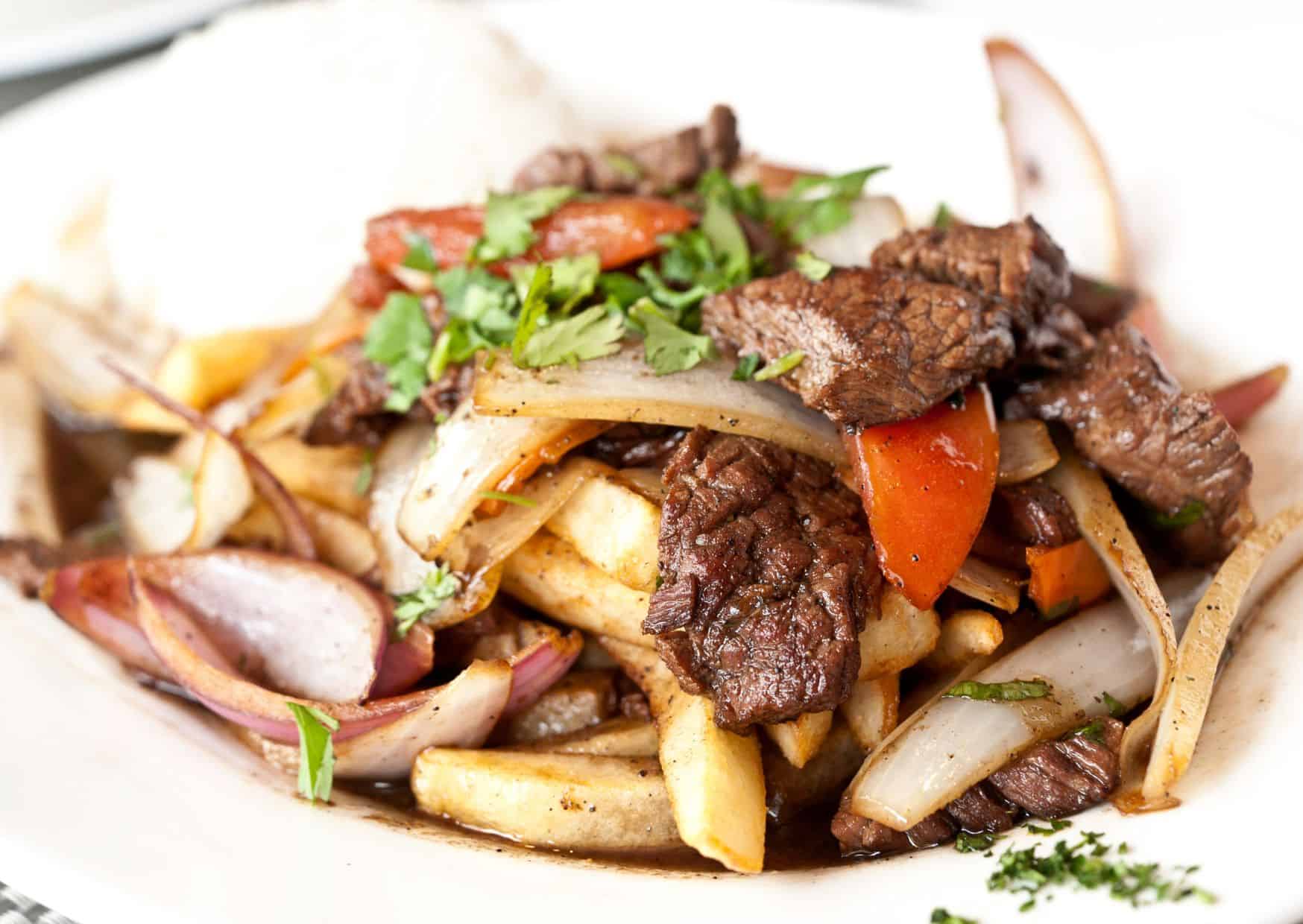
Plate the stir-fry alongside a serving of white rice and crispy French fries. Garnish with fresh cilantro.
Tips To Make Lomo Saltado
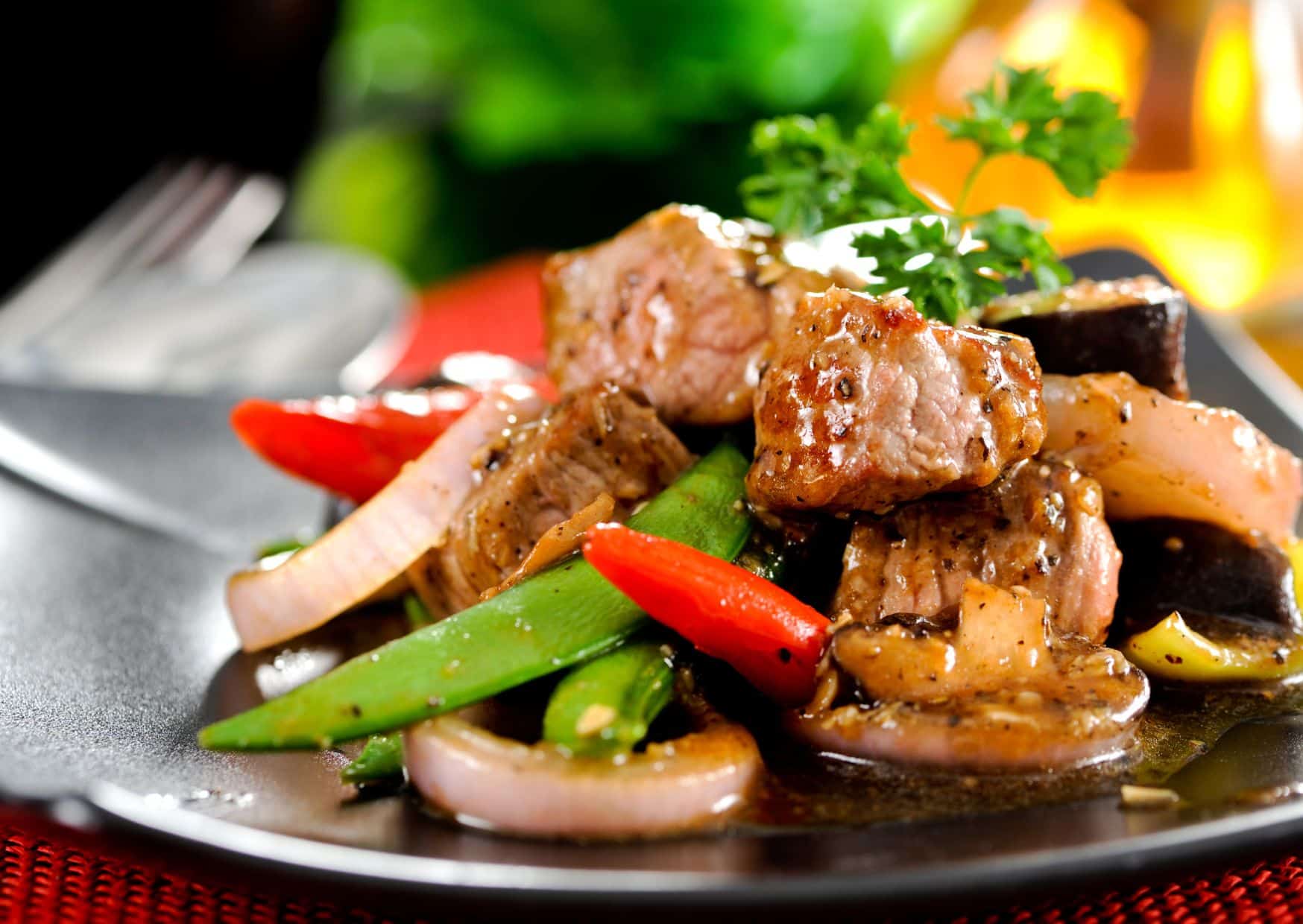
Cook on high heat for a quick sear to retain the beef’s juiciness and give the vegetables a slightly charred flavor.
Use ají amarillo chili for a traditional Peruvian taste. If unavailable, substitute with mild yellow peppers or omit.
Homemade fries are ideal, but you can use frozen ones for convenience. Add soy sauce gradually to avoid overpowering the dish.
How Many Calories Have Lomo Saltado
Approximate Total Calories: ~600-700 kcal
Beef and vegetables: ~300 kcal
White rice: ~200 kcal
French fries: ~150-200 kcal (depending on preparation method)
Variations
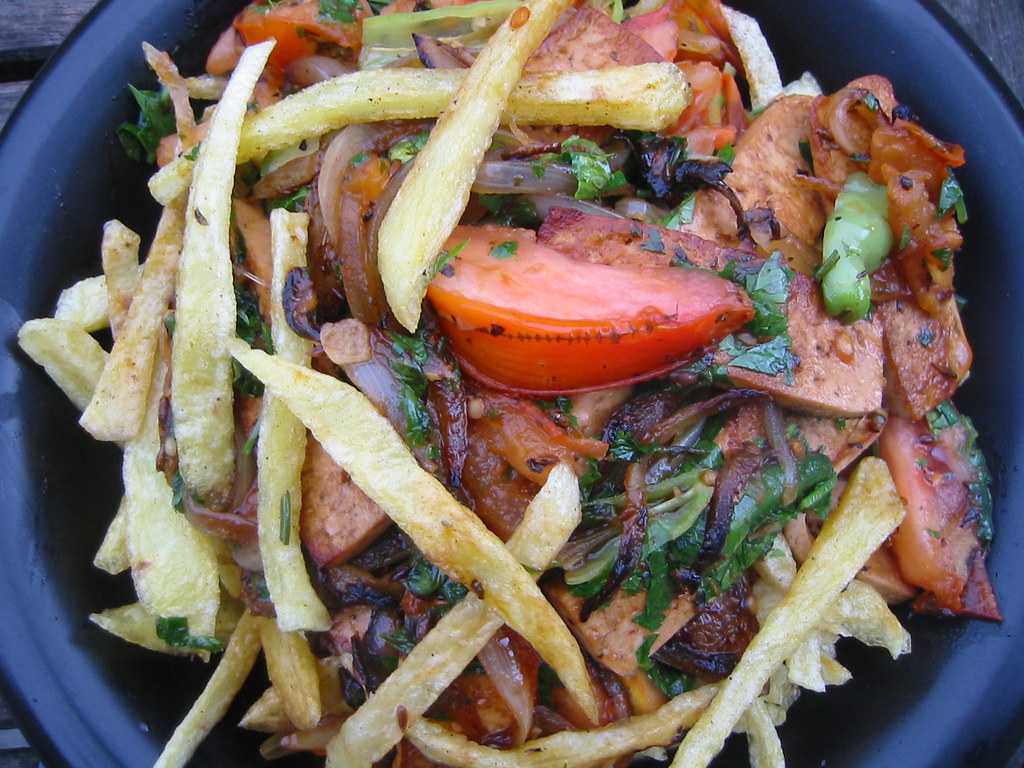
Vegetarian Option: Replace beef with tofu or mushrooms for a plant-based version.
Extra Heat: Add a drizzle of hot sauce or finely chopped chili for a spicy kick.
Lower Carb: Swap white rice with cauliflower rice or serve with a green salad instead of fries.
Origin and History
Lomo Saltado is one of those dishes that perfectly captures Peru’s layered culinary story. It’s a fusion of traditional Peruvian ingredients and Chinese cooking techniques brought over by Cantonese immigrants in the late 19th century. These immigrants settled in coastal cities like Lima and introduced stir-frying, wok cooking, and soy-based seasonings elements Peru quickly embraced and transformed into something uniquely its own.
As the blending of cultures continued, Peruvian cooks fused these Chinese techniques with local staples such as ají peppers, tomatoes, red onions, and native potatoes. The result was a dish that wasn’t just a stir-fry, but a celebration of Peru’s multicultural identity. Lomo Saltado became symbolic of chifa cuisine, Peru’s distinctive Chinese-Peruvian culinary tradition.
By the late 20th century, Lomo Saltado wasn’t just restaurant food it was a national obsession. It’s served in humble neighborhood eateries, upscale Peruvian restaurants, and home kitchens across the country. Today, it’s one of Peru’s most internationally recognized dishes, celebrated for its comforting flavors, quick preparation, and unique balance of salty, tangy, and spicy notes.
Despite its popularity, Lomo Saltado sparks plenty of debate even within Peru. One of the biggest points of contention is whether the dish should be made strictly with beef or whether chicken, pork, or even tofu versions can be considered legitimate. Purists argue that the original recipe was created to highlight beef, especially tenderloin, while others embrace more adaptable, modern interpretations.
Then there’s the French fry debate. Some insist the potatoes must be fried fresh and tossed into the stir-fry at the last second for crisp-tender perfection. Others believe the fries should be served on the side, not mixed in, to preserve their texture. The argument is so intense that some families have standing rules on how the dish must be served.
Finally, controversy surrounds how “saucy” Lomo Saltado should be. Some cooks prefer a thicker, reduced sauce that clings tightly to the beef and vegetables, while others like a looser, more broth-like base meant to soak into the accompanying rice. The disagreements reflect how personal and emotional the dish has become across generations.
How Long It Takes to Prepare
One of the biggest attractions of Lomo Saltado is that it’s incredibly fast to make. The bulk of your time is spent prepping ingredients slicing beef, chopping onions and tomatoes, and cutting potatoes for fries if you’re making them fresh. This typically takes about 15 to 20 minutes, depending on your knife speed and kitchen setup.
Once everything is prepped, the cooking process moves lightning fast. Because the stir-fry relies on high heat and quick movements, the actual cooking time is usually under 10 minutes. The beef sears in seconds, the vegetables soften quickly, and the sauce reduces almost instantly. Even the fries can be managed efficiently if you use an air fryer or cook them ahead of time.
Altogether, you can have a full, restaurant-quality Lomo Saltado on the table in about 30 minutes. It’s the kind of dish that works for weeknights but tastes special enough for entertaining guests.
Serving Suggestions
Traditionally, Lomo Saltado is served with two starches: fluffy white rice and crispy French fries. This double-carb approach might surprise newcomers, but it’s essential to the dish’s identity. The rice soaks up the tangy soy-vinegar sauce, while the fries add texture and richness.
To elevate the dish, some cooks add a fried egg on top, letting the yolk mingle with the sauce to create a richer, silkier finish. Others garnish with chopped cilantro or even add a splash of lime for extra brightness. You can also serve it with quinoa instead of rice, though this is considered a modern twist rather than traditional.
If you want a fuller Peruvian experience, pair the dish with a refreshing chicha morada or an ice-cold beer. The sweet, spiced notes of the traditional corn beverage complement the savory, tangy flavors perfectly.
Final Thoughts
Lomo Saltado is more than a stir-fry it’s a reflection of Peru’s cultural crossroads, where local ingredients meet Chinese cooking mastery. This blend of influences has created a dish that feels both comforting and exciting, familiar yet full of character. It’s no surprise the world has fallen head over heels for it.
What makes Lomo Saltado even more compelling is how accessible it is. With basic pantry ingredients and simple techniques, anyone can bring a taste of Peru into their home kitchen. It’s fast, flavorful, and flexible enough to make your own while still honoring its roots.
Ultimately, Lomo Saltado’s global appeal comes down to its perfect balance of bold flavors, hearty textures, and the story it tells on every plate. Once you taste it, it’s easy to understand why people keep coming back for more.

About the Author: Ruben, co-founder of Gamintraveler.com since 2014, is a seasoned traveler from Spain who has explored over 100 countries since 2009. Known for his extensive travel adventures across South America, Europe, the US, Australia, New Zealand, Asia, and Africa, Ruben combines his passion for adventurous yet sustainable living with his love for cycling, highlighted by his remarkable 5-month bicycle journey from Spain to Norway. He currently resides in Spain, where he continues sharing his travel experiences with his partner, Rachel, and their son, Han.