
A greeting is often the first impression you make when meeting someone, but not all greetings are the same across cultures. What’s friendly in one country might be awkward or even rude in another. From handshakes to bows and cheek kisses, understanding cultural differences in greetings can help you avoid embarrassing mistakes and show respect wherever you go.
Here are the unspoken rules of greeting people in different cultures that every traveler should know.
Greetings may seem simple, but they’re deeply cultural. Understanding them helps you connect better, avoid awkward situations, and show respect worldwide.
Read Here European Things that terrify Americans and American Habits that make Europeans Cringe
Read here how to pack for Europe and Best eSIM for Europe
BOOK YOUR TRAVEL INSURANCE
Two of our favorite travel insurance: Heymondo Vs Safetwing cheapest travel Insurance. You can get for $135 USD your Heymondo Travel Insurance with Heymondo discount code valid for 90 days. Read our full comparison of Genki vs Safetywing Travel Insurance Review and the comparison Heymondo vs Genki
Golden Rules for Greeting in Different Cultures
Handshake strength matters—firm in the West, gentle in Asia.
Cheek kissing is common in Latin America & Europe—but rare in the USA.
Bowing is key in Japan & Korea—don’t force handshakes.
Personal space varies—stay close in Latin America, farther in Scandinavia.
Always use your right hand in Middle Eastern and Muslim countries.
Respect gender norms—physical contact isn’t always welcome.
Learning a simple “hello” in the local language makes a huge difference.
1. Handshakes: Firm in the West, Gentle in the East

Western Countries (USA, UK, Germany, Australia, Canada):
A firm handshake is expected and shows confidence.
Maintain eye contact while shaking hands.
In business settings, men and women shake hands equally.
Middle East & Asia:
In the Middle East, handshakes are common but often softer—a strong grip can seem aggressive.
Men should wait for a woman to extend her hand first; some Muslim women prefer not to shake hands with men.
In China and Japan, handshakes are gentle and brief—a strong grip can be seen as rude.
Rule of Thumb: Adjust your grip to match the other person’s strength.
Avoid: Crushing someone’s hand in Asia or the Middle East, or giving a weak handshake in Germany or the USA.
2. Cheek Kissing: Romantic in the USA, Normal in Europe & Latin America

Europe & Latin America (France, Spain, Italy, Argentina):
Cheek kissing is a common greeting between friends and acquaintances.
In France, it’s usually two kisses (one on each cheek), but in some regions, it can be three or four.
In Argentina and Spain, even men may greet close friends with a cheek kiss.
USA, UK, Germany, & Northern Europe:
Cheek kissing is less common and usually reserved for close friends or family.
In business settings, stick to a handshake instead.
Rule of Thumb: If someone leans in for a kiss, go with the flow—but don’t initiate unless it’s expected.
Avoid: Kissing too many times or on the lips by accident—awkward!
3. Bowing: A Sign of Respect in Asia
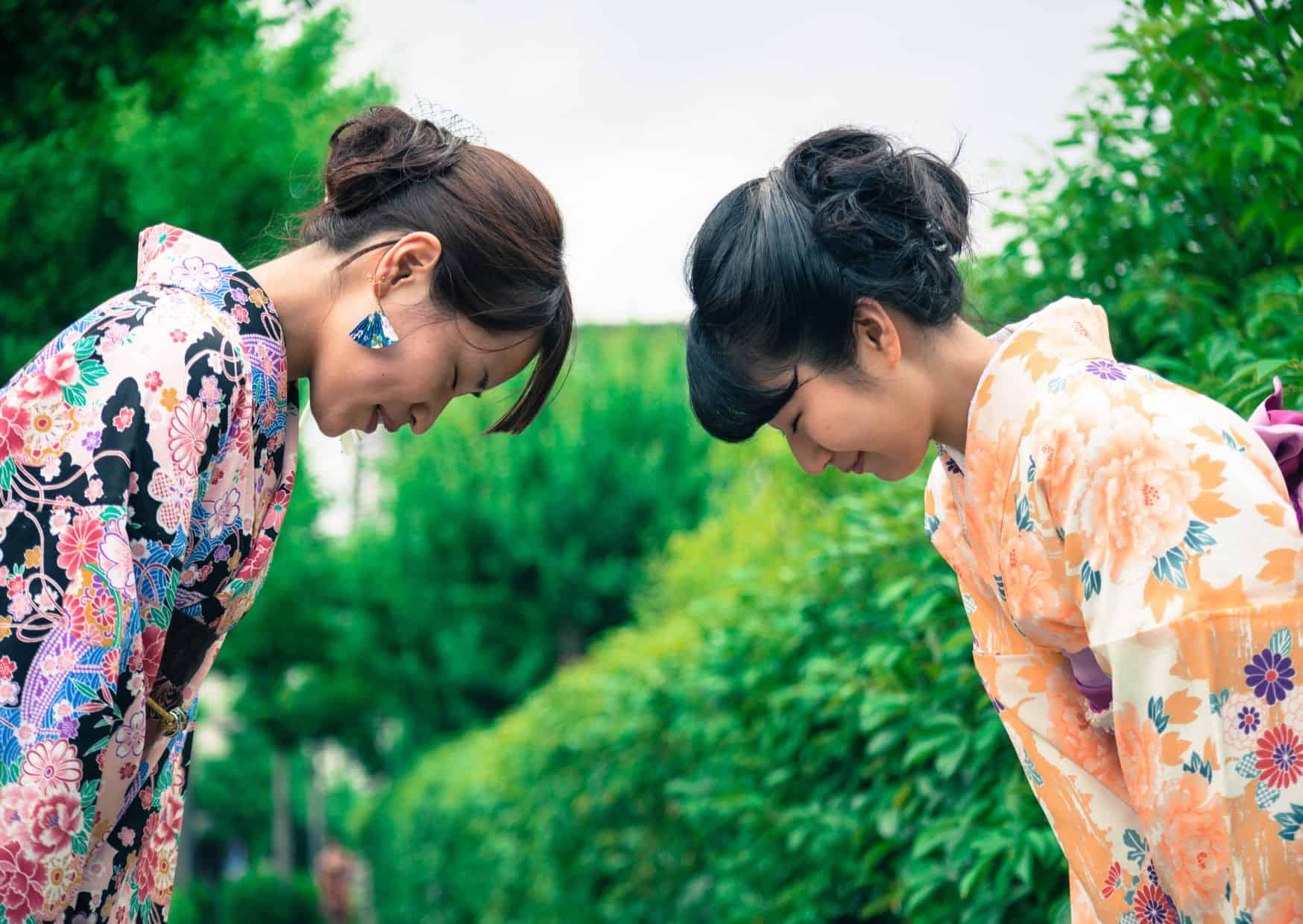
Japan & Korea:
Bowing is a deeply respected tradition used in greetings, thanks, and apologies.
The deeper the bow, the more respect you show—but casual bows are slight.
Handshakes are becoming more common, but bows remain standard.
China & Thailand:
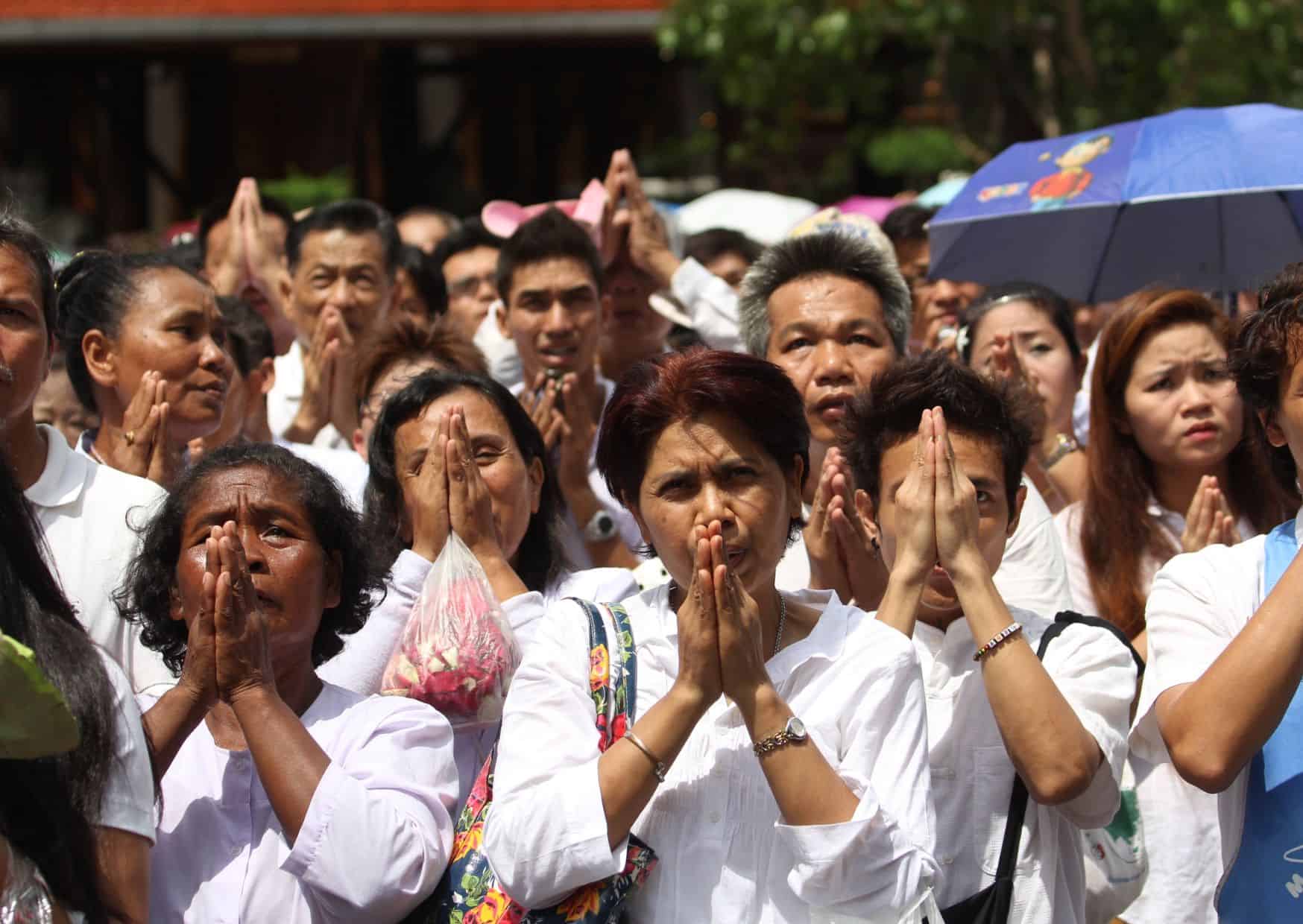
In China, a nod or light bow is common, but handshakes are more widespread.
In Thailand, a “wai” (palms together with a slight bow) is the traditional greeting.
Rule of Thumb: If someone bows to you, return the gesture—but don’t overdo it.
Avoid: Forcing a handshake if someone is bowing—it creates an awkward mix of gestures.
4. Personal Space: Close in Latin America, Far in Scandinavia
Latin America, Southern Europe, Middle East:
Greetings involve physical closeness, pats on the back, or hugs.
Standing too far away may seem unfriendly or cold.
Northern Europe, USA, Japan:
People prefer more personal space—keep about an arm’s length when greeting.
Overly close greetings may make people uncomfortable.
Rule of Thumb: If someone moves closer, they’re comfortable with less space—if they step back, give them more room.
Avoid: Hugging or standing too close to Nordic, British, or Japanese people on first meetings.
5. Greetings Between Men and Women Vary by Culture

Western Countries (USA, UK, France, Germany, Australia):
Men and women shake hands equally in business and casual settings.
Hugging may happen among close friends, but not in professional settings.
Middle East & South Asia (Saudi Arabia, UAE, India):
In conservative cultures, men and women often do NOT touch in greetings.
Men should wait for a woman to initiate a handshake—if she doesn’t, a nod is fine.
Latin America & Southern Europe:
In social settings, women may greet with a cheek kiss, even with new acquaintances.
Rule of Thumb: Observe how locals interact before extending a hand, a kiss, or a hug.
Avoid: Assuming physical contact is always acceptable—it depends on the culture.
6. Greetings in Muslim Countries: Right Hand & Religious
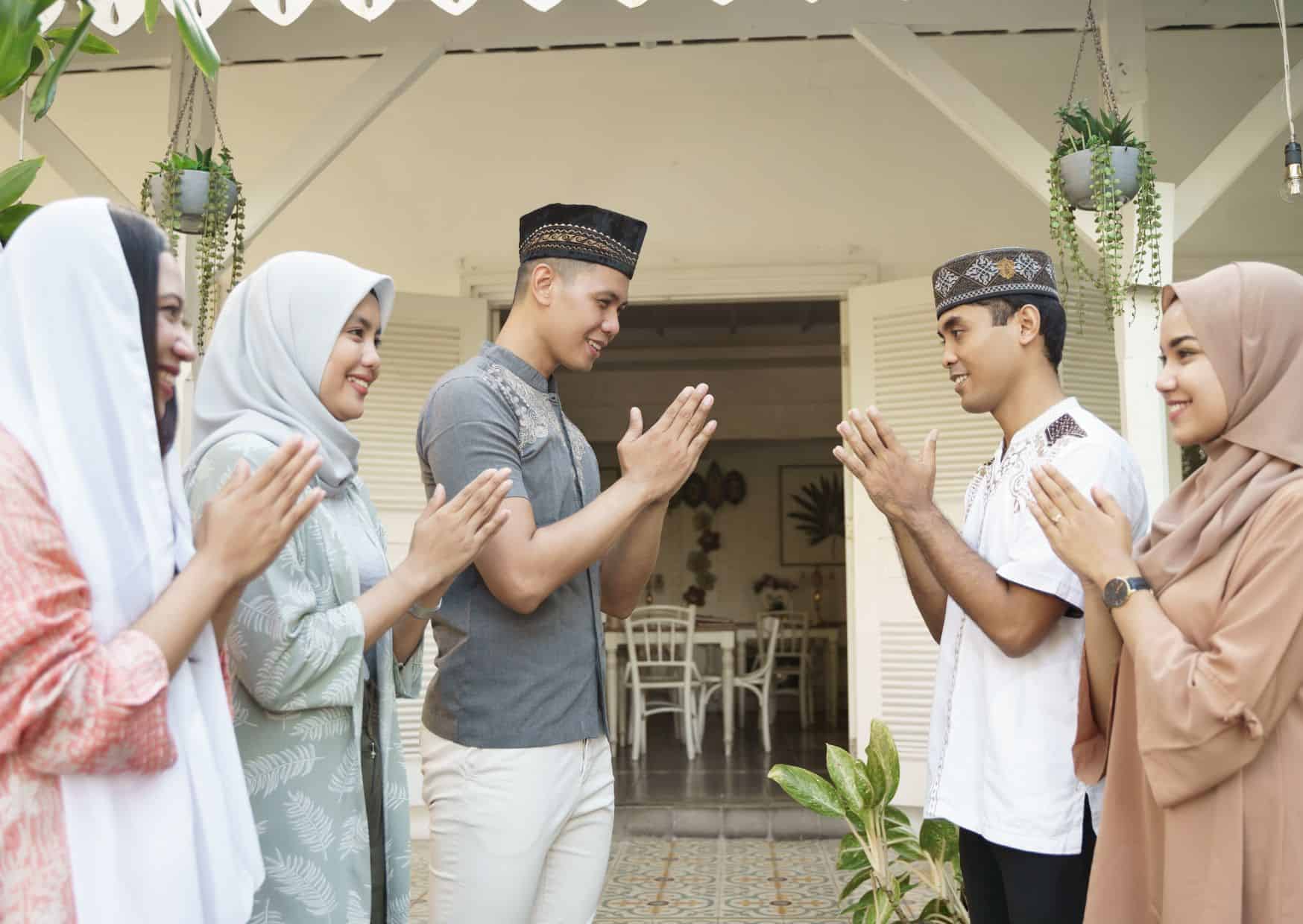
Considerations
Middle East, North Africa, Indonesia:
Always use your right hand for shaking hands or passing items—the left hand is considered unclean.
Many Muslim men won’t shake hands with unrelated women, and vice versa.
Instead, a nod, placing a hand over the heart, or saying “As-salamu Alaikum” (Peace be upon you) is a polite alternative.
Rule of Thumb: When in doubt, greet verbally and follow the other person’s lead.
Avoid: Initiating physical contact unless you’re sure it’s appropriate.
7. Verbal Greetings Matter Too
Common Greetings Around the World:
USA & UK: “Hello” or “How are you?” (but don’t expect a long answer).
France: “Bonjour” (Good day) – Always greet before asking for something.
Germany: “Guten Tag” (Good day) – Formal greetings are important.
Spain & Italy: “Hola” / “Ciao” – Used casually, often with cheek kisses.
Japan: “Konnichiwa” – Respectful bow included.
India: “Namaste” – Hands together with a slight bow.
Middle East: “As-salamu Alaikum” – Common Arabic greeting (reply: “Wa Alaikum Salam”).
Rule of Thumb: Learn at least one greeting in the local language—it’s a sign of respect.
Avoid: Assuming everyone speaks English—effort goes a long way.
8. Greeting Elders Requires Extra Respect in Some Cultures

Asia & Africa:
In Japan, Korea, India, and many African countries, younger people bow lower or show extra deference when greeting elders.
In India and some African cultures, touching an elder’s feet or bowing deeply is a sign of great respect.
Rule of Thumb: If meeting an elder, let them initiate the greeting first.
Avoid: Greeting elders too casually in Asia or Africa—formality matters.

About the Author: Ruben, co-founder of Gamintraveler.com since 2014, is a seasoned traveler from Spain who has explored over 100 countries since 2009. Known for his extensive travel adventures across South America, Europe, the US, Australia, New Zealand, Asia, and Africa, Ruben combines his passion for adventurous yet sustainable living with his love for cycling, highlighted by his remarkable 5-month bicycle journey from Spain to Norway. He currently resides in Spain, where he continues sharing his travel experiences with his partner, Rachel, and their son, Han.