
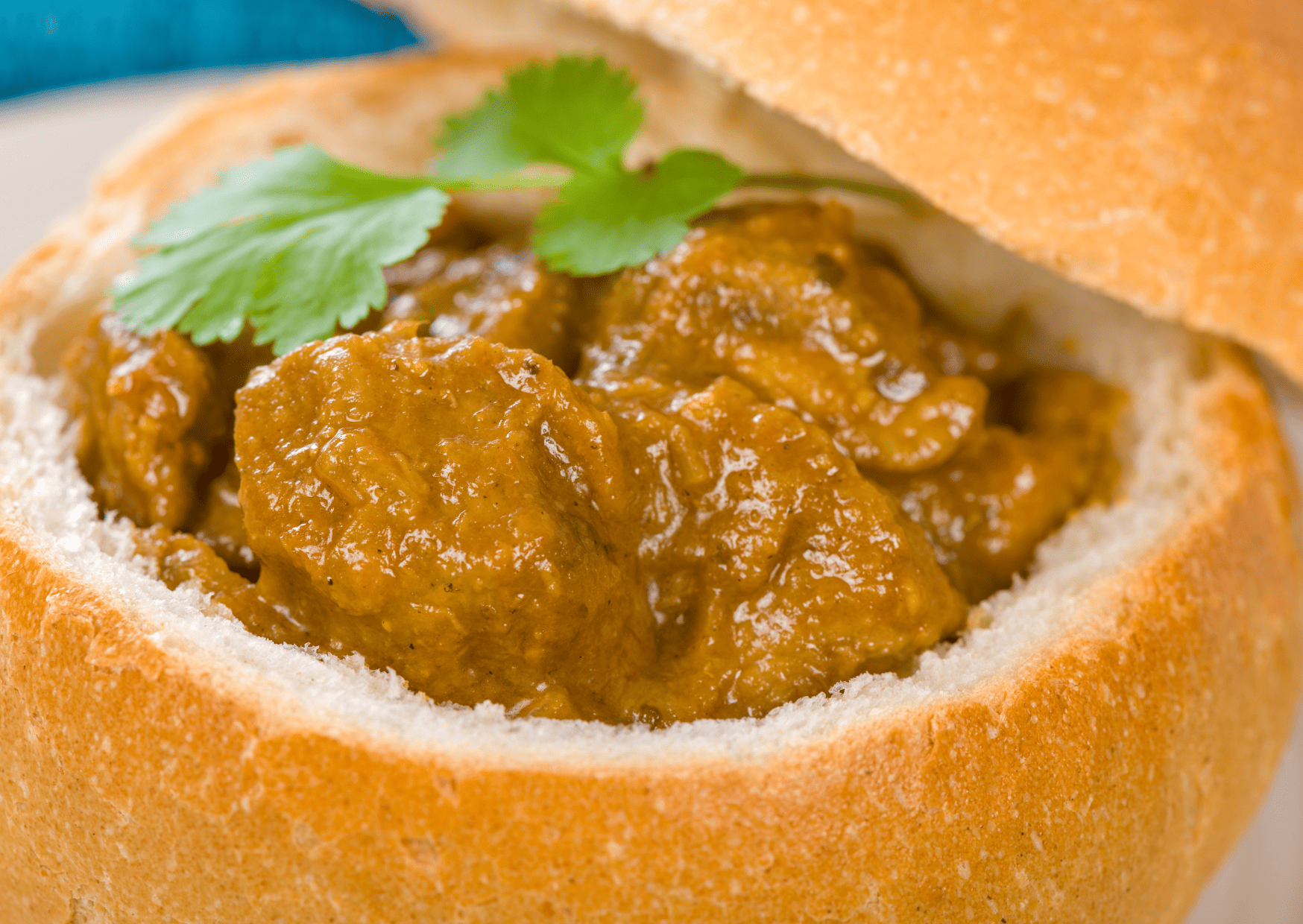
When you think of South African cuisine, your mind may jump to braais (barbecues) or biltong, but nothing captures the heart of street food culture like Bunny Chow. Originating in the vibrant city of Durban, Bunny Chow is a hollowed-out loaf of bread filled to the brim with spicy curry—messy, hearty, and unforgettable.
This dish has an inspiring history, too. It was created by the Indian community in Durban during the apartheid era as a portable and affordable way to serve curry. What started as a practical street meal has now become a national icon, beloved across South Africa and beyond.
Today, Bunny Chow is more than just food—it’s a symbol of cultural fusion, resilience, and bold flavor. From spicy lamb curries to vegetarian fillings, Bunny Chow offers a taste of South Africa’s diverse heritage in every bite.
BOOK YOUR TRAVEL INSURANCE
Two of our favorite travel insurance: Heymondo Vs Safetwing cheapest travel Insurance. You can get for $135 USD your Heymondo Travel Insurance with Heymondo discount code valid for 90 days. Read our full comparison of Genki vs Safetywing Travel Insurance Review and the comparison Heymondo vs Genki
How to Eat
The rule is simple: ditch the cutlery. Bunny Chow is meant to be eaten with your hands, tearing off chunks of bread to scoop up the curry as you go. It’s messy, satisfying, and part of the fun. Just don’t be shy about getting curry all over your fingers—that’s how you know you’re doing it right.
How to Partner
Bunny Chow is filling on its own, but locals often enjoy it with sambals (spicy chutneys or pickled vegetables) to balance the heat. A cold lager or ginger beer also pairs beautifully, cutting through the richness of the curry. If you want a sweet finish, serve it with malva pudding—another South African classic.
Despite its popularity, Bunny Chow has long been surrounded by controversy. For one, many argue whether it should only be considered a Durban dish or if it has truly become a national food. Durban locals fiercely defend it as their own, while others across South Africa claim it as part of the country’s shared identity.
Another debate is about the bread itself. Traditionalists insist Bunny Chow must be made with a cheap white loaf—the kind most accessible in its origins—while modern chefs sometimes use artisan bread or even mini buns for “fancy” versions. Purists often scoff at this, saying it takes away from its working-class roots.
Finally, there’s the global misunderstanding. Some tourists believe Bunny Chow has something to do with rabbits because of its name, which couldn’t be further from the truth. In reality, “bunny” comes from the Indian word bania (trader caste). For South Africans, it’s frustrating to see such a deeply cultural food simplified into a novelty.
How to Make Bunny Chow
Bunny Chow Recipe Ingredients
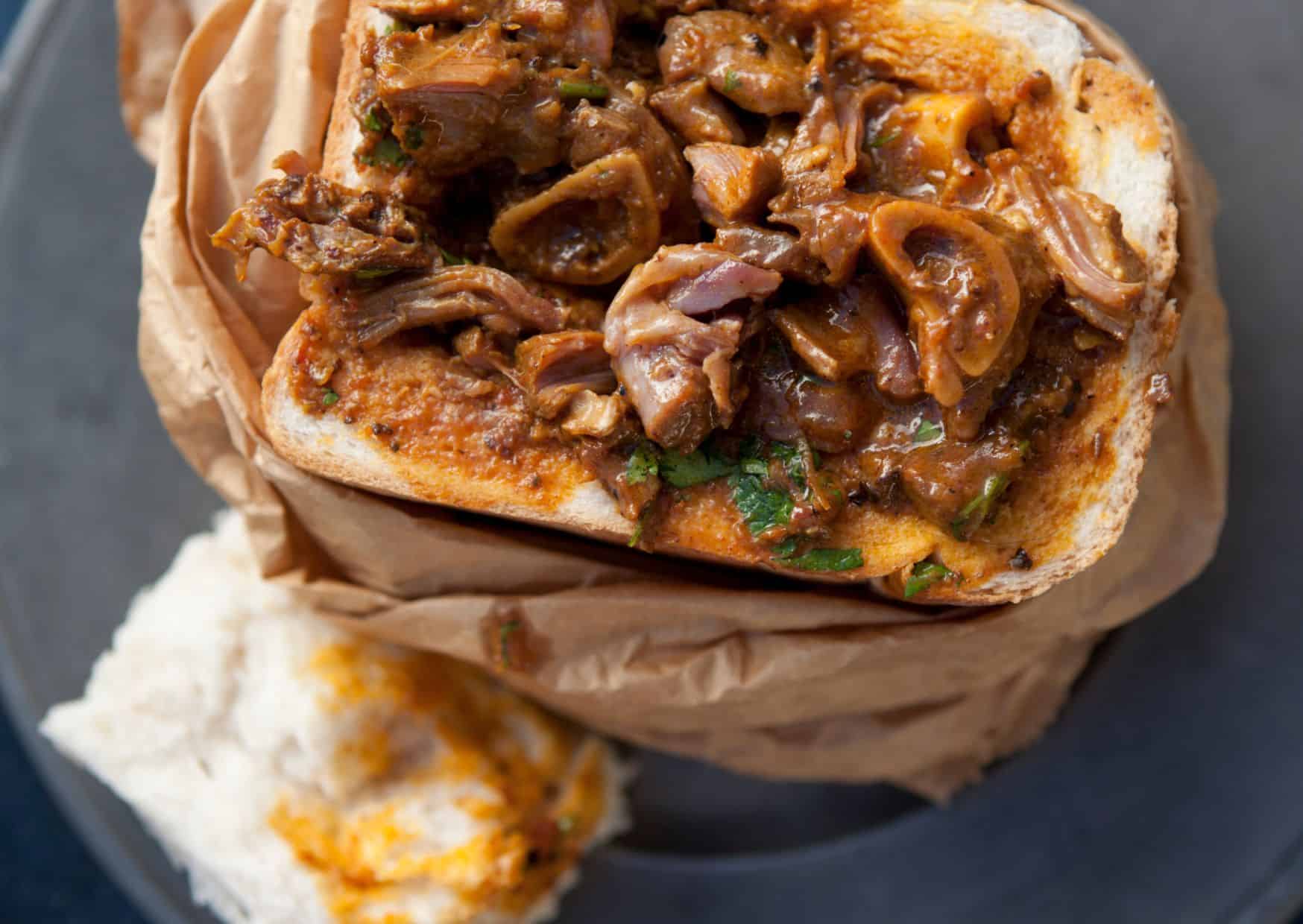
For the Curry:
500g (1.1 lbs) beef, lamb, chicken, or vegetable chunks (your choice)
2 tablespoons vegetable oil
1 large onion, chopped
2 cloves garlic, minced
1 tablespoon ginger, minced
2 tablespoons curry powder
1 teaspoon ground cumin
1 teaspoon ground coriander
1 teaspoon turmeric
1 can (400g) diced tomatoes
1 cup beef or chicken broth (or water for vegetarian version)
2 potatoes, peeled and cubed
Salt and pepper to taste
Fresh cilantro (for garnish)
For the Bread:
1 large loaf of white bread (unsliced)
Get the best deals for your home and kitchen needs
Step By Step How to Make Bunny Chow
Prepare the Curry
Heat the vegetable oil in a large pot over medium heat. Add the chopped onion and sauté until translucent.
Stir in the garlic and ginger, cooking for another minute until fragrant. Add the meat (or vegetables) and cook until browned on all sides.
Add Spices
Stir in the curry powder, cumin, coriander, and turmeric. Cook for 2-3 minutes to toast the spices.
Simmer the Curry
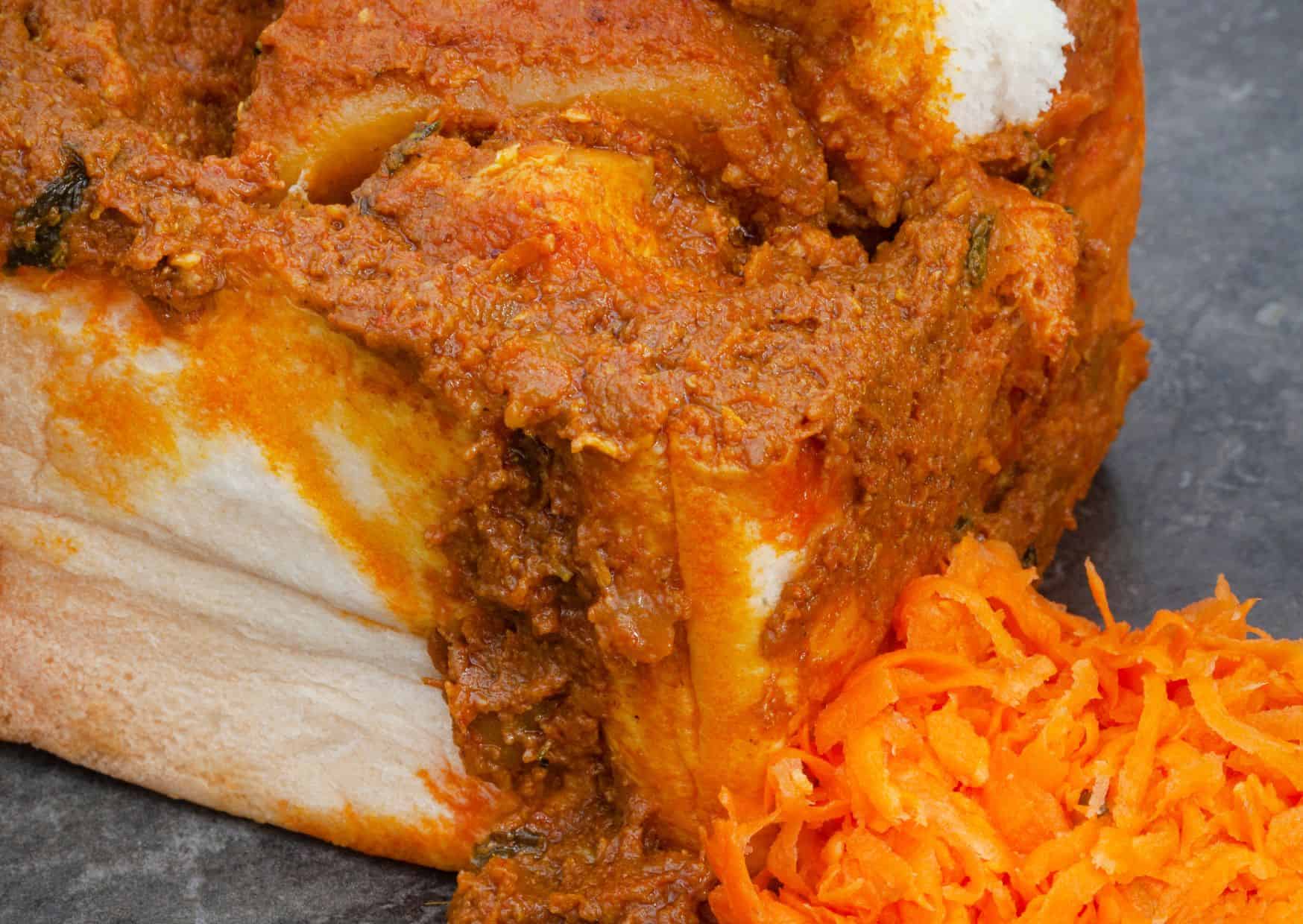
Add the diced tomatoes and broth. Stir to combine. Add the cubed potatoes, salt, and pepper. Bring the mixture to a boil, then reduce heat to low and simmer for 30-40 minutes, or until the meat and potatoes are tender and the sauce has thickened.
Prepare the Bread
Cut the loaf of bread into quarters. Hollow out each quarter, leaving a thick crust to hold the curry. Reserve the removed bread pieces for dipping.
Assemble and Serve
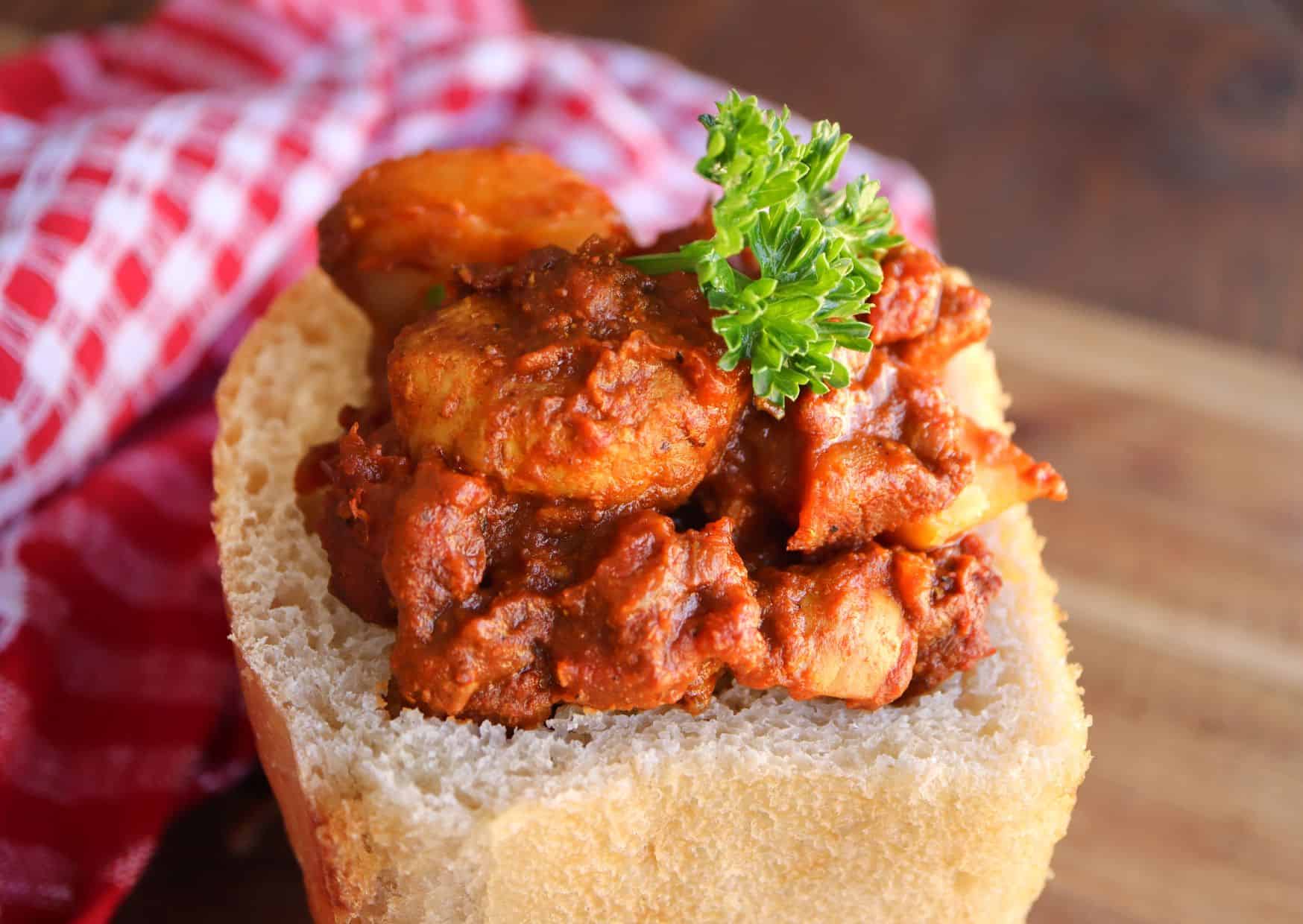
Spoon the hot curry into the hollowed-out bread quarters. Garnish with fresh cilantro.
Serve
Serve immediately with the reserved bread pieces on the side for dipping.
Tips To Make Bunny Chow
Use a sturdy loaf that can hold the curry without becoming too soggy. A day-old loaf works well as it tends to be firmer.
Adjust the amount of curry powder to control the heat level of the dish. Add more chili powder or fresh chilies for extra heat.
You can use different types of protein (beef, lamb, chicken) or make a vegetarian version with chickpeas and mixed vegetables. Serve with a side of sambal or pickled vegetables for added flavor and texture.
How Many Calories Have Bunny Chow
Meat (500g total): Approximately 150-200 calories per serving
Vegetable Oil (2 tablespoons): Approximately 60 calories per serving
Bread (1/4 loaf): Approximately 200-250 calories per serving
Potatoes (2 medium): Approximately 50-60 calories per serving
Other Ingredients (onions, tomatoes, spices): Approximately 40 calories per serving
Total Calories per Serving: Approximately 500-600 calories
Origin and History
Bunny chow began as a humble workers’ meal in Durban, a city shaped by Indian immigration, Zulu culinary traditions, and South Africa’s vibrant multicultural mix. In the early 20th century, Indian laborers needed a portable, hearty lunch they could eat quickly during long work shifts. Instead of transporting fragile metal tiffins, cooks carved out loaves of bread and filled them with rich, spice-forward curries. This simple innovation produced one of the most defining dishes in South African food culture.
Over time, bunny chow evolved far beyond its practical roots. Street vendors, families, and restaurants across Durban began crafting their own variations using mutton, chicken, beans, or vegetable curries. What stayed constant was its iconic presentation: a hollowed-out white bread loaf soaked with aromatic gravy. The dish became a symbol of resilience, reflecting the ingenuity of marginalized communities navigating strict segregation rules of the past.
As South Africa modernized, bunny chow transitioned from a working-class staple to a nationwide favorite. Tourists seek it out for its bold flavors, locals champion it as a cultural treasure, and chefs elevate it with refined ingredients. Despite its rise in popularity, it remains a powerful reminder of the country’s layered history and the culinary creativity that emerged in difficult circumstances.
One of the biggest debates surrounding bunny chow is who can claim ownership of the dish. While it is undeniably tied to Durban’s Indian community, many argue that its identity is shared by the Zulu population who helped shape its flavors and brought their own culinary influence into the mix. The result is a dish that belongs to everyone yet remains fiercely protected by its regional roots.
Another point of contention lies in authenticity. Some insist that a traditional bunny chow must be made with white sandwich bread and bone-in mutton curry, letting the juices seep into the loaf. Others argue that modern versions using artisanal bread, boneless meats, or vegetarian fillings are equally valid. This clash reflects the tension between preserving culinary heritage and embracing innovation.
Even the name sparks debate. Despite the presence of “bunny,” the dish has nothing to do with rabbits. Some believe it stems from the “Banias,” an Indian merchant caste believed to have sold the earliest versions. Critics argue that this explanation lacks documented evidence. The ambiguity only adds to the mystique of this beloved street food.
How Long It Takes to Prepare
Preparing bunny chow at home typically takes between one to two hours, depending on the type of curry you choose. A traditional mutton curry simmered on the bone takes closer to two hours, allowing the flavors to meld into a deep, soulful gravy. Faster versions with chicken or beans can come together much more quickly without sacrificing authenticity.
The bread preparation itself adds almost no time. The key is selecting a soft, dense loaf and carefully hollowing it out to create a sturdy bowl that can withstand the curry’s heat and richness. Many cooks prepare the bread while the curry simmers, making the entire process efficient and manageable for a weeknight meal.
Because the dish relies heavily on spices, chopping, sautéing, and roasting aromatics form the backbone of the cooking process. Once these flavors have developed, the rest is a relaxed simmer. The hands-on time is surprisingly minimal, making bunny chow easier than it appears.
Serving Suggestions
The classic way to serve bunny chow is with the hollowed-out “bread lid” placed on top like a cap. Diners tear off pieces of bread to scoop up the curry, letting the loaf gradually collapse in the most satisfying way. This hands-on approach is part of the experience and a defining feature of the dish.
To elevate your serving, add simple sides such as carrot salad, pickled onions, or chopped cilantro. These fresh elements brighten the richness of the curry and bring balance to each bite. Some like to include extra gravy on the side, allowing guests to adjust the level of sauciness.
If you want to impress a crowd, consider serving individual quarter-loaf portions so everyone gets their own edible bowl. It transforms a casual dish into a conversation piece and highlights the playful, communal spirit behind bunny chow.
Final Thoughts
Bunny chow is more than a recipe; it is a culinary story of migration, adaptation, and creativity. Making it at home allows you to connect with a dish that carries cultural significance while delighting in bold, comforting flavors. With each step, you participate in a tradition that transcends generations.
For cooks who love discovering dishes with depth and history, bunny chow offers an exciting project. It is approachable enough for beginners yet rich enough to satisfy seasoned food lovers. Once you make it yourself, it becomes clear why this stew-in-bread combination has earned global admiration.
Whether you keep it traditional or add your own twist, the heart of bunny chow remains the same: warmth, generosity, and flavor. It is a dish meant to be shared, enjoyed, and remembered long after the last piece of bread is gone.

About the Author: Ruben, co-founder of Gamintraveler.com since 2014, is a seasoned traveler from Spain who has explored over 100 countries since 2009. Known for his extensive travel adventures across South America, Europe, the US, Australia, New Zealand, Asia, and Africa, Ruben combines his passion for adventurous yet sustainable living with his love for cycling, highlighted by his remarkable 5-month bicycle journey from Spain to Norway. He currently resides in Spain, where he continues sharing his travel experiences with his partner, Rachel, and their son, Han.