
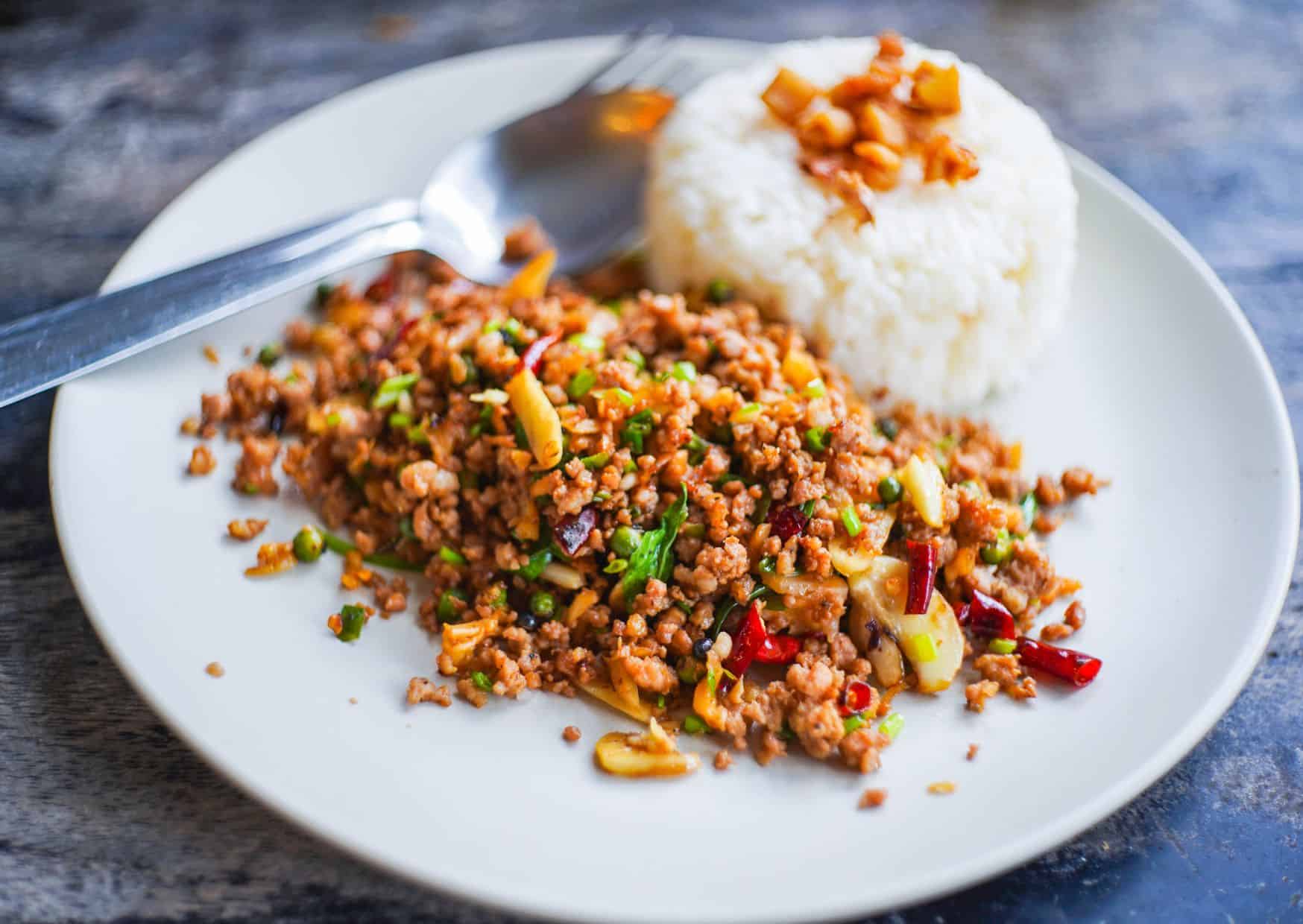
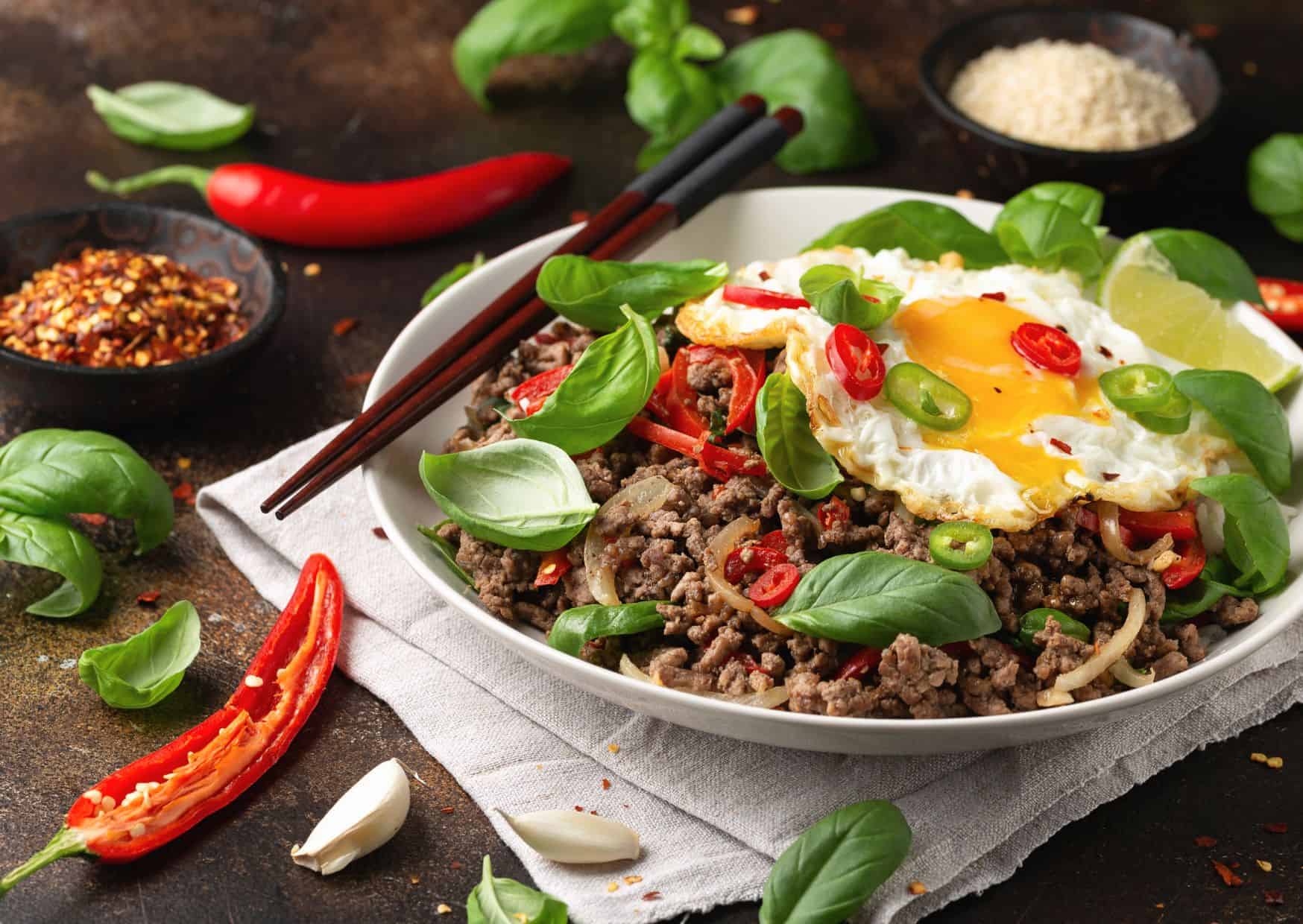
Pad Kra Pao Moo, or Thai basil pork stir fry, is one of the most popular street food dishes in Thailand, loved for its bold, aromatic flavours and satisfying combination of savoury, spicy, and sweet. This classic dish features minced pork stir-fried with garlic, chillies, and holy basil, then served over steamed jasmine rice and often topped with a crispy fried egg. In this recipe guide, you’ll learn how to make authentic Pad Kra Pao Moo at home, bringing the flavours of Bangkok’s bustling food stalls straight to your kitchen.
What makes Pad Kra Pao Moo so special is its simplicity and punchy flavours that come together in under 20 minutes. The combination of fresh holy basil, fish sauce, soy sauce, and chillies creates a dish that is fragrant, spicy, and deeply satisfying. It’s a quick stir fry that transforms everyday ingredients into a meal bursting with authentic Thai taste.
Whether you’re looking for a speedy weekday dinner, meal prepping for the week, or craving Thai food without ordering takeout, Pad Kra Pao Moo is a versatile recipe to add to your repertoire. It’s proof that the best Thai dishes are often the simplest to prepare and deliver the most unforgettable flavours.
Read here best Thai food and best Thai Breakfast
Read here best sim card in Thailand, Thailand vs Philippines and Thailand travel tips
BOOK YOUR TRAVEL INSURANCE
Two of our favorite travel insurance: Heymondo Vs Safetwing cheapest travel Insurance. You can get for $135 USD your Heymondo Travel Insurance with Heymondo discount code valid for 90 days. Read our full comparison of Genki vs Safetywing Travel Insurance Review and the comparison Heymondo vs Genki
Best Time To Eat
Pad Kra Pao Moo is best enjoyed as a quick lunch or satisfying dinner, especially on busy weekdays when you need a fast, protein-rich meal packed with spicy, aromatic flavours to energise your day.
Best Dishes To Partner
Serve your Pad Kra Pao Moo with steamed jasmine rice and a crispy fried egg (kai dao) for a complete meal. For sides, pair it with Thai cucumber salad (ajard) or clear vegetable soup, and enjoy it with a refreshing drink like iced Thai tea or lime soda to balance the dish’s heat.
One of the biggest misconceptions about Pad Kra Pao Moo is that any basil will do. Many Western versions use sweet basil or even Italian basil, completely altering the dish’s character. The essential ingredient is holy basil (kra pao), which gives the dish its signature peppery bite and aroma. Without it, it’s not authentic Pad Kra Pao—it’s just pork stir-fry.
Another issue is the tendency to overcomplicate or “elevate” the dish with unnecessary ingredients like bell peppers, soy sauce-heavy blends, or sugar-laden glazes. Real Pad Kra Pao is rustic, punchy, and quick—it doesn’t need reinvention. It’s meant to be a fast, fiery comfort food, not a sweet-and-sour stir-fry.
Lastly, this dish—despite being one of the most beloved street foods in Thailand—is often underappreciated in Western food media. It’s sometimes treated as a casual filler dish rather than the cultural staple it truly is. Giving it proper respect starts with cooking it right, using the right basil, and letting its raw, bold flavor speak for itself.
How to Make Pad Kra Pao Moo
Pad Kra Pao Moo Recipe Ingredients
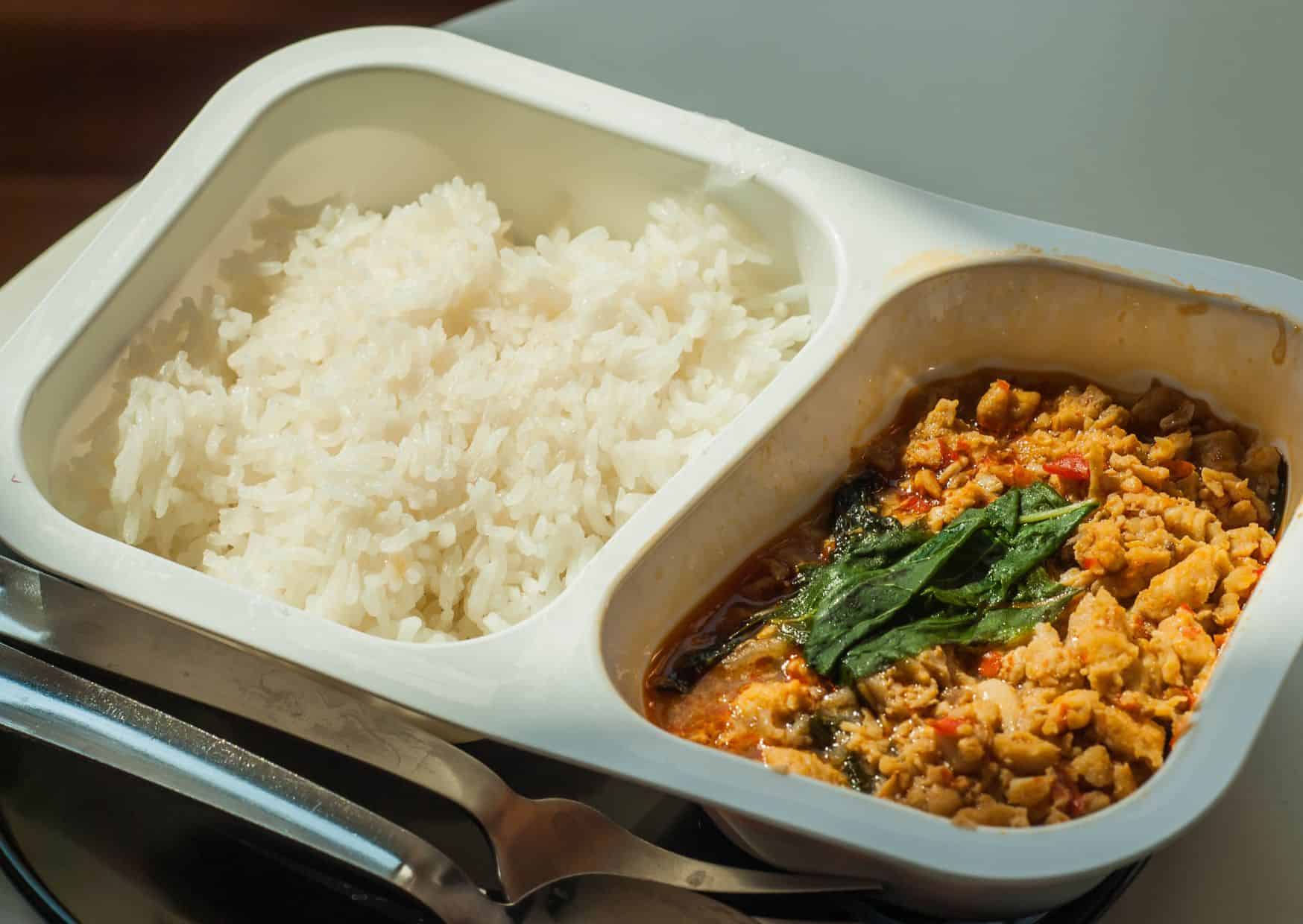
For the Stir-Fry:
1 lb (450g) minced pork
1 cup fresh Thai basil leaves
6 cloves garlic, minced
4-6 Thai bird’s eye chilies, minced (adjust to taste)
1 tablespoon vegetable oil
1 tablespoon fish sauce
1 tablespoon soy sauce
1 tablespoon oyster sauce
1 teaspoon dark soy sauce (for color, optional)
1 teaspoon sugar
For Serving:
Steamed jasmine rice
Fried eggs (one per serving)
Get the best deals for your home and kitchen needs
Step By Step How to Make Pad Kra Pao Moo
- Prepare the Ingredients
Mince the garlic and chilies. Set aside. Pick the Thai basil leaves from the stems and set aside.
- Make the Sauce
In a small bowl, mix the fish sauce, soy sauce, oyster sauce, dark soy sauce (if using), and sugar. Set aside.
- Cook the Pork
Heat the vegetable oil in a wok or large skillet over medium-high heat. Add the minced garlic and chilies, stir-frying for about 30 seconds until fragrant.
- Add the Pork
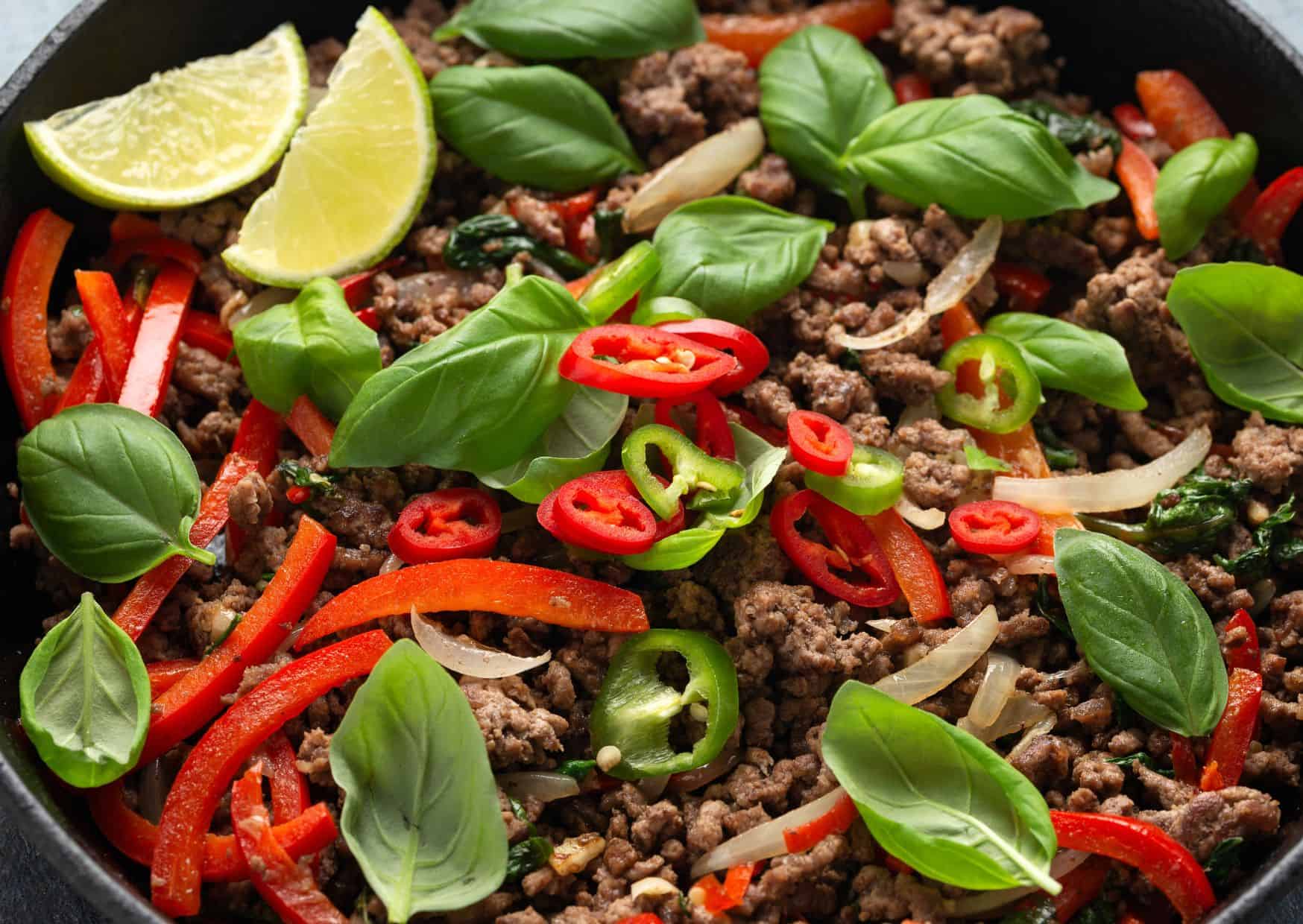
Add the minced pork to the wok. Cook, breaking up the meat with a spatula, until the pork is browned and cooked through, about 5-7 minutes.
- Add the Sauce
Pour the sauce mixture into the wok and stir well to combine. Cook for another 1-2 minutes until the sauce is heated through and coats the pork evenly.
- Add the Basil
Remove the wok from heat and immediately add the Thai basil leaves. Stir until the basil is wilted and fragrant.
- Fry the Eggs
In a separate skillet, heat a small amount of oil over medium-high heat. Fry the eggs until the edges are crispy, and the yolks are still runny.
- Serve
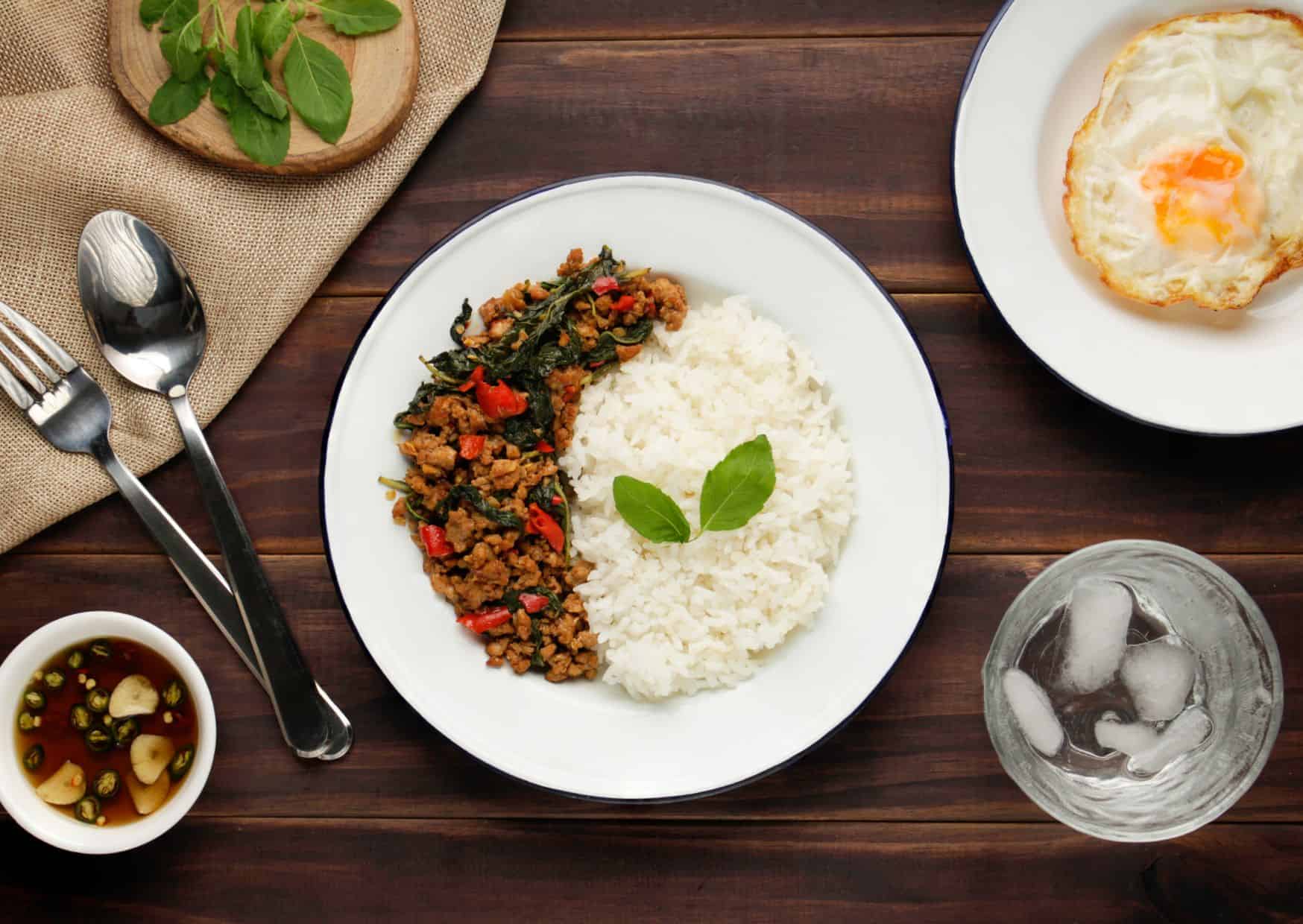
Serve the pork stir-fry over steamed jasmine rice, topped with a fried egg.
Tips for Making Pad Kra Pao Moo
For less heat, reduce the number of chilies or remove the seeds before mincing. Thai basil has a distinct flavor that is essential to this dish. If unavailable, sweet basil can be used as a substitute, though the flavor will differ.
Ensure the pork is well broken up and the sauce is evenly distributed for the best flavor. The crispy edges and runny yolk of the fried egg add a delightful contrast to the savory pork.
How Many Calories Have Pad Kra Pao Moo
Minced Pork: ~300-350 calories
Sauce and Vegetables: ~100-150 calories
Jasmine Rice: ~200-250 calories per cup
Fried Egg: ~70-90 calories
Total: Approximately 670-840 calories per serving.
Origin and History
Pad Kra Pao is one of the most iconic street food dishes in Thailand, celebrated for its bold flavors and lightning-fast preparation. The name translates to “stir-fried holy basil,” which is the defining ingredient of this dish. Unlike many complex Thai curries, Pad Kra Pao was born out of simplicity—quickly stir-frying meat, garlic, chili, and basil to create a dish bursting with heat and aroma.
Its roots can be traced to Bangkok’s bustling street food scene, where vendors needed to create flavorful meals fast for busy workers. Pad Kra Pao became a go-to lunch option because it was cheap, satisfying, and could be made to order. Traditionally served with jasmine rice and a crispy fried egg on top, it became synonymous with everyday comfort food.
Over time, this humble dish has become a cultural symbol of Thai cuisine. While Thai curries and noodles often dominate international menus, Pad Kra Pao is what many locals consider the true taste of home—a perfect blend of spice, fragrance, and balance.
Despite its simplicity, Pad Kra Pao has its share of culinary debates. One of the most heated topics is the type of basil to use. Authentic recipes call for holy basil, which has a distinct peppery aroma. Outside Thailand, it’s often substituted with sweet basil or Thai basil, but purists argue that this changes the soul of the dish entirely.
Another point of contention is how spicy Pad Kra Pao should be. In Thailand, it’s traditionally fiery, with bird’s eye chilies bringing intense heat. However, international versions often tone it down for milder palates. Many Thai cooks believe that reducing the spice dilutes the dish’s true character.
Lastly, there’s the question of ingredients. Authentic Pad Kra Pao is typically made with minced pork or chicken, but some restaurants add vegetables, sauces, or even omit the basil altogether. While these adaptations can be delicious, they also move away from the dish’s authentic street food roots.
How Long You Take to Prepare
One of the best things about Pad Kra Pao is how quickly it comes together. From start to finish, the dish takes about 20 minutes, making it a perfect weeknight meal. Most of the time is spent prepping ingredients, as the actual stir-frying process is lightning fast.
The key is having everything ready before you start cooking. Garlic and chili are smashed or minced, meat is finely chopped or ground, and the holy basil is set aside. Once the wok is hot, the aromatics are cooked until fragrant, the meat is added, and the sauce is quickly stirred in. The basil is added at the very end, just before serving, so it retains its vibrant aroma.
Because the cooking happens so fast, precision and heat control are essential. It’s a dish that rewards focus—just a few minutes can mean the difference between perfectly caramelized meat and something overcooked.
Serving Suggestions
Pad Kra Pao is traditionally served over a bed of fragrant jasmine rice, with a crispy fried egg on top—often with a runny yolk that mixes beautifully with the sauce. This combination of spicy, savory, and rich flavors is what makes it so satisfying.
For those who enjoy extra heat, it can be served with additional chili fish sauce on the side. A squeeze of lime juice can also add a bright, fresh note that balances the richness of the dish.
While pork is the classic choice, Pad Kra Pao also works beautifully with chicken, beef, tofu, or seafood. No matter the protein, the key is keeping the stir-fry fast and intense to lock in the flavors.
Final Thoughts
Pad Kra Pao Moo is the kind of dish that reminds you simple ingredients can deliver explosive flavor. With just a few pantry staples—garlic, chilies, fish sauce, and holy basil—you get a punchy, aromatic stir-fry that hits all the right notes: spicy, savory, and slightly sweet, all balanced with steamed rice and a crispy fried egg on top.
Once you’ve mastered the technique of fast, high-heat cooking and learned to balance the umami-rich sauce with the brightness of basil, this dish quickly becomes a go-to. It’s incredibly fast to make, perfect for weeknights, but impressive enough for anyone who wants a real taste of Thai street food at home.
More than just a meal, Pad Kra Pao is a celebration of contrast—heat meets fragrance, salt meets sweet, and simplicity meets intensity. Make it right, and it’s more than dinner—it’s an experience on a plate that transports you to a bustling food stall in Bangkok.

About the Author: Ruben, co-founder of Gamintraveler.com since 2014, is a seasoned traveler from Spain who has explored over 100 countries since 2009. Known for his extensive travel adventures across South America, Europe, the US, Australia, New Zealand, Asia, and Africa, Ruben combines his passion for adventurous yet sustainable living with his love for cycling, highlighted by his remarkable 5-month bicycle journey from Spain to Norway. He currently resides in Spain, where he continues sharing his travel experiences with his partner, Rachel, and their son, Han.