
Last updated on February 13th, 2026 at 02:08 pm
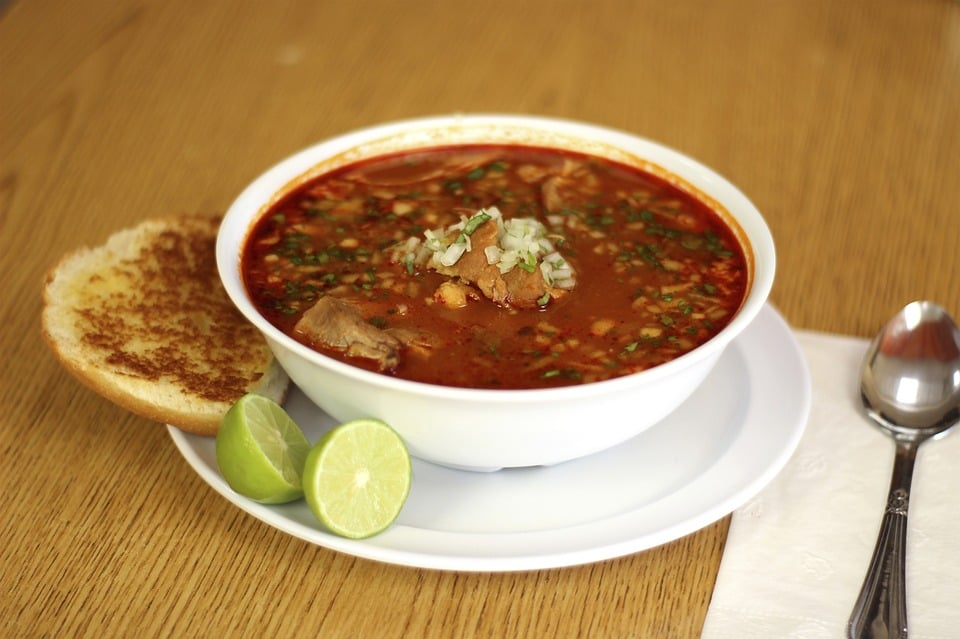
Our guide on How To Make Pozole one of the most popular Mexican recipes.
Pozole is a traditional Mexican soup or stew made from hominy (dried maize kernels), meat (usually pork or chicken), and a variety of seasonings and garnishes. This dish has deep cultural roots in Mexico and is often enjoyed during special occasions and holidays.
Pozole comes in different varieties, including red (rojo), green (verde), and white (blanco), depending on the region and ingredients used. Here’s a guide to making a classic Pozole Rojo (Red Pozole), along with tips and calorie information.
Pozole is a comforting and flavorful dish that brings together the rich culinary traditions of Mexico. Whether you’re making it for a special occasion or simply craving a hearty meal, this recipe for Pozole Rojo offers a delicious way to enjoy the deep, savory flavors of Mexican cuisine. Customize your bowl with your favorite garnishes, and enjoy this satisfying and nutritious dish with family and friends!
Read here best fruits in Mexico, drinks in Mexico, best Mexican dishes and traditional Mexican Food, the most popular non alcoholic drinks and Vegetarian Food in Mexico
BOOK YOUR TRAVEL INSURANCE
Two of our favorite travel insurance: Heymondo Vs Safetwing cheapest travel Insurance. You can get for $135 USD your Heymondo Travel Insurance with Heymondo discount code valid for 90 days. Read our full comparison of Genki vs Safetywing Travel Insurance Review and the comparison Heymondo vs Genki
Best Time to Eat and How to Partner
Pozole is traditionally eaten as a hearty lunch or dinner, especially on weekends or festive occasions when families gather to share a leisurely meal. In many Mexican households, pozole is served late into the evening, accompanied by music, conversation, and laughter.
To enjoy pozole like a local, serve it with warm tostadas spread with crema and sprinkled with cheese, and small bowls of chopped onion, shredded lettuce, radish slices, lime wedges, dried oregano, and chile flakes for guests to add as toppings. Pair it with a cold Mexican beer or agua fresca like hibiscus or tamarind to balance its warm, savory flavors.
One controversial truth about pozole is its pre-Hispanic origins. Historical accounts suggest that original Aztec pozole was made with human meat as part of ritual sacrifices, replaced later with pork after Spanish colonization. While this history is rarely discussed openly, it underscores pozole’s deep cultural roots and transformation into a modern comfort dish free from its darker past.
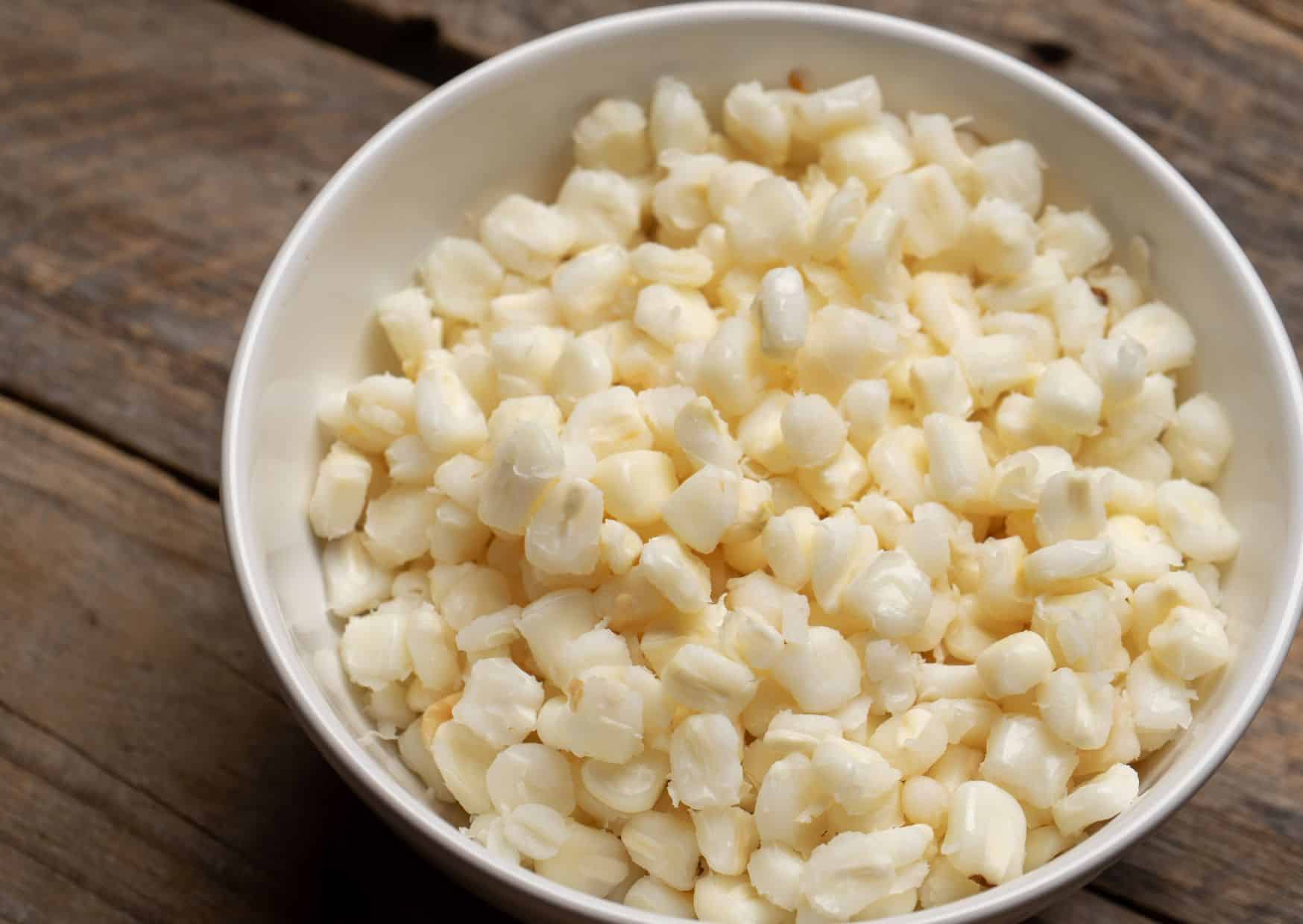
Another misunderstood aspect is the hominy itself. Many home cooks outside Mexico substitute it with canned sweet corn or skip it entirely, but hominy (nixtamalized corn) is essential to authentic pozole’s texture and earthy flavor. Skipping it turns pozole into a simple meat soup rather than the complex traditional stew it is meant to be.
Finally, while red pozole is the most globally recognized version, many Mexicans consider green or white pozole equally traditional and essential to regional identity. Treating pozole as a singular recipe rather than a diverse family of regional dishes misses its rich culinary heritage and the pride each state holds for its own variation.
How to Make Pozole
Pozole Recipe Ingredients
For the Pozole:
2 lbs pork shoulder or pork butt, cut into large chunks (you can also use a mix of pork and chicken)
1 onion, halved
6 cloves garlic, peeled
1 bay leaf
2 teaspoons salt, plus more to taste
1 teaspoon black pepper
1 teaspoon dried oregano
1/2 teaspoon ground cumin
8 cups water or chicken broth
2 cans (25 oz each) hominy, drained and rinsed
For the Red Chile Sauce:
4 dried guajillo chiles, stems and seeds removed
4 dried ancho chiles, stems and seeds removed
2 cloves garlic, peeled
1 small onion, chopped
1 teaspoon dried oregano
1/2 teaspoon ground cumin
Salt to taste
2 cups water
For Garnishes:
Shredded cabbage or lettuce
Sliced radishes
Diced onions
Chopped cilantro
Lime wedges
Avocado slices (optional)
Dried oregano
Crushed red pepper or chile powder
Tortilla chips or tostadas
Step By Step How to Make Pozole
Cook the Meat
In a large pot, add the pork chunks, onion halves, garlic cloves, bay leaf, salt, pepper, oregano, and cumin. Add 8 cups of water or chicken broth. Bring to a boil, then reduce the heat to low and simmer for about 1.5 to 2 hours, or until the pork is tender and easily shreds.
Once the meat is cooked, remove it from the pot and set it aside to cool slightly. Strain the broth to remove the onion, garlic, and bay leaf, then return the broth to the pot.
When the meat is cool enough to handle, shred it into bite-sized pieces and set it aside.
Prepare the Red Chile Sauce
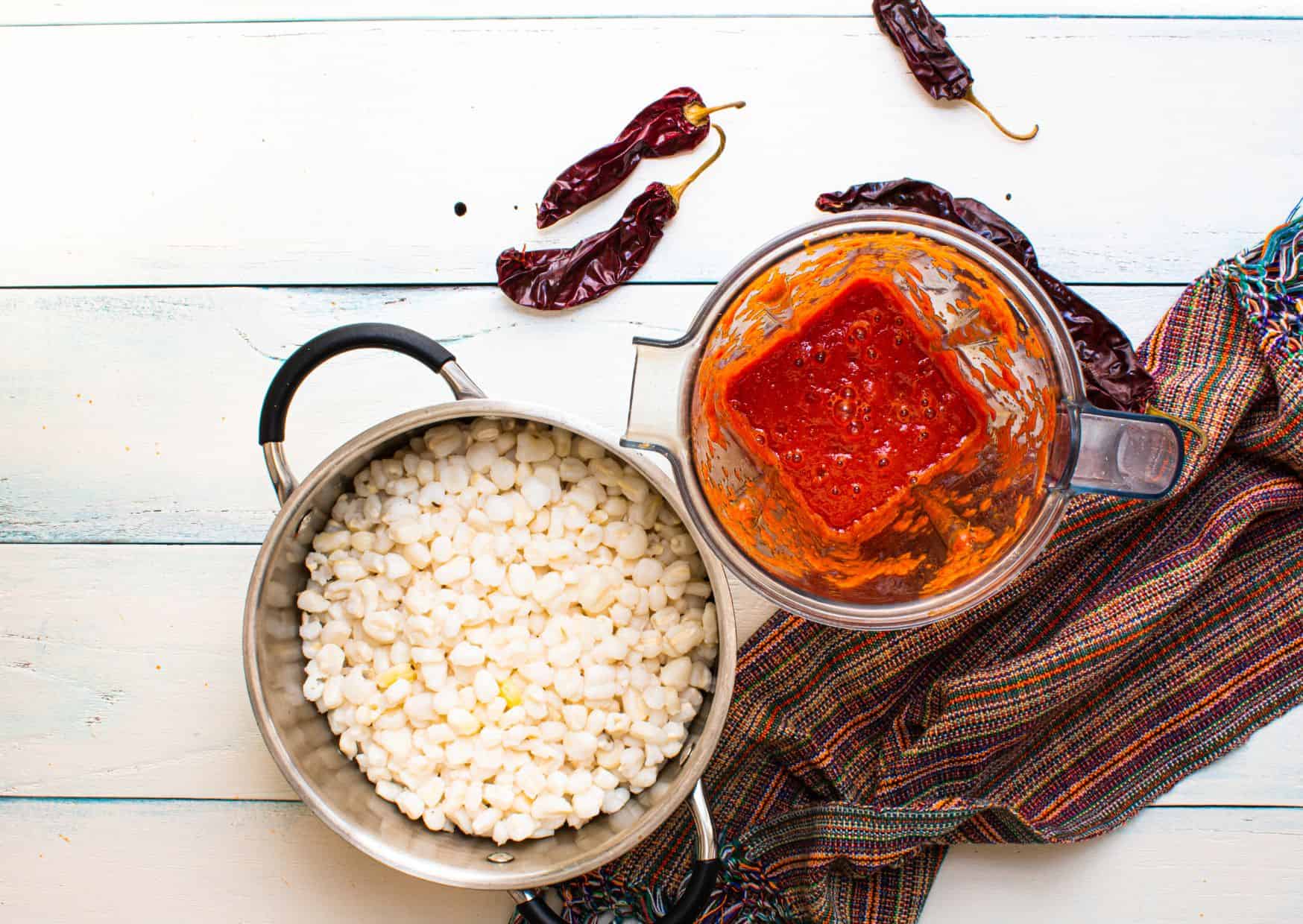
In a medium saucepan, bring 2 cups of water to a boil. Remove from heat and add the dried guajillo and ancho chiles. Let them soak for about 15-20 minutes until they are soft.
In a blender, combine the soaked chiles, garlic, chopped onion, oregano, cumin, and a pinch of salt. Add about 1 cup of the soaking water and blend until smooth.
Pour the blended chile sauce through a fine-mesh strainer into the pot with the broth, pressing with a spoon to extract as much liquid as possible. Discard the solids.
Assemble the Pozole
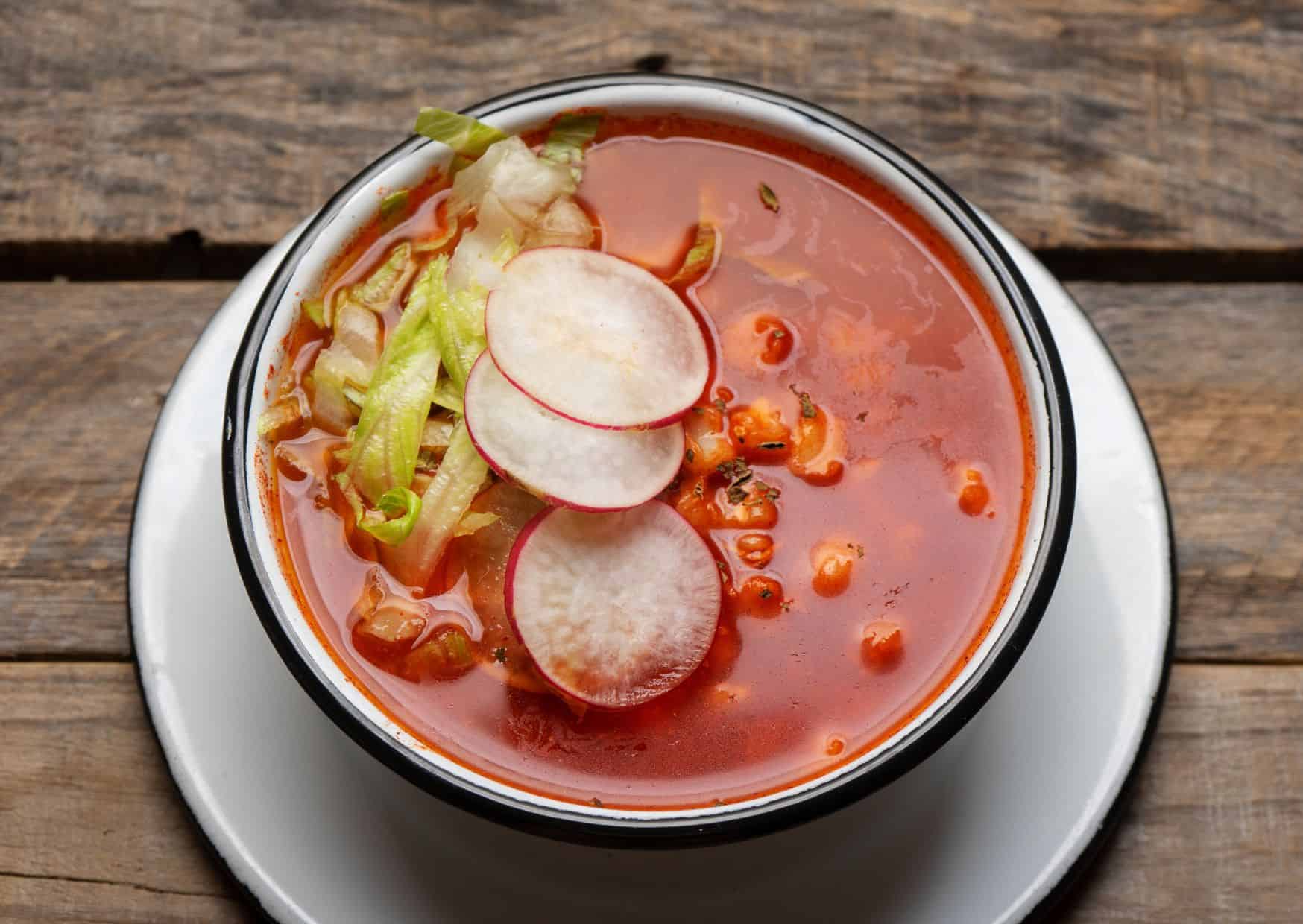
Add the shredded pork and the drained hominy to the pot with the chile-infused broth. Stir well to combine. Bring the mixture to a simmer and cook for an additional 30 minutes to allow the flavors to meld. Taste and adjust seasoning with more salt if necessary.
Serve the Pozole
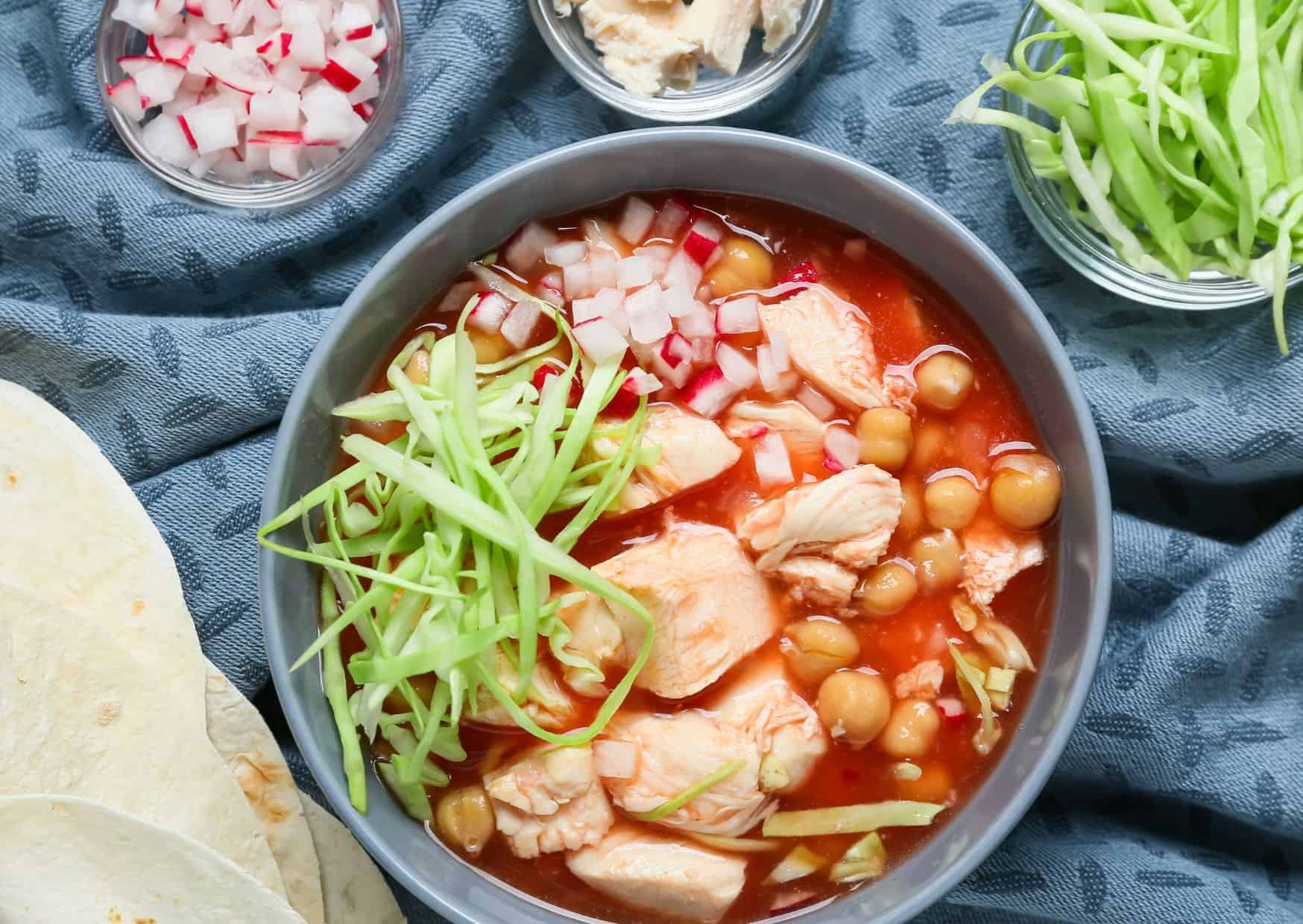
While the pozole simmers, prepare the garnishes: shredded cabbage or lettuce, sliced radishes, diced onions, chopped cilantro, lime wedges, avocado slices, and any other toppings you like.
Serve
Ladle the hot pozole into bowls and top with your choice of garnishes. Serve with lime wedges and tortilla chips or tostadas on the side.
Tips To Make Pozole
While pork is traditional, you can also use chicken or a combination of pork and chicken. Some recipes also include beef. Adjust the number of chiles to control the heat of the dish. Guajillo and ancho chiles are generally mild, but you can add a spicier chile like chile de árbol for more heat.
Pozole often tastes even better the next day, as the flavors have more time to meld. It can be made ahead of time and reheated, making it great for gatherings.
For a vegetarian version, skip the meat and use vegetable broth. Add more vegetables like zucchini, mushrooms, or beans for added texture and flavor.
How Many Calories Have Pozole
Calories Per Serving: Approximately 300-400 calories per serving (based on 8 servings)
Breakdown:
Pork Shoulder (per serving): ~200-250 calories
Hominy (per serving): ~60-80 calories
Chile Sauce (per serving): ~20-40 calories
Garnishes (varies by amount): ~20-50 calories.
Origin and History
Pozole is one of Mexico’s oldest and most culturally significant dishes, with origins that trace back to pre-Hispanic civilizations. Early records suggest that Indigenous communities prepared versions of pozole for ceremonial rituals, using hominy and local herbs as foundational ingredients. The dish held deep spiritual meaning and was often served during major celebrations or gatherings, symbolizing abundance, community, and tradition.
As Spanish influence spread across Mexico, pozole began to evolve. New ingredients such as pork were introduced, replacing earlier meats while maintaining the dish’s signature base of simmered hominy. Different regions adapted pozole to their local landscapes, creating variations that reflected the diversity of Mexico’s geography and culinary identity. From coastal zones to rural mountain towns, each community developed its own interpretation.
By the twentieth century, pozole had become firmly embedded in Mexican family life. It was no longer reserved only for ceremonies it became a staple for holidays, Sunday lunches, and communal gatherings. Today, pozole is cherished not only for its comforting warmth but also for its connection to heritage, identity, and the joy of sharing a meal across generations.
Despite pozole’s popularity, debates continue about what constitutes an “authentic” version. Some insist that traditional ingredients and slow, careful preparation are essential to maintaining the dish’s integrity. Others argue that modern adaptations whether using quicker methods, substitutions, or creative toppings are part of the natural evolution of any beloved recipe. These differing viewpoints reflect the tension between preserving cultural roots and allowing culinary innovation.
Another point of controversy is the regional rivalry between pozole rojo, verde, and blanco. Enthusiasts from each region often claim their version best represents the essence of the dish. While pozole rojo from Jalisco and Guerrero is celebrated for its rich chili base, pozole verde from Guerrero incorporates fresh herbs for a completely different flavor profile. Pozole blanco, often associated with Central Mexico, showcases the simplicity of hominy and broth. These preferences are tied to regional pride, making the debate more cultural than culinary.
There are also modern conversations about health and accessibility. Some cooks believe traditional pozole should be made with specific cuts of pork or free-range chicken, while others see plant-based versions as a way to make the dish more inclusive. Purists often resist these adaptations, insisting that certain ingredients are non-negotiable. This discussion highlights how deeply people feel connected to the original flavors and practices surrounding pozole.
How Long It Takes to Prepare
Traditional pozole requires patience, which is part of what makes the dish so rewarding. Preparing the hominy, simmering the meat, and building a flavorful broth typically take two to three hours. Most of the process is hands-off simmering, allowing the ingredients to develop depth and richness. While the time investment may seem lengthy, it reflects the ceremonial roots of the dish, where slow cooking was central to creating a communal experience.
For those using dried hominy, the process extends even longer, as the kernels must be soaked and cooked until they bloom into their signature chewy texture. This can add an additional hour or two, depending on technique and elevation. Using canned hominy shortens the preparation significantly, making pozole more accessible for weeknight cooking without compromising flavor.
Despite the long cooking time, the simplicity of the preparation makes pozole an approachable dish. Most of the work involves layering ingredients, seasoning carefully, and allowing the broth to simmer. Once the components come together, the dish offers a depth of comfort that justifies every minute invested. Many cooks find that pozole becomes easier and faster each time they make it.
Serving Suggestions
Pozole is traditionally served with an abundant assortment of toppings that allow each person to customize their bowl. Common additions include shredded lettuce or cabbage, thinly sliced radishes, lime wedges, oregano, onions, and a sprinkle of chili flakes. These fresh, crisp toppings contrast beautifully with the warm, hearty broth, creating a balanced and flavorful experience.
Tostadas or warm corn tortillas are the classic side pairings. They provide a satisfying crunch or soft complement, perfect for scooping up broth or enjoying alongside each bite. Some regions also serve pozole with avocado slices or spicy salsas, adding richness and heat depending on personal taste. This flexibility is one reason pozole is so beloved it adapts to individual preferences without losing its identity.
For gatherings, pozole is ideal as a centerpiece dish. Its generous portions and customizable bowls encourage conversation and sharing. When hosting, consider offering a toppings bar so guests can build their own bowls. This not only creates an interactive dining experience but also makes the meal feel celebratory, much like the traditional events where pozole is often served.
Final Thoughts
Pozole’s status as Mexico’s ultimate comfort food stems from much more than its flavor. It embodies history, community, and the enduring tradition of gathering around a shared pot. The dish carries the stories of generations and reflects the evolution of Mexican identity. Making pozole at home becomes an invitation to participate in that heritage, even from afar.
While debates about authenticity and technique will always surround iconic dishes, pozole remains beloved in all its forms. Whether prepared in its most traditional style or adapted to suit modern kitchens, its essence remains unchanged: a warm, nourishing bowl that brings people together. The dish’s versatility, depth, and emotional resonance are why it continues to hold such a special place in Mexican culture.
Ultimately, pozole is more than a recipe it is an experience. Each simmering pot offers comfort, connection, and a taste of history. Whether you are cooking it for the first time or carrying on a family tradition, pozole reminds us that food has the power to unite and restore. That is what makes it truly the ultimate comfort food.

About the Author: Ruben, co-founder of Gamintraveler.com since 2014, is a seasoned traveler from Spain who has explored over 100 countries since 2009. Known for his extensive travel adventures across South America, Europe, the US, Australia, New Zealand, Asia, and Africa, Ruben combines his passion for adventurous yet sustainable living with his love for cycling, highlighted by his remarkable 5-month bicycle journey from Spain to Norway. He currently resides in Spain, where he continues sharing his travel experiences with his partner, Rachel, and their son, Han.