
Carbonara is a quintessential Italian pasta dish beloved for its creamy texture, simple ingredients, and comforting flavors. Originating from Rome, authentic Italian Carbonara is traditionally made with just a few high-quality ingredients: guanciale (cured pork cheek), Pecorino Romano cheese, eggs, and black pepper. The dish is known for its silky sauce, which is naturally formed by the eggs and cheese without the addition of cream.
In contrast, the American version of Carbonara often takes liberties with the original recipe, incorporating ingredients like cream, garlic, and sometimes even peas and mushrooms, which are not found in the traditional version. This adaptation reflects a more global approach to Italian cuisine, tailored to local tastes and ingredient availability.
This guide will go into both the authentic Italian Carbonara and the American-style Carbonara, exploring how each version is made, their distinct flavors, and the cultural contexts that have influenced these variations.
Choosing between the classic Italian Carbonara and the American twist on this beloved dish isn’t just about taste—it’s about adventure! Let’s have fun breaking down what sets these two contenders apart in the ultimate comfort food face-off.
How to Eat
Italian carbonara should be enjoyed fresh, as the sauce depends on the heat of the pasta to emulsify the eggs and cheese into a glossy coating. It’s eaten slowly, with each bite offering a balance of sharp Pecorino and salty guanciale.
American carbonara, by contrast, is often creamier and heavier, which makes it more of a comfort dish. It’s typically served in larger portions and eaten as a stand-alone main course, rather than part of a multi-course meal.
Both versions are best enjoyed hot, but the Italian approach emphasizes moderation and balance, while the American version leans into indulgence. How you eat it often depends on whether you value tradition or comfort more.
How to Partner
Italian carbonara pairs beautifully with a crisp white wine, such as Frascati or Verdicchio, which cuts through the richness without overwhelming the dish. A simple side salad dressed in olive oil and lemon balances the flavors.
American carbonara is often paired with garlic bread or a bold red wine like Cabernet Sauvignon. These heavier sides match the richness of the creamy sauce but can feel far removed from Roman simplicity.
For both styles, bread is essential. In Italy, rustic bread is used sparingly to accompany the pasta, while in the U.S., buttery garlic bread often becomes a centerpiece in itself.
The biggest controversy is authenticity. Italians argue that cream in carbonara is sacrilege, while many Americans insist it improves the dish. This disagreement reflects broader debates about whether recipes should stay true to tradition or evolve with taste.
Another point of contention is ingredients. Guanciale and Pecorino Romano are considered non-negotiable in Italy, but outside of Rome, many cooks swap in bacon or Parmesan for accessibility. Purists call this dilution, while others argue it’s practicality.
There’s also the debate over ownership. Can a dish belong exclusively to its birthplace, or does it belong to the world once it spreads internationally? Carbonara sits at the center of this discussion, making it one of the most polarizing recipes in global cuisine.
Italian Carbonara: The Purist’s Delight
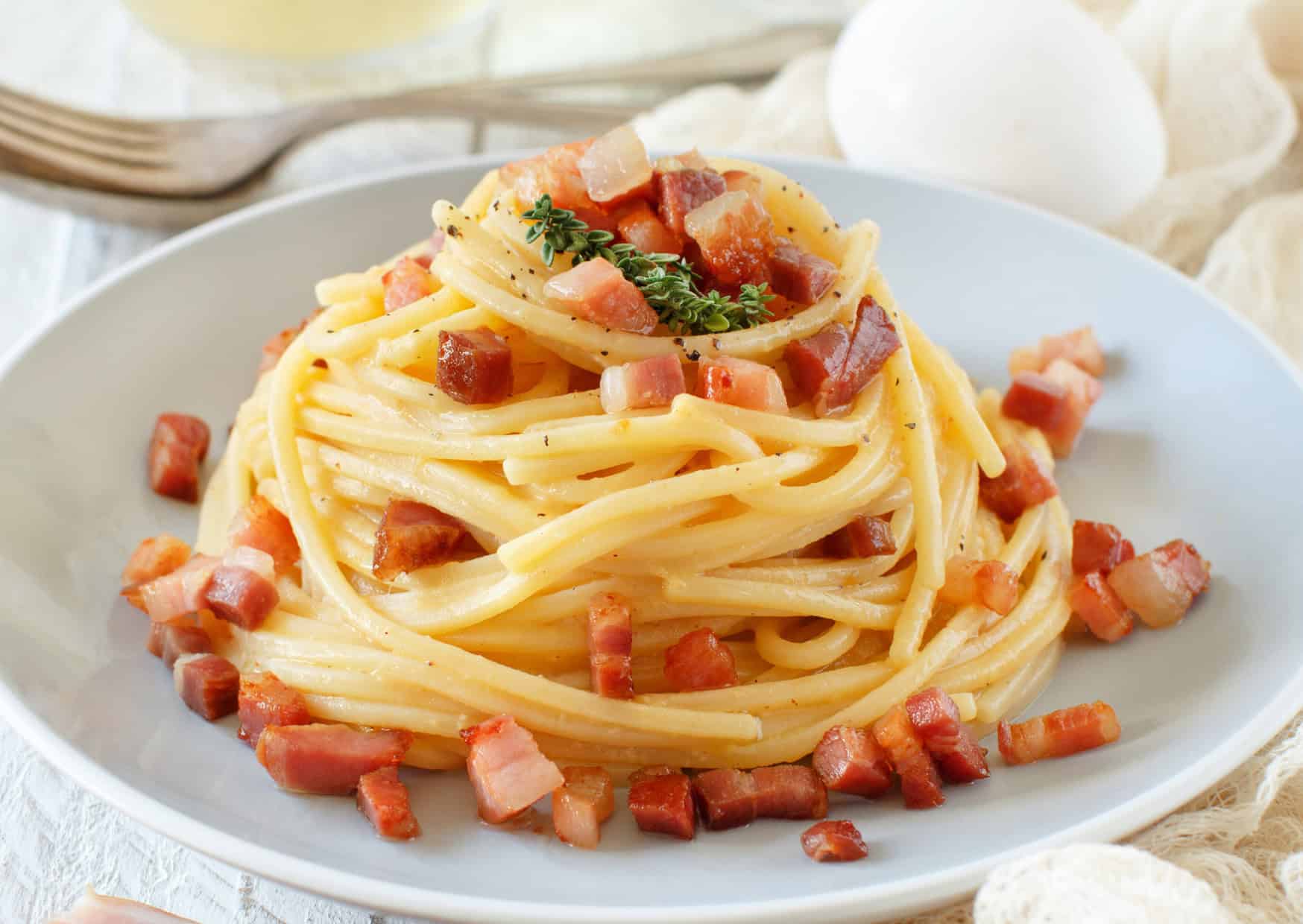
- Why We Love It: Imagine sitting in a quaint Roman café, a plate of silky, perfectly emulsified Carbonara in front of you—no cream, just the magical blend of Pecorino Romano, crispy guanciale, and fresh eggs. It’s a minimalist masterpiece that’s all about technique and timing.
- Perfect For: Culinary traditionalists who swear by their food scales, anyone who dreams in black and white (and maybe a splash of egg yolk yellow).
American Carbonara: The Creative Twist
- Why We Love It: It’s the “everything but the kitchen sink” approach. Who says no to extra creaminess? Garlic, onions, a handful of peas, and yes, even some crispy bacon bits because why not? This version is all about abundance and a touch of whimsy.
- Perfect For: The experimenter, anyone who likes to color outside the lines while humming their favorite tune, and those of us who believe that more is more.
The Fun Debate
- In Defense of Italian Carbonara: You’ve got to respect the classics to understand the art form. It’s like jazz; the beauty is in the simplicity and the improvisations you can play around the core theme. Plus, mastering the classic technique? A total badge of honor in the kitchen!
- In Defense of American Carbonara: Let’s get real, comfort food is about satisfaction and that extra scoop of joy. Cream makes everything better (sorry, not sorry, Italy), and a little garlic never hurt anybody. It’s the dish that hugs you back at the end of a long day.
So, Which Team Are You On?
There’s no right or wrong answer in this delicious dilemma. Are you Team “Keep it Classic” with Italian Carbonara, or do you rally behind Team “Remix the Rules” with American Carbonara? Try making both and decide which team you’re on—or better yet, switch teams depending on your mood! After all, isn’t food supposed to be fun?
Authentic Italian Carbonara Ingredients
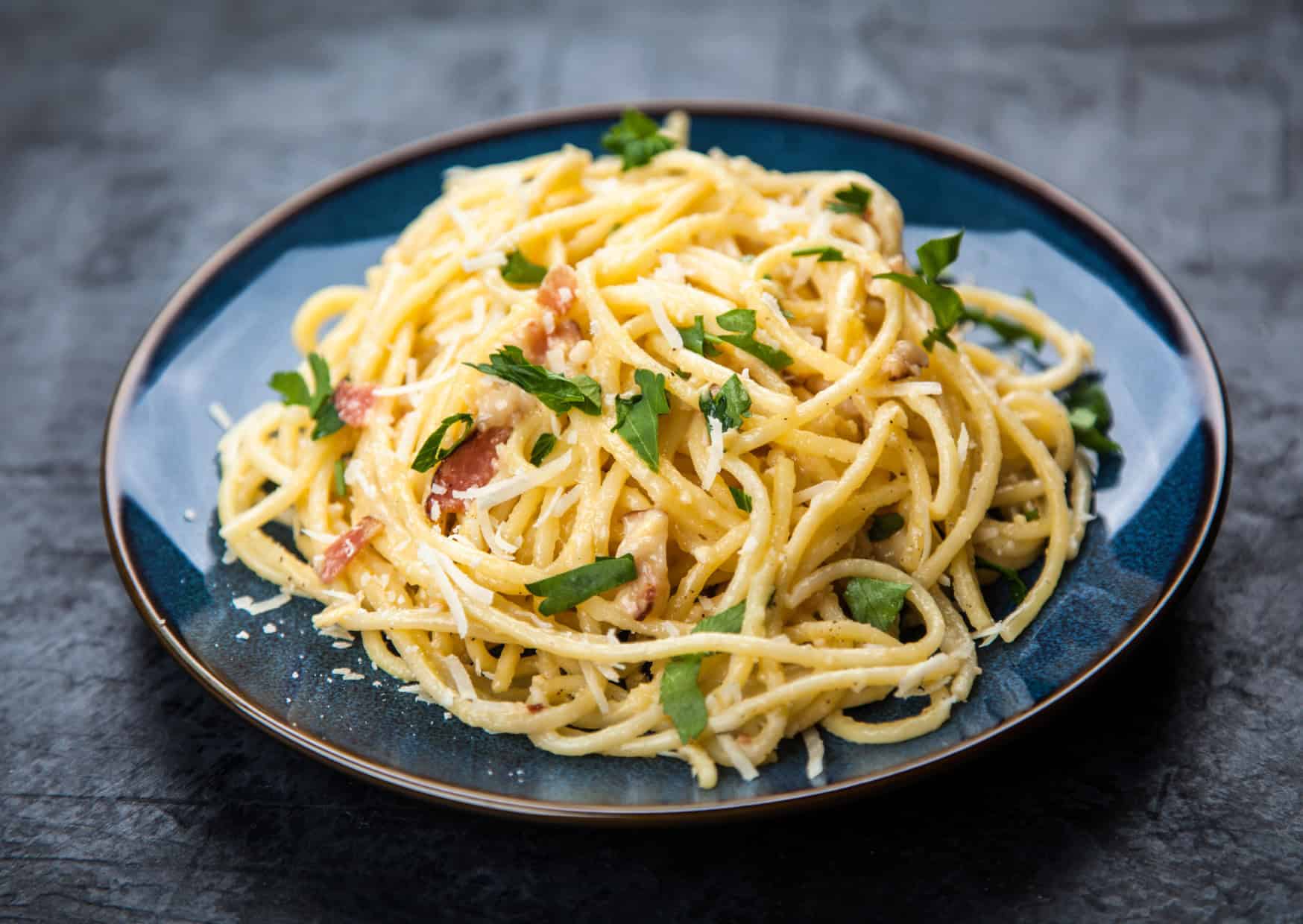
- Pasta: Spaghetti is the traditional choice, though other long pastas like linguine or bucatini can also be used.
- Pork: Guanciale is essential for its rich flavor and fat content.
- Cheese: Pecorino Romano, a salty, aged cheese from the region of Lazio, of which Rome is the capital.
- Eggs: Typically, whole eggs or a combination of whole eggs and extra yolks are used to create the creamy sauce.
- Seasoning: Freshly cracked black pepper.
American-style Carbonara Ingredients
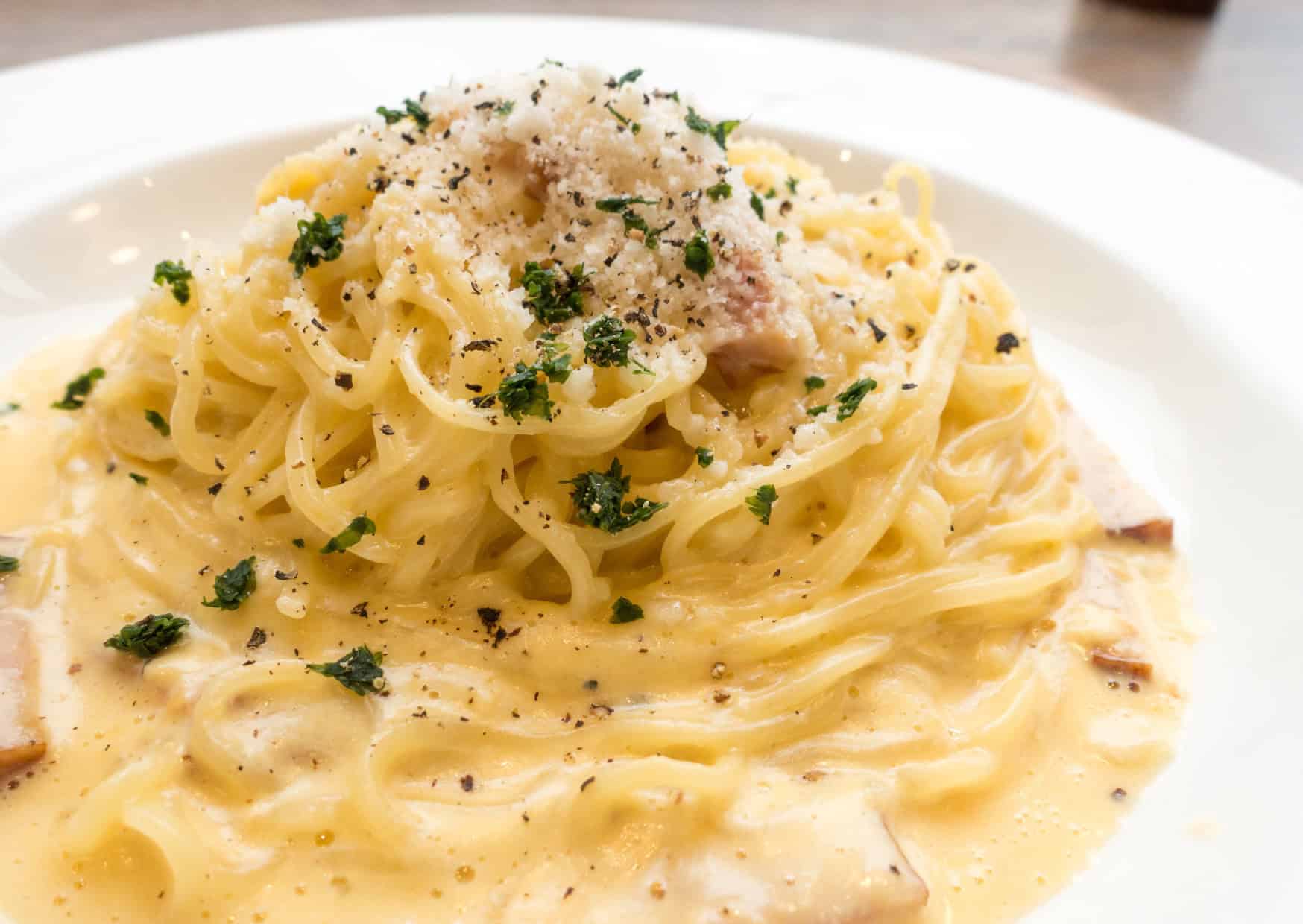
- Pasta: Similar choices as the Italian version, but often more variety, including shorter pastas like rigatoni.
- Pork: Pancetta or even regular bacon, which are more readily available.
- Cheese: Often Parmesan, which is milder and more accessible than Pecorino Romano.
- Eggs: Usually less than the Italian version, often supplemented with cream to achieve creaminess.
- Additional Ingredients: Garlic, onions, peas, and mushrooms are common, along with a generous use of cream.
Preparation Techniques
Preparing Authentic Italian Carbonara:
- Cook the Pasta: Boil the pasta in salted water until al dente.
- Render the Guanciale: Cook guanciale in a hot skillet until it is crispy and the fat has rendered.
- Mix Eggs and Cheese: Whisk together eggs, cheese, and black pepper in a mixing bowl.
- Combine: Toss the hot pasta with the guanciale and its rendered fat, then quickly mix with the egg mixture, using the residual heat to create a creamy emulsion without scrambling the eggs.
Preparing American-style Carbonara:
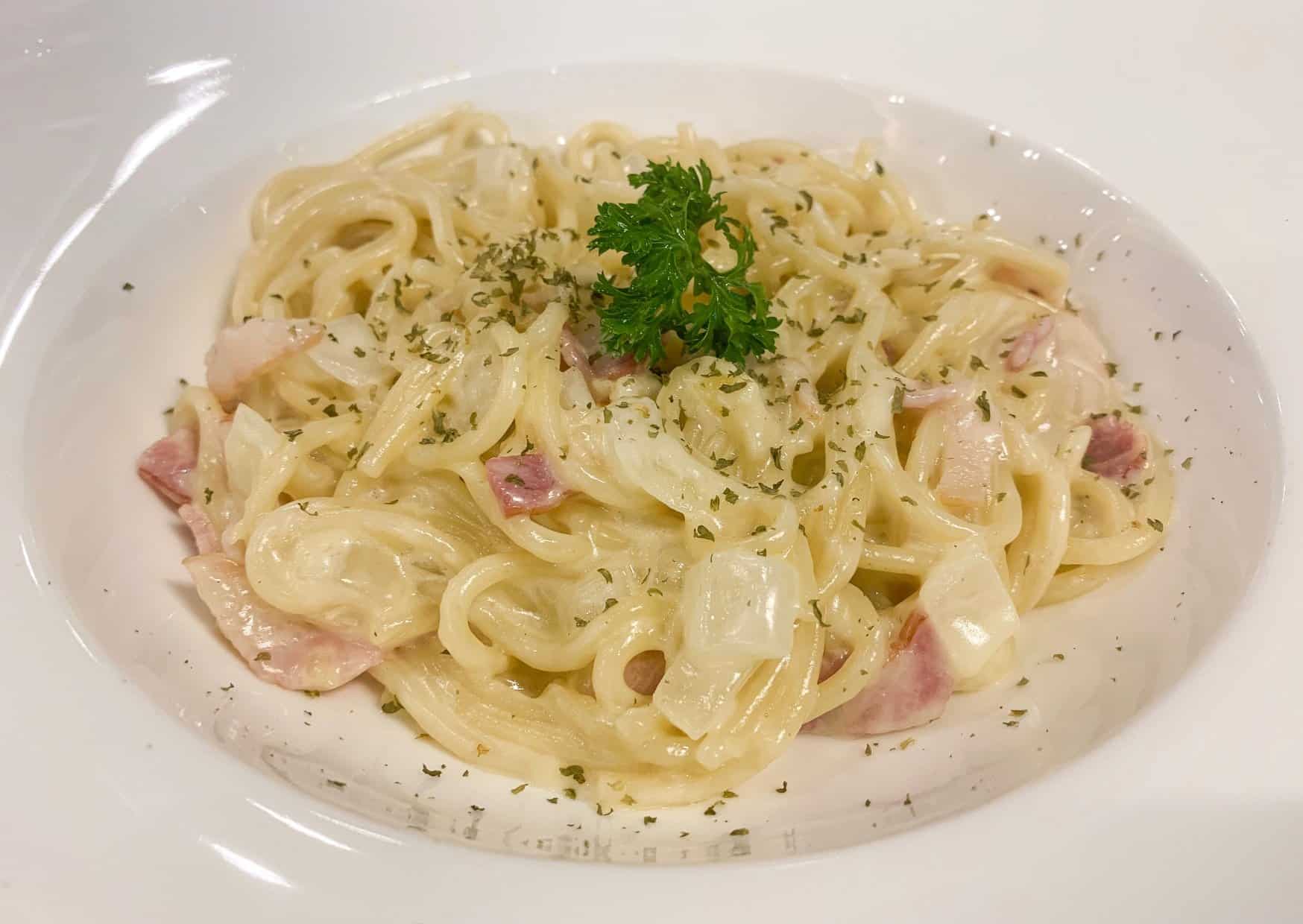
- Cook the Pasta: Same as the Italian version.
- Cook Additional Ingredients: Sauté bacon (or pancetta), and add garlic, onions, and other vegetables as desired.
- Cream Mixture: Mix eggs, cream, and Parmesan cheese, adding less cheese and more cream than the Italian version.
- Combine: Toss the pasta with cooked bacon and vegetables, then combine with the cream mixture, gently heating to thicken the sauce without curdling.
Culinary and Cultural Context
Authentic Italian Carbonara:
Italian Carbonara is deeply rooted in Roman culinary traditions, reflecting the simplicity and locality of ingredients. It’s a reflection of Italian culinary philosophy where quality of ingredients and minimalism in preparation are valued.
American-style Carbonara:
The American adaptation reflects a fusion approach, where accessibility of ingredients and local taste preferences lead to richer and more varied flavors. This version caters to a palate accustomed to creamier and more complex dishes.
Serving Suggestions
For authenticity, serve Italian carbonara in small portions, perhaps as part of a traditional Italian dinner with antipasti, pasta, a second course, and dessert.
For gatherings, American carbonara works well as a hearty main dish. Add garlic bread and roasted vegetables for a complete meal that satisfies comfort food cravings.
If you’re torn between the two, serve both versions side by side at a dinner party and let guests decide which style they prefer. It makes for a lively, interactive meal that sparks conversation.
So Which one wins?
Both the authentic Italian Carbonara and the American-style Carbonara offer delicious experiences, though they cater to different culinary expectations and traditions. The Italian version celebrates the purity of a few ingredients, while the American version embraces adaptation and diversity.
By understanding and appreciating these differences, enthusiasts of Italian cuisine can enjoy Carbonara in its many forms, whether sticking to tradition or exploring adaptations. Tell us in the comments which one. you like more!
Carbonara is more than a pasta dish it’s a cultural icon. The Italian version celebrates simplicity, precision, and tradition, while the American version embraces adaptation, comfort, and creativity. Both reveal something meaningful about the people who make and eat them.
The controversies surrounding authenticity, substitutions, and ownership show how food can carry deeper questions about identity and heritage. What seems like a simple recipe can become a battleground for tradition versus change.
Ultimately, the “ultimate showdown” isn’t about declaring a winner. It’s about appreciating both interpretations for what they are delicious expressions of culture, history, and personal taste. Whether you prefer the Roman original or the American twist, carbonara remains a dish worth savoring.

About the Author: Ruben, co-founder of Gamintraveler.com since 2014, is a seasoned traveler from Spain who has explored over 100 countries since 2009. Known for his extensive travel adventures across South America, Europe, the US, Australia, New Zealand, Asia, and Africa, Ruben combines his passion for adventurous yet sustainable living with his love for cycling, highlighted by his remarkable 5-month bicycle journey from Spain to Norway. He currently resides in Spain, where he continues sharing his travel experiences with his partner, Rachel, and their son, Han.