
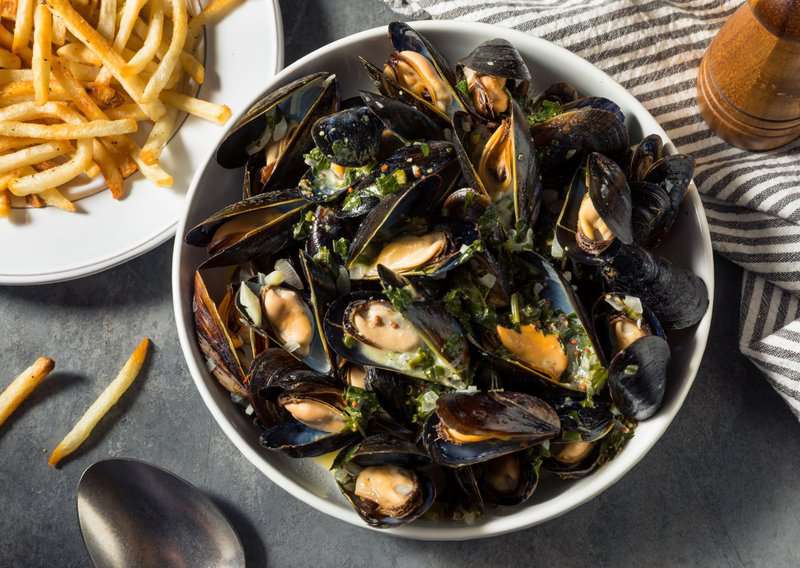
When it comes to iconic French foods, most travelers picture buttery croissants, escargot, or rich coq au vin. But ask anyone along France’s northern coast, and they’ll tell you: Moules (mussels) are the real star of French seaside cuisine. Often paired with a pile of golden fries—moules-frites—this humble seafood dish is deceptively simple, bursting with flavor, and steeped in regional pride.
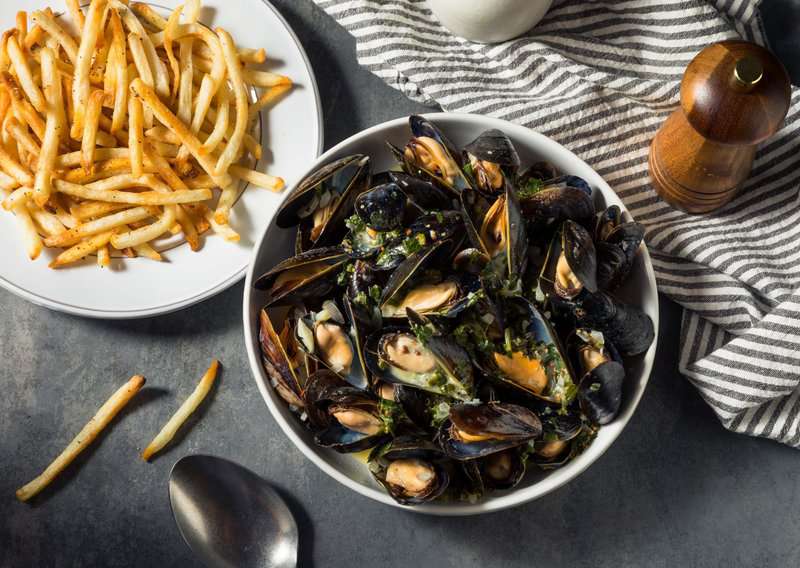
Made with fresh mussels steamed in a fragrant broth of white wine, shallots, garlic, parsley, and sometimes cream or mustard, moules are a sensory experience. The briny aroma of the sea, the delicate bite of the mollusk, and the ritual of soaking up the broth with crusty baguette all create a meal that’s both rustic and elegant. Whether eaten in a Parisian bistro or a Brittany fishing village, moules offer a taste of France that’s authentic and communal.
In this recipe guide, you’ll learn how to select, clean, and cook mussels at home the French way. We’ll walk you through flavor variations, the best wine pairings, and how to avoid the rookie mistakes that can ruin this dish. Moules may be one of France’s most underrated recipes abroad, but once you master them, they’ll become a go-to favorite in your kitchen.
Check the best Belgian Breakfast, the Belgium sim card for tourist, best Belgium travel tips, best Belgian drinks and Belgian food
BOOK YOUR TRAVEL INSURANCE
Two of our favorite travel insurance: Heymondo Vs Safetwing cheapest travel Insurance. You can get for $135 USD your HeymondoTravel Insurance with Heymondo discount code valid for 90 days. Read our full comparison of Genki vs Safetywing Travel Insurance Review and the comparison Heymondo vs Genki
Best Time to Eat & How to Partner
Moules are best enjoyed during “R” months—from September through April—when mussels are in season and at their plumpest. They’re perfect for a cozy dinner at home or a casual weekend lunch with friends. This dish is most satisfying when shared, ideally with a pot in the center of the table and extra napkins at the ready.
To serve moules like the French, pair them with thin-cut crispy fries, a dry white wine (like Muscadet or Sauvignon Blanc), and a simple green salad dressed with mustard vinaigrette. Add warm, crusty bread for dipping into the broth—an essential move that locals would never skip. For a twist, try adding saffron, curry, or blue cheese to your broth for regional-inspired versions like moules à la marinière or moules au roquefort.
Moules may seem like a classic dish, but they’ve sparked controversy over time—especially between purists and modern chefs. In France, adding cream to moules marinière is considered sacrilege in some regions and a tradition in others. Northern French cooks insist on keeping it light with just white wine and herbs, while Belgians often load on the cream and butter. That culinary divide even influences which country claims moules-frites as “truly theirs.”
Another point of tension: sustainability. While moules are generally considered eco-friendly shellfish, the surge in global demand has led to farming practices that worry environmentalists. Mussels filter water naturally, but in large-scale operations, overcrowding and pollution can become concerns. French chefs argue that local sourcing and seasonal eating mitigate those risks—another reason they encourage sticking to traditional timelines.
Finally, some tourists fear shellfish due to allergies or bad past experiences, leading many restaurants abroad to overcook or over-sanitize moules—stripping them of their delicate taste. French home cooks, however, know the key lies in buying fresh and cooking fast. When done right, moules don’t just represent French cooking—they represent confidence in simplicity.
How to Make Moules
Moules Recipe Ingredients
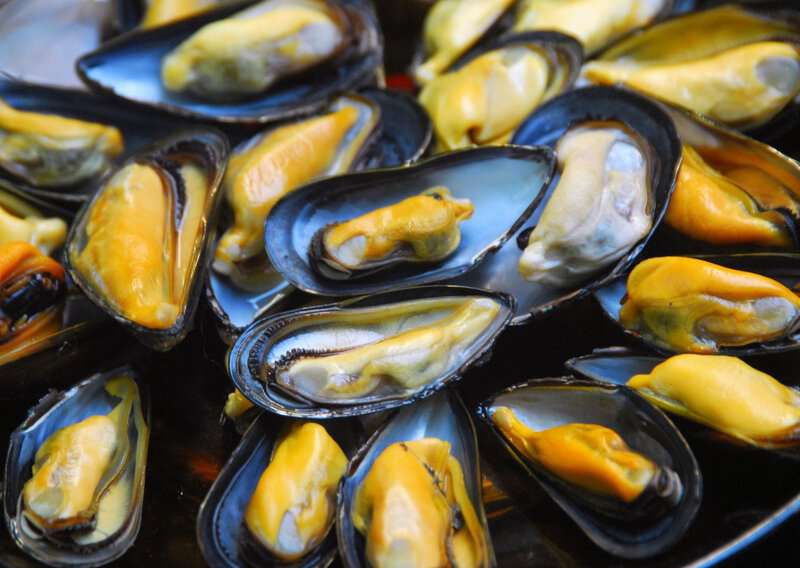
2 pounds of fresh mussels
1 tablespoon olive oil or butter
2-3 shallots, finely chopped
2 cloves garlic, minced
1 cup dry white wine
Fresh parsley, chopped
Salt and pepper
Optional: 1/2 cup of cream for a richer sauce
Get the best deals for your home and kitchen needs
Step By Step How to Make Moules
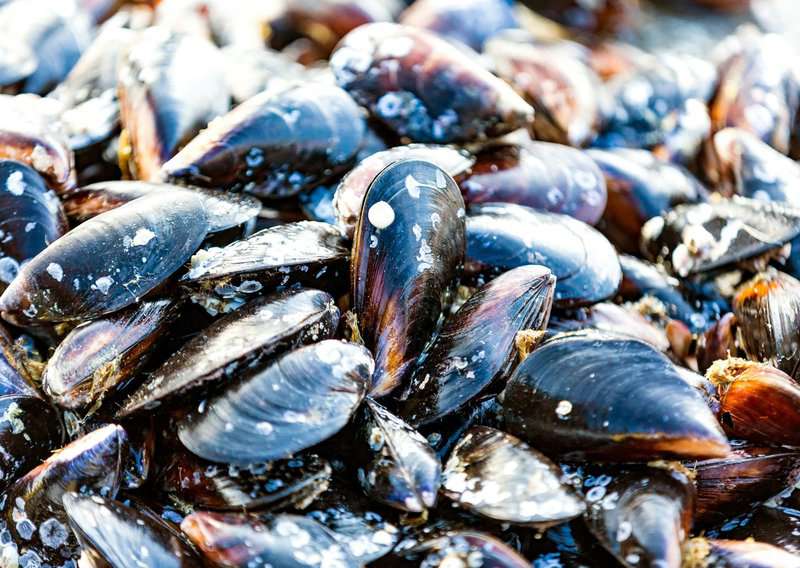
Clean the Mussel
Rinse the mussels under cold water. Pull off any beards (the fibrous tufts sticking out from the shells) and scrape off any barnacles with a knife. Discard any mussels that are open and do not close when tapped.
Sauté Shallots and Garlic
In a large pot, heat the olive oil or melt the butter. Add the chopped shallots and garlic, and sauté until they are soft but not browned.
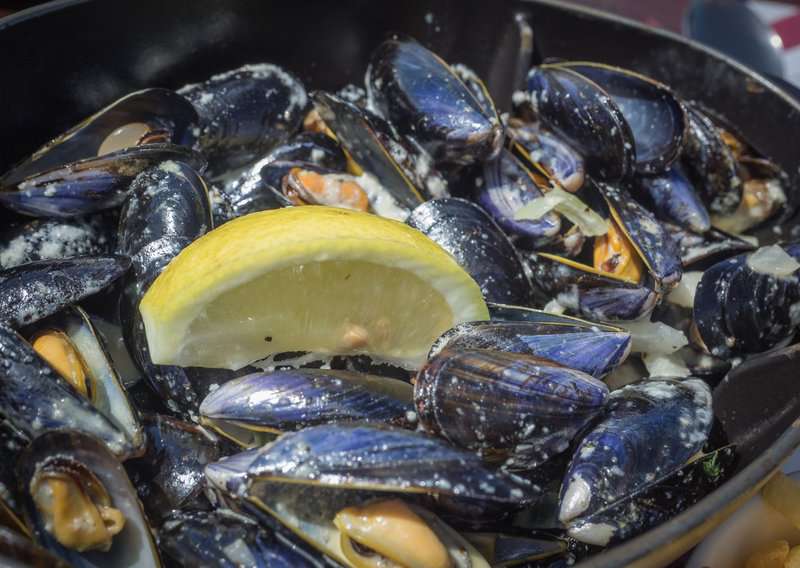
Cook the Mussels
Pour the white wine into the pot and bring it to a simmer. Add the cleaned mussels and cover the pot. Let them steam for about 5 to 7 minutes, shaking the pot occasionally until the mussels have opened. Discard any that remain closed after cooking. If using, add the cream to the broth after the mussels have opened, and heat through.
Season and Serve
Season with salt and pepper to taste. Sprinkle with plenty of chopped parsley. Serve the mussels in bowls, with the broth spooned over them. Pair with crusty bread to sop up the flavorful broth.
Tips To Make Moules
Make sure to use fresh mussels for the best taste and texture. They should smell like the ocean and be closed tightly when you buy them. Do not overcook the mussels; they should just be cooked until they open. Overcooking can make them tough.
Moules marinières are traditionally served with French fries (moules-frites) or with bread. You can enhance the broth by adding ingredients like chopped tomatoes, leeks, or herbs such as thyme and bay leaves.
How Many Calories Have Moules
A serving of moules without the cream (about 1 pound of mussels, which is roughly half the recipe above) contains approximately 290 calories.
Adding cream will increase the caloric content, roughly adding 100 calories per serving depending on the amount used.
Origin and History
Moules, or mussels steamed in aromatic broth, have been a cornerstone of coastal French cuisine for centuries. Long before they appeared on restaurant menus, mussels were a humble ingredient harvested by fishermen who relied on them as an inexpensive and reliable source of protein. Their abundance along the Atlantic and Channel coasts made them a daily staple for working families who needed hearty meals that required little more than wine, herbs, and a pot over fire.
The dish evolved into regional variations as French coastal towns embraced local flavors. In Normandy, cooks enriched their broth with cream and cider, while in Provence, garlic and fresh herbs shaped a lighter Mediterranean profile. Each region adapted moules to its own landscape, turning a simple fishermen’s food into a symbol of culinary identity.
By the nineteenth century, moules had traveled inland, thanks to improved transport and rising demand among urban diners eager to taste the flavors of the coast. What was once considered a modest village dish became one of the most recognizable and beloved offerings in brasseries across France. Its popularity continues today, with annual festivals and competitions celebrating the artistry of cooking mussels.
Despite its long history, moules often suffer from misconceptions — especially in countries where seafood is overcomplicated. Many Americans assume mussels are difficult to clean, dangerous to cook, or too delicate for weeknight meals, creating unnecessary fear around a dish that is traditionally prepared in minutes. This hesitation has led to a divide between how the French enjoy moules and how they are perceived abroad.
Another point of debate revolves around broth styles. Purists insist that moules marinières, with its lean base of white wine, shallots, butter, and parsley, is the only truly authentic version. Others argue that regional recipes are equally legitimate and represent the true diversity of French coastal cuisine. The controversy underscores how deeply people feel about preserving culinary heritage.
Restaurants contribute to confusion by serving overly heavy, inconsistent versions that stray from traditional technique. When diners experience mussels drowned in cream or lacking proper seasoning, they assume the dish itself is unimpressive. In reality, poorly executed restaurant moules distort the simplicity and elegance that define the classic French preparation.
How Long They Take to Prepare
One of the greatest surprises for home cooks is how quick moules are to prepare. From start to finish, the entire process typically takes no more than thirty minutes, making it one of the fastest seafood dishes in French cuisine. The most time-consuming step is cleaning the mussels, which still only requires a few minutes of scrubbing and debearding.
Once prepped, the cooking itself happens rapidly. Mussels steam open in roughly five minutes, absorbing the flavors of the broth while releasing their own natural brine to enrich it. Because they cook so quickly, timing is essential, and the dish should move from pot to table immediately to preserve texture and temperature.
This efficiency is exactly why moules remain a weeknight staple in French households. They demand minimal effort and ingredients, yet they deliver a satisfying, restaurant-quality meal without long cooking times or complicated techniques. Their speed is part of their charm and one of the reasons they are adored across the country.
Serving Suggestions
Moules, or mussels, are a French classic that shine when served with simple accompaniments. The most traditional pairing is a bowl of golden, crispy fries—better known as moules-frites. The fries are perfect for soaking up the aromatic broth, making the meal both rustic and indulgent.
Another great option is to pair moules with crusty baguette slices. The bread allows you to enjoy every last drop of the flavorful cooking liquid, whether it’s infused with garlic, wine, cream, or herbs. A side salad of lightly dressed greens balances the richness and adds freshness to the plate.
For a more elevated presentation, serve the mussels in individual bowls with the broth poured generously over the top. Offering a selection of dipping sauces for the fries or bread can turn the dish into a more interactive, communal dining experience that feels both relaxed and refined.
Final Thoughts
Moules are one of those dishes that look impressive yet are surprisingly easy to prepare at home. With just a handful of fresh ingredients and a quick cooking time, they deliver bold flavors without the complexity that intimidates many home cooks.
The beauty of this dish is its versatility. Depending on your mood, you can prepare them in a light white wine and garlic broth, a creamy sauce, or even with a spicy tomato base. No matter the variation, the mussels remain the star, tender and full of the ocean’s natural flavor.
Ultimately, learning how to make moules the right way brings you closer to the heart of French cooking—elegant yet accessible, simple yet deeply satisfying. Once you’ve made them at home, you may find yourself wondering why this dish is so often overlooked in American kitchens.

About the Author: Ruben, co-founder of Gamintraveler.com since 2014, is a seasoned traveler from Spain who has explored over 100 countries since 2009. Known for his extensive travel adventures across South America, Europe, the US, Australia, New Zealand, Asia, and Africa, Ruben combines his passion for adventurous yet sustainable living with his love for cycling, highlighted by his remarkable 5-month bicycle journey from Spain to Norway. He currently resides in Spain, where he continues sharing his travel experiences with his partner, Rachel, and their son, Han.