
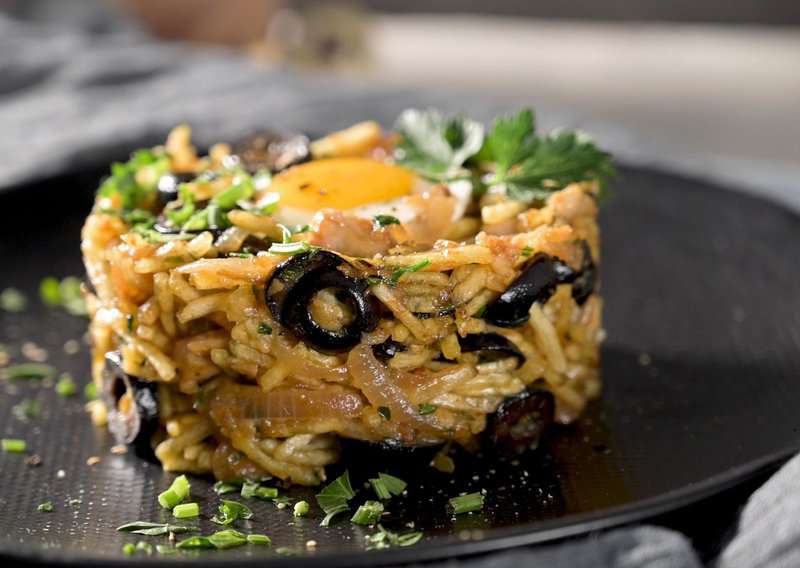
Few dishes capture the heart of Portuguese home cooking like Bacalhau à Brás — a comforting, flavorful dish made from shredded salt cod, onions, eggs, and thin matchstick potatoes. It’s a staple in Portuguese households and restaurants, known for its humble ingredients and rich, satisfying taste. Salty, creamy, and full of texture, Bacalhau à Brás is the perfect example of how Portuguese cuisine transforms simplicity into something unforgettable.
The dish’s origin traces back to Lisbon’s Bairro Alto neighborhood, where it was created by a tavern owner named Brás (or Braz). Since then, it has become one of Portugal’s most beloved bacalhau preparations out of the 365 rumored ways to cook codfish — one for every day of the year. Salting and drying cod was once a necessity; today, it’s a tradition that continues to flavor many of the country’s most iconic meals.
In this recipe guide, you’ll learn how to make Bacalhau à Brás at home using accessible ingredients, with step-by-step instructions for soaking the salt cod, crisping the potatoes, and folding it all together into a golden, silky scramble. Whether you’re exploring Portuguese cuisine for the first time or reconnecting with your roots, this dish brings heritage, comfort, and flavor to the table.
Read Here Best Traditional Portuguese Dishes and Best breakfast in Portugal
Read here Road trip to Algarve, the most instagrammable places in Portugal and all the things to know before visiting Portugal!
BOOK YOUR TRAVEL INSURANCE
Two of our favorite travel insurance: Heymondo Vs Safetwing cheapest travel Insurance. You can get for $135 USD your Heymondo Travel Insurance with Heymondo discount code valid for 90 days. Read our full comparison of Genki vs Safetywing Travel Insurance Review and the comparison Heymondo vs Genki
Best Time to Eat & What to Serve With It
Bacalhau à Brás is typically served as a main course for lunch or dinner, often enjoyed during family meals, holidays, or special gatherings. It’s hearty and filling enough to stand on its own, but still light enough for warm-weather dining — especially when paired with a crisp glass of white wine.
To round out the meal, serve it with a simple green salad with olive oil and vinegar, black olives, or even roasted seasonal vegetables for a colorful contrast. Crusty Portuguese bread or broa (cornbread) is a great addition to soak up any leftover richness on the plate.
For drinks, consider a Vinho Verde or a dry Portuguese white wine like Arinto to cut through the richness. If you’re planning a more traditional spread, add a small plate of presunto (Portuguese cured ham) or sardine pâté to start. Bacalhau à Brás is more than a dish — it’s a taste of Portugal’s coastal soul, best shared with good wine and even better company.
Bacalhau à Brás is often misunderstood, especially outside of Portugal. Many American or international home cooks try to simplify the dish by using fresh cod instead of properly soaked and rehydrated salted cod. That’s a big no in Portugal. The salt-curing process is essential to the flavor profile, and using fresh fish changes everything.
Another common mistake is overcooking the eggs. In Portugal, the eggs are gently folded into the dish at the last moment to stay creamy, not scrambled to rubber. Overcooking ruins the velvety texture that defines Bacalhau à Brás.
Also, commercial versions tend to skip the authentic matchstick potatoes for frozen fries or thick-cut chips. That shortcut may be convenient, but it sacrifices texture and tradition. In Portugal, those thin, crispy batatas palha are not optional—they’re part of the identity of the dish.
How to Make Bacalhau à Brás
Bacalhau à Brás Recipe Ingredients
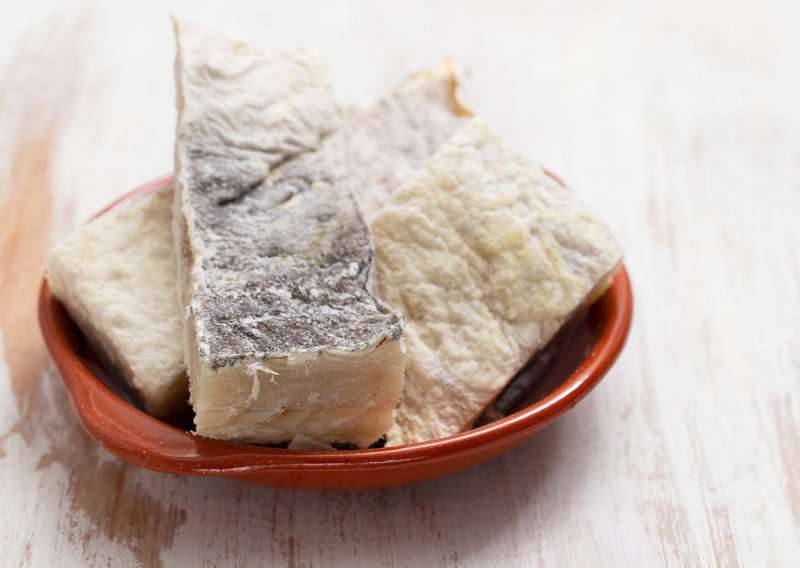
500g salt cod, soaked overnight and shredded
4 large potatoes, peeled and cut into thin matchsticks
1 large onion, thinly sliced
3-4 garlic cloves, minced
6 large eggs
Olive oil, for frying
Freshly ground black pepper
Handful of chopped parsley
Black olives, to garnish
Salt (if needed, as the cod can be salty)
Get the best deals for your home and kitchen needs
Step By Step How to Make Bacalhau à Brás
Step 1 – Prepare the Cod
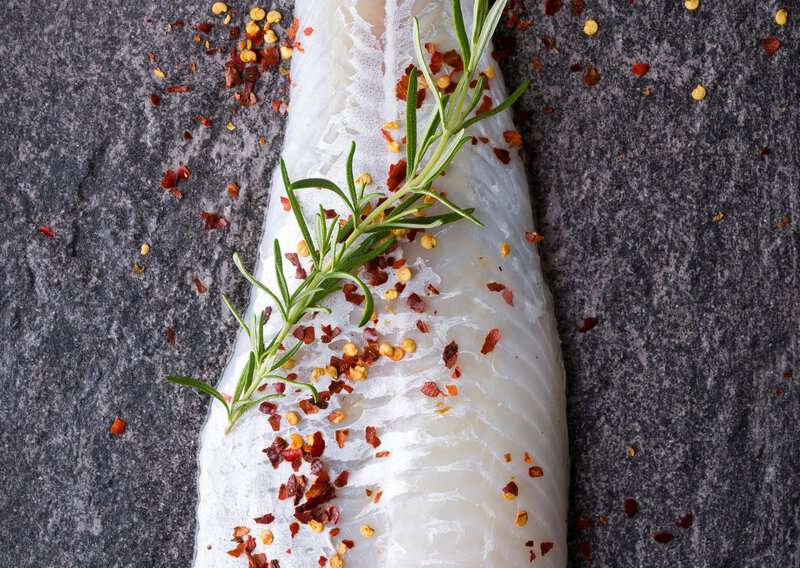
Soak the salt cod in water for 24 hours, changing the water several times to remove excess salt. Drain and shred the cod into small pieces. Make sure to remove any bones or skin.
Step 2 – Fry the Potatoes
Slice the potatoes into thin matchsticks. Pat them dry to remove any excess moisture.
Fry Potatoes: Heat a generous amount of olive oil in a large frying pan over medium-high heat. Fry the potato sticks in batches until they are golden and crispy. Remove with a slotted spoon and drain on paper towels.
Step 3 – Cook the Cod and Onions
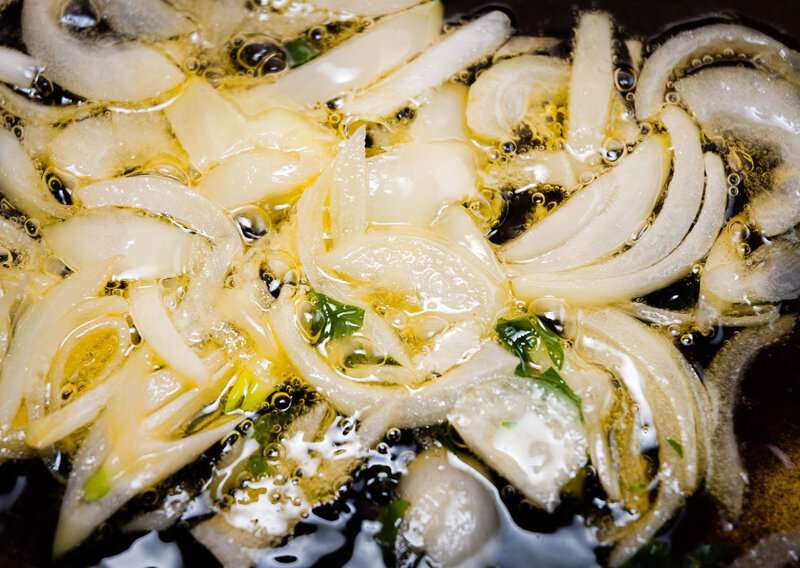
Sauté Onions and Garlic in the same pan, reduce the heat to medium, add more olive oil if needed. Add the shredded cod to the onion mixture and cook for about 5 minutes, stirring occasionally, until the cod is heated through.
Step 4 – Combine Ingredients
Add the fried potatoes to the pan with the cod and onions, gently mixing them together.
Step 5 – Add the Eggs
Beat the Eggs: In a bowl, beat the eggs with some freshly ground black pepper. You may want to hold off on adding salt until the end, as the cod retains some saltiness even after soaking.
Cook the Eggs: Pour the beaten eggs over the potato and cod mixture, stirring gently over low heat until the eggs are softly set.
Step 6 – Garnish and Serve
Sprinkle chopped parsley over the top and scatter black olives around and adjust seasoning with salt and pepper if necessary.
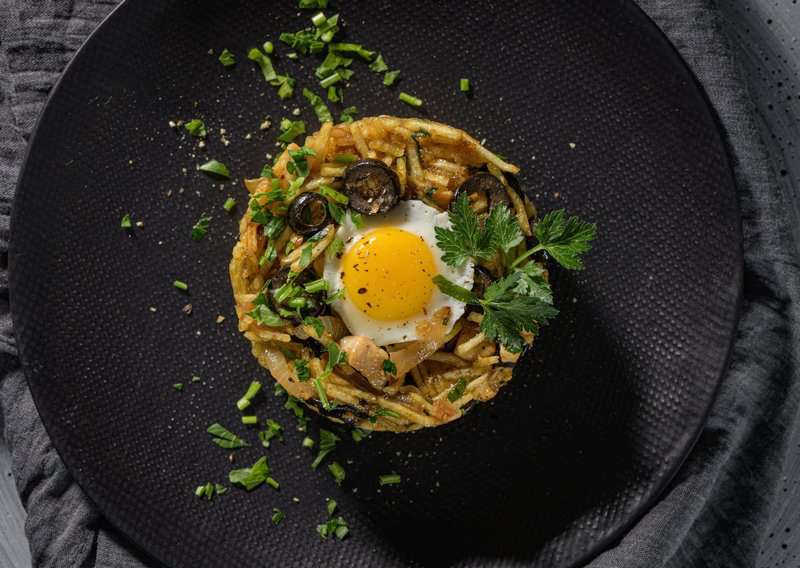
Tips To Make Bacalhau à Brás
Properly desalting the cod is crucial. If possible, start soaking it 36 hours in advance, changing the water every 8 hours. Ensure the potatoes are very thinly sliced to fry up crispy. You can use a mandolin slicer for even and thin slices.
Bacalhau à Brás is typically a standalone dish but can be served with a simple green salad and you can partner with wine.
How Many Calories Has A Bacalhau à Brás
Salt Cod (500g): Generally, cod is quite lean, with approximately 1450 calories for 500g. Potatoes are around 800 calories (200 calories each if each weighs roughly 300g).
Eggs (6 large): One large egg has about 70 calories, so six would contribute around 420 calories.
Olive Oil: Used for frying the potatoes and sautéing the onions and cod. Onions and Garlic are approximately 40-50 calories. Black Olives and Parsley are about 50 calories.
The total of calories combining all these elements each serving would roughly be around 817 calories.
Origin and History
Portugal’s most misunderstood dish is bacalhau à Brás, a recipe built from salted cod, thinly cut potatoes, and eggs gently cooked together into a rich, soft mixture. Its history dates to Lisbon in the late eighteenth century, when salted cod became a staple of the Portuguese diet due to its long shelf life and accessibility. Coastal fishermen adopted cod from northern European waters, preserving it in salt and creating a versatile ingredient that fed families through both prosperity and hardship. Over time, bacalhau dishes became synonymous with Portuguese home cooking.
The recipe is traditionally attributed to a cook known as Brás or Braz, who worked in a tavern in the old Lisbon neighborhood of Bairro Alto. He combined leftover cod with potatoes cut into matchsticks and tossed the mixture with eggs, creating a dish that was nourishing but elegant in its simplicity. From taverns, the recipe spread throughout the city, eventually appearing on restaurant menus and family tables alike. Each household added subtle variations, but the core technique remained consistent.
By the twentieth century, bacalhau à Brás was firmly established as one of Portugal’s most beloved dishes. Its appeal lies in its balance: salty fish, tender potatoes, and creamy eggs that never set into a firm scramble. Visitors discovered the dish through tourism, yet many encountered interpretations that strayed from the original method. As international versions emerged, the dish gained fame but lost precision, creating a divide between local tradition and global reinvention.
The controversy around bacalhau à Brás revolves around technique as much as ingredients. Many people treat the dish like a simple egg scramble, cooking everything together at high heat until firm. Portuguese cooks argue this changes the texture entirely. The essence of the dish is the slow, gentle folding of eggs into cooked potatoes and cod until the consistency becomes creamy without breaking. Critics of rushed methods say that treating the dish like a stir-fry removes what makes it distinct.
Another point of disagreement concerns the potatoes. In Portugal, they are cut thin, like matchsticks, then lightly fried to achieve softness and subtle crispness. Outside Portugal, cooks often replace them with thick fries or crumbled chips to save time. Traditionalists view these shortcuts as disruptive to both flavor and texture, creating a heavier, uneven dish. Supporters of shortcuts defend them as practical adaptations for home kitchens unfamiliar with the original technique.
Even the choice of cod sparks debate. True bacalhau requires dried and salted cod that is soaked in water to remove excess salt and restore texture. Using fresh fish or pre-salted fillets changes the flavor entirely. For locals, bacalhau is not just an ingredient but a cultural symbol tied to Portugal’s maritime history. Substituting the core product risks disconnecting the dish from its origins, turning it into a generic fish and eggs recipe rather than a link to national identity.
How Long It Takes to Prepare
Preparing bacalhau à Brás does not require complicated steps, but it does involve planning. The dried cod must be soaked in water for at least twenty-four hours, with several changes to remove salt and revive the texture. This stage requires no active work, yet it is essential for the final taste. Once the cod is ready, cooking the dish takes around forty minutes, including boiling and flaking the fish.
Frying the potatoes is the second stage, which typically takes fifteen to twenty minutes depending on size. Cutting them very thin ensures they cook quickly and absorb flavors later without becoming soggy. During this step, onions can be sautéed until soft and aromatic, creating a foundation for the fish and potatoes. The final stage involves folding the eggs into the mixture while keeping the heat low. This takes only a few minutes, but must be done patiently to avoid scrambling.
For home cooks seeking efficiency, soaking the cod ahead of time makes the recipe week-friendly. Potatoes can be pre-cut and stored in water to prevent discoloration. When these elements are prepared in advance, the dish can come together quickly. Even though the total timeline extends across a day because of soaking, the active cooking time is short, proving the traditional method is accessible rather than intimidating.
Serving Suggestions
Bacalhau à Brás is typically served with a garnish of chopped parsley and black olives. The freshness of the herbs and the briny olives bring contrast to the creamy base. Because the dish is naturally rich, it pairs well with a simple side salad of lettuce, onion, and olive oil, which adds crisp texture without competing for attention. Bread is often unnecessary, though a piece of crusty loaf can help balance salty notes.
For a more modern approach, some cooks add citrus zest to brighten the dish. Lemon or orange rind introduces subtle fragrance and lifts the flavors of the cod. Small side dishes like roasted peppers or marinated carrots can accompany it, reflecting the colors and freshness of Portuguese table traditions. These additions preserve the original concept while offering gentle expansions for those seeking variety.
Bacalhau à Brás also works well as part of a larger meal. It can be served alongside other cod dishes, such as baked bacalhau with cream or grilled fish, showcasing the ingredient’s versatility. Pairing the dish with vinho verde or a light white wine emphasizes the maritime character. For gatherings, serving it in a large platter for guests encourages the communal spirit that defines Portuguese dining.
Final Thoughts
Bacalhau à Brás endures because it captures the essence of Portuguese cooking: humble ingredients transformed with careful technique. The dish reflects a national love for cod and a culinary tradition built on resourcefulness. Its story stretches from tavern kitchens to family tables, and its simplicity makes it both comforting and expressive. Learning the traditional method reconnects cooks to the roots of a dish often misunderstood abroad.
The debates around authenticity show how people protect the identity attached to their food. While adaptations have their place, understanding the original allows appreciation for why each step matters. The matchstick potatoes, slow folding of eggs, and choice of salted cod are not arbitrary details but elements that define the dish. Cooking bacalhau à Brás the right way demonstrates respect for the history it represents.
Ultimately, getting the dish right means accepting that small techniques make a large difference. The recipe is not complicated, yet requires attention and patience. Home cooks who follow the traditional approach discover a dish that tastes balanced and rich without heaviness. Bacalhau à Brás offers more than a meal; it delivers a link to Portugal’s maritime legacy and the comfort of flavors shaped by time, tradition, and the people who kept them alive.

About the Author: Ruben, co-founder of Gamintraveler.com since 2014, is a seasoned traveler from Spain who has explored over 100 countries since 2009. Known for his extensive travel adventures across South America, Europe, the US, Australia, New Zealand, Asia, and Africa, Ruben combines his passion for adventurous yet sustainable living with his love for cycling, highlighted by his remarkable 5-month bicycle journey from Spain to Norway. He currently resides in Spain, where he continues sharing his travel experiences with his partner, Rachel, and their son, Han.