
Coq au Vin and Julia Child? Now, that’s a recipe we want to have!
Coq au Vin, a celebrated jewel of French cuisine, is a dish with humble beginnings that rose to become a staple in the repertoires of gourmet chefs around the world. This classic dish, which translates to “rooster in wine,” originated from the necessity of cooking tough meats slowly in wine to achieve tenderness and depth of flavor. Over the centuries, it has been refined into a rich, hearty stew that beautifully showcases the rustic yet sophisticated spirit of French culinary traditions.
Julia Child, the famed American chef who demystified French cooking for the American public, embraced Coq au Vin in her seminal work, “Mastering the Art of French Cooking.” Through her enthusiastic approach and meticulous attention to detail, Julia introduced this dish to countless households, transforming it from an exotic recipe to a beloved dinner staple. Her version of Coq au Vin emphasizes not just the technique but the art of cooking—how layers of flavor can be built and melded together over time, resulting in a dish that is more than the sum of its parts.
Julia often remarked that the right way to approach French cooking was with courage and joy, and Coq au Vin embodies this philosophy. It’s a dish that rewards patience and care, featuring chicken slowly braised in a rich red wine sauce with mushrooms, pearl onions, and smoky bacon, resulting in tender meat and a velvety sauce that carries hints of thyme and bay leaf, all brought together by the robust body of a good Burgundy or Pinot Noir.
As we dive into this guide on how to make Coq au Vin à la Julia Child, we embrace not only the technical steps but also the passion and creativity that cooking such a masterpiece entails. Whether you’re an experienced chef or a curious novice, preparing Coq au Vin offers a delightful challenge and an even greater reward—a sumptuous meal that captures the essence of French cuisine.
Ingredients List for Julia Child’s Coq au Vin
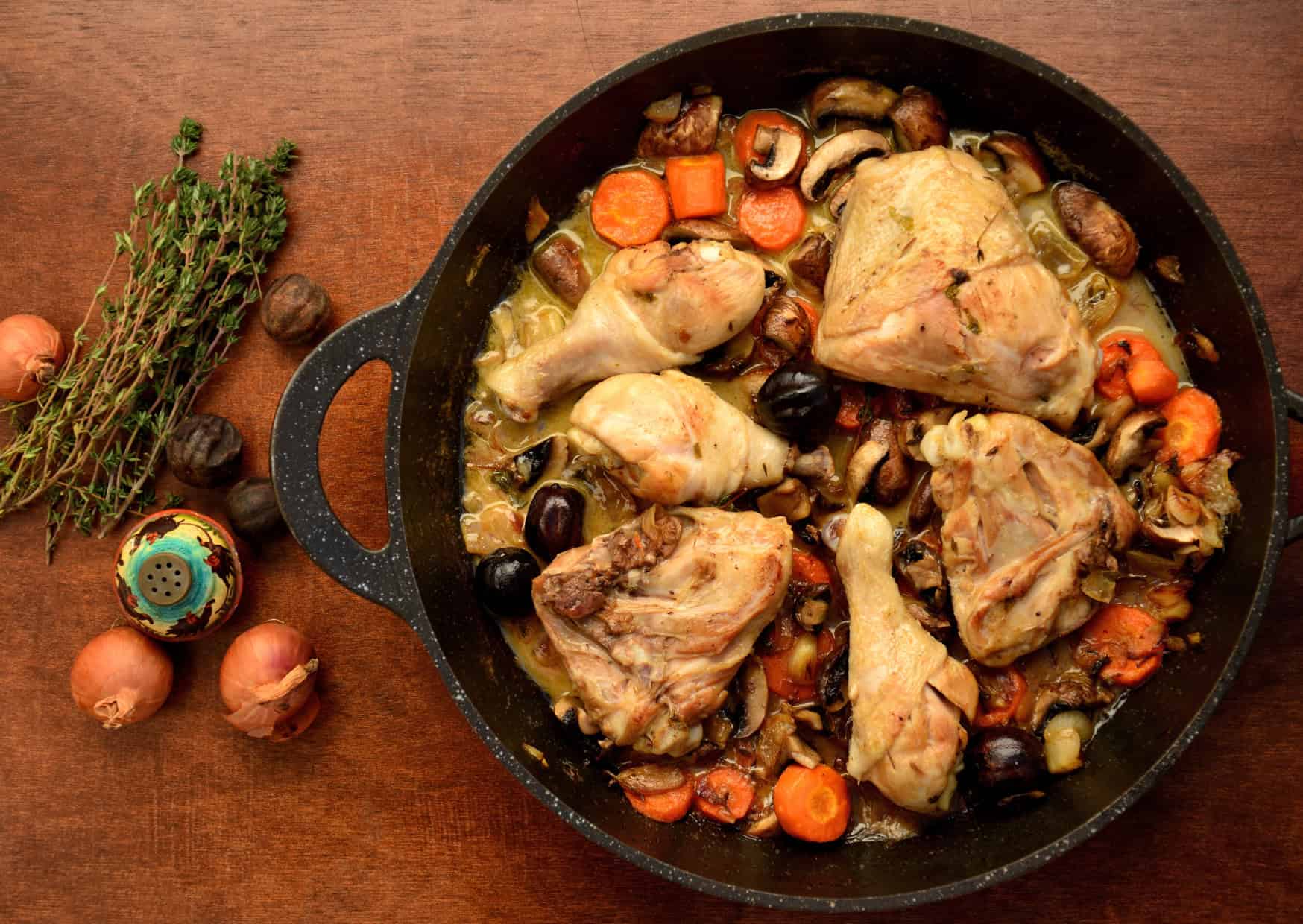
Primary Ingredients:
- Chicken: About 3 pounds, cut into pieces (Julia often used a combination of thighs, drumsticks, and breasts).
- Bacon: 6 ounces of slab bacon, cut into lardons.
- Mushrooms: 1/2 pound fresh, quartered.
- Pearl Onions: 1/2 pound, peeled.
- Garlic: 2 cloves, minced.
For the Braising Liquid:
- Red Wine: 3 cups of a full-bodied wine like Burgundy or Pinot Noir.
- Chicken Stock: 2 cups, preferably homemade.
- Brandy: 2 tablespoons.
Herbs and Seasonings:
- Bouquet Garni: A bundle of thyme, bay leaf, and parsley tied together.
- Flour: 3 tablespoons for thickening.
- Butter: For browning the chicken and vegetables.
- Salt and Pepper: To taste.
Equipment Needed
- Dutch Oven or Large Heavy Pot: Essential for even cooking and developing flavors.
- Wooden Spoon: For stirring without scratching the pot.
- Strainer: For removing solids from the sauce if desired.
Coq Au Vin Preparation Overview
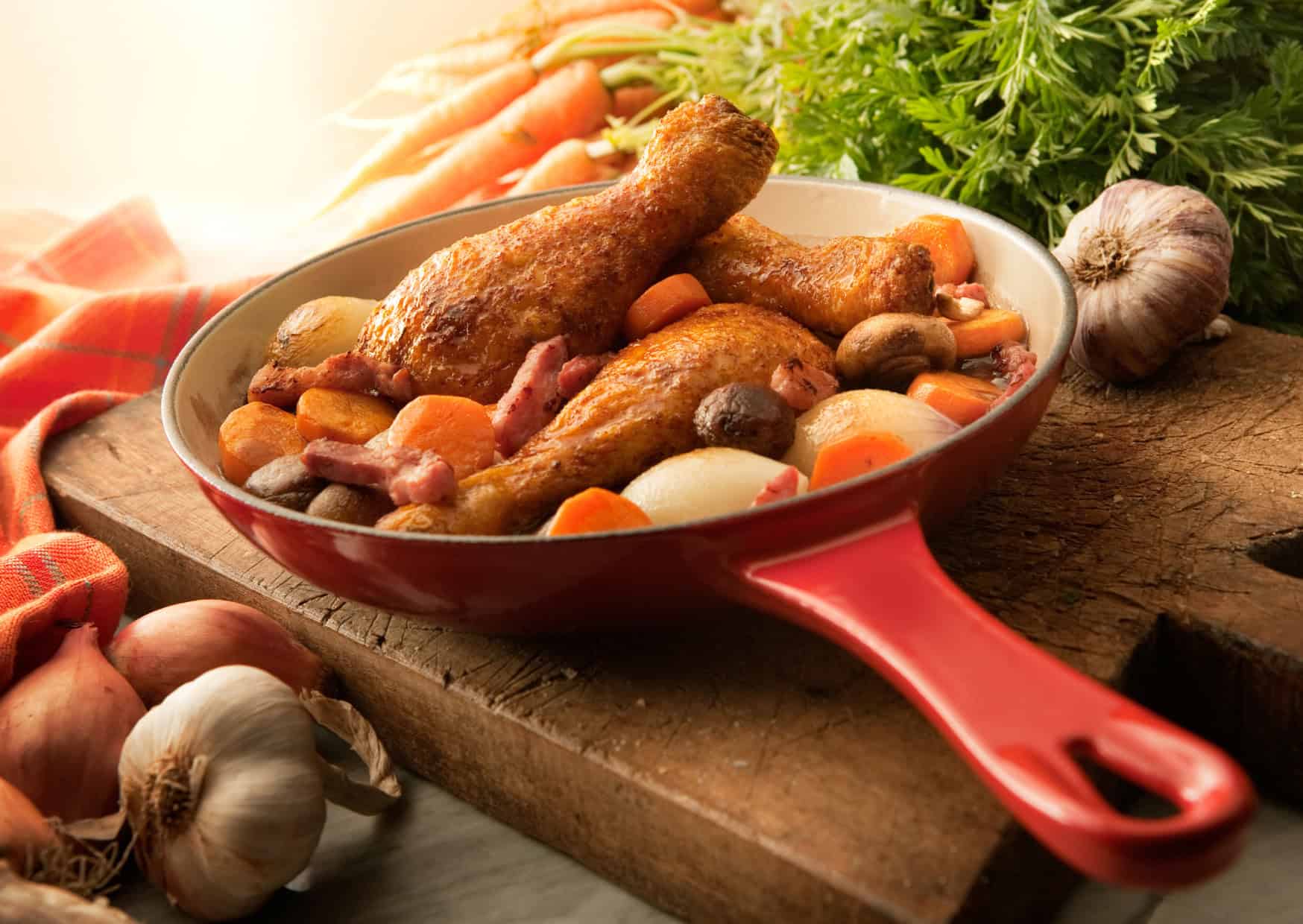
1. Browning the Bacon:
- Start by rendering the bacon lardons in a large Dutch oven over medium heat. Allow them to cook slowly, stirring occasionally, until they are crisp and golden. This not only crisps the bacon but also releases a rich fat base that will add flavor to the other components.
2. Searing the Chicken:
- After removing the bacon, increase the heat to medium-high. Season the chicken pieces generously with salt and pepper, then sear them in the bacon fat. The goal is to achieve a deep golden brown crust on each piece, which introduces a complex layer of flavor to the dish.
3. Sautéing Vegetables:
- Using the same pot, lower the heat to medium and add the mushrooms and pearl onions. Sauté them until they are golden brown and have absorbed the flavors of the fat. This caramelization process is key to developing the dish’s rich, umami background.
4. Deglazing and Braising:
- Deglaze the pot with a splash of brandy, scraping up any browned bits from the bottom. Then add red wine and chicken stock, bringing the mixture to a simmer. This liquid, enriched with herbs from the bouquet garni, will serve as the braising medium, slowly infusing the chicken with flavor as it cooks.
Detailed Step-by-Step Recipe
Step 1: Prepare the Ingredients
- In your Dutch oven, cook the bacon over medium heat until crisp. Remove the bacon and set it aside, leaving the fat in the pot.
- Increase the heat to medium-high and add the chicken pieces. Sear them until each piece is evenly browned on all sides. Remove from the pot and set aside.
Step 2: Sauté Vegetables
- In the remaining fat, add a tablespoon of butter if needed. Add the mushrooms and pearl onions, cooking until they start to brown and pick up the flavor of the fond (browned bits from the chicken and bacon).
- Stir in the minced garlic and cook for another minute until fragrant.
Step 3: Build the Dish
- Sprinkle flour evenly over the vegetables and stir to combine, cooking for a few minutes to form a light roux. This will help thicken the braising liquid.
- Slowly pour in the red wine, then the chicken stock, stirring continuously to prevent lumps.
- Return the browned chicken and cooked bacon to the pot. Add the brandy and submerge the bouquet garni in the liquid.
Step 4: Slow Cook
- Bring the mixture to a gentle simmer, then reduce the heat to low. Cover the pot and let it simmer for about 2 to 2.5 hours. During this time, the chicken will become tender and the sauce will thicken and concentrate in flavor.
Step 5: Final Adjustments and Serve
- Once the chicken is tender, remove the bouquet garni. Taste the sauce and adjust seasoning with additional salt and pepper as needed.
- Serve the Coq au Vin hot, garnished with fresh parsley to add a bright, herbal note that contrasts the rich sauce.
Yield and Servings
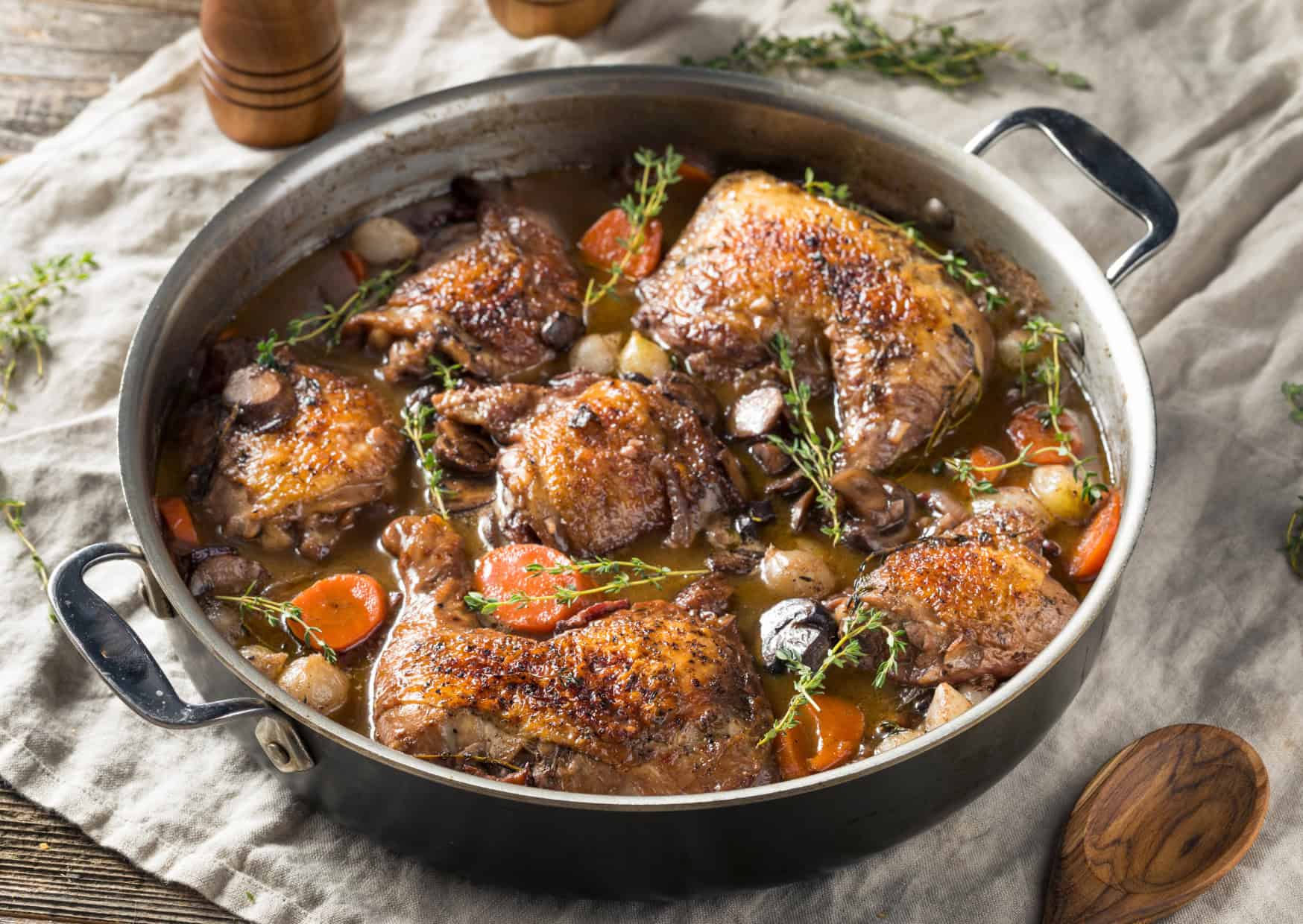
Servings: This recipe serves 4-6 people comfortably.
Portion Size: Each serving consists of one to two pieces of chicken, depending on the size of the chicken parts used, along with a generous portion of sauce, mushrooms, and onions.
Cooking and Prep Time:
- Preparation Time: 30 minutes (includes preparing ingredients and browning the chicken)
- Cooking Time: Approximately 2.5 hours
- Total Time: About 3 hours
Dish Type: Main Course
Cuisine: French
Suggestions for Scaling
- For Smaller Groups (2-3 people): Halve the quantities of all ingredients, but maintain the same cooking times to develop flavors fully.
- For Larger Groups (6-8 people): Double the ingredients. Consider using two Dutch ovens or a larger pot to accommodate the increased volume, ensuring there’s enough space for even cooking.
Nutritional Information (per serving)
- Calories: Approximately 550-600 calories
- Total Fat: 30 grams
- Saturated Fat: 9 grams
- Cholesterol: 135 mg
- Sodium: 800 mg (varies based on the salt content of the stock and bacon used)
- Total Carbohydrates: 15 grams
- Dietary Fiber: 2 grams
- Sugars: 5 grams (mostly from vegetables and wine)
- Protein: 45 grams
Key Vitamins and Minerals:
- Vitamin A: Provided by the carrots and enriched by the chicken liver, if included.
- Iron: Supplied by the chicken and enriched by the red wine.
- Potassium: Found in the chicken, mushrooms, and other vegetables.
Nutritional Notes:
- The calorie count primarily comes from the chicken (especially if skin-on pieces are used), bacon, and the cooking fats (butter and bacon fat).
- This dish is rich in protein, making it a hearty option for meal times.
- To reduce the fat content, you could trim the bacon of visible fat, use skinless chicken pieces, and minimize the added fats (butter/oil).
- To decrease the sodium content, opt for low-sodium chicken broth and bacon, and be cautious with added salt.
Top Tips for Making Coq au Vin
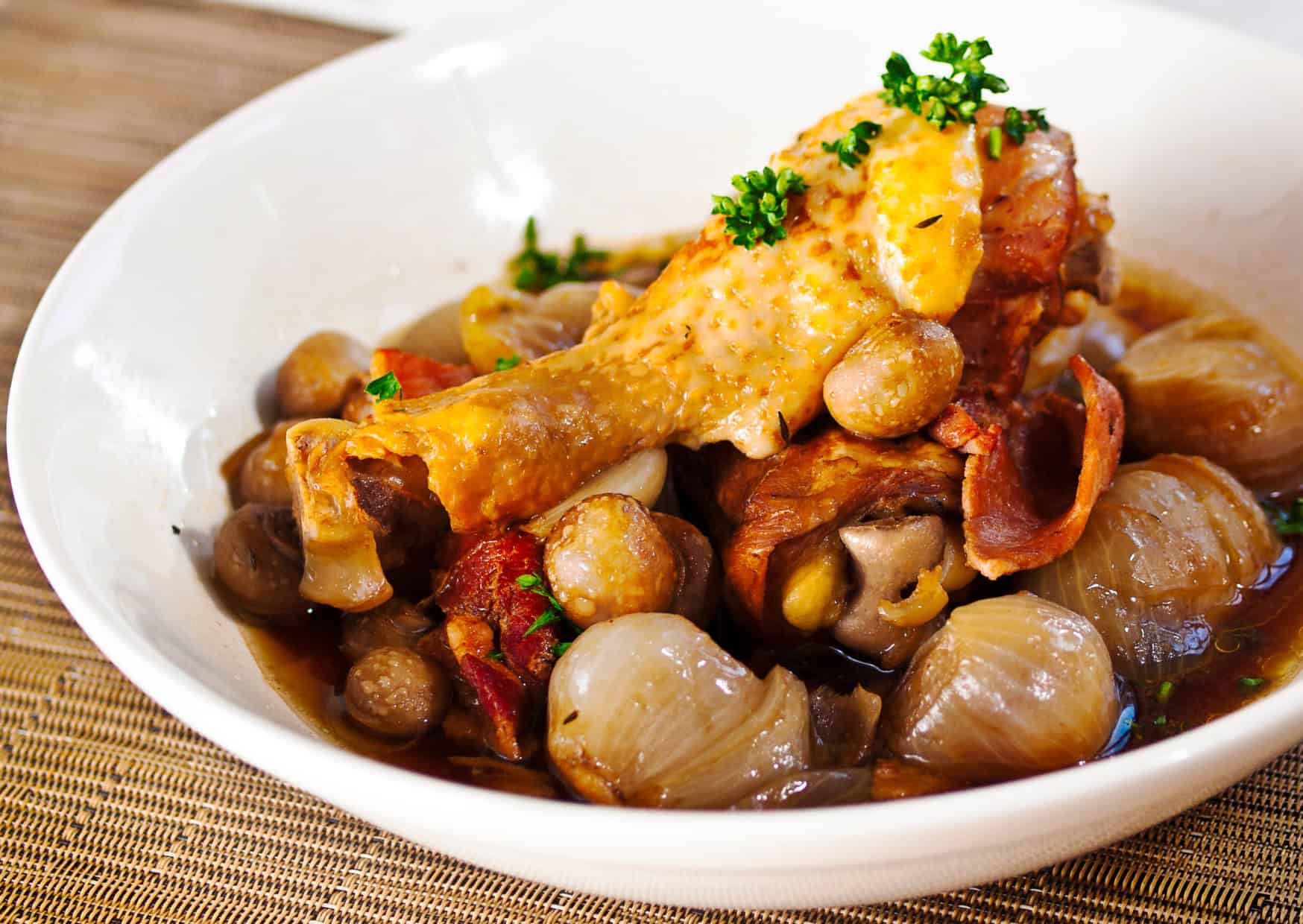
- Quality Ingredients: Choose a good quality, full-bodied red wine that you enjoy drinking. The wine is a central flavor component in Coq au Vin, so its quality will significantly impact the dish.
- Proper Browning: Take the time to properly brown the chicken and render the fat from the bacon. This step is crucial for developing a deep, rich flavor base.
- Slow Cook: Coq au Vin benefits from slow cooking at a low temperature. This allows the flavors to meld together beautifully and the chicken to become exceptionally tender.
- Bouquet Garni: Make your own bouquet garni with fresh herbs. The combination of parsley, thyme, and bay leaf adds a subtle complexity to the dish.
- Final Seasoning: Adjust the seasoning only after the dish has finished cooking. The flavors will develop and change throughout the cooking process, and you want to ensure the final product is perfectly seasoned.
- Rest Before Serving: Let the dish rest for a few minutes off the heat before serving. This allows the flavors to settle and the sauce to thicken slightly for the perfect consistency.
- Serve with the Right Sides: Serve Coq au Vin with simple sides that complement the rich flavors without overpowering them. Good options include mashed potatoes, crusty French bread, or a light green salad.
Origin and History
Coq au vin is one of France’s oldest rustic dishes, originally created as a practical way to cook tough, older roosters. Long before French cuisine became synonymous with refinement, rural families relied on slow braising to transform inexpensive ingredients into deeply flavorful meals. Wine, herbs, and time softened the meat and created a rich, velvety sauce that became a hallmark of provincial cooking.
Although the dish had existed for centuries, it gained recognition in the 20th century as French regional cuisine began to spread beyond local farmhouses and taverns. Different regions developed their own variations using local wines Burgundy with red wine, Alsace with white, and the Loire with lighter styles. Each version preserved the essence of slow, wine-based braising while reflecting local culture.
Coq au vin reached international fame when Julia Child introduced it to American home cooks through her books and television shows. Her version maintained the rustic spirit but made the dish accessible to everyday kitchens. It became a symbol of how French cooking could be both elegant and approachable, and it started a culinary revolution in homes across the United States.
One of the biggest controversies is whether Julia Child’s version is truly “authentic.” Traditionalists argue that the original dish was made with rooster, which has a firmer texture and deeper flavor than modern chicken. Many claim that using supermarket chicken especially boneless cuts removes the heart of the recipe. Others counter that recipes naturally evolve and accessibility is part of the dish’s global appeal.
Another debate centers on wine selection. Purists insist that only Burgundy wine creates the proper balance of acidity and richness. Some cooks, however, use whatever wine they have on hand, even lighter or sweeter varieties. The disagreement highlights a larger question: must tradition dictate the dish, or can personal preference take the lead?
There’s also disagreement about the level of difficulty. Some see coq au vin as a complex, intimidating dish reserved for special occasions. Others argue that its steps browning, simmering, and reducing are simple techniques that anyone can learn. This tension mirrors Julia Child’s original mission: to demystify French cuisine so home cooks would try dishes once considered out of reach.
How Long You Take to Prepare
Preparing coq au vin takes time, but most of it is hands-off. The initial steps browning the chicken, sautéing vegetables, and caramelizing mushrooms and bacon take about 30 to 40 minutes. This is where you build the deep layers of flavor that define the entire dish.
The braising stage requires patience, usually between 1 and 2 hours. During this time, the wine and broth slowly break down the chicken fibers while reducing into a rich, glossy sauce. Longer cooking yields more tenderness, and many cooks believe the dish tastes even better the next day as the flavors meld further.
The final stage thickening the sauce and adjusting seasoning takes another 10 minutes. When done properly, the sauce should coat the chicken without being heavy or overly thick. In total, coq au vin requires 2 to 3 hours from start to finish, but the slow, deliberate pace is part of its charm and one reason it has endured for centuries.
Serving Suggestions
Coq au vin shines when served with simple sides that absorb its rich sauce. The most traditional pairing is buttered egg noodles or mashed potatoes, both of which create the perfect base to catch every drop of the braising liquid. These classics keep the focus on the dish’s deep flavors.
For something rustic, serve it with crusty French bread. The bread can be used to sop up the sauce, and its texture adds a satisfying contrast to the tender chicken. A side of green beans, roasted carrots, or lightly dressed salad helps balance the richness of the meal without overpowering it.
If you want a more elegant presentation, pair coq au vin with creamy polenta or potato gratin. These sides create a luxurious, restaurant-style plate that elevates the dish while staying true to its earthy roots. A glass of the same wine used in the recipe ties everything together beautifully.
Final Thoughts
Coq au vin remains one of the most transformative dishes in American culinary history because it showed home cooks that French cuisine didn’t have to be complicated or intimidating. Julia Child didn’t just share a recipe she introduced an entire philosophy of cooking based on patience, technique, and joy. The dish still embodies that spirit today.
Whether you follow a traditional French method or Julia’s streamlined version, coq au vin teaches cooks to slow down and savor the process. Each step adds depth, and every ingredient plays a purpose. The result is a comforting, richly flavored meal that feels both humble and sophisticated.
Ultimately, coq au vin is a dish that invites you to cook with intention. It bridges old-world tradition with modern kitchens, reminding us that great food doesn’t rely on trends but on timeless technique. Once you master it, you’ll understand why this classic continues to win hearts and why Julia Child believed every home cook should make it at least once.
Coq au Vin is more than just a chicken dish; it’s a celebration of French culinary tradition brought into the limelight by Julia Child. This recipe not only offers a delicious meal but also a delightful cooking experience that hones your skills in braising and flavor building. By following the detailed steps and tips provided in this guide, you’re set to create a dish that’s rich in flavor and steeped in history. Enjoy the process and the meal, and remember, as Julia Child would say, “Bon Appétit!”

About the Author: Ruben, co-founder of Gamintraveler.com since 2014, is a seasoned traveler from Spain who has explored over 100 countries since 2009. Known for his extensive travel adventures across South America, Europe, the US, Australia, New Zealand, Asia, and Africa, Ruben combines his passion for adventurous yet sustainable living with his love for cycling, highlighted by his remarkable 5-month bicycle journey from Spain to Norway. He currently resides in Spain, where he continues sharing his travel experiences with his partner, Rachel, and their son, Han.