
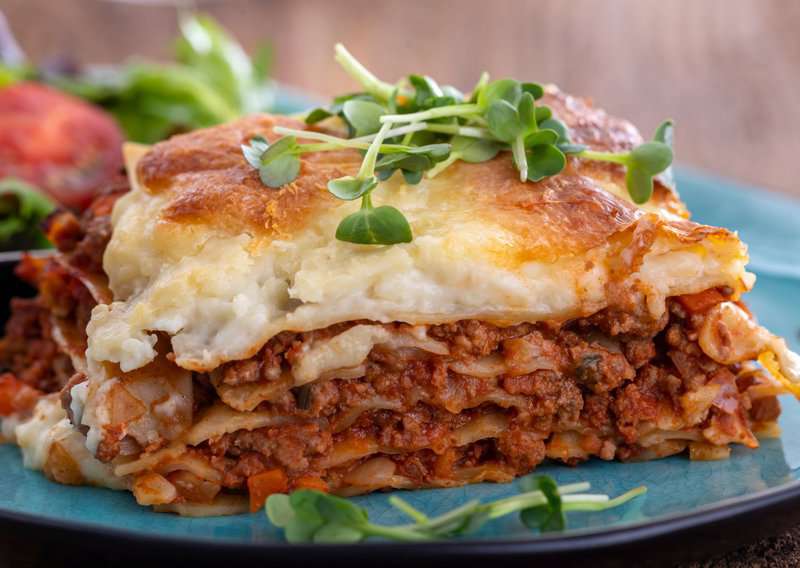
Lasagna is the undisputed heavyweight of Italian comfort food rich layers of pasta, slow-cooked meat sauce, creamy béchamel, and bubbling cheese baked to golden perfection. It’s a dish that turns ordinary ingredients into something deeply satisfying and celebratory. A true lasagna isn’t just a meal; it’s a statement of tradition, patience, and love for cooking.
Yet despite its popularity, lasagna is often misunderstood outside of Italy. Some versions drown in too much cheese, while others skip key components like the classic béchamel sauce. Authentic lasagna, especially the Bolognese-style from Emilia-Romagna, follows a balance of flavors and textures where each layer complements, not overpowers, the next. Homemade lasagna isn’t about shortcuts; it’s about crafting a dish that feels both rustic and refined.
In this guide, you’ll learn how to make traditional Italian lasagna from scratch from simmering a rich ragù to layering your pasta just right. Whether you’re preparing it for a family gathering, a cozy weekend meal, or your first attempt at authentic Italian cooking, this recipe delivers the heartwarming flavors of a true kitchen classic.
Read here best Italian food, vegetarian food in Italy, best drinks in Italy and best breakfast in Italy
Read Here Things to know before visiting Italy and how to buy a sim card in Italy
BOOK YOUR TRAVEL INSURANCE
Two of our favorite travel insurance: Heymondo Vs Safetwing cheapest travel Insurance. You can get for $135 USD your Heymondo Travel Insurance with Heymondo discount code valid for 90 days. Read our full comparison of Genki vs Safetywing Travel Insurance Review and the comparison Heymondo vs Genki
Best Time to Eat & How to Partner This Dish
Lasagna is best enjoyed as a hearty lunch or a special dinner, especially when you have time to savor both the cooking and the eating. It’s a popular centerpiece for Sunday meals, festive occasions, and family gatherings dishes meant to be shared, savored, and remembered.
Pair classic lasagna with a simple green salad tossed in vinaigrette or a plate of grilled vegetables, both of which lighten the meal without stealing the spotlight. A robust Italian red wine like Sangiovese or Chianti complements the rich meat sauce perfectly. And, of course, a side of crusty bread makes for the ideal sauce-sopping companion.
If you’re serving lasagna as part of a larger spread, keep the sides simple its bold flavors stand on their own. Lasagna also tastes even better the next day, making it perfect for meal prep or leftovers that feel just as special as the first serving.
One major misconception is that lasagna is all about the cheese. While cheese is important, authentic Italian lasagna relies more on a slow-cooked meat sauce and creamy béchamel to deliver depth and balance. Piling on mozzarella or skipping the sauce entirely turns lasagna into something closer to a cheesy casserole than a layered Italian dish.
Another common misunderstanding is that lasagna must be loaded with thick layers of pasta. Traditional recipes often use thin, delicate sheets of fresh pasta allowing the flavors of the sauce, filling, and béchamel to shine. Overly thick pasta layers can make the dish heavy and dense, missing the point of the dish’s careful layering.
And perhaps most surprising: not all lasagna in Italy is made the same way. While Lasagna alla Bolognese with ragù and béchamel is the most famous, regions like Naples have their own versions with ricotta, hard-boiled eggs, and sausage. The diversity of lasagna styles across Italy highlights its role as a flexible, regional comfort food endlessly adaptable yet always rooted in tradition.
How to Make Lasagna
Lasagna Recipe Ingredients
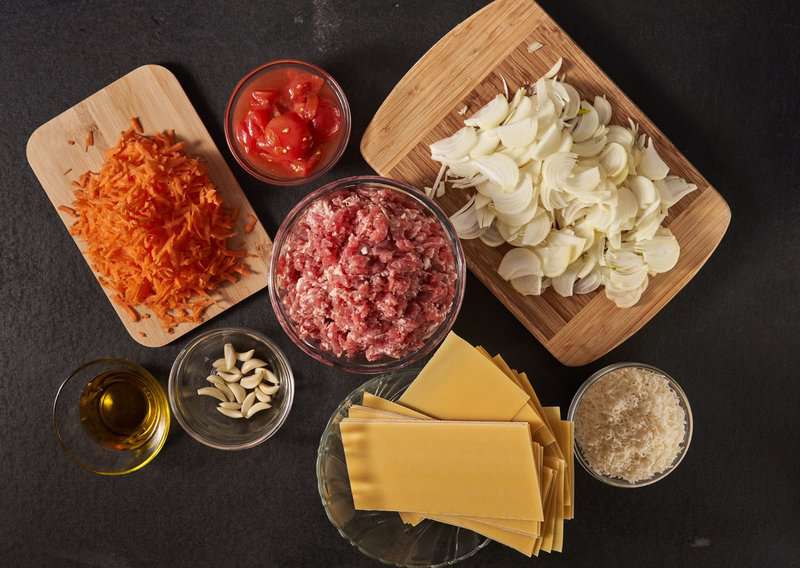
Lasagna noodles: Either fresh or dried that you’ll need to boil.
Bolognese sauce (Ragù):
1 lb (450 g) ground beef
1/2 lb (225 g) ground pork (optional, can use 1.5 lbs beef alone)
1 onion
2 carrots
2 celery stalks
4 cloves garlic
1 cup red wine
2 cups tomato sauce
1 cup tomato paste
1 cup beef or chicken broth
Salt and pepper to taste
2 tablespoons olive oil
Béchamel sauce:
5 tablespoons unsalted butter
4 tablespoons all-purpose flour
4 cups milk
Nutmeg, grated to taste
Salt
Cheese:
1 lb (450 g) mozzarella cheese, sliced or shredded
1/2 cup grated Parmesan cheese
Get the best deals for your home and kitchen needs
Step By Step How to Make Lasagna
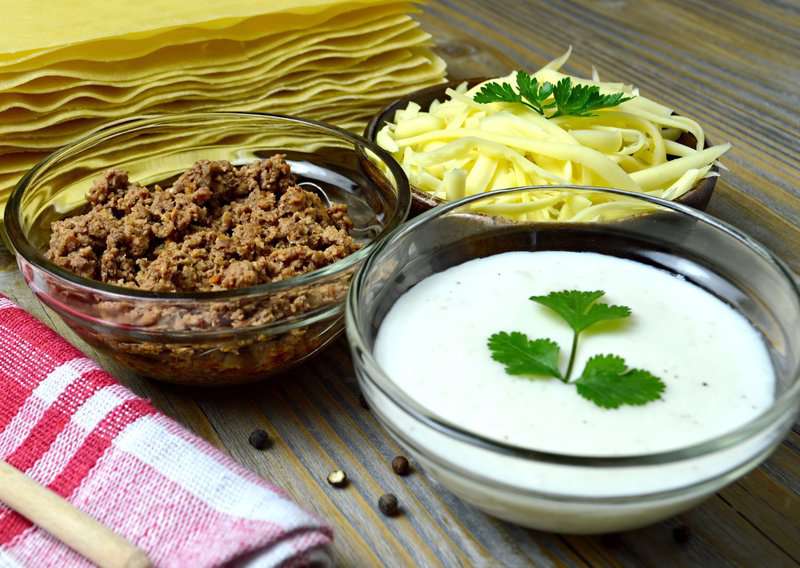
Step 1 – Prepare the Bolognese Sauce
In a large pan, heat the olive oil over medium heat. Add the ground beef and pork, season with salt and pepper, and cook until browned. Remove excess fat. Add the onion, carrot, celery, and garlic to the meat and cook until they are soft.
Add the red wine and allow it to reduce slightly, then add the tomato sauce, tomato paste, and broth. Simmer gently for about 1-2 hours until the sauce thickens.
Step 2: Prepare the Béchamel Sauce
In a saucepan, melt the butter over medium heat. Add the flour to the melted butter, whisking continuously to prevent lumps, and cook for about 2 minutes.
Gradually add the milk, continuously stirring until the sauce thickens and becomes smooth. Add a pinch of nutmeg and salt to taste. Set aside.
Step 3 – Prepare the Lasagna Noodles
If using dried noodles, boil them according to package instructions until al dente. Drain and lay flat on a clean towel to prevent sticking.
Step 4 – Assemble the Lasagna
Spread a thin layer of Bolognese sauce on the bottom of the baking dish. Place a layer of noodles over the sauce.
Third Layer: Add a layer of Bolognese sauce over the noodles, then a layer of béchamel sauce, and sprinkle with mozzarella and a bit of Parmesan.
Continue layering in this order until all ingredients are used, finishing with a top layer of béchamel sauce and a generous sprinkle of Parmesan.
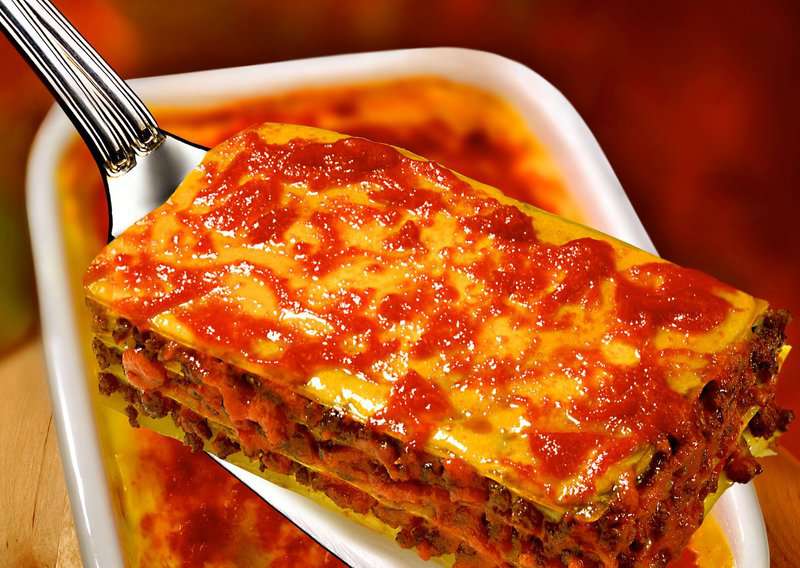
Step 5 – Baking
Preheat your oven to 375°F (190°C). Cover the lasagna with aluminum foil and bake for 25 minutes. Then remove the foil and bake for another 25 minutes until the top is bubbly and golden.
Allow the lasagna to rest for about 15 minutes before slicing. This helps the layers set and makes serving easier.
Tips To Make Lasagna
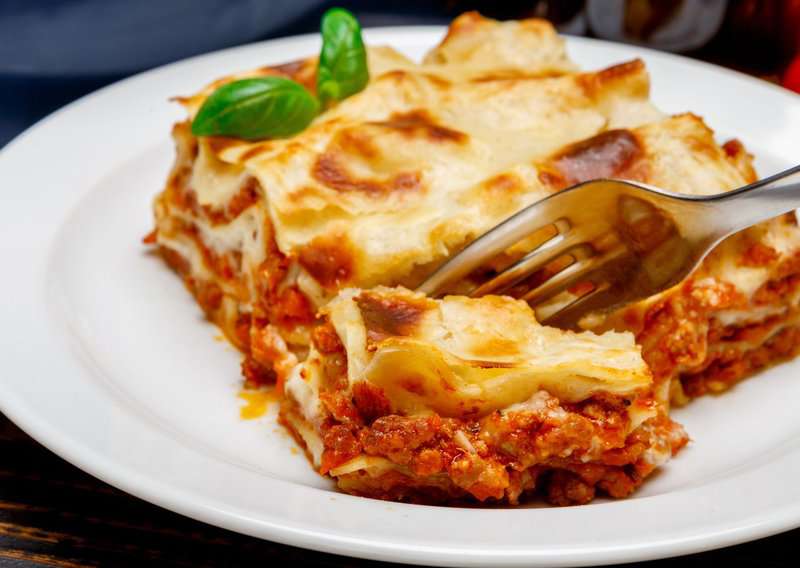
Lasagna tastes even better when the flavors meld, so consider making it a day ahead and reheating to serve. Lasagna freezes well. You can freeze it either baked or unbaked. Thaw overnight in the refrigerator before reheating or baking.
How Many Calories Has A Lasagna
A typical serving of cooked lasagna noodles is approximately 200 calories. Bolognese Sauce is around 300-400 calories, Béchamel Sauce is about 150-200 calories and the cheese has about 110 calories per ounce.
A single serving of lasagna is from 600 to 900 calories.
Origin and History
Lasagna has roots stretching back to ancient Rome, where early versions of layered pasta dishes first appeared. These early “laganum” sheets weren’t quite the lasagna we know today, but the concept of layering pasta with sauces took shape long before the Italian peninsula became a unified nation. Over centuries, techniques refined, ingredients evolved, and regions began creating their own interpretations.
By the Middle Ages, lasagna had become firmly rooted in Emilia-Romagna, where fresh egg pasta paired with rich ragù and delicate béchamel laid the foundation for what is now considered the classic version. Cities like Bologna perfected the balance of ingredients and texture. Rather than a cheese-heavy casserole, traditional lasagna emphasized slow-cooked meat sauce, thin pasta sheets, and just enough béchamel to create luxurious creaminess.
From Italy, the dish spread globally, transforming drastically along the way. Immigrant communities, especially in the United States, adapted it to local availability by swapping ingredients, adding more cheese, and bulking it up to feed large families. While these versions became beloved in their own right, they drifted far from the delicate, layered harmony of the original.
One of the biggest debates is cheese. Many people assume lasagna is supposed to be overflowing with mozzarella and ricotta, but Italians insist that this is an Americanized interpretation. In traditional lasagna, cheese plays a supporting role, not the leading one. Purists argue that using too much ricotta destroys the structure and masks the flavors of the ragù and pasta.
Another point of controversy is the sauce. Outside Italy, red sauce often dominates the dish, but authentic Italian lasagna relies on a slow-simmered ragù with wine, vegetables, and just enough tomato to add depth not overwhelm the dish. This disagreement fuels constant online arguments between home cooks who swear by a fast marinara and Italians who insist that true ragù must be cooked for hours.
Then there’s the pasta itself. Many believe that thicker noodles or no-boil sheets are acceptable shortcuts, while traditionalists insist that fresh, thin pasta rolled by hand or machine is non-negotiable. Critics of shortcuts argue that thick or pre-dried pasta leads to a soggy, gummy texture that completely changes the dish’s character.
How Long You Take to Prepare
Authentic lasagna is not a quick meal it’s a slow, intentional process. Preparing the ragù alone can take two to three hours, requiring low heat and patience to allow the meat, vegetables, and wine to blend into a velvety sauce. This step is where most of the flavor develops, and skipping or rushing it is one of the main reasons lasagna falls flat.
Next comes the pasta. If making fresh sheets, you’ll need another 45 minutes to mix, knead, rest, and roll the dough before cutting it into thin rectangles. Even if you choose high-quality dried sheets, pre-boiling them ensures proper texture, adding another 20 to 30 minutes. This step prevents the dish from becoming dense or undercooked.
Assembling and baking take roughly one more hour. Layering is an art: thin pasta, a modest amount of ragù, a spoonful of béchamel, and repeat. After baking for about 40 to 50 minutes, the lasagna should rest for an additional 15 minutes to fully set. Altogether, traditional lasagna can take four hours from start to finish but the payoff is worth it.
Serving Suggestions
True Italian lasagna is a complete meal in itself, layered with rich meat ragù, creamy béchamel, and tender sheets of pasta. Still, you can complement it with simple sides that enhance rather than compete. A lightly dressed arugula salad or steamed seasonal vegetables make perfect pairings that cut through the richness without overshadowing the main event.
For bread lovers, offer slices of crusty Italian ciabatta or focaccia on the side perfect for mopping up every last bit of sauce. Want to serve it the Italian way? Start with a light antipasto of olives, cured meats, or marinated artichokes, then follow the lasagna with a refreshing palate cleanser like lemon sorbet or a small espresso.
To drink, go with a bold Italian red like Barolo or Chianti for a traditional pairing that matches the depth of flavor in the ragù. Even a dry Lambrusco can add a festive touch to this beloved classic.
Final Thoughts
Lasagna may seem simple, but it’s one of those dishes where technique and tradition matter deeply. From choosing the right sauce ratio to knowing when to layer béchamel versus ricotta, every decision impacts the final result. It’s not just a pasta bake it’s a cultural icon rooted in centuries of culinary heritage.
Many people shortcut the process with store-bought sauces or overloaded fillings, but what makes authentic lasagna unforgettable is its restraint and balance. The goal is harmony, not excess. And when done right, it becomes more than just comfort food it becomes a dish that earns respect at every table it’s served on.
So if your lasagna hasn’t quite lived up to expectations in the past, now you know why. This time, slow it down, respect the layers, and cook it the way Italian nonnas have for generations. You might just finally get it right.

About the Author: Ruben, co-founder of Gamintraveler.com since 2014, is a seasoned traveler from Spain who has explored over 100 countries since 2009. Known for his extensive travel adventures across South America, Europe, the US, Australia, New Zealand, Asia, and Africa, Ruben combines his passion for adventurous yet sustainable living with his love for cycling, highlighted by his remarkable 5-month bicycle journey from Spain to Norway. He currently resides in Spain, where he continues sharing his travel experiences with his partner, Rachel, and their son, Han.